Introduction to Climate Extinction Politics: Season 3 of UCL Press Play

A white play button with the text 'UCL Press Play' on a coloured background.

Have you heard about UCL Press Play: our podcast and documentary series featuring groundbreaking voices and cutting-edge ideas? Join leading academics as they uncover fresh insights on diverse topics such as queer histories, neurodiversity and climate justice.

The climate crisis affects every part of society, but those least responsible for climate change often suffer its worst impacts. This disparity is the focus of Climate Extinction Politics – The Greatest Good; the latest season of our podcast and documentary series UCL Press Play. Read on to hear more about the academics who join Professor Philip Schofield, Director of the Bentham Project, to discuss their work in the second series.

Episode 1: The Ends of Coal, featuring Dr Andrew Seaton

Dr Andrew Seaton is a historian of politics, social history, medicine and environment, who has been recently shortlisted for the Wolfson History Prize, and won the American Historical Association’s Morris D. Forkosch Prize for the best book on British history. He is currently writing a book on the history of coal, and draws exclusive insights from that research in his episode.

Episode 2: Climate Politics, featuring Dr Fergus Green

Dr Fergus Green is an Associate Professor in the Department of Political Science and School of Public Policy at UCL. In this episode, he draws on his research exploring the drivers of and responses to climate change, and examines the fossil fuel industry’s influence on policy and public perception.

Episode 3: No Natural Disasters, featuring Professor Ilan Kelman

Professor Ilan Kelman is Professor of Disasters and Health at UCL, and a Professor II at the University of Agder. His overall research interest is linking disasters and health, integrating climate change into both. In this episode, he argues that disasters result from human choices, not natural events alone, and suggests what can be done to prevent future crises.

Episode 4: Biodiversity Loss, featuring Professor Jon Bridle

Professor Jon Bridle is Professor of Evolutionary Biology at UCL, and Director of the Centre for Biodiversity and Environment Research (CBER) within the Department of Genetics, Evolution and Environment (GEE). In this episode, he discusses the biodiversity crisis driven by human overconsumption, habitat destruction, and climate change, and outlines steps for conscious consumption and community action.

Episode 5: Ecosystems and Disease, featuring Dr Rory Gibb

Dr Rory Gibb is Wolfson UCL Excellence Fellow in UCL’s Genetics, Evolution & Environment Department. He is an ecologist and epidemiologist whose research explores how changes in climate, ecological and social systems combine to drive infectious disease in people and animals. In this episode, he discusses how climate change and social inequality are fuelling increases in mosquito-borne illnesses like dengue fever and West Nile virus.

Episode 6: Why We Should Love Wasps, featuring Professor Seirian Sumner

Professor Seirian Sumner is Professor of Behavioural Ecology in UCL’s Genetics, Evolution & Environment Department. A behavioural ecologist, she is especially interested in social wasps, and is working hard to raise the profile of these ecologically important insects, among both scientific and lay communities. In this episode, she makes the case for embracing wasps as allies in biodiversity and science.

Episode 7: Universities and Climate Change, featuring Professor Tristan McCowan

Professor Tristan McCowan is Professor of International Education at the Institute of Education. His work focuses on higher education in the international context, including issues of access, curriculum, alternative models and sustainability. In this episode, he argues that from resisting climate denial to modelling sustainable communities, universities have both the responsibility and the potential to help shape a just climate future.

Want to find out more? Register below to keep up to date with any new announcements.

Register your interest

Why read a book about Sahidic Coptic?

In this blog post, author Bill Manley reflects on the origins of Sahidic Coptic and how its influence can still be felt today.

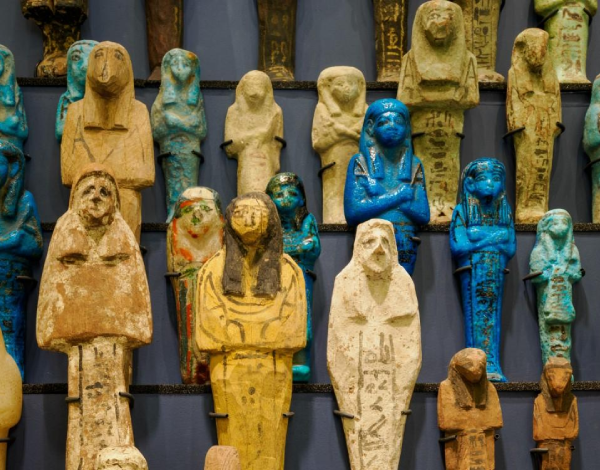
The end of ancient Egypt; the fall of the Roman Empire; early books; the early Bible; Orthodox Christianity; the Byzantine Empire; the history of religious persecution; Europe’s mediaeval monasteries; the rise of Islam; Egyptian society today; even the decipherment of hieroglyphs—these are a handful of the ‘big’ stories that cannot be told properly without some awareness of the tens of thousands of Sahidic Coptic texts from Late Antique Egypt. Often, they are among our most detailed sources for any of these subjects.

‘Copt’ comes via Arabic al-Qibṭiy from Greek Aiguptioi ‘Egyptians’, and evokes three centuries of Roman rule in Egypt; when a Greek-speaking ruling class treated native Egyptian speakers as social and political inferiors. The land had been brought under Roman rule in 30 BC, at the death of the notorious Queen Cleopatra VII. Subsequently, the indigenous language was excluded from public life, and Egypt’s institutions came to be viewed as collaborators. Resistance to Rome became identified with the systematic executions of Egyptian Christians; especially during the reign of Diocletian (284–305). Following an imperial about-face and edicts of religious toleration in the early 300s, Egypt was revealed to be a majority Christian nation where the ancient temples were repurposed as churches, and the spread of monasteries would be the most dynamic, transformative socio-economic phenomenon of the new age.

As the temples’ authority had dwindled among the people, so had that of the ancient hieroglyphic script: identified since the dawn of history with the kingship and priesthood. As with their rejection of traditional education and governance, the ‘Copts’ also devised an alphabet as an alternative for writing their language and promoting Christian scripture in translation. Sahidic Coptic is the normative literary dialect, whose influence is apparent in almost all Egyptian texts from Late Antiquity. Consequently, the usual definition of the word Copt today is ‘Egyptian Christian’. Even though Coptic is no longer spoken, most of the millions of modern Copts are Arabic-speakers, and the Coptic Orthodox churches have a global presence.

The relevance of Sahidic Coptic writing stretches far beyond Egypt. A single case in point would be the monk Pahom (St Pachomius), who first wrote down the rules for living in a monastery. His aptitude for organising large numbers in close proximity stemmed from his first career in the Roman Army. Pahom was baptised upon his discharge from the army, when Diocletian’s murders had barely ended, and was leading four ‘communities’ within a few years. In keeping with the meandering River Nile, a monastery was a scattered agricultural collective whose members came together to eat, pray, sing, and tend the poor, sick and elderly. Routines were organised along traditional patterns of life, but Pahom’s rules gave mettle to the collective. For instance, he advocated social distancing to limit the spread of contraband or disease: ‘No-one shall hold his companion’s hand nor any part of him. Instead leave a cubit between you and them whether you are sitting, standing or walking.’

By adopting his principles, tens of thousands of men and women, Egyptian and immigrant, organised themselves to live a ‘life in common’ – instead of the solitary practices of St Antony and the hermits – among them writers who were influential in Europe, such as Evagrius Ponticus, Palladius of Galatia and the Romanian, John Cassian.

Pahom died in 346 because he was neither the first nor the last in charge of infection control to ignore his own rules. He took ‘a great fever’ but ‘did not tell any of the brothers that he was ill nor confide about his illness, as was his way. Instead, gathering all his strength, he went with them to the harvest … However, while harvesting he fell flat on his face’. On his last night, he asked his friend Theodore not to leave his body in its grave ‘in case people stole his body and built a martyr’s shrine round it’ because he ‘did not approve of those who acted so’.

Despite his humbling demise, Pahom’s legacy was greater than he might have envisioned: John Cassian transplanted the monastic life to Marseilles, where he settled in 415 and founded several new communities. In turn, Pahom’s rules became the basis of the mediaeval monastic code of Benedict. So, the next time you pass Westminster Abbey, Durham Cathedral, Paisley Abbey, Mont-St-Michel, or any of western Europe’s magnificent abbey churches; take a moment to consider how these towering bastions of civilisation are just two steps removed from Pahom, and a single page from the story of the early ‘Copts’.


Bill Manley is the author of Sahidic Coptic. This concise textbook teaches beginner students the grammar of documents written in Sahidic Coptic, and provides the historical and cultural context required for reading primary sources through informal as well as more formal and religious texts.
Introducing UCL Press Play’s third season

A white play button with the text 'UCL Press Play' on a coloured background.

The climate crisis affects every part of society, but those least responsible for climate change often suffer its worst impacts. This disparity is the focus of Climate Extinction Politics – The Greatest Good; the latest season of our podcast and documentary series UCL Press Play.

Hosted by Professor Philip Schofield, Director of the Bentham Project, the series brings together leading voices from across UCL to break down the key climate issues we are facing.

New episodes will be released every week from the beginning of January until the end of February. Here’s a preview of what’s coming:

  1. Leverhulme Early Career Fellow Dr Andrew Seaton on the end of coal
  2. Dr Fergus Green from the Department of Political Science and School of Public Policy on climate politics
  3. Professor Ilan Kelman from the Department of Risk and Disaster Reduction on natural disasters
  4. Professor Jon Bridle from the Department of Genetics, Evolution & Environment on biodiversity loss
  5. Wolfson UCL Excellence Fellow Dr Rory Gibb on ecosystems and disease
  6. Professor Seirian Sumner from the Department of Genetics, Evolution & Environment on why we should love wasps
  7. Professor Tristan McCowan from the Institute of Education on universities and climate action

Sign up to be the first to hear when new episodes drop.

Introduction to Beautiful Minds: Season 2 of UCL Press Play

A white play button with the text 'UCL Press Play' on a coloured background.

Have you heard about UCL Press Play: our podcast and documentary series featuring groundbreaking voices and cutting-edge ideas? Join leading academics as they uncover fresh insights on diverse topics such as queer histories, neurodiversity and climate justice.

How much do we understand the human mind? This question is at the heart of Beautiful Minds. Uncover facts about the mind as our expert speakers challenge misconceptions of autism, clear up common myths about Tourette’s Syndrome and propose strategies for making our society more inclusive. Read on to hear more about the academics who join Professor Philip Schofield, Director of the Bentham Project, to discuss their work in the second series.

Episode 1: Exploring the Autistic Mind, featuring Dr Sarah White

Dr Sarah White is an Associate Professor in the Institute of Cognitive Neuroscience at UCL. She is a Royal Society Dorothy Hodgkin Research Fellow and a Chartered Psychologist. In this episode, she takes a forensic look at the brain, and challenges outdated medical models and stereotypes of autism. This is essential listening for anyone interested in the intersections of philosophy, psychology and disability rights.

Episode 2: Why People with Dyslexia Make Great Engineers, featuring Dr Michael Woodrow

Dr Michael Woodrow is a Lecturer in Engineering Education, with experience in both research and industry. In this episode, he shares his personal experience with dyslexia, highlighting the importance of the social model of disability, and explains how neurodivergent traits can offer unique advantages in the field of engineering. This conversation offers valuable insights for anyone interested in creating more inclusive environments in education, engineering and beyond.

Episode 3: Why Sleep Hygiene Doesn’t Always Work, featuring Professor Dagmara Dimitriou

Professor Dagmara Dimitriou is Professor of Sleep Education and Research in the Institute of Education at UCL. She specialises in sleep disorders, mental health and how these relate to learning and behaviour in the general population and in individuals with developmental disorders and neurodivergent profiles. This episode dives into why standard sleep advice often falls short for neurodiverse individuals.

Episode 4: Music and Memory, featuring Dr Jess Jiang

Dr Jess Jiang is a Research Fellow in Neurodegenerative Diseases. Her work focuses on measures of real-world communication functionality, and brain-to-person measures of well-being. In this episode, she explores how new scientific approaches and inclusive research are shaping the future of dementia care, and explains how music can be used for treatment and disease tracking.

Episode 5: Supporting Neurodiverse Children, featuring Dr Emily Midouhas

Dr Emily Midouhas is an Associate Professor in Psychology in the Department of Psychology and Human Development. In this episode, Dr Midouhas discusses ADHD and autism, and the challenges shared by and unique to both conditions. She focuses on the dynamics of family: examining its impact on neurodiverse individuals.

Episode 6: Tourette’s Mythbusting, featuring Dr Jane Gilmour

Dr Jane Gilmour is an Honorary Consultant Clinical Psychologist, a Clinical Lecturer, and the Programme Co-Director of a Child Development MSc at Great Ormond Street Institute of Child Health. This episode of UCL Press Play is an accessible and innovative exploration of the intersection between neurodiversity and philosophy, as Dr Gilmour discusses the natural history of Tourette’s alongside its social, global and historical context.

Documentary 1: Vision Impairment: Science, Art and Lived Experience by Dr Michael Crossland

Dr Michael Crossland is a Senior Research Fellow in the Lifelong Vision Lab at the UCL Institute of Ophthalmology, and a Principal Optometrist in the Low Vision Clinic at Moorfields Eye Hospital. He joins Professor Philip Schofield to discuss his research on how cutting-edge AI technologies can offer immediate support for those with low vision. They also explore how art, such as the work of visually impaired artist Luka Kille, provides a powerful way to express the lived experience of vision loss.

Documentary 2: Bentham’s Beautiful Mind

In this documentary, Professor Philip Schofield, the Director of the Bentham Project at UCL and General Editor of the Collected Works of Jeremy Bentham, explains why Bentham matters and how researchers at the Bentham Project are bringing his works to light today.

Want to find out more? Season 3 of UCL Press Play is coming soon. Register below to be the first to hear when new episodes drop.

Introduction to Bentham’s Defence of Sexual Liberty: Season 1 of UCL Press Play

A white play button with the text 'UCL Press Play' on a coloured background.

Have you heard about UCL Press Play: our podcast and documentary series featuring groundbreaking voices and cutting-edge ideas? Join leading academics as they uncover fresh insights on diverse topics such as queer histories, neurodiversity and climate justice.

Jeremy Bentham’s influence can be felt across the UCL community, but the impact of his radical progressivism can be felt worldwide. In the first season of UCL Press Play, world-renowned academics discuss how Bentham’s ideas were once considered radical but now shape the world we live in. Read on to hear more about the academics who join Professor Philip Schofield, Director of the Bentham Project, to discuss their work. Want to listen to an episode? Just click its name below.

Documentary: Bentham’s Defence of Sexual Liberty, featuring Professor Philip Schofield, Professor Judy Stephenson and Dr Xine Yao

This short documentary uncovers Jeremy Bentham’s radical defence of queer lives against the backdrop of 18th- and 19th-century repression. Hear from Professor Judy Stephenson: an economic historian with a specialism in researching labour markets, institutions, firms, finance and industries in England and NW Europe between 1600 and 1850. Also in this documentary is Dr Xine Yao, Associate Professor in English and co-director of UCL’s Queer Studies network; qUCL. 

Bentham, Romanticism and the ‘Cockney College’, featuring Professor Gregory Dart

Professor Gregory Dart is Professor of English at UCL. His first book was on the influence of the French Revolution upon English Romanticism, as mediated through Rousseau and the writings and speeches of Maximilien Robespierre. Professor Dart is also Chair of the Hazlitt Society and a member of the Lamb Society. In this episode, Professor Dart brings rich insights as he explores how ideas of Romanticism and Utilitarianism shaped the founding of UCL, or the ‘Cockney College’ as it was known at the time.

Queerness, Islam and the Left, featuring Dr Jonathan Galton

Dr Jonathan Galton recently completed a three-year postdoctoral research project at the IOE Social Research Institute, funded through a Leverhulme Early Career Fellowship, examining narratives of ‘Islamo-Leftism’, or the alliances between socialist politics and political Islam. In this episode, he shares his original research about the relationship between the British Left and Muslim communities, and discusses historical and contemporary relationships to homosexuality within Islam.

Queer Aesthetics and the Panoptic Gaze, featuring Dr Xine Yao

Dr Xine Yao is an Associate Professor in English and co-director of UCL’s Queer Studies network (qUCL). Her primary research focuses on early and nineteenth-century American literature through affect theory, critical race and ethnic studies, critical disability studies, and trans, feminist, and queer of colour theory. In this episode, Dr Yao draws on her extensive research into the radical politics of ‘unfeeling’ to investigate how not-feeling can be politically subversive.

The UK’s First Gaysoc, featuring Dr Luciano Rila

Dr Luciano Rila is an Associate Professor in the Department of Mathematics. He sits on UCL’s LGBTQ+ Equality Steering Group, and founded the LGBTQ+ STEM @UCL network. In this episode, Dr Rila recounts the unique story of the establishment of the first gaysoc affiliated to a student union in the UK, as well as the resulting backlash.

Nonbinary Gender in the Middle Ages: Recognising Wilgefortis, featuring Professor Bob Mills

Professor Bob Mills is Professor of Medieval Studies in the History of Art Department at UCL. Between 2015 and 2018 he directed qUCL, UCL’s LGBTQ+ research network. He has published articles on topics ranging from queer and trans approaches to the Middle Ages to queering museums and heritage. In this documentary, Professor Mills challenges the myth of a strictly binary Middle Ages, and the idea that gender diversity is a modern phenomenon.

Want to find out more? Season 2 of UCL Press Play is coming soon. Register below to be the first to hear when new episodes drop.

Sign up to our newsletter

Don't miss out!
Subscribe to the UCL Press newsletter for the latest open access books,
journal CfPs, news and views from our authors and much more!