British dads are going ‘on strike’ for better parental leave

Today’s blog post, by Professor Katherine Twamley, describes the issues around parental leave in the UK that she discusses in her recent open access book. This article originally appeared The Conversation.

UK campaign group The Dad Shift is staging a “dad strike” on June 11, to protest the poor paternity leave available to fathers in the UK. Fathers and other parents are being asked to “picket or pickup” – to leave work and join protests at government buildings, or use this time to do the school or nursery run.

My research suggests that a poor offer of leave for fathers means they do not believe either the UK government or their employers view their participation in childcare as important.

UK fathers can take up to two weeks’ leave at the time of the birth of their child, but it is paid well below the living wage. This leave is also only eligible to fathers who have been continuously employed by their employer for at least 26 weeks up to the 15th week before the baby is due.

Paternity leave was introduced in 2003, when maternity leave was extended from 18 to 26 and later 52 weeks. This has resulted in a stark inequality between mothers’ and fathers’ opportunity to take time with their new baby. The UK paternity leave offer also compares poorly against leave offered for fathers in other countries, ranking 40th out of 43 OECD countries

And despite the small amount of leave offered to fathers in the UK, only 59% actually take it. This is mostly due to the poor pay, but fathers also report facing pressure from work that inhibits their use of the leave options available to them.

Sharing leave

Shared parental leave, introduced in 2015 throughout the UK, allows parents to share up to 50 weeks between them. But it has failed to alter parental leave patterns: only 5% of fathers take any shared parental leave.

The low remuneration offered – currently £187.18 a week, if taken within the first nine months, or no pay at all thereafter – again has affected how many men make use of this scheme. They may also feel they are “stealing” the mother’s leave, because a father taking shared parental leave means the mother has to go back to work sooner.

But it’s really important that fathers take time with their babies. When fathers take leave, there are multiple documented benefits for the family and beyond.
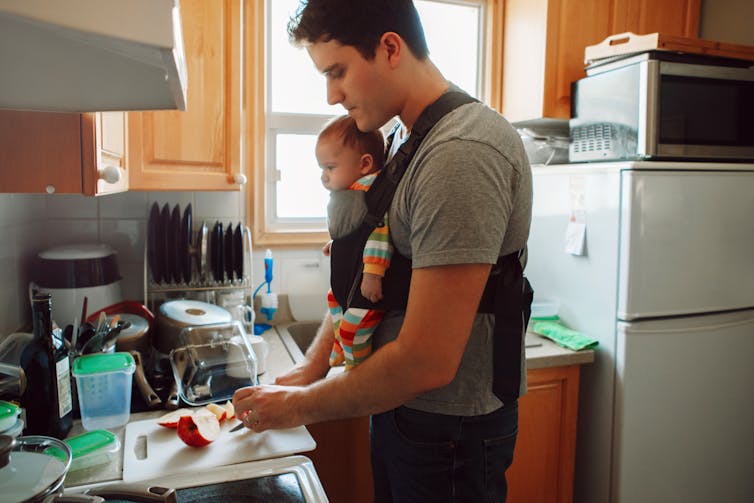
Man cooking with baby in sling
Time with an involved father benefits children. Anna Kraynova/Shutterstock

Dads’ time at home with their children can help establish a bond between father and child. Research has found that a father who spends time with his young baby, and does activities with them, is more likely to be an engaged parent as his child gets older. There are also potential improved developmental outcomes for children. These benefits are increased the more time fathers are able to spend with their children.

Wider benefits

Mothers also benefit from having their partner off work and with them, particularly during the first weeks and months after giving birth.

I collected diary entries and held interviews with new parents about their parental leave. The difference that fathers taking extended paternity leave at the time of birth made to mothers was palpable. All these mothers reported a smoother and happier transition to parenthood.

On the other hand, mothers whose partners returned to work at two weeks or earlier reported significant challenges. Some even said they felt “traumatised” when the paternity leave ended. “It’s harrowing when the father goes back to work,” one mother told me. “I was, like, hysterical from lack of sleep and not being able to breastfeed.”

As more and more births are via caesarean section – an estimated 31% in the UK – it is even more important that mothers have a partner present at this time. Mothers who have a c-section have limited mobility and will generally require greater levels of support for longer than mothers who have a vaginal birth.

Beyond the family, fathers’ participation in leave is also good for gender equality. Fathers who take leave are more likely to share parenting tasks later and demonstrate more understanding around what parenthood involves.

These benefits are magnified when fathers take leave alone – whether through shared parental leave taken alone in the UK or, as in some European countries, an extended “daddy’s quota” of leave taken after the mother returns to work.

This can also have knock-on benefits for gender equality in paid work. The gender pay gap in the UK is 7% – women working full-time earn 7% less per hour than men. As documented by Nobel prize winner Claudia Goldin, the biggest factor in the gender pay gap is the transition to parenthood. A greater uptake of leave by fathers can shift the established roles of mother-as-carer and father-as-breadwinner.

Besides all these documented benefits of paternity leave, perhaps one of the most potent is that fathers too are part of a family. To deny them independent and well-supported access to parental leave, at least in a comparable way to mothers, is simply unjust. They shouldn’t miss out on this valuable time with their children – and nor should children miss out on time with their fathers.

About the Author

Katherine Twamley is Professor of Sociology, UCL and author of the open access book Caring is Sharing? Couples navigating parental leave at the transition to parenthood

This article is republished from The Conversation under a Creative Commons license. Read the original article.
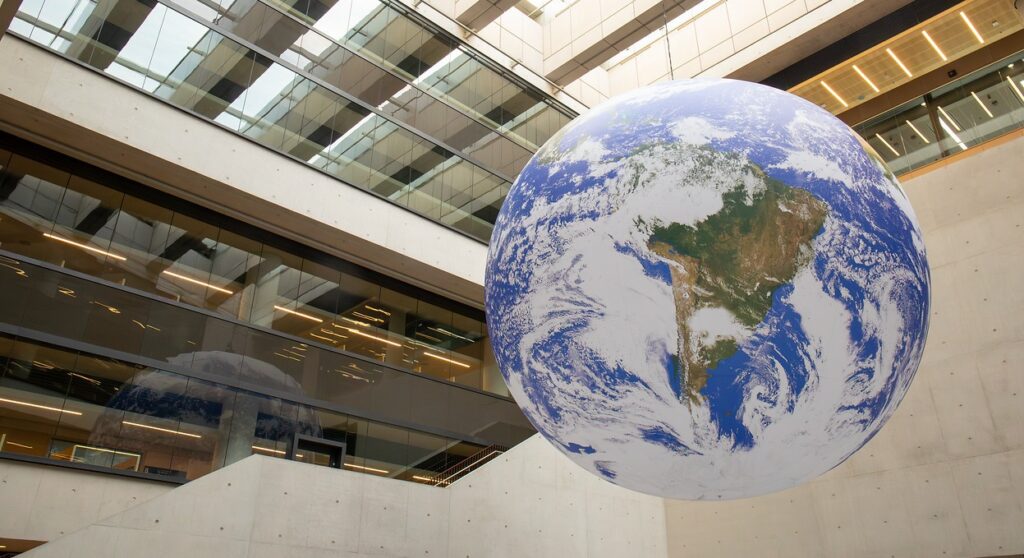
UCL Press celebrates 10 years of award-winning open access publishing

This June, UCL Press marks a decade of open access publishing and over 19.5 million global downloads.

Launched in June 2015 as part of UCL’s commitment to open research and scholarship, UCL Press provides scholars with the opportunity to publish their monographs, journal articles and textbooks via open access, meaning that they are free to download online anywhere in the world. 

UCL Press broke the mould as the UK’s first fully open access university press and over the last ten years has published over 380 scholarly monographs, 11 textbooks and has built a portfolio of 15 scholarly journals.  

The pioneering Open Access (OA) programme spans many of the major academic disciplines, from history to philosophy and the sciences to anthropology.  

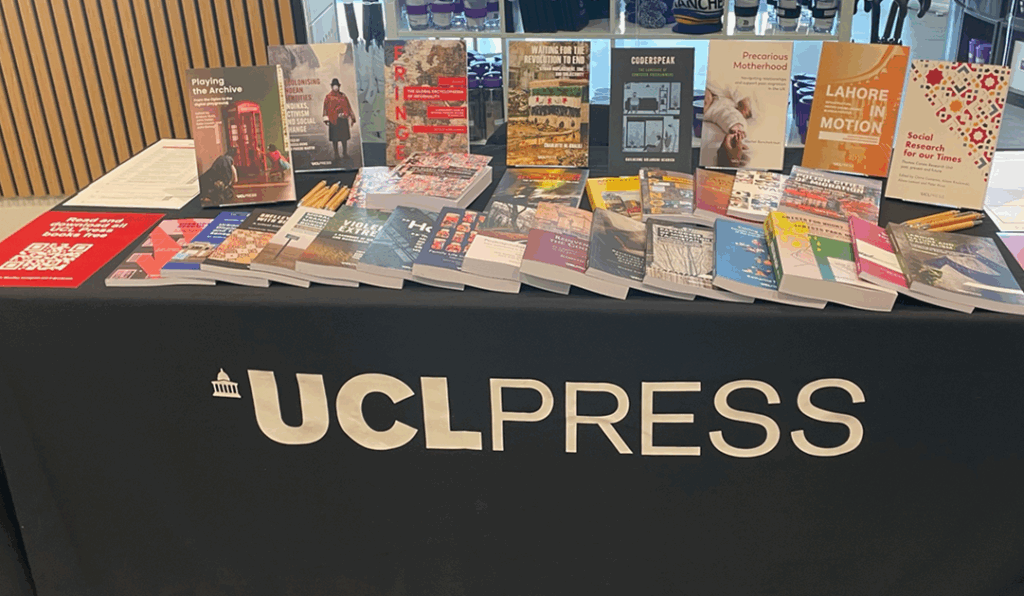
Montage of UCL Press publications

With global collaboration in mind, UCL Press publishes not only UCL authors but also independent scholars and authors from other academic institutions around the world.  

UCL Press’s global reach extends to 242 countries and territories, with the United States topping the list of countries with the highest number of downloads, followed by the UK, then India.  

The most downloaded title in the UCL Press list continues to be How the World Changed Social Media by UCL Professor of Anthropology Daniel Miller and a collective of eight other global anthropologists. The title has been downloaded over 930,000 times in over 227 countries and territories since its publication in 2016. 

More recently, UCL Press has also established an open access textbooks programme to provide free, high-quality digital textbooks for students.  

Books published by UCL Press have won critical acclaim, including Geographies of Solar Energy Transitions edited by Siddharth Sareen and Abigail Martin, which won the American Energy Society’s Award for Best Edited Book. A Contemporary Archaeology of London’s Mega Events by Jonathan Gardner also won the London Archaeological Prize for the best book about London archaeology. 

Marking the occasion, Dr Paul Ayris, Pro-Vice-Provost (Library, Culture, Collections & Open Science) and Chief Executive of UCL Press, said: “From the start, UCL Press was about breaking down barriers. Traditional academic publishing often locks knowledge behind paywalls, with monographs costing academic institutions and the public money and selling just a few hundred copies. 

‘UCL Press flipped this model of publishing on its head. It was the UK’s first fully open access university press, making OA publishing more accessible to both early career researchers and experienced scholars alike.’ – Paul Ayris

As part of the university’s commitment to an open science future, UCL Press receives funding from UCL to support its open access publishing model and deliver global impact for its publications.  

A celebratory 10th Anniversary panel discussion, featuring speakers from the worlds of universities and publishing will take place on Tuesday 10th June 2025. 

If you are interested in publishing your book, journal or journal article with UCL Press, please visit ‘Publish with Us’ on: www.uclpress.co.uk 

Bill Hillier’s legacy, and the future of Space Syntax – notes from the Space Syntax book launch

Space Syntax, a collection of the late Bill Hillier’s work that reflects the progression of his influential ideas across his career, published in April. In a post that originally appeared on Mapping Urban Form and Society, Professor Laura Vaughan reflects on Bill Hiller’s legacy, the future of Space Syntax, and a launch event that took place in May.

It’s hard to believe that it’s three years since I first wrote to leading space syntax scholars John Peponis (Georgia Tech) and Ruth Conroy Dalton (Northumbria) with the idea for an edited volume of Bill’s key papers. We had the mad notion that it would be quite a simple process. In some ways it was: we selected papers that weren’t available elsewhere for which Hillier was first author, choosing pieces that entailed significant theoretical and methodological insights, with a bias to the earlier articles and book chapters that established the foundations of the discipline of space syntax.

Edited by me, Laura Vaughan, John Peponis, and Ruth Conroy Dalton, the book offers access to essential papers on the origins and development of the discipline of space syntax, ranging from pieces on architecture as a professional and research discipline, through to later articles that present a theory of the spatial structure of the city and its social functions. By bringing together writing from across Bill Hillier’s career span of half a century, with specially commissioned introductions by a wide range of international experts in the field, we aimed to contextualise his key ideas.

The selection of contributors was relatively straightforward, as we did so on the basis that they had written something relevant about the piece in the past and/or were from adjacent fields that we felt that could add an interesting angle to Bill’s ideas. Inevitably, this consequently led to many space syntax theorists not being included.

The main themes in Bill’s work were summarised for the book’s introductory chapter, recontextualising their historical development in an extended piece written by the three editors led by John Peponis. Both he and Ruth checked, and revised where necessary, formulae and graphs that had been corrupted in earlier publications.

Page from one of Bill Hillier’s numerous notebooks, courtesy of Sheila Hillier

All the pieces were reformatted from the original, frequently poor quality photocopied papers. This involved, as well as rekeying the text of many of the earlier pieces, checking and revision of references, with additional editorial endnotes. The book also includes a list of published works by Bill Hillier. The illustrations were redrawn by a team led by Ruth Conroy Dalton, working with Emad Alyedreessy, while Nick (Sheep) Dalton, author of the original space syntax suite of software, wrote the code to generate new syntax graphs in several instances. An essential index to the book was prepared by Garyfalia (Falli) Palaiologou.

Photos from the launch courtesy of Jonathan Rock Rokem. Left-hand image shows John Peponis, Laura Vaughan, and Ruth Conroy Dalton; Right-hand image shows Ricky Burdett, Kerstin Sailer, Michal Gath-Morad, and Vinicius (Vini) Netto

The launch held a panel discussion to reflect on Hillier’s legacy and explore future directions for the field of space syntax, with prompting questions from the event’s chair, Kimon Krenz. Linked to below are the brief papers prepared by John Peponis and Ruth Conroy Dalton, as well as those of several of the panellists.

Introduction to Bill Hillierby John Peponis

Where Might Bill Hillier Have Gone Next? Reflections on the Future Directions of Space Syntaxby Ruth Conroy Dalton

Charting the Adjacent Possible: Future explorations for Space Syntax as a socio-spatial theory, by Vinicius M. Netto

What innovative cognitive frameworks or methods could revolutionise the way we understand human interaction with space? by Michal Gath-Morad, University of Cambridge

Can space syntax better accommodate the social, institutional, and behavioural nuances that define how people truly use and experience space? by Kerstin Sailer


About the author

Professor Laura Vaughan is Director of the Space Syntax Laboratory at the Bartlett School of Architecture, University College London, where she is Professor of Urban Form and Society. Following an architectural design degree at the Bezalel Academy of Art and Design, Jerusalem, Israel, she studied for an MSc and PhD at the Lab. After several years working with Bill Hillier at Space Syntax Limited, she returned to UCL in 2001 as lecturer and Programme Director, MSc Advanced Architectural Studies (now MSc/MRes Space Syntax). She has been the Lab’s Director since 2014. In addition to co-editing Space Syntax, she also edited Suburban Urbanities (UCL Press, 2016) and is author of Mapping Society (UCL Press, 2018).

Read her blog to find out more about her work: Mapping Urban Form and Society.

Making content accessible

Black-framed eyeglasses on top of photographs and papers with a blurred background.

The European European Accessibility Act (EAA) comes into force in June 2025. Angela Thompson, UCL Press Production Editor, writes about a recent training course that she attended, and the recent changes that UCL Press has implemented to make content more accessible.
I recently attended a training course on Accessibility and Publishing, run on behalf of the IPG (Independent Publishers Guild) by Simon Mellins, a publishing industry accessibility expert.  With the European Accessibility Act (EAA) coming into force in June 2025, the course was well attended by a wide variety of publishers keen to ensure they understood the implications of the Act and how to ensure their digital content meets the requirements outlined by this important legislation.   

In terms of how the EAA impacts the publishing sector, the Act requires that various types of products and services, including e-books and e-readers, are accessible to all. It aims to remove barriers to content, and to ensure that users with disabilities are not disadvantaged.  Importantly, it gives readers the power to demand that publishers make materials accessible.   
The course gave clarity to what the EAA – and accessibility in publishing more generally – means in practice. That is, content needs to: work well with assistive technology; have a flexible and dynamic layout; provide alternative renditions of content (for example, alternative text descriptions for images); and have accessible metadata and e-commerce. 
The course was usefully structured around these key areas, with a detailed session on drawing up alternative text for images. The training concluded with a session focused on strategy and how to implement the EAA requirements on a practical level across an entire publishing programme. 

Whilst meeting the requirements of the EAA is not without its challenges, much of the training reinforced and clarified our approach at UCL Press, rather than presenting any surprises or concerns. For example, we are now including alternative text as standard for all new titles, and have a programme underway to draw this up for our backlist. We have accessibility guidelines in place for our authors to follow, and we are addressing our metadata to ensure accessible features of a publication are communicated through the supply chain.  Other accessibility requirements, such the need for content to be easy to navigate, including clear headings and a logical structure, should be at the heart of all good publishing, not just in relation to addressing the EAA. However, the discussion on this certainly helped focus the mind on the importance of well-organised, well-written content for all readers. 

As well as addressing challenges, the course focused on opportunities; not least that bringing content accessibility to the forefront of what we do ensures wider dissemination and new readerships, but also that this ‘semantically rich’ content is ideally placed to meet the requirements of new technologies, future platform changes, and of course any future legislative changes.  

The key takeaway is not to panic, and to draw up a realistic plan that works towards making all content accessible, and to have a clear and timely procedure in place for dealing with accessibility requests as they arise. We will certainly ensure we have all this in place at UCL Press in readiness for the EAA. 

New webinar: Authorship in the era of AI

Join a free online discussion on how we think about ‘authorship’ for AI-assisted writing, where the boundaries might lie, and what the future might look like.

📆 June 6th 2025

🕐 2 – 3:30pm BST

Sign up: https://www.eventbrite.co.uk/e/authorship-in-the-era-of-ai-tickets-1323581220059

With the rapid growth of AI tools over the past three years, there has been a corresponding rise in the number of academics and students using them in their own writing. While it is generally agreed that we still expect people to be the “authors” of their work, deciding how to interpret that is often a nuanced and subjective decision by the writer.

This panel discussion will look at how we think about ‘authorship’ for AI-assisted writing – what are these tools used for in different contexts? Where might readers and publishers draw their own lines as to what is still someone’s own work? And how might we see this develop over time?

Speakers:

  • Dhara Snowden, Textbook publisher at UCL Press
  • Ayanna Prevatt-Goldstein, Head of the UCL Academic Communications Centre
  • Rachel Safer, Executive Publisher for Ethics & Integrity at OUP and a member of the Committee on Publication Ethics

This session is open to all.

About the Festival of Open Science and Scholarship

The Festival of Open Science and Scholarship is organised by teams at UCL, LSE and the Francis Crick Institute. Running from 2-6 June the festival includes a combination of online, hybrid, and in-person events across a range of topics including: 

  • Special collections and co-production
  • AI and its impact on authorship
  • Open Research in the Age of Populism
  • Scaling up Diamond OA journals 
  • Reproducibility and qualitative research
  • Navigating data sharing with personal data

The full programme and booking is available via the Open@UCL blog.

What are photographs ‘doing’ in museums?

Digital Camera with lens

What are photographs ‘doing’ in museums? Like the x-ray permeating objects to reveal internal structures, photographs permeate museum practices at all levels – display, collections management, conservation, retail, publicity and exhibition publications, for instance. Photographs inhabit museums in huge numbers. However, these photographs are rarely part of formally accessioned collections: despite their epistemic and historical presence, they are active yet invisible, there but not there. 

Museums are shaped and defined through photographic practices that constitute and reproduce values, hierarchies and knowledge systems, generally with little cognisance of the power of these practices. Such images and their uses are, as Crane has described them, ‘a lowly sort of thing’ that ‘appears or hides in many guises’. Consequently, this book is about the work of the photographs that are not part of a museum’s formal collection, although they might once have been, or might become so. It addresses a range of institutional conditions which exceeds ‘the collection’ as it is officially recognised.

Whether one is considering ‘the collections’ or the material accruals around them, museums are centres of calculation in Bruno Latour’s sense, where accumulated objects, networks, proximities and values become knowledge through an institution’s procedures and devices. Photographs are the unconsidered heart of these processes, as they accumulate and circulate knowledge, even more so in an age when digitally available photographs of objects are at the front line of ‘accessibility’. While it has been argued that museums have, for some time, been post-photographic in their increasing dependence on networked, digital and multimedia realms, it remains that beneath these developments of the last three decades or so, photographs as imaging practices remain central. Since the nineteenth century, photographs have widened the reach of what museums can do and how they can function. They form both the background and the spine of museum practice, from record keeping to questions of decolonisation, from archival accrual to retail source, to the degree that it has been impossible to think about museum function and praxis without encountering photographs.

This mass of photographs can be said to form an ‘ecosystem’: a finely balanced network of dependencies and connective tissue which create and underpin values, hierarchies and knowledge systems and which are present in the museum in dispersed multiple, folded and overlapping layers. The various sites of photographic activity, from the studio through collections management to exhibitions, are nodes in the ecosystem which have their own micro-cultures that mutually inform and conflict. They form massive and shifting bodies of photographic utility and practice which translate objects into certain kinds of things and displays into certain kinds of spaces. Photographs shape the texture and fabric of both internal professional procedures of museums and their external public face. 

They are, in sum, a key organising principle of museums and markers of its ’rhetoric of value’.


About the Authors

This is an excerpt from the open access book What Photographs Do, edited by Elizabeth Edwards and Ella Ravilious and published by UCL Press/ V&A.

Elizabeth Edwards is Professor Emerita of Photographic History at De Montfort University, Leicester, and also Honorary Professor in the Department of Anthropology at UCL. 

Ella Ravilious is Curator: Architecture and Design in the Art, Architecture, Photography and Design Department at the V&A.  

New open access books published in April 2025

Another busy month for the UCL Press books team, with 5 brilliant new open access titles spanning everything from architecture to COVID-19, classics and race to children’s play.

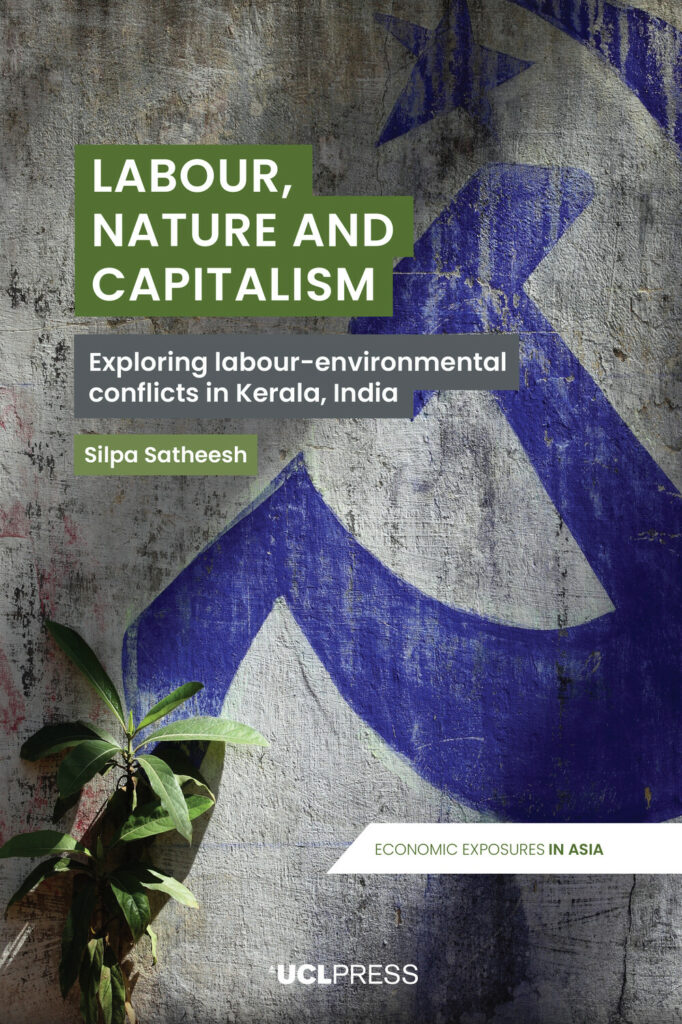
The first book published was Labour, Nature and Capitalism: Exploring labour-environmental conflicts in Kerala, India, ehich traces how the alliance between labour and capital manifests in the form of conflicts between organised trade unions and a local environmental movement in the context of the much-acclaimed Kerala model of development. It explores the history of the area’s local industrialisation, the presence of varied economic interests and exposes the barriers to forming solidarity networks among the working classes.

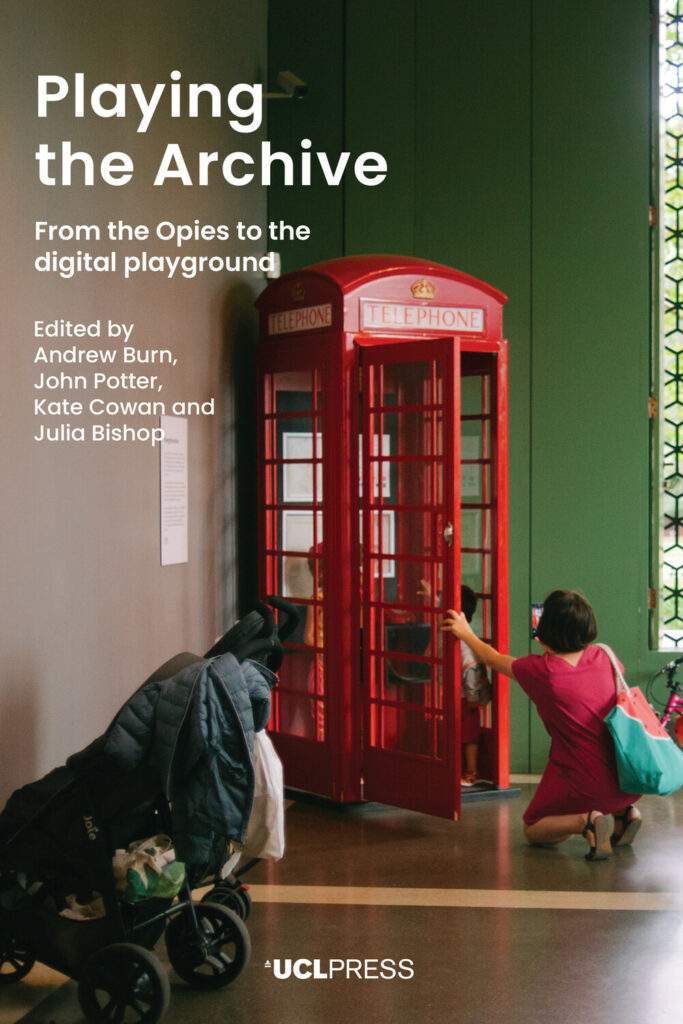
The fascinating Playing the Archive: From the Opies to the digital playground. This open access book investigates the vast collection of play experiences accumulated by Iona and Peter Opie in the 1950s and 1960s. It shares new stories and games gathered from today’s children, and compares the accounts told at these two points in time. Children are seen as creative, agentive and engaged participants in their play cultures.

Our third publication was Classics and Race: A historical reader. This important book provides scholars and students with an exploratory intellectual history of the various and complex relationships between Classics and racist and anti-racist thought-systems and politics.

The latest volume of the Culture and Health series was next up. Covid’s Chronicities: From urgency to stasis in a pandemic era is a fascinating account of the shifts that have occurred in the face of the pandemic, the state and community responses to it, its continuing toll on health services, economies, and communities and its compounding effects on people’s health, lives and livelihoods.

The final book to publish in April was Space Syntax: Selected papers by Bill Hillier, which provides a canon of works that reflect the progression of Hillier’s ideas from the early publications of the 1970s to his most recent work, published before his death in 2019.

As always, stay safe! We’ll see you next month!

BSA 2025 reading list

To mark the BSA Conference 2025 in Manchester, we’ve put together a reading list of essential open access books in Sociology from UCL Press.

If you’re attending, Pat Gordon-Smith, our commissioning editor of sociology, will be there to talk you through our extensive list of titles, and answer questions about how to publish your next open access book with UCL Press.

Join the UCL Press mailing list to find out more about the latest open access titles, or visit our stand!

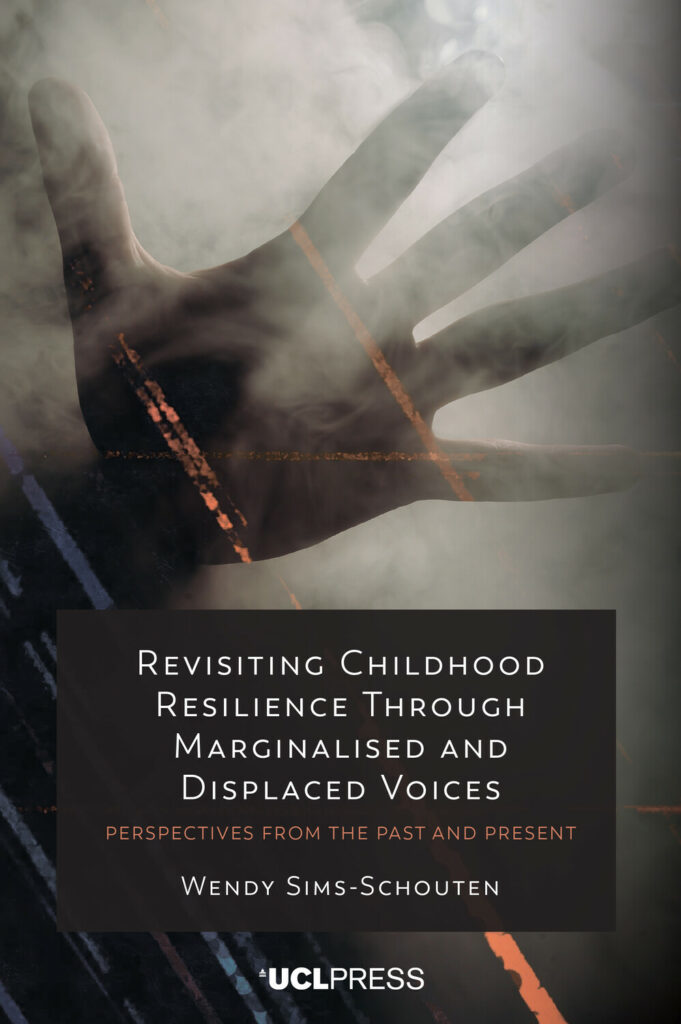
The image displays the cover of the book ‘Revisiting Childhood Resilience Through Marginalised and Displaced Voices: Perspectives from the Past and Present’, authored by Wendy Sims-Schouten. The cover features a blurred background with dark tones and light streaks, with a translucent silhouette of an outstretched hand reaching towards the viewer. The title is in white text, and the UCL Press logo is at the bottom.
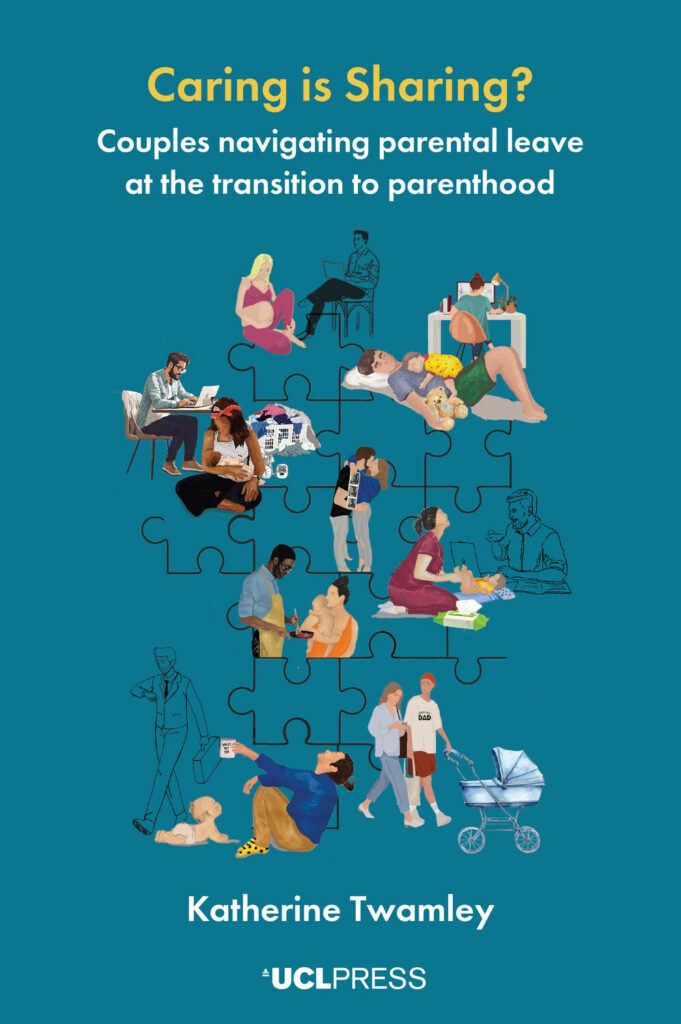
The image displays the cover of the book ‘Caring is Sharing? Couples Navigating Parenthood’, authored by Katherine Twamley. The cover features a teal background with illustrations of couples performing various parenting and household tasks, arranged like puzzle pieces. The title is in white and yellow text, and the UCL Press logo is at the bottom.

New open access books published in March 2025

Books on a wooden bookshelf in UCL library.

After a dark, wet Winter, Spring has finally sprung. We’ve had a very busy month on the book front, with a bumper crop of seven new open access titles.

The first title to publish in March, Reading Randomised Controlled Trials investigates the complexities of conducting randomised controlled trials in the field of education. The Flexible Phonics trial is not only an important experiment in improving children’s literacy, but a case study in which the methodology of single randomised controlled trials in education can be considered.

The intriguing William Lawrence and the Organ of Mind explores the historical origins and ideological valence of the conceptualisation of thought and mind as functions of the brain in early nineteenth-century Britain.

Precarious Motherhood is an important ethnography that explores the experiences of racially minoritised mothers who have insecure immigration status and are living with financial hardship in London. It goes beyond the mother-child relationship to consider the impact on mothers’ couple relationships, friendships, adult kin relationships and faith-based networks.

Moving between economic history and the history of medicine, Between Feast and Famine is a comparative history of nutrition across the diverse spaces that make up modern Ghana. At the heart of this story is an analysis of how colonisation and capitalism variously affected the lives of women and children since the end of the nineteenth century.

Ethnographic museums have come under increasing scrutiny. Now is a good time to explore whether new developments in display and cultural politics provide a viable future for ethnographic museums. Authors in Reframing the Ethnographic Museum grapple with the new complexities facing them as curators in the contemporary world.

An Anthropology of Architectural Transformation is a fascinating ethnographic investigation of everyday life in a Romanian apartment block. It provides a unique window into how inhabitants, through everyday creative engagements with their apartments, come to terms with the uncertainties of a rapidly changing society. If you’re interested in an early ‘Easter egg’ from the author, there’s an absorbing on the ‘Resources’ tab of the book’s product page.

A companion to 2019’s Fundamentals of Galaxy Dynamics, Formation and Evolution, Fundamentals of Dark Matter, this open access textbook focuses on pedagogy that guides students through the facts regarding dark matter. The material can be used as the main textbook for a dedicated module on dark matter and to support a general course on extragalactic astrophysics and cosmology.

We’ll be back again next month with a round up of the very best open access books. As always, stay safe!

Five years since COVID: Notes from the USA

Logo of FACT-COVID: FAMILIES & COMMUNITY IN THE TIME OF COVID-19 A Study Investigating Family Life under Covid 19

Last month marked five years since the WHO declared the COVID-19 worldwide pandemic. In commemoration of this moment, the Marjorie Elaine, Lu Liu and Sophia L. Ángeles look back at what has changed and what has remained the same in the USA since the original research for Family Life in the time of COVID was undertaken.

A lot of things have changed in the US in recent months. Looking back, we see roots of the current sociopolitical upheaval in the COVID-19 pandemic. The U.S. presents an interesting contrast to the scenario that Maria Dobryakova describes in Russia. In the U.S., the populace did not unite against the danger of the virus. Instead, there was a major split between those who complied with and those who rejected public health advice to shelter at home, wear masks, and get vaccinated. And now, five years later, the newly appointed head of the U.S. Department of Health and Human Services, Robert F. Kennedy, Jr. is a person well known for his skepticism about vaccines, and a leading voice for the “anti-vaxxer” movement, as people who are against mandated vaccinations are known. 

As Dobryakova notes, crises illuminate the powerful social construction of reality, including through the narrated memories we create about them. Dobryoakova suggests that Russians remember cozy days at home with family and friends, with an “undertone of togetherness.” In the US, there is little such public nostalgia. Instead, the country seems to be trying to leave the pandemic behind, to erase a period of divisiveness and confusion, and return to an elusive “normal.”  And yet, the world we have returned to is not normal at all. We are more divided and confused than ever. 

We would do well, we think, to reflect on what we could have learned from the COVID-19 pandemic. The diaries that we gathered from 35 U.S. families are replete with wisdom and insights into all kinds of learning that happened in homes and communities during that time: positive lessons about compassion, kindness, cooperation, protection of the most vulnerable, working together in the face of great uncertainty, reinvigorating intergenerational and transnational connections (using technology as a tool in creative ways), and centering wellness activities such as creative pursuits and being in nature. 

There are also lessons we could learn about how things could have been done differently, or better, to mitigate against the greatest inequities (in which “essential workers” were left to bear the brunt of illnesses and deaths, and children in under-resourced homes and communities were left to flounder without sufficient educational supports). There are powerful lessons that we could have learned, and maybe still can, through careful reflection on what we all thought and experienced as we moved through that time. Our international consortium has the data to facilitate such reflection; the data we gathered may be even more powerful when analyzed at a distance. The U.S. team is working on a new book, tentatively titled Crisis Crossroads: What we could have learned from the COVID-19 pandemic (and maybe still can). We hope we can contribute to collective remembering of all that happened during that time, honouring the voices and perspectives of the people in our study


About this post

This post originally appeared on https://fact-covid.wixsite.com/study/post/five-years-on-notes-from-the-usa

Sign up to our newsletter

Don't miss out!
Subscribe to the UCL Press newsletter for the latest open access books,
journal CfPs, news and views from our authors and much more!