Constructions of Progressive Learning
An interdisciplinary history of Dartington Hall School
Kieran Mahon (Author)
Dartington Hall School in Devon, England (1926–87) was one of the most celebrated showpieces of progressive education. Founded within a wider project of social and rural reconstruction, it gained international attention for its commitment to freedom, creativity and child centred learning. Eminent thinkers including Bertrand Russell and Aldous Huxley sent their children to Dartington, while visitors travelled from near and far to observe its distinctive ethos. In its early decades, the school developed some of the most specialised educational architecture in the country, collaborating with notable architects such as Oswald P. Milne and William Lescaze.
Constructions of Progressive Learning tells the story of the institution through its architecture – a perspective largely overlooked in histories of progressive education. The book demonstrates how Dartington’s learning environments both shaped and reflected changing ideas about the body, gender, democracy, pedagogy and class. It argues that the architecture of progressive education was not fixed, but evolved in response to shifts in leadership, policy and educational philosophy. Drawing on Dartington’s innovations in performance writing, the book weaves archival research, oral history and site writing practices into a richly layered narrative. The method brings marginalised voices of forgotten staff and students into dialogue with more dominant accounts of headmasters and architects. In doing so, the book offers a timely reflection on how educational environments might centre wellbeing, relationships and lived experience, rather than performance metrics alone.
List of figures
Dramatis personae
1 Progressive education, architecture and Dartington
2 ‘Outline of an educational experiment’
3 The missing case of C. Winifred Harley
4 Reconstructing the living society
5 In pursuit of modernism
6 Pragmatic progressivism
7 Radicalism returns
8 Useful work, utopian thinking
Interviewee biographies
Acknowledgements
Bibliography
Index
DOI: 10.14324/111.9781806552054
Number of illustrations: 77
Publication date: 01 January 2027
EPUB ISBN: 9781806552061
Kieran Mahon (Author) 
Dr Kieran Mahon is Senior Lecturer at University of the Arts London. As an educator, researcher and architectural historian, he investigates the relationships between spatial design, critical theory and collaborative pedagogy. Mahon’s research examines how learning environments are designed, interpreted and experienced, drawing on critical, historical and practice-based approaches to the built environment. His work has been published in edited volumes and academic journals, contributing to debates on spatial practice, architectural history, educational theory and creative research methods.

How Alex Bloom Built Radical Democratic Secondary Education in Post-war London
Michael Fielding, Mark Erickson,
01 September 2026
Creating a Framework for Developing Sessional Teachers in Higher Education
Neil Sutherland, Alex Standen,
01 August 2026
Bringing Powerful Knowledge into Classrooms
Mark Hardman, Marie Nilsberth, Mikko Puustinen,
22 July 2026

ABC Learning Design
Clive Young, Nataša Perović, Leo Havemann, Karen Shackleford-Cesare,
14 April 2026




Reading Randomised Controlled Trials
Robert Savage, Amy Fox, Anneka Dawson, Helen Gray, Clare Huxley,
03 March 2025
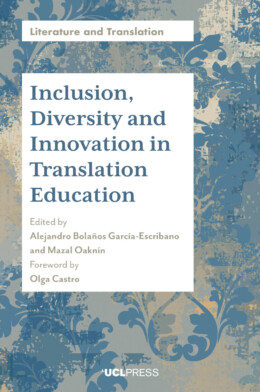
Inclusion, Diversity and Innovation in Translation Education
Alejandro Bolaños García-Escribano, Mazal Oaknín, Olga Castro,
01 October 2024
Constructions of Progressive Learning
An interdisciplinary history of Dartington Hall School
Dartington Hall School in Devon, England (1926–87) was one of the most celebrated showpieces of progressive education. Founded within a wider project of social and rural reconstruction, it gained international attention for its commitment to freedom, creativity and child centred learning. Eminent thinkers including Bertrand Russell and Aldous Huxley sent their children to Dartington, while visitors travelled from near and far to observe its distinctive ethos. In its early decades, the school developed some of the most specialised educational architecture in the country, collaborating with notable architects such as Oswald P. Milne and William Lescaze.
Constructions of Progressive Learning tells the story of the institution through its architecture – a perspective largely overlooked in histories of progressive education. The book demonstrates how Dartington’s learning environments both shaped and reflected changing ideas about the body, gender, democracy, pedagogy and class. It argues that the architecture of progressive education was not fixed, but evolved in response to shifts in leadership, policy and educational philosophy. Drawing on Dartington’s innovations in performance writing, the book weaves archival research, oral history and site writing practices into a richly layered narrative. The method brings marginalised voices of forgotten staff and students into dialogue with more dominant accounts of headmasters and architects. In doing so, the book offers a timely reflection on how educational environments might centre wellbeing, relationships and lived experience, rather than performance metrics alone.