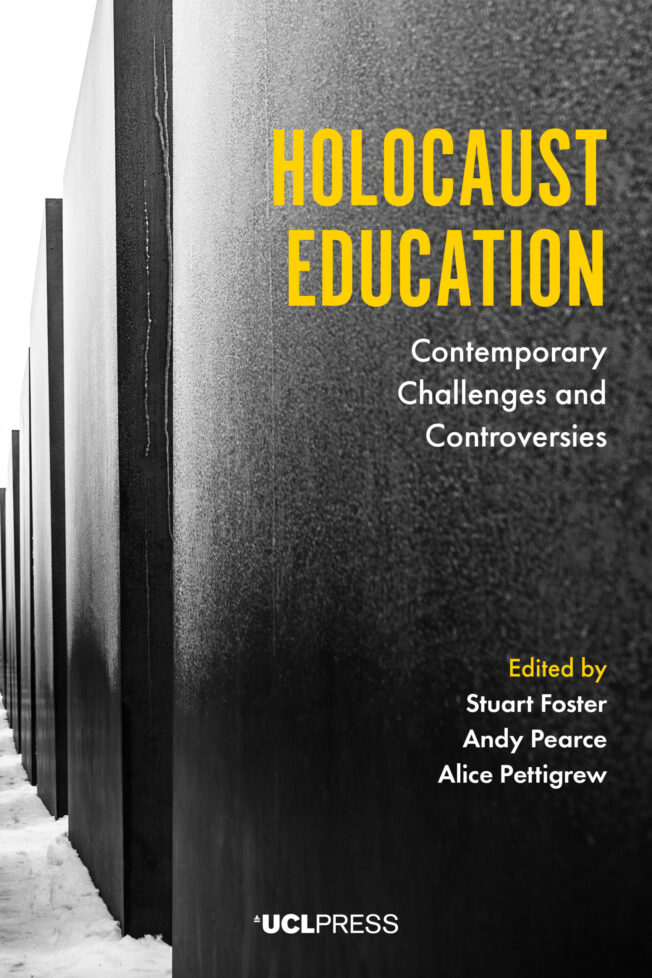

Holocaust Education
Contemporary challenges and controversies
Stuart Foster (Editor), Andy Pearce (Editor), Alice Pettigrew (Editor)
Teaching and learning about the Holocaust is central to school curriculums in many parts of the world. As a field for discourse and a body of practice, it is rich, multidimensional and innovative. But the history of the Holocaust is complex and challenging, and can render teaching it a complex and daunting area of work.
Drawing on landmark research into teaching practices and students’ knowledge in English secondary schools, Holocaust Education: Contemporary challenges and controversies provides important knowledge about and insights into classroom teaching and learning. It sheds light on key challenges in Holocaust education, including the impact of misconceptions and misinformation, the dilemmas of using atrocity images in the classroom, and teaching in ethnically diverse environments. Overviews of the most significant debates in Holocaust education provide wider context for the classroom evidence, and contribute to a book that will act as a guide through some of the most vexed areas of Holocaust pedagogy for teachers, teacher educators, researchers and policymakers.
Praise for Holocaust Education
‘This book will stimulate educators’ thinking about the challenges of teaching the Holocaust. …I would recommend [Stuart Foster’s] chapter [as] required reading for student history teachers, and teachers of the Holocaust. …Karayianni’s chapter on teaching about the Holocaust in the primary school provides empirical research in an under-researched area. …Lenga’s words of caution are accompanied by considered practical recommendations to support teachers in their duty of care to their pupils. These will be welcomed by educators of the Holocaust, Human Rights and Genocide alike.’
Educational Review
‘… A commanding exploration of the complex issues surrounding Holocaust education in the twentieth-century.’Holocaust Studies: A Journal of culture and History
Teaching and learning about the Holocaust is central to school curriculums in many parts of the world. As a field for discourse and a body of practice, it is rich, multidimensional and innovative. But the history of the Holocaust is complex and challenging, and can render teaching it a complex and daunting area of work.
Drawing on landmark research into teaching practices and students’ knowledge in English secondary schools, Holocaust Education: Contemporary challenges and controversies provides important knowledge about and insights into classroom teaching and learning. It sheds light on key challenges in Holocaust education, including the impact of misconceptions and misinformation, the dilemmas of using atrocity images in the classroom, and teaching in ethnically diverse environments. Overviews of the most significant debates in Holocaust education provide wider context for the classroom evidence, and contribute to a book that will act as a guide through some of the most vexed areas of Holocaust pedagogy for teachers, teacher educators, researchers and policymakers.
Related titles
Knowledge, Policy and Practice in Education and the Struggle for Social Justice
Andrew Brown, Emma Wisby,
01 April 2020
Ab Initio Language Teaching in British Higher Education
Ulrike Bavendiek, Silke Mentchen, Christian Mossmann, Dagmar Paulus,
01 December 2022
Brian Simon and the Struggle for Education
Gary McCulloch, Antonio F. Canales, Hsiao-Yuh Ku,
21 September 2023
Towards a Global Core Value System in Doctoral Education
Maresi Nerad, David Bogle, Ulrike Kohl, Conor O’Carroll, Christian Peters, Beate Scholz,
27 September 2022
Online and Distance Education for a Connected World
Linda Amrane-Cooper, David Baume, Stephen Brown, Stylianos Hatzipanagos, Philip Powell, Sarah Sherman, Alan Tait,
27 March 2023
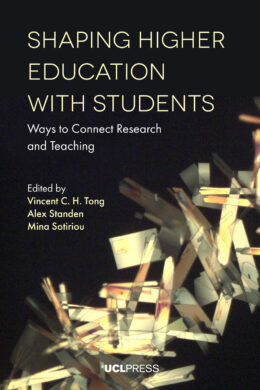
Shaping Higher Education with Students
Vincent C. H. Tong, Alex Standen, Mina Sotiriou,
06 March 2018
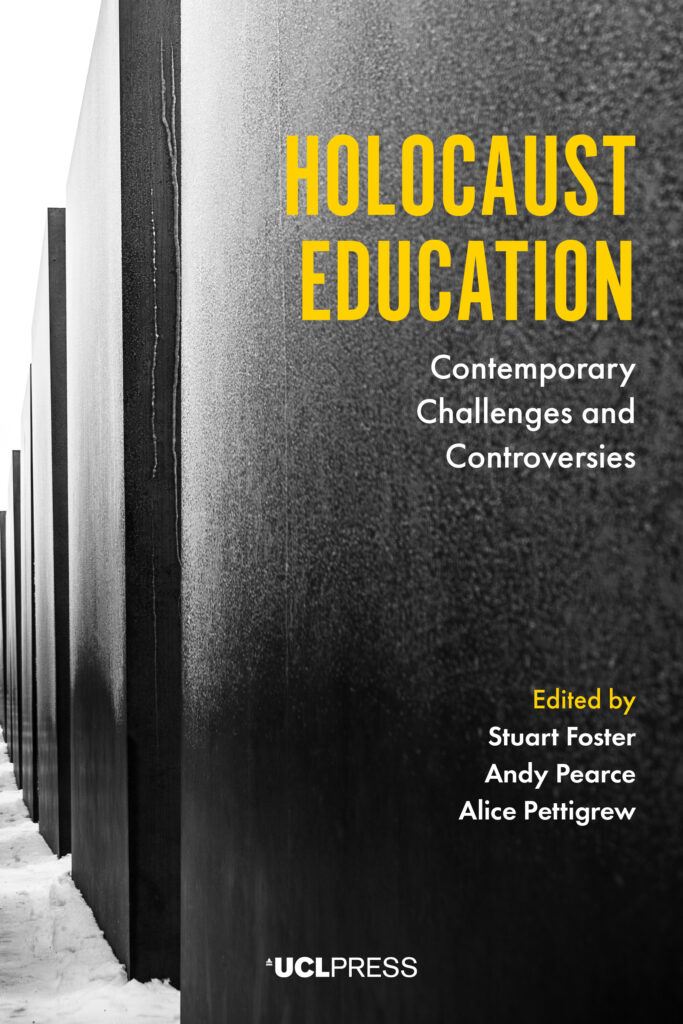
Holocaust Education
Contemporary challenges and controversies
Teaching and learning about the Holocaust is central to school curriculums in many parts of the world. As a field for discourse and a body of practice, it is rich, multidimensional and innovative. But the history of the Holocaust is complex and challenging, and can render teaching it a complex and daunting area of work.
Drawing on landmark research into teaching practices and students’ knowledge in English secondary schools, Holocaust Education: Contemporary challenges and controversies provides important knowledge about and insights into classroom teaching and learning. It sheds light on key challenges in Holocaust education, including the impact of misconceptions and misinformation, the dilemmas of using atrocity images in the classroom, and teaching in ethnically diverse environments. Overviews of the most significant debates in Holocaust education provide wider context for the classroom evidence, and contribute to a book that will act as a guide through some of the most vexed areas of Holocaust pedagogy for teachers, teacher educators, researchers and policymakers.
Praise for Holocaust Education
‘This book will stimulate educators’ thinking about the challenges of teaching the Holocaust. …I would recommend [Stuart Foster’s] chapter [as] required reading for student history teachers, and teachers of the Holocaust. …Karayianni’s chapter on teaching about the Holocaust in the primary school provides empirical research in an under-researched area. …Lenga’s words of caution are accompanied by considered practical recommendations to support teachers in their duty of care to their pupils. These will be welcomed by educators of the Holocaust, Human Rights and Genocide alike.’
Educational Review
‘… A commanding exploration of the complex issues surrounding Holocaust education in the twentieth-century.’Holocaust Studies: A Journal of culture and History
Teaching and learning about the Holocaust is central to school curriculums in many parts of the world. As a field for discourse and a body of practice, it is rich, multidimensional and innovative. But the history of the Holocaust is complex and challenging, and can render teaching it a complex and daunting area of work.
Drawing on landmark research into teaching practices and students’ knowledge in English secondary schools, Holocaust Education: Contemporary challenges and controversies provides important knowledge about and insights into classroom teaching and learning. It sheds light on key challenges in Holocaust education, including the impact of misconceptions and misinformation, the dilemmas of using atrocity images in the classroom, and teaching in ethnically diverse environments. Overviews of the most significant debates in Holocaust education provide wider context for the classroom evidence, and contribute to a book that will act as a guide through some of the most vexed areas of Holocaust pedagogy for teachers, teacher educators, researchers and policymakers.
‘… A commanding exploration of the complex issues surrounding Holocaust education in the twentieth-century.’
Holocaust Studies: A Journal of culture and History
‘This book will stimulate educators’ thinking about the challenges of teaching the Holocaust. …I would recommend [Stuart Foster’s] chapter [as] required reading for student history teachers, and teachers of the Holocaust. …Karayianni’s chapter on teaching about the Holocaust in the primary school provides empirical research in an under-researched area. …Lenga’s words of caution are accompanied by considered practical recommendations to support teachers in their duty of care to their pupils. These will be welcomed by educators of the Holocaust, Human Rights and Genocide alike.’
Educational Review