We are currently upgrading our shopping cart; in the interim all orders are being diverted to Waterstones. If you would like to redeem a promotional code, or are an author wanting to place an order, please email us.

Contact us

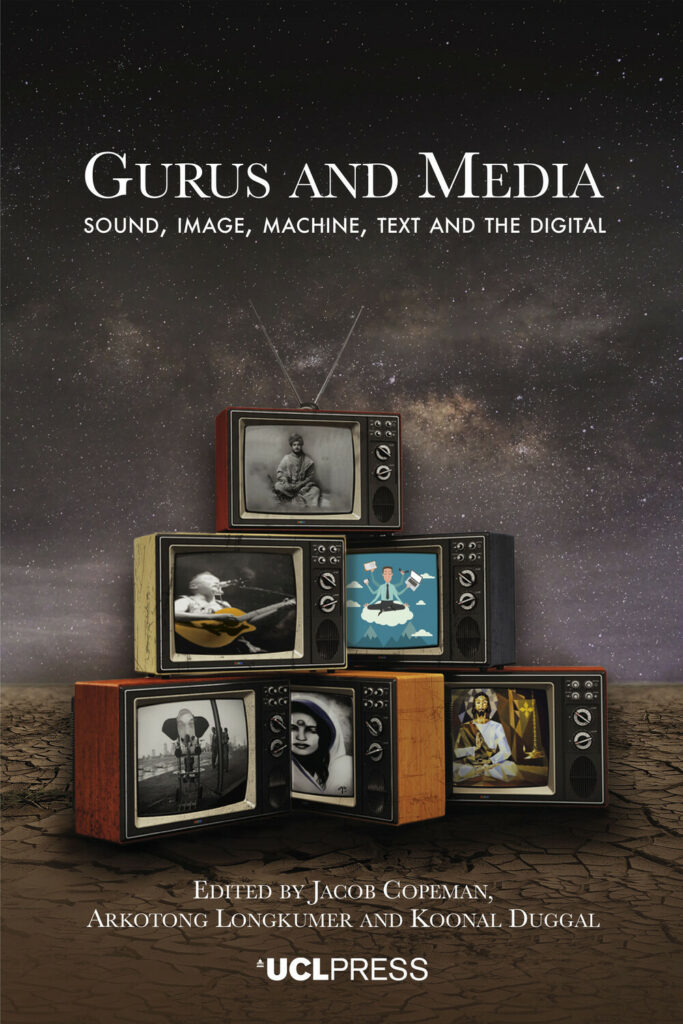
Gurus and Media

Gurus and Media is the first book dedicated to media and mediation in domains of public guruship and devotion. Illuminating the mediatisation of guruship and the guru-isation of media, it bridges the gap between scholarship on gurus and the disciplines of media and visual culture studies. It investigates guru iconographies in and across various time periods and also the distinctive ways in which diverse gurus engage with and inhabit different forms of media: statuary, games, print publications, photographs, portraiture, films, machines, social media, bodies, words, graffiti, dolls, sound, verse, tombs and more.

The book’s interdisciplinary chapters advance, both conceptually and ethnographically, our understanding of the function of media in the dramatic production of guruship, and reflect on the corporate branding of gurus and on mediated guruship as a series of aesthetic traps for the captivation of devotees and others. They show how different media can further enliven the complex plurality of guruship, for instance in instantiating notions of ‘absent-present’ guruship and demonstrating the mutual mediation of gurus, caste and Hindutva.

Throughout, the book foregrounds contested visions of the guru in the development of devotional publics and pluriform guruship across time and space. Thinking through the guru’s many media entanglements in a single place, the book contributes new insights to the study of South Asian religions and to the study of mediation more broadly.
The Global Smartphone

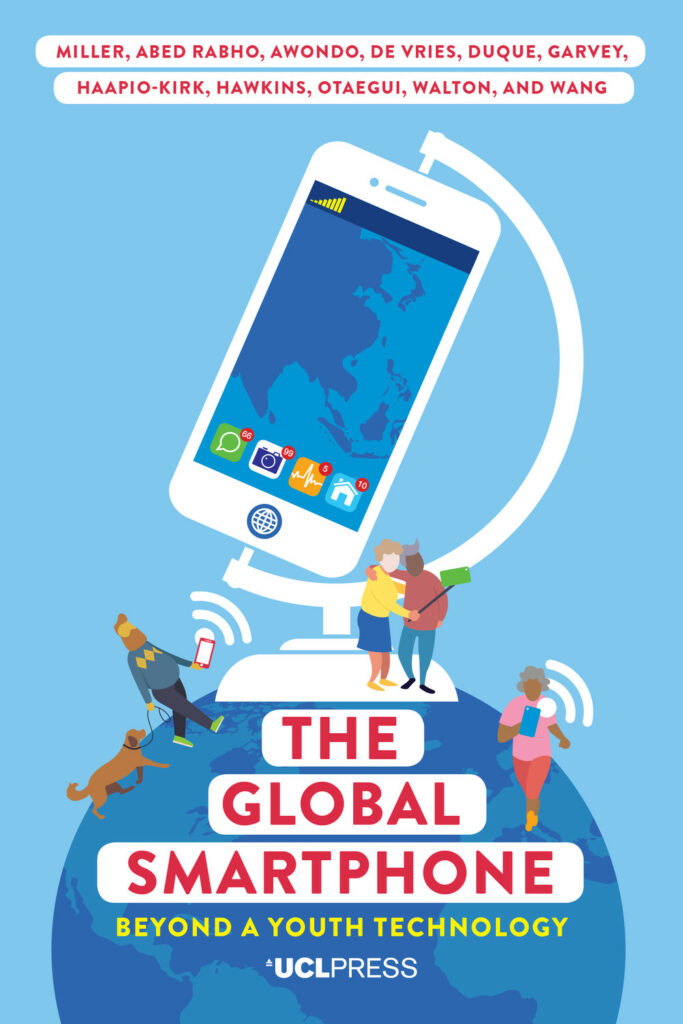
The smartphone is often literally right in front of our nose, so you would think we would know what it is. But do we? To find out, 11 anthropologists each spent 16 months living in communities in Africa, Asia, Europe and South America, focusing on the take up of smartphones by older people. Their research reveals that smartphones are technology for everyone, not just for the young.

The Global Smartphone presents a series of original perspectives deriving from this global and comparative research project. Smartphones have become as much a place within which we live as a device we use to provide ‘perpetual opportunism’, as they are always with us. The authors show how the smartphone is more than an ‘app device’ and explore differences between what people say about smartphones and how they use them.

The smartphone is unprecedented in the degree to which we can transform it. As a result, it quickly assimilates personal values. In order to comprehend it, we must take into consideration a range of national and cultural nuances, such as visual communication in China and Japan, mobile money in Cameroon and Uganda, and access to health information in Chile and Ireland – all alongside diverse trajectories of ageing in Al Quds, Brazil and Italy. Only then can we know what a smartphone is and understand its consequences for people’s lives around the world.

Global Sceptical Publics

Global Sceptical Publics is the first major study of the significance of different media for the (re)production of non-religious publics and publicity. While much work has documented how religious subjectivities are shaped by media, until now the crucial role of diverse media for producing and participating in religion-sceptical publics and debates has remained under-researched. With some chapters focusing on locations hitherto barely considered by scholarship on non-religion, the book places in comparative perspective how atheists, secularists and humanists engage with media – as means of communication and forming non-religious publics, but also on occasion as something to be resisted. Its conceptually rich interdisciplinary chapters thereby contribute important new insights to the growing field of non-religion studies and to scholarship on media and materiality more generally.

Decolonizing Science in Latin American Art

Projects that bring the ‘hard’ sciences into art are increasingly being exhibited in galleries and museums across the world. In a surge of publications on the subject, few focus on regions beyond Europe and the Anglophone world. Decolonizing Science in Latin American Art assembles a new corpus of art-science projects by Latin American artists, ranging from big-budget collaborations with NASA and MIT to homegrown experiments in artists’ kitchens.

While they draw on recent scientific research, these art projects also ‘decolonize’ science. If increasing knowledge of the natural world has often gone hand-in-hand with our objectification and exploitation of it, the artists studied here emphasize the subjectivity and intelligence of other species, staging new forms of collaboration and co-creativity beyond the human. They design technologies that work with organic processes to promote the health of ecosystems, and seek alternatives to the logics of extractivism and monoculture farming that have caused extensive ecological damage in Latin America. They develop do-it-yourself, open-source, commons-based practices for sharing creative and intellectual property. They establish critical dialogues between Western science and indigenous thought, reconnecting a disembedded, abstracted form of knowledge with the cultural, social, spiritual, and ethical spheres of experience from which it has often been excluded.

Decolonizing Science in Latin American Art interrogates how artistic practices may communicate, extend, supplement, and challenge scientific ideas. At the same time, it explores broader questions in the field of art, including the relationship between knowledge, care, and curation; nonhuman agency; art and utility; and changing approaches to participation. It also highlights important contributions by Latin American thinkers to themes of global significance, including the Anthropocene, climate change and environmental justice.

Como o Mundo Mudou as Mídias Sociais

Como o Mundo as Mídias Sociais é o primeiro livro da Why We Post, uma série de livros que investiga as descobertas de nove antropólogos, que passaram 15 meses vivendo em comunidades em diferentes partes do mundo, incluindo Brasil, Chile, China, Inglaterra, Índia, Itália, Trinidad e Turquia. Este livro oferece uma análise comparativa que resume os resultados da pesquisa e a análise do impacto das mídias sociais sobre política e gênero, educação e comércio. Qual é o resultado do aumento da ênfase na comunicação visual? Estamos nos tornando mais individualistas ou mais sociais? Por que as mídias sociais públicas são tão conservadoras? Por que a igualdade na internet não consegue anular a desigualdade? Como os memes se tornaram a polícia moral da internet?

Apoiado por uma introdução à estrutura acadêmica do projeto e aos termos teóricos que ajudam a analisar as descobertas, o livro argumenta que a única maneira de se apreciar e entender algo tão privado e ubíquo como as mídias sociais deve se dar a partir da imersão nas vidas das pessoas que ali postam. Só então podemos descobrir como diferentes indivíduos em todo o mundo já transformaram as mídias sociais de maneiras tão inesperadas e avaliar suas conseqüências.

Come il mondo ha cambiato i social media

Come il mondo ha cambiato i social media è il volume complessivo di comparazione dei risultati di un’ampia indagine etnografica, coordinata da Daniel Miller, dall’eloquente titolo “Why We Post”. Nove ricercatori, incluso Miller, hanno trascorso 15 mesi sul campo, in diversi paesi del mondo (Italia del sud, Turchia sudorientale, due siti in Cina, area rurale e area industriale, Trinidad, Inghilterra, India del sud, Cile settentrionale e Brasile) a osservare e studiare, con un approccio etnografico, i modi in cui le persone usano i social media. È un fatto indiscutibile che i social sono entrati nella nostra vita con prepotenza, in modo capillare, per certi aspetti invasivo. Con un linguaggio fluido, talvolta anche colloquiale, il lettore è condotto all’interno di un ambito che gli sembra di conoscere, se non altro perché ne siamo tutti, più o meno, utenti, scoprendo però quanto di valori, di comportamenti culturalmente codificati, di ‘polizia morale’ ci sia dentro i social media. L’approccio qui presentato parte infatti da un’idea un po’ diversa rispetto a quelle più diffuse, e avvalorata nel corso della ricerca: se è indubbio che i social media hanno cambiato il mondo, la questione più interessante riguarda però il modo in cui il mondo li ha cambiati.

American Cities in Post-Apocalyptic Science Fiction

Visions of the American city in post-apocalyptic ruin permeate literary and popular fiction, across print, visual, audio and digital media. American Cities in Post-Apocalyptic Science Fiction explores the prevalence of these representations in American culture, drawing from a wide range of primary and critical works from the early-twentieth century to today.

Beginning with science fiction in literary magazines, before taking in radio dramas, film, video games and expansive transmedia franchises, Robert Yeates argues that post-apocalyptic representations of the American city are uniquely suited for explorations of contemporary urban issues. Examining how the post-apocalyptic American city has been repeatedly adapted and repurposed to new and developing media over the last century, this book reveals that the content and form of such texts work together to create vivid and immersive fictional spaces in ways that would otherwise not be possible. Chapters present media-specific analyses of these texts, situating them within their historical contexts and the broader history of representations of urban ruins in American fiction.

Original in its scope and cross-media approach, American Cities in Post-Apocalyptic Science Fiction both illuminates little-studied texts and provides provocative new readings of familiar works such as Blade Runner and The Walking Dead, placing them within the larger historical context of imaginings of the American city in ruins.

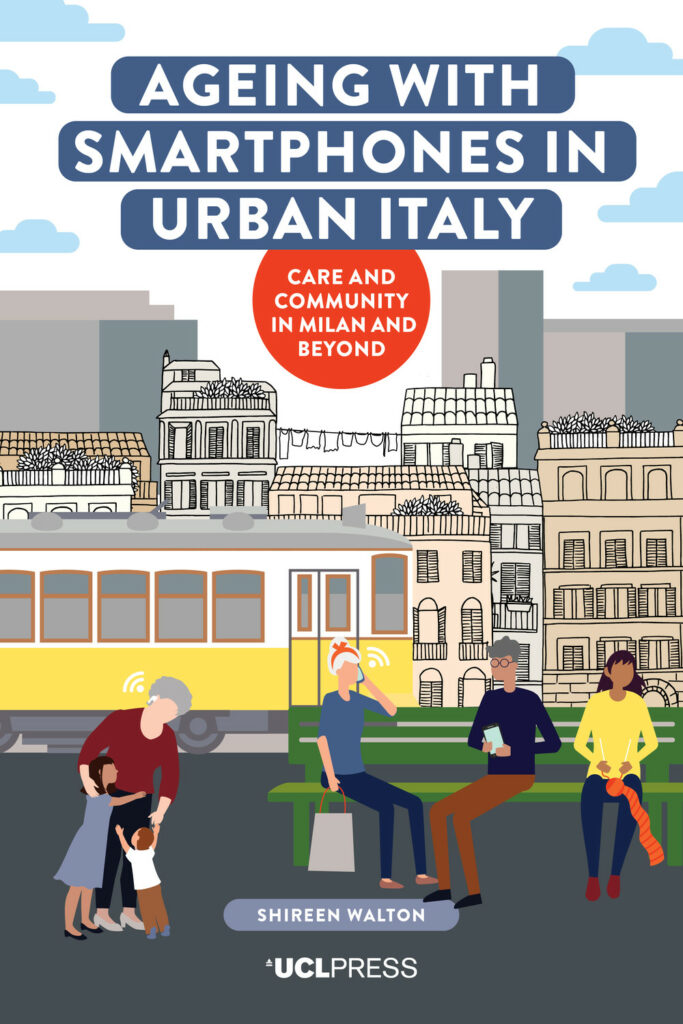
Ageing with Smartphones in Urban Italy

‘Who am I at this (st)age? Where am I and where should I be, and how and where should I live?’ These questions, which individuals ask themselves throughout their lives, are among the central themes of this book, which presents an anthropological account of the everyday experiences of age and ageing in an inner-city neighbourhood in Milan, and in places and spaces beyond.

Ageing with Smartphones in Urban Italy explores ageing and digital technologies amidst a backdrop of rapid global technological innovation, including mHealth (mobile health) and smart cities, and a number of wider socio-economic and technological transformations that have brought about significant changes in how people live, work and retire, and how they communicate and care for each other.

Based on 16 months of urban digital ethnographic research in Milan, the smartphone is shown to be a ‘constant companion’ in, of and for contemporary life. It accompanies people throughout the day and night, and through individual and collective experiences of movement, change and rupture. Smartphone practices tap into and reflect the moral anxieties of the present moment, while posing questions related to life values and purpose, identities and belonging, privacy and sociability.

Through her extensive investigation, Shireen Walton argues that ageing with smartphones in this contemporary urban Italian context is about living with ambiguity, change and contradiction, as well as developing curiosities about a changing world, our changing selves, and changing relationships with and to others. Ageing with smartphones is about figuring out how best to live together, differently.

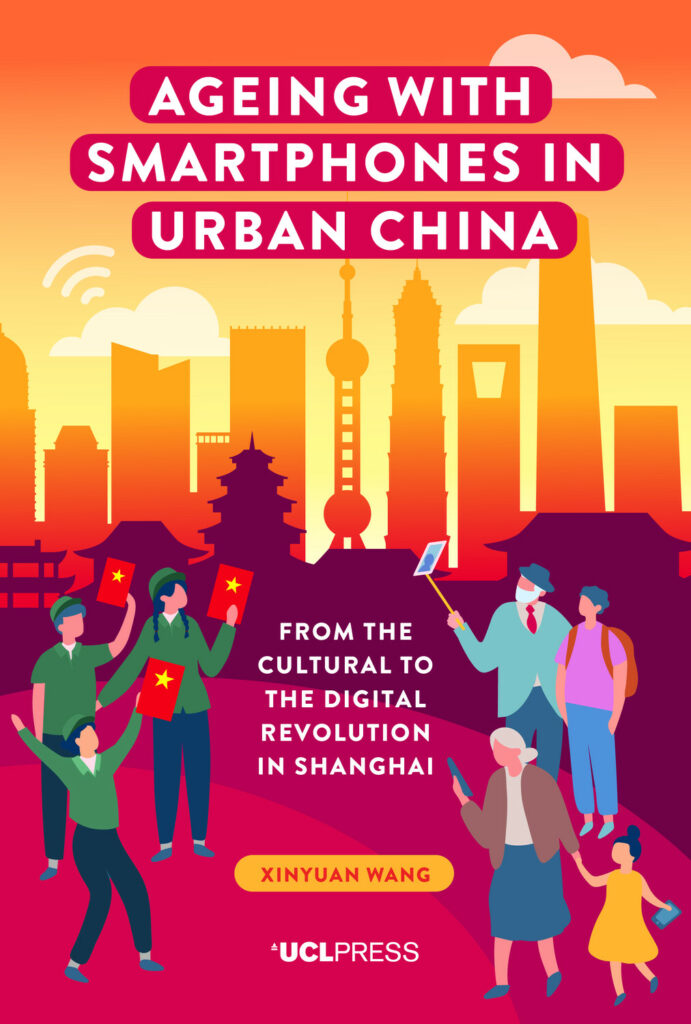
Ageing with Smartphones in Urban China

If we want to understand contemporary China, the key is through understanding the older generation. This is the generation in China whose life courses almost perfectly synchronised with the emergence and growth of the ‘New China’ under the rule of the Communist Party (1949). People in their 70s and 80s have double the life expectancy of their parents’ generation. The current oldest generation in Shanghai was born in a time when the average household could not afford electric lights, but today they can turn their lights off via their smartphone apps.

Based on 16-month ethnographic fieldwork in Shanghai, Ageing with Smartphones in Urban China tackles the intersection between the ‘two revolutions’ experienced by the older generation in Shanghai: the contemporary smartphone-based digital revolution and the earlier communist revolutions. We find that we can only explain the smartphone revolution if we first appreciate the long-term consequences of these people’s experiences during the communist revolutions.

The context of this book is a wide range of dramatic social transformations in China, from the Cultural Revolution to the individualism and Confucianism in Digital China. Supported by detailed ethnographic material, the observations and analyses provide a panoramic view of the social landscape of contemporary China, including topics such as the digital and everyday life, ageing and healthcare, intergenerational relations and family development, community building and grassroots organizations, collective memories and political attitudes among ordinary Chinese people.

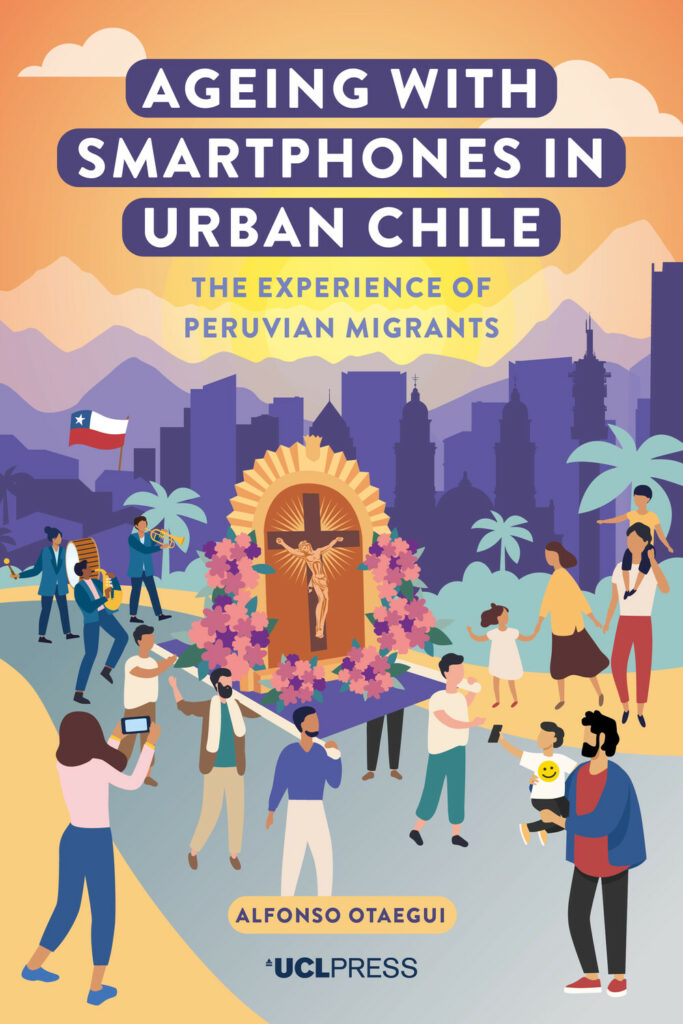
Ageing with Smartphones in Urban Chile

What does it mean to be ageing in Chile as a migrant? What does it mean to be late middle-aged nowadays? How does living half of your life in a foreign country impact perspectives on later life? Is retirement an opportunity to go back to the home country? What will happen to the next generation, raised in a different country from their parents?
Based on 16 months of ethnographic fieldwork, Ageing with Smartphones in Urban Chile analyses the experience of ageing for Peruvian migrants aged around 60, who have lived in Chile for over 20 years. Their lives are informed by a series of experiences of being in between. They live between two countries, two generations (their Peruvian parents and their Chilean children), two different stages in life (retained youth and menacing old age), between giving care (to their parents) and not wanting care (from their children) and between a continuing legacy (through their children, who have a promising future) and not transmitting legacy (some traditions will not pass on to the next generation).

Peruvian migration has been one of the most studied in Chile. However, neither the experience of ageing of migrants in Chile nor the experience of late middle age has been fully addressed yet. By focusing on the entanglement of ageing, migration and technology, this monograph is an ethnographic contribution to an unexplored subject in the vast literature on migration studies in Chile.

Sign up to our newsletter

Don't miss out!
Subscribe to the UCL Press newsletter for the latest open access books,
journal CfPs, news and views from our authors and much more!