We are currently upgrading our shopping cart; in the interim all orders are being diverted to Waterstones. If you would like to redeem a promotional code, or are an author wanting to place an order, please email us.

Contact us

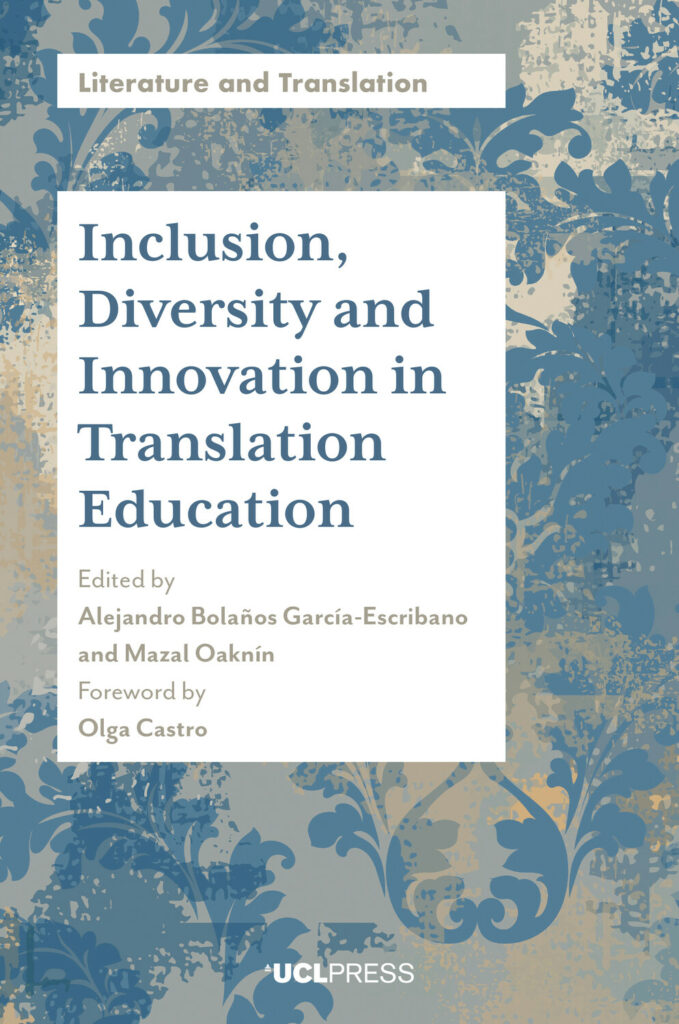
Inclusion, Diversity and Innovation in Translation Education

The image shows the cover of a book titled ‘Inclusion, Diversity and Innovation in Translation Education’, edited by Alejandro Bolaños García-Escribano and Mazal Oaknín and foreword by Olga Castro. The cover has an abstract blue and beige floral background with the title text on a white central panel.

Through examples of literary and audiovisual translation teaching practices, Inclusion, Diversity and Innovation in Translation Education places a novel emphasis on equality, diversity and inclusion (EDI) synergising the latest research advancements in EDI and translation curricula.

The contributors revisit how languages and translation are currently taught and explore the relevance of EDI values from an interdisciplinary perspective. The chapters contain proposals of best teaching practices and teacher training guidance alongside examples of research-led teaching scenarios. There is a twofold rationale behind this volume: firstly, identifying links between literary and audiovisual translation teaching practices, which often demand great creativity inside and outside the classroom; and, secondly, placing greater emphasis on EDI-focused methods and themes. Following this approach, readers are invited to consider pressing societal issues such as (media) accessibility, intersectionality, LGBTQI+ and race, among others, and to embed them in their language and translation teaching practices.

Contemporary Afro-Brazilian Short Fiction

The cover of the book ‘Afro-Brazilian Short Fiction’ is edited by Ana Cláudia Suriani da Silva, Julio Ludemir, and Maria Aparecida Andrade Salgueiro. It features an abstract design with swirling patterns of green and gold, resembling marble or a topographical map. The title and editors’ names are in white font, centrally aligned on the cover, with the UCL Press logo at the bottom.

Although Brazil is the largest Afro-descendant country outside of Africa, the literature produced by Black Brazilians is mostly unknown both in Brazil and abroad. There is a growing worldwide demand for Afro-descendant literature and a demand for decolonial practices and content, especially within Lusophone literature and literature across the Americas.

Contemporary Afro-Brazilian Short Fiction emerges from a UCL-sponsored collaborative translation project, bridging Afro-Brazilian literature with a global audience to respond to the worldwide call for Afro-diasporic narratives. This unique compilation of 21 short stories includes both established and emerging Afro-Brazilian voices. The anthology is bilingual, fostering cross-cultural understanding and affirming the legitimacy of pretoguês as a literary language. The texts are presented with three insightful contributions by Ana Cláudia Suriani da Silva (UCL), Julio Ludemir (Flup) and Maria Aparecida Andrade Salgueiro (UERJ). The introductions not only contextualise the short stories, but also engage in theoretical debates, shedding light on the role of literary translation in language teaching and the impact of the Literary Festival of the Peripheries (Flup) in forming a new generation of Black Brazilian writers.

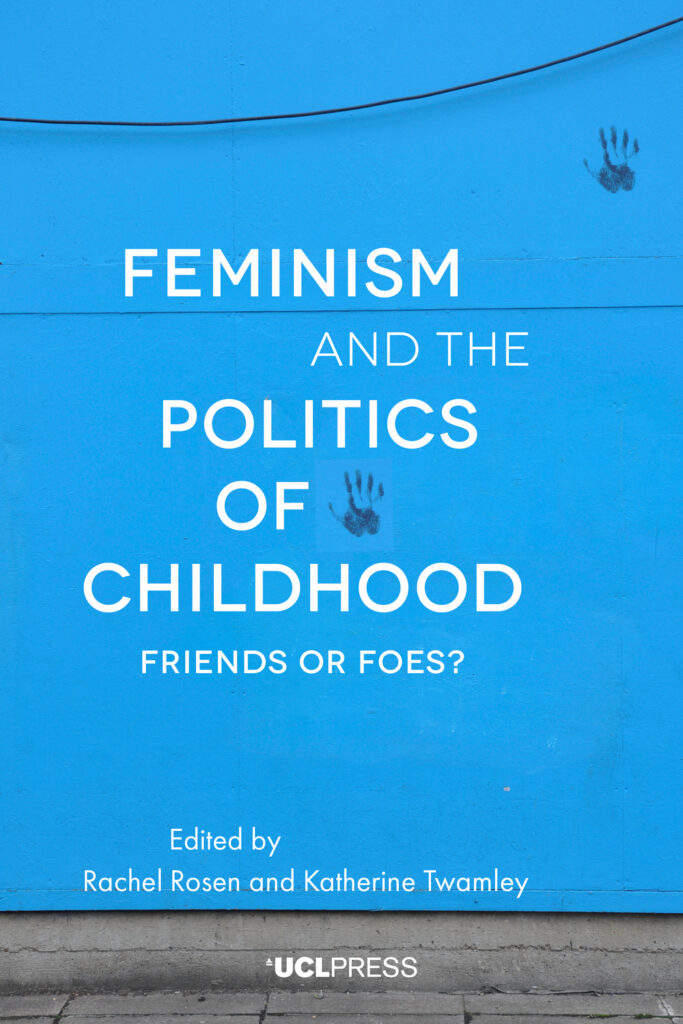
Feminism and the Politics of Childhood

Feminism and the Politics of Childhood offers an innovative and critical exploration of perceived commonalities and conflicts between women and children and, more broadly, between various forms of feminism and the politics of childhood. This unique collection of 18 chapters brings into dialogue authors from a range of geographical contexts, social science disciplines, activist organisations, and theoretical perspectives. The wide variety of subjects include refugee camps, care labour, domestic violence and childcare and education.

Chapter authors focus on local contexts as well as their global interconnections, and draw on diverse theoretical traditions such as poststructuralism, psychoanalysis, posthumanism, postcolonialism, political economy, and the ethics of care. Together the contributions offer new ways to conceptualise relations between women and children, and to address injustices faced by both groups.

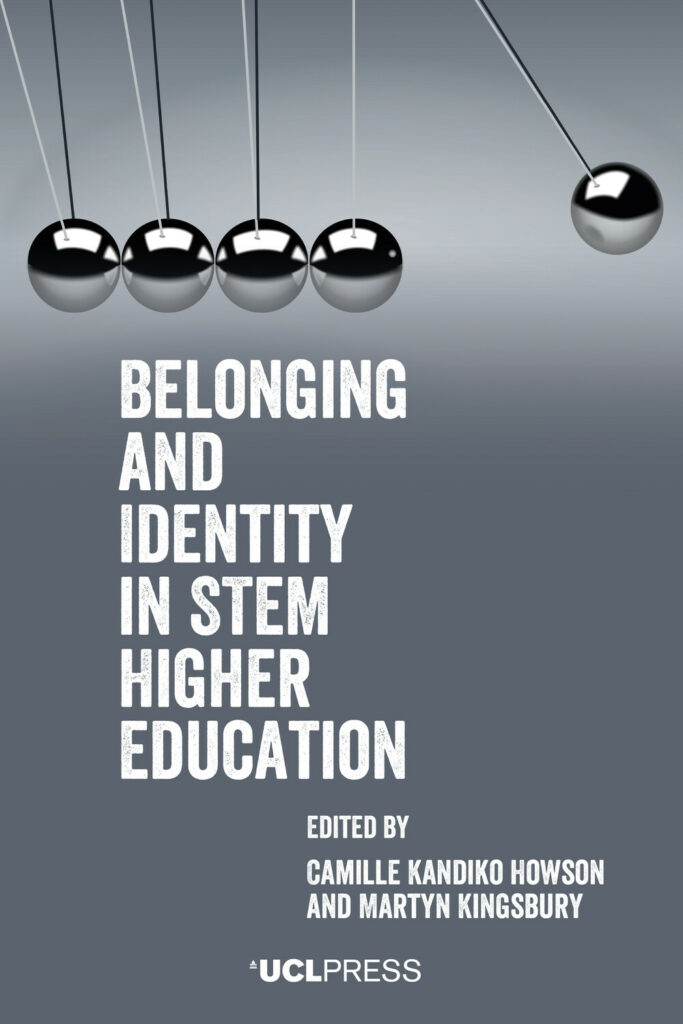
Belonging and Identity in STEM Higher Education

The image features a book cover titled Belonging and Identity in STEM Higher Education. The cover depicts five pendulum balls, reminiscent of Newton’s cradle, with the first and last balls in motion. The title is written in bold black letters. The editors’ names, Camille Kandiko Howson and Martyn Kingsbury, appear below the title. The UCL Press logo is at the bottom.

In Belonging and Identity in STEM Higher Education, leading scholars, teachers, practitioners and students explore belonging and identity in Science, Technology, Engineering and Mathematics (STEM) fields, and how this is impacted by disciplinary changes and the post-pandemic higher education context. In STEM fields, positivist approaches and a focus on numerical data can lead to assumptions that they are unemotional, impersonal disciplines. The need for mathematical competency, logical thinking and disciplinary contexts can be barriers to engagement, belonging and success in STEM.

STEM ways of thinking, such as those underpinning abstract and complex mathematics, can form the basis for new ways of conceptualising belonging for both staff and students, going beyond socio-demographic and cultural differences. In this book, chapters and case study contributions analyse what is unique about STEM educational environments for staff and students in the UK, Ireland, Europe, Scandinavia and Asia. The authors examine the role of STEM pedagogies in facilitating belonging, variable impacts across student characteristics and the experiences STEM students face in their higher education experiences. It provides a valuable resource for those working in equality, diversity and inclusion (EDI), STEM educational researchers and practitioners, as well as offering insights for academics and teachers in STEM higher education.

Sign up to our newsletter

Don't miss out!
Subscribe to the UCL Press newsletter for the latest open access books,
journal CfPs, news and views from our authors and much more!