Why read a book about Sahidic Coptic?

In this blog post, author Bill Manley reflects on the origins of Sahidic Coptic and how its influence can still be felt today.

The end of ancient Egypt; the fall of the Roman Empire; early books; the early Bible; Orthodox Christianity; the Byzantine Empire; the history of religious persecution; Europe’s mediaeval monasteries; the rise of Islam; Egyptian society today; even the decipherment of hieroglyphs—these are a handful of the ‘big’ stories that cannot be told properly without some awareness of the tens of thousands of Sahidic Coptic texts from Late Antique Egypt. Often, they are among our most detailed sources for any of these subjects.

‘Copt’ comes via Arabic al-Qibṭiy from Greek Aiguptioi ‘Egyptians’, and evokes three centuries of Roman rule in Egypt; when a Greek-speaking ruling class treated native Egyptian speakers as social and political inferiors. The land had been brought under Roman rule in 30 BC, at the death of the notorious Queen Cleopatra VII. Subsequently, the indigenous language was excluded from public life, and Egypt’s institutions came to be viewed as collaborators. Resistance to Rome became identified with the systematic executions of Egyptian Christians; especially during the reign of Diocletian (284–305). Following an imperial about-face and edicts of religious toleration in the early 300s, Egypt was revealed to be a majority Christian nation where the ancient temples were repurposed as churches, and the spread of monasteries would be the most dynamic, transformative socio-economic phenomenon of the new age.

As the temples’ authority had dwindled among the people, so had that of the ancient hieroglyphic script: identified since the dawn of history with the kingship and priesthood. As with their rejection of traditional education and governance, the ‘Copts’ also devised an alphabet as an alternative for writing their language and promoting Christian scripture in translation. Sahidic Coptic is the normative literary dialect, whose influence is apparent in almost all Egyptian texts from Late Antiquity. Consequently, the usual definition of the word Copt today is ‘Egyptian Christian’. Even though Coptic is no longer spoken, most of the millions of modern Copts are Arabic-speakers, and the Coptic Orthodox churches have a global presence.

The relevance of Sahidic Coptic writing stretches far beyond Egypt. A single case in point would be the monk Pahom (St Pachomius), who first wrote down the rules for living in a monastery. His aptitude for organising large numbers in close proximity stemmed from his first career in the Roman Army. Pahom was baptised upon his discharge from the army, when Diocletian’s murders had barely ended, and was leading four ‘communities’ within a few years. In keeping with the meandering River Nile, a monastery was a scattered agricultural collective whose members came together to eat, pray, sing, and tend the poor, sick and elderly. Routines were organised along traditional patterns of life, but Pahom’s rules gave mettle to the collective. For instance, he advocated social distancing to limit the spread of contraband or disease: ‘No-one shall hold his companion’s hand nor any part of him. Instead leave a cubit between you and them whether you are sitting, standing or walking.’

By adopting his principles, tens of thousands of men and women, Egyptian and immigrant, organised themselves to live a ‘life in common’ – instead of the solitary practices of St Antony and the hermits – among them writers who were influential in Europe, such as Evagrius Ponticus, Palladius of Galatia and the Romanian, John Cassian.

Pahom died in 346 because he was neither the first nor the last in charge of infection control to ignore his own rules. He took ‘a great fever’ but ‘did not tell any of the brothers that he was ill nor confide about his illness, as was his way. Instead, gathering all his strength, he went with them to the harvest … However, while harvesting he fell flat on his face’. On his last night, he asked his friend Theodore not to leave his body in its grave ‘in case people stole his body and built a martyr’s shrine round it’ because he ‘did not approve of those who acted so’.

Despite his humbling demise, Pahom’s legacy was greater than he might have envisioned: John Cassian transplanted the monastic life to Marseilles, where he settled in 415 and founded several new communities. In turn, Pahom’s rules became the basis of the mediaeval monastic code of Benedict. So, the next time you pass Westminster Abbey, Durham Cathedral, Paisley Abbey, Mont-St-Michel, or any of western Europe’s magnificent abbey churches; take a moment to consider how these towering bastions of civilisation are just two steps removed from Pahom, and a single page from the story of the early ‘Copts’.


Bill Manley is the author of Sahidic Coptic. This concise textbook teaches beginner students the grammar of documents written in Sahidic Coptic, and provides the historical and cultural context required for reading primary sources through informal as well as more formal and religious texts.

Tackling difficult histories with (museum) objects

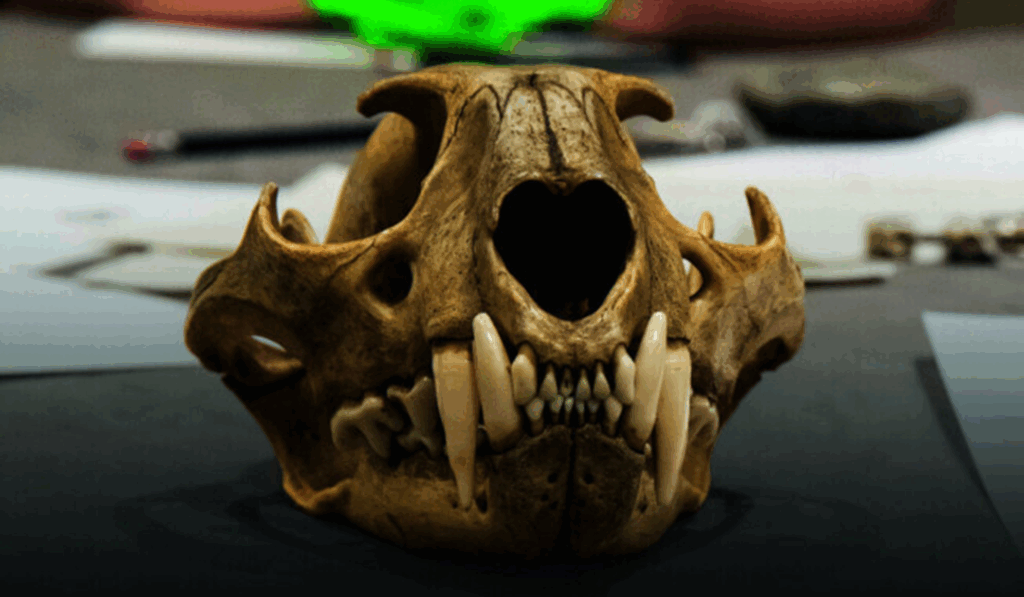
Animal skull with prominent canines on a tabletop.

What can a preserved animal specimen tell us about colonialism, extinction and even genocide? In this blog post, Thomas Kador reflects on the themes of his recent book Object-Based Learning: Exploring Museums and Collections in Education and considers how museum objects, often seen as neutral or purely scientific, can reveal troubling histories. From the Thylacine skeleton in UCL’s Grant Museum to instruments linked to eugenics, these objects challenge us to confront uncomfortable truths and rethink the role of collections in education.

Object-based learning (OBL) refers to a pedagogy based on working with material culture in support of learning and critical engagement with the world. While object-based approaches can involve all types of objects, there is usually a particular focus on items from museums and other curated collections.

My recent book Object-Based Learning: Exploring Museums and Collections in Education explores the many ways in which we can employ objects in formal and informal educational settings, and the benefits of doing so. Research repeatedly demonstrates that learners find working with objects – especially heritage ones – inspiring. It also shows that working with objects can support the development of subject-specific, transferable, and interdisciplinary skills, as well as benefit learners’ health and wellbeing.

You can probably recall a time when you felt inspired by a beautiful museum object or work of art, but there are museum objects that testify to much darker and challenging parts of human history. This does not diminish their capacity to facilitate learning. On the contrary, such objects represent extremely powerful catalysts for interrogating the past, including power structures, abuses of power, injustices, and even atrocities. 

There are some well-known examples you might be aware of, such as the so-called Benin bronzes in the British Museum, and the artworks that were stolen by Nazi officials from their Jewish owners during the Holocaust. However, many items’ connection to difficult histories is less readily apparent, and we need to scratch a little deeper  below the surface to reveal their stories.

For example, the deep entanglement of many museums and collections in the colonial project is well known. Objects and specimens allow us to lift the curtain on colonial exploits, with much of the discourse focusing  on archaeological, anthropological, and historical museums, and – to a lesser extent – art collections. But what about natural history museums? Often mistakenly seen solely as spaces of scientific study which are unconnected to past or present political situations, these museums can also reveal problematic histories if we dig a little deeper.

UCL’s Grant Museum of Zoology has a collection of animal specimens that stretch back to the university’s foundation in 1826. When the collection was started in the 1820s and 30s, animals which have since become endangered or extinct were still in existence. For example, the museum has a collection of Thylacine – commonly known as the Tasmanian Tiger – material, consisting of a complete skeleton, some skulls, a number of other bones and a fluid specimen (i.e. a dissected animal preserved in alcohol). As Thylacines became extinct nearly 90 years ago,  the remains at the Grant Museum are significant, especially as the fluid specimen is possibly the only one in the world.

But this is where it gets political, as Tasmania – the island from where the Thylacine specimens originate – was declared a British colony in 1825. At the time, the Thylacine, the largest modern day marsupial carnivore, was seen as a threat to European sheep plantations, and a bounty was placed on their pelts. This resulted in perhaps the only documented purposeful extinction of an entire animal species in human history. The mission ‘succeeded’, and by 1936 the last known Thylacine had died in that Australian zoo. The native human population did not fare much better, with the colonisers coming extremely close to exterminating the local Aboriginal people during the 1824-1832 Tasmanian war. It is striking how quickly a seemingly ‘harmless’ specimen in a natural history collection can become an emblem not only of its own species’ extinction, but also a reminder of the genocides perpetrated by Europeans on Tasmanians and other Aboriginal peoples. 

While these are truly dark subjects, museum objects and specimens allow us to explore them closely in a relatively safe and non-confrontational manner. We can interrogate difficult topics from multiple perspectives, including some that differ from our own personal views. This brings us back to the role of objects as conduit for highlighting and critiquing institutional power and violence without being violent in their own right. This allows learners to confront uncomfortable truths, such as our own complicity – or inaction – in local or global injustices.

As an employee of UCL, it would be remiss of me not to mention my institution’s promotion of scientifically racist and ableist ideas through its enthusiastic embrace of eugenics in the early twentieth century. As a legacy of UCL’s involvement, we have a collection of objects, instruments and materials related to the study of eugenics, which recently have found new use as items that allow learners to critically engage with this troubled history. In this context, objects that were once instruments of oppression are now enabling students and researchers to interrogate, challenge, and come to terms with these practices and the mindsets that gave rise to them. The objects remain as tangible connections to these troublesome chapters of human history, but they have been transformed from tools of power and domination to facilitators of dialogue and cultural understanding.

Chasing a ghost: Dark matter physics

A detailed image of outer space showing cosmic web structures. Blue filaments stretch across, with bright orange patches representing galaxies or galaxy clusters.

Today marks the publication of the open access textbook Fundamentals of Dark Matter by Ignacio Ferreras. This new book focuses on pedagogy that guides students through the facts regarding dark matter, and also encourages questions and critical examination of what is known to date.

In this blog post, Professor Ferreras provides an introduction to the discovery of dark matter and offers some pointers about how dark matter science may develop in future years.

Dark matter is unquestionably one of the most important topics of modern physics. Postulated nearly a century ago to account for the motion of galaxies in clusters, and then to describe the orbits of stars within galaxies, it is now found to pervade the Universe as the dominant component of all matter. In contrast, the “standard stuff”, i.e. matter put together by elements taken from the Periodic Table, amounts to a fraction roughly 16% by mass. The composition of dark matter is thus far unknown, but “ordinary particles” that make up the Standard Model are positively ruled out; even standard neutrinos cannot contribute more than a fraction of the total dark matter budget. The subject of dark matter thus overlaps a wide range of disciplines in astrophysics, cosmology and particle physics. Its elusive detection, along with its important contribution to the Universal mass content nicely exemplifies how science has to deal with such elephants in the room. While critics raise this issue to illustrate the weakness of science, it should be noted that there are numerous examples in the history of science when such situations were faced, and so it represents the strength, rather than the weakness, of the scientific method.

A not too dissimilar example of a gravitational conundrum can be found in our Solar system. The traditional family of five planets* (from Mercury to Saturn) has been known for millennia, due to their visibility to the naked eye and their wandering motion on the celestial sphere. Positional astronomy allowed us to make one of the most fundamental discoveries of humanity, namely the workings of the Solar environment through gravity, and the true nature of Earth as just another planet orbiting the Sun. Astrophysics adds one more step in this understanding of the Universe, by adopting a powerful methodology that compares precise measurements of the Heavens with a mathematically-based model (in this case the inverse square law of gravitational forces). After the discovery of planet Uranus by Sir William Herschel, following a careful investigation of a would-be comet by him and others (Lexell and Bode), astronomers were puzzled with the observations of the orbital motion of Uranus that could not be fully explained by the adopted paradigm of Newtonian gravity. In the nineteenth century, Adams and Le Verrier hypothesised a new planet (Neptune) to explain the observations, that was eventually discovered in 1846. In the decades spanning from the confirmation of Uranus as a major planet to the discovery of Neptune, we could make the case that “dark matter” was present in our Solar system.

On the other side of our planetary system, closer to the Sun, another example illustrates a new approach to tackle a similar problem. It was again Le Verrier, who proposed an additional, inner planet to explain the motion of Mercury. The orbit of Mercury was found to feature a characteristic precession of its perihelion, something that could not be accounted by Newton’s gravity. The search for the new “dark matter” was on, and spurious sightings of planet Vulcan were reported. This time, the true nature of Mercury’s motion was due to a substantial change in the adopted paradigm. Einstein’s theory of general relativity predicted a post-Newtonian perturbation in the inner parts of the Solar system that can fully accommodate Mercury’s orbital precession.

These two discoveries show how difficult it is to find definitive solutions to complex problems, and how the unexpected motion of a system can lead either to a new component (say, the dark matter particle), or a change in the working paradigm (say, our understanding of gravity).

My new textbook Fundamentals of Dark Matter, published by UCL Press, is meant to give advanced undergraduates and keen aficionados a general overview of this most elusive case of unexpected gravitational effects over scales ranging from galaxies to the whole Universe. Amazingly enough, the solution to the Dark Matter problem should come at the level of microphysics, in the form of a new particle and/or the modification of our incomplete paradigm based on the Standard Model of particle physics along with General Relativity.

* Plus our own Earth, of course.


About the Author

Ignacio Ferreras is a staff astronomer at the Instituto de Astrofisica de Canarias, in Tenerife, Spain and holds an honorary professor position at the Physics and Astronomy department, UCL. He was academic staff at the Mullard Space Science Laboratory, UCL for eleven years. After obtaining university degrees in theoretical physics in Valladolid, Spain, and Cornell University, USA, he embarked on a career in astrophysics with a PhD in Cantabria, Spain, followed by various research and academic appointments at Oxford, ETH Zürich, UCL, and King’s College London. He was a ‘La Caixa’ fellow and an individual Marie Curie fellow.

Are you interested in adopting open access textbooks?

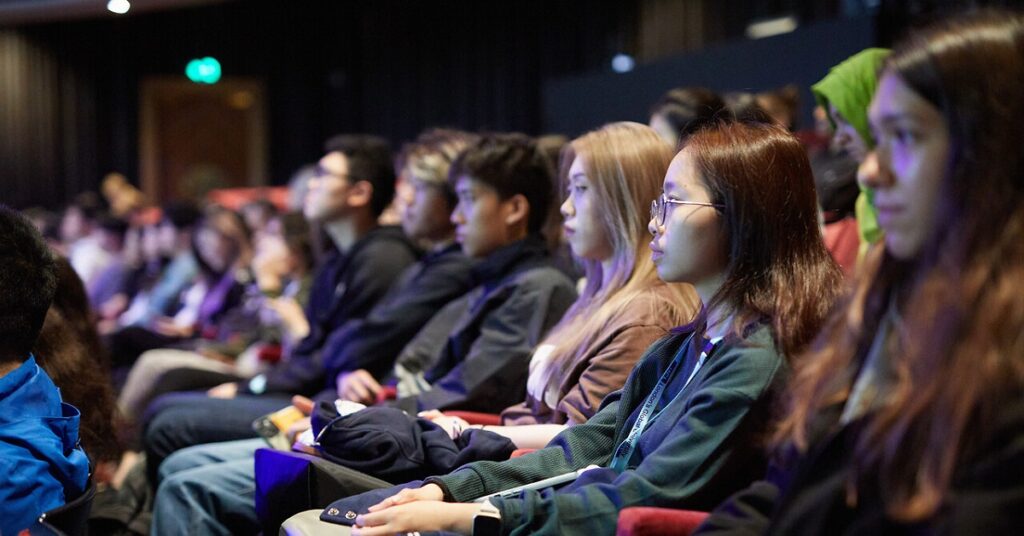
A line of seated students listening intently in a lecture theatre. All Rights © Digby Oldridge/PR Eye


UCL Press is currently building a programme of high-quality, open access textbooks, free to download digitally, anywhere in the world.

If you are teaching on under- or postgraduate courses, we want to hear about the information you require to make a decision, and the best time to receive it, for an open access textbook where the barriers of cost, subscription and access are removed.

You can access the eTextbook Marketing Survey here

It should take no more than 5 minutes to complete. The survey will close at 5pm (BST) on Tuesday 8th October.

The anonymised results will be used to develop our communications to help academics access the right information at the right time.

Thank you to those who are able to take part!


About the author

Dhara Snowden leads the UCL Press open access Textbook Programme. She previously held editorial roles at Rowman & Littlefield, Edinburgh University Press and Bloomsbury Publishing.

Open access books published in July 2024

Books on a wooden bookshelf in UCL library.

Summer might have been a bit of a wash out (again!) but July has been a fertile month for new publications. In July we published a bumper crop of SIX new open access books, including the second publication from our new open access textbook programme!

First up was Newman University Church, Dublin: Architectural revivalism in the British Isles and the authority of form, which is a fascinating study of Dublin’s Newman University Church, situating it not only in terms of its connection to John Henry Newman’s views on and achievements in education, but also in terms of the overlooked significance of the church in relation to architectural revivalism. A must read for scholars of religious buildings and architectural history.

Another open access gem, Between Design and Making: Architecture and craftsmanship, 1630–1760 followed soon after. This exciting book re-evaluates the social and professional fabric that binds design to making, and the asymmetry that has emerged between architecture and craft. (If you enjoyed this one, you’ll also enjoy Enriching Architecture: Craft and its conservation in Anglo-Irish building production, 1660–1760 from some of the same team)

Next up was Methods and Methodologies in Heritage Studies, an essential textbook that offers succinct, easily accessible analyses of the disciplinary debates, intellectual legacies, and practical innovations that have led to understandings of heritage value today. Well worth a read if you are interested in research methods used in heritage studies.

Readers might also like to take a look at Collections Management as Critical Museum Practice. With a superstar cast of museum studies contributors, this open access book brings into focus the knowledges, value systems, ethics and workplace pragmatics that are the foundation of collections management. The book creates a critical dialogue about the underlying philosophies, values and ethics that determine what are and what might be acceptable collections practices.

The month ended with two titles that focus on the world of STEM. Generalism in Clinical Practice and Education outlines a generalist philosophy of practice that is brought to life through interleaved examples. Written by a range of international clinicians, patients and academics it seeks to inspire readers’ future engagement with generalism in practice and learning through sharing underpinning concepts, values and principle.

The second title, Belonging and Identity in STEM Higher Education, leading scholars, teachers, practitioners and students explore belonging and identity in STEM fields. STEM ways of thinking, such as those underpinning abstract and complex mathematics, can form the basis of new ways of conceptualising belonging for both staff and students.

As always, happy reading and stay safe!

UCL Press Open Access Textbooks: Call for Proposals

Students Studying in UCL Science Library

Open access presents the opportunity to revolutionise how – and how widely – knowledge is disseminated. By making research outputs and teaching materials freely available online, readers worldwide can engage with them, regardless of their ability to pay.

Following the successful open access publications of Textbook of Plastic and Reconstructive Surgery and Key Concepts in Public Archaeology, UCL Press is expanding its textbook publishing programme. It now invites applications from UCL academics to submit textbook proposals for any discipline taught at UCL at undergraduate or postgraduate level.

The expansion of our textbook programme demonstrates both UCL’s commitment to harnessing a culture of research-based learning through the Connected Curriculum, and to establishing a world-class digital learning environment.

We are particularly interested in proposals for textbooks that meet one or more of the following criteria:

  • Potential to supply large student cohorts for the maximum benefit of the student experience
  • Current provision is very expensive or out-of-date
  • Where there is currently no textbook provision, because a course is very new, for example
  • Potential to create a bespoke textbook tailored to any UCL programme

Multidisciplinary subjects are welcome, as are proposals for textbooks with a digitally innovative approach.

Awards

UCL Press plans to offer 10 awards of £1,500 each to successful applicants. Payment will be on delivery of the final accepted manuscript.

Deadline and evaluation

Please submit a 300-word description of the proposed project by 1 July 2017 to Chris Penfold, UCL Press Commissioning Editor: c.penfold@ucl.ac.uk. Please explain in your description how the project meets the above criteria and what stage the project is at.

UCL Press’s Executive Group (Editorial Board) will evaluate the submissions in the first instance and will then inform authors/editors of the projects it would like to take forward as full proposals. Final acceptance of projects for publication will be dependent on receipt of a full proposal and positive peer review reports.

Production period

Applications are welcome for textbooks that will be ready for manuscript submission between now and July 2019. Publication will follow within approximately 9 months after submission of the final manuscript. Once a textbook has published, the Press will review the potential for updates and new editions where necessary.

Sign up to our newsletter

Don't miss out!
Subscribe to the UCL Press newsletter for the latest open access books,
journal CfPs, news and views from our authors and much more!