Lolly Willowes at 100: Sylvia Townsend Warner, Religion and the Supernatural

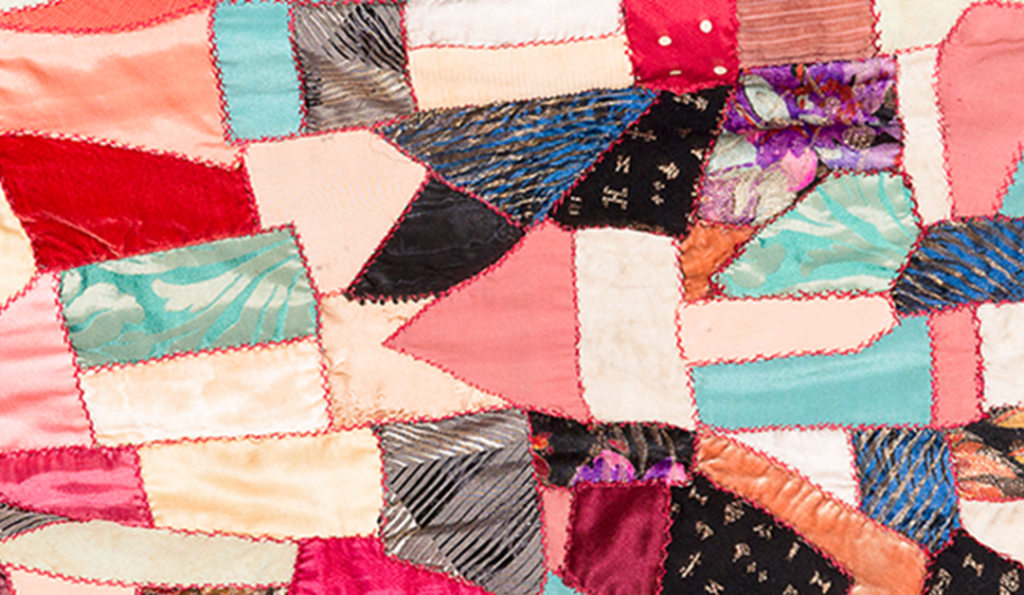
Image of patchwork quilt.

Join the team behind the Journal of the Sylvia Townsend Warner Society for a two-day in-person conference celebrating the centenary of Lolly Willowes, Sylvia Townsend Warner’s first and best-known novel.

First published in 1926, Lolly Willowes explores themes of freedom, gender, and religion in a distinctive and thought-provoking way. As a serious and imaginative fantasy, it stands as a strikingly original contribution to literary modernism, written in the same decade as James Joyce’s Ulysses, T.S. Eliot’s The Waste Land, and Virginia Woolf’s Mrs Dalloway. This conference places Warner’s novel at the centre of that landscape and opens up new perspectives on its significance and enduring relevance.

Organised in collaboration with the UCL English Department, UCL Press, and the UCL Institute of Advanced Studies, the conference features a keynote lecture by the novelist Adam Mars-Jones. The programme also brings together poets and fiction writers Philip Hensher, Juliet McKenna, and Deryn Rees-Jones, alongside the American composer Michael Alec Rose, who will present excerpts from his 2019 chamber opera Lolly Willowes.

  • Event type: In person
  • Date & time: 29 May 2026 – 30 May 2026
  • Location: IAS Common Ground, Room G11 South Wing, University College London Gower Street London WC1E 6BT United Kingdom

Day tickets are available to purchase for either individual days or the whole conference. 

Find out more and book your place:
https://www.ucl.ac.uk/arts-humanities/events/2026/may/lolly-willowes-100-sylvia-townsend-warner-rel…

UCL Press launches Advances in Perioperative Care, a new Diamond Open Access journal

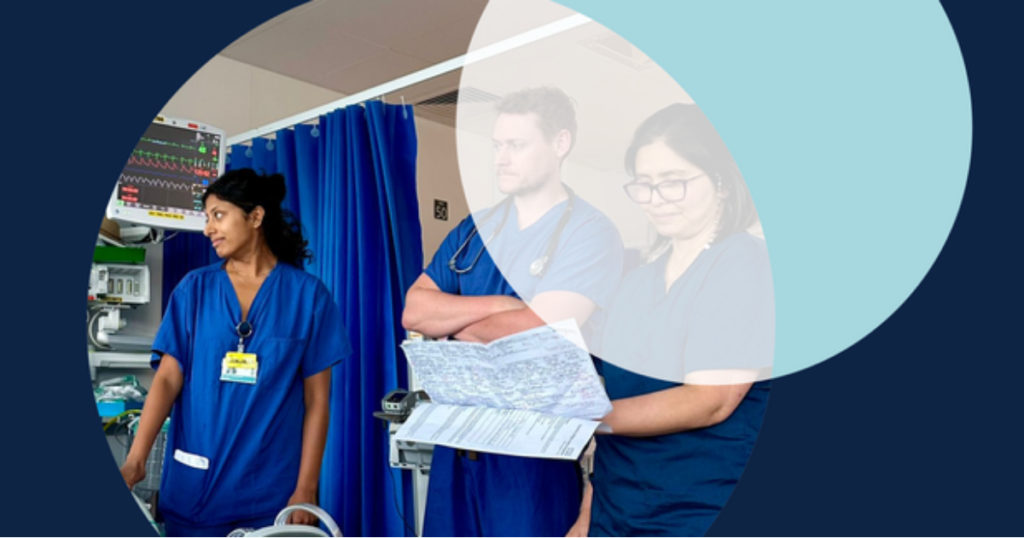
Healthcare workers in a hospital room reviewing patient charts.

UCL Press is proud to announce the launch of Advances in Perioperative Care (APOC), a new Diamond Open Access journal created to support the growing field of perioperative care.

As part of our commitment to widening access to research, the journal is free to read and free to publish in, ensuring that high quality educational content is available to all who support patients through the surgical journey.

APOC publishes case reports and narrative articles that translate evidence into practical guidance for the multidisciplinary teams working in perioperative care. Each article is built around a clear clinical scenario and learning objective, offering insight that readers can apply directly in practice. The journal provides a welcoming and supportive editorial environment where authors receive constructive feedback throughout peer review.

Developed by clinicians and academics at the UCL Centre for Perioperative Medicine, the journal is led by Editor in Chief Professor David Walker and an experienced editorial board representing a range of perioperative disciplines. Together, they aim to build a global community of contributors who share a commitment to improving the experience and outcomes of surgical patients.

APOC invites submissions from healthcare professionals worldwide. The journal welcomes contributions on any area of perioperative care, including clinical management, pharmacy interventions, nursing innovations, digital and data driven approaches and therapies that support recovery and wellbeing. Articles that explore a focused clinical challenge or offer learning from a compelling case study are particularly encouraged.

Find out more at journals.uclpress.co.uk/apoc

COP30 reading list

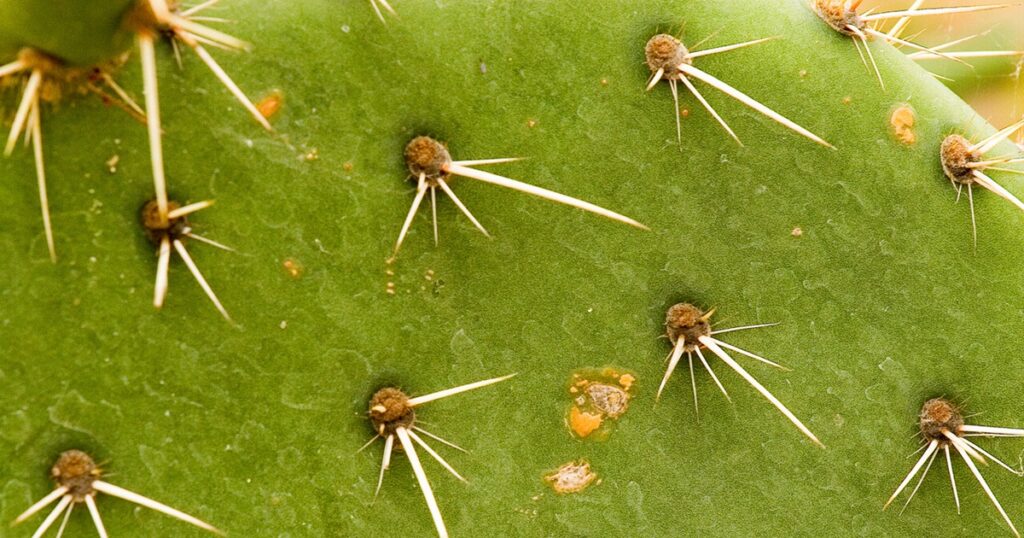
Close up photograph of a cactus

As COP30 comes to an end, we’ve pulled together a selection of open access books and journals tackling the big questions on climate change, environmental justice and sustainable futures. From practical solutions for greener cities to global perspectives on policy and activism, these titles bring fresh thinking to urgent challenges.

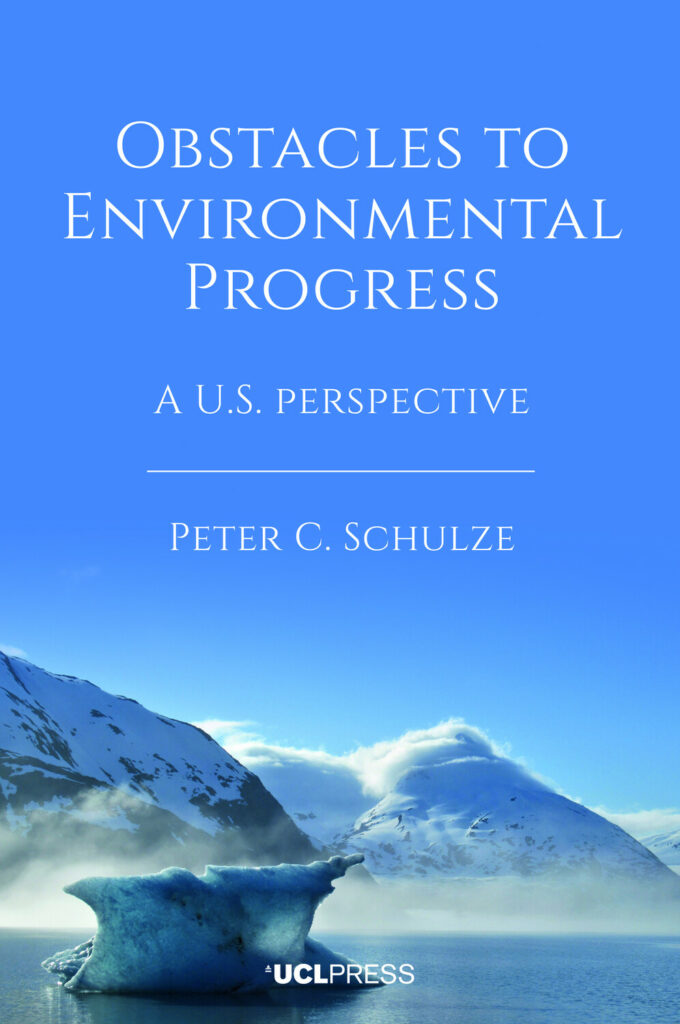
Highlights include Universities and Climate ActionHaste: The slow politics of climate urgencyObstacles to Environmental Progress: A U.S. perspective and our multidisciplinary open science journal UCL Open: Environment. Every title is free to read and share – because knowledge should power action.


Call for proposals: Reimagining teachers’ work and teacher education for our futures

A green pencil on lined paper with "MAKE YOUR MARK" printed on it.

UCL Press is delighted to share a call for papers for a forthcoming special series in the International Journal of Development Education and Global Learning (IJDEGL): ‘Reimagining teachers’ work and teacher education for our futures – Global perspectives at the intersection of change, hope and crisis.’ Find out more in the full call.

Edited by Arto Kallioniemi, Hannele Niemi and Marianna Vivitsou, this series will explore how teacher education can respond to the profound challenges of our time—climate change, geopolitical instability, technological transformation—while fostering hope and agency for a sustainable future.

Building on UNESCO’s landmark report Reimagining our futures together: A new social contract for education (2021) and the ‘Reimagining Teachers and Teacher Education’ conference (June 2024), the series invites contributions that examine how education can repair injustices and transform learning ecosystems. The Editors welcome theoretical and empirical research addressing questions including:

  • What do teaching/learning environments and ecosystems that support engagement with global issues look like?
  • What pedagogical thinking best serves engagement with global issues in formal and informal teaching/learning environments and ecosystems?
  • What methods and practices best support the purposes of global teaching and learning ecosystems?
  • What pedagogical methods and practices best support the purposes of global teaching and learning ecosystems (e.g., pedagogies for relationality, pedagogies of love, liberation pedagogies, wild pedagogies, speculative pedagogies and so on).
  • What principles and elements frame processes of co-creation? What are the roles of learners, communities, and other stakeholders in processes of co-creation?
  • What is the new role of technology in teaching and learning about global issues?
  • In what ways can inclusiveness and disability studies serve the purposes of teaching and learning about global issues? What approaches, methods and practices should be developed for inclusiveness and disability studies?
  • What approaches would best serve the purposes of teaching and learning of global and local realities?

Key dates:

  • Expressions of interest (300–500 word abstract): 17 October 2025
  • Full paper submission: 9 January 2026

Submissions should include an abstract, up to six references, and a short biographical statement for each author. Please send expressions of interest to:

This is an exciting opportunity to contribute to a global conversation on the future of education. For full details, visit the full call for proposals.

UCL Press at IPG

Bookshelves filled with various books in UCL's Main Library, showing colourful spines with labels.

UCL Press Production Manager Jaimee Biggins recently attended the Independent Publishers Guild (IPG) Autumn Conference at the Shaw Theatre in London, where over 300 publishers from across the academic and trade sectors came together for a day of discussion, insight, and collaboration. In her blog post below, she explains what she learnt.

I attended the Independent Publishers Guild (IPG) Autumn conference at the Shaw Theatre in London on 16th September. There were around 300 publishers of all types (academic, trade etc) in attendance to discuss a diverse range of subjects. The day was punctuated by three keynote speakers, the first being by BBC economics correspondent Dharshini David who spoke about global economic pressures on publishing such as the impact of tariffs on imports. She spoke about prospects for creative sectors like publishing in these turbulent times.

My first breakout session was on publishers’ journeys to accessibility where an expert panel discussed the state of play almost three months on from the European Accessibility Act. Simon Mellins, digital accessibility consultant spoke about progress but also the need to do more still. We heard from James Woollam from David & Charles Publishing who discussed the company’s targeted approach to compliance including metadata, implementing a website request system and ensuring alt text was built into workflows. Most companies appear to be taking a targeted approach to vast backlists.

AI expert Priya Lakhani led the afternoon keynote where she described the different types of AI and how it can be labour-enhancing and an opportunity for publishers. She said that publishers should advocate to protect their collective interests and ensure voices were heard so that the rights of authors and publishers are protected.

My afternoon breakout was on the forthcoming EUDR (the European Union’s Deforestation Regulation). This was a very practical session on how publishers can prepare for compliance and how to work effectively with printers and distributors to ensure important information is passed through the supply chain to ensure publishers products can be sold in the EU. Robert Ruutsalo from EAS summarised how publishers can partner with EAS to ensure compliance.

The day ended with a keynote by broadcaster and podcaster Lewis Goodall. He spoke about the need for a content strategy and said content must be ‘everywhere, all of the time’. It was an insightful day of thought-provoking sessions and networking and underlined the strength of independent publishers.


About the author

Jaimee leads the UCL Press production team and has extensive experience of book and journal production. Prior to joining UCL Press she was Production Team Leader at OUP for 6 years.

Call for Proposals: Exploring Narrative Competence in History Education

In a world shaped by competing narratives and rapid change, how we understand and teach history has never been more important. History Education Research Journal (HERJ) invites scholars, educators, and researchers to contribute to a new open access special series set for publication from mid-2026: Narrative Competence, History & Responsibility. All articles will be Diamond open access, and will not attract APCs.

Why Narrative Competence Matters

We live in a “multi-storied” world, where young people encounter diverse and often conflicting narratives about the past, present, and future. In this context, developing narrative competence—the ability to critically engage with, construct, and deconstruct historical narratives—is essential for fostering democratic values, addressing injustices, and resisting extremist ideologies.

This special series seeks to reimagine how history education can cultivate narrative competence, drawing on rich traditions in history didactics and educational theory. It aims to move beyond viewing history as a static story or purely as an epistemological exercise, and instead explore how historical narratives shape civic life, identity, and agency.

Themes and Questions

Contributors are invited to engage with a wide range of questions, including:

  • What kinds of engagement with the past can help to foster an open democratic political culture, address enduring injustices, and / or counter ultra nationalist, neo-fascist and other extremist political tendencies?
  • What kinds of historical narrations or other types of historical representation can be considered responsible and irresponsible in epistemological, ethical, ontological and other respects.
  • How history education can contribute to refiguring historical agency, and its representation in temporal and other narrative respects?
  • How history education can contribute to the refiguration and use of historical narratives, as practical resources in the everyday life of our democracies?
  • How narratives are appropriated and used in various socio-cultural and political contexts and how new media of narrative generation and dissemination (including AI) may be impacting our societies, cultures and polities?
  • What can cognitive and sociocultural research in History Education tell us about the learning processes – and barriers to learning – impacting critical narrative sense-making, and the processes of meaning construction, deconstruction and reconstruction that it involves.
  • The uses and limitations of critical historical knowledge and understanding as tools for informing civic and other forms of action in the present.

Submission Details

  • Expressions of interest due: 31 August 2025
  • Full paper submissions due: 27 February 2026

To express interest, please submit a 300–500 word abstract, up to six references, and a 50-word biographical statement for each author. Submissions should be sent via email to the series editors:

About the Journal

History Education Research Journal (HERJ) is a leading international, fully open-access, peer-reviewed journal that focuses on the global significance and impact of history education. It provides a platform for scholarly discourse on contemporary issues, policies, and practices in history education, drawing on a wide range of research methodologies. For more information on submission guidelines and to read the full call for proposals, please visit the HERJ website.

UCL Open Environment now indexed in Scopus

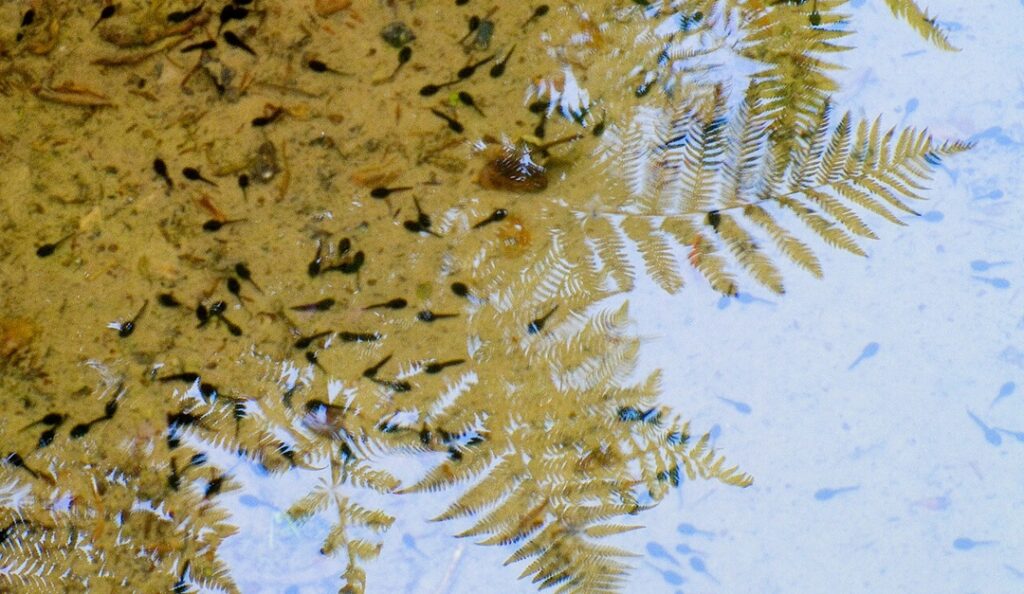
Ferns reflected into a Pool with tadpoles

We are delighted to share that UCL Open Environment has been accepted for indexing in Scopus, one of the world’s leading abstract and citation databases. This milestone follows a rigorous evaluation process and marks a significant step in the journal’s development.

Inclusion in Scopus enhances the visibility and discoverability of research published in UCL Open Environment, and reflects the journal’s growing reputation for quality and impact. It joins a growing list of indexers, including PubMed Central (PMC), that recognise the journal’s contribution to open, accessible scholarship.

Led by Editor-in-Chief Professor Dan Osborn, UCL Open Environment is committed to publishing high-quality, peer-reviewed research that addresses the environmental challenges of today—and tomorrow. The journal is grounded in the principles of open science and fully open access publishing, ensuring that knowledge is freely available to all who seek it.

We extend our thanks to our editorial board, authors, reviewers, and readers for their continued support. This achievement would not have been possible without your contributions.

We look forward to welcoming new submissions from researchers around the world. To learn more about the journal or to submit your work, visit: https://journals.uclpress.co.uk/ucloe/

About the journal

UCL Open Environment is a unique, fully non-commercial, Open Science journal, dedicated to publishing for the benefit of humanity, across all environment-related subjects. It is the home to broad thinking, inter and multi-disciplinary research across all aspects of environment-related subjects. Find out more at https://journals.uclpress.co.uk/ucloe/

Call for papers: The Loss of the ‘Social’ in Social Pedagogy and Social Work?

The International Journal of Social Pedagogy (IJSP) is inviting proposals for a special series titled ‘The Loss of the ‘Social’ in Social Pedagogy and Social Work? Implications and Future Directions’. The series will explore how the social, relational, and community-based foundations of these professions are being challenged – and how they might be revitalised. Read the full call for proposals.

Social pedagogy and social work have historically been rooted in values of inclusion, solidarity, and collective care. However, in recent years, these professions have increasingly been shaped by individualised, clinical, and managerial approaches. Frameworks such as trauma-informed care and Adverse Childhood Experiences (ACEs) have gained prominence, often sidelining the broader social and political dimensions of practice.

This special issue asks what happens when the social mandate of these professions is lost, and and crucially, how can we reclaim it?

What the editors are looking for

Guest editors Mark Smith (University of Dundee), Sebastian Monteux (Abertay University), and Mie Engen (Aalborg University) welcome contributions that critically reflect on:

  • The political, economic, and epistemological shifts affecting social pedagogy and social work
  • How the ‘social’ has been conceptualised, lost, or reimagined across different national and cultural contexts
  • Practice-based examples that resist dominant paradigms and centre relational, community-rooted work
  • Philosophical and theoretical reflections on the future of the social professions

The editors are particularly interested in work that challenges the dominance of psychological and public health discourses, and that foregrounds relationship-centred, socially engaged practice.

Who should submit?

This call is open to both new and experienced authors. The journal encourages submissions from practitioners, researchers, and educators working across disciplines and sectors. Support is available for those less confident in academic writing or writing in English, and the editorial team is happy to discuss ideas in advance.

Submission to this special issue

Expressions of interest

Please send early expressions of interest to the IJSP Editorial Office (editors@internationaljournalofsocialpedagogy.com) by October 31st 2025 in the form of an abstract of 300-500 words, up to six references, and a 50-word biographical statement.

Full-draft submission deadline

Authors will then be invited to submit a full draft for editorial review by April 30th 2026 through the journal’s online submission system. Please consult the notes for authors on the journal’s webpage at https://journals.uclpress.co.uk/ijsp/.
Pre-submission enquires about your ideas are welcomed by emailing the journal, who will be happy to provide further guidance. The journal is keen to encourage new and existing writers and as such we can offer support in a variety of ways, e.g. for new writers, or for writers who are less confident about writing in English.


About the journal

The International Journal of Social Pedagogy is a peer-reviewed, open-access journal published by UCL Press. It is free to publish in and free to read, and it welcomes contributions that explore social pedagogy in its broadest sense—from early childhood to elder care, from theory to practice.
Call for Applications: Editor-in-Chief of UCL Open Environment

A yellow diamond-shaped road sign saying "OPPORTUNITY AHEAD" against a blue sky with clouds.

UCL Press is inviting applications for the role of Editor-in-Chief of UCL Open Environment, an open access journal dedicated to publishing high-quality, peer-reviewed research that addresses the world’s most pressing environmental challenges. This is a voluntary role open only to UCL academic staff. Read the role description and specification.

The journal provides a platform for interdisciplinary and cross-sectoral research across all environment-related subjects, from climate science and ecology to environmental law, policy, and the humanities. It is grounded in the principles of open science and equity, with a mission to make knowledge freely accessible and impactful.

As Editor-in-Chief, the successful candidate will lead the journal’s editorial strategy, working closely with UCL Press and an international editorial board to shape its future direction. The role includes overseeing the peer review process, maintaining editorial standards, and supporting the journal’s growth and visibility within the global research community.

UCL Open Environment is fully open access and non-commercial, with all content freely available from the point of publication. The journal is indexed in major databases including Scopus and PubMed Central, ensuring wide discoverability and reach.

We are seeking an individual with:

  • A strong academic background in an environment-related discipline
  • Experience in scholarly publishing or editorial roles
  • A commitment to open access, interdisciplinary collaboration, and research integrity

This is an exciting opportunity to contribute to the development of a journal that reflects UCL’s values of excellence, innovation, and public benefit.

🗓️ The deadline for applications is 27 July 2025.

📄 For full details and how to apply, download the role description:
https://journals.uclpress.co.uk/media/journals/16/UCLOE_EiC_2025_ad.pdf

🔗 Learn more about the journal:
https://journals.uclpress.co.uk/ucloe/


About the journal

UCL Open Environment is a unique, fully non-commercial, Open Science journal, dedicated to publishing for the benefit of humanity, across all environment-related subjects. It is the home to broad thinking, inter and multi-disciplinary research across all aspects of environment-related subjects. Find out more at https://journals.uclpress.co.uk/ucloe/

UCL Press signs up to the PAAG Charter for Accessible Publishing

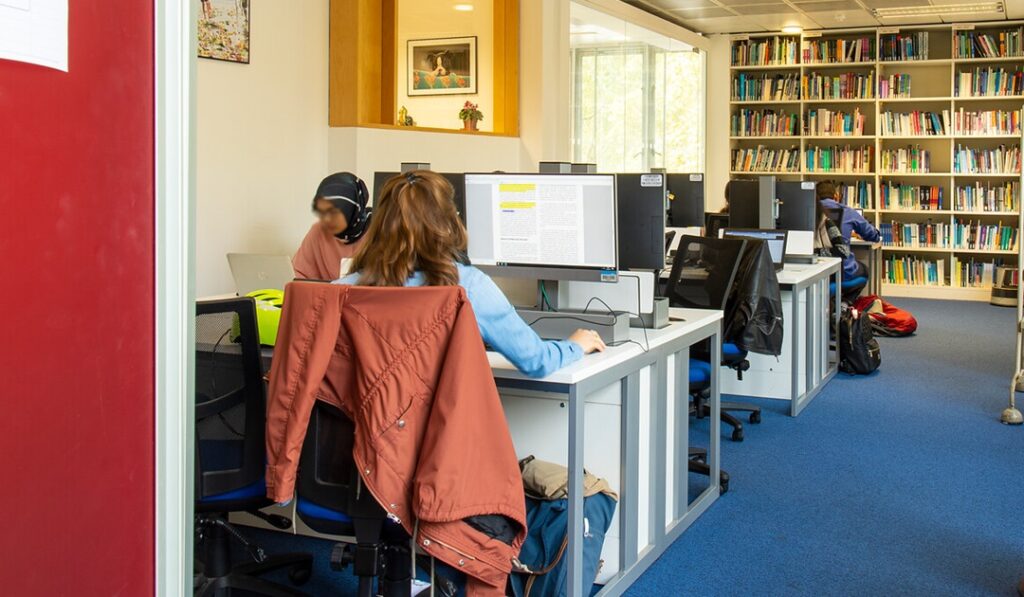
Students working at computer desks in a library with shelves full of books. Taken in ther UCL Great Ormond Street Institute of Child Health Library.

UCL Press is delighted to announce that it has recently signed the PAAG Charter for Accessible Publishing, joining a growing number of publishers committed to improving accessibility in digital publishing.

The Charter, developed by the Publishing Accessibility Action Group (PAAG), outlines a series of practical measures aimed at making digital content more inclusive for readers with print disabilities. These include appointing an internal accessibility lead, publishing a clear accessibility policy, and embedding accessibility features into digital publications.

What this means for UCL Press

As a signatory, UCL Press has committed to:

  • Providing a point of contact for accessibility queries
  • Using accessibility metadata to improve discoverability
  • Monitoring and reporting on progress

We’ve already begun reviewing our workflows and metadata standards to align with the Charter’s recommendations. This work complements our broader commitment to open access and inclusive publishing.

Looking ahead

The European Accessibility Act has come into force this year requiring publishers to reassess their practices. Further updates will follow as we continue to implement changes and share what we learn. For more information about the Charter, visit the PAAG website.

Sign up to our newsletter

Don't miss out!
Subscribe to the UCL Press newsletter for the latest open access books,
journal CfPs, news and views from our authors and much more!