We are currently upgrading our shopping cart; in the interim all orders are being diverted to Waterstones. If you would like to redeem a promotional code, or are an author wanting to place an order, please email us.

Contact us

UCL Press launches Advances in Perioperative Care, a new Diamond Open Access journal

Healthcare workers in a hospital room reviewing patient charts.

UCL Press is proud to announce the launch of Advances in Perioperative Care (APOC), a new Diamond Open Access journal created to support the growing field of perioperative care.

As part of our commitment to widening access to research, the journal is free to read and free to publish in, ensuring that high quality educational content is available to all who support patients through the surgical journey.

APOC publishes case reports and narrative articles that translate evidence into practical guidance for the multidisciplinary teams working in perioperative care. Each article is built around a clear clinical scenario and learning objective, offering insight that readers can apply directly in practice. The journal provides a welcoming and supportive editorial environment where authors receive constructive feedback throughout peer review.

Developed by clinicians and academics at the UCL Centre for Perioperative Medicine, the journal is led by Editor in Chief Professor David Walker and an experienced editorial board representing a range of perioperative disciplines. Together, they aim to build a global community of contributors who share a commitment to improving the experience and outcomes of surgical patients.

APOC invites submissions from healthcare professionals worldwide. The journal welcomes contributions on any area of perioperative care, including clinical management, pharmacy interventions, nursing innovations, digital and data driven approaches and therapies that support recovery and wellbeing. Articles that explore a focused clinical challenge or offer learning from a compelling case study are particularly encouraged.

Find out more at journals.uclpress.co.uk/apoc

Call for Proposals: Exploring Narrative Competence in History Education

In a world shaped by competing narratives and rapid change, how we understand and teach history has never been more important. History Education Research Journal (HERJ) invites scholars, educators, and researchers to contribute to a new open access special series set for publication from mid-2026: Narrative Competence, History & Responsibility. All articles will be Diamond open access, and will not attract APCs.

Why Narrative Competence Matters

We live in a “multi-storied” world, where young people encounter diverse and often conflicting narratives about the past, present, and future. In this context, developing narrative competence—the ability to critically engage with, construct, and deconstruct historical narratives—is essential for fostering democratic values, addressing injustices, and resisting extremist ideologies.

This special series seeks to reimagine how history education can cultivate narrative competence, drawing on rich traditions in history didactics and educational theory. It aims to move beyond viewing history as a static story or purely as an epistemological exercise, and instead explore how historical narratives shape civic life, identity, and agency.

Themes and Questions

Contributors are invited to engage with a wide range of questions, including:

  • What kinds of engagement with the past can help to foster an open democratic political culture, address enduring injustices, and / or counter ultra nationalist, neo-fascist and other extremist political tendencies?
  • What kinds of historical narrations or other types of historical representation can be considered responsible and irresponsible in epistemological, ethical, ontological and other respects.
  • How history education can contribute to refiguring historical agency, and its representation in temporal and other narrative respects?
  • How history education can contribute to the refiguration and use of historical narratives, as practical resources in the everyday life of our democracies?
  • How narratives are appropriated and used in various socio-cultural and political contexts and how new media of narrative generation and dissemination (including AI) may be impacting our societies, cultures and polities?
  • What can cognitive and sociocultural research in History Education tell us about the learning processes – and barriers to learning – impacting critical narrative sense-making, and the processes of meaning construction, deconstruction and reconstruction that it involves.
  • The uses and limitations of critical historical knowledge and understanding as tools for informing civic and other forms of action in the present.

Submission Details

  • Expressions of interest due: 31 August 2025
  • Full paper submissions due: 27 February 2026

To express interest, please submit a 300–500 word abstract, up to six references, and a 50-word biographical statement for each author. Submissions should be sent via email to the series editors:

About the Journal

History Education Research Journal (HERJ) is a leading international, fully open-access, peer-reviewed journal that focuses on the global significance and impact of history education. It provides a platform for scholarly discourse on contemporary issues, policies, and practices in history education, drawing on a wide range of research methodologies. For more information on submission guidelines and to read the full call for proposals, please visit the HERJ website.

UCL Open Environment now indexed in Scopus

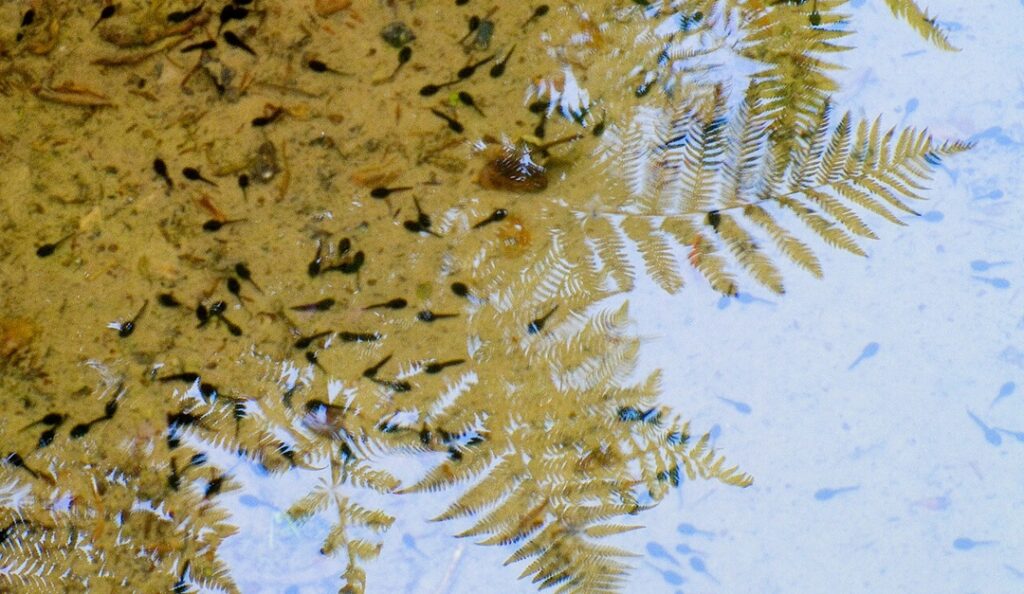
Ferns reflected into a Pool with tadpoles

We are delighted to share that UCL Open Environment has been accepted for indexing in Scopus, one of the world’s leading abstract and citation databases. This milestone follows a rigorous evaluation process and marks a significant step in the journal’s development.

Inclusion in Scopus enhances the visibility and discoverability of research published in UCL Open Environment, and reflects the journal’s growing reputation for quality and impact. It joins a growing list of indexers, including PubMed Central (PMC), that recognise the journal’s contribution to open, accessible scholarship.

Led by Editor-in-Chief Professor Dan Osborn, UCL Open Environment is committed to publishing high-quality, peer-reviewed research that addresses the environmental challenges of today—and tomorrow. The journal is grounded in the principles of open science and fully open access publishing, ensuring that knowledge is freely available to all who seek it.

We extend our thanks to our editorial board, authors, reviewers, and readers for their continued support. This achievement would not have been possible without your contributions.

We look forward to welcoming new submissions from researchers around the world. To learn more about the journal or to submit your work, visit: https://journals.uclpress.co.uk/ucloe/

About the journal

UCL Open Environment is a unique, fully non-commercial, Open Science journal, dedicated to publishing for the benefit of humanity, across all environment-related subjects. It is the home to broad thinking, inter and multi-disciplinary research across all aspects of environment-related subjects. Find out more at https://journals.uclpress.co.uk/ucloe/

Call for Applications: Editor-in-Chief of UCL Open Environment

A yellow diamond-shaped road sign saying "OPPORTUNITY AHEAD" against a blue sky with clouds.

UCL Press is inviting applications for the role of Editor-in-Chief of UCL Open Environment, an open access journal dedicated to publishing high-quality, peer-reviewed research that addresses the world’s most pressing environmental challenges. This is a voluntary role open only to UCL academic staff. Read the role description and specification.

The journal provides a platform for interdisciplinary and cross-sectoral research across all environment-related subjects, from climate science and ecology to environmental law, policy, and the humanities. It is grounded in the principles of open science and equity, with a mission to make knowledge freely accessible and impactful.

As Editor-in-Chief, the successful candidate will lead the journal’s editorial strategy, working closely with UCL Press and an international editorial board to shape its future direction. The role includes overseeing the peer review process, maintaining editorial standards, and supporting the journal’s growth and visibility within the global research community.

UCL Open Environment is fully open access and non-commercial, with all content freely available from the point of publication. The journal is indexed in major databases including Scopus and PubMed Central, ensuring wide discoverability and reach.

We are seeking an individual with:

  • A strong academic background in an environment-related discipline
  • Experience in scholarly publishing or editorial roles
  • A commitment to open access, interdisciplinary collaboration, and research integrity

This is an exciting opportunity to contribute to the development of a journal that reflects UCL’s values of excellence, innovation, and public benefit.

🗓️ The deadline for applications is 27 July 2025.

📄 For full details and how to apply, download the role description:
https://journals.uclpress.co.uk/media/journals/16/UCLOE_EiC_2025_ad.pdf

🔗 Learn more about the journal:
https://journals.uclpress.co.uk/ucloe/


About the journal

UCL Open Environment is a unique, fully non-commercial, Open Science journal, dedicated to publishing for the benefit of humanity, across all environment-related subjects. It is the home to broad thinking, inter and multi-disciplinary research across all aspects of environment-related subjects. Find out more at https://journals.uclpress.co.uk/ucloe/

Call for papers: Truth-telling in history education: Truth and justice in a post-truth era

A person in a green shirt and denim shorts performs a handstand between ancient stone columns.

In an age marked by misinformation, contested narratives, and global reckonings with historical injustices, the role of history education has never been more critical. The History Education Research Journal (HERJ) invites scholars, educators, and practitioners to contribute to a special series:  ‘Truth-telling in History Education: Truth and Justice in a ‘Post-truth’ Era.’ All articles will be published diamond open access and will not attract APCs. Read the full call for proposals.

This timely series seeks to explore how truth-telling is conceptualized, practiced, and contested in history education across diverse national and cultural contexts. It responds to the urgent need for educational spaces that confront difficult histories – colonialism, genocide, systemic racism, and other legacies of injustice – rather than perpetuating sanitised or nationalist narratives.

Why This Series Matters

From Truth and Reconciliation Commissions in Canada and Australia to curriculum reforms in Europe and beyond, societies are grappling with how to teach the past honestly and inclusively. Yet, these efforts are increasingly challenged by the rise of ‘fake news’ political polarisation, and the erosion of public trust in institutions and expertise.

This special series aims to position history classrooms as critical spaces for cultivating media literacy, epistemic awareness, and a commitment to justice. It invites contributors to examine how educators can navigate the emotional, political, and ethical tensions of teaching contested histories, and how students can be empowered to engage with the past in meaningful and transformative ways.

Key Themes and Questions

Proposals should engage with one or more of the following themes:

  • Theoretical frameworks: What does truth-telling mean for history education? How might truth-telling be interpreted in history education? How do truth and reconciliation sit in relation to existing theoretical approaches and debates such as ‘truth’ in history, postmodern critiques of truth, historical consciousness, historical thinking, materialist and post-qualitative approaches? How do epistemological and ethical considerations inform approaches to truth-telling in history education?
  • Pedagogical approaches: How can educators balance multiple perspectives and historical truths in the classroom? What methodologies are effective for teaching contested or difficult histories? How do teachers navigate emotional, political, and ethical tensions in the classroom? What educational outcomes are associated with approaches that confront difficult historical truths? What effects do knowledge of history and explicit instruction discourses have on truth telling?
  • Curriculum and policy: How do curricula support or suppress truth-telling? How does curricula reflect particular truths and exclude others? How are diverse histories, peoples, groups, and cultures represented in history curricula and textbooks?
  • Teacher and student perspectives: How do teachers and students reason about truth telling? How do teachers navigate their own positionality and identity when teaching difficult historical truths? How do students respond to curriculum that addresses historical injustices related to their communities? In what ways do students’ prior beliefs and family histories/narratives interact with truth-telling in the history classroom?
  • Public history and post-truth digital media: How do museums, memorials, and online platforms contribute to or complicate truth-telling? How does the post-truth (social) media landscape and artificial intelligence shape truth-telling discourses in history education? How might teachers leverage digital tools to support critical engagement with historical narratives?
  • Indigenising history education: How can the engagement and reframing of history education from First Nations perspectives support empathy, reciprocity, justice, accountability, and the development of the whole student? How can this enable community health, healing and sovereignty? How could this contribute to the community building
    capacity of all students of history?
  • Decolonising history education: How are Indigenous and other marginalised perspectives integrated or resisted in school history? How does truth-telling lead to justice and accountability? How does truth-telling sits with decolonising frameworks for history education?
  • Truth and justice commissions and education: What educational lessons can be drawn from the legacies of truth and justice commissions?
  • Truth and identity: How does truth telling in history education intersect with issues of identity and representation? How can history education promote understanding and reconciliation in post-conflict settings?

The series welcomes a wide range of contributions, including empirical studies, theoretical analyses, literature reviews, and critical reflections on practice.Read the full call for proposals.

Submission Details

Submissions will be peer-reviewed and should align with HERJ’s commitment to advancing critical, inclusive, and globally relevant history education research. All articles will be published diamond open access and will not attract APCs.

About HERJ

History Education Research Journal (HERJ) is a leading international, fully open-access, peer-reviewed journal that focuses on the global significance and impact of history education. It provides a platform for scholarly discourse on contemporary issues, policies, and practices in history education, drawing on a wide range of research methodologies. For more information on submission guidelines and to read the full call for proposals, please visit the HERJ site.

Making The Journal of the Sylvia Townsend Warner Society accessible for all

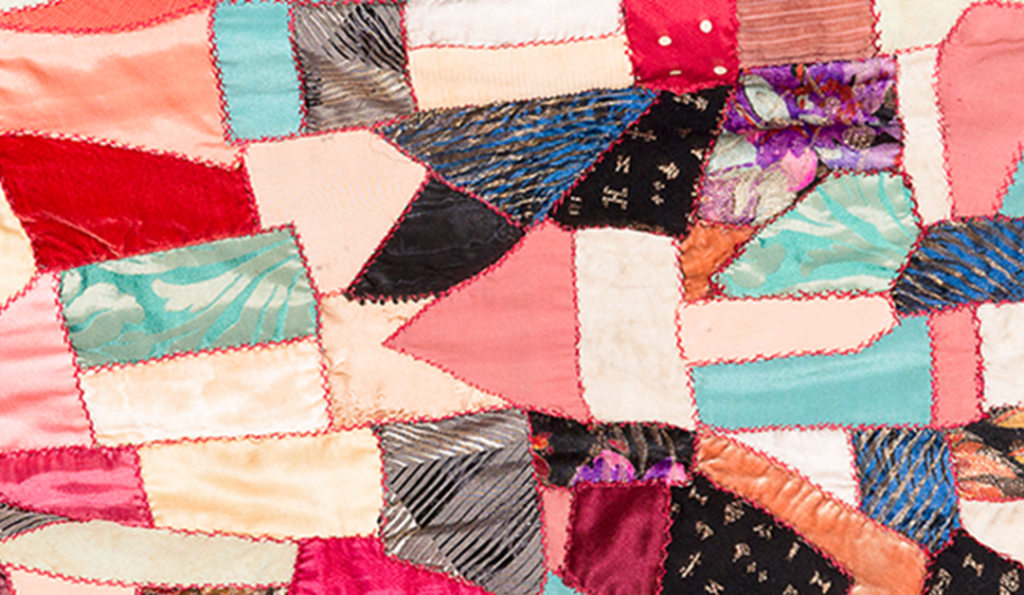
Image of patchwork quilt.

UCL Press is pleased to announce that the latest volume of The Journal of the Sylvia Townsend Warner Society, volume 24 (2024), has published with alt text in the html and PDFs for all images.

The Journal of the Sylvia Townsend Warner Society is a peer reviewed, open access journal, aiming to create a wider interest in the life and works of Sylvia Townsend Warner. Scholarly articles and pieces by well-known contemporary writers describing their appreciation of Warner are published alongside previously unpublished archival works by Warner, with each volume boasting an impressive list of figures which are mostly reproduced with permission from the Sylvia Townsend Warner and Valentine Ackland Archive at the Dorset History Centre, but occasionally seen for the first time through the journal.

In the current volume, readers can see candid pictures of Sylvia Townsend Warner, taken by her partner Valentine Ackland, alongside typescript notes of Warner’s manuscripts, and Warner’s handwritten correspondence to author Thomas Hardy.

The inclusion of alt text enables assistive technologies to read a description of these images aloud to the reader who cannot see them. This means the journal will be able to reach a wider audience and ensures equal access for all. First piloted in a Research For All article, this marks the first full volume of a UCL Press publication to publish with alt-text.

The current volume of The Journal of the Sylvia Townsend Warner Society also features the Society’s 2023 biennial lecture, ‘‘The True Voice of the Heart’: Capture and Evasiveness in Sylvia Townsend Warner’s Life and Work’. The Sylvia Townsend Warner Lecture series is a biennial event run by the journal and supported by UCL Press. The series offers the opportunity to hear from acclaimed writers whose work touches on Warner’s life and works. The 2023 lecture was delivered by Claire Harman, who is an award-winning writer and critic known for her pioneering work on Sylvia Townsend Warner.

About the UCL Press journals programme

A version of this article appeared on the journal’s blog.

UCL Press are proud to publish 15 Open Access journals, that cover a broad range of topics across the humanities, law, and social sciences, as well as science, technology, and engineering. We are also home to UCL Open Environment, the first and only dedicated, multidisciplinary, Open Science journal that publishes broadly across all environment related subjects. Explore our journals at journals.uclpress.co.uk

Remembering Sylvia Townsend Warner in 2024

Image of patchwork quilt.

On the anniversary of her birth, the UCL Press journals team reflects on the life and works of Sylvia Townsend Warner.

Born on 6th December 1893, Warner was an English novelist and poet. In 1925 Warner published her first collection of poetry, The Espalier and her first novel, Lolly Willowes, published the following year, establishing her as a literary talent, a contemporary of Virginia Woolf and Djuna Barnes. Warner contributed short stories to the New Yorker for more than forty years and went on to write six more novels.

Warner lived in Dorset for most of her life with her partner, Valentine Ackland. They joined the Communist Party of Great Britain and worked in Spain during the Civil War and her writing at the time reflected on contemporary politics.

Warner continued publishing throughout her life, subverting dominant narratives on gender, sexuality and politics. Though interest in her work remained steady during her lifetime, the attention her work has gained in the years following her death in 1978 has brought renewed enthusiasm and new readers to her work.

In this context, The Sylvia Townsend Warner Society was launched in 2000 with the aim to promote a wide readership and better understanding of the writings of Warner. The society also launched a new academic journal, The Journal of the Sylvia Townsend Warner Society, edited by Professor Peter Swaab (UCL English, University College London, UK). Published by UCL Press, The Journal of the Sylvia Townsend Warner Society is a peer reviewed, open access journal, aiming to create a wider interest in the life and works of Sylvia Townsend Warner. Scholarly articles and pieces by well-known contemporary writers describing their appreciation of Warner are published alongside previously unpublished archival works by Warner.

In addition to the journal, the society, with the support of UCL Press, host a bi-annual lecture offering the opportunity to hear from acclaimed writers whose work touches on Warner’s life and works. The previous four Sylvia Townsend Warner Lectures were given by Maud Ellmann (2017), Peter Swaab (2019), David Trotter (2021) and Claire Harman (2023). All essays are published by UCL Press in The Journal of the Sylvia Townsend Warner Society and are freely available online as open access publications. Lectures are also recorded and can be freely streamed online from the journal site, here.


About the author

This post originally appeared on the blog of The Journal of the Sylvia Townsend Warner Society. The original post can be read on their site.

History Education Research Journal publishes first article in new special series on history education in historical perspective

A person in a green shirt and denim shorts performs a handstand between ancient stone columns.

We are excited to share the news of the launch and publication of a new special series in History Education Research Journal about ‘History Education in Historical Perspective’.

Edited by Dr Tyson Retz (University of Stavanger, Norway) and Prof Terry Haydn (University of East Anglia, UK), this open access special series brings together a collection of high-quality articles that explore different national contexts of theory and practice, the different intellectual traditions of educational thought that have made an impact across national borders and papers that consider what, in the history of history education, remains a potentially valuable source of new insight. The intent is to provide new historical insights on these topics and to characterise the implications of this research. Contributors of the papers in this series bring their histories to bear on discussion of the current and future directions of historical teaching and learning.

The first article published in the series is Historical narratives: how Portuguese students aged 10 and 15 make use of national history  by Ana Isabel Moreira (University of Porto, Porto, Portugal) and Isabel Barca (University of Porto, Porto, Portugal). Accompanying the article is the blog post ‘Do they know national history’ in which the authors discuss their paper and explore historical narratives in history education.

More articles will publish in this special feature over time. . Read the special feature free.

Architecture_MPS- Now indexed in Scopus!

We are delighted to announce that, following a rigorous evaluation process,  the diamond open access journal Architecture_MPS has been accepted for indexing in SCOPUS.

Scopus is widely recognised as one of the largest academic abstract and citation databases, encompassing journals, books, and conference proceedings. Researchers publishing in the journal will now be indexed automatically in SCOPUS, in addition to a broad list of other indexers, including Web of Science.

The official journal of the international research organisation Architecture, Media, Politics, Society (AMPS), Architecture_MPS is a fully peer-reviewed, international, diamond open access journal that addresses the growing interest in the social and political interpretation of the built environment, from a multidisciplinary perspective.

Architecture_MPS focuses upon critical and original engagement with the built environment and explicitly welcomes interdisciplinary perspectives. The journal seeks to explore an overlaid terrain in which the physical, material and the environmental are critically examined through the prisms offered by other fields. Publishing articles from planners, architects, urban designers, sociologists, artists, urban economists, and lawyers specialized in land rights, Architecture_MPS aims to address the relationship of these disciplines with the built environment.

Find out more about the journal, and read and download articles free, at journals.uclpress.co.uk/amps

Peer review week Q&A with the editor of Radical Americas Journal

To mark Peer Review Week 2024, Sunbul Akhtar caught up with Bill Booth, co-editor of the journal Radical Americas (RA). In this Q&A, which originally appeared on the Radical Americas blog, Bill provides an insight to the processes involved in securing reviewer comments, and offers advice to early career researchers on how to get involved in the scholarly publishing community. This Q&A is an insightful read about a function of academic publishing that has become a cornerstone of research integrity.

Sunbul (SA): How do you select reviewers for each paper?

Bill Booth (BB): The assigned editor for any given submission will use a combination of their subject knowledge and networks to identify suitable reviewers. This can be challenging in some circumstances, such as where the submission is of an interdisciplinary nature, or covers an area with a limited existing literature.

SA: Are there any other challenges you’ve found in getting a good review?

BB: On the whole, I would say it’s harder getting people to commit to review in the current climate than it is to then get a good review from them; most of our reviewers are extremely constructive, engaged and enthusiastic. It is getting harder, though, for various reasons, to secure reviewers.

SA: If you could give three key points for reviewers to consider when they are writing what would you say?

BB: Think about context – the journal, the field, the topic – and not solely about content, though of course that is very important!

Empathise – we expect and welcome critique, and good scholarship depends on it, but it is best framed in a constructive and actionable manner.

Contribute – bring your own suggestions and use your expertise to help shape the process of scholarly publication!

SA: How would you encourage early career researchers to get involved in the peer review process?

BB: Make yourself known! We positively welcome early career researchers, sometimes paired with a well established senior scholar, to our review process. It’s one of academia’s unspoken truths, but early career often means that much more enmeshed with the newest scholarship.

SA: This year’s theme for peer review week is Innovation and Technology in Peer Review. With the advent of AI tools to assist writing up research, do you imagine A.I. could be used to provide a good review?

BB: Nothing I’ve read about A.I. makes me think so.

SA: This year’s theme for peer review week is Innovation and Technology in Peer Review. With the advent of AI tools to assist writing up research, do you imagine A.I. could be used to provide a good review?

BB: A huge thank you! I review for several journals so I know how much effort it entails; as an editor, I also know how vitally important it is to the production of new, innovative and challenging scholarship!


About the authors

Sunbul Akhtar is Journals Development Editor at UCL Press. Her portfolio is wide-ranging and includes UCL Open: Environment, History Education Journal, Radical Americas and Architecture_MPS.

Bill Booth is Lecturer in Latin American History at UCL, London, in addition to being co Editor-in-Chief of Radical Americas.

Sign up to our newsletter

Don't miss out!
Subscribe to the UCL Press newsletter for the latest open access books,
journal CfPs, news and views from our authors and much more!