University College London: The Bloomsbury Campus praised as ‘a magnificent new architectural history’ in the Daily Telegraph

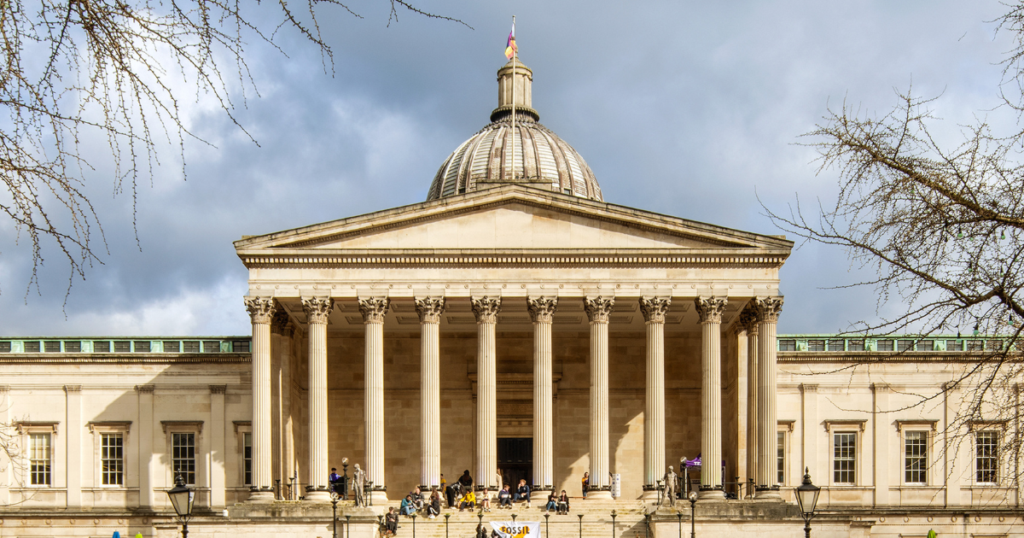
The UCL Portico

UCL Press is pleased to note the recent coverage of University College London: The Bloomsbury Campus in the Daily Telegraph. Writing in the paper, Christopher Howse described the volume as ‘a magnificent new architectural history of UCL’s Bloomsbury campus’, recognising the significance of this landmark publication for the university’s bicentenary.

Published as part of a trio of books marking UCL’s two hundredth year, the volume offers the most comprehensive study to date of the buildings, landscapes and planning decisions that have shaped UCL’s central London home. It is the nineteenth volume in the long running Survey of London series and the first to be published by UCL Press, where it is available in full as open access.

The authors trace the evolution of the Bloomsbury estate from UCL’s radical beginnings in 1826 to its position today as a global university committed to openness, innovation and public purpose. Through extensive archival research and newly commissioned photography, the book brings to light the architectural character of the campus and the ideas that have guided its development over two centuries.

UCL Press publishes first open‑access volume in Survey of London series

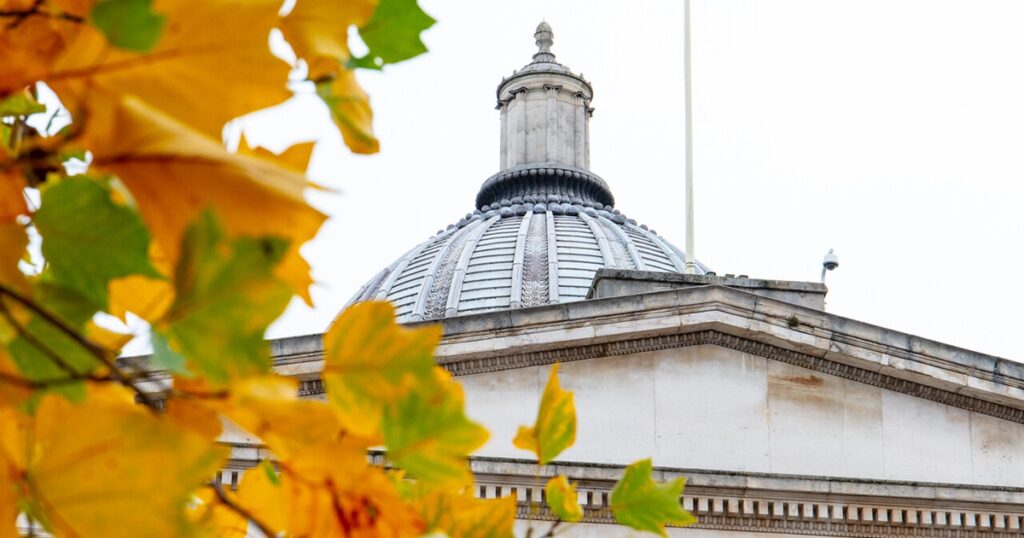
UCL Portico and Dome and Autumn leaves of the Ginkgo Biloba

UCL Press is delighted to announce the publication of the first Survey of London volume to be released in open access: University College London: The Bloomsbury Campus.

Formerly published by Yale University Press, the Survey of London is a renowned series of architectural and topographical studies documenting the evolving built environment of London’s neighbourhoods. Known for its meticulous research and richly illustrated volumes, the series is an indispensable resource for anyone interested in the history and architecture of the capital.

The new volume offers an in‑depth account of UCL’s Bloomsbury campus, tracing its architectural development, historical importance, and the role its buildings have played in shaping the university’s identity. It is the first volume in the series to be published by UCL Press, and the first to be made freely available as an open access PDF.

Its publication marks the start of UCL’s 200‑year celebrations, reflecting the university’s longstanding commitment to sharing knowledge widely and supporting global access to scholarship. Making the Survey of London openly accessible underscores UCL’s dedication to public engagement and the dissemination of high-quality research.

Commissioning editor Dr Chris Penfold said: ‘We are very pleased to welcome the Survey of London series to UCL Press. The series has a long and distinguished history. The combination of new research, detailed building-by-building analysis and extensive illustrative material makes the series an indispensable tool for architectural historians. We look forward to working with the team on forthcoming volumes.’

Colin Thom, Director of the Survey of London, said: ‘The move to UCL Press opens up an exciting new chapter in the Survey of London’s long and distinguished history. The UCL Press open-access model – the first established by a UK university press – is very much in keeping with the Survey’s founding ethos and public-service traditions, and promises a full range of publishing formats that will achieve far wider outreach and impact for us, while maintaining the continuity and posterity of the series. We are also delighted that the first benefit of this new relationship should be a monograph volume shedding new light on 200 years of UCL’s Bloomsbury campus’.

New open access books published in September 2025

Rock pool

September marks the start of a new academic year, and UCL Press welcomed it with a selection of five new open access titles. September’s releases spanned museum studies, pedagogy, urban knowledge co-production, Victorian collecting, and children’s wellbeing in cities.

Object-Based Learning: Exploring museums and collections in education

Thomas Kador

Object-Based Learning provides a concise overview of some of the most important approaches to material culture and object analysis in plain and easily understandable language, that is equally accessible to undergraduate and postgraduate students as well as lecturers.

Read and download free.

Millionaire Shopping: The collections of Alfred Morrison, 1821-1897

Edited by Caroline Dakers

Millionaire Shopping is the first full, detailed and original account of the huge and unstoppable collecting and patronage of Alfred Morrison (1821-1897) who was one of the most important Victorian collectors and patrons of the arts. Each chapter is written by an expert in the field and dedicated to a particular aspect of Morrison’s collecting and patronage.

Read and download free,

Urban Childhoods: Growing up in inequality and hope

Edited by Claire Cameron

Urban Childhoods puts children’s and families’ voices centre stage while investigating ways of bringing children’s wellbeing to the fore in planning for urban life. The book explores themes that start from what children find important and details strategies that emerged from a major prevention programme conducted in two English cities.

Read and download free,

Co-production of Knowledge in Action: Emancipatory strategies for urban equality

Cassidy Johnson, Vanesa Castán Broto, Wilbard Kombe, Catalina Ortiz, Barbara Lipietz, Emmanuel Osuteye, Caren Levy

Co-production of Knowledge in Action examines how co-production is articulated and deployed in cities such as Lima, Freetown, Kampala, Dar es Salaam and Delhi. It engages with ongoing experiences of co-production-inspired action, mapping the different aspirations that inform co-production practices and the impacts on urban communities.

Read and download free.

Deconstituting Museums: Participation’s affective work

Helen Graham

Deconstituting Museums argues that participation collides with dominant paradigms of inclusion, diversity and decision-making on behalf of ‘future generations’ and ‘the public’. Participation draws in ideas from direct and horizontal political traditions. How might participation and its affects enable new political structures of heritage?

Read and download free

We’ll be back next month with more open access gems. Until then, stay safe, and happy reading!

New open access books published in August 2025

Stones and Sand on Brighton Beach

August is traditionally a time to relax – but we haven’t slowed down! Six brand new open access books have landed this month, covering everything from blindness to Soviet youth games, historical travel to democracy.

Bringing together leading international scholars and artists in the emerging field of ‘blindness arts’, Beyond the Visual: Multisensory modes of beholding art seeks to broaden the discussion of multisensory ways of beholding contemporary art, with a particular emphasis on modes that transcend a dependency upon sight. A true delight to read.

Moving beyond current scholarship in urban and regional studies, Informational Peripheries: Rethinking the urban in a digital age presents a case for ‘informational peripheries’ as an analytical lens to understand the uneven, fragmented and disconnected geographies of urban peripheries in the Global South. Download it free.

So absorbing that one of our team recommended it as excellent bedtime reading, Leagues of Laughter: War, comedy and the Soviet legacy in Russia and Ukraine traces how a Soviet-created youth game changed as students’ nation states collapsed, competed and went to war. A series of interconnected, cross-border stories spanning 60 years illustrates how laughter and oppression entwined in the long cultural context of the war in Ukraine. Download it free.

Our Marketing Manager’s Summer read, No Country for Travellers? British visitors to Spain and Portugal, 1760–1820 explores the rise and nature of British travel to Spain and Portugal between 1760 and 1820. Using extensive archival and printed sources left by travellers in the period, the compelling narrative is a broad and deep investigation into all aspects of travel experience, including non-combatant witness to the Peninsular War. Download it free.

With more than 30 authors, the ambitious The Sciences of the Democracies proposes holistic study of democracy that draws on five sources of knowledge: individual people, groups of people, non-textual media, texts and non-humans. It argues that inclusion of these sources leads to the discovery of democratic practices and institutions unfamiliar to the conventional ‘Western’ perception. Read it free.

The fascinating Women’s Labour Activism in Eastern Europe and Beyond: A new transnational history presents a deeply researched, inclusive history of women’s labour activism in Eastern Europe and transnationally from the age of empires to the late 20th century. It explores women’s activism to improve working conditions and living circumstances of lower-income and working-class women and communities in the region and internationally. Download free.

We’ll be back again next month with a round up of the very best open access books. As always, stay safe!

ICCEES 2025 World Congress reading list

UCL SSEES winding staircase.

To mark the ICCEES 2025 World Congress at UCL in London this week, we’ve put together a reading list of essential open access books from UCL Press.

If you’re attending, Dr Chris Penfold, our commissioning editor, will be there to talk you through our extensive list of titles, and answer questions about how to publish your next open access book with UCL Press.

Join the UCL Press mailing list to find out more about the latest open access titles, or visit our stand!

Cover of Redefining Russian Literary Diaspora, 1920-2020

Bill Hillier’s legacy, and the future of Space Syntax – notes from the Space Syntax book launch

Space Syntax, a collection of the late Bill Hillier’s work that reflects the progression of his influential ideas across his career, published in April. In a post that originally appeared on Mapping Urban Form and Society, Professor Laura Vaughan reflects on Bill Hiller’s legacy, the future of Space Syntax, and a launch event that took place in May.

It’s hard to believe that it’s three years since I first wrote to leading space syntax scholars John Peponis (Georgia Tech) and Ruth Conroy Dalton (Northumbria) with the idea for an edited volume of Bill’s key papers. We had the mad notion that it would be quite a simple process. In some ways it was: we selected papers that weren’t available elsewhere for which Hillier was first author, choosing pieces that entailed significant theoretical and methodological insights, with a bias to the earlier articles and book chapters that established the foundations of the discipline of space syntax.

Edited by me, Laura Vaughan, John Peponis, and Ruth Conroy Dalton, the book offers access to essential papers on the origins and development of the discipline of space syntax, ranging from pieces on architecture as a professional and research discipline, through to later articles that present a theory of the spatial structure of the city and its social functions. By bringing together writing from across Bill Hillier’s career span of half a century, with specially commissioned introductions by a wide range of international experts in the field, we aimed to contextualise his key ideas.

The selection of contributors was relatively straightforward, as we did so on the basis that they had written something relevant about the piece in the past and/or were from adjacent fields that we felt that could add an interesting angle to Bill’s ideas. Inevitably, this consequently led to many space syntax theorists not being included.

The main themes in Bill’s work were summarised for the book’s introductory chapter, recontextualising their historical development in an extended piece written by the three editors led by John Peponis. Both he and Ruth checked, and revised where necessary, formulae and graphs that had been corrupted in earlier publications.

Page from one of Bill Hillier’s numerous notebooks, courtesy of Sheila Hillier

All the pieces were reformatted from the original, frequently poor quality photocopied papers. This involved, as well as rekeying the text of many of the earlier pieces, checking and revision of references, with additional editorial endnotes. The book also includes a list of published works by Bill Hillier. The illustrations were redrawn by a team led by Ruth Conroy Dalton, working with Emad Alyedreessy, while Nick (Sheep) Dalton, author of the original space syntax suite of software, wrote the code to generate new syntax graphs in several instances. An essential index to the book was prepared by Garyfalia (Falli) Palaiologou.

Photos from the launch courtesy of Jonathan Rock Rokem. Left-hand image shows John Peponis, Laura Vaughan, and Ruth Conroy Dalton; Right-hand image shows Ricky Burdett, Kerstin Sailer, Michal Gath-Morad, and Vinicius (Vini) Netto

The launch held a panel discussion to reflect on Hillier’s legacy and explore future directions for the field of space syntax, with prompting questions from the event’s chair, Kimon Krenz. Linked to below are the brief papers prepared by John Peponis and Ruth Conroy Dalton, as well as those of several of the panellists.

Introduction to Bill Hillierby John Peponis

Where Might Bill Hillier Have Gone Next? Reflections on the Future Directions of Space Syntaxby Ruth Conroy Dalton

Charting the Adjacent Possible: Future explorations for Space Syntax as a socio-spatial theory, by Vinicius M. Netto

What innovative cognitive frameworks or methods could revolutionise the way we understand human interaction with space? by Michal Gath-Morad, University of Cambridge

Can space syntax better accommodate the social, institutional, and behavioural nuances that define how people truly use and experience space? by Kerstin Sailer


About the author

Professor Laura Vaughan is Director of the Space Syntax Laboratory at the Bartlett School of Architecture, University College London, where she is Professor of Urban Form and Society. Following an architectural design degree at the Bezalel Academy of Art and Design, Jerusalem, Israel, she studied for an MSc and PhD at the Lab. After several years working with Bill Hillier at Space Syntax Limited, she returned to UCL in 2001 as lecturer and Programme Director, MSc Advanced Architectural Studies (now MSc/MRes Space Syntax). She has been the Lab’s Director since 2014. In addition to co-editing Space Syntax, she also edited Suburban Urbanities (UCL Press, 2016) and is author of Mapping Society (UCL Press, 2018).

Read her blog to find out more about her work: Mapping Urban Form and Society.

Walking the metro line in Lahore

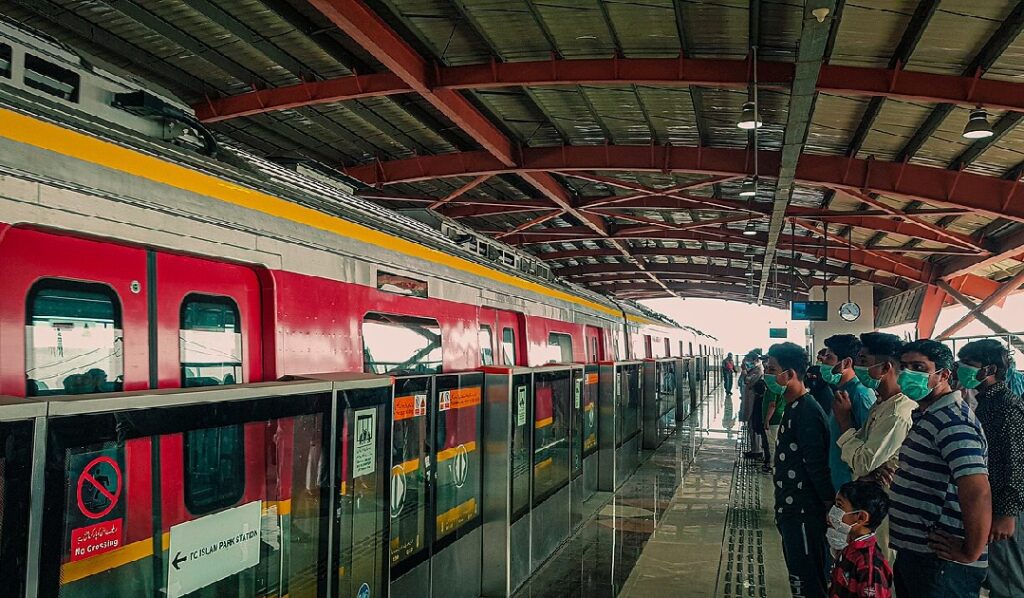
Orange Line Metro Train, Chauburji Station, Lahore

Published last month, Lahore in Motion provides a portrait of the Pakistani metropolis by tracing the path of the city’s first metro rail corridor. Construction for this major piece of public infrastructure began in 2015 and, over subsequent years, the nascent ‘Orange Line’ rapidly reconfigured Lahore’s urban landscape – displacing residents and slicing through existing structures along its route, all while offering Lahoris the promise of ‘world-class’ public transportation.

To mark the book’s publication, we are proud to share an extract from the introduction that explains why the stories from a series of walks along the metro’s 27-kilometre path are important in reflecting on the relationship between urban change and belonging in a historic city.

In October 2020, Pakistan’s first rapid transit metro train was inaugurated in Lahore. The ‘Orange Line’, as it is known, has dramatically reconfigured Pakistan’s second largest city. The metro connects the north-east of Lahore to its south-west along a 27-kilometre route dotted with 26 stations. In a city of 13 million, the train has the capacity to accommodate 30,000 passengers per hour. For most of its path across Lahore, the line takes the form of a viaduct, a raised track elevated over existing roadways, casting a shadow on the buildings and lives that fall beneath. For less than 2 kilometres near its midway point, where the line intersects with the old colonial-era thoroughfare of Lahore, the Mall Road, the metro dips briefly underground.

Even before the line was opened to the public, the monumental form of the viaduct was being integrated into the everyday rhythms of the environments it crossed. Its huge pillars provided ample space for posters and advertisements – cheap buses to Islamabad, news of an upcoming political rally. The paved or bricked islands it created in the middle of traffic-filled streets were turned, where they were wide enough, into new spaces for sociality or trade – men playing ludo near Bund Road, cans of paint for sale on Nicholson Road. Some of these islands acquired young gardens, or were planted with small trees, though much of this greenery wilted early on, covered in layers of dust, hidden from the sky by the viaduct and so unable to be refreshed by rain.

This process of incorporation into Lahori life has not been without its frictions. When construction of the Orange Line was announced in 2015, it prompted vocal opposition across a range of interest groups, from civil society activists to party politicians, religious leaders to local residents’ groups. Although never operating as a cohesive coalition, this shifting contingent was nevertheless responsible for a series of street protests, political campaigns and legal challenges over subsequent years. Much of this opposition was linked to the cost and scale of the project and to the nature of its implementation. Financed through a US$1.6 billion soft loan from China, the project was critiqued by many as a costly and unnecessary undertaking, particularly given widespread evidence of underinvestment in areas of health and education in the city. The 27-kilometre route was carved through some of the most densely populated areas of Lahore, and the line’s construction required the destruction of small commercial centres and neighbourhoods, displacing thousands of residents. Poor standards of occupational safety resulted in the deaths of at least 50 workers during the five years of construction. Many were migrant labourers, living and working in precarious conditions.1 Critics also seized on the proximity of the line’s path to several historic sites, from the seventeenth-century paradise garden at Shalamar Bagh to the monumental Mughal gateway Chauburji. Concerns with how official permission was secured to enable construction so close to legally protected built heritage led to a suspension of construction in August 2016, ordered by the Lahore High Court but eventually overturned (with some small concessions) by Pakistan’s Supreme Court in late 2017.

At the heart of civil society opposition to the Orange Line project was a deep unease with the Punjab government’s relentless pursuit of development, particularly as overseen by the popular centre-right political party in the province, the Pakistan Muslim League (PML-N) and its then-Chief Minister, Shehbaz Sharif. The petition which secured the High Court’s order of suspension characterised the Orange Line as a ‘white elephant’ pursued for ‘cheap publicity’, a prestige object for the ruling party rather than something genuinely needed by Lahore’s residents. Highly visible megaprojects like the Orange Line have been framed plainly by many activists as threats to the city of Lahore – its historic identity, its ways of life and its distinctiveness as an urban centre. The viaduct represented a dramatic example of what some viewed as the ‘Dubai-fication’ of Lahore: the creation of an anonymised, generic space of glass, steel and concrete, following a Gulf model for prosperity rather than something ‘appropriate’ to Lahore’s proud local culture and centuries-old history.

This brand of critique deploys a narrative that will be familiar across a range of twenty-first century urban contexts: neoliberal development, in the shape of large-scale infrastructure projects and associated speculation and commercialisation, is destroying local ways of navigating, knowing and inhabiting a city. But this narrative has its own risks. In framing development as an external imposition following a ‘foreign’ logic of neoliberalism, it can flatten our understanding of the ‘local’, failing to account for the variations in class, ideology and historical experience that shape individual lives in a city. Large-scale projects do, of course, have substantial (and, often, irreversible) impacts, and there does appear to be a shift in the manner and speed in which such developments are taking place. But the ways in which these changes are felt and understood can differ vastly between urban constituencies. They are also frequently contradictory. Many of those dispossessed and displaced by the construction of the Orange Line, for instance, opposed the project entirely. But some readily agreed to leave their homes in the hope that they would resettle in more upwardly mobile neighbourhoods elsewhere in the city. Other affected residents embraced the building of a new mass transit line, but simply wished for their voices to be included in project design and implementation.

Another risk of this narrative is its commitment to an ‘authentic’ Lahore that must be rescued from braying bulldozers and the vulgar aspirations of careerist politicians. The impact of unregulated expansion on the city’s environment – from polluted waterways to shrinking tree coverage to air pollution – certainly demands critical attention. But these processes are not merely symptoms of our neoliberal present. They are in fact constitutive of Lahore’s longer history as an urban space, and certainly since its establishment as the colonial capital of British Punjab in 1849 sparked a population and building boom that continues to this day.4 Earlier rulers had invested lavishly in the city, in particular during the Mughal period (1524–1725) which saw the establishment of many of Lahore’s historic landmarks. But it was in the British period that Lahore started expanding confidently beyond its millennia-old historic centre, the Walled City, absorbing the land and older villages around it. In the 1939 essay Lahore ka Jughrafiya (‘Lahore’s Geography’), the Urdu writer Patras Bokhari joked that ‘once Lahore had surrounding areas, now it is Lahore that surrounds Lahore’.5 In documents from 1941, the Lahore Improvement Trust – a colonial institution founded in 1936 to coordinate urban development – was already noting the ‘extensive purchases of land in the areas surrounding the centre of Lahore’ during the 1920s and 1930s, by residents who hoped to profit from the increase in land values brought about by municipal improvements.6 Change is a quality of urban life. Rather than lamenting a city ‘lost’ through change, it is important to interrogate the different ways change takes place, the inequalities that determine who gains and who suffers, and the political ideas and public imaginaries that frame and mediate interventions into the urban environment.

Lahore in Motion is an attempt to grapple with complexity and contradiction in Lahore’s urban landscape. It does so in a way that is intention- ally multi-vocal; that jumps back and forth across time; that is open to tangents, fragments and impressions as opposed to authoritative statements and comprehensive accounts. We approach the city as a forum of frictions, and the richly generative quality of the Orange Line justifies this concern. In her 2004 ethnography of Indonesia’s rainforests, the anthropologist Anna Lowenhaupt Tsing argues that capitalist desires for connectivity – the unimpeded flow of goods, ideas and people – ‘come to life in “friction”, the grip of worldly encounter’. For Tsing, ‘friction’ describes those awkward, unstable and creative outcomes produced by attempts to forge links across distance and difference. They might be destructive, they may provoke resistance, but they might also enable new social formations and alter conditions of political or economic possibility.

The chapters in Lahore in Motion trace the Orange Line’s work of connection and the ways this infrastructural project has been awkwardly, unstably and creatively incorporated into the city. Our contributors include academics, artists, activists, architects and more. Some have lived in Lahore for decades, others have made it a home more recently, while several consider it their home but no longer live there. All possess a strong affinity with the city and a deep interest in studying and understanding its histories, politics and everyday transformations. Each contributor was assigned one of the Orange Line’s 26 stations and asked to spend time in their respective area, to walk around the station’s environs, to speak to people and to note their own thoughts, concerns and associations. Rather than a conventional academic account of infra- structural development in a postcolonial city, our aim was to create a collaborative portrait of how change is experienced and felt, and how larger historical events, government policies and the politics of class, caste, gender and ethnicity become entangled with personal memories and everyday processes of place-making. Contributors were urged to resist the familiar framing of the Orange Line as an imposed obstruction and to avoid making judgements around ‘(in)authenticity’ in the city.

Many were open to this challenge; others felt compelled to push back against our exhortations and to defend a particular vision of Lahore. The volume thus reflects the fragmentation that characterises contemporary urban life. As editors, our approach recognised that belonging to and inhabiting Lahore entails traversing familiarity and unease, safety and risk, connection and disconnection.

While our work is grounded in Pakistan, it responds to a wider literature on urban life compiled by historians, anthropologists and geographers, in both the Global South and North. The volume is an experiment in how accounts of the contemporary city might profitably stage difference and contestation. We make no claim to provide a ‘representative’ sample of Lahore’s residents in these pages and are keenly aware of the contingent circumstances that brought this collection of (mostly middle class, mostly cosmopolitan, and primarily academic) contributors together, as well as the limitations this poses. Our aim is rather to model an approach for seeing and writing about the city, one that is simultaneously illuminating and inconclusive, one that grapples with friction in order to understand why urban spaces are so productive for thinking about history, identity, politics and belonging in the modern world.


About the Editors

Ammara Maqsood is Associate Professor in Social Anthropology at UCL.

Chris Moffat is Senior Lecturer in South Asian History at Queen Mary University of London.

Fizzah Sajjad is an urban planner and geographer with research positions at the London School of Economics and the Lahore University of Management Sciences.

This is an excerpt from the introduction of Lahore in Motion.

Image credit: Orange Line Metro Train, Chauburji Station, Lahore by Shahzaib Damn Cruze, CC BY-SA 4.0, via Wikimedia Commons
New open access books published in February 2025

Books on a wooden bookshelf in UCL library.

It’s been another grey, dark, wet month, but we’ve almost been too busy to notice. With six more exciting open access books to read, who can blame us?

The final volume of David Scott’s extraordinary On Learning trilogy (v1, v2) , On Learning, Volume 3: Knowledge, curriculum and ethics published at the start of the month. Like the first two volumes, the book is a response to empiricist and positivist conceptions of knowledge. in which the author challenges detheorised and reductionist ideas of learning that have filtered through to the management of our schools, colleges and universities, over-simplified messages about learning, knowledge, curriculum and assessment, and the denial that values are central to understanding how we live and how we should live.
Postcapitalist Countrysides: From commoning to community wealth building explores the tensions that arise from the established conventions of economic production and private accumulation, as they affect life, wealth and work in rural areas. Find out more about the brilliance of the brilliance of the book’s contributors in an interview with one of the editors.

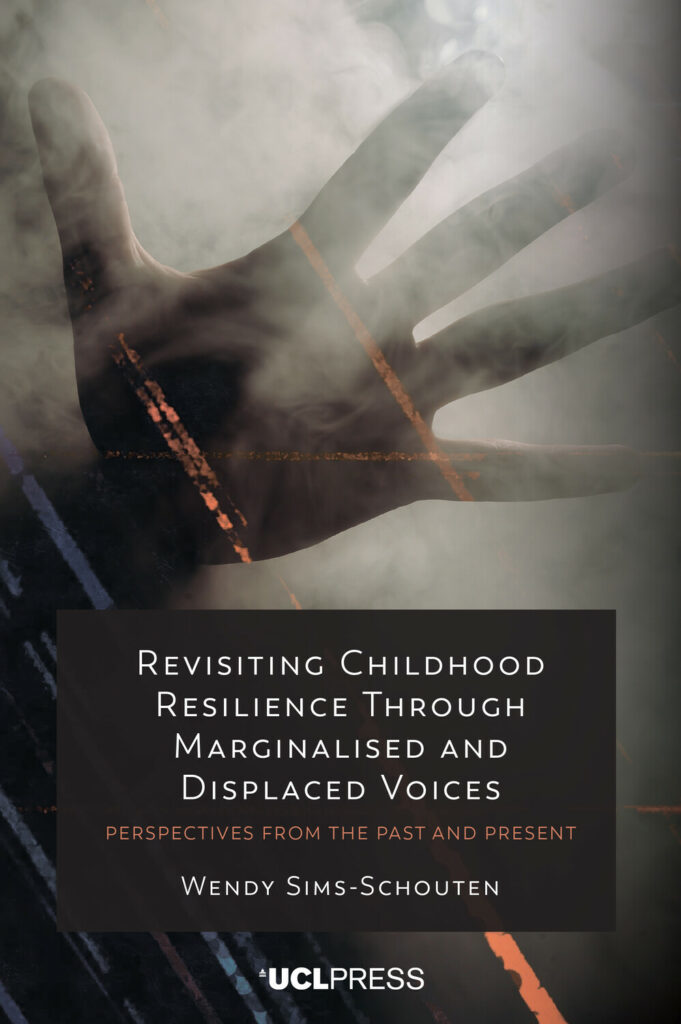
Revisiting Childhood Resilience Through Marginalised and Displaced Voices: Perspectives from the past and present draws on 10 years of Wendy Sims-Schouten’s research with children, young people and adults from marginalised, disadvantaged and displaced communities. These stories draw critical attention to coping strategies in adversity and oppression, and will inform creative research and policymaking. Read our interview with the author to find out more about her fascinating approach to research.

Lahore in Motion: Infrastructure, history and belonging in urban Pakistan provides a vivid portrait of the Pakistani metropolis by tracing the path of the city’s first metro rail corridor. The volume collects stories from a series of walks along the metro’s 27-kilometre path, bringing together a wide variety of authors to reflect on the relationship between urban change and belonging in a historic city. Interested to find out more? We have an excusive excerpt on the blog.

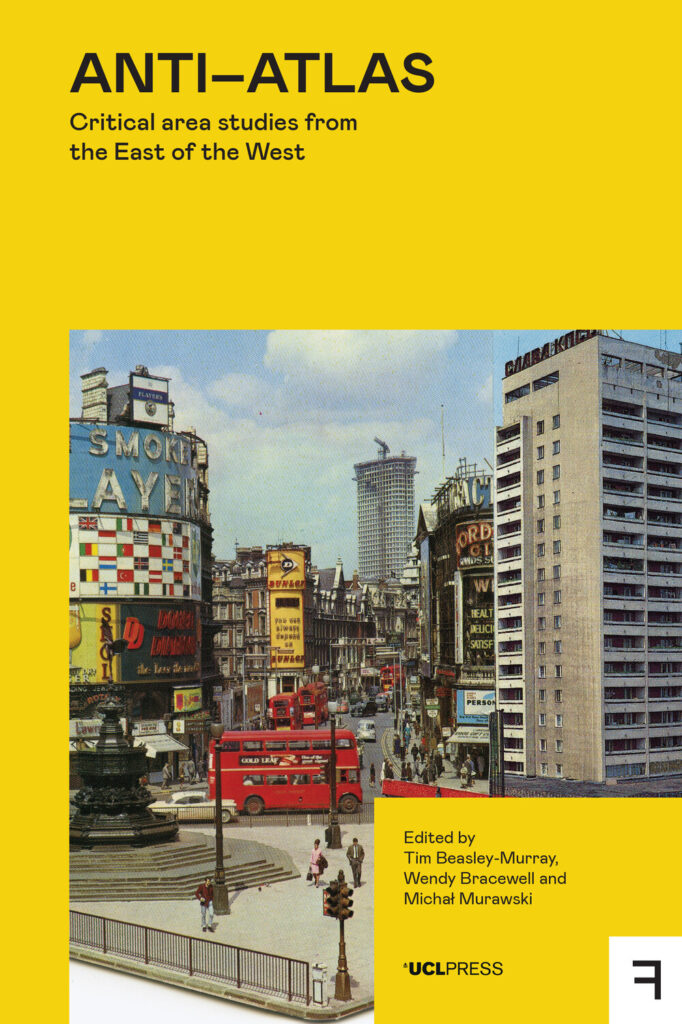
The latest book in the FRINGE series, Anti-Atlas: Critical Area Studies from the East of the West plays with the politics of the conventional atlas, with its assumptions about knowledge and power, its hierarchies of value, and its simplifications. It provides readers with a diverse series of intellectual resources, asking them to think critically about the ways in which we construct the world by dividing it into pieces.

The final book of the month, A Guide to Performing Systematic Reviews of Health and Disease is a fantastic practical guide to performing systematic reviews in a healthcare context provides a step-by-step approach for students and health professionals. Using free, opensource software to extract data and perform the necessary meta-analyses, this open access guide navigates the process of reviews, from study design and randomised controlled trials to interpreting results and reporting your findings. The author explains why this is an important book for health professionals and students alike in a wide-ranging interview.

We’ll be back again next month with a round up of the very best open access books. As always, stay safe!

New open access books published in December 2024

Books on a wooden bookshelf in UCL library.

The end of the year is nigh, and we’ve got one very exciting open access publication to share with you: Urban Transformations in Sierra Leone!

With a population over one million, Freetown, the capital of Sierra Leone, faces serious challenges around provision of services, housing and infrastructure, all exacerbated by climate change. Already, a large share of the Freetown population lives in informal settlements and as many as 70 per cent of the city’s residents are employed on an informal basis.

In 2015, the Sierra Leone Urban Research Centre (SLURC) was established to engage with urban challenges in Sierra Leone through research, capacity building and advocacy activities in areas such as health, land, housing and mobility. SLURC has become a platform for dialogue among urban stakeholders to negotiate the future of the city.

Urban Transformations in Sierra Leone aims to share SLURC’s journey so far, articulating the key findings generated by its various research projects, while also reflecting on the partnerships it has enabled. By bringing together research from different sectors, the book makes a significant contribution to knowledge on Freetown, and demonstrates the potential of transdisciplinary work.

What ever you’re doing this festive season- whether you’re planning to celebrate, or not- we send you the warmest of season’s greetings. We’ll be back next year with more of the very best open access books and journals!

Sign up to our newsletter

Don't miss out!
Subscribe to the UCL Press newsletter for the latest open access books,
journal CfPs, news and views from our authors and much more!