
Publication date: 1 February 2027
DOI: https://doi.org/10.14324/111.9781806551897
Number of illustrations: 16

When Classrooms Drown
Climate vulnerability and poverty in Pakistan
Marie Lall (Author), Licia Proserpio (Author)
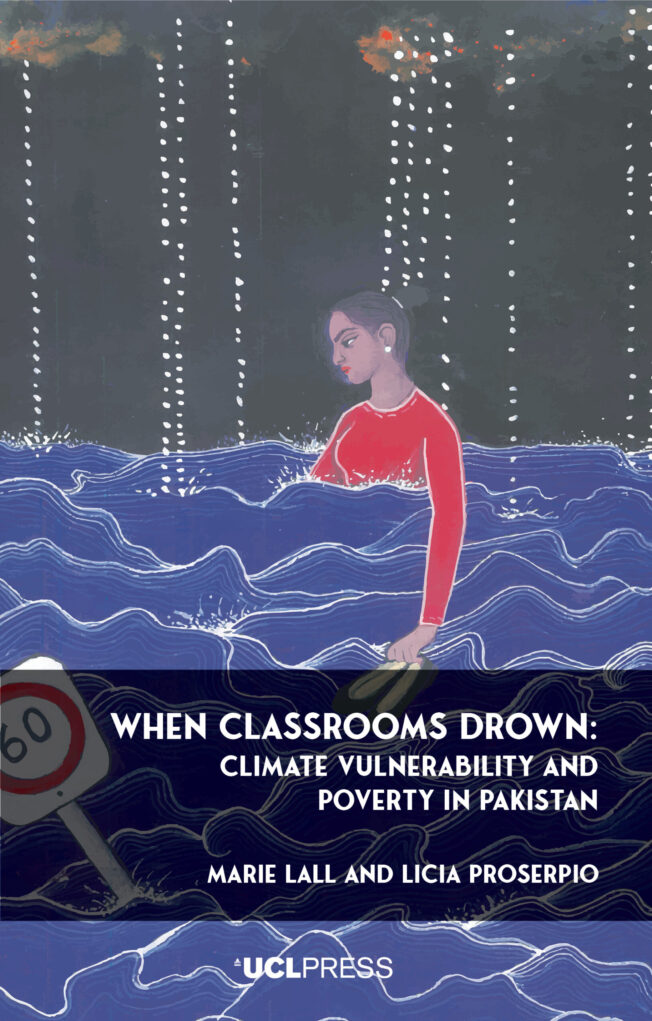
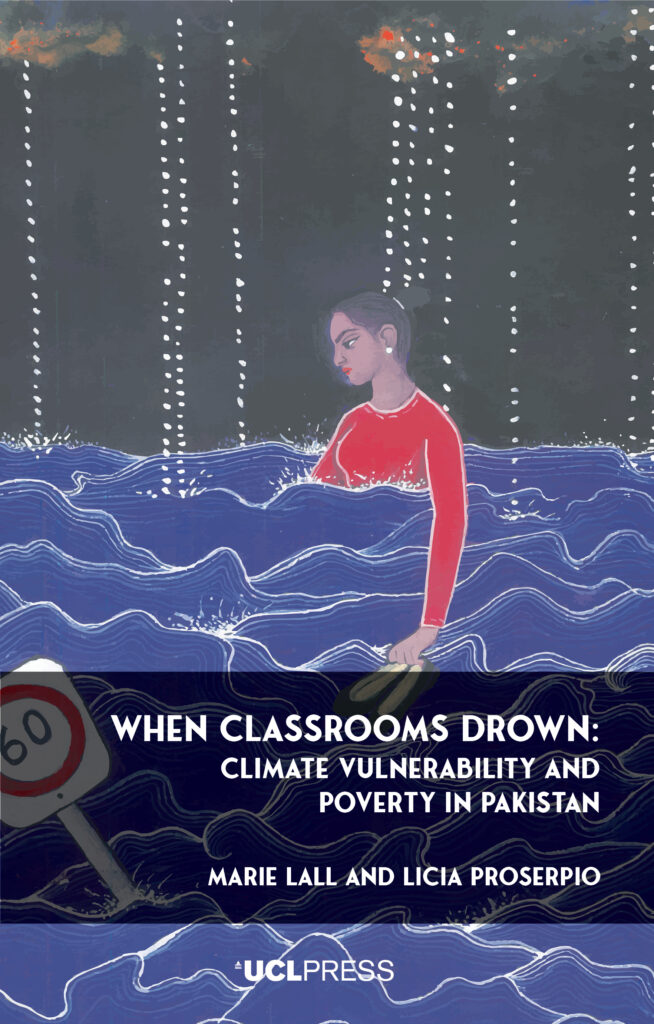
From June to September 2022, Pakistan experienced a catastrophic climate-related disaster as shocking floods affected an estimated 33 million people, half of them children, with 8 million displaced. Education ground to a halt as 26,000 schools were either destroyed or damaged and flood-affected communities struggled to survive.
When Classrooms Drown gives voice to those communities. Families, teachers and students describe in harrowing detail what they endured and the dire conditions they continued to face two years later, when research for this book was conducted. Their accounts highlight the lack of adequate state support and how NGOs attempted to fill these gaps. Crucially, the book brings a sharper gendered lens to these experiences, showing how women and girls were disproportionately affected by displacement and loss of livelihoods, while also facing heightened levels of risk to their safety and wellbeing. These perspectives underscore the urgent need for disaster preparedness that explicitly addresses gender inequalities while also ensuring that children receive stronger, sustained support for their education during and after crises. Schools, in this context, are not only sites of learning but critical spaces for safety, future-making and preparedness, equipping children and teachers with knowledge and support systems before, during, and after disasters.
Related titles
When Classrooms Drown
Climate vulnerability and poverty in Pakistan
Publication date: February 1, 2027
Open Access PDF ISBN: 9781806551897
Paperback ISBN: 9781806551880
Hardback ISBN: 9781806551866
Trim size (hardback): 23.4cm x 15.6cm
Trim size (paperback): 23.4cm x 15.6cm
From June to September 2022, Pakistan experienced a catastrophic climate-related disaster as shocking floods affected an estimated 33 million people, half of them children, with 8 million displaced. Education ground to a halt as 26,000 schools were either destroyed or damaged and flood-affected communities struggled to survive.
When Classrooms Drown gives voice to those communities. Families, teachers and students describe in harrowing detail what they endured and the dire conditions they continued to face two years later, when research for this book was conducted. Their accounts highlight the lack of adequate state support and how NGOs attempted to fill these gaps. Crucially, the book brings a sharper gendered lens to these experiences, showing how women and girls were disproportionately affected by displacement and loss of livelihoods, while also facing heightened levels of risk to their safety and wellbeing. These perspectives underscore the urgent need for disaster preparedness that explicitly addresses gender inequalities while also ensuring that children receive stronger, sustained support for their education during and after crises. Schools, in this context, are not only sites of learning but critical spaces for safety, future-making and preparedness, equipping children and teachers with knowledge and support systems before, during, and after disasters.