We are currently upgrading our shopping cart; in the interim all orders are being diverted to Waterstones. If you would like to redeem a promotional code, or are an author wanting to place an order, please email us.

Contact us

Essays on Logic, Ethics, and Universal Grammar

This new volume of Bentham’s philosophical writings deals with his most fundamental ideas concerning logic, language, ethics, and grammar. It includes four major essays written between 1814 and 1816, namely ‘Essay on Logic’, ‘Essay on Ethics’, ‘Didacologia’, and ‘Universal Grammar’, all of them closely related to Chrestomathia, Bentham’s major work on education.

In ‘Essay on Logic’, Bentham contrasts the præcognita of Aristotle with his own ‘characteristics’ of logic and deals with methodization, ontology, and the relationship between logic and language. In ‘Essay on Ethics’, he offers a critique of the Aristotelian virtues and outlines his own division of ethics into prudence, probity, and benevolence. In ‘Didacologia’, he presents an outline of a comprehensive plan for the division of the arts and sciences based on the method of exhaustive bifurcation and a new nomenclature. In ‘Universal Grammar’, Bentham deals with language as the basis for thought and communication and investigates the nature of the different parts of speech. The volume is completed with an Appendix containing fragmentary material, written in August and September 1813, with a focus on language. All the texts are based on Bentham’s original manuscripts and have never before been published in authentic form.
The Correspondence of Jeremy Bentham, Volume 3

The first five volumes of the Correspondence of Jeremy Bentham contain over 1,300 letters written both to and from Bentham over a 50-year period, beginning in 1752 (aged three) with his earliest surviving letter to his grandmother, and ending in 1797 with correspondence concerning his attempts to set up a national scheme for the provision of poor relief. Against the background of the debates on the American Revolution of 1776 and the French Revolution of 1789, to which he made significant contributions, Bentham worked first on producing a complete penal code, which involved him in detailed explorations of fundamental legal ideas, and then on his panopticon prison scheme. Despite developing a host of original and ground-breaking ideas, contained in a mass of manuscripts, he published little during these years, and remained, at the close of this period, a relatively obscure individual. Nevertheless, these volumes reveal how the foundations were laid for the remarkable rise of Benthamite utilitarianism in the early nineteenth century.

The letters in this volume document Bentham’s meeting and friendship with the Earl of Shelburne (later the Marquis of Lansdowne), which opened a whole new set of opportunities for him, as well as his extraordinary journey, by way of the Mediterranean, to visit his brother Samuel in Russia.

The Correspondence of Jeremy Bentham, Volume 5

The first five volumes of the Correspondence of Jeremy Bentham contain over 1,300 letters written both to and from Bentham over a 50-year period, beginning in 1752 (aged three) with his earliest surviving letter to his grandmother, and ending in 1797 with correspondence concerning his attempts to set up a national scheme for the provision of poor relief. Against the background of the debates on the American Revolution of 1776 and the French Revolution of 1789, to which he made significant contributions, Bentham worked first on producing a complete penal code, which involved him in detailed explorations of fundamental legal ideas, and then on his panopticon prison scheme. Despite developing a host of original and ground-breaking ideas, contained in a mass of manuscripts, he published little during these years, and remained, at the close of this period, a relatively obscure individual. Nevertheless, these volumes reveal how the foundations were laid for the remarkable rise of Benthamite utilitarianism in the early nineteenth century.

Bentham’s life in the mid-1790s was dominated by the panopticon, both as a prison and as a network of workhouses for the indigent. The letters in this volume document in excruciating detail Bentham’s attempt to build a panopticon prison in London, and the opposition he faced from local aristocratic landowners. His brother Samuel was appointed as Inspector-General of Naval Works and in September 1796 married Mary Sophia Fordyce.

The Correspondence of Jeremy Bentham, Volume 2

The first five volumes of the Correspondence of Jeremy Bentham contain over 1,300 letters written both to and from Bentham over a 50-year period, beginning in 1752 (aged three) with his earliest surviving letter to his grandmother, and ending in 1797 with correspondence concerning his attempts to set up a national scheme for the provision of poor relief. The early letters deal with Bentham’s education at Oxford University, where he was sent at the age of 12 and graduated at the age of 16, and his legal training before being admitted to the bar at the age of 21. He soon afterwards turned his back on the practice of the law and, allying himself with the more radical and sceptical figures of the continental Enlightenment, embarked on a career of law reform.

Against the background of the debates on the American Revolution of 1776 and the French Revolution of 1789, to which he made significantcontributions, Bentham worked first on producing a complete penal code, and then on his panopticon prison scheme. Despite developing a host of original and ground-breaking ideas, contained in a mass of manuscripts, he published little during these years, and remained, at the close of this period, a relatively obscure individual. Nevertheless, these volumes reveal how the foundations were laid for the remarkable rise of Benthamite utilitarianism in the early nineteenth century.

Bentham’s educational ideas were the inspiration for the founding of UCL. The vast majority of Bentham’s papers, consisting of around 60,000 folios, are held in UCL Library.

Bentham’s correspondence reveals that in the late 1770s he was working intensively on the development of a code of penal law, but also expanding his acquaintance and, to a moderate degree, enhancing his reputation as a legal thinker. A significant family event took place in 1779, when his brother Samuel went to Russia in order to make his fortune.

The Correspondence of Jeremy Bentham, Volume 1

The first five volumes of the Correspondence of Jeremy Bentham contain over 1,300 letters written both to and from Bentham over a 50-year period, beginning in 1752 (aged three) with his earliest surviving letter to his grandmother, and ending in 1797 with correspondence concerning his attempts to set up a national scheme for the provision of poor relief. Against the background of the debates on the American Revolution of 1776 and the French Revolution of 1789, to which he made significant contributions, Bentham worked first on producing a complete penal code, which involved him in detailed explorations of fundamental legal ideas, and then on his panopticon prison scheme. Despite developing a host of original and ground-breaking ideas, contained in a mass of manuscripts, he published little during these years, and remained, at the close of this period, a relatively obscure individual. Nevertheless, these volumes reveal how the foundations were laid for the remarkable rise of Benthamite utilitarianism in the early nineteenth century.

Bentham’s early life is marked by his extraordinary precociousness, but also family tragedy: by the age of 10 he had lost five infant siblings and his mother. The letters in this volume document his difficult relationship with his father and his increasing attachment to his surviving younger brother Samuel, his education, his interest in chemistry and botany, and his committing himself to a life of philosophy and legal reform.

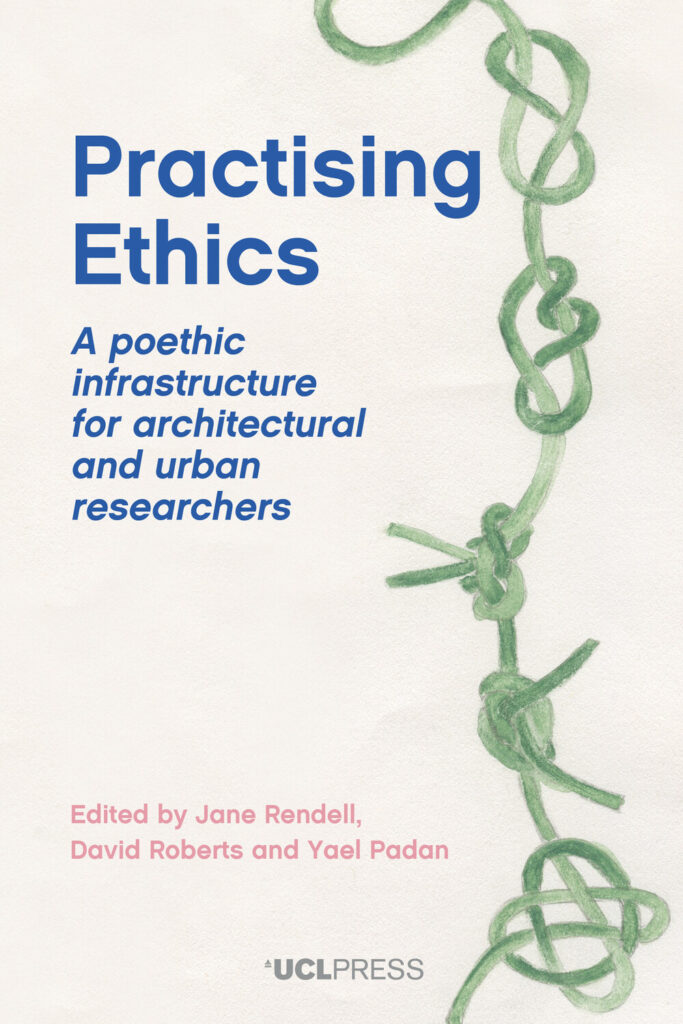
Practising Ethics

Grappling with ethics can disorientate and disturb your peace of mind in the small hours of the night. Practising Ethics transforms ethics from an obstacle to an opportunity by offering a poethic infrastructure to guide the development of ethical practice in architectural and urban research.

Practising Ethics bridges the gap between research volume and textbook. The book’s two-part structure creates a dialogue between ethical concepts derived from decolonial, ecological, feminist and queer theory, and lived ethical experiences that are explored through specific situations. A series of opening essays present hotspots, touchstones, keystones, blindspots, moonshots and milestones as different ethical orientations in a six-point methodology. This is followed by six case studies in which practitioners and researchers navigate these orientations through narrative figurations that describe ethical deliberations arising from social science, humanities, practice-led and participatory art and architectural design research in El Salvador, India, Nigeria, Peru and the United Kingdom.

The book acts as a companion to an award-winning online toolkit and is illustrated by Judit Ferencz who offers creative exercises for readers to develop their own poethic infrastructures.

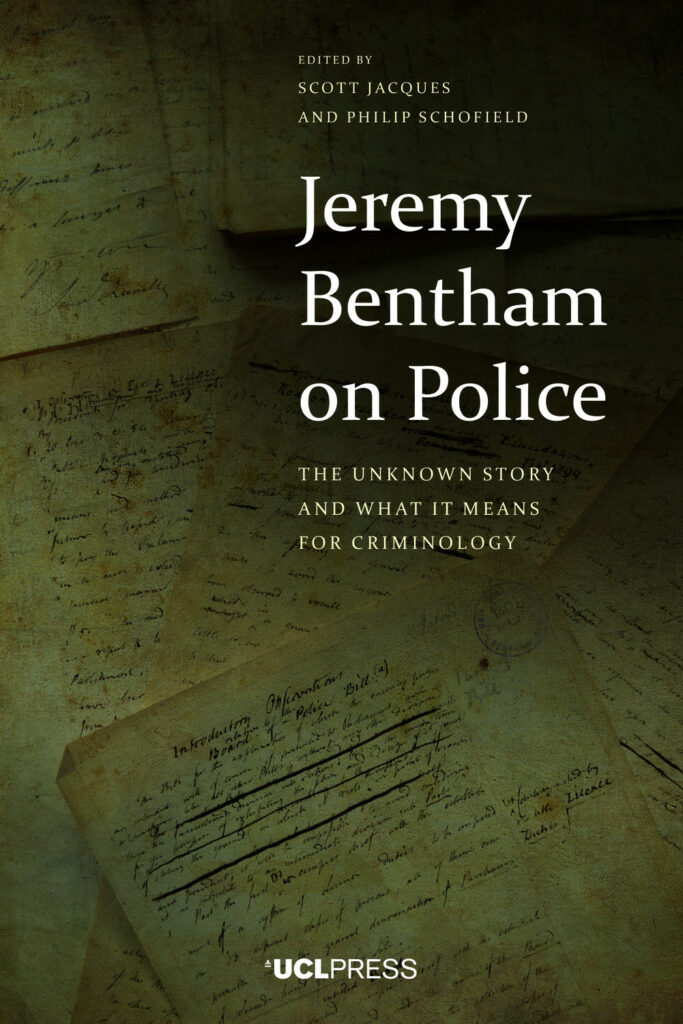
Jeremy Bentham on Police

Jeremy Bentham’s ideas on punishment are famous. Every criminology student learns about Bentham, and every criminologist contends with him, as advocate or opponent. This discourse concerns his ideas about punishment, namely with respect to legislation and the panopticon. Yet, scholars and students are generally ignorant of Bentham’s ideas on police. Hitherto, these ideas have been largely unknowable. Now, thanks to UCL’s Bentham Project, these ideas are public.

Jeremy Bentham on Police celebrates this achievement by exploring the story of Bentham’s writings on police and considering their relevance to the past, present and future of criminology. After Scott Jacques introduces the book, the Director of the Bentham Project, Philip Schofield, describes and explains how it works. Then Michael Quinn, who brought together Bentham’s writings on police, delves into the personal and socio-historical background in which they were created. An extract follows, representing the most (criminologically-)relevant passages from Bentham’s police writings. Finally, a rich variety of scholars offer their thoughts on what those writings mean for criminology. These contributions come from Anthony A. Braga, Ronald Clarke, David J. Cox, Stephen Douglas, Stephen Engelmann, G. Geltner, Joel F. Harrington, Jonathan Jacobs, Paul Knepper, Gloria Laycock, Gary T. Marx, Daniel S. Nagin, Graeme R. Newman, Pat O’Malley, Eric L. Piza, Kim Rossmo, Lucia Summers and Dean Wilson.

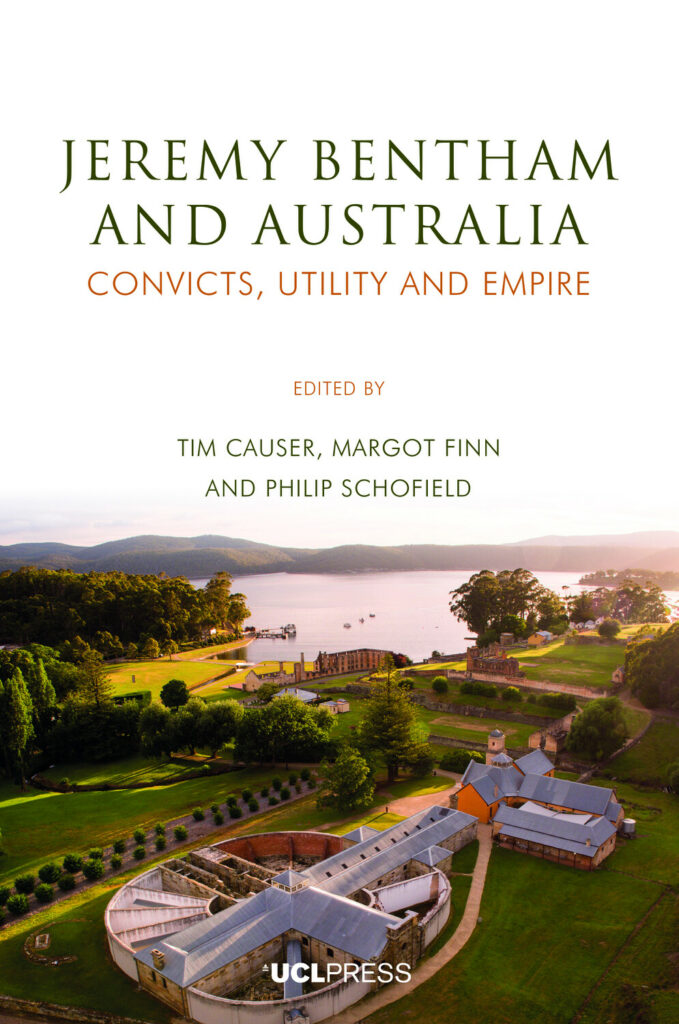
Jeremy Bentham and Australia

Jeremy Bentham and Australia is a collection of scholarship inspired by Bentham’s writings on Australia. These writings are available for the first time in authoritative form in Panopticon versus New South Wales and other writings on Australia, a volume in The Collected Works of Jeremy Bentham published by UCL Press.

In the present collection, a distinguished group of authors reflect on Bentham’s Australian writings, making original contributions to existing debates and setting agendas for future ones. In the first part of the collection, the works are placed in their historical contexts, while the second part provides a critical assessment of the historical accuracy and plausibility of Bentham’s arguments against transportation from the British Isles. In the third part, attention turns to Bentham’s claim that New South Wales had been illegally founded and to the imperial and colonial constitutional ramifications of that claim. Here, authors also discuss Bentham’s work of 1831 in which he supports the establishment of a free colony on the southern coast of Australia. In the final part, authors shed light on the history of Bentham’s panopticon penitentiary scheme, his views on the punishment and reform of criminals and what role, if any, religion had to play in that regard, and discuss apparently panopticon-inspired institutions built in the Australian colonies.

This collection will appeal to readers interested in Bentham’s life and thought, the history of transportation from the British Isles, and of British penal policy more generally, colonial and imperial history, Indigenous history, legal and constitutional history, and religious history.

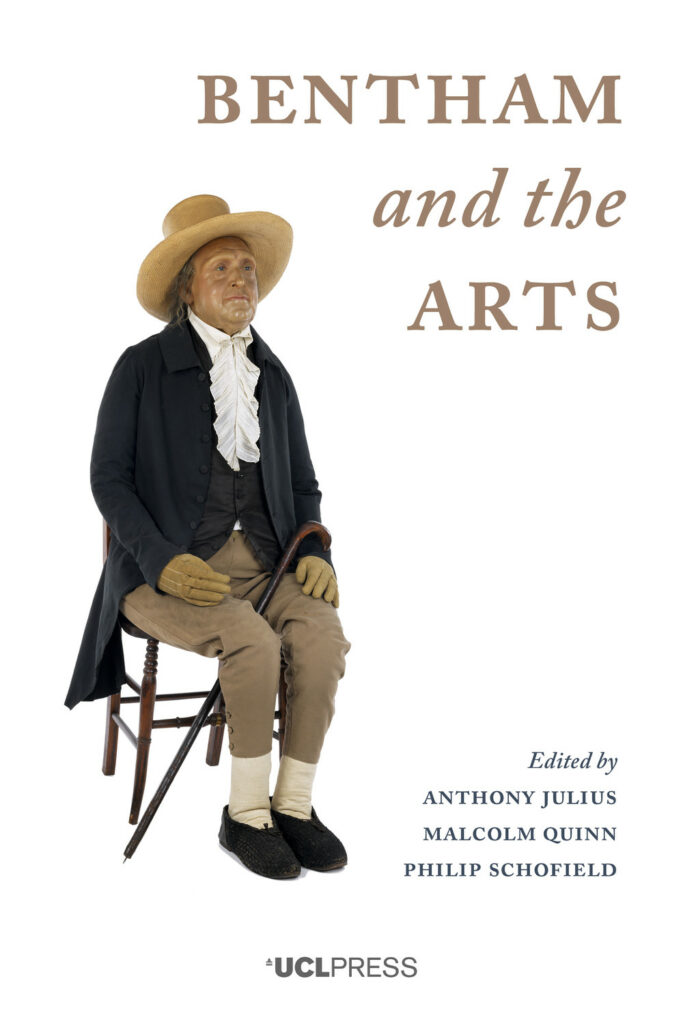
Bentham and the Arts

Bentham and the Arts considers the sceptical challenge presented by Bentham’s hedonistic utilitarianism to the existence of the aesthetic, as represented in the oft-quoted statement that, ‘Prejudice apart, the game of push-pin is of equal value with the arts and sciences of music and poetry. If the game of push-pin furnish more pleasure, it is more valuable than either.’ This statement is one part of a complex set of arguments on culture, taste, and utility that Bentham pursued over his lifetime, in which sensations of pleasure and pain were opposed to aesthetic sensibility. Leading scholars from a variety of disciplines reflect on the implications of Bentham’s radical utilitarian approach for our understanding of the history and contemporary nature of art, literature, and aesthetics more generally.

Each contributor takes into account, from the perspective of their own discipline and expertise, the implications for their research area of the views contained in Bentham’s Of Sexual Irregularities, and other writings on Sexual Morality (published in the authoritative edition of The Collected Works of Jeremy Bentham in 2014) and ‘Not Paul, but Jesus: Volume III’ (published online by the Bentham Project in 2014). In these essays, Bentham puts forward the first philosophical defence of sexual liberty. In doing so, he questions the meaning of ‘taste’ and hence the received understanding of aesthetics more generally.

The contributors, moreover, challenge two of the major commonplaces in literary and historical studies of the nineteenth century: first that literature and utilitarianism represented alternative and incompatible views of the world; and second that Bentham’s utilitarianism was somehow emaciated in comparison with that of John Stuart Mill. The volume also includes new reflections on the auto-icon and the panopticon, the latter showing the utilitarian genealogy of a collaborative art and architecture project on the site of the Millbank Penitentiary.

The title ‘Bentham and the Arts’ itself challenges the commonly held notion that Bentham had nothing relevant to say on the subject of the Arts – the essays in this volume show that Bentham remains extraordinarily relevant, both in historical and philosophical terms.

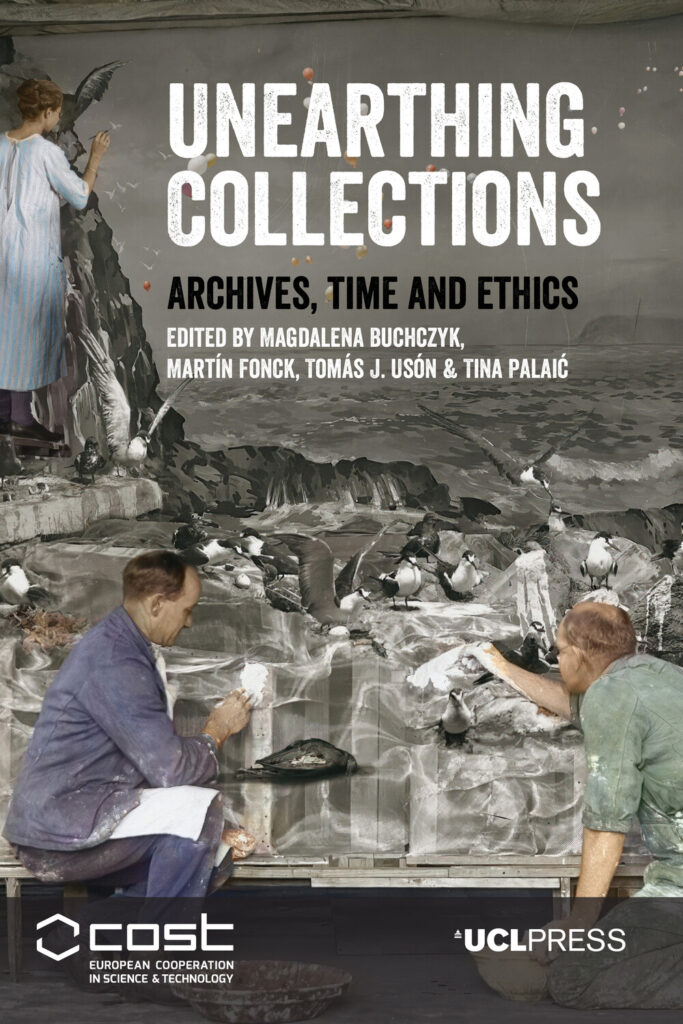
Unearthing Collections

Unearthing Collections invites readers to reconsider the ethics of collections and archives through the lens of temporality. Drawing on case studies that range from community protests over glacial sampling to the ethical dilemmas of housing human remains in museum collections and acquiring ephemeral political art, the authors interrogate the urgent challenges of collecting, displaying and preserving traces.

The book is framed around the concept of ‘unearthing’, the process of revealing hidden truths, excavating layers of history, and uncovering the unknown. It explores how the pursuit of knowledge often comes at the cost of displacement, exploitation, commodification, and the enduring legacies of imperialism and colonialism.

Alongside critique of the extractive practices that shaped many collections and archives, the book proposes a shift towards ‘re-earthing’, a practice that reconfigures how we understand and engage with knowledge about traces. As a critical approach, re-earthing acknowledges the messy, entangled nature of traces of the past, rejecting attempts to purify or control them in collections and archives, so they may evolve into new forms of knowledge. This innovative perspective challenges scholars, archivists, artists, and collection practitioners to rethink their approach to time and trace, urging them to disrupt dominant chronologies and cultivate new ethical approaches for working with collections and archives.

Sign up to our newsletter

Don't miss out!
Subscribe to the UCL Press newsletter for the latest open access books,
journal CfPs, news and views from our authors and much more!