We are currently upgrading our shopping cart; in the interim all orders are being diverted to Waterstones. If you would like to redeem a promotional code, or are an author wanting to place an order, please email us.

Contact us

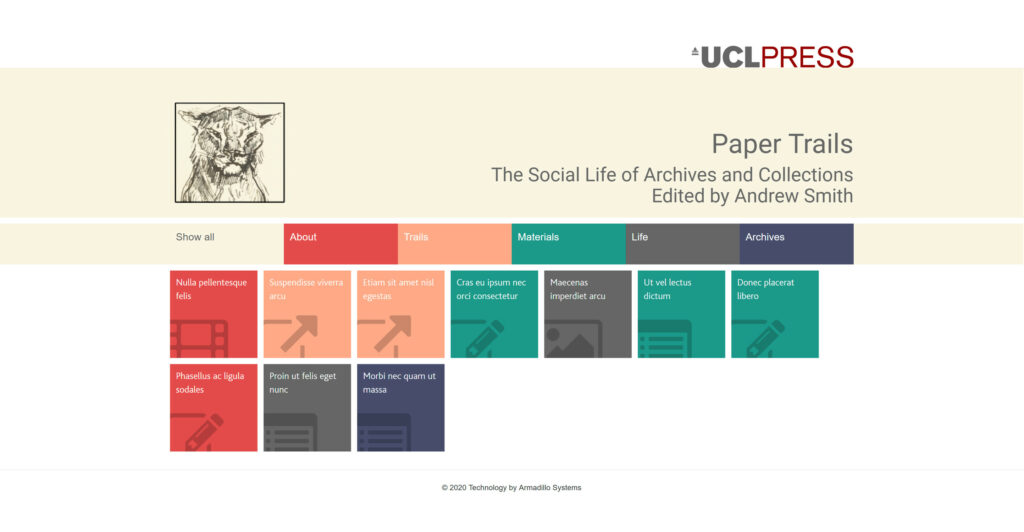
Paper Trails

Paper Trails brings together a diverse group of people both in its pages and its readership – researchers, practitioners and students – as well as featuring different historical collections (print, object and digital) held in a wide variety of different libraries, museums and archives. Its content is designed to bridge different communities of research and practice. The BOOC format creates a ‘living book’, which is entirely open access and evolves over time, allowing for different formats of pieces to speak in conversation.

The project enables collaboration between sometimes unlikely partners to help break down barriers and to open up the world of historical research. It reveals how the work and methodologies of researchers, academics, education practitioners and students interrelate, providing opportunities for collaborations beyond the usual parameters these fields present.

Paper Trails is organised around four different streams of content, which are:

1. Research Stories: Full-length research articles which encourage a focus on research stories to invite a reflective methodology, offering an inclusive and engaged commentary on the work involved in researching, ordering and preserving the past.

2. Co-production: Outputs from projects in which non-academic, undergraduate and taught postgraduate audiences collaborate with others (collection professions, academics, members of the public, etc.) to create new work that is based on research collections.

3. Collection Profiles: Shorter, descriptive or even narrative pieces that highlight items or collections of interest.

4. Engagement: Reflective pieces that focus on a broad range of engagement activities, from the professional’s perspective. These can be case studies, or ‘think pieces’ on particular skills or techniques.
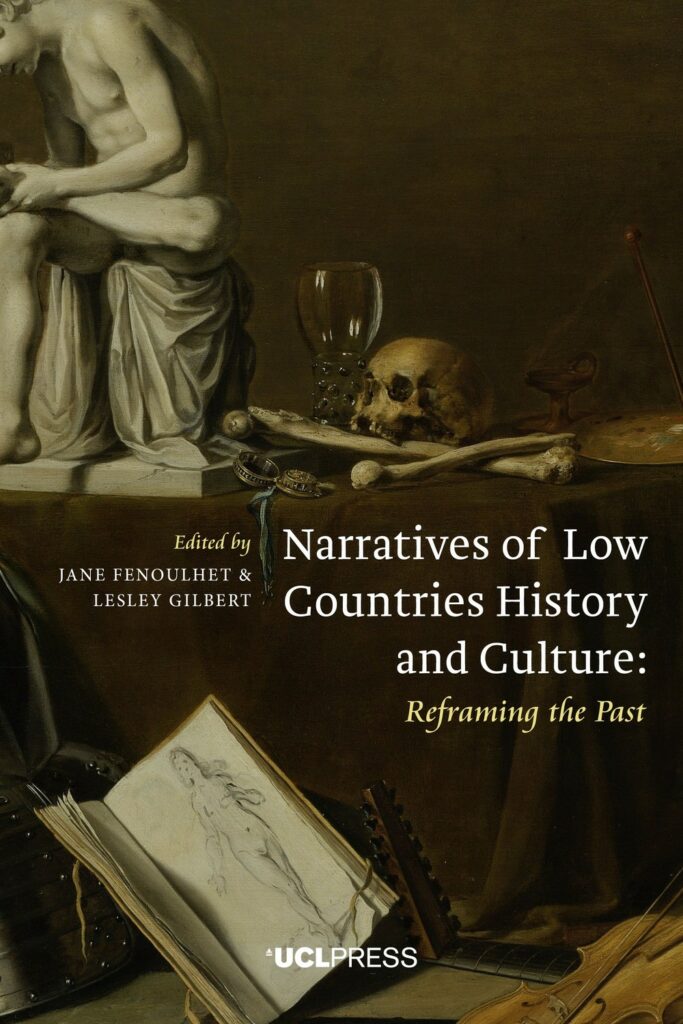
Narratives of Low Countries History and Culture

This edited collection explores the ways in which our understanding of the past in Dutch history and culture can be rethought to consider not only how it forms part of the present but how it can relate also to the future.

Divided into three parts – The Uses of Myth and History, The Past as Illumination of Cultural Context, and Historiography in Focus – this book seeks to demonstrate the importance of the past by investigating the transmission of culture and its transformations. It reflects on the history of historiography and looks critically at the products of the historiographic process, such as Dutch and Afrikaans literary history.

The chapters cover a range of disciplines and approaches: some authors offer a broad view of a particular period, such as Jonathan Israel’s contribution on myth and history in the ideological politics of the Dutch Golden Age, while others zoom in on specific genres, texts or historical moments, such as Benjamin Schmidt’s study of the doolhof, a word that today means ‘labyrinth’ but once described a 17th-century educational amusement park. This volume, enlightening and home to multiple paths of enquiry leading in different directions, is an excellent example of what a past-present doolhof might look like.

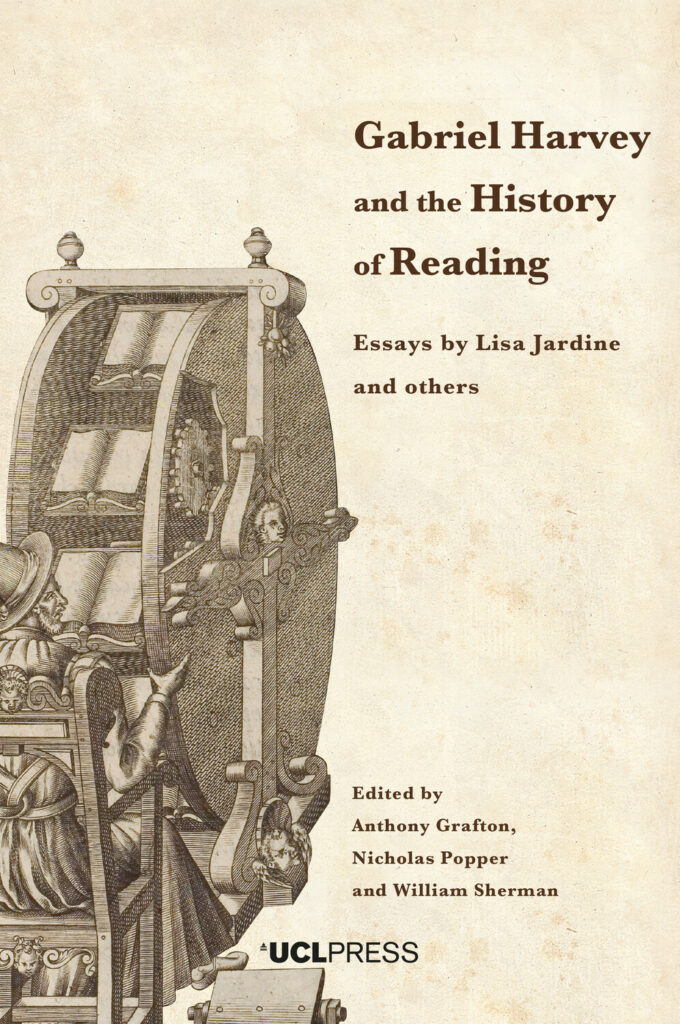
Gabriel Harvey and the History of Reading

Few articles in the humanities have had the impact of Lisa Jardine and Anthony Grafton’s seminal ‘Studied for Action’ (1990), a study of the reading practices of Elizabethan polymath and prolific annotator Gabriel Harvey. Their excavation of the setting, methods and ambitions of Harvey’s encounters with his books ignited the History of Reading, an interdisciplinary field which quickly became one of the most exciting corners of the scholarly cosmos. A generation inspired by the model of Harvey fanned out across the world’s libraries and archives, seeking to reveal the many creative, unexpected and curious ways that individuals throughout history responded to texts, and how these interpretations in turn illuminate past worlds.

Three decades on, Harvey’s example and Jardine’s work remain central to cutting-edge scholarship in the History of Reading. By uniting ‘Studied for Action’ with published and unpublished studies on Harvey by Jardine, Grafton and the scholars they have influenced, this collection provides a unique lens on the place of marginalia in textual, intellectual and cultural history. The chapters capture subsequent work on Harvey and map the fields opened by Jardine and Grafton’s original article, collectively offering a posthumous tribute to Lisa Jardine and an authoritative overview of the History of Reading.

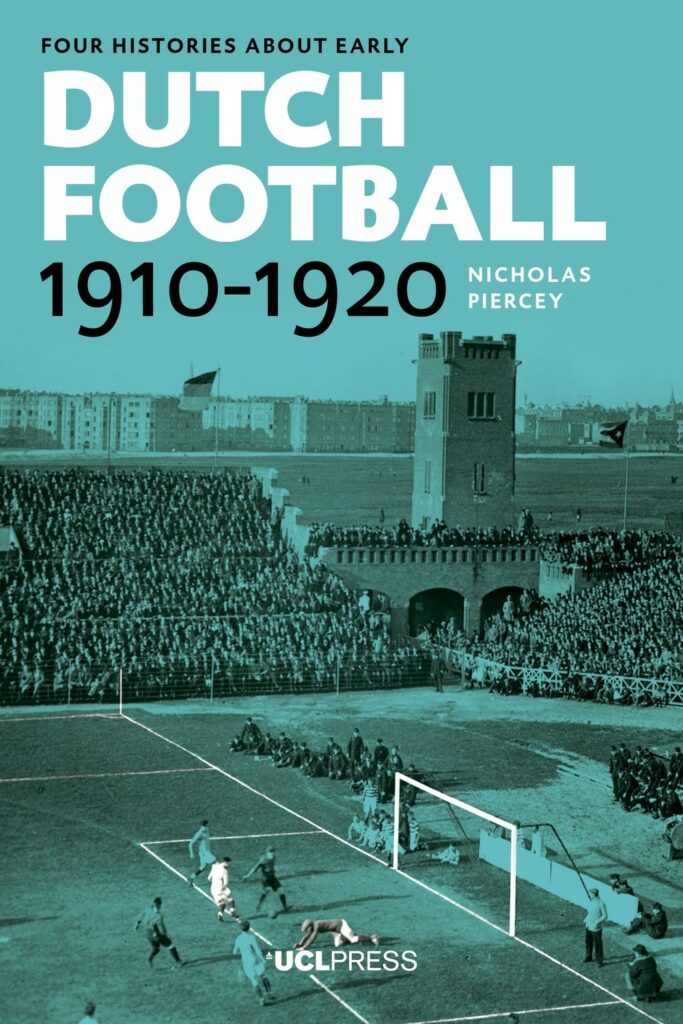
Four Histories about Early Dutch Football, 1910-1920

What is the purpose of history today, and how can sporting research help us understand the world around us? In this stimulating book, Nicholas Piercey constructs four new histories of early Dutch football, exploring urban change, club members, the media, and the diaries of Cornelis Johannes Karel van Aalst, a stadium director, to propose practical examples of how history can become an important democratic tool for the 21st century.

Using early Dutch football as a field for experimental thinking about the past, the four histories offer new insights into the lives, interests and passions of those connected to the sport in the 1910s and the cities they lived in. How did the First World War impact on Dutch football? Were new stadia a form of social control? Is the spread of the beautiful game really a good thing? And why was one of the sport’s most prominent figures more concerned with potatoes? These stories of early Dutch football suggest how vital sport and history can be in shaping our lives, perceptions and actions, and why we need to challenge the influence they have today.

This book also includes a downloadable appendix. [Download it here]1.

[1]: http://discovery.ucl.ac.uk/1517998/11/Appendix.xlsx

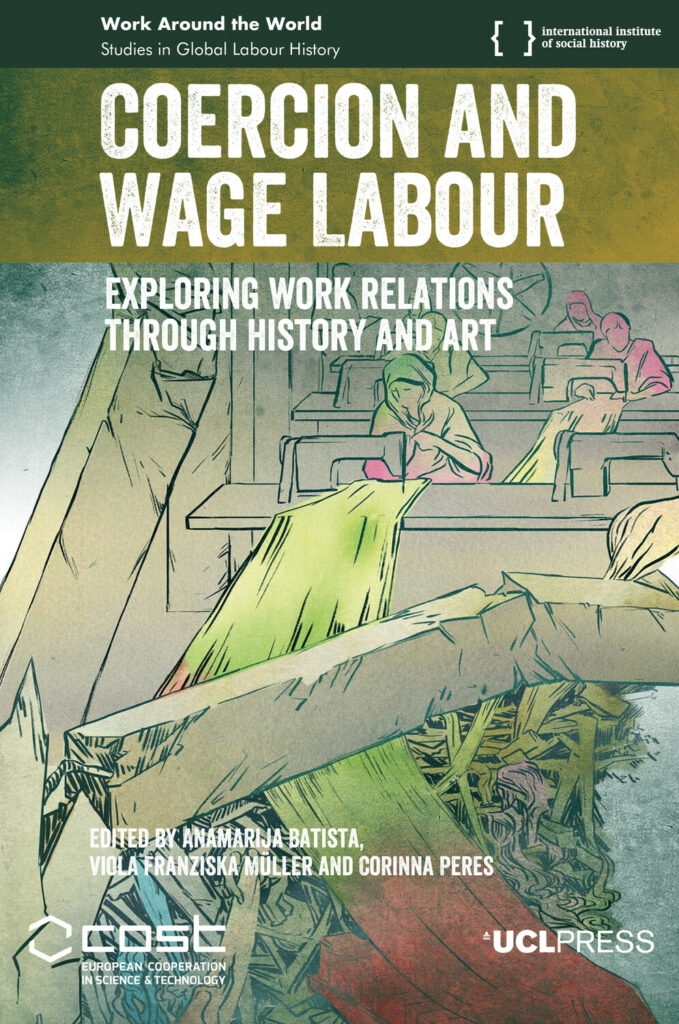
Coercion and Wage Labour

Coercion and Wage Labour presents novel histories of people who experienced physical, social, political or cultural compulsion in the course of paid work. Broad in scope, the chapters examine diverse areas of work including textile production, war industries, civil service and domestic labour, in contexts from the Middle Ages to the present day. They demonstrate that wages have consistently shaped working people’s experiences, and failed to protect workers from coercion. Instead, wages emerge as versatile tools to bind, control, and exploit workers. Remuneration mirrors the distribution of power in labour relations, often separating employers physically and emotionally from their employees, and disguising coercion.

The book makes historical narratives accessible for interdisciplinary audiences. Most chapters are preceded by illustrations by artists invited to visually conceptualise the book’s key messages and to emphasise the presence of the body and landscape in the realm of work. In turn, the chapter texts reflect back on the artworks, creating an intense intermedial dialogue that offers mutually relational ‘translations’ and narrations of labour coercion. Other contributions written by art scholars discuss how coercion in remunerated labour is constructed and reflected in artistic practice. The collection serves as an innovative and creative tool for teaching, and raises awareness that narrating history is always contingent on the medium chosen and its inherent constraints and possibilities.

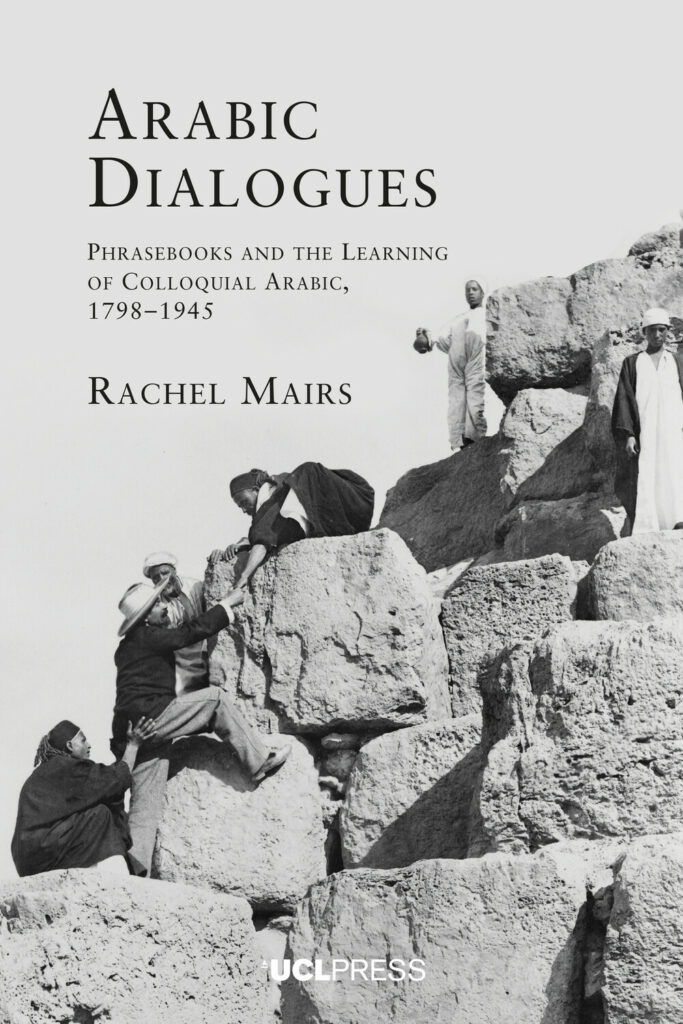
Arabic Dialogues

During the nineteenth century and into the early twentieth century, more Europeans visited the Middle East than ever before, as tourists, archaeologists, pilgrims, settler-colonists and soldiers. These visitors engaged with the Arabic language to differing degrees. While some were serious scholars of Classical Arabic, in the Orientalist mould, many did not learn the language at all. Between these two extremes lies a neglected group of language learners who wanted to learn enough everyday colloquial Arabic to get by. The needs of these learners were met by popular language books, which boasted that they could provide an easy route to fluency in a difficult language.

Arabic Dialogues explores the motivations of Arabic learners and effectiveness of instructional materials, principally in Egypt and Palestine, by analysing a corpus of Arabic phrasebooks published in nine languages (English, French, German, Spanish, Portuguese, Italian, Yiddish, Hebrew, Russian) and in the territory of twenty-five modern countries. Beginning with Napoleon’s Expédition d’Égypte (1798–1801), it moves through the periods of mass tourism and European colonialism in the Middle East, concluding with the Second World War. The book also considers how Arab intellectuals understood the project of teaching Arabic to foreigners, the remarkable history of Arabic-learning among Yiddish- and Hebrew-speaking immigrants in Palestine, and the networks of language learners, teachers and plagiarists who produced these phrasebooks.

Sign up to our newsletter

Don't miss out!
Subscribe to the UCL Press newsletter for the latest open access books,
journal CfPs, news and views from our authors and much more!