We are currently upgrading our shopping cart; in the interim all orders are being diverted to Waterstones. If you would like to redeem a promotional code, or are an author wanting to place an order, please email us.
Join a panel of expert speakers online to learn about the Open Journal Collective, a new diamond OA journal model, how it came to light, what it offers and why it is needed.
Diamond open access (OA) is championed as a more open, equitable and inclusive, community-driven journal publishing model, especially when compared against other commercially owned, author pay and subscription models. Additionally, demand for not-for-profit open access journal publishing is rapidly growing amongst academics and funders, however, there is an acute lack of capacity and funding for journals to sustainably meet this demand. There are many barriers to solving these complex challenges, but one new initiative called the Open Journals Collective aims to disrupt the current landscape by offering a more equitable, sustainable and alternative solution to the traditional and established payment structures. Join us in this session where we will hear about this new and exciting community-run diamond open access funding model, pioneered for and by university presses.
During the session we will hear from the conveners of the collective to learn more about why and how it came to light, what it offers and why it is needed. We will hear about the experiences of a library / institution with various OA journal models including their interactions with commercial publishers, as well as perspectives from a journal Editor who, alongside the journal board, resigned from a subscription journal and successfully launched a new and competing diamond open access journal.
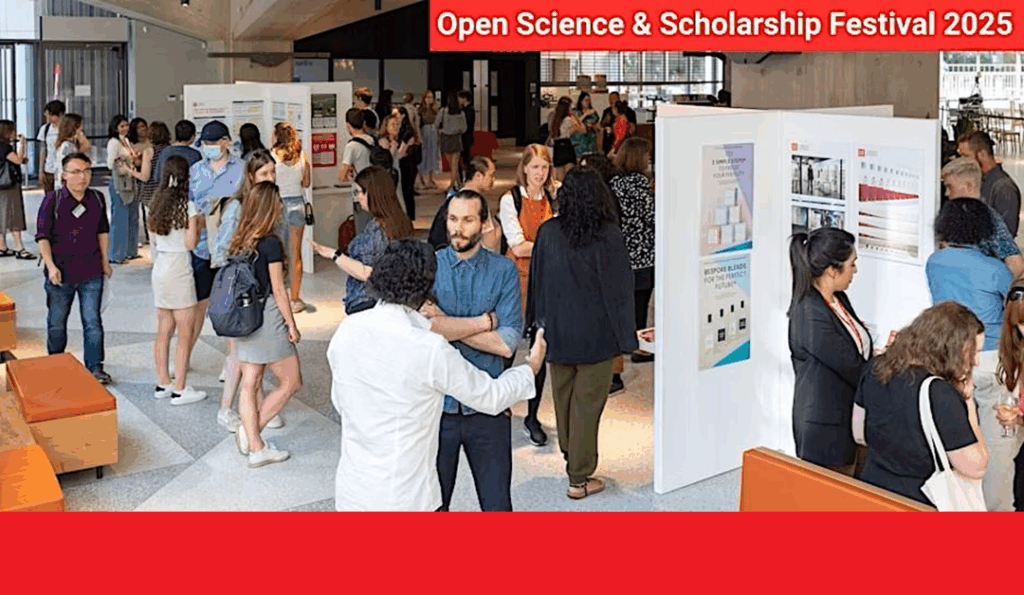
This event is being presented as part of the Festival of Open Science and Scholarship.
About the Festival of Open Science and Scholarship
The Festival of Open Science and Scholarship is organised by teams at UCL, LSE and the Francis Crick Institute. Running from 2-6 June the festival includes a combination of online, hybrid, and in-person events across a range of topics including:
London Review of Education, UCL Press’s flagship fully open-access journal based in IOE, UCL’s Faculty of Education and Society, is seeking to expand the membership of its editorial board. The journal publishes cutting edge research and scholarly work from across the world and particularly welcomes interdisciplinary contributions that explore and interrogate the links between research, policy and practice, with a strong focus on social justice.
The journal wishes to recruit new editorial board members based in a variety of contexts with expertise specifically in the following disciplinary areas and educational research more broadly:
Religion and religious education
Anthropology
Psychology
Second language education
Critical sociolinguistics/applied linguistics
Gender, sexuality and queer studies
Spatiality and place in educational settings
Editorial board members are appointed on a three-year basis and are expected to act as champions of the journal in their institutions and networks, attend and contribute to the termly editorial board meetings, and participate in the peer review process (reviewing up to 4 manuscripts per year). In addition, editorial board members will subscribe to our equity, diversity and inclusion policy (https://www.ucl.ac.uk/ioe/about-ioe/equity-diversity-and-inclusion).
To be an effective member of the LRE Editorial Board, individuals should ideally meet several personal and professional criteria to bring a wide range of expertise, experience and diverse perspectives to the journal.
Essential criteria include:
A thorough understanding of one of the abovementioned disciplinary areas;
Active involvement in research, practice, or policy making, within one of these areas;
High standards of ethical behaviour with regard to research and its assessment;
Ability to provide clear, fair, and constructive feedback and assessment and justify actions.
Desirable criteria include:
Experience of peer-reviewing for other academic journals.
Celebrated in 20th February each year, the World Day of Social Justice is an international day recognising the need to promote social justice, which includes efforts to tackle issues such as poverty, exclusion, gender inequality, unemployment, human rights, and social protections.
We asked our journals team to share a selection of articles on 2025’s theme: ‘Strengthening a Just Transition for a Sustainable Future’.
This important article outlines the five entrenched narratives regarding the relationship between protected areas and human wellbeing in the Global South, the and where the first three narratives being conservation being pro-poor, poverty reduction benefiting conservation, and compensation neutralising conservation costs, are problematic. The authors highlight the need to integrate social equity into conservation efforts, especially in light of the proposed expansion of protected areas.
This paper in London Review of Education explores how university campuses can serve as intercultural spaces that promote inclusivity and social justice, particularly in the context of increasing diversity among students. It highlights the need for both top-down and bottom-up strategies to address the challenges of social and academic exclusion, emphasizing the importance of integrating support for home and international students to foster intercultural connections.
A discussion of the integration of culturally responsive teaching in primary science education in Aotearoa New Zealand, highlighting the lack of support for teachers amidst curriculum changes. It emphasizes the partnership between mainstream science and Mātauranga Māori (Indigenous traditional knowledge) through cultural narratives, demonstrating how this approach can enhance learning and cultural competence for all students.
An exploration of a pedagogical approach aimed at promoting justice-oriented teaching in school science education in England, addressing the need for more equitable engagement with STEM subjects. It highlights the importance of supporting teachers in adopting critical pedagogical practices that challenge social inequalities related to race, gender, and class, while emphasizing the value of learners’ cultural and social assets.
This fascinating article explores the intersection of racism, intersubjectivity, and transgression within Brazil’s socio-educational services, drawing on the theories of Paulo Freire and bell hooks. It presents a theoretical model to address ethnic-racial issues in educational contexts, aiming to enhance social education and inform public policies that promote social justice and anti-racism.
As January comes to a close, the UCL Press journals team is delighted to highlight a collection of popular and highly cited articles from journals including London Review of Education, International Journal of Social Pedagogy, History Education Research Journal and UCL Open Environment.
As a mission oriented not-for-profit university press that publishes across the academic spectrum, we uphold our commitment to open science and scholarship by making all of our journals’ high-quality research as freely available. Our journals do not levy any publication fees; we believe that global access to knowledge should be shared, read and cited by all. In addition, the journals use a diamond Open Access publication model that removes the financial barriers for both readers and authors, further broadening the promotion of research, knowledge sharing, and dissemination of impactful articles.
This post celebrates some of our journals programme’s most popular and highly cited publications and is testament to the rigorous efforts of our editors’, reviewers’, and authors’ contribution to their fields.
London Review of Education
Decolonisation of curriculum: the case of language education policy in Nepal While decolonisation is usually discussed in relation to countries that were formally colonised, countries that have not been formally colonised have also faced challenges related to colonialism. In this case, it is worth considering whether decolonial theory has more widespread applicability to respond to global challenges faced in the postcolonial era. This article documents the historical trajectories of colonisation and decolonisation of the school curriculum in Nepal.
Research-informed teacher education, teacher autonomy and teacher agency: the example of Finland This article highlights how Finland’s rigorous, research-based teacher education system fosters autonomous and agentic teachers, contributing to the country’s strong performance in international assessments like PISA. This article argues that the rigorous research focus of Finnish teacher education cultivates autonomous and agentic teachers.
Education, decolonisation and international development at the Institute of Education (London): a historical analysis This article reviews the process of building relationships around education and international development at the IOE, UCL’s Faculty of Education and Society. Looking at how hierarchies linked to colonialism were inscribed in initial structures and unevenly and disparately contested by students, staff and a range of interlocutors around the world over one hundred years, authors ask, how does this history shape practice in the present and perspectives on the future?
Citizenship to (counter)terrorism: the need to de-securitise the Norwegian education system and create space for democratic resilience Education for citizenship has been the subject of growing policy and research attention since the beginning of the twenty-first century. Yet, alongside conventional assumptions that school can help young learners develop socio-political attitudes that support democratic attitudes and behaviours, there are growing political expectations that educators will actively prevent terrorism. This article examines how precautionary counterterrorism logic can cause harmful and exclusionary pedagogical practices.
Collaboration between doctoral researchers and patient research partners: reflections and considerations A key principle of working in collaboration with patient research partners (patients contributing to research projects as team members, rather than as participants) is that they should be equal partners with researchers and health professionals. This presents a challenge in doctoral research, where students are expected to own their research decisions. This paper provides practical suggestions for working effectively with patient partners throughout the doctoral process and offers suggestions for formalising the process to support both parties to ensure that patient partners’ involvements are not tokenistic.
How can impact strategies be developed that better support universities to address twenty-first-century challenges? To better address twenty-first-century challenges, research institutions often develop and publish research impact strategies but, as a tool, impact strategies are poorly understood. This study provides the first formal analysis of impact strategies from the UK, Canada, Australia, Denmark, New Zealand and Hong Kong, China, and from independent research institutes.
Teaching and learning the legacy of residential schools for remembering and reconciliation in Canada In 2015, the Truth and Reconciliation Commission (TRC) of Canada released a Final Report containing 94 Calls to Action. Operating in parallel to these reforms, social studies curricula across Canada have undergone substantial revisions. As a result, historical thinking is now firmly embedded within the curricula of most provinces and territories. This article represents an exploration of an emerging field of debate around whether historical thinking and Reconciliation are compatible.
Why is ‘powerful knowledge’ failing to forge a path to the future of history education? The concept of ‘powerful knowledge’ has become extremely influential in discussions about curriculum in England over the last ten years. However, the concept seems to have done little to revolutionise curriculum design and, in some cases, it has led to curricular narrowing and a focus on an increasingly nationalistic narrative in history. This paper explores these claims and finds that key voices in education in England and history education, specifically, have misunderstood and misapplied the concept of powerful knowledge.
A short history of the successes and failures of the international climate change negotiations Over the last 35 years, international negotiations have sought to address climate change, leading to notable successes, including the 2015 Paris Agreement to limit global temperature rise to well below 2°C and pursue efforts to stay below 1.5°C. This article reviews past progress and future goals for the UNFCCC/COP meetings.
Rethinking entrenched narratives about protected areas and human wellbeing in the Global South Attempts to link human development and biodiversity conservation goals remain a constant feature of policy and practice related to protected areas. Underlying these approaches are narratives that simplify assumptions, shaping how interventions are designed and implemented. This paper examines evidence for five key narratives.
To celebrate International Day of Education 2025, UCL Press’s journals team share a range of essential articles on this year’s theme: AI in education. This article originally appeared on the UCL Press journals site.
With Google searches for ‘AI’ skyrocketing in 2023 and the global AI market size projected to reach US$243.70bn in 2025, artificial intelligence has officially entered the zeitgeist of the 2020s. AI is reshaping how human society fundamentally functions, and the role of AI across industries will only continue to expand as AI-driven systems become increasingly sophisticated. It’s no surprise, then, that UNESCO has dedicated the International Day of Education 2025 to AI, inspiring reflections on the possibilities, challenges, and ethical responsibilities that this technology elicits in the schooling of children, youth, and adults worldwide.
The United Nations General Assembly proclaimed 24 January as International Day of Education to celebrate quality education as a conduit for peace, equality, and wellbeing for every community, everywhere. UNESCO recognises education as a human right and public responsibility, and International Day of Education is an opportunity to engage with education frameworks as a collective and mobilise resources to drive the charge toward educational equity. In the spirit of knowledge sharing, UCL Press’s journals team presents a range of articles on AI in education, along with supplementary materials to enrich your understanding of education policy.
Understanding AI and Automation in Education
From alleviating administrative duties and tailoring curriculums to computerising admission processes and informing resource allocation, AI can be – and is – used in learning spaces to enhance the educational experience in a way that still honours the unique and essential input of human educators. Uses of Artificial Intelligence and Machine Learning in Systematic Reviews of Education Research by Henrik Karlstrøm in the London Review of Education explores how AI and machine learning can improve systematic reviews in education research. By automating processes like literature retrieval, content analysis, and bibliometric mapping, AI can help manage the growing volume and complexity of academic publications.
Karlstrøm also acknowledges that while these technologies enhance efficiency, careful validation and understanding are crucial to address challenges related to transparency, reliability, and potential over-reliance on automated systems. A special feature in the same journal, ‘AI in Education’, brings together articles featuring a diverse perspective on issues related to adjusting to the challenges and opportunities brought by AI in the field of education. Leaton Gray’s article Artificial Intelligence in Schools: Towards a Democratic Future further highlights the need for greater transparency, regulatory frameworks, and collaborative development to ensure AI systems empower students and educators rather than reinforcing commercial interests and systemic biases. These insights underscore the need for balance and ethical analysis in the adoption of AI-enabled machines.
Ensuring the responsible use of AI in education is a self-sustaining cycle. Developing a mass awareness of AI’s value and limitations depends on learning pathways that teach AI as a supplementary tool and not a definitive solution. Foregrounding trusted research is crucial for facilitating informed discussions and critically examining the profound impact of AI on the future of education.
Looking Beyond AI: Other Educational Resources
Although the spotlight is on AI this International Day of Education, considering other pedagogical themes is essential to developing a nuanced understanding of empowered education systems. Articles from the International Journal of Social Pedagogy and the International Journal of Development Education and Global Learning explore how education can tackle broader societal challenges. Felton et al.’s Civic Action on Social Media demonstrates how fostering digital media literacy can prepare students for civic engagement in a digital age. Similarly, Wimpenny et al.’s work investigates how collaborative online international learning can deepen students’ understanding of global citizenship education.
Finally, the Architecture_MPS journal offers a critical perspective on higher education. The Death and Life of UK Universities and the Cultural Spaces They Consume critiques how neoliberalism and corporatisation have shaped British universities, urging educators to reclaim these institutions as spaces for cultural and academic growth.
Join the Conversation
Thank you for celebrating International Day of Education with us! Explore these featured articles to learn more about preserving human agency in education in a technologically advancing world.
From December 2025, History Education Research Journal will begin publishing a new thematic area investigating the relationship between generative artificial intelligence and history education. This new theme aims to investigate what the widespread use of generative AI means for history education.
As International Open Access Week comes to a close, the journals team consider this year’s theme ‘Community over Commercialisation’, and reflect how to better serve scholarly communities. Ian Caswell, UCL Press Journals Manager, explains more. This post originally appeared on the UCL Press journals platform.
As a diamond open access journal publisher, UCL Press is committed to making high-quality research freely accessible to everyone. We continuously seek ways to reduce the barriers and inequalities that persist in the scholarly landscape – whether in publishing or accessing research. We believe that by removing these barriers, especially financial ones, knowledge producers from around the world and across diverse professions and disciplines can more easily engage with and benefit from the latest research. This approach fosters greater collaboration and innovation across disciplines and geographical boundaries, maximising the benefits of research for society.
UCL Press currently publishes 14 journals under the diamond open access model, focusing on disciplines in the humanities and social sciences. Diamond open access is a publishing model in which neither authors nor readers are required to pay fees. This is a significant departure from traditional publishing models, which often involve substantial costs for authors (in the form of article processing charges (APCs)) and for readers (through subscription fees). By adopting the Diamond open access model, we ensure that financial barriers do not limit the reach of research. This inclusivity is crucial for enabling a diverse range of voices to contribute to the academic discourse, particularly those from underfunded institutions or developing countries.
At UCL Press, we place a strong emphasis on community engagement and multidisciplinary research. Two of our notable journals, that exemplify this commitment are Research for All and the International Journal of Social Pedagogy.
Research for All highlights the collaborative nature of research and its societal impact. It publishes articles that explore how research is co-produced with non-academic partners, including community groups, policymakers, and practitioners. By emphasising the practical applications of research and its benefits to society, Research for All bridges the gap between academia and the wider community. This journal is particularly valuable for researchers who aim to make a tangible impact through their work, as it provides a platform for sharing insights and best practices in community-engaged research.
The International Journal of Social Pedagogy is another exemplary journal that underscores our dedication to community engagement. It publishes research on social pedagogy, an interdisciplinary field focused on holistic education and care. Covering topics like child and youth care, community development, and social work, the International Journal of Social Pedagogy provides a platform for scholars and practitioners to share their work, the journal fosters a global dialogue on innovative practices and policies in social education and care.
By ensuring that high-quality research is freely accessible, we advance the dissemination of knowledge while promoting equity and inclusivity in the scholarly community. We believe that our publishing model serves as a beacon for other academic publishers, demonstrating how open access can transform the way we share and engage with scholarly research.
To learn more about UCL Press Journals, including Research for All and the International Journal of Social Pedagogy, visit our website journals.uclpress.co.uk.
In addition to journals, UCL Press also publishes a wide range of open access books, including monographs, edited collections, and textbooks. These publications are entirely free to read and download. Find out more about by visiting uclpress.co.uk.
Edited by Dr Janice Tripney from UCL IOE’s Social Research Institute and Prof Sabine Wollscheid from The Nordic Institute for Studies in Innovation, Research and Education, Norway ), this new open access special feature brings together a collection of articles on systematic review methodology and their application in education and related fields. The intent is to provide an overview of the current state of research on these topics and to characterise the major findings or implications of this research, covering two categories:
Systematic reviews that stand to make important contributions to the most pressing challenges facing decision-makers in education, including but not limited to reviews responding to the social crisis created by the Covid-19 pandemic.
Articles highlighting technological or data-related innovations in methodology that are relevant to future systematic reviews in education and related subject areas.
The first two articles to publish in this series are:
When discussing peer review, generally, I find it helpful to remind myself of some of the values as to perhaps why researchers publish in scholarly journals. In essence, it usually comes down to these 4 headings.
Knowledge and discovery
Evaluation and validation
Credit
Access to research
Within this environment, peer review is arguably the fundamental gold standard aspect of scholarly and academic publishing and is, at least in its most fundamental use of it, the facilitator for publishers to sell journals and its content.
So then, what is the role for peer review precisely, and what does it serve to accomplish?
An easy question to answer, right? In the book Editorial peer review: It’s strengths and weaknesses, the author writes the role of what peer review serves is, as ‘the goal of the process is to ensure that the valid article is accepted, the messy article cleaned up, and the invalid article rejected,’ thereby ensuring that the article made available to the reader is quality controlled.
In another book titled Peer review: A critical inquiry, the author here writes that the process of peer review also benefits the author, as they are later certified by the process if published proceeding peer review: “Careers are often made or destroyed by the process.”
In scholarly publishing, peer review acts to validate and assess work and is the current system used to assess the quality of a manuscript before it is published. Other experts in the relevant field assesses the research or article for things like fact, validity, and significance, that aid the assessors (i.e. Editors) to determine whether the manuscript should be published in the journal or not. I think it is pertinent to remember here that journals do play a vital role in the scientific and scholarly process, by refining research through peer review and disseminating it to appropriate communities by publication, and it is this role of review by peers that has been a part of scholarly communication since the appearance of the first journal in the 17th Century (see the brilliant book by Professor Aileen Fyfe et al, A History of Scientific Journals: Publishing at the Royal Society, 1665-2015.)
“Although alternative forms of peer review have evolved to tackle issues of bias, it is less clear what effect, if any, they will have upon fraud. High‐profile cases of fraud and plagiarism have brought the debate about the efficacy of peer review to a wider audience, attracting greater public attention. Such incidences include [certain individuals], tipped to be a Nobel Prize winner, who published a series of fraudulent papers that were withdrawn from Nature, Science, Physical Review, and Applied Physics Letters.”
Journals typically tackle these types of concerns by anonymising authors and reviewers from each other to ‘enable a fairer and just review system’. In this article Mulligan et al surveyed around 40,000 published researchers that were randomly selected from the Web of Science (then known as the Thomson Reuters ISI list) and concluded that the majority of respondents were happy with the current system, but noted the system is imperfect and more can be done to ensure a higher level of efficacy and efficiency.
Now, being led by open science principles, it is largely seen that being more open and transparent with research publication and assessment can we increase scholarly rigour, accountability and trust.
In April 2017, a systematic review of what open peer review is was published online in F1000Research (itself an innovative model of open peer review). It concluded: “Open peer review has neither a standardized definition, nor an agreed schema of its features and implementations. The literature reflects this, with a myriad of overlapping and often contradictory definitions.”
What this review very accurately depicts, is that there are a number of definitions of open peer review that can be collated together into themes and it purports there are 7 open traits to what open peer review concerns itself with, and that open peer review can take either a single aspect, or a multitude or mix of any of these traits, to operate as an open peer review model. Briefly, these are:
Open identities, where authors and reviewers are aware of each other’s identity.
Open reports, where the review reports are published alongside the relevant article
Open participation, where the wider community are able to contribute to the review process
Open interaction, where direct reciprocal discussion between author(s) and reviewers, and between the reviewers themselves, is allowed and encouraged
Open pre-review manuscripts, essentially, a pre-print server, where manuscripts are made immediately available (e.g., BiorXiv) in advance of any formal peer review procedures
Open final-version commenting, where the review or commenting on the final “version of record” is published
Open platforms (or “decoupled review”), where review is facilitated by a different organizational entity than the venue of publication
What is UCL Press doing?
At UCL Press, we launched our very own open peer review and open science journal called UCL Open Environment: a fully non-commercial, Open Science journal, publishing high impact, multi-disciplinary research, on real world environmental issues, with the overall aim of benefitting humanity. The journal is for any researcher or professional at knowledge-based universities, institutions, and organisations (including Non-Government Organisations, Think Tanks, Inter-Government Organisations, and the United Nations) and submissions are invited from those at all career stages, including early career researchers, mid-career professionals, and senior scholars. There are also no barriers to the Open Peer Review Process (whereby the identity of the reviewer and the report are made publicly visibly at all times); engagement from all will advance the greatest leaps and discoveries.
Reviewers are firstly asked to sign in to the system using their ORCID account and when they submit their review report, the report is posted up online in the preprint server alongside the article, under the CC-BY licence and assigned a unique DOI. You can find out more information about this at https://journals.uclpress.co.uk/ucloe/site/how-it-works/
Reviewers can therefore attain credit of their report and readers are able to follow the process openly online. We hope this will also aid the development for others (especially earlier career researchers and students) with examples on how a review is written and how an article is revised accordingly, aiming to improve the way we should engage critically and beneficially with research.
Readers of this blog can see for themselves how the journal works (you can see here the list of the latest submissions and open peer reviews, as well as here for publications accepted after peer review). It is my hope that readers will be encouraged to provide more open peer reviews or open comments, adding to the corpus of open debate around research, and consider contributing to UCL Open Environment, as we believe that by removing barriers and innovatively working openly and together will we accelerate finding solutions to the world’s most significant challenges.
UCL Press is pleased to announce a new journals hosting partnership with Janeway, an open source scholarly publishing platform, providing a more intuitive, improved navigation experience for its global readers and greater flexibility, ownership, and efficiency for its journals programme.
The UCL Press Journals Programme aims to create valuable opportunities and contributions to advances in the Arts, Humanities, Social Sciences, and STEM subjects at a global level, by way of challenging the publication process/format status quo and providing a unique and open alternative for researchers and the academic community. All 15 fully open access journals published by UCL Press have transferred onto the new platform and can now be found at https://journals.uclpress.co.uk, including the journal UCL Open Environment, which was launched by UCL Press in 2019 as the first and only dedicated, multi-disciplinary, Open Science journal, that publishes broadly across all environment-related subjects (https://journals.uclpress.co.uk/ucloe).
All journals are editorially independent, each supported by its own Editorial Board; carefully appointed to provide specialist subject specific expertise and are published open access to help ensure the widest possible inclusivity, dissemination, and readership. The Journals Programme reaches a global audience attracting a broad range of contributors and we work with a large number of subject specific indexers, repositories, and search databases, including PubMed Central, Web of Science, Scopus, DOAJ, Dimensions, Google Scholar and many more.
You can learn more about the aims, scope, submission criteria and indexing arrangements for UCL Press journals by visiting the ‘About’ page of each journal at their new home. Start exploring and sign up to Publishing Alerts at https://journals.uclpress.co.uk.
We are delighted to announce that, following a rigorous evaluation process, UCL Open Environment has been accepted for indexing in PubMed Central. Researchers wishing to publish in the journal and funded by the Wellcome Trust, MRC and BBSRC, NIHR and the NIH (as well as many others all across the world) will meet open access policy requirements and be indexed automatically in the PubMed Central database and the Europe PMC database.
A science journal with the broadest of scope, UCL Open Environment (UCLOE) publishes multi-disciplinary research that uniquely crosses conventional boundaries (between disciplines and many different kinds of communities in the academic, business and social spheres) to facilitate and accelerate progress. UCLOE is for any researcher or professional at knowledge-based universities, institutions, and organisations (including Non-Government Organisations, Think Tanks, Inter-Government Organisations, and the United Nations) working broadly across environment-related research, covering climate change, the character and functioning of the environment, Planetary Health (its resources and limits), public health grounded in environmental factors, and the environment in which people live.
Professor Dan Osborn, Editor-in-Chief of UCLOE, said: “This is a really important milestone for the journal with its clear open access, open peer-review policies and process. Now the journal is indexed in PubMed Central, authors are better enabled to meet funder publishing requirements effortlessly, whilst publishing multidisciplinary environment-related research – which often lacks an outlet for publication – in an open, transparent, and accountable way that is much needed in today’s world.”
Launched in 2019, UCLOE aims to reduce many of these publication barriers and bring together to enable and accelerate the publication of the most critical thinking on environment-related topics: from the most renowned researchers, through to innovative and emerging new voices; on all aspects of the environment. Unlike typical, single disciplinary journals, UCLOE is the only dedicated multidisciplinary environmental open science journal that publishes broadly across all environment-related subjects, at little or no cost to the researcher, and now indexed in PubMed Central.
It is our hope that more contributors, funded and not, throughout the world, will take up this opportunity to publish their research in UCLOE, in an open, transparent, accountable and equitable way.