New series editor for Literature and Translation series

Abstract blue and beige swirling pattern with the text 'Literature and Translation' in the centre. This is section of the cover of 'Selected Essays and Dialogues by Gianni Celati'

UCL Press is delighted to announce the appointment of Prof. Kathryn Batchelor as a series editor of the popular series Literature and Translation. Currently Professor in Translation Studies at UCL, she joins fellow editors Prof. Timothy Mathews and Dr. Ana Cláudia Suriani da Silva.

The appointment comes as Prof. Geraldine Brodie steps down as co-series editor. We would like to thank Prof. Brodie for her hard work and dedication in growing the series.

Literature and Translation is a series for books of literary translation as well as about literary translation. Its emphasis is on diversity of genre, culture, period and approach. The series uses the UCL Press open access publishing model widely to disseminate developments in both the theory and practice of translation. Translations into English are welcomed of literature from around the world.

Fine out more about the series, and view published titles by visiting the series page.

The hidden health costs of ultra-processed foods

In Packaged Plants: Seductive supplements and metabolic precarity, published today by UCL Press, authors Anita Hardon and Michael Lim Tam offer an absorbing ethnography and cultural history of how the production and consumption of plants for food and medicine has gone through ‘metabolic rifts’, increasingly processed into commodities with adverse impact on health and aggravating existing economic and social inequities.

This extract from the book places the authors’ research in a wider context, and reveals how ultra-processed foods (UPF) are relied on for their convenience, their cheapness and their supposed medicinal properties, which are often based on highly questionable evidence.

One early morning when I (Michael) was busy working at home on the final edits for this book, I decided to check our kitchen to see what our housekeeper was preparing for breakfast. I did this with some trepidation because I could guess, from the smell, what she was cooking. Indeed, she was frying several hot dogs and at her feet were three of our dogs – one a dachshund – doing their puppy eyes routine in anticipation of getting their share of the loot.

‘Giatay!’, I exclaimed, the term is from Cebuano, a southern Philippine language, and it roughly means ‘Oh my liver!’ to express surprise, shock, dismay. I reminded her that we had already talked about dietary norms in my household – my being vegetarian, and my wanting my children to grow up healthy even if they are not vegetarian, so the instructions were to minimize ultra-processed foods (UPF) like instant noodles, fast food, ‘forever foods’ (don’t they ever perish?) and of course, hot dogs.

The real dogs were still sitting listening to our conversation, probably hopeful that my lecture would force our cook to throw away the hot dogs.

This time I told her that I’d been so busy working on a book about food and had come across so many studies about the danger of hot dogs and other UPFs. I didn’t want to bandy terms like metabolic syndrome, so I chose something more familiar: cancer.

She was apologetic, but defensive: ‘But the hot dogs were not for you or for your children. It was for me and the driver.’

I quickly retorted, ‘But I don’t want you or the driver to be put at risk for cancer!’

She had the final say, an enthusiastic ‘thank you’ for my concern, but I couldn’t help but feel there was a tinge of cynicism, if not sarcasm, in her thanks.

That incident reminded me I had to finish the preface for this book, where I started by referring to a British Medical Journal (BMJ) article featuring a massive umbrella study previously published meta-analyses that involved, in total, 9.9 million people. I was alerted to the BMJ article by a feature in the British newspaper The Guardian, headlined ‘Ultra-processed food linked to 32 harmful effects to health, review finds’ (Gregory 2024).

The title and tone of the BMJ article was more sedate but still alarming. In a summary of their findings, the authors of the article said that a ‘direct association (was) found between exposure to UPF and 32 health parameters covering mortality, cancer, mental, respiratory, cardiovascular, gastrointestinal and metabolic health outcomes’. Furthermore, the authors found other studies suggesting more studies that could be made to explore other linkages between UPF and ill health, especially in terms of chronic inflammatory diseases (Lane et al. 2024).

The study made Anita and me pause: should we further delay the book and add more materials on UPF as found in the BMJ article?

Anita and I decided not to delay. UPF did figure prominently in our book, but as part of a spectrum of metabolic rifts or ways through which plant-based food and medicines have, through new forms of production, processing, marketing and consumption, created numerous problems not just around nutrition and health but also in exacerbating social inequities.

But the ‘hot dogs incident’ reminded me of the real world out there and the difficult tasks that lie ahead. How can the BMJ article’s findings be disseminated and spur people to take action? How do we translate terms like ‘danger’ and ‘risk’?

The odds are tremendous given the way science is eclipsed by advertising and promotions, including multi-level marketing that pushes vitamin-minerals and supplements and UPFs. Alternative information and education on healthy eating have few platforms available, given too that even scientists and professionals are often captives of the metabolic rifts we describe in our book, the loss of plant sovereignty or control over our food and medicines.

The poor are put at greatest risks in the way their food sources are now limited to the packaged UPFs, including beverages like soft drinks. Our packaged plants theme took on more urgency as we found a growing body of literature describing how the packaging themselves are problematic, plastics especially endangering the health of people, of non-human animals, and the planet itself. Solutions to malnutrition, a paradox of underweight and stunting on one hand and of overweight on the other, take on the character of UPFs with fortification programs, with an emphasis on micro-nutrient deficiencies that further expand the market for vitamins and minerals.

Going through voluminous research reports reminded us about how we are lagging behind in the race for better nutrition and health and why we need more foresight, anticipating other problems in the horizon. An article by Wickramasinghe et al., published in 2021, warns that even plant-based nutrition is being co-opted, and urges greater regulation of the many plant-based products that have appeared on the market, riding on the search for ‘organic’ and ‘natural’ foods, preferably packaged. Wickramasinghe and his associates note that many of these new plant-based products are in fact UPFs, with the same problems of high salt, sugar and fats found in the meat-based UPFs (Wickramasinghe et al. 2021).

Even nutritionists and health professionals are still unfamiliar with the term “UPF” despite its having been introduced and defined several years ago (Monteiro et al 2019). So much advocacy work will involve translation, and not necessarily from one language to another but in terms of demystifying the jargon. Advocacy will also involve dissemination of Good Practices in the many fields related to nutrition and health.

As we finalized our preface, local newspapers featured still another relevant article, this time about scams in the Philippines involving supplements making unsubstantiated anti-cancer properties for the products. One patient diagnosed with breast cancer said that she spent some $909 US per month for the supplements and agreed to chemotherapy only after her cancer metastasized.

We were touched by the valiant efforts of individuals to counter-act the scams. A Filipino oncologist working in a government hospital said, ‘five out of 10 patients I see ask me about something they have seen or read on the internet – 90 percent of the time the information is incorrect’.

When Adam, a Melbourne-based Australian doctor, began to post YouTube videos countering the misleading claims of supplement manufacturers, he was threatened with lawsuits by the companies. He has since quit his advocacy.

Agence France Presse (AFP) has been conducting investigations of online promotions of supplements and reporting the deceitful promotions to Meta, the parent company of Facebook, which is widely used by the unethical supplements producers. Even when flagged for their false claims, the companies will take down their promotions temporarily and then bring them back.

The Philippines Food and Drug Administration says it is helpless, with one official saying that it still does not have implementing guidelines on online advertising to accompany the law that created (actually, reorganized) the FDA in 2006.

Both of us (Anita and Mike) became grandparents as we finished writing this book, feeling a greater sense of urgency than when we began to write it, realizing that we will face even tougher questions from future generations who will assess what we did, and didn’t do, in these times of metabolic rifts.

About the Authors

This is an excerpt from Packaged Plants: Seductive supplements and metabolic precarity in the Philippines by Anita Hardon and Michael Lim Tam.

Anita Hardon is Chair of the Knowledge, Technology and Innovation group at Wageningen University.

Michael Lim Tan is Professor Emeritus and former chancellor of the University of the Philippines Diliman.


Facing the challenges of shared parental leave

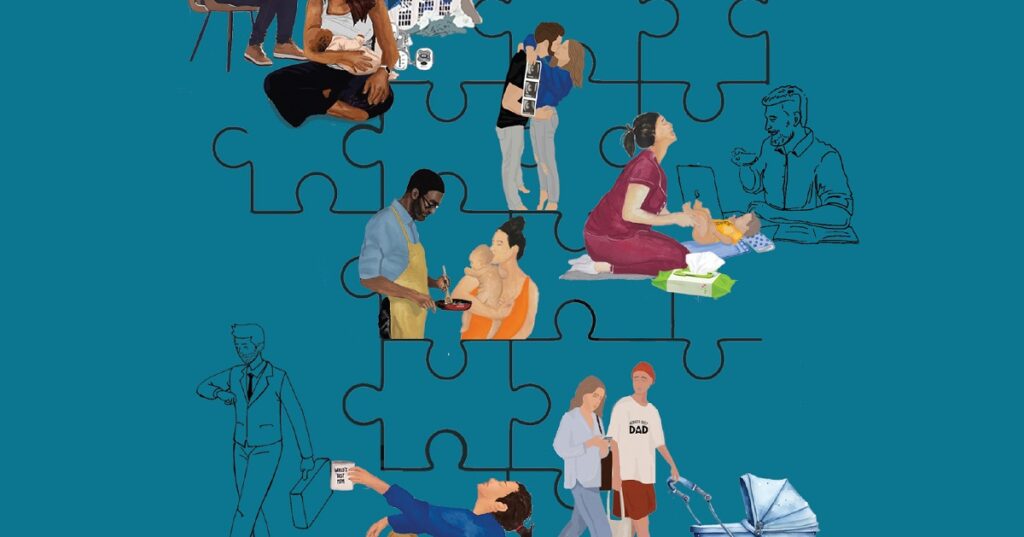
The image features a jigsaw puzzle with pieces that are filled with illustrations of various people engaged in different activities. The background is a solid teal color. Each puzzle piece showcases a unique scene: one has an individual reading, another shows two people having a conversation, and others depict individuals working on laptops, sitting thoughtfully, and walking.

Shared parental leave (SPL), introduced in the UK in 2015, allows a mother to transfer part of her maternity leave to her partner. Despite being available to all new parents in employment throughout the UK, a 2023 evaluation found that only around 5 per cent of fathers are taking SPL.

To mark the publication of Caring is Sharing? Couples navigating parental leave at the transition to parenthood by Katherine Twamley, we are proud to share an extract exploring the competing pressures that prevent couples from taking up shared parental leave, and looking in detail at study participants Rita and Riley, and the impact of ‘greedy work’ on their SPL choices. Here the author reflects on her interview with study participants Rita and Riley, and the impact of ‘greedy work’ on their SPL choices.

Riley and Rita are advertising executives, working in the same company and at the same level at the time of Rita’s pregnancy. On the face of it, they would seem to be in an ideal situation to share leave. However, they pretty quickly decided that Rita would take all her leave, in a ‘gut decision’. When I probed them a bit further on their reasoning, Riley told me the following:

I would love to take some time off but again, it’s a very tough decision to take, not least because Rita will have already taken time off, and as a woman, they [employers] have patience for you to take that time off. But that does impact your career. If we have another child, Rita will probably have to take off a couple of months, so somehow it makes sense that one of us stays more career-focused than the other one, who will be more child-focused. That sounds awful but …

Riley, Interview 1

For Riley, only one person can take leave, because of the expected impact on career earnings and progression. That women’s maternity leave impacts on their careers is well evidenced (Cukrowska-Torzewska & Matysiak, 2020). Since Rita will ‘obviously’ want to take several months’ leave, and moreover to recover from the pregnancy and birth, the impact on her career is taken for granted. From his perspective, it ‘makes sense’ that all career penalties be focused on one career – Rita’s. It is interesting nonetheless that he added ‘That sounds awful but …’, indicating a recognition that traditional divisions of paid and unpaid work go against popular discourses of gender equality within couple relationships (Faircloth, 2021; Jamieson, 2011; Twamley, 2014). Here we see how parental leave decisions are negotiated in dialogue with real and imagined others (Burkitt, 2012; Holmes et al., 2021) and their expected reactions to couples’ leave plans, but in concert with (perceived) structural constraints. Fear of repercussions for men’s careers was one of the most common responses in the survey on the question of why participants were not sharing leave; it has moreover been observed in multiple contexts beyond the UK, which indicates the pervasive nature of such concerns (Samtleben et al., 2019).

This idea that ‘role specialisation’ is necessary was not uncommon; it actually emerged most forcefully in later interviews as participants began to consider how to manage the demands of paid and unpaid work after the leave period (we will return to this in chapter 6). Fundamental to this perspective is a view of paid work as precarious and very demanding (as much as the intensive demands of parenting, which I discuss further in the next section). Participants described working in high-pressure contexts which necessitated long working hours to keep on top of their workloads and especially for career progression. Goldin (2021) argues that such ‘greedy work’ is a key driver in the role specialisation of earner and carer within couples. Greedy work is embedded in cultural ideals which value professional achievements over personal needs; it is most commonly found in white-collar jobs and professions, and it is at its ‘greediest’ in high-stress, high-demand sectors such as finance, law and technology. The glorification of overwork, the pressure to conform to high-performance expectations and the lack of institutional support for work–life balance contribute to the prevalence of this phenomenon (Goldin, 2021; T. A. Sullivan, 2014).

The ‘patience’ that Riley said employers show as regards women’s take-up of leave underlies an understanding of personal and family life as a hindrance to employers, who ‘patiently’ accept limited incursions into the work sphere. In this context, SPL is felt as risky for Riley and other participants, conscious of the potential repercussions on their career. Riley appeared to internalise what Acker calls the ideal worker norm here: a hypothetical worker ‘who exists only for the job’ without allowing any other commitments to intrude on their work (1990:149). Such workers typically perceive long work hours as legitimate (Byun & Won, 2020; Williams et al., 2013) and therefore place indirect limits on fathers’ leave take-up (their own and other’s) (Haas & Hwang, 2019). This was the case with Riley, not only in his avoidance of SPL, but also in his take-up of paternity leave. When Rita went into labour, Riley explained, he was asked to forgo his paternity leave until a later time as his manager didn’t want him to take 10 days off in a row; the manager suggested Riley took annual leave instead – two days a week for three weeks – and delayed his paternity leave until work was more settled:

He [Riley’s manager] didn’t directly say ‘Don’t take paternity leave’, but he did say that it would be better if I took it later. I get on really well with him, so I could have said ‘No, I want to take it now’, but I’m lucky how well we get on and we had this difficult project so I agreed and it was fine. I’ll take the paternity leave maybe later in the year.

Riley, Interview 2

It is striking that Riley describes himself as ‘lucky’ despite the pressure from his manager not to take paternity leave. Such seeming gratitude to employers was observed in other fathers, who also told me that they were ‘lucky’ their employers facilitated time off during their partner’s pregnancy, for example, or in the generally positive reaction to the request for paternity leave, despite the fact that it is a legal right for fathers. The gratitude signals a socio-political narrative of individual responsibility for care and family (rather than a shared societal one).

About the Author

This is an excerpt from Caring Is Sharing? Couples navigating parental leave at the transition to parenthood by Katherine Twamley.

Katherine Twamley is Professor of Sociology at the UCL Social Research Institute.

Episode 4 of the Greatest Good now available!

'Pink and yellow graphic featuring a line drawing of Jeremy Bentham, the text 'Coming soon: The Greatest Good'.

UCL Press Play is delighted to announce the release of the fourth episode of the podcast series The Greatest Good, which explores the lasting influence of the philosopher Jeremy Bentham, whose radical progressivism was the intellectual inspiration for UCL.

In the fourth episode, Philip Schofield sits down with Dr Luciano Rila, from UCL’s Department of Mathematics, to delve into the history of the UK’s first university-affiliated Gaysoc, founded at UCL by Jamie Gardiner in 1972. Dr Rila discovered archival materials in UCL’s Special Collections revealing that though the society was initially met with backlash, UCL’s liberal tradition prevailed, and the movement gained momentum, slowly leading to nationwide improvements in the lives of queer students.

The final episode, a video podcast, will be available next week. Episodes 1 to 3 are also available to download now, and the documentary ‘Bentham’s Defence of Sexual Liberty’ is available to stream now via YouTube.

About The Greatest Good

The inaugural series from UCL Press Play, The Greatest Good, explores the lasting influence of the philosopher Jeremy Bentham, whose radical progressivism was the intellectual inspiration for UCL. As the first entirely secular university to admit students regardless of religion, UCL was inspired by Bentham’s principles of equality and intellectual freedom.

About UCL Press Play

UCL Press Play is a new initiative presenting documentary videos and podcasts featuring aspects of UCL’s sector-leading research, and casting light on the contribution UCL makes to society.

Just as UCL Press makes its work accessible through Open Access, UCL Press Play brings the ground-breaking research of London’s global university to audiences worldwide.

New open access books published in October 2024

Books on a wooden bookshelf in UCL library.

As Autumn closes in, we’ve had a busy month publishing 4 new open access books which cover everything from inclusion, diversity and innovation in translation education to the surprising ways that many people use their mobile and smartphones for health purposes.

The month’s first publication was  Inclusion, Diversity and Innovation in Translation Education. Through examples of literary and audio-visual translation teaching practices, this unique book places a novel emphasis on equality, diversity and inclusion (EDI) synergising the latest research advancements in EDI and translation curricula. It’s a must-read for anyone teaching in these areas.

It was closely followed by Reconnoitring Russia. By focusing on such geographical practices as exploring, observing, describing, mapping and similar activities, the late Denis J.B. Shaw’s final book, Reconnoitring Russia, seeks to explain how Russia’s rulers and its educated public came to know and understand the territory of their expanding state and empire, especially as a result of the modernizing policies of such sovereigns as Peter the Great and Catherine the Great. It’s a fantastic read that can be downloaded free.

Next up was Structural Injustice and the Law, which presents theoretical approaches and concrete examples to show how the concept of structural injustice can aid legal analysis, and how legal reform can, in practice, reduce or even eliminate some forms of structural injustice. A group of outstanding law and political philosophy scholars discuss a comprehensive range of interdisciplinary topics, including the notion of domination, equality and human rights law, legal status, sweatshop labour, labour law, criminal justice, domestic homicide reviews, begging, homelessness, regulatory public bodies and the films of Ken Loach. Intrigued? Find out more!

The final book of the month (and final volume in the Ageing with Smartphones series) An Anthropological Approach to mHealth, published on 28th October. Based on ten 16-month ethnographies in settings across Asia, Africa, Europe and Latin America, it proposes a radically different anthropological approach to the development and dissemination of mobile health (mHealth), a rapidly growing sector in healthcare. Read more about the surprising ways that many people use their mobile and smartphones for health purposes.

Some fantastic reads there that we’re sure you’ll enjoy!

We’ll be back again next month with a round up of the very best open access books. As always, stay safe!

Episode 3 of The Greatest Good now available!

'Pink and yellow graphic featuring a line drawing of Jeremy Bentham, the text 'Coming soon: The Greatest Good'.

UCL Press Play is delighted to announce the release of a brand new episode of the podcast series The Greatest Good, which explores the lasting influence of the philosopher Jeremy Bentham, whose radical progressivism was the intellectual inspiration for UCL.


In the third episode, Philip Schofield discusses queer aesthetics and the idea of a racialised panoptic gaze with Dr Xine Yao, co-director of qUCL (UCL’s Queer Studies network) and an expert on American literature in the Department of English. They dig into the archive of bestselling, but now forgotten, American novels, and tease out the ways in which the biggest issues of the 19th century still resonate in everyday life today.

The full series will be made available in coming weeks, featuring The UK’s First Gaysoc and exploring Nonbinary Gender in the Middle Age. Episodes 1 and 2 are available to download now, and the documentary ‘Bentham’s Defence of Sexual Liberty’ is available to stream now via YouTube.

About The Greatest Good

The inaugural series from UCL Press Play, The Greatest Good, explores the lasting influence of the philosopher Jeremy Bentham, whose radical progressivism was the intellectual inspiration for UCL. As the first entirely secular university to admit students regardless of religion, UCL was inspired by Bentham’s principles of equality and intellectual freedom.

About UCL Press Play

UCL Press Play is a new initiative presenting documentary videos and podcasts featuring aspects of UCL’s sector-leading research, and casting light on the contribution UCL makes to society.

Just as UCL Press makes its work accessible through Open Access, UCL Press Play brings the ground-breaking research of London’s global university to audiences worldwide.

Second episode of The Greatest Good podcast available!

'Pink and yellow graphic featuring a line drawing of Jeremy Bentham, the text 'Coming soon: The Greatest Good'.

UCL Press Play is delighted to announce the release of a brand new episode of the podcast series The Greatest Good, which explores the lasting influence of the philosopher Jeremy Bentham, whose radical progressivism was the intellectual inspiration for UCL.

In the second episode, Professor Philip Schofield hosts Dr Jonathan Galton, a social scientist from UCL IOE’s Thomas Coram Research Unit, to explore his research into the perceived political tension on the progressive left between queerness and Islam. Discussing the historical and cultural context surrounding queerness and Islam, they find surprising affinities between Bentham’s writing on freedom of religion and sexual liberty, and the contemporary theological work reinterpreting Quranic verses on homosexuality today.

The full series will be made available in coming weeks, and will include episodes covering Queerness, Islam and the Left; Queer Aesthetics and the Panoptic Gaze; The UK’s First Gaysoc; and Nonbinary Gender in the Middle Ages. The documentary ‘Bentham’s Defence of Sexual Liberty’ is available to stream now via YouTube.

About The Greatest Good

The inaugural series from UCL Press Play, The Greatest Good, explores the lasting influence of the philosopher Jeremy Bentham, whose radical progressivism was the intellectual inspiration for UCL. As the first entirely secular university to admit students regardless of religion, UCL was inspired by Bentham’s principles of equality and intellectual freedom.

About UCL Press Play

UCL Press Play is a new initiative presenting documentary videos and podcasts featuring aspects of UCL’s sector-leading research, and casting light on the contribution UCL makes to society.

Just as UCL Press makes its work accessible through Open Access, UCL Press Play brings the ground-breaking research of London’s global university to audiences worldwide.

First episode of The Greatest Good podcast available!

'Pink and yellow graphic featuring a line drawing of Jeremy Bentham, the text 'Coming soon: The Greatest Good'.

UCL Press Play proudly presents the first episode of the brand new podcast series The Greatest Good. This is the first podcast series produced under this title, and joins the documentary film ‘Bentham’s Defence of Sexual Liberty’, which is already available.

In the first podcast episode, Professor Philip Schofield and Professor Gregory Dart from UCL’s Department of English discuss the philosophical differences between Utilitarianism and Romanticism, in the context of the founding of ‘the Cockney College’, as UCL was known at the time. They explore how Bentham’s utilitarian principles, emphasising happiness and the greatest good, contrasted with Romantic notions of moral intentions and conscience.

The full series will be made available in coming weeks, and will include episodes covering Queerness, Islam and the Left; Queer Aesthetics and the Panoptic Gaze; The UK’s First Gaysoc; and Nonbinary Gender in the Middle Ages. The documentary ‘Bentham’s Defence of Sexual Liberty’ is available to stream now via YouTube.

About The Greatest Good

The inaugural series from UCL Press Play, The Greatest Good, explores the lasting influence of the philosopher Jeremy Bentham, whose radical progressivism was the intellectual inspiration for UCL. As the first entirely secular university to admit students regardless of religion, UCL was inspired by Bentham’s principles of equality and intellectual freedom.

About UCL Press Play

UCL Press Play is a new initiative presenting documentary videos and podcasts featuring aspects of UCL’s sector-leading research, and casting light on the contribution UCL makes to society.

Just as UCL Press makes its work accessible through Open Access, UCL Press Play brings the ground-breaking research of London’s global university to audiences worldwide.

World Food Day interview with with Robert Biel, author of Sustainable Food Systems: Role of the City

A city skyline with plants growing round it, against a khaki green sky.

To mark World Food Day, we’re re-publishing a chat we had in 2017 with Professor Robert Biel, author of Sustainable Food Systems

UCL Press: We’re intrigued about your pathway into this topic.

Well it converged from two directions. I’ve been an allotment holder for 15 years, experimenting with a low-input, high-productivity method where you work alongside natural systems, not against them.  That was a hobby, something I loved doing.  Professionally, I was teaching international relations theory, which is a lot about how order can emerge from within a system itself.

In the debate following my first book, The New Imperialism, I discovered general systems theory, which tries to identify what’s common to all systems: they have a capacity to self-regulate, but they can also go haywire.  So I began to understand that the ecological problem and the threats to human society are not two separate challenges which just happen to face us simultaneously; rather, we can study them – and look for answers – in an integrated way.

I addressed this in my 2012 book The Entropy of Capitalism, but at that more general level it was easier to write convincingly about all the bad stuff that was happening, than about solutions! The only way to get to grips with positive solutions was to take a very concrete topic and run with it.  With Sustainable Food Systems, this all came together.

UCL Press: Please tell us a bit about the process, from initial conception, to publication

Together with my colleague Yves Cabannes (editor of Integrating Food into Urban Planning) I started teaching a Masters module on Urban Agriculture, and there were also a few small community food-related action research projects.  This suggested a lot of ideas which I felt somehow needed to be written down.

But the project implies an unusual form of knowledge, drawing on both natural and social sciences.  While general systems theory was a help, I had to be respectful to the integrity of each specific discipline – soil science, anthropology etc. – even where I don’t have specialist training.  To ensure the research was solid, I embraced the peer-review process at several levels.  I started with a conference paper, delivered in Paris in 2012, and then split it into five journal articles and book chapters, all exploring different aspects of food-systems issues.  While I received much important feedback from the reviews on these papers, I was also myself doing quite a lot of peer-reviewing for journals.  And I could trust the peer-review system for the quality of research in the leading scientific journals which I was citing.

At the same time, the ‘new paradigm’, also implies deeper issues of fundamental world view.  In this sense, knowledge (or maybe we should say wisdom) should not be reduced to academic research.  The traditional/indigenous spirituality doesn’t see a distinction between nature and society anyway, it understands that our minds are part of nature, and correctly sees farming as intrinsically rooted in the wider ecosystemic context.  In this sense, visioning sustainable futuresis also a return, to a more authentic way of apprehending the world and our place in it.

Finally, the project implied a different publishing model.  Though there were enquiries from conventional publishing, I quickly rejected this when I realised that the form of publication must reflect the content: the book is about emergent order, self-organisation, commons regimes, peer-to-peer, grassroots research … therefore it had to be open-access.  I was delighted that UCL Press was thinking the same way.

UCL Press: What’s your take on organic food? Are you advocating for it?

There are two issues here.  First, from a consumer angle, of course there are dangers from pesticides or loss of nutrients, which are rightly emphasised, but at the end of the day you might just say mainstream agriculture successfully feeds the world and the risk of changing it is too great.  So I would rather approach the question from the production angle: the main thing wrong with conventional farming is that it destroys the complex soil ecosystem and ultimately the soil itself, and therefore the risk of not changing it is too great.  We have a window of opportunity while there’s still enough food around.  That’s why the issue is urgent.

Secondly, ‘organic’ can often seem a negative definition, i.e. we limit ourselves by renouncing chemicals, which makes it seem like we’re farming with one hand tied behind our back.  I’d rather emphasise what we are opting into: a whole new world of biomimicry and self-organisation … that’s why I sometimes prefer a term like Natural Systems Agriculture.  Besides, the problem isn’t just chemicals, but a lot of other stuff: excessive ploughing, monocropping … Much of this is about how we face risk, because natural systems spontaneously evolve in response to shocks, and become stronger in doing so.

UCL Press: Surprise me with something unexpected you encountered in researching this book.

A couple of paradoxes, which are in fact closely linked:

[1] When looking for cutting-edge examples of the new paradigm in action – learning from nature, self-assembly and self-healing, not trying to control systems too much – I found them in areas like industrial design and materials science; farming in contrast, which you might expect to be our interface with nature, is still horribly conservative and stuck in the old ways. Wonderful research is being done, about soil systems for example, but translating this into an innovative, high-productivity, totally biomimicked farming practice: that’s not yet the mainstream, it’s still very peripheral.

[2] The countryside is so heavily depleted by herbicides, pesticides and monocropping, that cities are potentially havens for nature to regenerate itself: this has been beautifully demonstrated by green roofs, for example, and is potentially very encouraging for a programme of greening the city.  We might even pioneer the new paradigm here!

UCL Press: The book has an optimistic vibe, because it’s about solutions, and as you’ve said, some elements of ‘paradigm shift’ already underway.  So what’s blocking it?  And in particular, how do you interpret the recent Right-wing nationalist backlash.

In the book, I paraphrase a quote from Lenin, about the ruling system being dragged against its will into a new social order.  The shift in world politics towards the nationalist Right shows the system digging its heels in, frantically resisting the implications which its very own development has unleashed.  That’s the aspect internal to society.  But then there’s the environmental context: climate – plus soil-degradation and species-loss – forms the backdrop to everything.

So why is the nationalist Right addicted to climate denial? Because if we take climate seriously, we’d have to face up to the social conditions demanded by resilience: decentralised capacity, peer-to-peer networks, modularity, non-monetary exchange, commons regimes.  These are all evident in today’s food-related social movements – seed-sharing for example.  The issue is inevitably political: a new ‘order’ is a self-organised, emergent order.  That’s what scares the ruling interests.

UCL Press: So what about this term ‘food sovereignty’? That sounds nationalistic in a way…

I think it was always more about community autonomy.  But in a deeper sense, I take your point: we must dare to be normative, not just describe a movement like food sovereignty, but discover what it should be.  A lot about the ‘old’ food sovereignty was resisting the extreme neo-liberal agenda of ‘free’ trade and its disastrous implications for food, and that was all very necessary, but it was only a phase.  In the book I try to place this in a much broader historical context. You have millennia of resistance against exploitative agrarian systems, then against colonialism and imperialism, then against the ‘Green Revolution’ of the Cold War; at an English level, there is an unbroken legacy: the peasants’ revolt, the Diggers of 1649, early 19th century Chartists, the Land and Freedom movement of the 1970s, and some inspiring contemporary stuff. If the ruling agenda is today shifting away from ‘free’ trade, the enduring issues of commons and land rights haven’t changed.

At the same time, today’s food sovereignty must also face up to new challenges.  What has gone haywire (in society and its relations with nature) has been a narrowing, homogenisation, simplification.  Physically, this is seen in the shrinking variety of crops being cultivated, in the strains of each crop etc.; socio-politically this is seen in intolerance, xenophopia, the narrowing of discourses.  If that is permitted, we will have a system (in food, in society) which fractures and disintegrates in the face of shocks.

So if we are to respond to this threat, I would say – prolonging the book’s argument – that if political liberalism has in a sense destroyed itself by hitching itself to economic neo-liberalism, then the good things which used to be (very imperfectly) identified with liberalism must be regenerated on a new basis: tolerance, pluralism, what I’d call a ‘new cosmopolitanism’ … in essence a diverse system which can produce innovation from anywhere and which – when it faces shocks – will get stronger.

The movement over land and food can be a flagship for this.  Today, the academic and science community is trying to resist the attacks of obscurantism, but can’t do this alone: it needs mass allies.  This is precisely what the land/food-related struggles – of peasants, indigenous peoples, the urban masses – can supply; the academic world has important knowledge to offer, but it will also be itself transformed by discovering a new social relevance.

In these ways, researching the book, I got some kind of glimpse of a new world coming into being.  It’s exciting to feel part of this.


About the Author

Robert Biel is Professor of the Political Ecology of Sustainable Food at the Bartlett Development Planning Unit, UCL.

Mapping Russia in the shadow of Peter the Great

Section of a map of Russia

To mark the publication today of the late Denis J. B. Shaw’s Reconnoitring Russia: Mapping, exploring and describing early modern Russia, 1613-1825, we bring you an excerpt from the Introduction. This passage provides the historical context for the book’s overall goal of explaining how Russia’s rulers and its educated public came to know and understand the territory of their expanding state and empire.

‘I love my country in the way that Peter the Great taught me to love it.’

Petr Chaadaev, 1837

This book is about how the Russians came to know Russia. It focuses on ‘those practices – observing, mapping, collecting, comparing, writing, sketching, classifying, reading, and so on – through which people came to know the world’ (Withers 2007, 12). More precisely, it concerns those geographical practices through which the territory of the Russian state and empire, and to a lesser degree the rest of the globe, became known to the country’s rulers and its educated public.

As intimated by the epigraph to this chapter, a key moment for this book is the reign of Peter the Great (1682–1725). The noted Russian writer and philosopher Petr Chaadaev regarded Peter’s reign as a turning point in the history of his country, a time when Russia threw off the shackles of its medieval past and adopted a new, more progressive role, one open to the influences of the outside world, and of Europe and the West in particular (Kohn 1962, 50–1). Writing in 1837, Chaadaev declaimed:

‘One hundred and fifty years ago the greatest of our kings – the one who supposedly began a new era, and to whom, it is said, we owe our greatness, our glory, and all the goods which we own today – disavowed the old Russia in the face of the whole world. He swept away all our institutions with his powerful breath; he dug an abyss between our past and our present, and into it he threw pell-mell all our traditions. He himself went to the Occidental countries and made himself the smallest of men, and he came back to us so much the greater; he prostrated himself before the Occident, and he arose as our master and our ruler. He introduced Occidental idioms into our language; he called his new capital by an Occidental name; he rejected his hereditary title and took an Occidental title; finally, he almost gave up his own name, and more than once he signed his sovereign decrees with an Occidental name.’

Chaadaev’s contemporaries and subsequent writers engaged in heated debates about whether Peter’s policies had had positive or negative consequences for Russia’s long-term development. In the present book I shall adopt a more nuanced stance on Peter’s reign than that taken by Chaadaev, but I do agree with him that the reign represented a significant break with the past. The book will focus on geographical practices, or what I shall call geographical endeavour, over the period between 1613, when the Romanov dynasty assumed power (but with some attention paid to the preceding era) and 1825, the conclusion of Alexander I’s reign, or what is often termed the end of Russia’s ‘long eighteenth century’. Hence it will focus on the period between the inauguration of the dynasty to which Peter belonged and end at the point immediately before the onset of the precipitate changes that characterized the nineteenth century – the building of the railways, the Emancipation of the Serfs (1861) and the initial industrialization and urbanization of Russia. Chronologically, Peter’s reign is thus the period around which the book pivots.

Chaadaev’s emphasis on the significance of Peter the Great’s reign points to a central feature of the book – the comparative dimension. Peter’s reforms derived from his admiration of a series of Western developments, and these he strove to emulate in Russia, adapting them to the very different circumstances prevailing in his homeland. We cannot understand Russian geographical endeavour from Peter’s time (and even to a limited extent before Peter) without placing it in a broader European context. Throughout the book, therefore, explicit reference is made to this broader context.

The principal question to be addressed in this book is: by what means did Russian geographical endeavour reveal and explain to Russians the variable character of the territories which formed their expanding realm? Related questions include: how far did Russian geographical endeavour inform Russians of the character of the globe as a whole, and to what extent was Russian geographical endeavour distinctive? Finally: how far did Russian geographical endeavour inform Europeans of the nature of Russian territory and of Russia’s place in the world? Of course, I am aware that these questions are far too broad to tackle in a single volume, but I do at least hope to build on earlier work relating to such themes and to open up new questions for future research.

Whilst the book will consider many different types of geographical endeavour over the period, I make no pretence to be systematic or comprehensive. That would be impossible in a volume of such length. Rather, in aiming to provide a general framework for understanding the nature of geographical endeavour, and describing how it changed through time, I particularly emphasize scholarship and episodes that appear to me to be especially significant. No doubt my choice will disappoint or displease some readers. But by seeking to place selected aspects of the Russian story into an international context I hope to show how far that story was distinctive and how far Russia’s experience was just part and parcel of a common endeavour in the early modern period.

About the Author

This is an excerpt from Reconnoitring Russia: Mapping, exploring and describing early modern Russia, 1613-1825 by Denis J. B. Shaw.

Until his death in March 2024 Denis J. B. Shaw was an Honorary Senior Research Fellow at the University of Birmingham, where he had formerly been Reader in Russian Geography.

Sign up to our newsletter

Don't miss out!
Subscribe to the UCL Press newsletter for the latest open access books,
journal CfPs, news and views from our authors and much more!