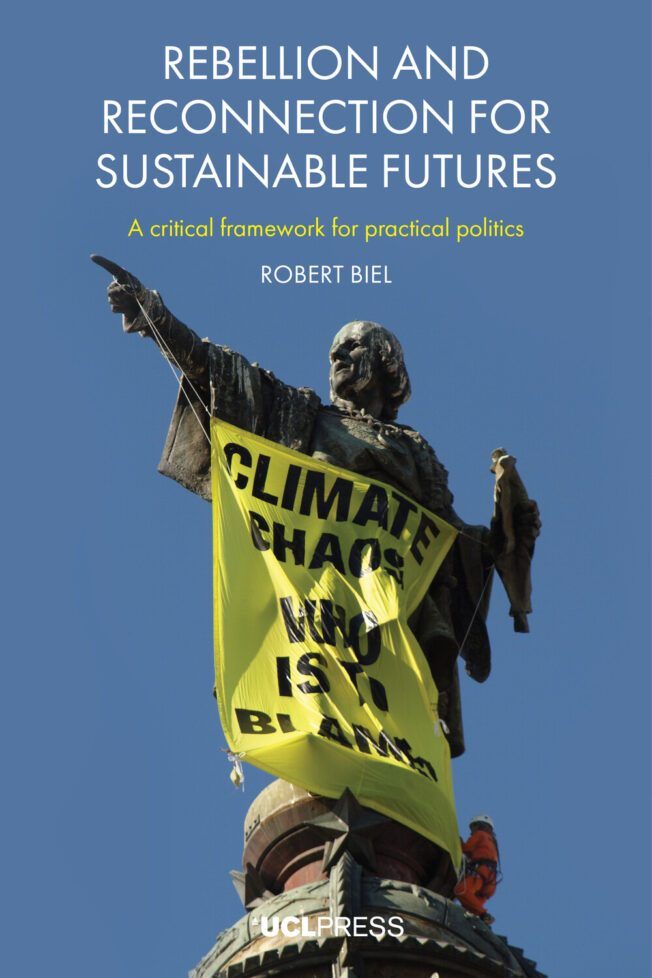

Rebellion and Reconnection for Sustainable Futures
A critical framework for practical politics
Robert Biel (Author)
We stand at a point of crisis for human society and life on Earth, with sustainability a constant theme in global discourse. Governments, industries and individuals attempt to take constructive action, but their steps are everywhere countered by the habits and relationships built over 300 years of capitalism, while right-wing populism and climate denial openly hold them back. Rebellion and Reconnection for Sustainable Futures proposes an urgent change of direction.
Grounded in the critical and theoretical tradition of political ecology, the book calls for a practical politics that rebels against the dominance of nature, resists fascist populism and reconnects with human tradition. Robert Biel argues that two forms of ‘remembering’ are needed, first that we embrace humanity’s past connection with socio-ecological change through deep time, and second that we assimilate still-valuable socialist traditions such as dignity and creativity of work. From this basis, he proposes a novel synthesis between complex systems research, Indigenous one-ness with nature, the ‘good Anthropocene’, and Marxist perspectives on nature. This unlocks a broad interrogation of the COVID experience by drawing on notions of biopolitics and queer theory, while also re-framing theories of imperialism to critique the central role of racism. Written in an engaging style, the book builds a compelling case for a new practical and actionable politics based on reclaiming what we have lost.
Toby Butler, Felix Driver, Barbara Brayshay, Chris Church, Jeremy Iles, Oli Mould, Saskia Papadakis,
01 November 2026


Poetics and Politics of Islamic Imaginaries
Sertaç Sehlikoglu, Fatemeh Sadeghi, Sumrin Kalia, Erol Saglam, Alexander Pymm,
01 October 2026

The Faces of Authoritarianism and Strategies of Dissent in Contemporary Brazil
Andreza Aruska de Souza Santos, Katerina Hatzikidi,
15 May 2025

Nick Gallent, Menelaos Gkartzios, Mark Scott, Andrew Purves,
06 February 2025
An Introduction to Waste Management and Circular Economy
Stijn van Ewijk, Julia Stegemann,
05 December 2023

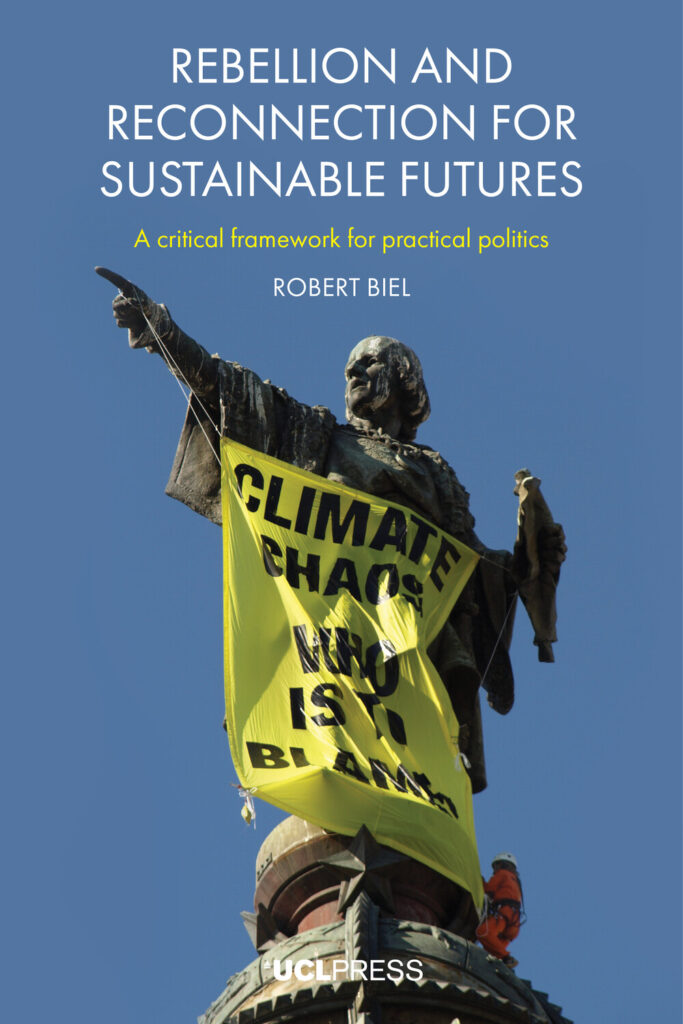
Rebellion and Reconnection for Sustainable Futures
A critical framework for practical politics
Publication date: July 1, 2026
Open Access PDF ISBN: 9781806551200
Paperback ISBN: 9781806551194
Hardback ISBN: 9781806551187
Trim size (hardback): 23.4cm x 15.6cm
Trim size (paperback): 23.4cm x 15.6cm

We stand at a point of crisis for human society and life on Earth, with sustainability a constant theme in global discourse. Governments, industries and individuals attempt to take constructive action, but their steps are everywhere countered by the habits and relationships built over 300 years of capitalism, while right-wing populism and climate denial openly hold them back. Rebellion and Reconnection for Sustainable Futures proposes an urgent change of direction.
Grounded in the critical and theoretical tradition of political ecology, the book calls for a practical politics that rebels against the dominance of nature, resists fascist populism and reconnects with human tradition. Robert Biel argues that two forms of ‘remembering’ are needed, first that we embrace humanity’s past connection with socio-ecological change through deep time, and second that we assimilate still-valuable socialist traditions such as dignity and creativity of work. From this basis, he proposes a novel synthesis between complex systems research, Indigenous one-ness with nature, the ‘good Anthropocene’, and Marxist perspectives on nature. This unlocks a broad interrogation of the COVID experience by drawing on notions of biopolitics and queer theory, while also re-framing theories of imperialism to critique the central role of racism. Written in an engaging style, the book builds a compelling case for a new practical and actionable politics based on reclaiming what we have lost.