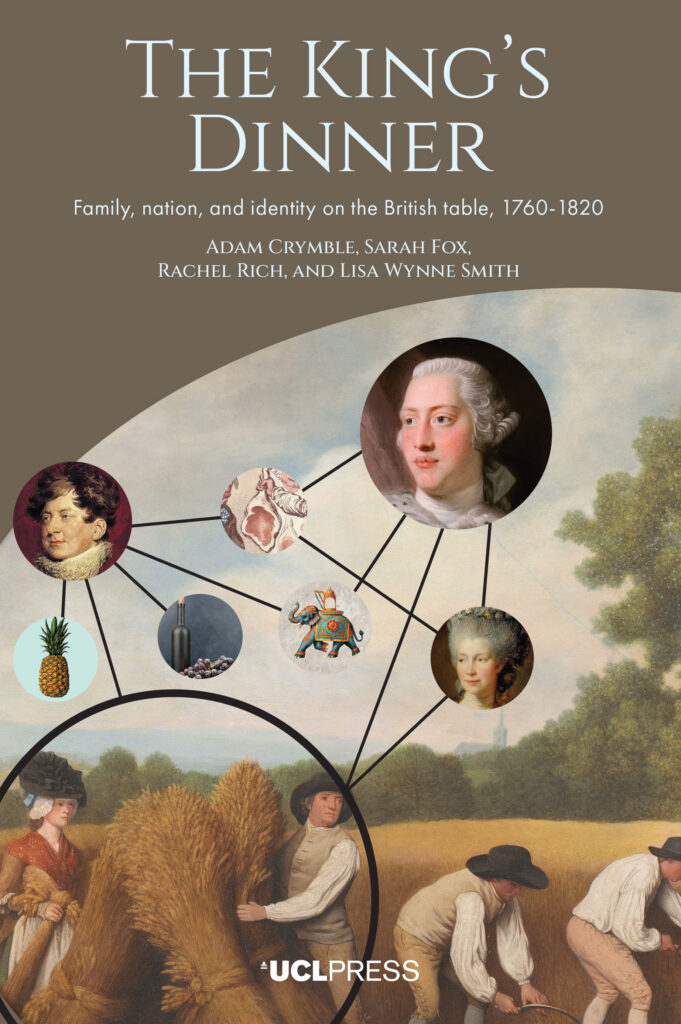
The King’s Dinner

The King’s Dinner is about what it meant to be British at the end of the eighteenth century. Drawing on the vast kitchen ledgers of two royal households made newly available to research through digitisation, the authors study the role and influence of food in understanding British identity. Analysing trade routes, migration, agricultural changes, recipes, and flavours they argue that Britishness was more complex and more multicultural than previously recognised.

Starting at George III’s Kew Palace and the Prince Regent’s Carlton House, then moving in ever wider circles, the book considers the significance of food for understanding the royal family, the wider British population, their European neighbours, and the British and colonised people in the Atlantic world and the Indian subcontinent. With a growing overseas empire, Britain was an increasingly powerful nation, and the ability to choose was one of the ways this power was exercised. The cuisine that emerged was complex, with wealthy Britons adopting, adapting, or rejecting the foods of European enemies and allies or colonised peoples and places. ‘Britishness’ was an ever-shifting balance of European multiculturalism, imperial ambition, tradition and experimentation, a messy mix that reveals the entanglement of cultures and cuisines, continually changed by the people who cook and eat the food.

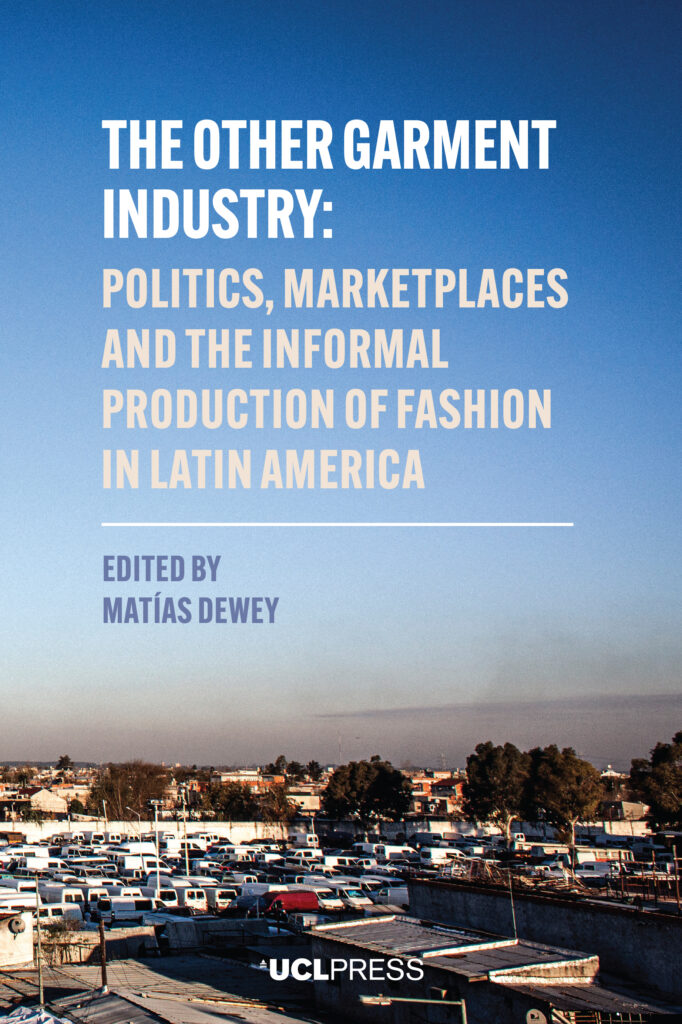
The Other Garment Industry

The Other Garment Industry sheds light on an economic, social and political phenomenon in Latin America, which is well known in the region, yet largely overlooked in social sciences literature. The volume analyses a regional configuration of informal garment production, distribution and consumption which cannot be explained by the dominant paradigm of global chains. This volume is pioneering in providing a holistic account of a specific industrial configuration in Latin America, showcasing this type of economy in Argentina, Brazil and Peru, and brings examples of trade in neighbouring countries such as Uruguay, Chile, Bolivia and Paraguay.

The volume focuses on three pillars of this economy: downstream entrepreneurs, bustling garment marketplaces and far-reaching national and regional trade routes. Far from the conventional image of sweatshops as monotonous spaces where creativity is reserved for big brands, the volume reveals workshops where design, trend-sensing and production are tightly woven together around consumer desires and imaginaries. Within these productive units, a differentiated division of labour makes room for experimentation, style innovation and rapid responses to shifting tastes. The garments travel through large, informal marketplaces expressly devoted to low-cost fashion, where traders and buyers meet in dense, dynamic circuits of exchange. These garment-oriented marketplaces, linked to extended informal trade routes, become crucial connectors that compress distribution chains, lower costs and expand access to affordable fashion for broad segments of the population.

Contraband Cultures

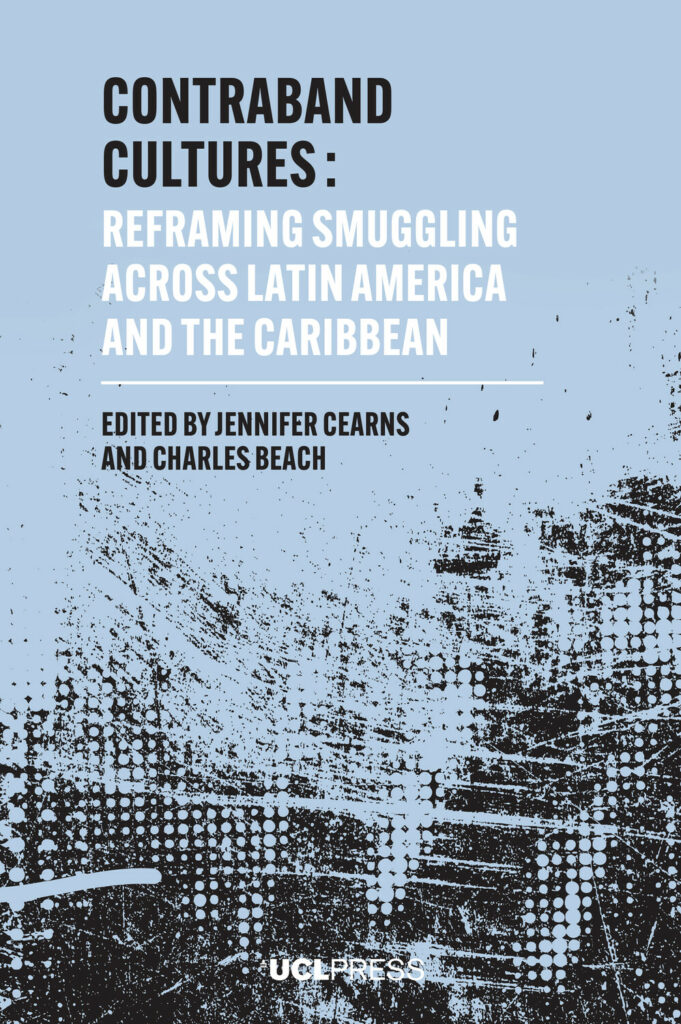
The image shows the cover of a book titled ‘Contraband Cultures: Reframing Smuggling Across Latin America and The Caribbean’, edited by Jennifer Cearns and Charles Beach. The background is dark blue with a pattern that resembles white paint splatters or stars. The title and editors’ names are in white text, with the UCL Press logo at the bottom.

Contraband Cultures presents narratives, representations, practices and imaginaries of smuggling and extra-legal or informal circulation practices, across and between the Latin American region (including the Caribbean) and its diasporas. Countering a fetishizing and hegemonic imaginary (typically stemming from the Global North) of smuggling activity in Latin America as chaotic, lawless, violent and somehow ‘exotic’, this book reframes such activities through the lenses of kinship, political movements, economic exchange and resistance to capitalist state hegemony.

The volume comprises a broad range of chapters from scholars across the social sciences and humanities, using various methodological techniques, theoretical traditions and analytic approaches to explore the efficacy and valence of ‘smuggling’ or ‘contraband’ as a lens onto modes of personhood, materiality, statehood and political (dis)connection across Latin America. This material is presented through a combination of historic documentation and contemporary ethnographic research across the region to highlight the genesis and development of these cultural practices whilst grounding them in the capitalist and colonial refashioning of the entire region from the sixteenth century to the present day.

Materialising the Roman Empire

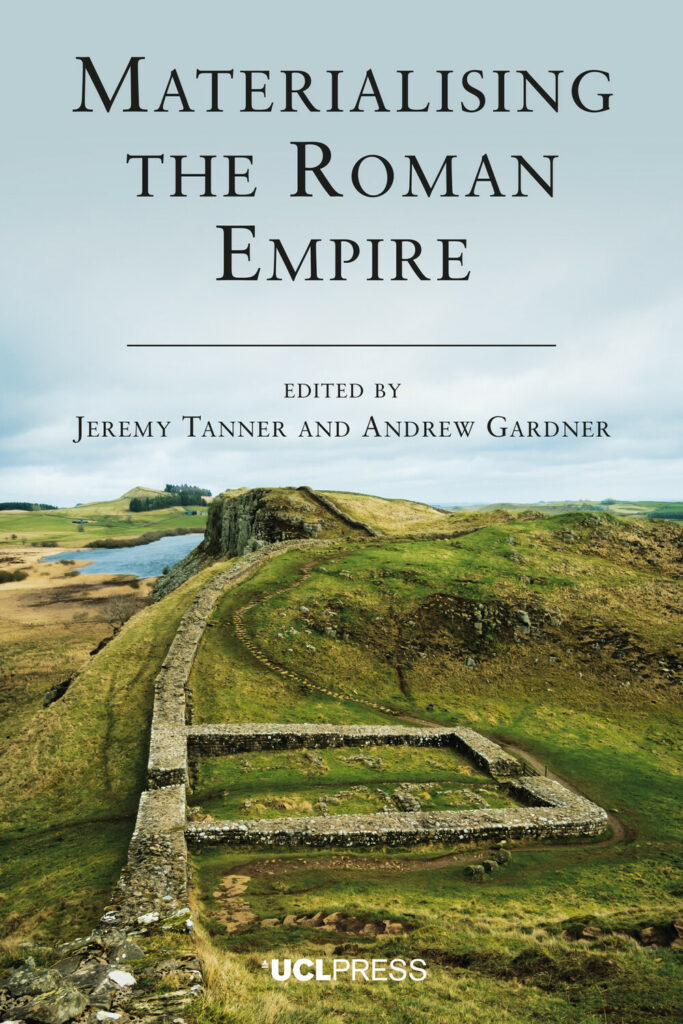
Materialising the Roman Empire defines an innovative research agenda for Roman archaeology, highlighting the diverse ways in which the Empire was made materially tangible in the lives of its inhabitants. The volume explores how material culture was integral to the processes of imperialism, both as the Empire grew, and as it fragmented, and in doing so provides up-to-date overviews of major topics in Roman archaeology.

Each chapter offers a critical overview of a major field within the archaeology of the Roman Empire. The book’s authors explore the distinctive contribution that archaeology and the study of material culture can make to our understanding of the key institutions and fields of activity in the Roman Empire. The initial chapters address major technologies which, at first glance, appear to be mechanisms of integration across the Roman Empire: roads, writing and coinage. The focus then shifts to analysis of key social structures oriented around material forms and activities found all over the Roman world, such as trade, urbanism, slavery, craft production and frontiers. Finally, the book extends to more abstract dimensions of the Roman world: art, empire, religion and ideology, in which the significant themes remain the dynamics of power and influence. The whole builds towards a broad exploration of the nature of imperial power and the inter-connections that stimulated new community identities and created new social divisions.

The Venice Variations

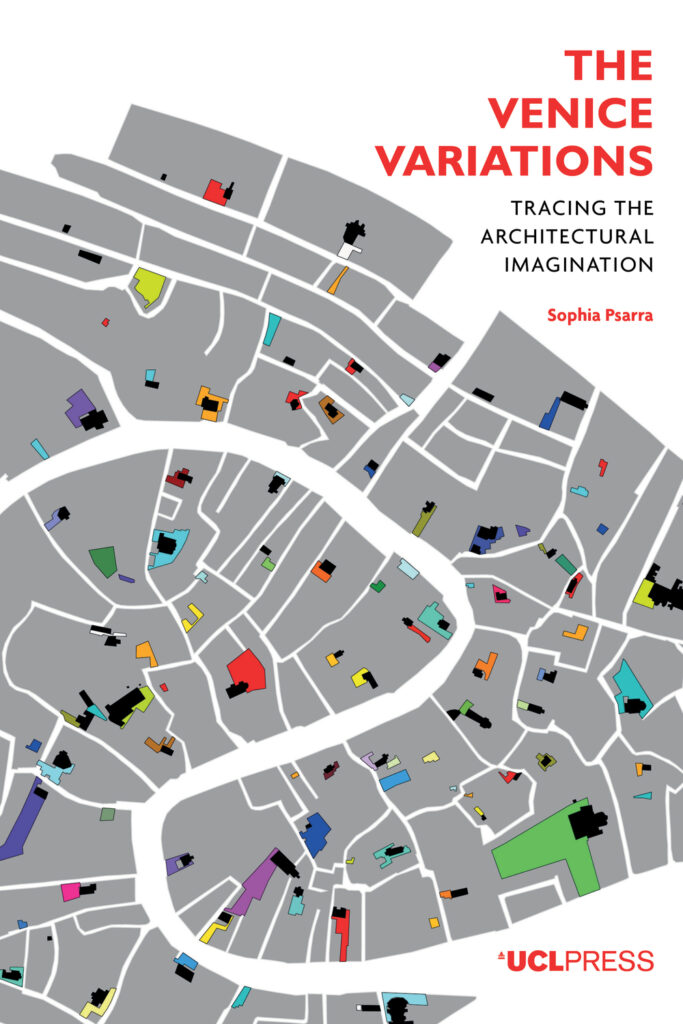
From the myth of Arcadia through to the twenty-first century, ideas about sustainability – how we imagine better urban environments – remain persistently relevant, and raise recurring questions. How do cities evolve as complex spaces nurturing both urban creativity and the fortuitous art of discovery, and by which mechanisms do they foster imagination and innovation? While past utopias were conceived in terms of an ideal geometry, contemporary exemplary models of urban design seek technological solutions of optimal organisation. The Venice Variations explores Venice as a prototypical city that may hold unique answers to the ancient narrative of utopia. Venice was not the result of a preconceived ideal but the pragmatic outcome of social and economic networks of communication. Its urban creativity, though, came to represent the quintessential combination of place and institutions of its time.

Through a discussion of Venice and two other works owing their inspiration to this city – Italo Calvino’s Invisible Cities and Le Corbusier’s Venice Hospital – Sophia Psarra describes Venice as a system that starts to resemble a highly probabilistic ‘algorithm’. The rapidly escalating processes of urban development around our big cities share many of the motivations for survival, shelter and trade that brought Venice into existence. Rather than seeing these places as problems to be solved, we need to understand how urban complexity can evolve, as happened from its unprepossessing origins in the marshes of the Venetian lagoon to the ‘model city’ enduring a 1000 years. This book frees Venice from stereotypical representations, revealing its generative capacity to inform potential other ‘Venices’ for the future.

Statecraft and Foreign Policy

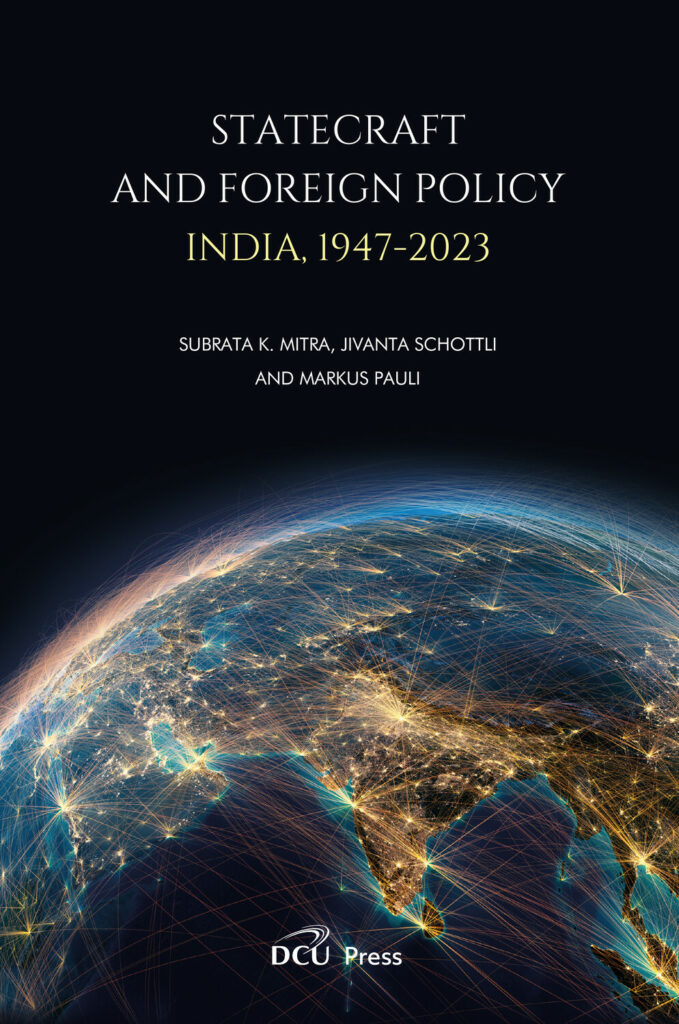
Statecraft and Foreign Policy provides an in-depth understanding of India’s rise as an economic and political power and its role in addressing global challenges, from climate change to international trade, security, health and energy. It focuses on India’s statecraft and foreign policy from its independence in 1947 to current politics and policies in 2023 – 75 years later.

The book has three main sections, focusing on the evolution of India’s foreign policy after Independence, its transformation after the Cold War and as India’s economic and political power grew, and India’s engagement with major powers (like the US, China and Russia), neighbouring countries, and international institutions. The analysis draws on International Relations Theory, Foreign Policy Analysis, and the work of classic Indian thinkers like Kautilya. It combines evaluating domestic and international influences on India’s statecraft and foreign policy.

The authors introduce a ‘toolbox’ for studying the making and the outcomes of Foreign Policy based on an analysis of interests, perceptions, and values. This analytical framework goes beyond the Indian case study and can be applied to International Relations, Comparative Politics, and Foreign Policy Analysis.

Praise for Statecraft and Foreign Policy

‘Mitra, Schottli, and Pauli have crafted a remarkably deep analysis of India’s foreign policy. They have not only reviewed the details of India’s foreign affairs, itself no small task, but they have done so in an analytic framework grounded in a profound evaluation of the intertwining of domestic and foreign policy choices and compunctions. As contemporary India has emerged as one of the world’s great powers – great in every sense of that term – this book is essential reading for policymakers, diplomats, scholars, and students of Indian affairs and world affairs. Statecraft and Foreign Policy is a tour de force that will define how we think of India in global politics for decades to come!’ Bruce Bueno de Mesquita, Julius Silver Professor of Politics, New York University, USA

‘A sweeping overview, in holistic perspective. Covers independent India’s 75 years, narrating policy development and diplomatic actions. Incisive, balanced, and insightful.’ Kisan S. Rana, Emeritus Professor and Former Ambassador of India to Germany

‘This book offers both a wide compass of Indian foreign policy across its 76 years but also a focused lens that assesses change and continuity across different periods and varied dimensions of foreign policy. Domestic and international variables are brought together in the analysis with a focus on how the Prime Ministers think about and visualize their foreign policies. Each chapter provides a synoptic assessment including additional readings making it an excellent reference that brings analysis of foreign policy up to date. The discussions of India’s multilateral engagements on trade, climate change and international negotiations is a valuable addition to usual bilateral discussions of foreign policies.’ Aseema Sinha, Wagener Chair of South Asian Politics and George R. Roberts Fellow at Claremont McKenna College in California, USA

‘The authors have done the almost-impossible – they have provided a synopsis of the most important phases, relationships, and issues that mark the country’s policies beyond its borders. And they have done it engagingly and with sophistication…free of jargon and abstruse theorizing, and yet with a penetrating point of view.’ Professor Kanti Bajpai, Lee Kuan Yew School of Public Policy at the National University of Singapore
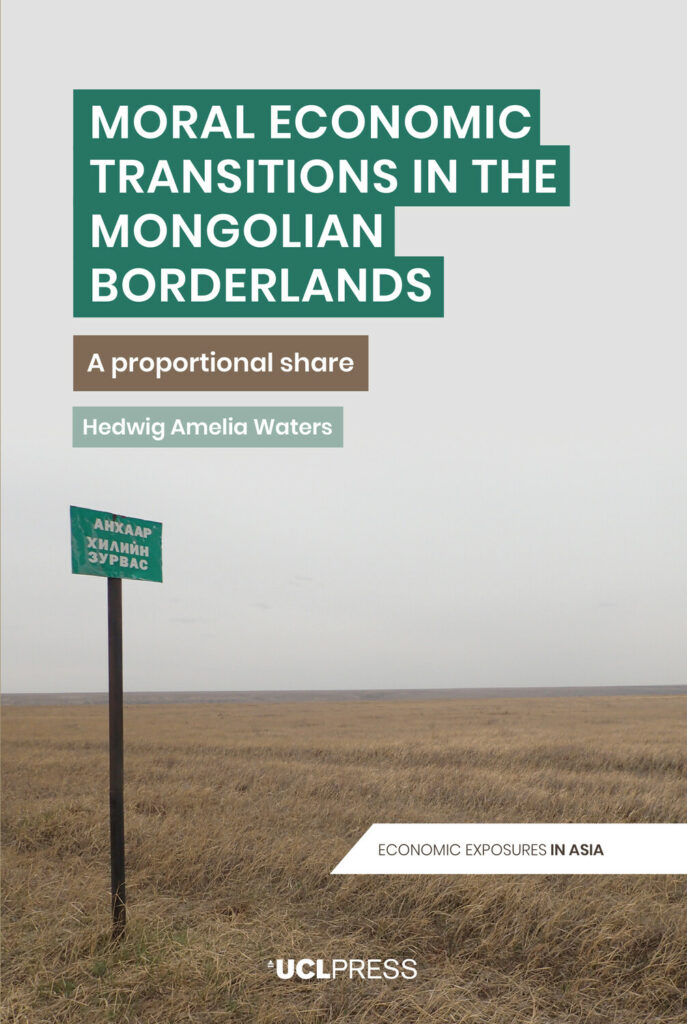
Moral Economic Transitions in the Mongolian Borderlands

Since the early 1990s, Mongolia began its hopeful transition from socialism to a market democracy, becoming increasingly dependent on international mining revenue. Both shifts were promised to herald a new age of economic plenty for all. Now, roughly 30 years on, many of Mongolia’s poor and rural feel that they have been forgotten.
Moral Economic Transitions in the Mongolian Borderlands describes these shifts from the viewpoint of the self-proclaimed ‘excluded’: the rural township of Magtaal on the Chinese border. In the wake of socialism, the population of this resource-rich area found itself without employment and state institutions, yet surrounded by lush nature 30 kilometres from the voracious Chinese market. A two-tiered resource-extractive political-economic system developed. Whilst large-scale, formal, legally sanctioned conglomerates arrived to extract oil and land for international profits, the local residents grew increasingly dependent on the Chinese-funded informal, illegal cross-border wildlife trade. More than a story about rampant capitalist extraction in the resource frontier, this book intimately details the complex inner worlds, moral ambiguities and emergent collective politics constructed by individuals who feel caught in political-economic shifts largely outside of their control.

Offering much needed nuance to commonplace descriptions of Mongolia’s post-socialist transition, this study presents rich ethnographic detail through the eyes and voices of the state’s most geographically marginalized. It is of interest not only to experts of political-economy and post-socialist transition, but also to non-academic readers intrigued by the interplay of value(s) and capitalism.

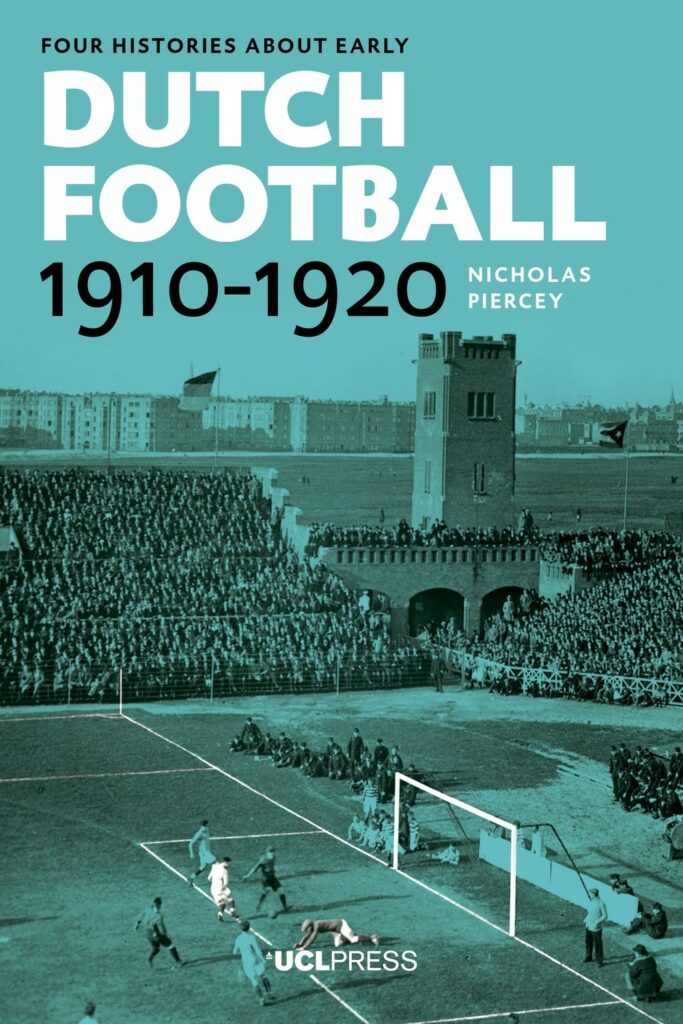
Four Histories about Early Dutch Football, 1910-1920

What is the purpose of history today, and how can sporting research help us understand the world around us? In this stimulating book, Nicholas Piercey constructs four new histories of early Dutch football, exploring urban change, club members, the media, and the diaries of Cornelis Johannes Karel van Aalst, a stadium director, to propose practical examples of how history can become an important democratic tool for the 21st century.

Using early Dutch football as a field for experimental thinking about the past, the four histories offer new insights into the lives, interests and passions of those connected to the sport in the 1910s and the cities they lived in. How did the First World War impact on Dutch football? Were new stadia a form of social control? Is the spread of the beautiful game really a good thing? And why was one of the sport’s most prominent figures more concerned with potatoes? These stories of early Dutch football suggest how vital sport and history can be in shaping our lives, perceptions and actions, and why we need to challenge the influence they have today.

This book also includes a downloadable appendix. [Download it here]1.

[1]: http://discovery.ucl.ac.uk/1517998/11/Appendix.xlsx

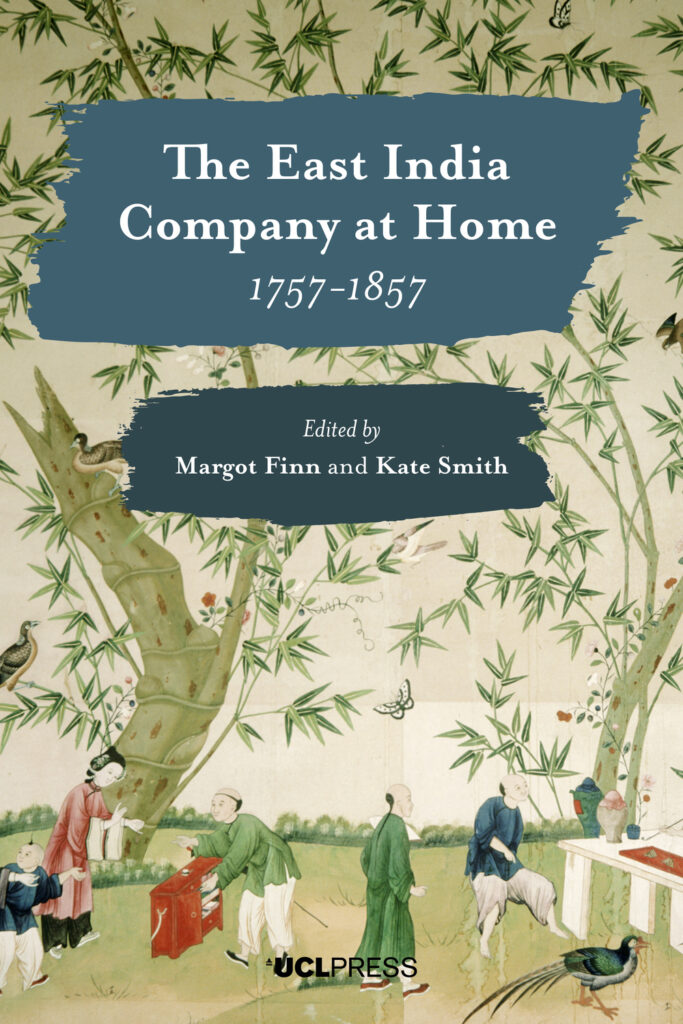
The East India Company at Home, 1757-1857

The East India Company at Home, 1757-1857 explores how empire in Asia shaped British country houses, their interiors and the lives of their residents. It includes chapters from researchers based in a wide range of settings such as archives and libraries, museums, heritage organisations, the community of family historians and universities. It moves beyond conventional academic narratives and makes an important contribution to ongoing debates around how empire impacted Britain.

The volume focuses on the propertied families of the East India Company at the height of Company rule. From the Battle of Plassey in 1757 to the outbreak of the Indian Uprising in 1857, objects, people and wealth flowed to Britain from Asia. As men in Company service increasingly shifted their activities from trade to military expansion and political administration, a new population of civil servants, army officers, surveyors and surgeons journeyed to India to make their fortunes. These Company men and their families acquired wealth, tastes and identities in India, which travelled home with them to Britain. Their stories, the biographies of their Indian possessions and the narratives of the stately homes in Britain that came to house them, frame our explorations of imperial culture and its British legacies.

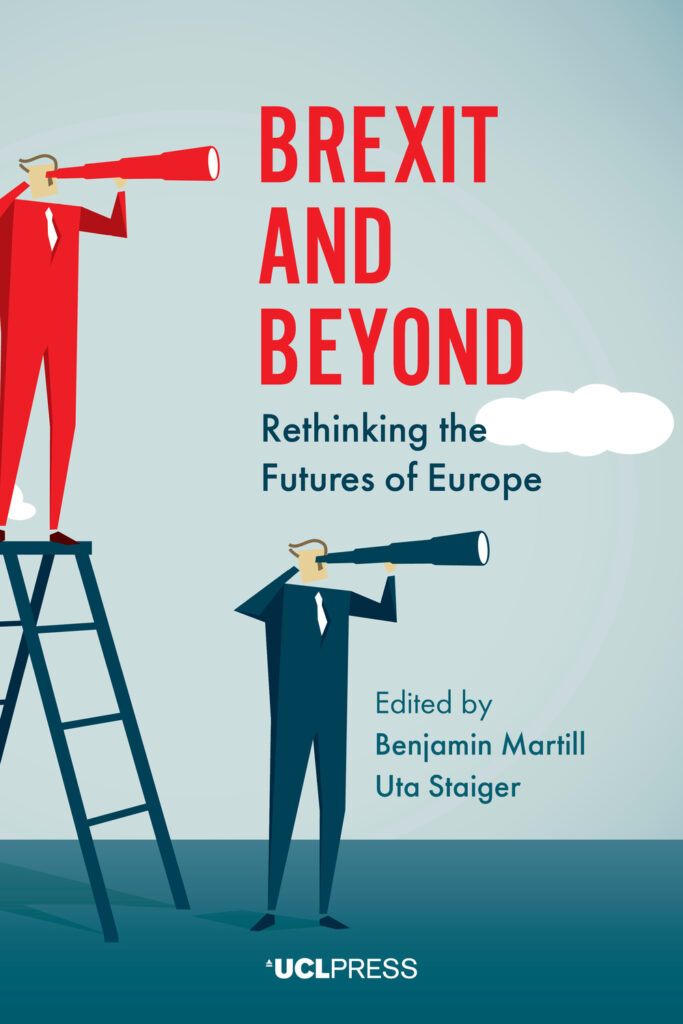
Brexit and Beyond

Brexit will have significant consequences for the country, for Europe, and for global order. And yet much discussion of Brexit in the UK has focused on the causes of the vote and on its consequences for the future of British politics. This volume examines the consequences of Brexit for the future of Europe and the European Union, adopting an explicitly regional and future-oriented perspective missing from many existing analyses.

Drawing on the expertise of 28 leading scholars from a range of disciplines, Brexit and Beyond offers various different perspectives on the future of Europe, charting the likely effects of Brexit across a range of areas, including institutional relations, political economy, law and justice, foreign affairs, democratic governance, and the idea of Europe itself. Whilst the contributors offer divergent predictions for the future of Europe after Brexit, they share the same conviction that careful scholarly analysis is in need – now more than ever – if we are to understand what lies ahead for the EU.

Sign up to our newsletter

Don't miss out!
Subscribe to the UCL Press newsletter for the latest open access books,
journal CfPs, news and views from our authors and much more!