We are currently upgrading our shopping cart; in the interim all orders are being diverted to Waterstones. If you would like to redeem a promotional code, or are an author wanting to place an order, please email us.

Contact us

Critical Perspectives on Academic Writing

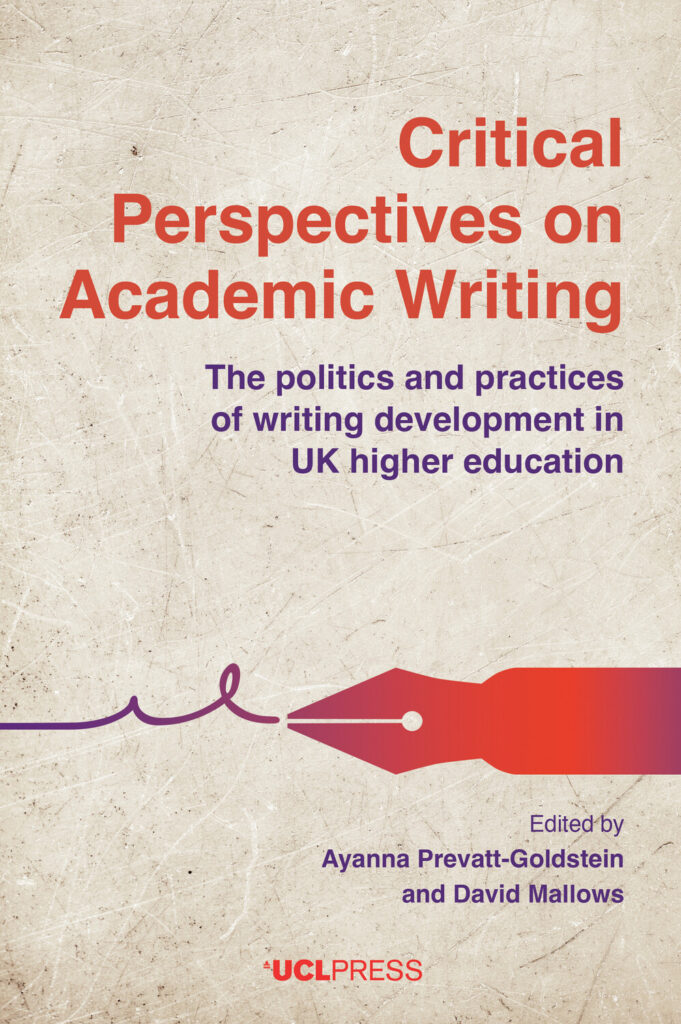
Critical Perspectives on Academic Writing offers a timely, theoretically grounded examination of the often marginalised yet foundational role of academic writing in UK higher education. Based on the UCL Institute of Education’s Academic Writing Seminar Series, the volume brings together leading researchers and practitioners to interrogate the contested politics, practices, and pedagogies of academic writing development. Against the backdrop of internationalisation, widening participation, neoliberalisation, and the rapid rise of generative artificial intelligence in higher education, the contributors consider how we value academic writing and how we support student writing development.

The first part of the book frames the choices we make when working with writing or with developing writers as inherently political rather than neutral. The second focuses on the implications of generative AI for student academic writing; and the third situates research on academic writing and literacies in the practices of learning and teaching. By examining the roles of writing specialists, subject lecturers, and institutional policy, the book highlights both challenges and possibilities for change. It combines critical insights with practical approaches to writing pedagogy, offering an essential resource for educators, researchers and policymakers seeking to rethink the place of writing in the modern university.
Inclusion, Diversity and Innovation in Translation Education

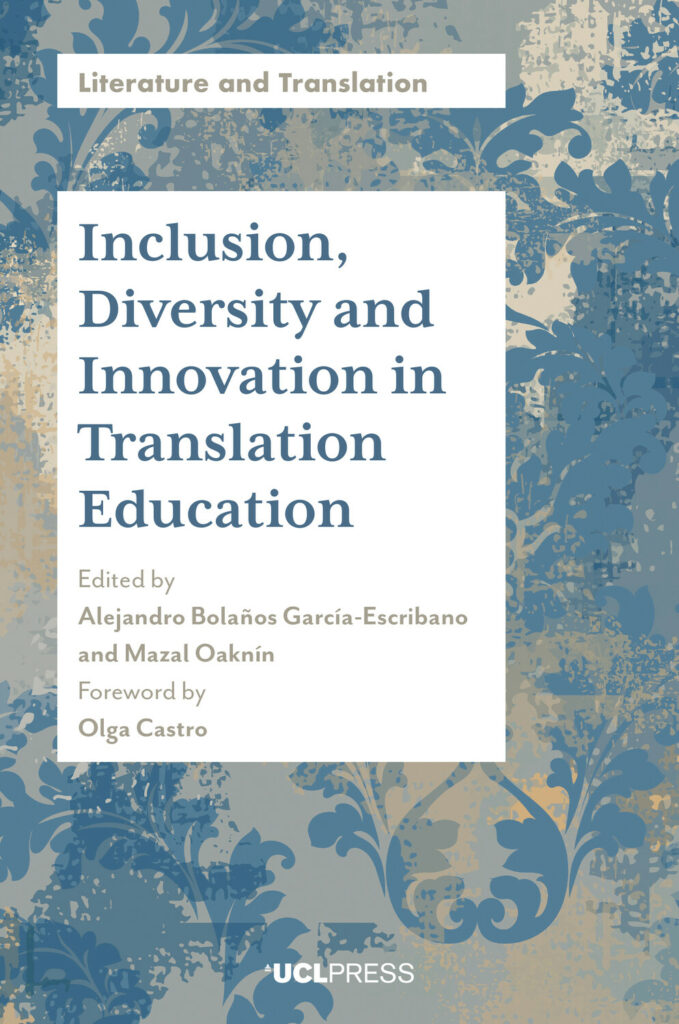
The image shows the cover of a book titled ‘Inclusion, Diversity and Innovation in Translation Education’, edited by Alejandro Bolaños García-Escribano and Mazal Oaknín and foreword by Olga Castro. The cover has an abstract blue and beige floral background with the title text on a white central panel.

Through examples of literary and audiovisual translation teaching practices, Inclusion, Diversity and Innovation in Translation Education places a novel emphasis on equality, diversity and inclusion (EDI) synergising the latest research advancements in EDI and translation curricula.

The contributors revisit how languages and translation are currently taught and explore the relevance of EDI values from an interdisciplinary perspective. The chapters contain proposals of best teaching practices and teacher training guidance alongside examples of research-led teaching scenarios. There is a twofold rationale behind this volume: firstly, identifying links between literary and audiovisual translation teaching practices, which often demand great creativity inside and outside the classroom; and, secondly, placing greater emphasis on EDI-focused methods and themes. Following this approach, readers are invited to consider pressing societal issues such as (media) accessibility, intersectionality, LGBTQI+ and race, among others, and to embed them in their language and translation teaching practices.

Rethinking Class Size

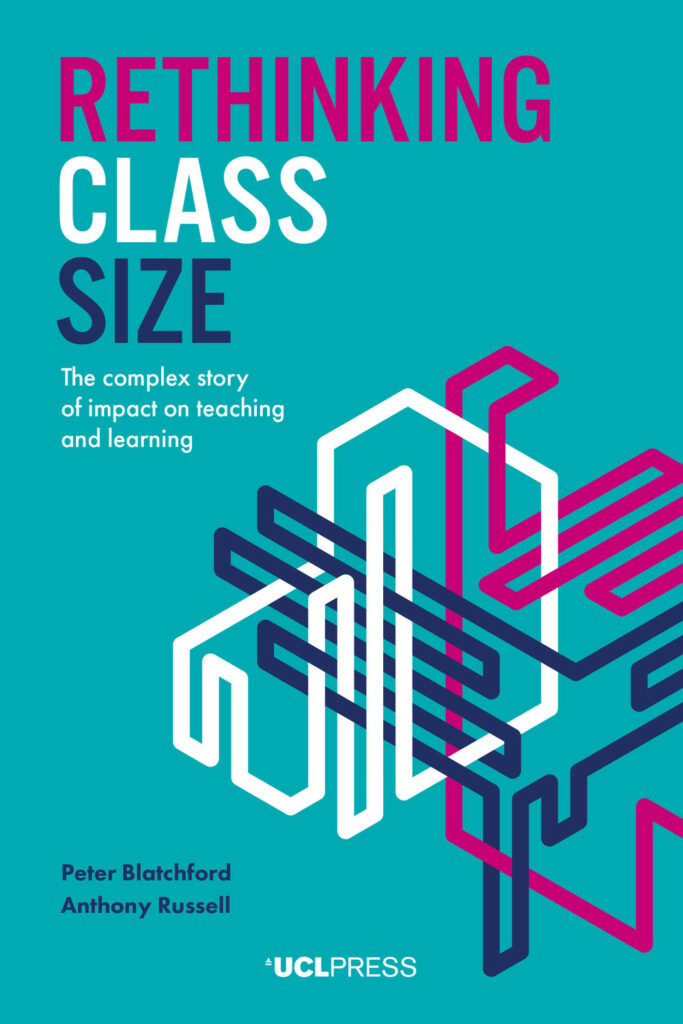
The debate over whether class size matters for teaching and learning is one of the most enduring, and aggressive, in education research. Teachers often insist that small classes benefit their work. But many experts argue that evidence from research shows class size has little impact on pupil outcomes, so does not matter, and this dominant view has informed policymaking internationally. Here, the lead researchers on the world’s biggest study into class size effects present a counter-argument. Through detailed analysis of the complex relations involved in the classroom they reveal the mechanisms that support teachers’ experience, and conclude that class size matters very much indeed.

Drawing on 20 years of systematic classroom observations, surveys of practitioners, detailed case studies and extensive reviews of research, Peter Blatchford and Anthony Russell contend that common ways of researching the impact of class size are limited and sometimes misguided. While class size may have no direct effect on pupil outcomes, it has, they say, significant force through interconnections with classroom processes. In describing these connections, the book opens up the everyday world of the classroom and shows that the influence of class size is everywhere. It impacts on teaching, grouping practices and classroom management, the quality of peer relations, tasks given to pupils, and on the time teachers have for marking, assessments and understanding the strengths and challenges for individual pupils. From their analysis, the authors develop a new social pedagogical model of how class size influences work, and identify policy conclusions and implications for teachers and schools.

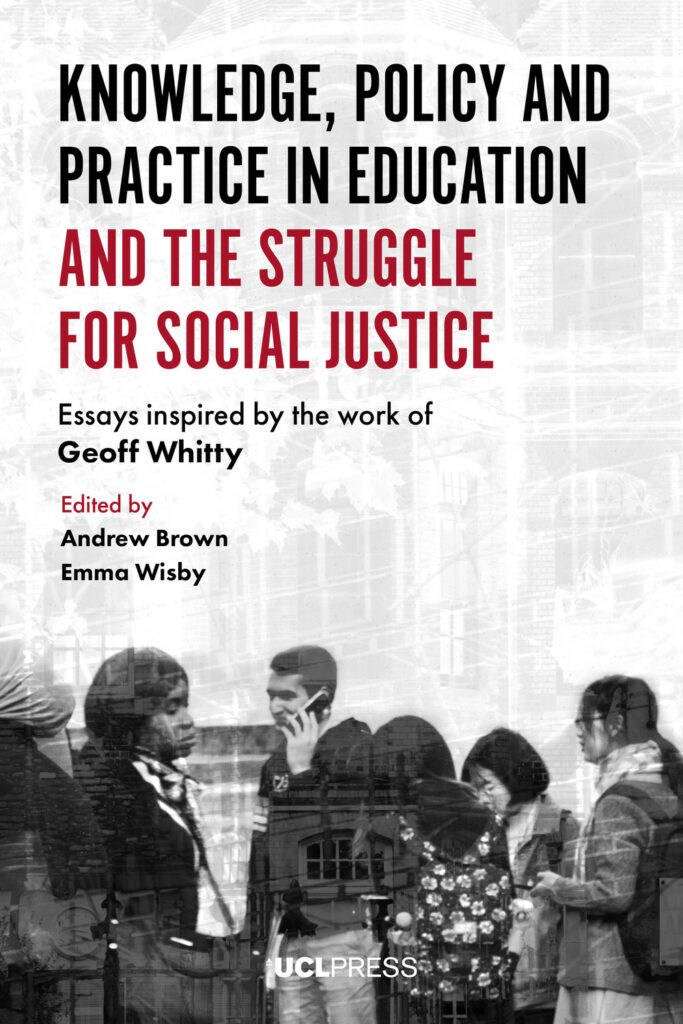
Knowledge, Policy and Practice in Education and the Struggle for Social Justice

For 50 years, educator and sociologist Geoff Whitty resolutely pursued social justice through education, first as a classroom teacher and ultimately as the Director of the Institute of Education in London.

The essays in this volume – written by some of the most influential authors in the sociology of education and critical policy studies – take Whitty’s work as the starting point from which to examine key contemporary issues in education and the challenges to social justice that they present. Set within three themes of knowledge, policy and practice in education, the chapters tackle the issues of defining and accessing ‘legitimate’ knowledge, the changing nature of education policy under neoliberalism and globalization, and the reshaping of teacher workplaces and professionalism – as well as attempts to realize more emancipatory practice. Whitty’s scholarship on what constitutes quality and impact in educational research is also explored.

Together, the essays open a window on a life in the sociology of education, the scholarly community of which it was part, and the facets of education policy, practice and research that they continue to reveal and challenge in pursuit of social justice. They celebrate Whitty as one of the foremost sociologists of education of his generation, but also as a friend and colleague. And they highlight the continued relevance of his contribution to those seeking to promote fairer and more inclusive education systems.

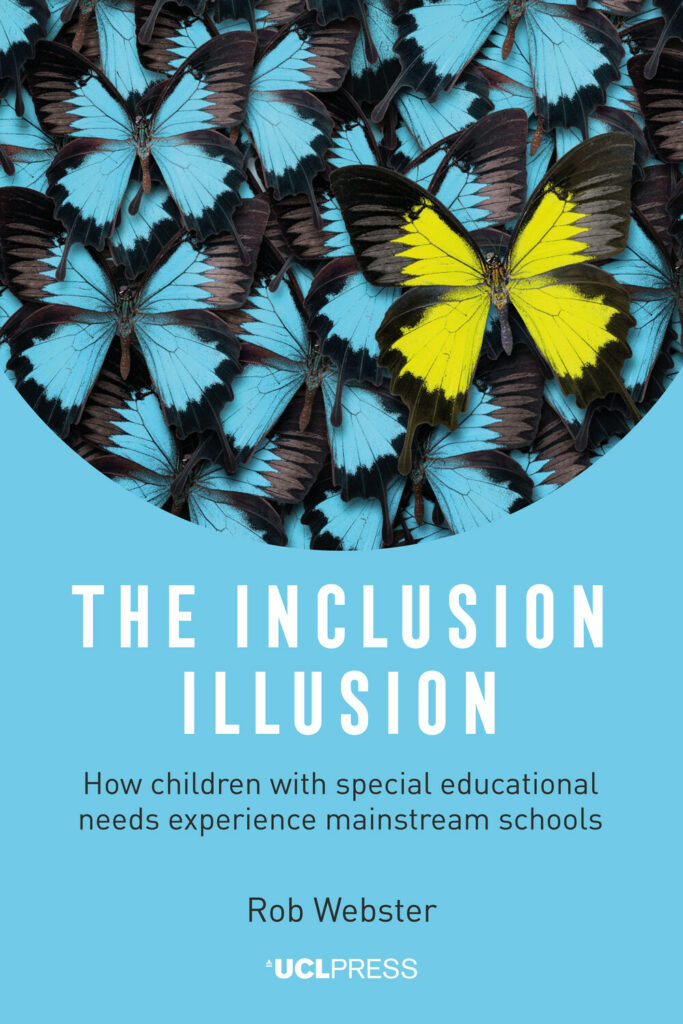
The Inclusion Illusion

Inclusion conjures images of children with special educational needs and disabilities (SEND) learning in classes alongside peers in a mainstream school. For pupils in the UK with high-level SEND, who have an Education, Health and Care Plan (formerly a Statement), this implies an everyday educational experience similar to that of their typically-developing classmates. Yet in vital respects, they are worlds apart.

Based on the UK’s largest observation study of pupils with high-level SEND, The Inclusion Illusion exposes how attendance at a mainstream school is no guarantee of receiving a mainstream education. Observations of nearly 1,500 lessons in English schools show that their everyday experience of school is characterised by separation and segregation. Furthermore, interviews with nearly 500 pupils, parents and school staff reveal the effect of this marginalisation on the quality of their education. The way schools are organised and how classrooms are composed creates a form of ‘structural exclusion’ that preserves mainstream education for typically-developing pupils and justifies a diluted pedagogical offer for pupils with high-level SEND. Policymakers, not mainstream schools, are indicted over this state of affairs. This book prompts questions about what we think inclusion is and what it looks like. Ultimately, it suggests why a more authentic form of inclusion is needed, and how it might be achieved.

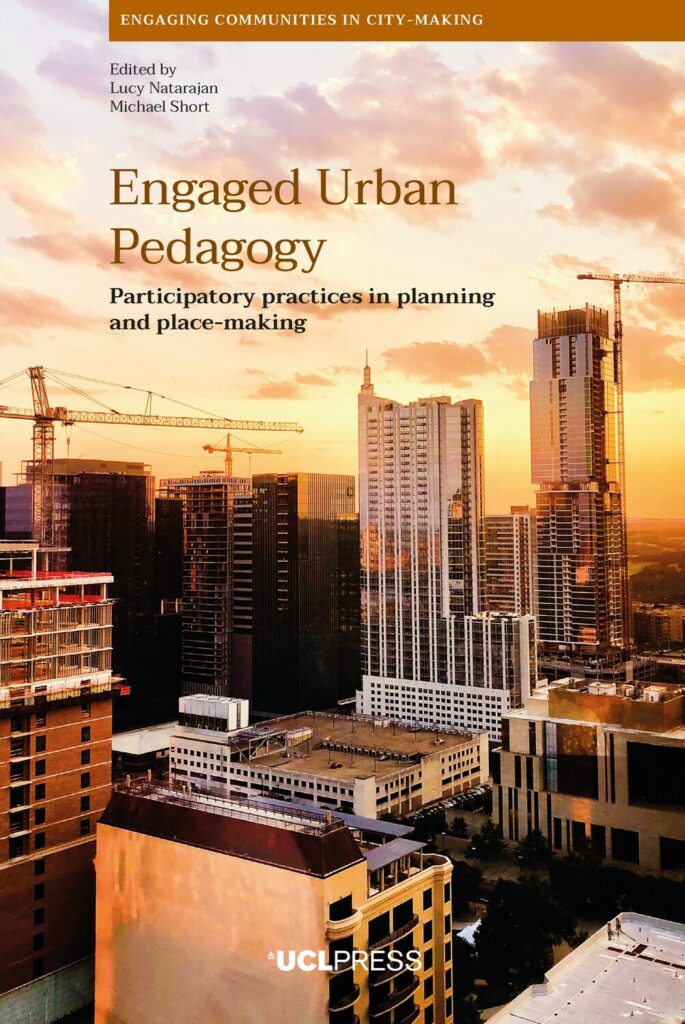
Engaged Urban Pedagogy

Engaged Urban Pedagogy presents a participatory approach to teaching built environment subjects by exploring 12 examples of real-world engagement in urban planning involving people within and beyond the university. Starting with curriculum review, course content is analysed in light of urban pasts, race, queer identity, lived experiences and concerns of urban professionals. Case studies then shift to focus on techniques for participatory critical pedagogy, including expanding the ‘classroom’ with links to live place-making processes, connections made through digital co-design exercises and student-led podcasting assignments. Finally, the book turns to activities beyond formal university teaching, such as where school-age children learn about their own participation in urban processes alongside university students and researchers. The last cases show how academics have enabled co-production in local urban developments, trained community co-researchers and acted as part of a city-to-city learning network. Throughout the book, editorial commentary highlights how these activities are a critical source of support for higher education.

Together, the 12 examples demonstrate the power and range of an engaged urban pedagogy. They are written by academics, university students and those working in urban planning and place-making. Drawing on foundational works of critical pedagogy, they present a distinctly urban praxis that will help those in universities respond to the built environment challenges of today.

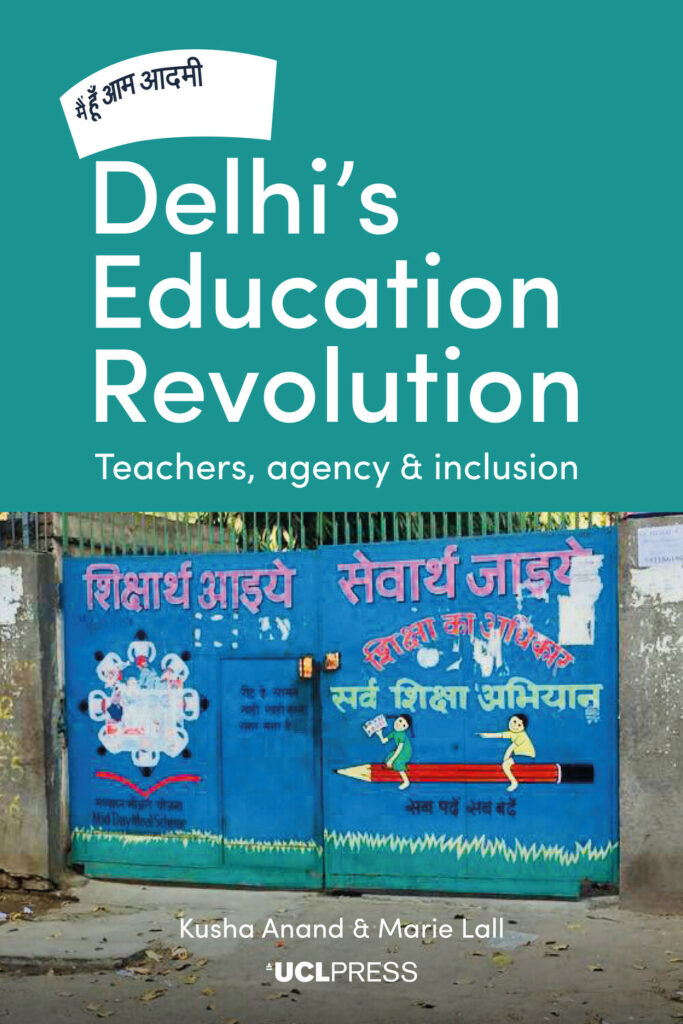
Delhi’s Education Revolution

In 2015, the Aam Aadmi Party (AAP) was elected to govern Delhi promising to improve public services, including education through government schools that would be the equal of private-school provision. Media reports, along with the party’s re-election in 2020, suggest strong public confidence that AAP are delivering on that promise. But is this success reflected by experience in schools?

Delhi’s Education Revolution offers a critical evaluation of the AAP’s education reforms by exploring policy and practice through the eyes of one key group: the government-school teachers tasked with making the AAP’s pledge a reality. Drawing on 110 research interviews conducted via Zoom during the Covid pandemic in the summer of 2020, teachers explain how the reforms have changed their profession and practice, and whether education really has improved for children of all backgrounds. Analysis of views about critical issues such as inclusion and the pressure of achievement targets in classrooms that often contain more than 50 students, informs their observations about the reform programme itself. The study paints a more qualified picture of success than suggested elsewhere and makes a valuable contribution to the understanding of education reforms in India, and most especially, in Delhi.

Belonging and Identity in STEM Higher Education

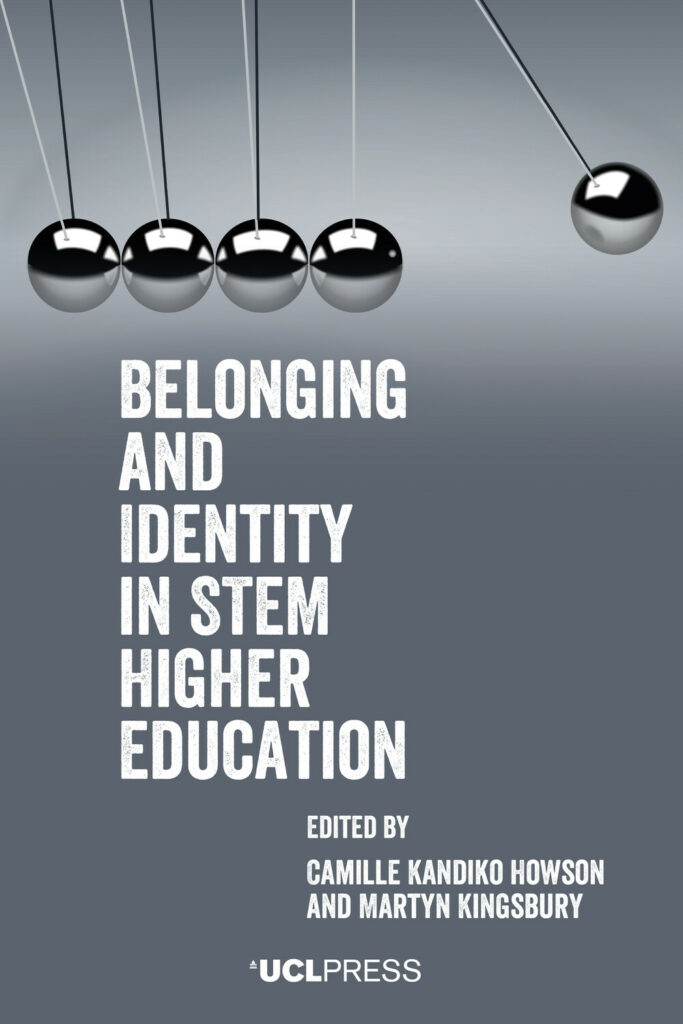
The image features a book cover titled Belonging and Identity in STEM Higher Education. The cover depicts five pendulum balls, reminiscent of Newton’s cradle, with the first and last balls in motion. The title is written in bold black letters. The editors’ names, Camille Kandiko Howson and Martyn Kingsbury, appear below the title. The UCL Press logo is at the bottom.

In Belonging and Identity in STEM Higher Education, leading scholars, teachers, practitioners and students explore belonging and identity in Science, Technology, Engineering and Mathematics (STEM) fields, and how this is impacted by disciplinary changes and the post-pandemic higher education context. In STEM fields, positivist approaches and a focus on numerical data can lead to assumptions that they are unemotional, impersonal disciplines. The need for mathematical competency, logical thinking and disciplinary contexts can be barriers to engagement, belonging and success in STEM.

STEM ways of thinking, such as those underpinning abstract and complex mathematics, can form the basis for new ways of conceptualising belonging for both staff and students, going beyond socio-demographic and cultural differences. In this book, chapters and case study contributions analyse what is unique about STEM educational environments for staff and students in the UK, Ireland, Europe, Scandinavia and Asia. The authors examine the role of STEM pedagogies in facilitating belonging, variable impacts across student characteristics and the experiences STEM students face in their higher education experiences. It provides a valuable resource for those working in equality, diversity and inclusion (EDI), STEM educational researchers and practitioners, as well as offering insights for academics and teachers in STEM higher education.

Sign up to our newsletter

Don't miss out!
Subscribe to the UCL Press newsletter for the latest open access books,
journal CfPs, news and views from our authors and much more!