We are currently upgrading our shopping cart; in the interim all orders are being diverted to Waterstones. If you would like to redeem a promotional code, or are an author wanting to place an order, please email us.

Contact us

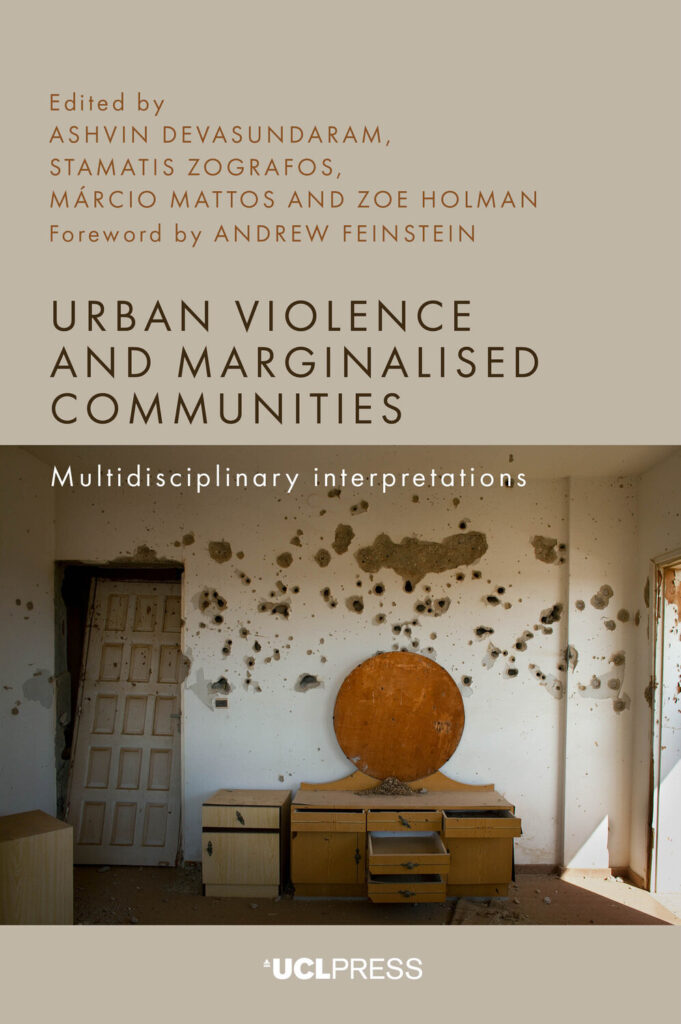
Urban Violence and Marginalised Communities

Placing peripheralised people at its centre, this edited collection unpacks how urban violence must be understood from multiple points of view: powerholders, decision makers, law enforcers, built environment professionals, creative artists, and particularly from the lived standpoint of less empowered communities. It illustrates how listening to often unheard voices of the excluded, disproportionately experiencing daily precarity and violence, can inform and broaden our shared understanding of urban violence.

Urban Violence and Marginalised Communities presents a nuanced and revealing picture of how urban violence manifests and operates in multiple and unprecedented ways, challenging the common conception of urban violence solely as criminal physical acts performed by predictable perpetrators. This volume blurs geographical borders through an equitable and representative synthesis of Global South and North interpretations, focusing on a range of marginalised communities. The chapters are inventively crafted as local-meets-global case studies, with a broad regional sweep from Brazil, US, UK and Ukraine to India, South Africa and Palestine. This is mirrored in the volume’s multidisciplinary diversity of topical themes including migration and politics, policing, law and order, built environment/architecture, film, media and performing arts.

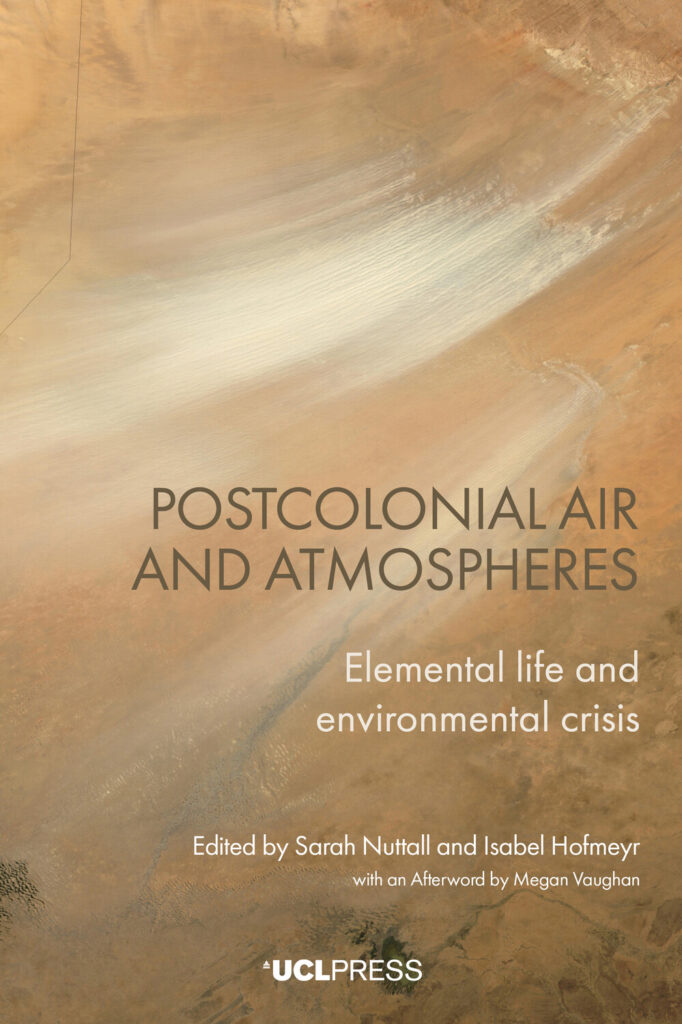
Postcolonial Air and Atmospheres

This volume puts two traditions of scholarship into conversation: Euro-American work on air and atmospheres, and emergent postcolonial debates on these themes. Drawing on the strengths of the first, this collection probes its limits, while mapping an emergent field of postcolonial research on air and atmospheres.

Postcolonial Air and Atmospheres recontextualizes debates on atmospheres and aesthetics, exploring these themes in relation to the uneven hemispheric terrains of material decay and toxicity. It extends the narrow spatial purview of the Euro-American scholarship by taking an empire-wide perspective, considering historical questions of air and enslavement alongside South Asian histories of air-conditioning and the toxic atmospheres of extractive industries. It develops a phenomenology of breathing in a range of postcolonial settings to revisit the theorizations of air and breath in western critical theoretical scholarship. The collection comprises three sections. ‘Affective Atmospheres’ explores the materialities of air while foregrounding atmospheres as sites of affect, politics and power in the postcolony. ‘Unfree and Impure Airs’ foregrounds clean and toxic air, who breathes them along with the politics and technologies of how these unequal forms of air were and are produced. ‘Breathing in’ centres practices of breath as a means to analyse air and atmospheres.
Towards a Global Core Value System in Doctoral Education

Recent decades have seen an explosion in doctoral education worldwide. Increased potential for diverse employment has generated greater interest, with cultural, political and environmental tensions focusing the attention of new creative, responsible scholars.

Towards a Global Core Value System in Doctoral Education provides an evaluation of changes and reforms in doctoral education since 2000. Recognising the diversity of academic cultures and institutional systems worldwide, the book advocates for a core value system to overcome inequalities in access to doctoral education and the provision of knowledge. Building on in-depth perspectives of scholars and young researchers from more than 25 countries, the chapters focus on the structures and quality assurance models of doctoral education, supervision, and funding from an institutional and comparative perspective. The book examines capacity building in the era of globalisation, global labour market developments for doctoral graduates, and explores the ethical challenges and political contestations that may manifest in the process of pursuing a PhD.

Experts and early career researchers in the Global North and South collaborated in interdisciplinary and intergenerational teams to develop guidelines for doctoral education. They learned from each other about how to act courageously within a complex global context. The resulting recommendations and reflections are an invitation to reflect on the frames and conditions of doctoral education today.

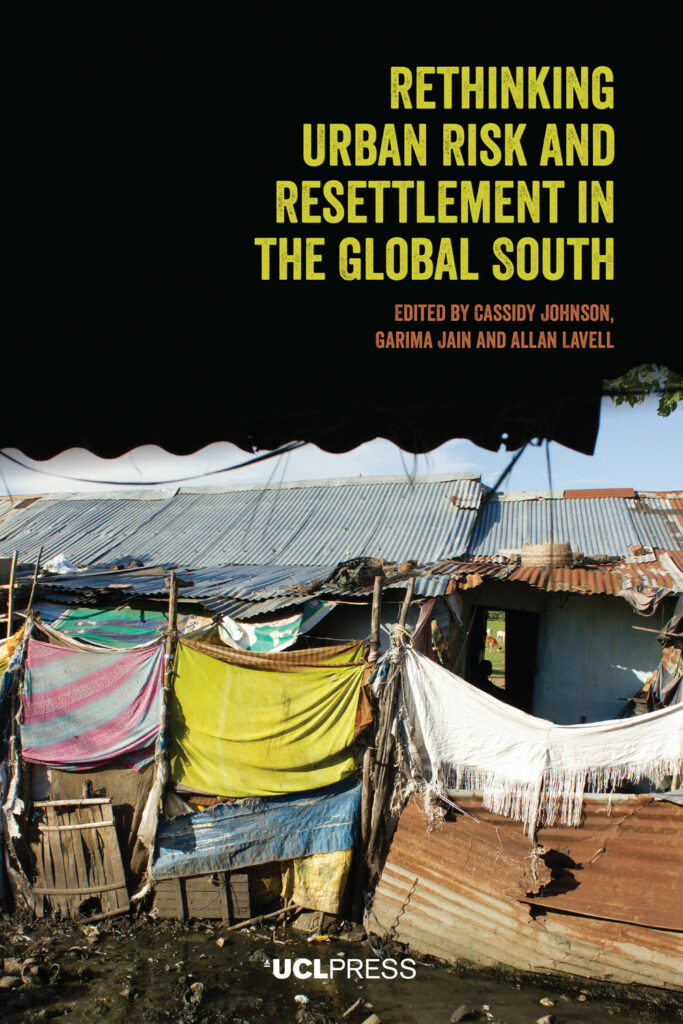
Rethinking Urban Risk and Resettlement in the Global South

Environmental changes have significant impacts on people’s lives and livelihoods, particularly the urban poor and those living in informal settlements. In an effort to reduce urban residents’ exposure to climate change and hazards such as natural disasters, resettlement programmes are becoming widespread across the Global South. While resettlement may reduce a region’s future climate-related disaster risk, it often increases poverty and vulnerability, and can be used as a reason to evict people from areas undergoing redevelopment.

A collaboration between the Bartlett Development Planning Unit at UCL, the Indian Institute for Human Settlements and the Latin American Social Science Faculty, Rethinking Urban Risk and Resettlement in the Global South collates the findings from ‘Reducing Relocation Risks’, a research project that studied urban areas across India, Uganda, Peru, Colombia and Mexico. The findings are augmented with chapters by researchers with many years of insight into resettlement, property rights and evictions, who offer cases from Monserrat, Cambodia, Philippines and elsewhere.

The contributors collectively argue that the processes for making and implementing decisions play a large part in determining whether outcomes are socially just, and examine various value systems and strategies adopted by individuals versus authorities. Considering perceptions of risk, the volume offers a unique way to think about economic assessments in the context of resettlement and draws parallels between different country contexts to compare fully urbanised areas with those experiencing urban growth. It also provides an opportunity to re-think how disaster risk management can better address the accumulation of urban risks through urban planning.

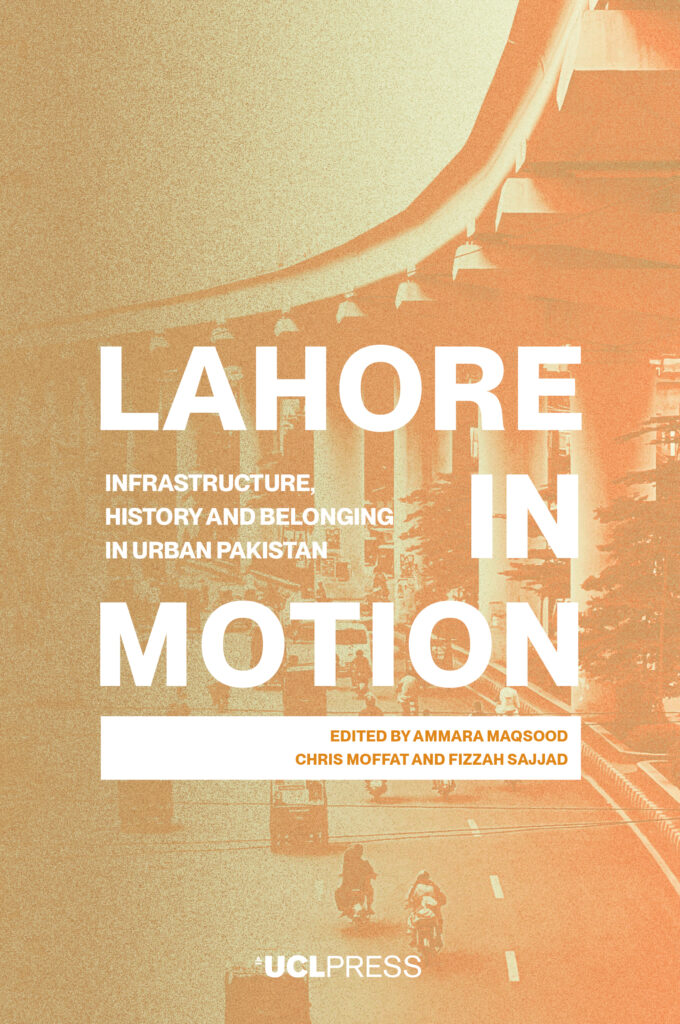
Lahore in Motion

Lahore in Motion provides a portrait of the Pakistani metropolis by tracing the path of the city’s first metro rail corridor. Construction for this major piece of public infrastructure began in 2015 and, over subsequent years, the nascent ‘Orange Line’ rapidly reconfigured Lahore’s urban landscape – displacing residents and slicing through existing structures along its route, all while offering Lahoris the promise of ‘world-class’ public transportation. The volume collects stories from a series of walks along the metro’s 27-kilometre path, bringing together a wide variety of authors – including academics and activists, architects and artists – to reflect on the relationship between urban change and belonging in a historic city.

Each chapter is organised around a particular station on the metro, but the volume moves far beyond the neighbourhoods shadowed by the train’s elevated track. Contributors navigate the friction generated by the Orange Line’s construction and reflect on how this project of connection both responds to and produces fragmentation in the urban environment. The book brings together critical insights on the politics of infrastructure in South Asia and the desires and dispossessions fuelling projects of development in the Global South, assessing how they unevenly inflect the intimate rhythms of everyday life in one of the world’s most populous cities.

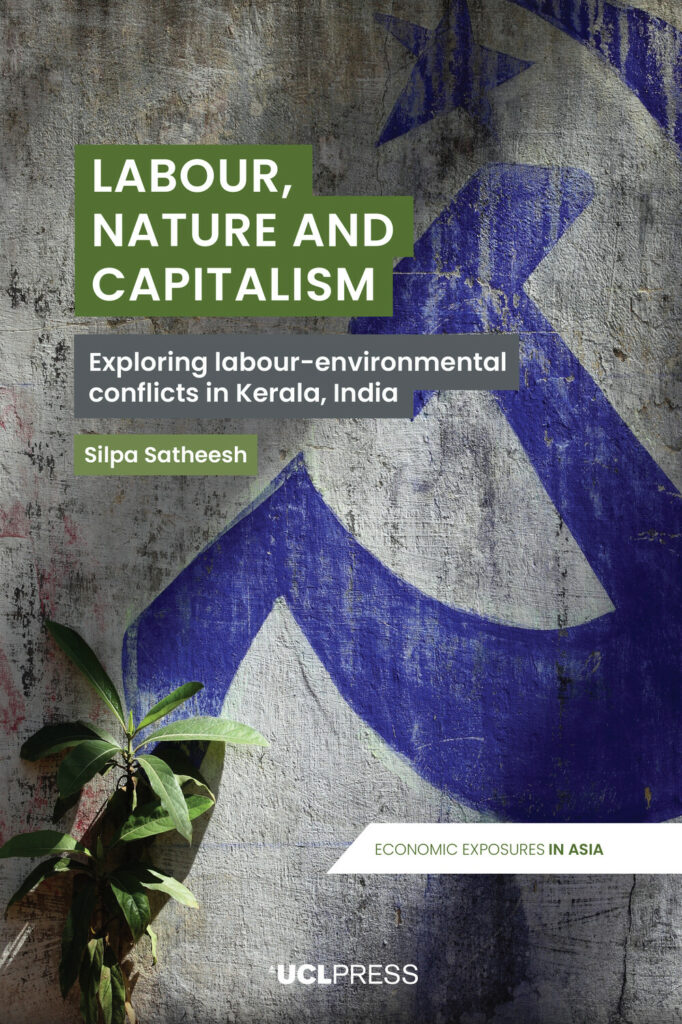
Labour, Nature and Capitalism

Labour, Nature and Capitalism traces how the alliance between labour and capital manifests in the form of conflicts between organised trade unions and a local environmental movement in the context of the much-acclaimed Kerala model of development. It explores the history of the area’s local industrialisation, the presence of varied economic interests and exposes the barriers to forming solidarity networks among the working classes.

Situated in the backdrop of the Eloor-Edayar industrial belt, this book delves deeper into the ways in which capitalism infiltrates and manipulates the social movement landscape in Kerala. It shows how the hegemonic coalition between the state, industries and institutionalised trade unions enable capitalist rationality to mediate and control social movements in postcolonial settings.

Using an ethnographic approach, the book seeks to embark on a journey to understand the tensions between two progressive social movements – a trade union collective and a local environmental movement – foregrounding the experiences of members of the respective groups. The analysis presented here shows how the contestations/conflicts between the movements stem from interpretive as well as ideological differences surrounding economic development and environmental justice.

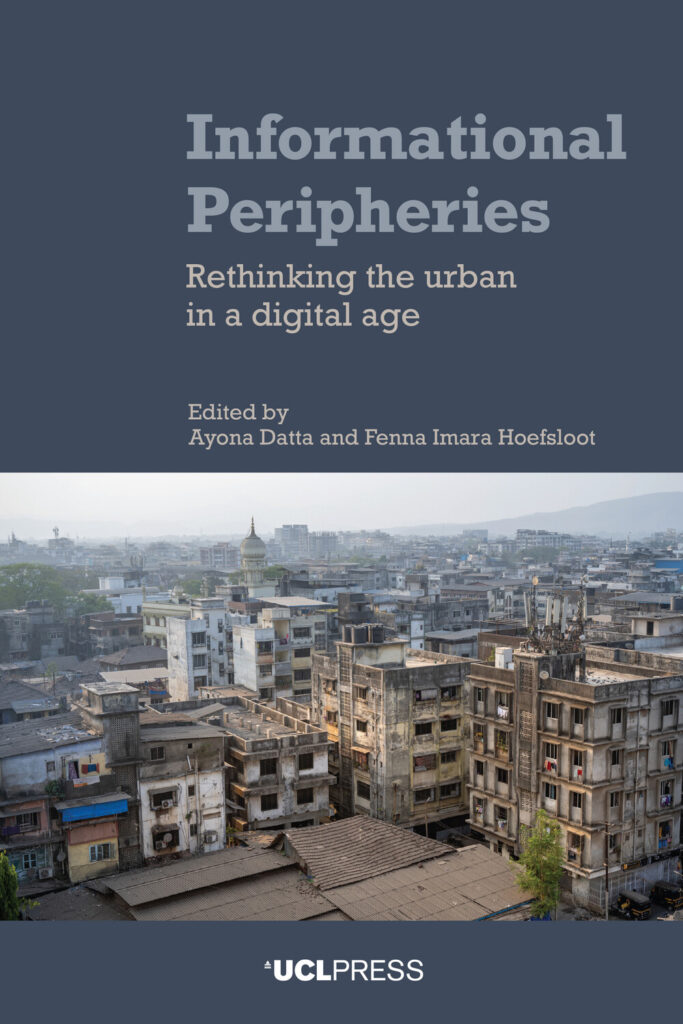
Informational Peripheries

Urbanisation and urban life in a digital age needs to be examined through a lens of information – encompassing both its politics and its geographies. The periphery in an information age is located simultaneously across the geographic centre and edge, across social, material and digital worlds. Moving beyond current scholarship in urban and regional studies, this book presents a case for ‘informational peripheries’ as an analytical lens to understand the uneven, fragmented and disconnected geographies of urban peripheries in the Global South.

While ‘unplanned urbanisation’ has been a key discourse in the production of urban periphery in the Global South, Informational Peripheries argues that the coming of an informational age destabilises the geographic location of the urban periphery. Informational peripheries capture the complexities of digital, material and social dispersal and fragmentation that emerge from informational extraction, redlining, manipulation and bypassing. Exclusions are marked by both geographic and informational distance from the state. It includes subjects who are uncountable, as well as territories that are digitally, socially and materially unmappable. This approach provides an important vantage point for interrogating the political and technological apparatuses that are reconfiguring the notion of the urban in a digital age.

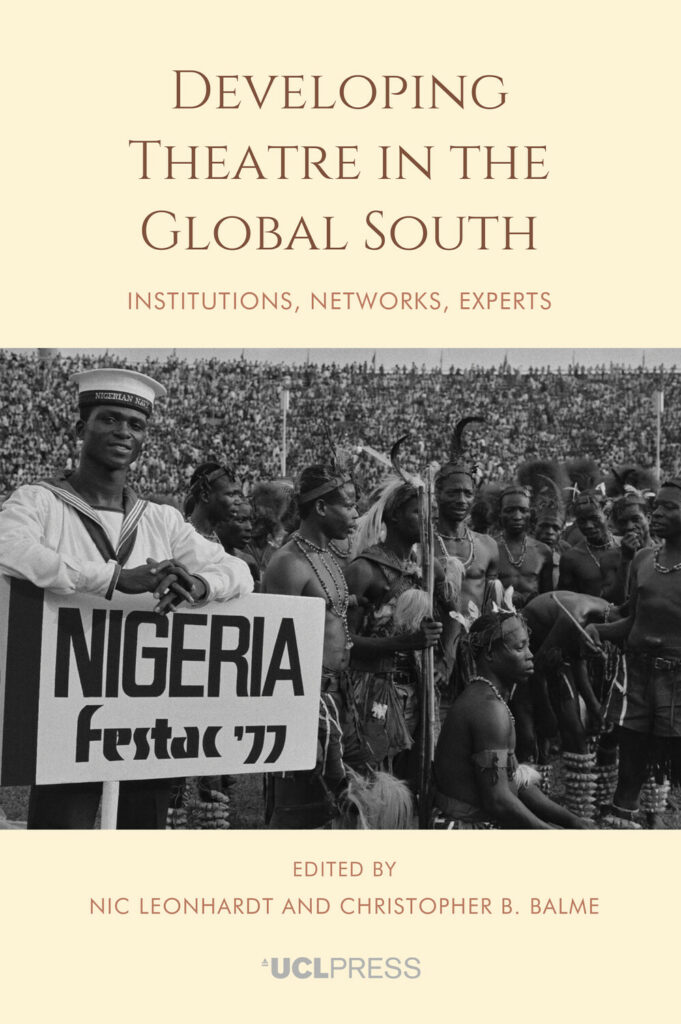
Developing Theatre in the Global South

Drawing on new research from the ERC project ‘Developing Theatre’, this collection presents innovative institutional approaches to the theatre historiography of the Global South since 1945. Covering perspectives from Africa, Asia, the Middle East, Latin America and Eastern Europe, the chapters explore how US philanthropy, international organisations and pan-African festivals all contributed to the globalisation and institutionalisation of the performing arts in the Global South. During the Cultural Cold War, the Global North intervened in and promoted forms of cultural infrastructure that were deemed adaptable to any environment. This form of technopolitics impacted the construction of national theatres, the introduction of new pedagogical tools and the invention of the workshop as a format. The networks of ‘experts; responsible for this foreground seminal figures, both celebrated (Augusto Boal, Efua Sutherland) but also lesser known (Albert Botbol, Severino Montano, Metin And), who contributed to the worldwide theatrical epistemic community of the postwar years.

Developing Theatre in the Global South investigates the institutional factors that led to the emergence of professional theatre in the postwar period throughout the decolonising world. The book’s institutional and transnational approach enables theatre studies to overcome its still strong national and local focus on plays and productions, and connect it to current discourses in transnational and global history.

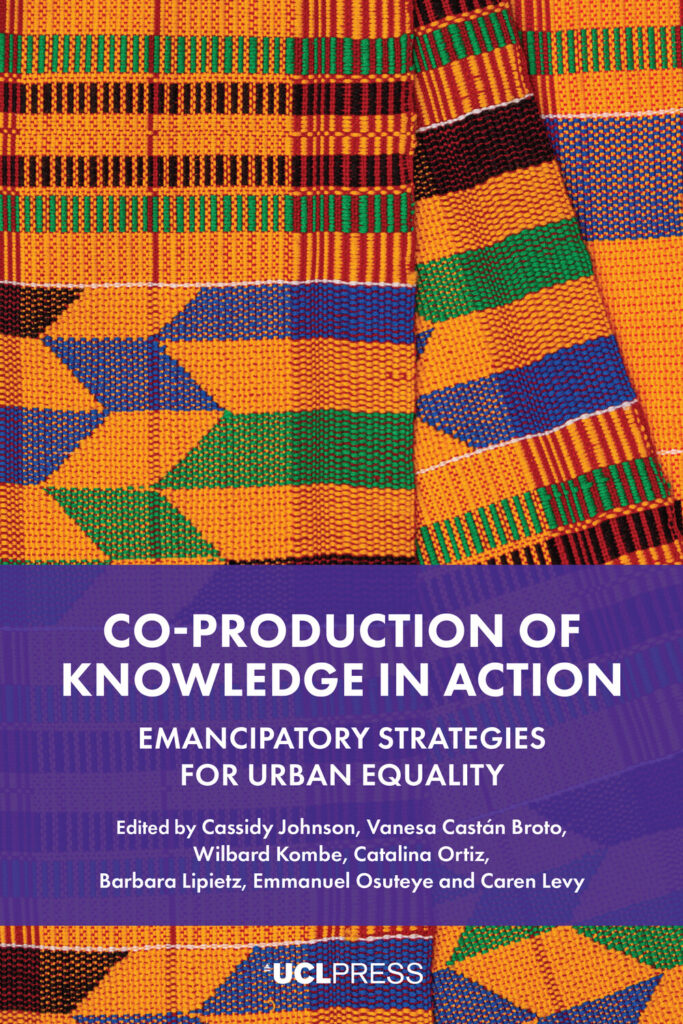
Co-production of Knowledge in Action

Co-production of actionable knowledge as a development strategy entails working in partnership with different institutions and sharing power so that communities can participate in planning urban futures. From housing, access to land, services and livelihoods, co-production strategies serve to advance collective interventions to improve inhabitation in cities around the world.

Over time, experiences of co-production have generated critical insights about the opportunities and limits of such partnership strategies. Co-production of Knowledge in Action engages with this critique from the perspective of practice. It examines how co-production is articulated and deployed in cities such as Lima, Freetown, Kampala, Dar es Salaam and Delhi, and explores ongoing experiences of co-production-inspired action, mapping the different aspirations that inform co-production practices and the impacts on urban communities.

While the volume recognises the limitations of co-production, and the ways it can serve to reproduce power structures if emptied of its political, transformatory intent, the authors also seek to understand the emancipatory potential of co-production as an incremental strategy that has the power to transform urban planning practices.

Sign up to our newsletter

Don't miss out!
Subscribe to the UCL Press newsletter for the latest open access books,
journal CfPs, news and views from our authors and much more!