We are currently upgrading our shopping cart; in the interim all orders are being diverted to Waterstones. If you would like to redeem a promotional code, or are an author wanting to place an order, please email us.

Contact us

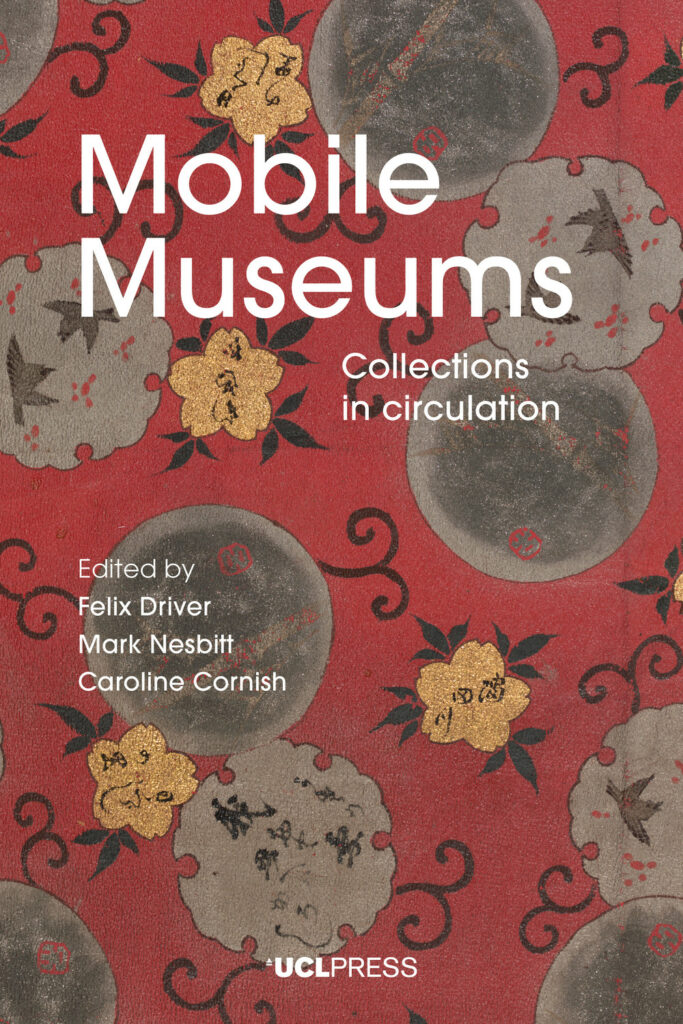
Mobile Museums

Mobile Museums presents an argument for the importance of circulation in the study of museum collections, past and present. It brings together an impressive array of international scholars and curators from a wide variety of disciplines – including the history of science, museum anthropology and postcolonial history – to consider the mobility of collections. The book combines historical perspectives on the circulation of museum objects in the past with contemporary accounts of their re-mobilisation, notably in the context of Indigenous community engagement. Contributors seek to explore processes of circulation historically in order to re-examine, inform and unsettle common assumptions about the way museum collections have evolved over time and through space.

By foregrounding questions of circulation, the chapters in Mobile Museums collectively represent a fundamental shift in the understanding of the history and future uses of museum collections. The book addresses a variety of different types of collection, including the botanical, the ethnographic, the economic and the archaeological. Its perspective is truly global, with case studies drawn from South America, West Africa, Oceania, Australia, the United States, Europe and the UK. Mobile Museums helps us to understand why the mobility of museum collections was a fundamental aspect of their history and why it continues to matter today.
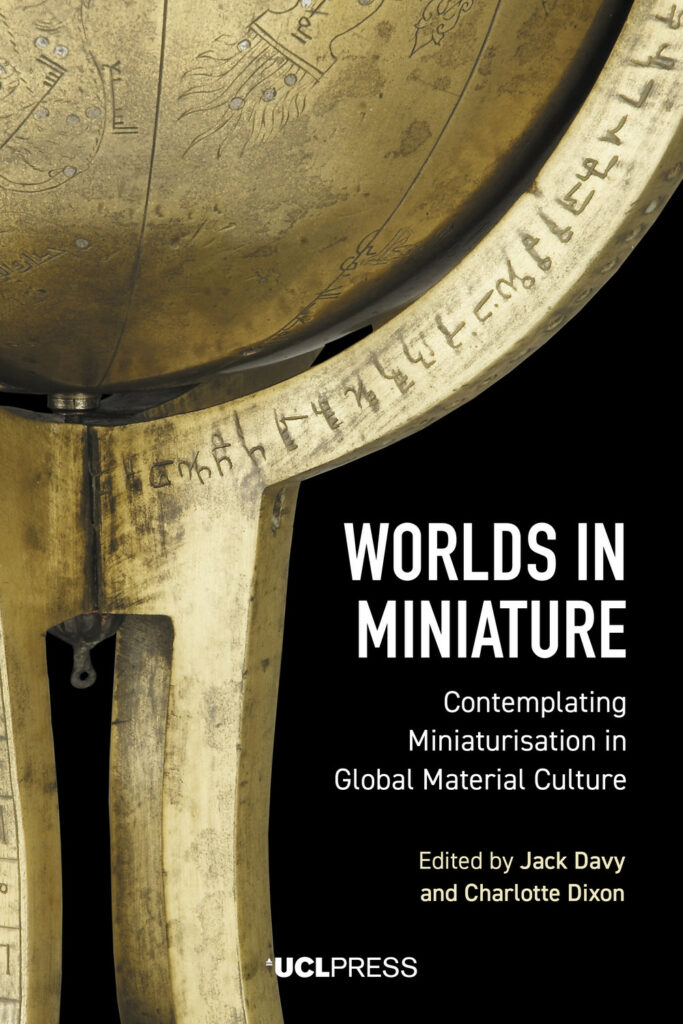
Worlds in Miniature

Miniaturisation is the creation of small objects that resemble larger ones, usually but not always for purposes different to those of the larger original object. Worlds in Miniature brings together researchers working across various regions, time periods and disciplines to explore the subject of miniaturisation as a material culture technique. It offers original contribution to the field of miniaturisation through its broad geographical scope, interdisciplinary approach, and deep understanding of miniatures and their diverse contexts.

Beginning with an introduction by the editors, which offers one possible guide to studying and comparing miniatures, the following chapters include studies of miniature Neolithic stone circles on Exmoor, Ancient Egyptian miniature assemblages, miniaturisation under colonialism as practiced by the Makah People of Washington State, miniature watercraft from India, miniaturised contemporary tourist art of the Warao people of Venezuela, and dioramas on display in the Science Museum.

Interspersing the chapters are interviews with miniature-makers, including two miniature boat-builders at the National Maritime Museum Cornwall and a freelance architectural model-maker. Professor Susanne Küchler concludes the volume with a theoretical study summarising the current state of miniaturisation as a research discipline. The interdisciplinary nature of the volume makes it suitable reading for anthropologists, historians, archaeologists and artists, and for researchers in related fields across the social sciences.

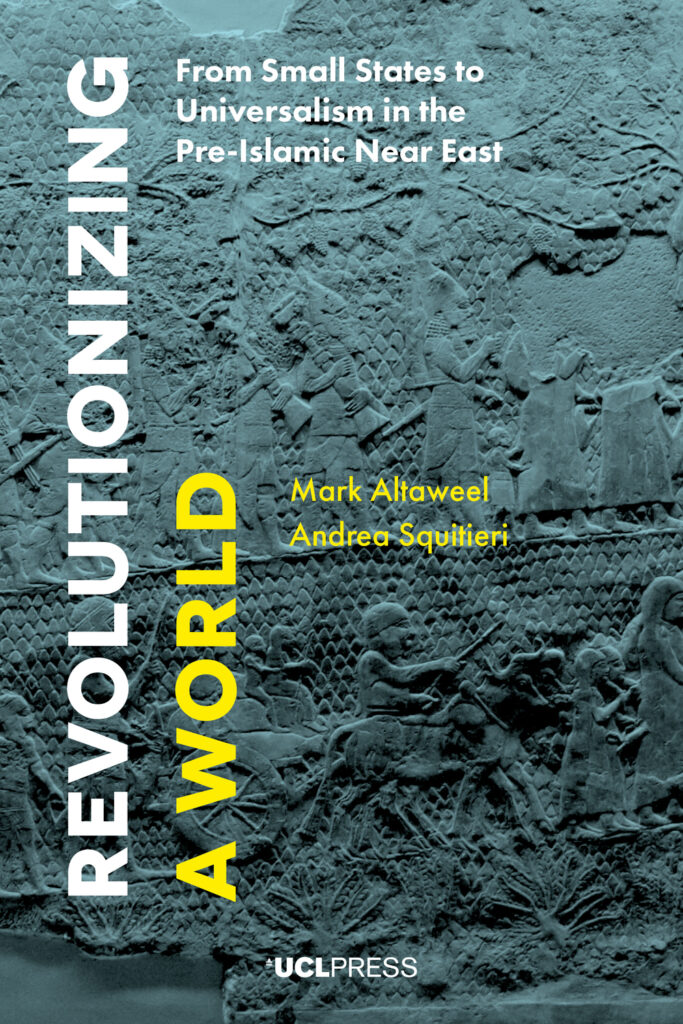
Revolutionizing a World

This book investigates the long-term continuity of large-scale states and empires, and its effect on the Near East’s social fabric, including the fundamental changes that occurred to major social institutions. Its geographical coverage spans, from east to west, modern-day Libya and Egypt to Central Asia, and from north to south, Anatolia to southern Arabia, incorporating modern-day Oman and Yemen. Its temporal coverage spans from the late eighth century BCE to the seventh century CE during the rise of Islam and collapse of the Sasanian Empire.

The authors argue that the persistence of large states and empires starting in the eighth/seventh centuries BCE, which continued for many centuries, led to new socio-political structures and institutions emerging in the Near East. The primary processes that enabled this emergence were large-scale and long-distance movements, or population migrations. These patterns of social developments are analysed under different aspects: settlement patterns, urban structure, material culture, trade, governance, language spread and religion, all pointing at movement as the main catalyst for social change. This book’s argument is framed within a larger theoretical framework termed as ‘universalism’, a theory that explains many of the social transformations that happened to societies in the Near East, starting from the Neo-Assyrian period and continuing for centuries.

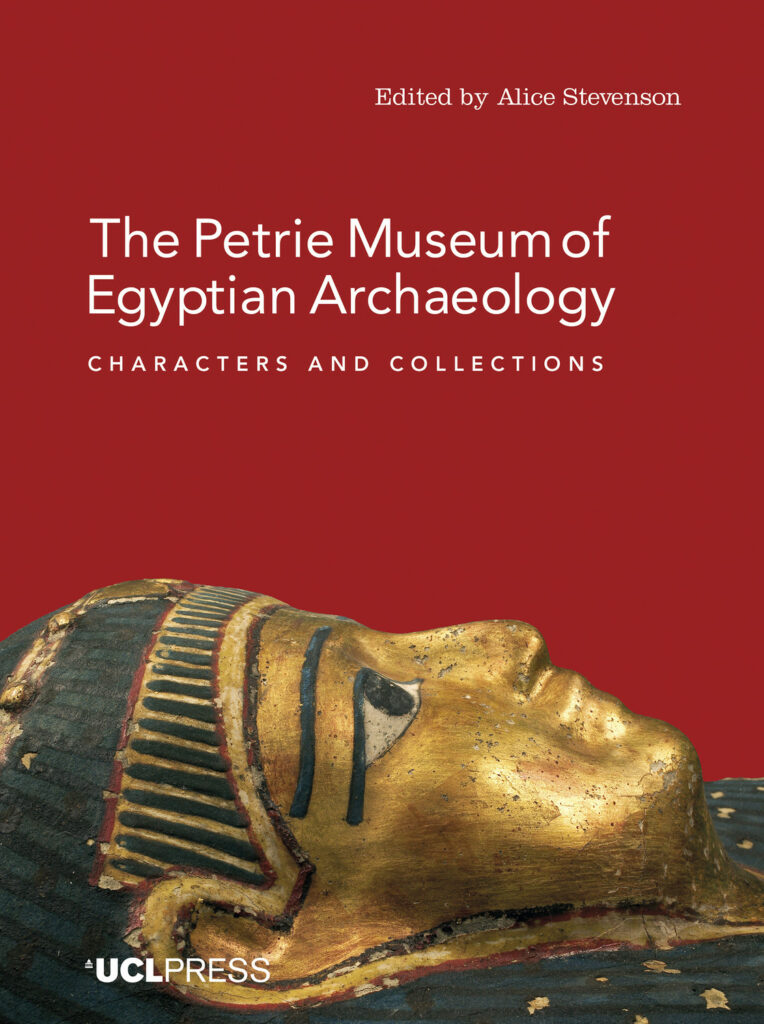
The Petrie Museum of Egyptian Archaeology

The Petrie Museum of Egyptian Archaeology first opened its doors in 1915, and since then has attracted visitors from all over the world as well as providing valuable teaching resources. Named after its founder, the pioneering archaeologist Flinders Petrie, the Museum holds more than 80,000 objects and is one of the largest and finest collections of Egyptian and Sudanese archaeology in the world. Richly illustrated and engagingly written, the book moves back and forth between recent history and the ancient past, between objects and people. Experts discuss the discovery, history and care of key objects in the collections such as the Koptos lions and Roman era panel portraits. The rich and varied history of the Petrie Museum is revealed by the secrets that sit on its shelves.

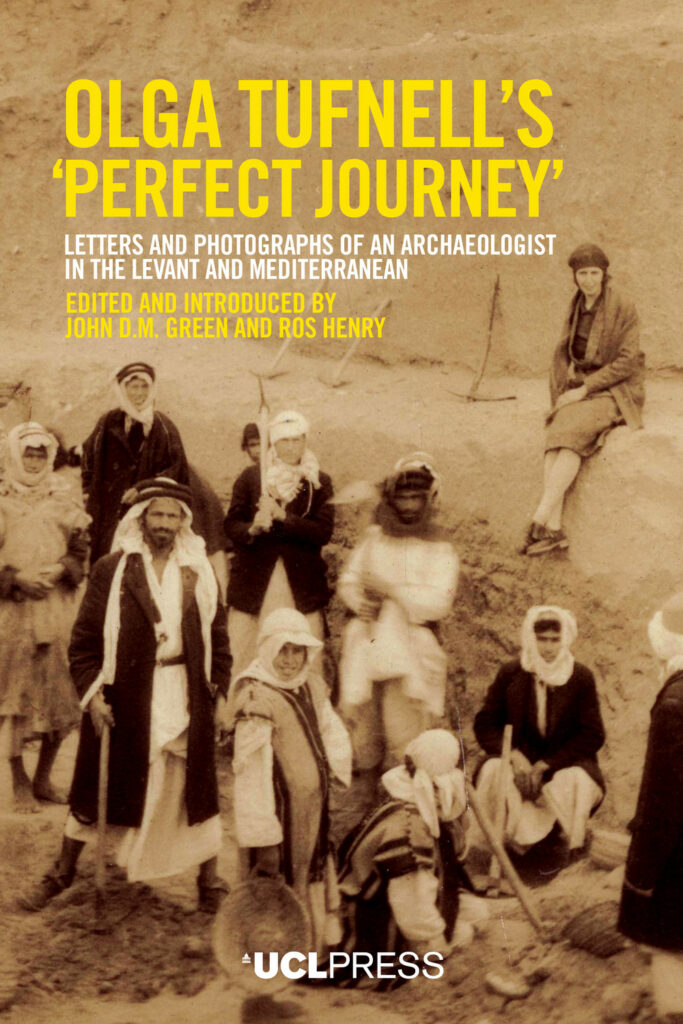
Olga Tufnell’s ‘Perfect Journey’

Olga Tufnell (1905–85) was a British archaeologist working in Egypt, Cyprus and Palestine in the 1920s and 1930s, a period often described as a golden age of archaeological discovery. For the first time, this book presents Olga’s account of her experiences in her own words. Based largely on letters home, the text is accompanied by dozens of photographs that shed light on personal experiences of travel and dig life at this extraordinary time. Introductory material by John D.M. Green and Ros Henry provides the social, historical, biographical and archaeological context for the overall narrative.

The letters offer new insights into the social and professional networks and history of archaeological research, particularly for Palestine under the British Mandate. They provide insights into the role of foreign archaeologists, relationships with local workers and inhabitants, and the colonial framework within which they operated during turbulent times.

This book will be an important resource for those studying the history of archaeology in the Eastern Mediterranean, particularly for the sites of Qau el-Kebir, Tell Fara, Tell el-‘Ajjul and Tell ed-Duweir (ancient Lachish). Moreover, Olga’s lively style makes this a fascinating personal account of archaeology and travel in the interwar era.**

Early Civilization and the American Modern

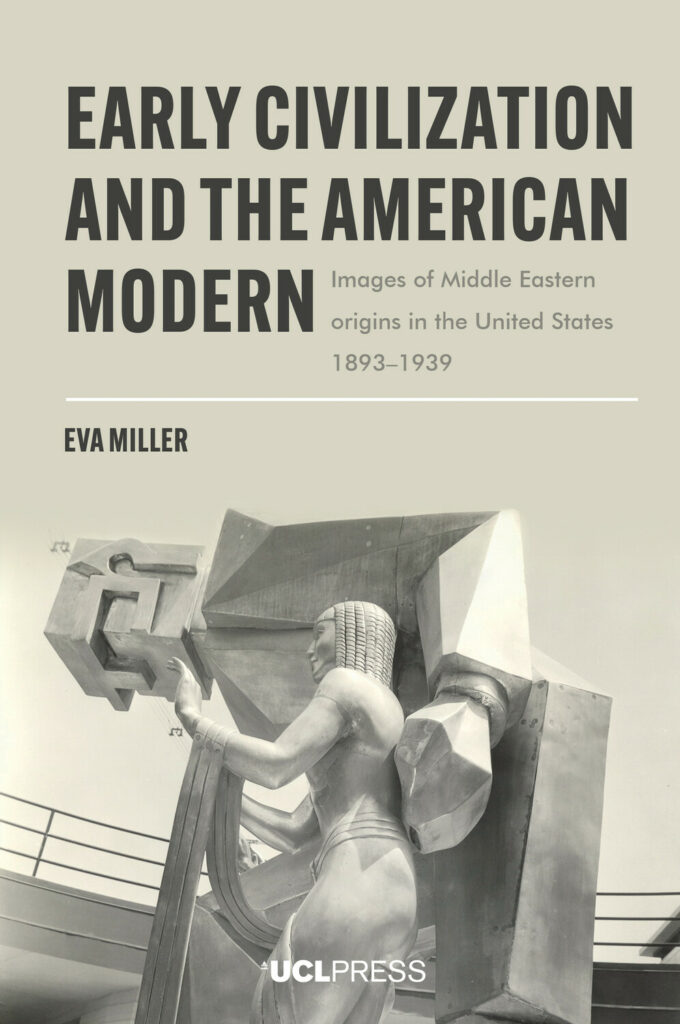
The cover of the book ‘Early Civilization and the American Modern: Images of Middle Eastern Origins in the United States 1893–1939’ by Eva Miller features a grayscale photograph of a stylized human figure sculpture within an architectural structure. The background shows a clear sky and the corner of another building, suggesting an outdoor setting. The title and author’s name are prominently displayed in white text against the dark backdrop, with the UCL Press logo at the bottom.

In the late nineteenth and early twentieth century, a particular story about the United States’ role in the long history of world civilization was constructed in public spaces, through public art and popular histories. This narrative posited that civilization and its benefits – science, law, writing, art and architecture – began in Egypt and Mesopotamia before passing ever further westward, towards a triumphant culmination on the American continent.

Early Civilization and the American Modern explores how this teleological story answered anxieties about the United States’ unique role in the long march of progress. Eva Miller focuses on important figures who collaborated on the creation of a visual, progressive narrative in key institutions, world’s fairs and popular media: Orientalist and public intellectual James Henry Breasted, astronomer George Ellery Hale, architect Bertram Grosvenor Goodhue, and decorative artists Lee Lawrie and Hildreth Meière. At a time when new information about the ancient Middle East was emerging through archaeological excavation, ancient Egypt and Mesopotamia appeared simultaneously old and new. This same period was crucial to the development of public space and civic life across the United States, as a shared sense of historical consciousness was actively pursued by politicians, philanthropists, intellectuals, architects and artists.

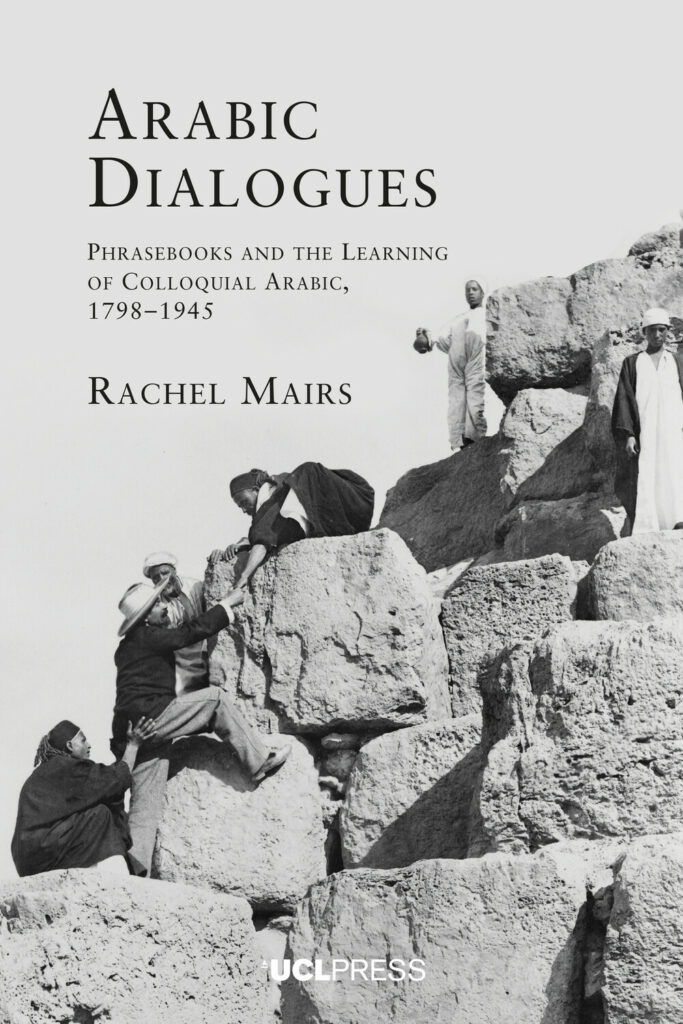
Arabic Dialogues

During the nineteenth century and into the early twentieth century, more Europeans visited the Middle East than ever before, as tourists, archaeologists, pilgrims, settler-colonists and soldiers. These visitors engaged with the Arabic language to differing degrees. While some were serious scholars of Classical Arabic, in the Orientalist mould, many did not learn the language at all. Between these two extremes lies a neglected group of language learners who wanted to learn enough everyday colloquial Arabic to get by. The needs of these learners were met by popular language books, which boasted that they could provide an easy route to fluency in a difficult language.

Arabic Dialogues explores the motivations of Arabic learners and effectiveness of instructional materials, principally in Egypt and Palestine, by analysing a corpus of Arabic phrasebooks published in nine languages (English, French, German, Spanish, Portuguese, Italian, Yiddish, Hebrew, Russian) and in the territory of twenty-five modern countries. Beginning with Napoleon’s Expédition d’Égypte (1798–1801), it moves through the periods of mass tourism and European colonialism in the Middle East, concluding with the Second World War. The book also considers how Arab intellectuals understood the project of teaching Arabic to foreigners, the remarkable history of Arabic-learning among Yiddish- and Hebrew-speaking immigrants in Palestine, and the networks of language learners, teachers and plagiarists who produced these phrasebooks.

Sign up to our newsletter

Don't miss out!
Subscribe to the UCL Press newsletter for the latest open access books,
journal CfPs, news and views from our authors and much more!