Taking English Planning Law Scholarship Seriously

Planning is at the heart of the response to many of the significant challenges of our time, from the climate and environmental crises to social and economic inequalities. It is embedded in, as well as partially constituting, our democratic systems, so that the challenges of democratic decision-making in a complex society cannot be avoided when thinking about planning. Planning law raises some of the most fundamental questions faced by legal scholars, from the legitimacy of authority to the relationship between public and private rights and interests. And yet, planning law has been relatively neglected by legal scholars.

The objective of Taking English Planning Law Scholarship Seriously is to create space for planning law scholarship in all of its variety, and for curiosity about law in all of its complexity. The chapters reflect this diversity and complexity, covering a range of the objects of planning (from housing to energy to highways) and a multiplicity of planning tasks and tools (from compulsory purchase to contracting to planning inquiries).
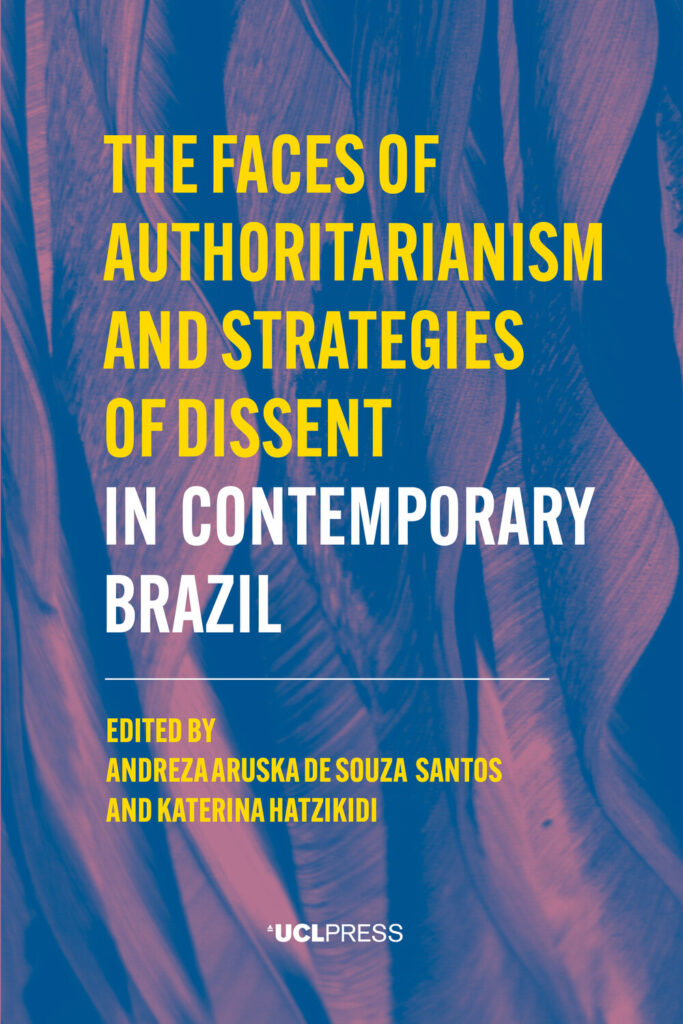
The Faces of Authoritarianism and Strategies of Dissent in Contemporary Brazil

Rather than looking back into Brazil’s authoritarian past, the Bolsonaro administration (2019–2022) provides an innovative case study through which to explore Brazil’s manifold and recurring expressions of authoritarianism. This book investigates the ways that authoritarianism most recently emerged and how it was confronted, and, in doing so, the varied ways (and spaces) in which struggles over the meaning and practice of democracy that took place during the period.

The Faces of Authoritarianism and Strategies of Dissent in Contemporary Brazil examines repression and dissent: efforts to dismantle democratic foundations alongside forms of contestation and resistance to authoritarianism. The chapters offer valuable theoretical and ethnographic insights, from interdisciplinary perspectives, into the complex realities that Brazilians experienced in the four years of Bolsonaro’s presidency. The book is organised around four sections, each addressing a core area where democracy, as meaning and practice, was contested, attacked and defended. This is shown not only between Bolsonaro’s government and those who resisted it from within and outside the state, but also between state and non-state actors and between public and private sectors, allowing for a broad view of the country’s polarised political landscape and the impact such struggles have had on civil society.

The Sciences of the Democracies

The field of democracy studies is more constricted than it needs to be, as researchers, for all their insights, continue to study only fragments of democracy in isolation from each other. Seeking change, The Sciences of the Democracies proposes a groundbreaking means for holistic study, drawing on five sources of knowledge that will provide better understanding of democracy, or rather, of ‘the democracies’. These are: individual people, groups of people, non-textual media, texts, and non-humans.

This book details how the inclusion of these five sources across temporal, spatial, cultural, linguistic, and species contexts leads to the discovery of democratic practices and institutions hitherto unknown or unfamiliar to the conventional ‘Western’ perception. It promises to generate a new class of democratic theorist – the ‘Fourth Theorist’, who theorizes from thousands of multimedial democracy concepts – and it has the potential for generating better-founded, less arbitrary, more inclusive democratic theories. In doing so, the book considers the philosophical, institutional, educational, and methodological difficulties of the scientific understandings and undertakings it proposes. The book is a choral work of many collaborating authors. Their ambition is to offer a touchstone text for government and public officials, citizens, residents and visitors, researchers, practitioners, and philanthropists (big and small) participating in what is a vibrant global discussion on how to study and practice democracy equitably.

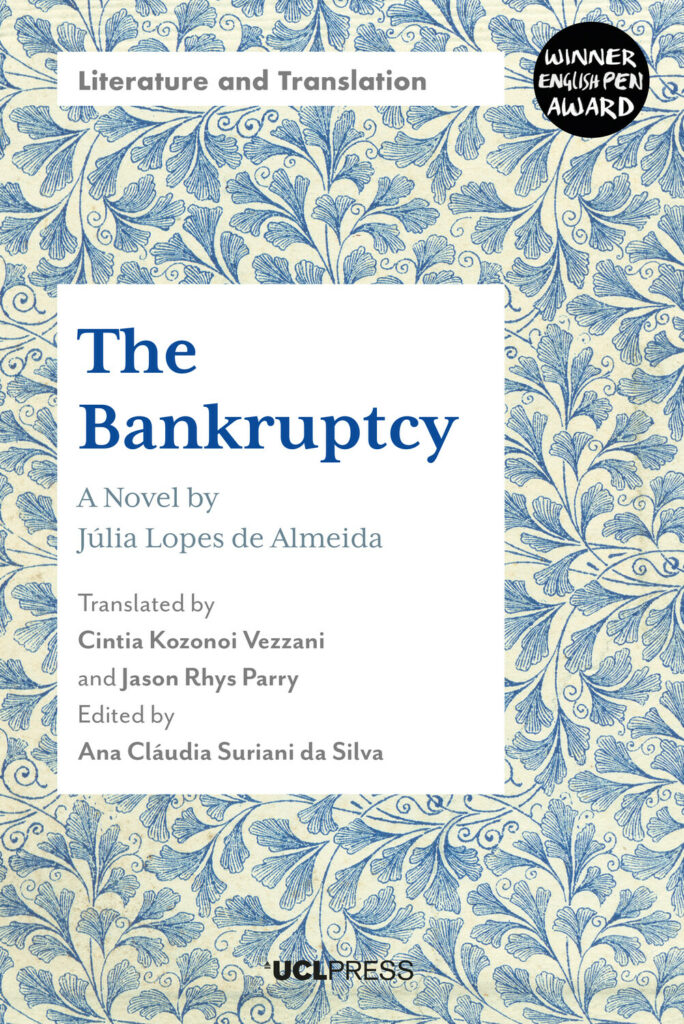
The Bankruptcy

Set in the early years of the Old Republic after the abolition of slavery, Júlia Lopes de Almeida’s The Bankruptcy depicts the rise and fall of a wealthy coffee exporter against a kaleidoscopic background of glamour, poverty, seduction, and financial speculation. The novel introduces readers to a turbulent period in Brazilian history seething with new ideas about democracy, women’s emancipation, and the role of religion in society. Originally published in 1901, its prescient critiques of financial capitalism and the patriarchal family remain relevant today.

In her lifetime, Júlia Lopes de Almeida was compared to Machado de Assis, the most important Brazilian writer of the nineteenth century. She was also considered for the inaugural list of members of the Brazilian Academy of Letters, but was excluded because of her gender. In the decades after her death, her work was largely forgotten. This publication, a winner of the English PEN award, marks the first novel-length translation of Almeida’s writing into English, including an Introduction to the novel and a Translators’ preface, and accompanies a general rediscovery of her extraordinary body of work in Brazil.

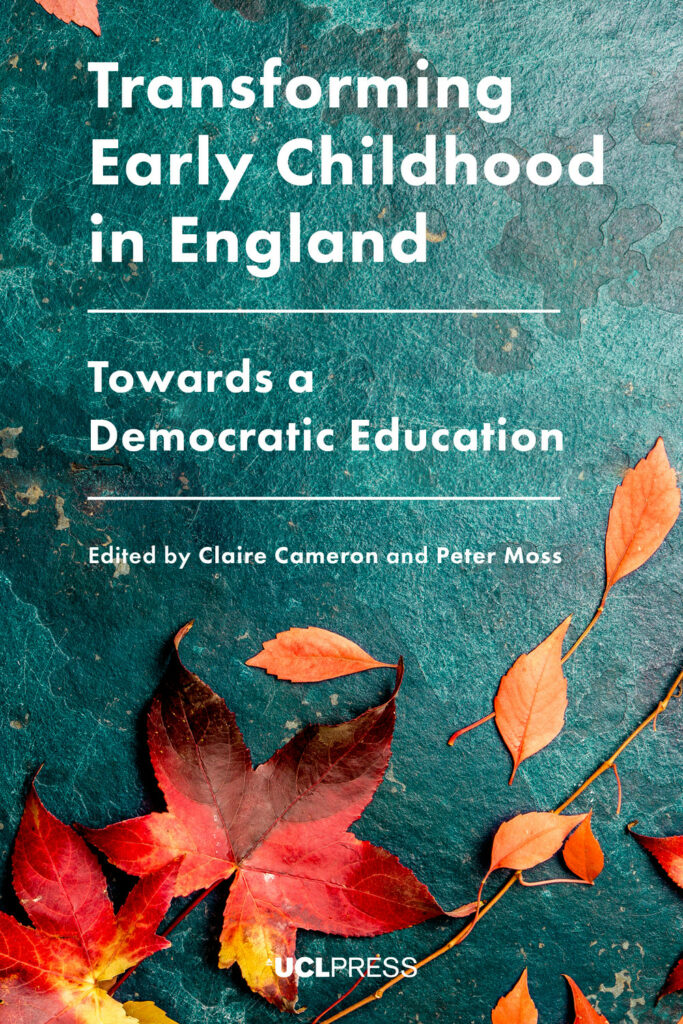
Transforming Early Childhood in England

Early childhood education and care has been a political priority in England since 1997, when government finally turned its attention to this long-neglected area. Public funding has increased, policy initiatives have proliferated and at each general election political parties aim to outbid each other in their offer to families. Transforming Early Childhood in England: Towards a Democratic Education argues that, despite this attention, the system of early childhood services remains flawed and dysfunctional. National discourse is dominated by the cost and availability of childcare at the expense of holistic education, while a hotchpotch of fragmented provision staffed by a devalued workforce struggles with a culture of targets and measurement. With such deep-rooted problems, early childhood education and care in England is beyond minor improvements. In the context of austerity measures affecting many young families, transformative change is urgent.

Transforming Early Childhood in England offers a critical analysis of the current system and proposes change based on young children’s universal right to education. The book calls for provision built on democratic principles, where all learning by all children is visible and recognised, educators are trusted and respected, and a calmer approach called ‘slow pedagogy’ replaces outcomes-driven targets. Combining criticism and hope, and drawing on inspiring research and examples from home and abroad, the book is essential reading for students, educators, practitioners, parents, academics and policymakers – anyone, in fact, who seeks to understand the policy problems for early childhood education and care in England, and see better prospects for the future.

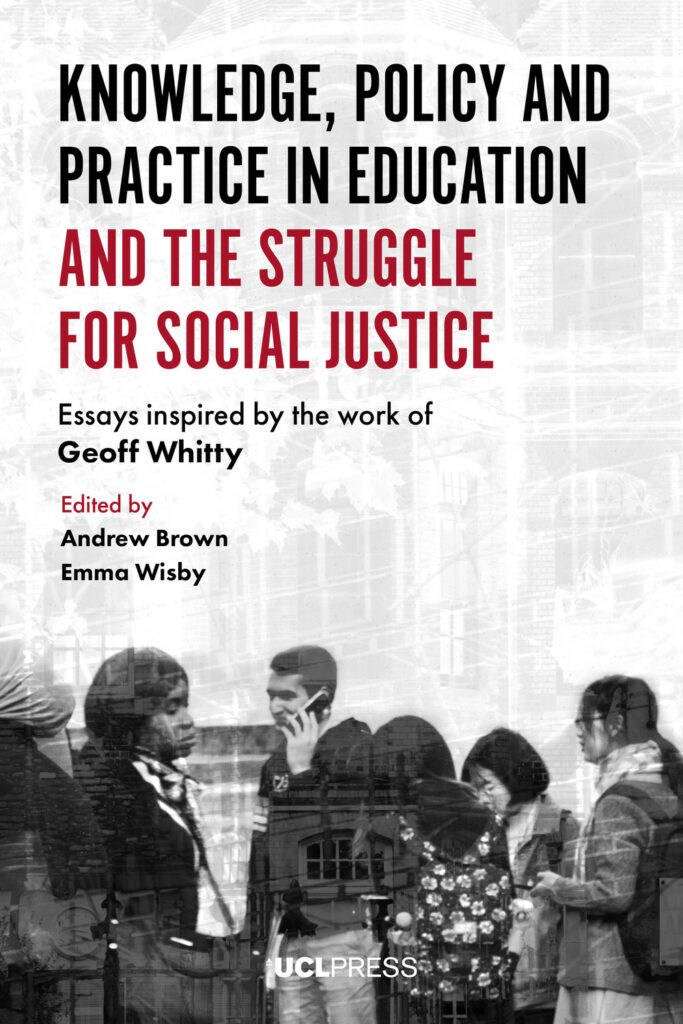
Knowledge, Policy and Practice in Education and the Struggle for Social Justice

For 50 years, educator and sociologist Geoff Whitty resolutely pursued social justice through education, first as a classroom teacher and ultimately as the Director of the Institute of Education in London.

The essays in this volume – written by some of the most influential authors in the sociology of education and critical policy studies – take Whitty’s work as the starting point from which to examine key contemporary issues in education and the challenges to social justice that they present. Set within three themes of knowledge, policy and practice in education, the chapters tackle the issues of defining and accessing ‘legitimate’ knowledge, the changing nature of education policy under neoliberalism and globalization, and the reshaping of teacher workplaces and professionalism – as well as attempts to realize more emancipatory practice. Whitty’s scholarship on what constitutes quality and impact in educational research is also explored.

Together, the essays open a window on a life in the sociology of education, the scholarly community of which it was part, and the facets of education policy, practice and research that they continue to reveal and challenge in pursuit of social justice. They celebrate Whitty as one of the foremost sociologists of education of his generation, but also as a friend and colleague. And they highlight the continued relevance of his contribution to those seeking to promote fairer and more inclusive education systems.

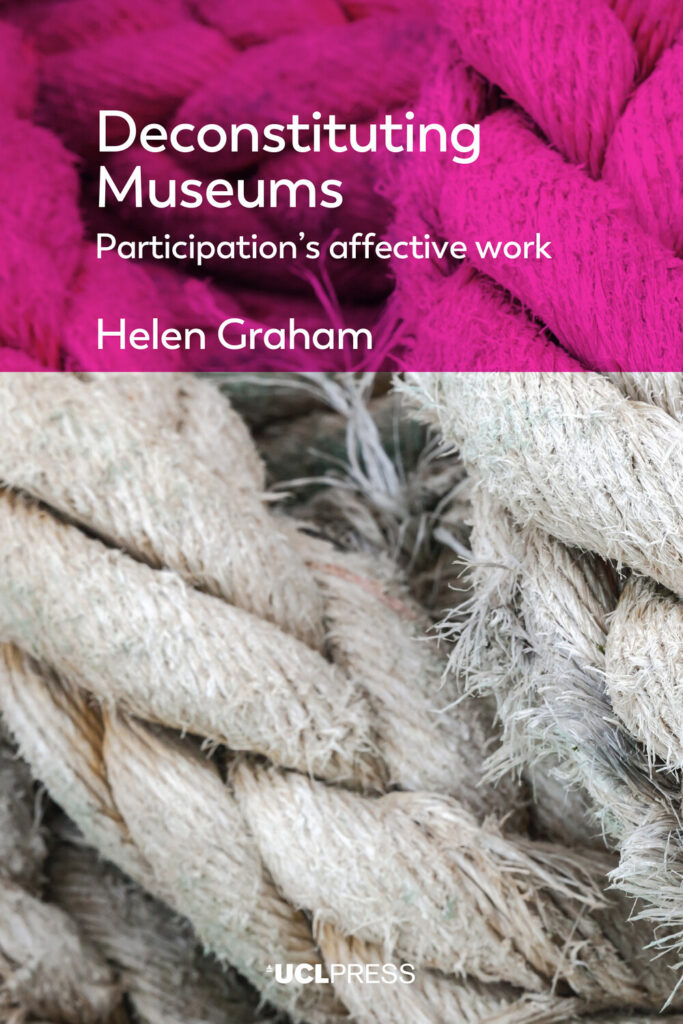
Deconstituting Museums

Over the past 30 years, museums have turned to participation in the hope that direct involvement of non-museum staff would serve their claims to be accessible, inclusive, representative and diverse. And yet, adding participation to museums has often generated conflict, disappointment and anger.

Deconstituting Museums argues that the difficulties produced by adding participatory practice arise from political incompatibility. In the representational liberal logics that underpin museum decision-making, trustees and professionals make decisions ‘on behalf of’ future generations and the public. This is a political infrastructure the book names ‘museum constitution’. Conversely, participation arises from ideas and practices from direct and horizontal political traditions, drawing those who act as facilitators into new relationships and expanding political imaginations.

Through sustained engagement with theories of affect, materialism, and feminist and decolonial praxis, Helen Graham identifies techniques for deconstituting museums. She uses experimental writing as a method to turn away from the desire to right institutional wrongs and towards relational and directly negotiated ways of organising. In doing so she locates participation not as engagement but as a mode of governance that is enabled by, and enables, variant political ontologies. This is an alternative named ‘participatory worlding’. The affective work of facilitating participation has long tugged at and frayed museums’ constitutional liberal logics. Deconstituting Museums envisages how participation and its affects might be activated in reworking the politics of heritage.

Citizenship, Democracy and Belonging in Suburban Britain

A study of the conditions of being a citizen, belonging and democracy in suburban Britain, this book focuses on understanding how a community takes on the social responsibility and pressures of being a good citizen through what they call ‘stupid’ events, festivals and parades. Building a community is perceived to be an important and necessary act to enable resilience against the perceived threats of neoliberal socio-economic life such as isolation, selfishness and loss of community. Citizenship, Democracy and Belonging in Suburban Britain{::}** explores how authoritative knowledge is developed, maintained and deployed by this group as they encounter other ‘social projects’, such as the local council planning committee or academic projects researching participation in urban planning.The activists, who call themselves the ‘Seething Villagers’, model their community activity on the mythical ancient village of Seething where moral tales of how to work together, love others and be a community are laid out in the Seething Tales. These tales include Seething ‘facts’ such as the fact that the ancient Mountain of Seething was destroyed by a giant. The assertion of fact is central to the mechanisms of play and the refusal of expertise at the heart of the Seething community. The book also stands as a reflexive critique on anthropological practice, as the author examines their role in mobilising knowledge and speaking on behalf of others

Citizenship, Democracy and Belonging in Suburban Britain is of interest to anthropologists, urban studies scholars, geographers and those interested in the notions of democracy, inclusion, citizenship and anthropological practice.

Brexit and Beyond

Brexit will have significant consequences for the country, for Europe, and for global order. And yet much discussion of Brexit in the UK has focused on the causes of the vote and on its consequences for the future of British politics. This volume examines the consequences of Brexit for the future of Europe and the European Union, adopting an explicitly regional and future-oriented perspective missing from many existing analyses.

Drawing on the expertise of 28 leading scholars from a range of disciplines, Brexit and Beyond offers various different perspectives on the future of Europe, charting the likely effects of Brexit across a range of areas, including institutional relations, political economy, law and justice, foreign affairs, democratic governance, and the idea of Europe itself. Whilst the contributors offer divergent predictions for the future of Europe after Brexit, they share the same conviction that careful scholarly analysis is in need – now more than ever – if we are to understand what lies ahead for the EU.

Ageing with Smartphones in Ireland

There are not many books about how people get younger. It doesn’t happen very often. But Ageing with Smartphones in Ireland documents a radical change in the experience of ageing.

Based on two ethnographies, one within Dublin and the other from the Dublin region, the book shows that people, rather than seeing themselves as old, focus on crafting a new life in retirement. Our research participants apply new ideals of sustainability both to themselves and to their environment. They go for long walks, play bridge, do yoga and keep as healthy as possible. As part of Ireland’s mainstream middle class, they may have more time than the young to embrace green ideals and more money to move to energy-efficient homes, throw out household detritus and protect their environment.

The smartphone has become integral to this new trajectory. For some it is an intimidating burden linked to being on the wrong side of a new digital divide. But for most, however, it has brought back the extended family and old friends, and helped resolve intergenerational conflicts though facilitating new forms of grandparenting. It has also become central to health issues, whether by Googling information or looking after frail parents. The smartphone enables this sense of getting younger as people download the music of their youth and develop new interests.

This is a book about acknowledging late middle age in contemporary Ireland. How do older people in Ireland experience life today?

Sign up to our newsletter

Don't miss out!
Subscribe to the UCL Press newsletter for the latest open access books,
journal CfPs, news and views from our authors and much more!