We are currently upgrading our shopping cart; in the interim all orders are being diverted to Waterstones. If you would like to redeem a promotional code, or are an author wanting to place an order, please email us.

Contact us

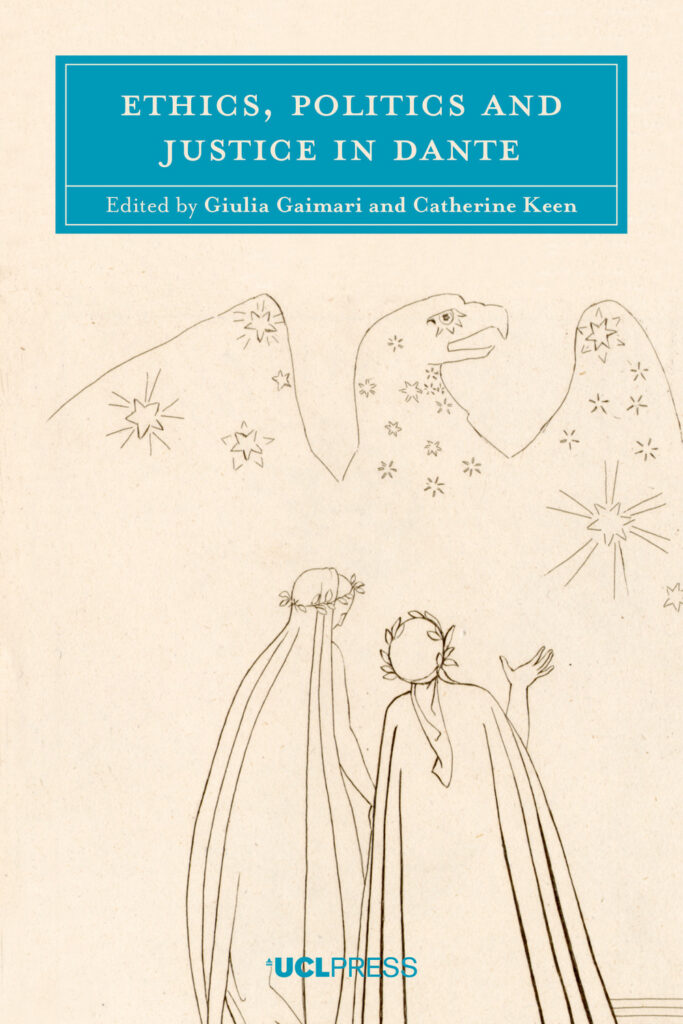
Ethics, Politics and Justice in Dante

Ethics, Politics and Justice in Dante presents new research by international scholars on the themes of ethics, politics and justice in the works of Dante Alighieri, including chapters on Dante’s modern ‘afterlife’.

Together the chapters explore how Dante’s writings engage with the contemporary culture of medieval Florence and Italy, and how and why his political and moral thought still speaks compellingly to modern readers. The collection’s contributors range across different disciplines and scholarly traditions – history, philology, classical reception, philosophy, theology – to scrutinize Dante’s Divine Comedy and his other works in Italian and Latin, offering a multi-faceted approach to the evolution of Dante’s political, ethical and legal thought throughout his writing career.

Certain chapters focus on his early philosophical Convivio and on the accomplished Latin Eclogues of his final years, while others tackle knotty themes relating to judgement, justice, rhetoric and literary ethics in his Divine Comedy, from hell to paradise. The closing chapters discuss different modalities of the public reception and use of Dante’s work in both Italy and Britain, bringing the volume’s emphasis on morality, political philosophy, and social justice into the modern age of the nineteenth, twentieth, and twenty-first centuries.
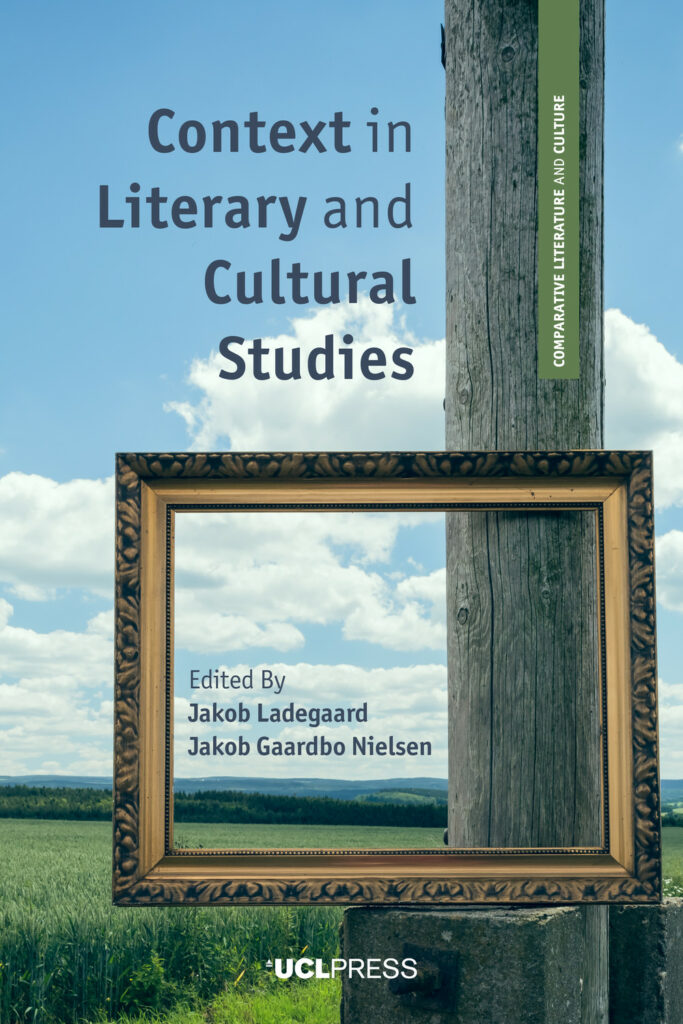
Context in Literary and Cultural Studies

Context in Literary and Cultural Studies is an interdisciplinary volume that deals with the challenges of studying works of art and literature in their historical context today. The relationship between art works and context has long been a central concern for aesthetic and cultural disciplines, and the question of context has been asked anew in all eras. Developments in contemporary culture and technology, as well as new theoretical and methodological orientations in the humanities, once again prompt us to rethink context in literary and cultural studies. This volume takes up that challenge.

Introducing readers to new developments in literary and cultural theory, Context in Literary and Cultural Studies connects all disciplines related to these areas to provide an interdisciplinary overview of the challenges different scholarly fields today meet in their studies of art works in context. Spanning a number of countries, and covering subjects from nineteenth-century novels to rave culture, the chapters together constitute an informed, diverse and wide-ranging discussion.

The volume is written for scholarly readers at all levels in the fields of Literary Studies, Comparative Literature, Cultural Studies, Art History, Film, Theatre Studies and Digital Humanities.

Contraband Cultures

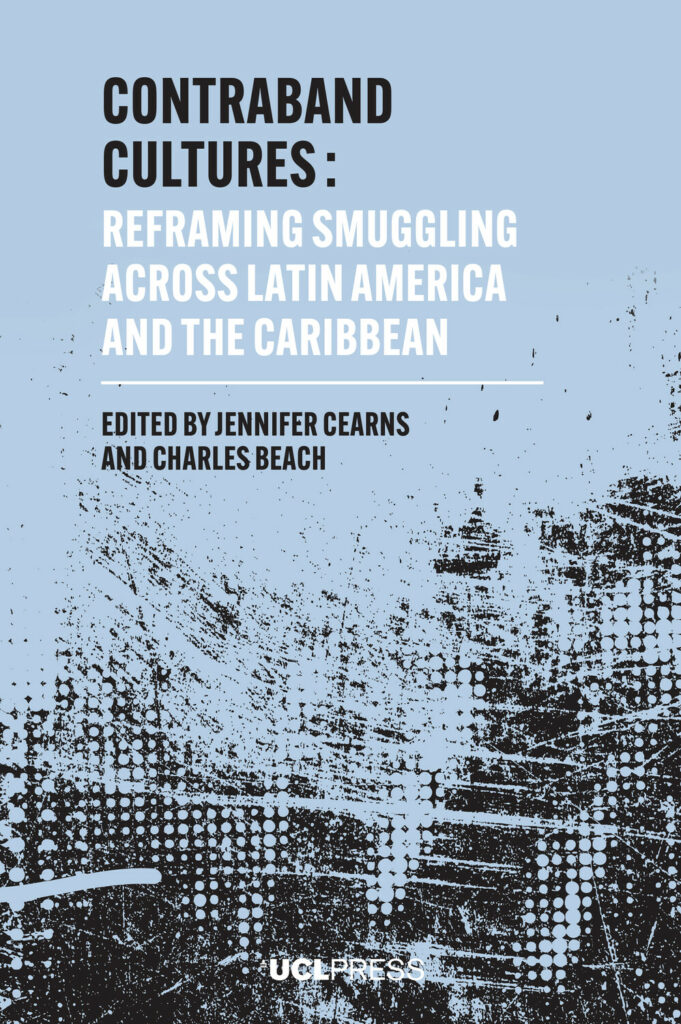
The image shows the cover of a book titled ‘Contraband Cultures: Reframing Smuggling Across Latin America and The Caribbean’, edited by Jennifer Cearns and Charles Beach. The background is dark blue with a pattern that resembles white paint splatters or stars. The title and editors’ names are in white text, with the UCL Press logo at the bottom.

Contraband Cultures presents narratives, representations, practices and imaginaries of smuggling and extra-legal or informal circulation practices, across and between the Latin American region (including the Caribbean) and its diasporas. Countering a fetishizing and hegemonic imaginary (typically stemming from the Global North) of smuggling activity in Latin America as chaotic, lawless, violent and somehow ‘exotic’, this book reframes such activities through the lenses of kinship, political movements, economic exchange and resistance to capitalist state hegemony.

The volume comprises a broad range of chapters from scholars across the social sciences and humanities, using various methodological techniques, theoretical traditions and analytic approaches to explore the efficacy and valence of ‘smuggling’ or ‘contraband’ as a lens onto modes of personhood, materiality, statehood and political (dis)connection across Latin America. This material is presented through a combination of historic documentation and contemporary ethnographic research across the region to highlight the genesis and development of these cultural practices whilst grounding them in the capitalist and colonial refashioning of the entire region from the sixteenth century to the present day.

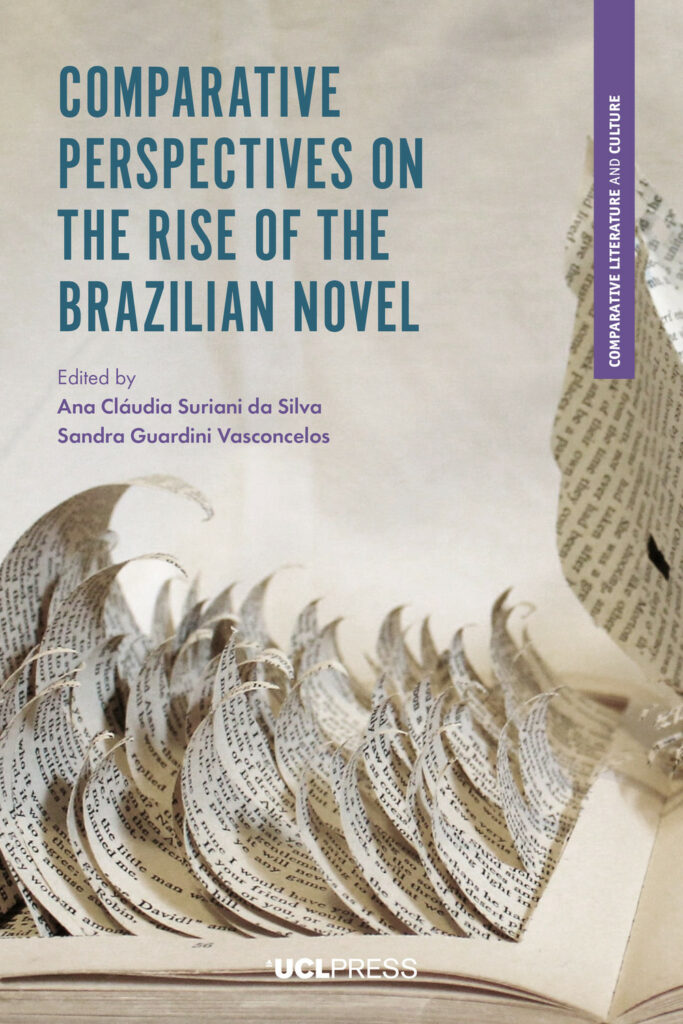
Comparative Perspectives on the Rise of the Brazilian Novel

Comparative Perspectives on the Rise of the Brazilian Novel presents a framework of comparative literature based on a systemic and empirical approach to the study of the novel and applies that framework to the analysis of key nineteenth-century Brazilian novels. The works under examination were published during the period in which the forms and procedures of the novel were acclimatized as the genre established and consolidated itself in Brazil.

The 15 original essays by experienced and early career scholars explore the links between themes, narrative paradigms, and techniques of Brazilian, European and North American novels and the development of the Brazilian novel. The European and North American novels cover a wide range of literary traditions and periods, and are in conversation with the different novelistic trends that characterize the rise of the genre in Brazil. Chapters reflect on both canonical and lesser-known Brazilian works from a comparatist perspective: from the first novel by an Afro-Brazilian woman, Maria Firmina dos Reis’s Ursula (1859) to Machado de Assis’s Dom Casmurro (1900); and from José de Alencar’s Indianist novel, Iracema (1865), to Júlia Lopes de Almeida’s A Falência (The Bankruptcy, 1901).

Sign up to our newsletter

Don't miss out!
Subscribe to the UCL Press newsletter for the latest open access books,
journal CfPs, news and views from our authors and much more!