We are currently upgrading our shopping cart; in the interim all orders are being diverted to Waterstones. If you would like to redeem a promotional code, or are an author wanting to place an order, please email us.

Contact us

Reflexive Translation Studies

In the past decades, translation studies have increasingly focused on the ethical dimension of translational activity, with an emphasis on reflexivity to assert the role of the researcher in highlighting issues of visibility, creativity and ethics. In Reflexive Translation Studies, Silvia Kadiu investigates the viability of theories that seek to empower translation by making visible its transformative dimension; for example, by championing the visibility of the translating subject, the translator’s right to creativity, the supremacy of human translation or an autonomous study of translation.

Inspired by Derrida’s deconstructive thinking, Kadiu presents practical ways of challenging theories that argue reflexivity is the only way of developing an ethical translation. She questions the capacity of reflexivity to counteract the power relations at play in translation (between minor and dominant languages, for example) and problematises affirmative claims about (self-)knowledge by using translation itself as a process of critical reflection.

In exploring the interaction between form and content, Reflexive Translation Studies promotes the need for an experimental, multi-sensory and intuitive practice, which invites students, scholars and practitioners alike to engage with theory productively and creatively through translation.

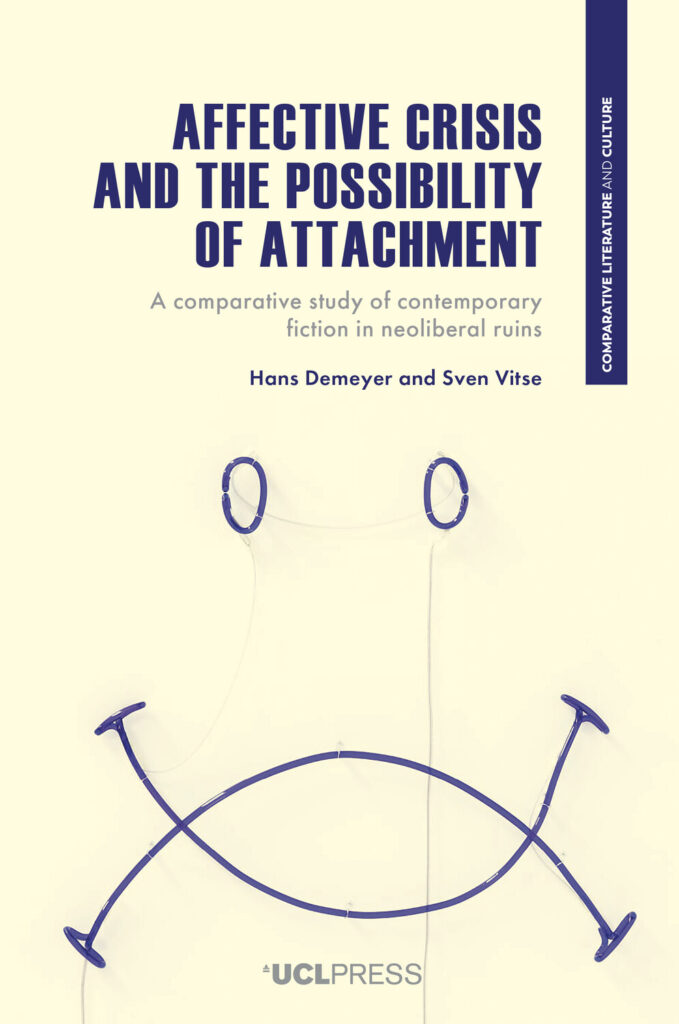
Affective Crisis and the Possibility of Attachment

Affective Crisis and the Possibility of Attachment offers a comparative critical study of contemporary fiction. It intervenes in discussions about contemporary fiction in its literary-historical relationship to postmodernism and in its socio-historical relationship to neoliberalism. It argues that contemporary literature is dominated by affective questions that are rooted in, but not fully subsumed by, neoliberalism: ‘How can I experience reality (as real)?’; ‘How can I feel attached to someone?’ This ‘affective dominant’ signals a diachronical shift from postmodernist fiction’s pervasive epistemological and ontological reflections to a focus on questions of an affective nature in contemporary fiction. It also offers a perspective on contemporary fiction as mediating neoliberalism’s double-edged dynamics of commodifying affective experience while privatising collective experience.

The book argues that contemporary fiction develops emergent mediations of neoliberal dynamics, with the affective crises the latter yield. It studies this affective crisis in relation to central themes as identity and climate crisis, and through prevalent contemporary genres as autofiction and coming-of-age narratives. The book explores a transnational corpus, including authors Heike Geissler, Ben Lerner, Édouard Louis, Valeria Luiselli, Ling Ma, Lieke Marsman, Mohamed Mbougar Sarr, Niña Weijers and Alejandro Zambra, amongst others.
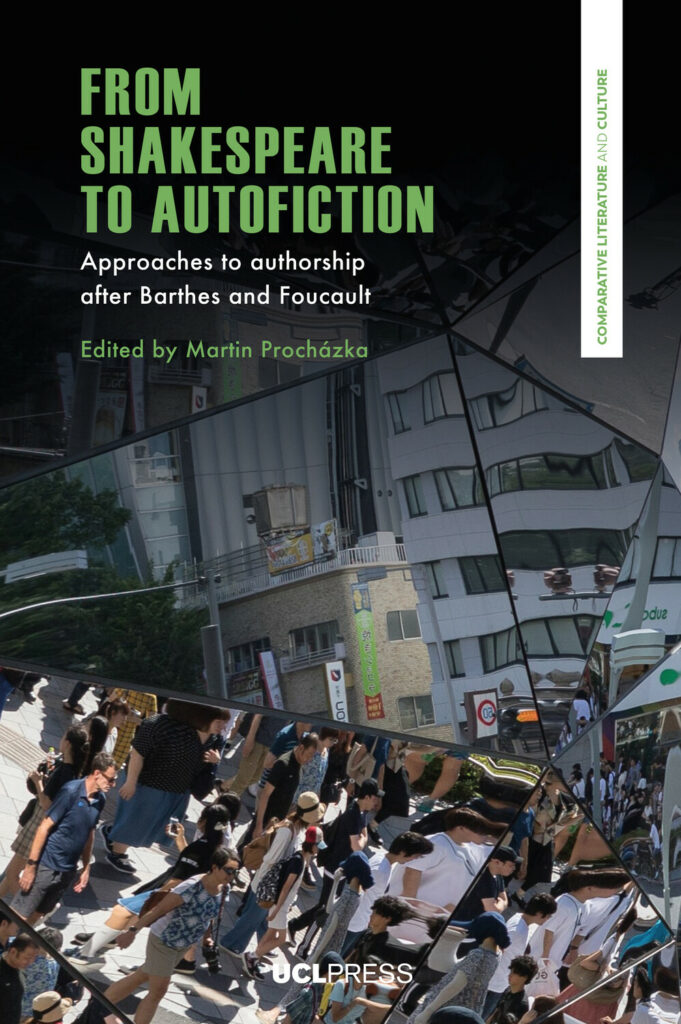
From Shakespeare to Autofiction

From Shakespeare to Autofiction focuses on salient features of authorship throughout modernity, ranging from transformations of oral tradition and the roles of empirical authors, through collaborative authorship and authorship as ‘cultural capital’, to the shifting roles of authors in recent autofiction and biofiction. In response to Roland Barthes’ ‘removal of the Author’ and its substitution by Michel Foucault’s ‘author function’, different historical forms of modern authorship are approached as ‘multiplicities’ integrated by agency, performativity and intensity in the theories of Pierre Bourdieu, Wolfgang Iser, Gilles Deleuze and Félix Guattari.

The book also reassesses recent debates of authorship in European and Latin American literatures. It demonstrates that the outcomes of these debates need wider theoretical and methodological reflection that takes into account the historical development of authorship and changing understandings of fiction, performativity and new media. Individual chapters trace significant moments in the history of authorship from the early modernity to the present (from Shakespeare’s First Folio to Latin American experimental autofiction), and discuss the methodologies reinstating the author and authorship as the irreducible aspects of literary process.

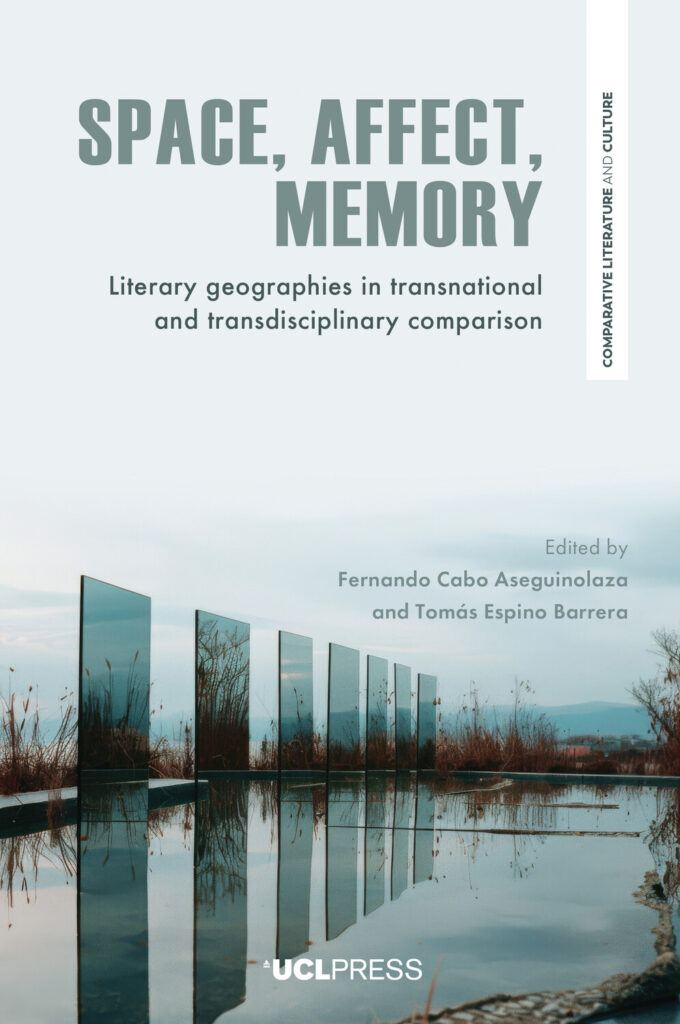
Space, Affect, Memory

Space, Affect, Memory highlights the centrality of space in modern and contemporary culture, both as an object of study and as a concept that underpins research and creative practice. In so doing, this book argues for the necessity of a new approach to space which integrates its affective and memorial dimension.

Contributors from different fields explore and advance debates in literary geography from diverse transnational perspectives through close readings of canonical and less familiar cultural and literary productions in English, Spanish, Portuguese, French, Italian and Japanese, in locales spanning Africa, the Americas, Asia and Europe. In this way, Space, Affect, Memory decentres the anglophone bias of established scholarly approaches in literary geography, probing terminologies and methodologies from different national traditions.

Finally, Space, Affect, Memory interweaves the visual arts by engaging with photography, performance and architecture. As a result, the volume offers a fresh, comparative perspective on the intermingling of space, affect and memory that lies at the heart of literary geography and comparative literature. These efforts converge in a shared attempt to pluralize the field (geographies) and to showcase the numerous possibilities of creative, transdisciplinary interaction between media, performance and representation, across cultures.

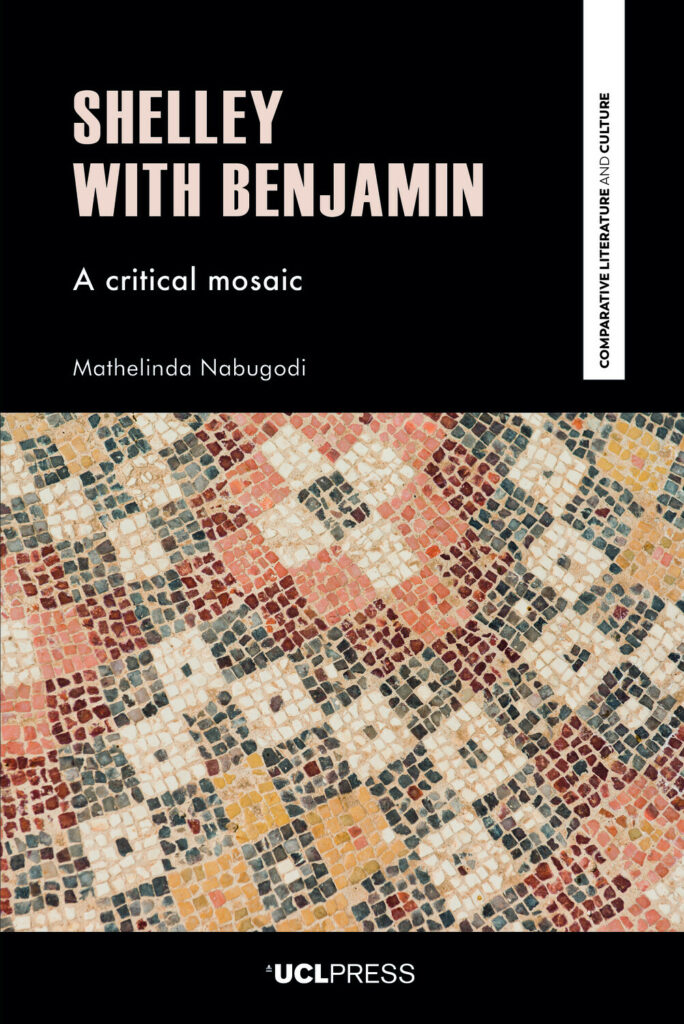
Shelley with Benjamin

*Yet what surprises me most of all at this time is that what I have written consists, as it were, almost entirely of quotations. – Compositions so produced are to poetry what mosaic is to painting. – It is the craziest mosaic technique you can imagine – and the very mind which directs the hands in formation is incapable of accounting to itself for the origin, the gradations, or the media of the process.

Shelley with Benjamin: A critical mosaic is an experiment in comparative reading. Born a century apart, Percy Bysshe Shelley and Walter Benjamin are separated by time, language, temperament and genre – one a Romantic poet known for his revolutionary politics and delicate lyricism, the other a melancholy intellectual who pioneered a dialectical method of thinking in constellations. Yet, as the above montage of citations from their works demonstrates, their ideas are mutually illuminating: the mosaic is but one of several images that both use to describe how literature lives on through practices of citation, translation and critical commentary.

In a series of close readings that are by turns playful, erotic and violent, Mathelinda Nabugodi unveils affinities between two writers whose works are simultaneously interventions in literary history and blueprints for an emancipated future. In addition to offering fresh interpretations of both major and minor writings, she elucidates the personal and ethical stakes of literary criticism. Throughout the book, marginal annotations and interlinear interruptions disrupt the faux-objective and colourblind stance of standard academic prose in an attempt to reckon with the barbarism of our past and its legacy in the present.

The book will appeal to readers of Shelley and Benjamin as well as those with an interest in comparative literature, literary theory, romantic poetics, and creative critical writing.

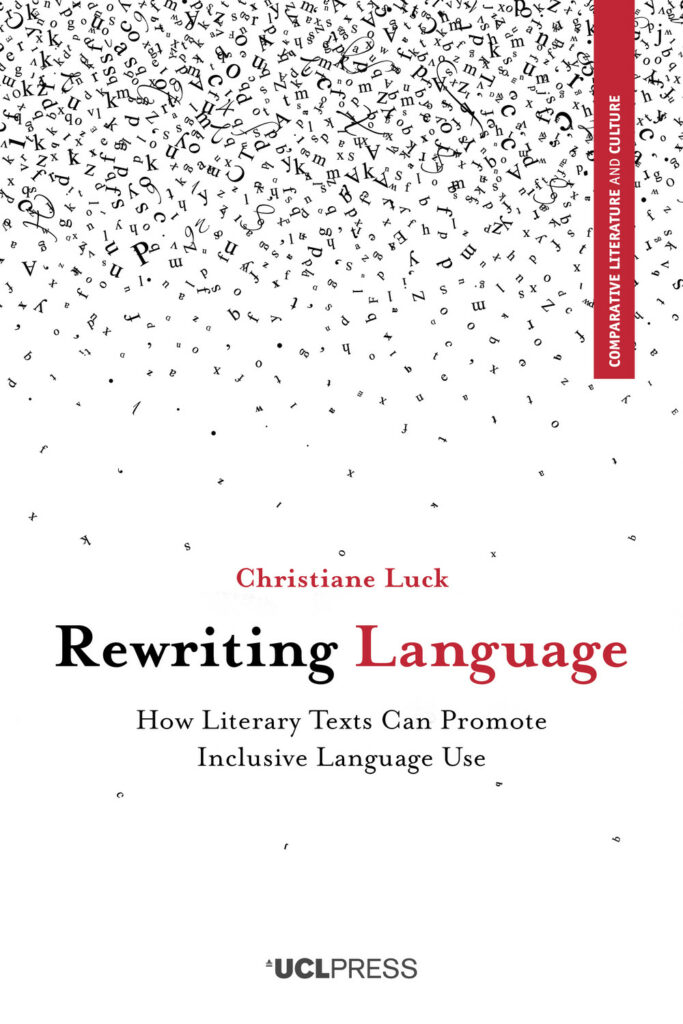
Rewriting Language

Inclusive language remains a hot topic. Despite decades of empirical evidence and revisions of formal language use, many inclusive adaptations of English and German continue to be ignored or contested. But how to convince speakers of the importance of inclusive language? Rewriting Language provides one possible answer: by engaging readers with the issue, literary texts can help to raise awareness and thereby promote wider linguistic change.

Christiane Luck analyses five iconic texts from a literary, linguistic and sociological perspective. She shows how Ursula K. Le Guin’s The Left Hand of Darkness and Verena Stefan’s Häutungen highlight the issues inherent in the linguistic status quo; Marge Piercy’s Woman on the Edge of Time and June Arnold’s The Cook and the Carpenter explore the possibilities and challenges of linguistic neutrality; and Gerd Brantenberg’s Egalias døtre reverses linguistic norms to illustrate the link between language and imagination. A focus group study provides empirical evidence for the effectiveness of the literary approaches and shows how literary texts can sensitise readers to the impact of biased language. Particularly in the context of education, Luck concludes, literary texts can be a valuable tool to promote inclusive language use.

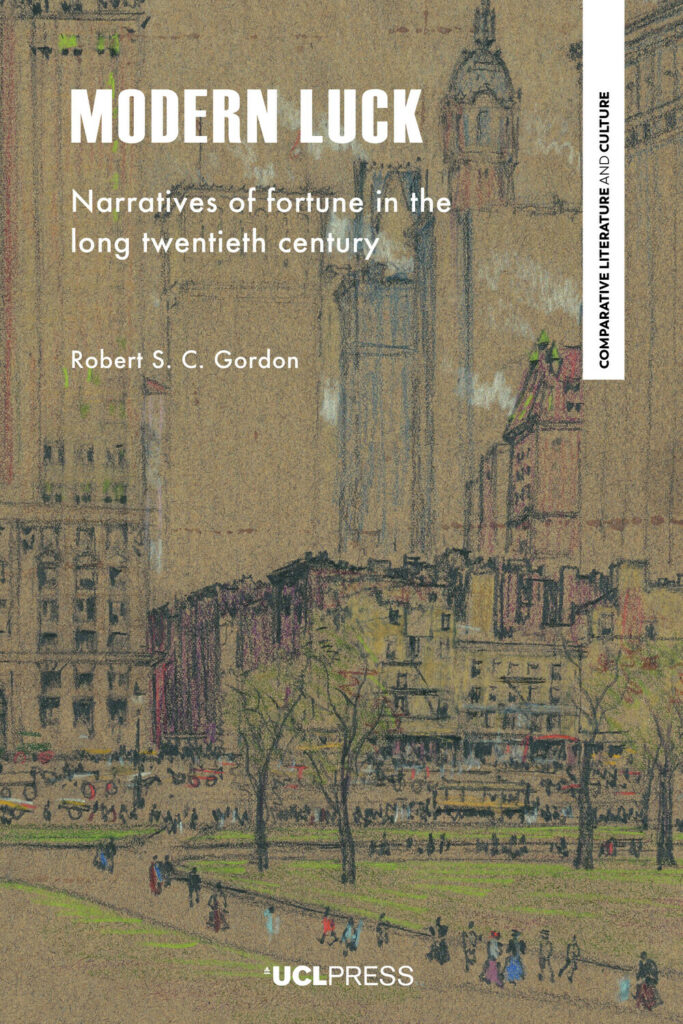
Modern Luck

Beliefs, superstitions and tales about luck are present across all human cultures, according to anthropologists. We are perennially fascinated by luck and by its association with happiness and danger, uncertainty and aspiration. Yet it remains an elusive, ungraspable idea, one that slips and slides over time: all cultures reimagine what luck is and how to tame it at different stages in their history, and the modernity of the ‘long twentieth century’ is no exception to the rule. Apparently overshadowed by more conceptually tight, scientific and characteristically modern notions such as chance, contingency, probability or randomness, luck nevertheless persists in all its messiness and vitality, used in our everyday language and the subject of studies by everyone from philosophers to psychologists, economists to self-help gurus.
Modern Luck sets out to explore the enigma of luck’s presence in modernity, examining the hybrid forms it has taken on in the modern imagination, and in particular in the field of modern stories. Indeed, it argues that modern luck is constituted through narrative, through modern luck stories. Analysing a rich and unusually eclectic range of narrative taken from literature, film, music, television and theatre – from Dostoevsky to Philip K. Dick, from Pinocchio to Cimino, from Curtiz to Kieślowski – it lays out first the usages and meanings of the language of luck, and then the key figures, patterns and motifs that govern the stories told about it, from the late nineteenth century to the present day.

The Modernist Bestiary

The Modernist Bestiary centres on *{::}Le Bestiaire ou Cortège d’Orphée (1911), a multimedia collaborative work by French-Polish poet Guillaume Apollinaire and French artist Raoul Dufy, and its homonym, *The Bestiary or Procession of Orpheus (1979), by British artist Graham Sutherland. Rather than reconstructing the lineage of these two compositions, the book uncovers the aesthetic and intellectual processes involved that operate in different times, places and media. The Apollinaire and Dufy Bestiary is an open-ended collaboration, a feature that Sutherland develops in his re-visiting, and this book shows how these neglected works are caught up in many-faceted networks of traditions and genres. These include Orphic poetry from the past, contemporary musical settings, and bestiary writing from its origins to the present. The nature of productive dialogue between thought and art, and the refracted light they throw on each other are explored in each of the pieces in the book, and the aesthetic experience emerges as generative rather than reductive or complacent.

The contributors’ encounters with these works take the form of poetry and essays, all moving freely between different disciplines and practices, humanistic and posthumanist critical dimensions, as well as different animals and art forms. They draw on disciplines ranging from music, art history, translation, Classical poetry and French poetry, and are nurtured by approaches including phenomenology, cultural studies, sound studies, and critical animal studies. Collectively the book shows that the aesthetic encounter, by nature affective, is by nature also interdisciplinary and motivating, and that it spurs the critical in addressing the complex issues of ‘humananimality’.

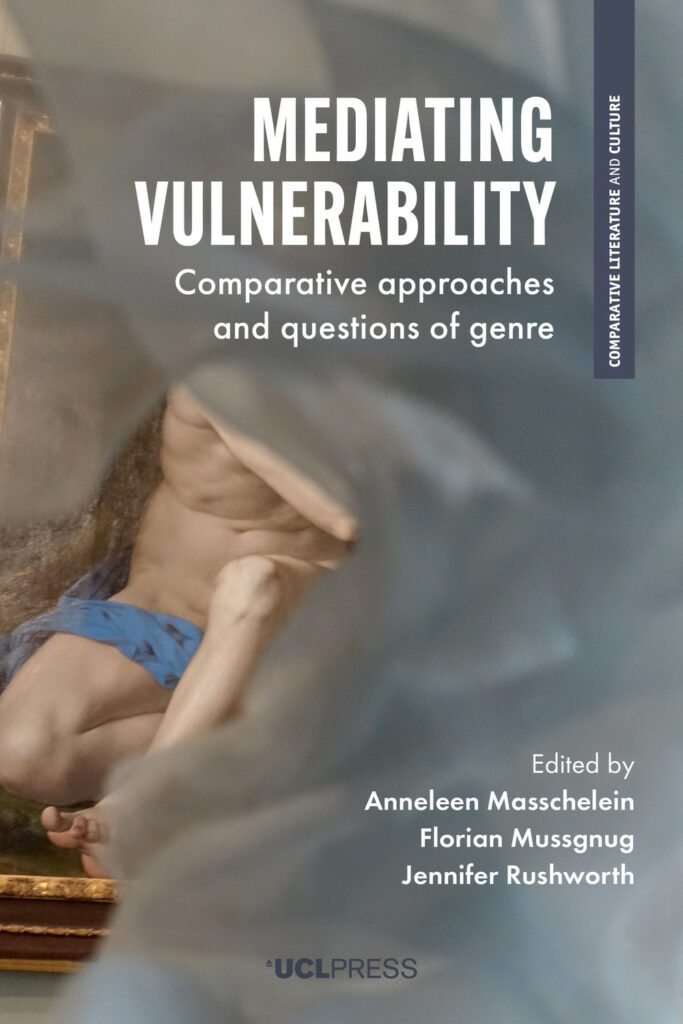
Mediating Vulnerability

Mediating Vulnerability examines vulnerability from a range of connected perspectives. It responds to the vulnerability of species, their extinction but also their transformation. This tension between extreme danger and creativity is played out in literary studies through the pressures the discipline brings to bear on its own categories, particularly those of genre. Extinction and preservation on the one hand, transformation, adaptation and (re)mediation on the other. These two poles inform our comparative and interdisciplinary project. The volume is situated within the particular intercultural and intermedial context of contemporary cultural representation. Vulnerability is explored as a site of potential destruction, human as well as animal, but also as a site of potential openness.

This is the first book to bring vulnerability studies into dialogue with media and genre studies. It is organised in four sections: ‘Human/Animal’; Violence/Resistance’; ‘Image/Narrative’; and ‘Medium/Genre’. Each chapter considers the intersection of vulnerability and genre from a comparative perspective, bringing together a team of international contributors and editors. The book is in dialogue with the reflections of Judith Butler and others on vulnerability, and it questions categories of genre through an interdisciplinary engagement with different representational forms, including digital culture, graphic novels, video games, photography and TV series, in addition to novels and short stories. It offers new readings of high-profile contemporary authors of fiction including Margaret Atwood and Cormac McCarthy, as well as bringing lesser-known figures to the fore.

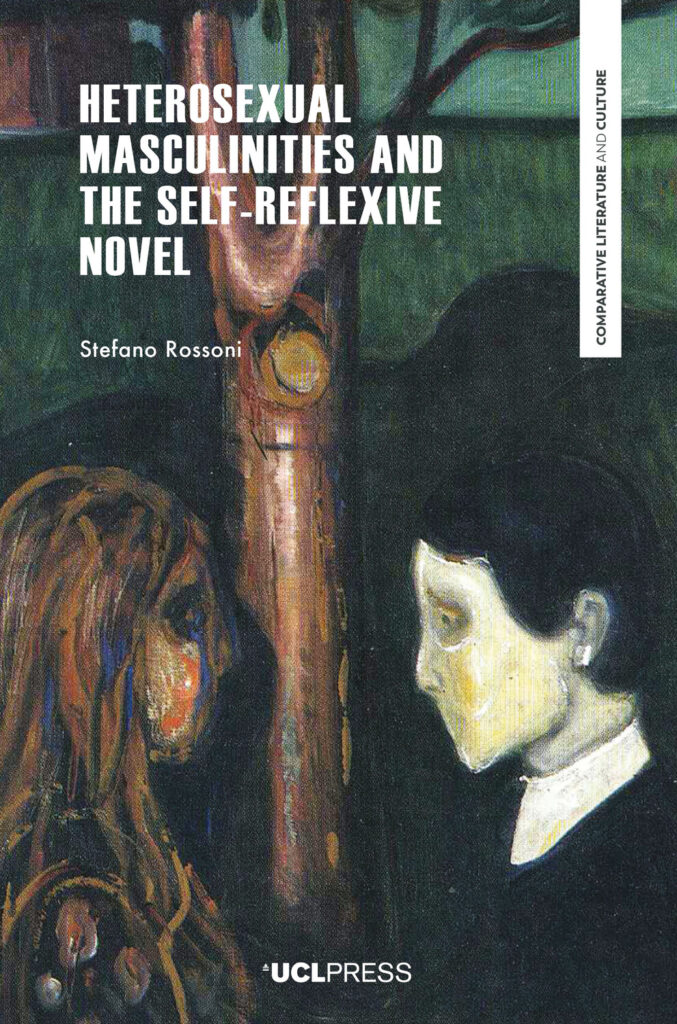
Heterosexual Masculinities and the Self-Reflexive Novel

Heterosexual Masculinities and the Self-Reflexive Novel examines how the narratives of four world-renowned authors, namely J. M. Coetzee, Milan Kundera, Philip Roth and Mario Vargas Llosa, offer a standpoint through which to address the inscription of heterosexual masculinity into Western literary legacy and the ways in which masculinity is re-fashioned in contemporary self-reflexive novels.

Considering the interconnectedness of their narratives for the first time, the book explores unexamined patterns of dialogue among Coetzee, Kundera, Roth and Vargas Llosa while also contextualising their writing in the light of the European literary tradition inaugurated by Cervantes’s Don Quixote and continued by Flaubert’s Madame Bovary. Rather than building on conventional theoretical approaches to literary studies, Stefano Rossoni develops a fresh and engaging approach by looking at these two works not only as narrative texts but most importantly as theories of literature. In dialogue with critical contributions that examined men’s emotional illiteracy and struggle to develop a language for self-reflection, the book argues that the narratives of Coetzee, Kundera, Roth and Vargas Llosa engage with the tradition of the self-reflexive novel and its ramifications to reflect on masculinity as a socio-cultural construction. Ultimately, their writing reveals men’s novelistic self-reflexivity as a site of unintelligibility.

Sign up to our newsletter

Don't miss out!
Subscribe to the UCL Press newsletter for the latest open access books,
journal CfPs, news and views from our authors and much more!