
Essential journal articles for International Day of Education

To celebrate International Day of Education 2025, UCL Press’s journals team share a range of essential articles on this year’s theme: AI in education. This article originally appeared on the UCL Press journals site.

With Google searches for ‘AI’ skyrocketing in 2023 and the global AI market size projected to reach US$243.70bn in 2025, artificial intelligence has officially entered the zeitgeist of the 2020s. AI is reshaping how human society fundamentally functions, and the role of AI across industries will only continue to expand as AI-driven systems become increasingly sophisticated. It’s no surprise, then, that UNESCO has dedicated the International Day of Education 2025 to AI, inspiring reflections on the possibilities, challenges, and ethical responsibilities that this technology elicits in the schooling of children, youth, and adults worldwide.

The United Nations General Assembly proclaimed 24 January as International Day of Education to celebrate quality education as a conduit for peace, equality, and wellbeing for every community, everywhere. UNESCO recognises education as a human right and public responsibility, and International Day of Education is an opportunity to engage with education frameworks as a collective and mobilise resources to drive the charge toward educational equity. In the spirit of knowledge sharing, UCL Press’s journals team presents a range of articles on AI in education, along with supplementary materials to enrich your understanding of education policy.

Understanding AI and Automation in Education

From alleviating administrative duties and tailoring curriculums to computerising admission processes and informing resource allocation, AI can be – and is – used in learning spaces to enhance the educational experience in a way that still honours the unique and essential input of human educators. Uses of Artificial Intelligence and Machine Learning in Systematic Reviews of Education Research by Henrik Karlstrøm in the London Review of Education explores how AI and machine learning can improve systematic reviews in education research. By automating processes like literature retrieval, content analysis, and bibliometric mapping, AI can help manage the growing volume and complexity of academic publications.

Karlstrøm also acknowledges that while these technologies enhance efficiency, careful validation and understanding are crucial to address challenges related to transparency, reliability, and potential over-reliance on automated systems. A special feature in the same journal, ‘AI in Education’, brings together articles featuring a diverse perspective on issues related to adjusting to the challenges and opportunities brought by AI in the field of education. Leaton Gray’s article Artificial Intelligence in Schools: Towards a Democratic Future further highlights the need for greater transparency, regulatory frameworks, and collaborative development to ensure AI systems empower students and educators rather than reinforcing commercial interests and systemic biases. These insights underscore the need for balance and ethical analysis in the adoption of AI-enabled machines.

Ensuring the responsible use of AI in education is a self-sustaining cycle. Developing a mass awareness of AI’s value and limitations depends on learning pathways that teach AI as a supplementary tool and not a definitive solution. Foregrounding trusted research is crucial for facilitating informed discussions and critically examining the profound impact of AI on the future of education.

Looking Beyond AI: Other Educational Resources

Although the spotlight is on AI this International Day of Education, considering other pedagogical themes is essential to developing a nuanced understanding of empowered education systems. Articles from the International Journal of Social Pedagogy and the International Journal of Development Education and Global Learning explore how education can tackle broader societal challenges. Felton et al.’s Civic Action on Social Media demonstrates how fostering digital media literacy can prepare students for civic engagement in a digital age. Similarly, Wimpenny et al.’s work investigates how collaborative online international learning can deepen students’ understanding of global citizenship education.

History Education Research Journal examines the obligation institutions have to decolonise their teaching practices and socially support young people, such as preparing school students to respond to climate crises, engaging with Indigenous scholarship to enhance history education, and embracing scaffolding and translanguaging as pedagogical approaches in teaching history. UCL Open Environment also features research on environmental education, providing a platform for student perspectives on climate change and sustainability education in England and reflecting on the important contribution that all subjects can make towards developing interdisciplinary, complex understandings of the environmental emergency.

Finally, the Architecture_MPS journal offers a critical perspective on higher education. The Death and Life of UK Universities and the Cultural Spaces They Consume critiques how neoliberalism and corporatisation have shaped British universities, urging educators to reclaim these institutions as spaces for cultural and academic growth.

Join the Conversation

Thank you for celebrating International Day of Education with us! Explore these featured articles to learn more about preserving human agency in education in a technologically advancing world.

From December 2025, History Education Research Journal will begin publishing a new thematic area investigating the relationship between generative artificial intelligence and history education. This new theme aims to investigate what the widespread use of generative AI means for history education.
Chances and Risks of Participation in dealing with Difficult Heritage

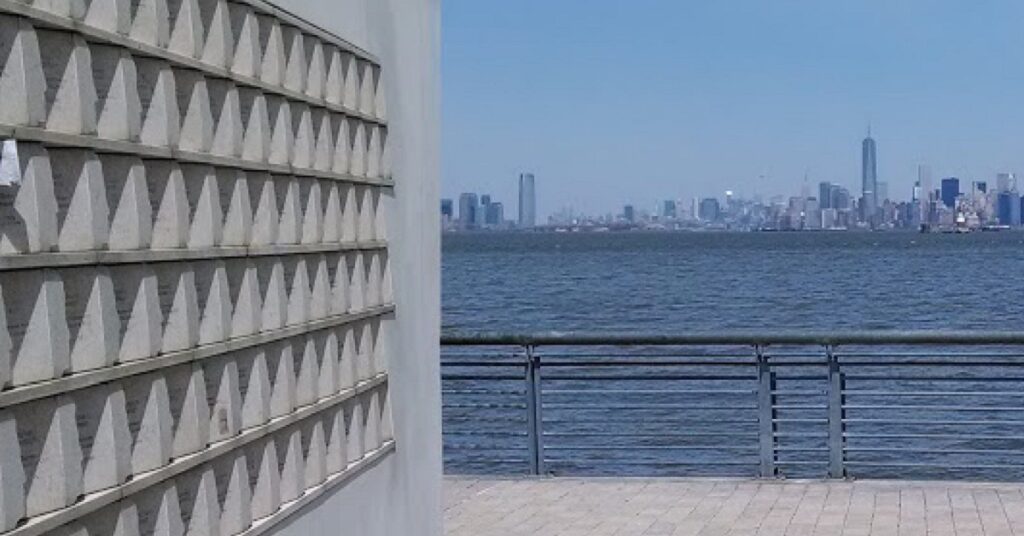
Florian Reitmann’s recent paper in AMPS explores a participatory process organised to deal with the highly contested former Nazi project Prora on the Baltic island of Rügen, which was carried out on behalf of the German government in 1996. The author explains why the process opened new avenues in dealing with difficult heritage.

How can a difficult heritage site exert a negative influence on a local community and even block the path to a future perceived as positive? How can such a difficult legacy be negotiated in order to transform it from an obstacle into an opportunity for positive development? What are the opportunities – but also the risks – of participatory approaches in dealing with such a difficult heritage site?

These questions characterised a participatory process that in 1996 dealt with a site with multiple burdens: ‘Prora’ on the German island of Rügen in the Baltic Sea.

Prora was planned and built by the Nazi regime. Intended as a gigantic ‘strength-through-joy’ seaside resort, it was meant to hold 20,000 beds, to provide low-cost seaside holidays for workers. However, Prora was the first time put into operation under communist rule. It served the GDR’s ‘National People’s Army’ as an important military base. In this new function, the building not only represented the military power of the communist regime, it also exerted an important influence on the island’s economy and the lives of the local population for many years.

After the fall of the Berlin wall, the military was withdrawn from the site. However, due to its size and former importance, Prora soon turned into a battleground in the conflicts over Rügen’s future. Various stakeholder — including residents of the complex, local communities, heritage activists, government agencies and international investors — attached different historical meanings to Prora and, upon that basis, projected conflicting futures on the site and the island.

When the growing conflicts threatened to block any solution, the federal government decided to cooperate with local actors and initiatives to find a solution for Prora.

The resulting participatory process took the form of a ‘discursive procedure’: Over the course of eight months, joint solutions for dealing with the complex were developed in workshops and discussion rounds. This process is at the centre of my article ‘Turning the project of dictatorship into an example of democracy? Chances and risks of participation at the Nazi relic Prora’.

My article argues that the participatory process in Prora opened a space of opportunity that demonstrates the potential of a transformative and future-oriented approach to difficult heritage. A burden that inhibited development on the island was transformed into a positive and active asset. It became a tool for actively shaping a new and different future. This tool was used to verbalise and manage conflicts that went far beyond the immediate significance of Prora and affected the entire region.

However, the framework in which the participatory process in Prora took place pointed to new risks and problems that can accompany such an approach. Under the conditions of market-liberal politics, the call for the withdrawal of the state, experts and institutional responsibility can easily serve as a vehicle for delegating responsibility for difficult heritage to market forces and profit-oriented local actors. This also became quite clear in the course of the participatory process in Prora and is discussed in more detail at the end of the article.

Turning the project of dictatorship into an example of democracy? Chances and risks of participation at the Nazi relic Prora by Florian Rietmann (Brandenburg University of Technology) is published in Architecture_MPS, volume 29.

This article originally appeared on the AMPS journal blog.


About the author

Florian Rietmann is an architect, researcher and educator. Currently he is scholarship holder and lecturer at the Berliner Hochschule für Technik (BTH). His working experience include different positions in architecture firms in Germany and Switzerland as well as his work as a researcher in the DFG Research Training Group “Cultural and Technological Significance of Historic Buildings” at Brandenburg University of Technology, where he is currently working on his dissertation “Prora’s Rigid Resilience – The Long Shadow of an Unloved Structure”.

Architecture_MPS- Now indexed in Scopus!

We are delighted to announce that, following a rigorous evaluation process,  the diamond open access journal Architecture_MPS has been accepted for indexing in SCOPUS.

Scopus is widely recognised as one of the largest academic abstract and citation databases, encompassing journals, books, and conference proceedings. Researchers publishing in the journal will now be indexed automatically in SCOPUS, in addition to a broad list of other indexers, including Web of Science.

The official journal of the international research organisation Architecture, Media, Politics, Society (AMPS), Architecture_MPS is a fully peer-reviewed, international, diamond open access journal that addresses the growing interest in the social and political interpretation of the built environment, from a multidisciplinary perspective.

Architecture_MPS focuses upon critical and original engagement with the built environment and explicitly welcomes interdisciplinary perspectives. The journal seeks to explore an overlaid terrain in which the physical, material and the environmental are critically examined through the prisms offered by other fields. Publishing articles from planners, architects, urban designers, sociologists, artists, urban economists, and lawyers specialized in land rights, Architecture_MPS aims to address the relationship of these disciplines with the built environment.

Find out more about the journal, and read and download articles free, at journals.uclpress.co.uk/amps

Housing’s Critical Position for the Future of Cities

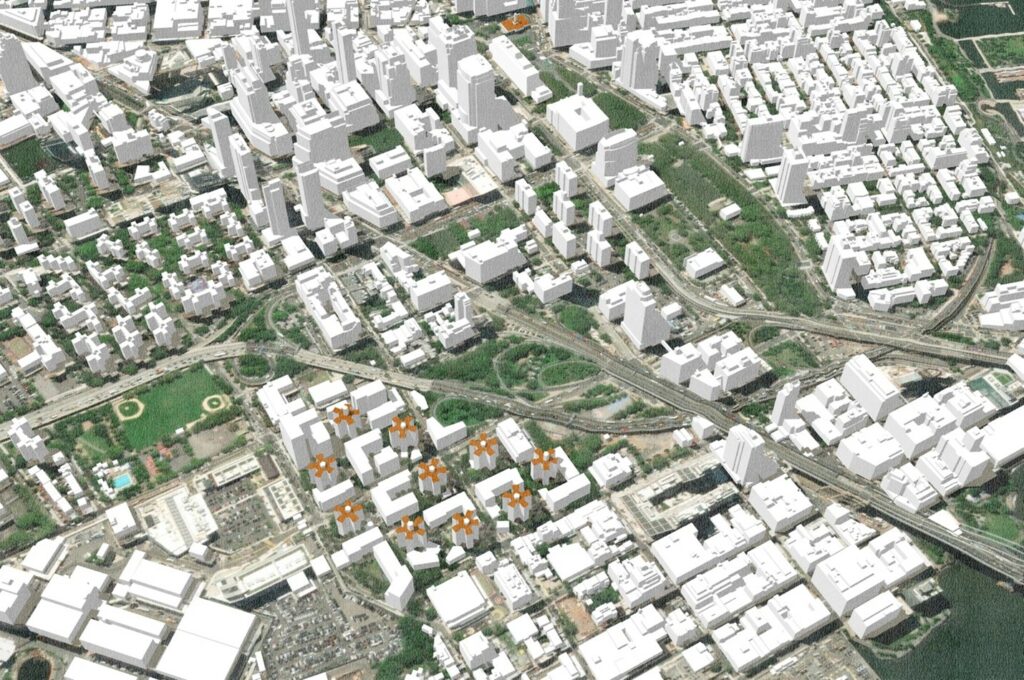
View of Downtown Brooklyn’s Fabric with Infill Housing Spatially Integrating the Farragut Housing Towers (indicated by use of brown roof). By Author.

View of Downtown Brooklyn’s Fabric with Infill Housing Spatially Integrating the Farragut Housing Towers (indicated by use of brown roof)

For much of the 20th century, the image of cities was defined by the skyline of corporate office towers. The disruption of the pandemic, however, has reduced the demand for new office towers and dampened their allure as the image of the city. At the same time, the importance of housing in cities has only grown and is now the critical focus of city governments across the world. Despite the ability to work and live remotely, urban housing, especially in global cities like New York, is still in high demand as cities are the economic engines of their region, providing opportunity to a diverse range of people. These city governments are working to meet the vast needs for new housing stock, in particular affordable housing, while at the same time preserving as much existing housing as possible, especially housing for low-income families. This task of meeting the housing demand is daunting, with hundreds of thousands of new units required and many older buildings faltering due to a lack of adequate investment and maintenance. Making this task more difficult is the resistance many communities have to change, rendering proposals for new housing contentious. This volume of housing research offers multiple perspectives considering the nature of housing and specific instances where the provision of housing is a complex process with social, economic, and political implications.

My paper explores this complexity in the context of the vital questions surrounding the survival of public housing in New York City. The research and speculative design demonstrate the potential for new housing and site-specific urban design to be part of the solution to saving and upgrading the deteriorating subsidised apartments for low-income New Yorkers. This new housing, the fabric of a new neighbourhood integrating the public housing towers, is shown to simultaneously address the economic needs for the existing housing and the spatial and social isolation of public housing residents by providing the definition of new streets, parks, and public squares as an active and connected public realm. This paper’s goal is to help move the conversation forward by demonstrating what change could look like and how new urban housing development could benefit a wide range of new and current city residents.

Addressing urban social and spatial stratification: testing the potential for integration of public housing by Jason Montgomery (School of Architecture and Planning, Catholic University of America, USA) is published in Architecture_MPS, volume 28.


About the author

This post originally appeared on the Architecture_MPS blog, and can be read here.

Jason Montgomery is an architect, urban designer, scholar, and educator. An Associate Professor at Catholic University School of Architecture and a principal at Truong Montgomery Architect, his research reflects his interests in urban architecture and morphology. He co-organized a number of conferences and symposia addressing the complexity of cities, the evolution of downtown Brooklyn, and housing along the Brooklyn waterfront. He was the editor of a recently published volume Place-based Sustainability: Research and Design Extending Pathways for Ecological Stewardship, and a guest editor of a special issue of AMPS Journal: Re-imagining the City: Urban Space in the Post-Covid City.

Sign up to our newsletter

Don't miss out!
Subscribe to the UCL Press newsletter for the latest open access books,
journal CfPs, news and views from our authors and much more!