Lolly Willowes at 100: Sylvia Townsend Warner, Religion and the Supernatural

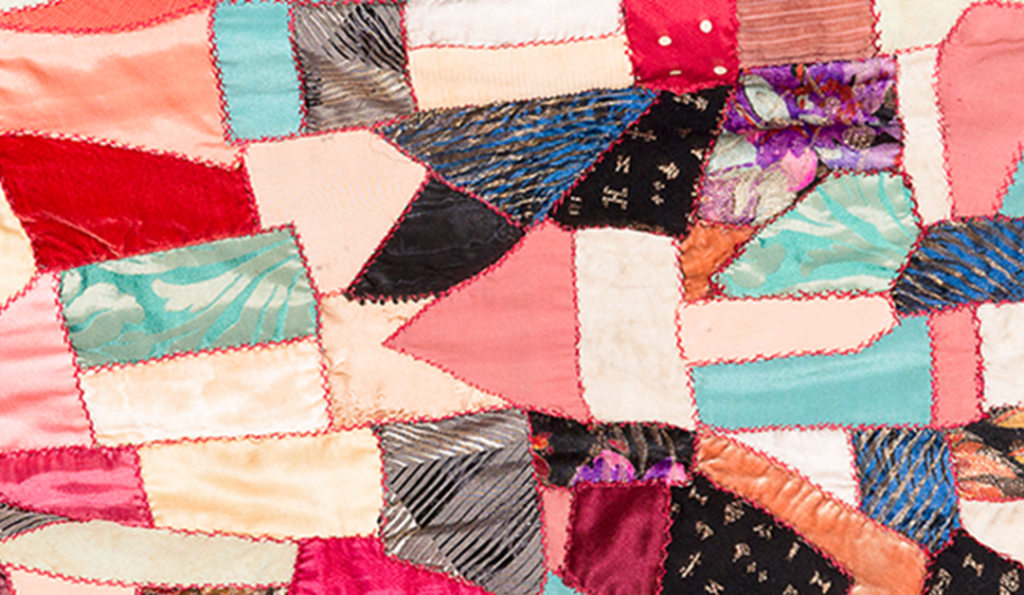
Image of patchwork quilt.

Join the team behind the Journal of the Sylvia Townsend Warner Society for a two-day in-person conference celebrating the centenary of Lolly Willowes, Sylvia Townsend Warner’s first and best-known novel.

First published in 1926, Lolly Willowes explores themes of freedom, gender, and religion in a distinctive and thought-provoking way. As a serious and imaginative fantasy, it stands as a strikingly original contribution to literary modernism, written in the same decade as James Joyce’s Ulysses, T.S. Eliot’s The Waste Land, and Virginia Woolf’s Mrs Dalloway. This conference places Warner’s novel at the centre of that landscape and opens up new perspectives on its significance and enduring relevance.

Organised in collaboration with the UCL English Department, UCL Press, and the UCL Institute of Advanced Studies, the conference features a keynote lecture by the novelist Adam Mars-Jones. The programme also brings together poets and fiction writers Philip Hensher, Juliet McKenna, and Deryn Rees-Jones, alongside the American composer Michael Alec Rose, who will present excerpts from his 2019 chamber opera Lolly Willowes.

  • Event type: In person
  • Date & time: 29 May 2026 – 30 May 2026
  • Location: IAS Common Ground, Room G11 South Wing, University College London Gower Street London WC1E 6BT United Kingdom

Day tickets are available to purchase for either individual days or the whole conference. 

Find out more and book your place:
https://www.ucl.ac.uk/arts-humanities/events/2026/may/lolly-willowes-100-sylvia-townsend-warner-rel…

Celebrating the Life and Legacy of Dr Paul Ayris

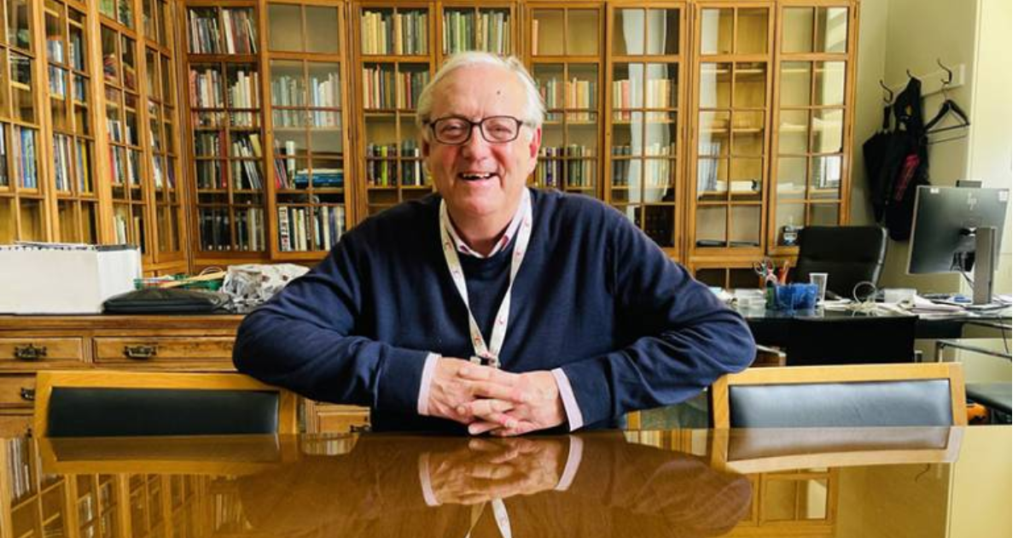
Paul Ayris, sat at his desk, in his office at UCL, smiling.

On 17th March, more than 100 colleagues, friends and members of the academic community gathered  to celebrate the life and work of Dr Paul Ayris, and to mark the launch of his open access book, Thomas Cranmer’s Register, which was the result of more than 40 years of extraordinary academic endeavour.

Speakers reflected on Paul’s significant contributions to UCL and to the wider scholarly community:

  • Professor Jennifer Hudson, Vice-Provost (Faculties) reflected on her work with Paul during the past two years, and his leadership of LCCOS (Library, Culture, Collections and Open Science) at UCL
  • Professor Emeritus David Price, former Vice-Provost (Research) at UCL, who shared warm recollections of working closely with Paul and spoke about their long-standing friendship.
  • Professor Richard Rex, Professor of Reformation History at the University of Cambridge, who placed Paul’s pioneering research on Thomas Cranmer’s Register in its wider scholarly context and reflected on their academic collaboration.
  • Dr Michael Spence, President and Provost of UCL, who led the audience in a moment of remembrance.

Paul was founder, CEO and a champion of UCL Press, and dedicated most of his career to UCL. He joined in 1997 as Deputy Librarian and later became Director of UCL Library Services, where he strengthened the university’s commitment to openness and public engagement. In 2018, he was appointed Pro-Vice-Provost of LCCOS (Library, Culture, Collections and Open Science) with an expanded portfolio, and his leadership in Open Science helped shape practice across the sector. His influence played a key role in establishing UCL Press as a global leader in open access publishing.

Paul also volunteered his time to a range of organisations across the sector in service of his vision of an open, accessible and publicly engaged higher education ecosystem, including as President of LIBER, the Association of European Research Libraries, and as Chair of League of European Research Universities’ Working Groups on Roadmaps for Open Access, Research Data and Open Science. He was latterly proud to serve as Chair of the LERU Group for Open Science Ambassadors.

Paul’s impact is felt across UCL, within the international library and scholarly communications communities, and among all who had the privilege of working with him. 

Find out more about Paul Ayris’ life and work: https://uclpress.co.uk/in-memoriam-dr-paul-ayris-ba-phd-frhist/

Read and download Thomas Cranmer’s Register: https://uclpress.co.uk/book/thomas-cranmers-register/

Book talk: Teaching Slavery: New Approaches to Britain’s Colonial Past

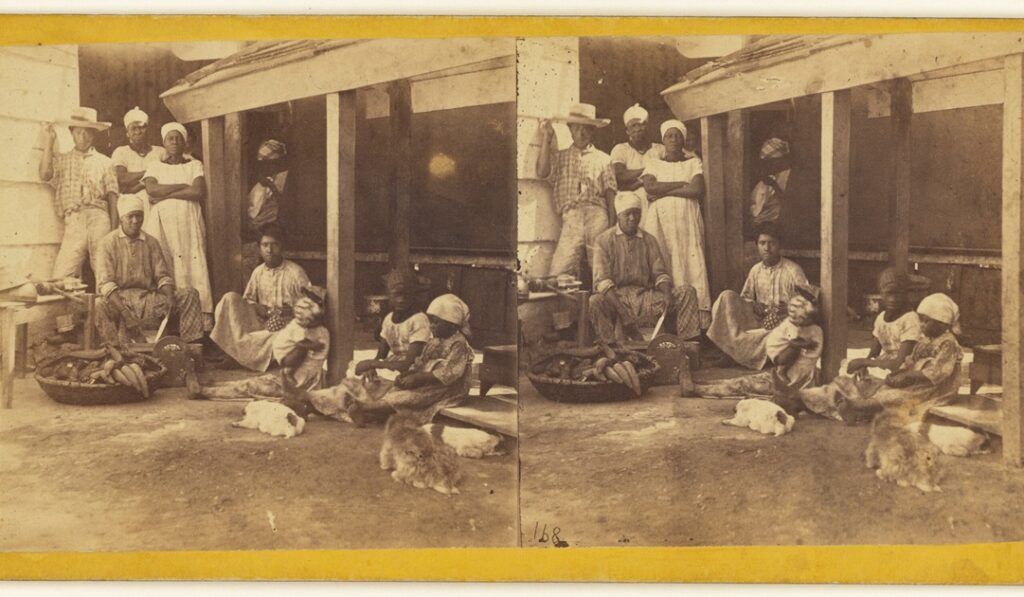
A group of enslaved Black men and women, in the kitchen of a barracoon.

Join the authors of the open access book Teaching Slavery: New Approaches to Britain’s Colonial Past for a hybrid book talk hosted by the Institute of Historical Research.

Date: 11th December 2025
Time: 17:30–19:30 GMT
Location: Hybrid | Online-via Zoom & Room 349, Third Floor, Senate House, Malet Street, London WC1E 7HU
Series: Black British History 

Registration link: https://www.history.ac.uk/news-events/events/book-talk-teaching-slavery-new-approaches-britains-colonial-past

All welcome– this seminar is free to attend but advance registration is required.

This groundbreaking book brings together the latest academic research on Britain’s involvement in transatlantic slavery, with innovative thinking on the teaching of such challenging histories in the classroom. It provides an essential framework for transforming how slavery is conceptualised and taught in British secondary schools by addressing three specific areas of concern: limits of teacher training on historical content and pedagogical approaches; the scarcity of high-quality, appropriate, research-based resources; and the lack of supporting published material to guide teachers on the principles, knowledge and practice for ethical classroom engagement.

Drawing on insights from a long-term partnership between historians and educators Teaching Slavery combines sophisticated historical analysis with practical pedagogical guidance. The early part of the book offers thorough historiographical examination of key themes, including race, the gendering of slavery, resistance and rethinking abolition. These are followed by detailed guidance on overcoming the challenges of teaching these histories, including exemplar enquiries to help teachers establish a classroom where teachers and students can confidently engage in dialogue about key ideas, including the construction of race and racism. Throughout, the authors emphasise the importance of historical specificity and the need to critically engage with Britain’s history of slavery and empire.

OASPA Conference 2025: Embracing the Complexity – how do we get to 100% OA?

a group of people sitting in an an auditorium

UCL Press Head of Publishing Lara Speicher recently attended the OASPA Conference 2025, where open access advocates, publishers, librarians and researchers from around the world gathered to explore the future of scholarly communication. The conference focused on the theme Embracing the Complexity – How Do We Get to 100% OA?, sparking rich discussions around infrastructure, equity and collaboration. In her blog post below, Lara shares her reflections on the key takeaways and challenges ahead.

The OASPA (Open Access Scholarly Publishing Association) annual conference is always an excellent opportunity to hear the latest updates in open access from a wide range of representatives involved in scholarly publishing and communications from around the world. This year’s conference, held in the beautiful city of Leuven, where the university is celebrating its 600th year, was no exception, with presentations on OA initiatives in China, India, USA, Canada, Europe, UK, Japan, South Africa, the Middle East and Latin America.

Keynote presentations considered the progress in open access to date as well as addressing how much more work there is to be done to get to 100% OA. Demmy Verbeke, Head of Artes, KU Leuven Libraries’ Arts and Humanities collections, opened the conference with a presentation on the bold approach to open access taken by Leuven University, where they do not have an APC fund or enter into transformative agreements, rather they choose to invest in fair open access initiatives and community approaches, repurposing part of the collection budget for this purpose. Verbeke presented the case for knowledge as a public good, not a commodity, and argued that academics should play a greater role in driving change through their publishing choices.

Hannah Hope, Open Research Lead at the Wellcome Trust, presented Wellcome’s goal for 100% OA and the recent changes made to the Wellcome Trust’s policies to help to achieve this. Funds have been redirected from transformative agreements towards the wider OA publishing ecosystem, supporting infrastructure for both Wellcome- and non-Wellcome funded researchers. She highlighted global differences in scholarly communications systems and drew attention to the fact that while the majority of attention around open science is directed to North America and Europe, for many countries OA is the starting point. Citing the growing volatility in north-western parts of the world, Hope made the case that our privileged publishing systems and our very institutions are under threat and that significant change is required.

Professor Wei Yang (Zhejiang University; National Natural Science Foundation of China, NSFC; China Association of Science and Technology, CAST & Chinese Academy of Sciences, CAS) set out the publishing and open access landscape in China, where a preference for publishing in high-ranking Anglophone journals is prevalent. While China contributes around £909 million dollars in APCs to journals outside of China, representing around 30% of global open access, only 5% of journal articles by Chinese authors are published in Chinese journals. To address this, the government has introduced a requirement that 20% of funded authors’ articles have to publish in Chinese journals. Yang also highlighted the growth in recent years in scholarly output from the Global South, which now represents around 50% of total outputs.

OASPA conferences feature large university presses, commercial publishers and society publishers as well as small university presses and community-based initiatives. This year’s conference featured sessions including representatives from Cambridge University Press and Wiley, who discussed transformative agreements, among other things: what they have achieved so far, the challenges with TAs and whether they can lead to a full transition to OA. Other panels discussed the much broader topic of who owns knowledge with panellists from SPARC and the United Nations, and researcher incentives with panellists from the Chinese Academy of Sciences and NWO Dutch Research Council, among others. Among the community initiatives presented were the Big 10 Open Alliance in the USA, a collective of university presses working to increase their open access publishing, and the Open Journals Collective, a new initiative launching in 2026 that will make available over 350 open access journals from university presses and institutional publishers in a library subscription model.

I participated in a panel chaired by Niels Stern, Managing Director of the OAPEN Foundation, about fully open access book publishing to present UCL Press’s model and our achievements in the last 10 years. Other panellists included Johannesburg University Press, Amherst College Press and Firenze University Press and the discussion covered governance, funding models and sustainability, quality and demonstrating impact. While the four presses had many points in common, our funding models differed quite substantially, highlighting that the routes for publishing OA books remain disparate and varied.

This blog features just a few key highlights, and there were many other panel discussions and lightning talks, too numerous to cover here, showcasing other OA initiatives happening around the world. All in all, a fantastic and inspiring conference.
UCL Press at IPG

Bookshelves filled with various books in UCL's Main Library, showing colourful spines with labels.

UCL Press Production Manager Jaimee Biggins recently attended the Independent Publishers Guild (IPG) Autumn Conference at the Shaw Theatre in London, where over 300 publishers from across the academic and trade sectors came together for a day of discussion, insight, and collaboration. In her blog post below, she explains what she learnt.

I attended the Independent Publishers Guild (IPG) Autumn conference at the Shaw Theatre in London on 16th September. There were around 300 publishers of all types (academic, trade etc) in attendance to discuss a diverse range of subjects. The day was punctuated by three keynote speakers, the first being by BBC economics correspondent Dharshini David who spoke about global economic pressures on publishing such as the impact of tariffs on imports. She spoke about prospects for creative sectors like publishing in these turbulent times.

My first breakout session was on publishers’ journeys to accessibility where an expert panel discussed the state of play almost three months on from the European Accessibility Act. Simon Mellins, digital accessibility consultant spoke about progress but also the need to do more still. We heard from James Woollam from David & Charles Publishing who discussed the company’s targeted approach to compliance including metadata, implementing a website request system and ensuring alt text was built into workflows. Most companies appear to be taking a targeted approach to vast backlists.

AI expert Priya Lakhani led the afternoon keynote where she described the different types of AI and how it can be labour-enhancing and an opportunity for publishers. She said that publishers should advocate to protect their collective interests and ensure voices were heard so that the rights of authors and publishers are protected.

My afternoon breakout was on the forthcoming EUDR (the European Union’s Deforestation Regulation). This was a very practical session on how publishers can prepare for compliance and how to work effectively with printers and distributors to ensure important information is passed through the supply chain to ensure publishers products can be sold in the EU. Robert Ruutsalo from EAS summarised how publishers can partner with EAS to ensure compliance.

The day ended with a keynote by broadcaster and podcaster Lewis Goodall. He spoke about the need for a content strategy and said content must be ‘everywhere, all of the time’. It was an insightful day of thought-provoking sessions and networking and underlined the strength of independent publishers.


About the author

Jaimee leads the UCL Press production team and has extensive experience of book and journal production. Prior to joining UCL Press she was Production Team Leader at OUP for 6 years.

Book Launch: Anti-Atlas: Critical Area Studies from the East of the West

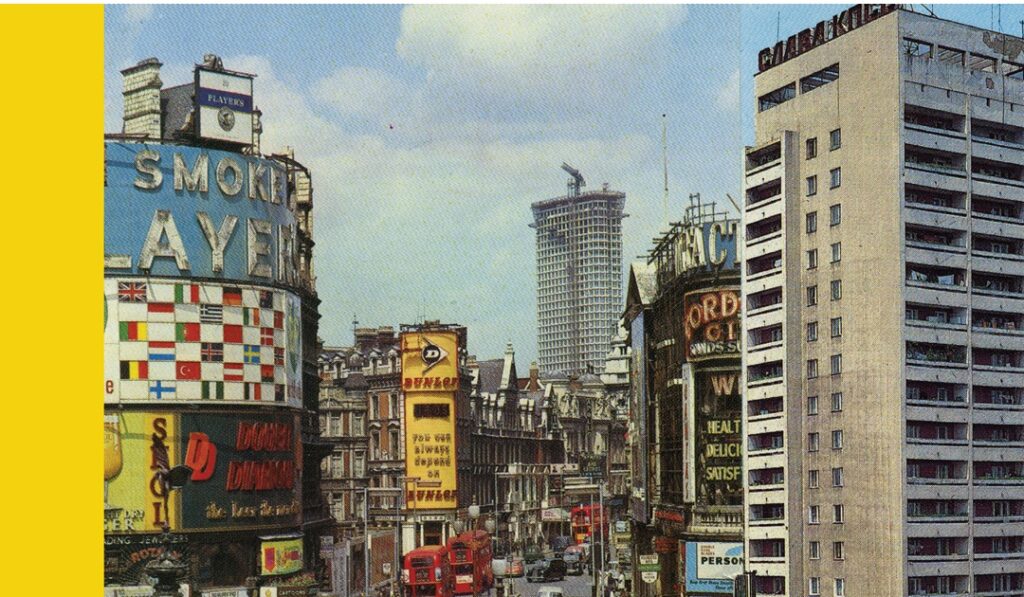
City street with double-decker buses, tall buildings with ads, and a high-rise tower in the background. This image is used on the cover of Anti-Atlas

Join the authors and editors of Anti-Atlas for a lively discussion on the future of Area Studies in a rapidly shifting global landscape.

Date: Tuesday 22 July 2025
Time: 17:30–19:00 BST
Location: The Moot Court, Bentham House, UCL Laws, 4–8 Endsleigh Gardens, London WC1H 0EG
Hosted by: PPV (FRINGE Centre UCL/SSEES; UCL European Institute) and the Tbilisi Architecture Biennale

Admission is free but registration is required.
👉 https://www.eventbrite.com/e/area-studies-on-trial-tickets-1489197512849

About the book

The full-scale Russian invasion of Ukraine has brought renewed urgency to questions about how we understand and study regions of the world. Anti-Atlas responds to this moment by challenging the conventions of the traditional atlas, including its assumptions about knowledge, power and spatial hierarchy.

Bringing together an eclectic mix of authors from Eastern and Western Europe, the UK and North America, the volume explores how Area Studies can be reimagined through heterodox, vernacular, undisciplined and collaborative approaches. The book includes a wide range of genres, from scholarly essays and travel guides to autobiographical reflections and data visualisations, each offering a different lens on what it means to think critically about place.

Anti-Atlas is an imaginative, brave attempt to reframe area studies, simultaneously rebuilding ‘our images and cartographies of the world’… an essential antidote to knowledge produced in the service of empires, past or present.
— Aida A. Hozić, University of Florida

Event details

This event is open to all and will be of particular interest to those working in Area Studies, critical geography, postcolonial theory and interdisciplinary research. It will take place in person at UCL Bentham House.

Admission is free but registration is required.
👉 https://www.eventbrite.com/e/area-studies-on-trial-tickets-1489197512849

UCL Press celebrates 10 years of award-winning open access publishing

This June, UCL Press marks a decade of open access publishing and over 19.5 million global downloads.

Launched in June 2015 as part of UCL’s commitment to open research and scholarship, UCL Press provides scholars with the opportunity to publish their monographs, journal articles and textbooks via open access, meaning that they are free to download online anywhere in the world. 

UCL Press broke the mould as the UK’s first fully open access university press and over the last ten years has published over 380 scholarly monographs, 11 textbooks and has built a portfolio of 15 scholarly journals.  

The pioneering Open Access (OA) programme spans many of the major academic disciplines, from history to philosophy and the sciences to anthropology.  

Montage of UCL Press publications

With global collaboration in mind, UCL Press publishes not only UCL authors but also independent scholars and authors from other academic institutions around the world.  

UCL Press’s global reach extends to 242 countries and territories, with the United States topping the list of countries with the highest number of downloads, followed by the UK, then India.  

The most downloaded title in the UCL Press list continues to be How the World Changed Social Media by UCL Professor of Anthropology Daniel Miller and a collective of eight other global anthropologists. The title has been downloaded over 930,000 times in over 227 countries and territories since its publication in 2016. 

More recently, UCL Press has also established an open access textbooks programme to provide free, high-quality digital textbooks for students.  

Books published by UCL Press have won critical acclaim, including Geographies of Solar Energy Transitions edited by Siddharth Sareen and Abigail Martin, which won the American Energy Society’s Award for Best Edited Book. A Contemporary Archaeology of London’s Mega Events by Jonathan Gardner also won the London Archaeological Prize for the best book about London archaeology. 

Marking the occasion, Dr Paul Ayris, Pro-Vice-Provost (Library, Culture, Collections & Open Science) and Chief Executive of UCL Press, said: “From the start, UCL Press was about breaking down barriers. Traditional academic publishing often locks knowledge behind paywalls, with monographs costing academic institutions and the public money and selling just a few hundred copies. 

‘UCL Press flipped this model of publishing on its head. It was the UK’s first fully open access university press, making OA publishing more accessible to both early career researchers and experienced scholars alike.’ – Paul Ayris

As part of the university’s commitment to an open science future, UCL Press receives funding from UCL to support its open access publishing model and deliver global impact for its publications.  

A celebratory 10th Anniversary panel discussion, featuring speakers from the worlds of universities and publishing will take place on Tuesday 10th June 2025. 

If you are interested in publishing your book, journal or journal article with UCL Press, please visit ‘Publish with Us’ on: www.uclpress.co.uk 

New webinar: Authorship in the era of AI

Join a free online discussion on how we think about ‘authorship’ for AI-assisted writing, where the boundaries might lie, and what the future might look like.

📆 June 6th 2025

🕐 2 – 3:30pm BST

Sign up: https://www.eventbrite.co.uk/e/authorship-in-the-era-of-ai-tickets-1323581220059

With the rapid growth of AI tools over the past three years, there has been a corresponding rise in the number of academics and students using them in their own writing. While it is generally agreed that we still expect people to be the “authors” of their work, deciding how to interpret that is often a nuanced and subjective decision by the writer.

This panel discussion will look at how we think about ‘authorship’ for AI-assisted writing – what are these tools used for in different contexts? Where might readers and publishers draw their own lines as to what is still someone’s own work? And how might we see this develop over time?

Speakers:

  • Dhara Snowden, Textbook publisher at UCL Press
  • Ayanna Prevatt-Goldstein, Head of the UCL Academic Communications Centre
  • Rachel Safer, Executive Publisher for Ethics & Integrity at OUP and a member of the Committee on Publication Ethics

This session is open to all.

About the Festival of Open Science and Scholarship

The Festival of Open Science and Scholarship is organised by teams at UCL, LSE and the Francis Crick Institute. Running from 2-6 June the festival includes a combination of online, hybrid, and in-person events across a range of topics including: 

  • Special collections and co-production
  • AI and its impact on authorship
  • Open Research in the Age of Populism
  • Scaling up Diamond OA journals 
  • Reproducibility and qualitative research
  • Navigating data sharing with personal data

The full programme and booking is available via the Open@UCL blog.

New Webinar: Scaling up Diamond Open Access Journals

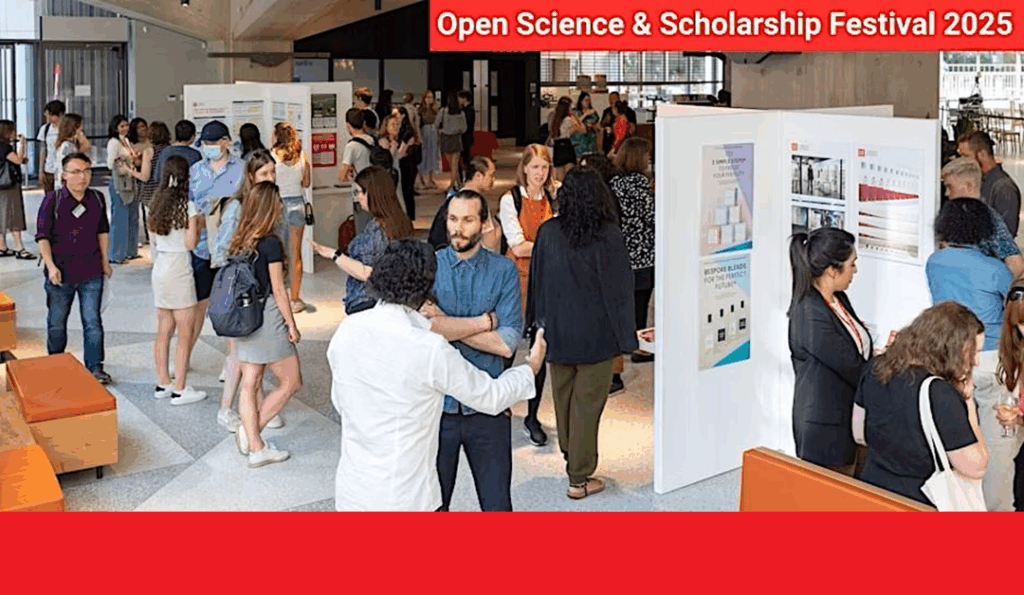
The image shows a bustling indoor event space with numerous people mingling and examining displays. The area has a modern architecture with large glass windows and high ceilings. Attendees, dressed in casual and semi-formal attire, engage in discussions in small groups. On the right, several people are observing informational boards that display colorful graphics and text. The venue features light-colored flooring and orange seating areas. At the top of the image, there is a red banner with white text.

Join a panel of expert speakers online to learn about the Open Journal Collective, a new diamond OA journal model, how it came to light, what it offers and why it is needed.

📆 June 3rd 2025

🕐 2 – 3:30pm BST

Sign up: https://www.eventbrite.co.uk/e/scaling-up-diamond-open-access-journals-tickets-1349605499379

Diamond open access (OA) is championed as a more open, equitable and inclusive, community-driven journal publishing model, especially when compared against other commercially owned, author pay and subscription models. Additionally, demand for not-for-profit open access journal publishing is rapidly growing amongst academics and funders, however, there is an acute lack of capacity and funding for journals to sustainably meet this demand. There are many barriers to solving these complex challenges, but one new initiative called the Open Journals Collective aims to disrupt the current landscape by offering a more equitable, sustainable and alternative solution to the traditional and established payment structures. Join us in this session where we will hear about this new and exciting community-run diamond open access funding model, pioneered for and by university presses.

During the session we will hear from the conveners of the collective to learn more about why and how it came to light, what it offers and why it is needed. We will hear about the experiences of a library / institution with various OA journal models including their interactions with commercial publishers, as well as perspectives from a journal Editor who, alongside the journal board, resigned from a subscription journal and successfully launched a new and competing diamond open access journal.

Sign up: https://www.eventbrite.co.uk/e/scaling-up-diamond-open-access-journals-tickets-1349605499379

This event is being presented as part of the Festival of Open Science and Scholarship.

About the Festival of Open Science and Scholarship

The Festival of Open Science and Scholarship is organised by teams at UCL, LSE and the Francis Crick Institute. Running from 2-6 June the festival includes a combination of online, hybrid, and in-person events across a range of topics including: 

  • Special collections and co-production
  • AI and its impact on authorship
  • Open Research in the Age of Populism
  • Scaling up Diamond OA journals 
  • Reproducibility and qualitative research
  • Navigating data sharing with personal data

The full programme and booking is available via the Open@UCL blog.

Book Launch: Lahore in Motion

Join the editors of Lahore in Motion: Infrastructure, History and Belonging in Urban Pakistan on 5th March from 6-7.30pm GMT for a night of conversation, readings and refreshments to celebrate the book’s publication.

All welcome. Please register to attend at https://ucl-cssa-lahore-in-motion.eventbrite.co.uk

This event has been organised by the UCL Centre for the Study of South Asia and the Indian Ocean World, with additional support from UCL Press and UCL Anthropology

About the book

Lahore in Motion: Infrastructure, History and Belonging in Urban Pakistan provides a portrait of the Pakistani metropolis by tracing the path of the city’s first metro rail corridor. Construction for this major piece of public infrastructure began in 2015 and, over subsequent years, the nascent ‘Orange Line’ rapidly reconfigured Lahore’s urban landscape – displacing residents and slicing through existing structures along its route, all while offering Lahoris the promise of ‘world-class’ public transportation. The volume collects stories from a series of walks along the metro’s 27-kilometre path, bringing together twenty-seven different authors – including academics and activists, architects and artists – to reflect on the relationship between urban change and belonging in a historic city.

Each chapter is organised around a particular station on the metro, but the volume moves far beyond the neighbourhoods shadowed by the train’s elevated track. Contributors navigate the friction generated by the Orange Line’s construction and reflect on how this project of connection both responds to and produces fragmentation in the urban environment. The book brings together critical insights on the politics of infrastructure in South Asia and the desires and dispossessions fuelling projects of development in the Global South, assessing how they unevenly inflect the intimate rhythms of everyday life in one of the world’s most populous cities.

The book is available open access via UCL Press.

About the Speakers

  • Ammara Maqsood is Associate Professor in Social Anthropology at University College London. 
  • Chris Moffat is Senior Lecturer in History at Queen Mary University of London.
  • Kasia Paprocki is Associate Professor in Geography and Environment at the London School of Economics. 
  • Fizzah Sajjad in an urban planner and geographer with research positions at the London School of Economics and the Lahore University of Management Sciences. 
  • Majed Akhter is Senior Lecturer in Geography at King’s College London. 

Sign up to our newsletter

Don't miss out!
Subscribe to the UCL Press newsletter for the latest open access books,
journal CfPs, news and views from our authors and much more!