New open access books published in August 2025

Stones and Sand on Brighton Beach

August is traditionally a time to relax – but we haven’t slowed down! Six brand new open access books have landed this month, covering everything from blindness to Soviet youth games, historical travel to democracy.

Bringing together leading international scholars and artists in the emerging field of ‘blindness arts’, Beyond the Visual: Multisensory modes of beholding art seeks to broaden the discussion of multisensory ways of beholding contemporary art, with a particular emphasis on modes that transcend a dependency upon sight. A true delight to read.

Moving beyond current scholarship in urban and regional studies, Informational Peripheries: Rethinking the urban in a digital age presents a case for ‘informational peripheries’ as an analytical lens to understand the uneven, fragmented and disconnected geographies of urban peripheries in the Global South. Download it free.

So absorbing that one of our team recommended it as excellent bedtime reading, Leagues of Laughter: War, comedy and the Soviet legacy in Russia and Ukraine traces how a Soviet-created youth game changed as students’ nation states collapsed, competed and went to war. A series of interconnected, cross-border stories spanning 60 years illustrates how laughter and oppression entwined in the long cultural context of the war in Ukraine. Download it free.

Our Marketing Manager’s Summer read, No Country for Travellers? British visitors to Spain and Portugal, 1760–1820 explores the rise and nature of British travel to Spain and Portugal between 1760 and 1820. Using extensive archival and printed sources left by travellers in the period, the compelling narrative is a broad and deep investigation into all aspects of travel experience, including non-combatant witness to the Peninsular War. Download it free.

With more than 30 authors, the ambitious The Sciences of the Democracies proposes holistic study of democracy that draws on five sources of knowledge: individual people, groups of people, non-textual media, texts and non-humans. It argues that inclusion of these sources leads to the discovery of democratic practices and institutions unfamiliar to the conventional ‘Western’ perception. Read it free.

The fascinating Women’s Labour Activism in Eastern Europe and Beyond: A new transnational history presents a deeply researched, inclusive history of women’s labour activism in Eastern Europe and transnationally from the age of empires to the late 20th century. It explores women’s activism to improve working conditions and living circumstances of lower-income and working-class women and communities in the region and internationally. Download free.

We’ll be back again next month with a round up of the very best open access books. As always, stay safe!

Two new launch events for Palaeontology in Public

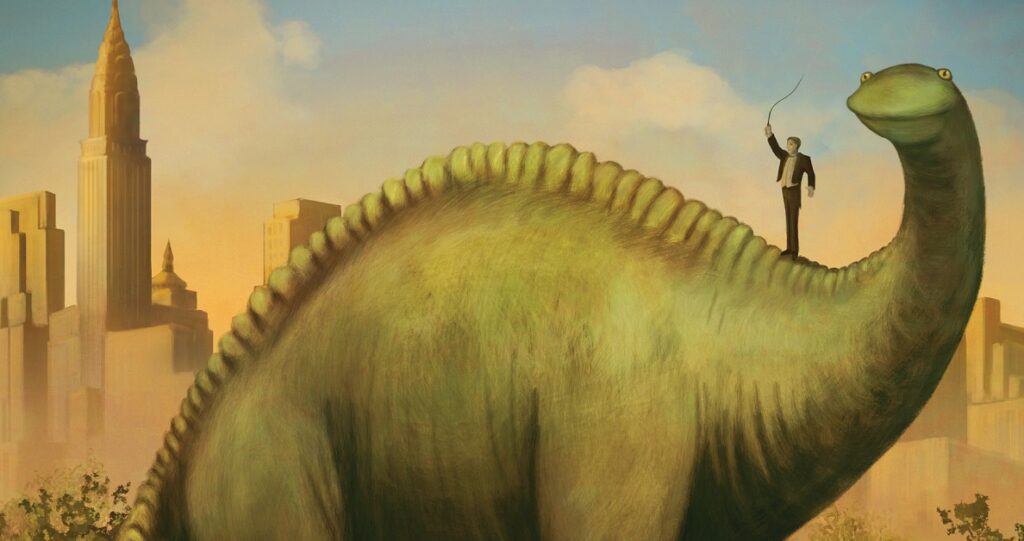
A large green dinosaur with a man in a suit on its back, set against a cityscape with skyscrapers.

Join the authors for two events for the recently published book Palaeontology in Public. The book examines how palaeontology has impacted on public culture, and how the public role of the field has shaped the science of palaeontology across its history.

Online event

An online event will take place on Tuesday 18 February between 18:00-19:30 GMT on Zoom. This event will feature a panel discussion on the themes of the book, with Mike Benton, Riley Black, Adrian Currie, Natalia Jagielska and Alison Laurence, in conversation with several of the book chapter authors.

Sign up free: http://bit.ly/3QaOlOj

In-person event

The second launch will be in-person. This will take place on Saturday 22 March between 14:30-19:30 GMT at King’s College London.

The event will feature talks, discussion, a film screening, and a pop-up exhibition. Current confirmed speakers include Richard Fallon, Susannah Lydon, Ilja Nieuwland and Mark Witton; the event will close with a panel discussion, where Mike Benton, Tori Herridge, Natalie Lawrence and Darren Naish will reflect on the place of palaeontology in public life, and how it has affected their own work and careers.

Read full details and sign up free: https://bit.ly/3CFdFsN

Palaeontology in Public: Meet the editor

A large green dinosaur with a man in a suit on its back, set against a cityscape with skyscrapers.

Today we are excited to publish Palaeontology in Public, edited by Dr Chris Manias. This exciting new book considers the connections between palaeontology and public culture across the past two centuries. In so doing, it explores how these public dimensions have been crucial to the development of palaeontology, and indeed how they conditioned wider views of science, nature, the environment, time and the world. 

We are grateful to Chris for taking the time to answer a few questions about his work, making the book as accessible as possible, and what he’s learnt from editing this new collection.

Tell us more about your background and experience in this field

I’m a historian of science specialising in the history and cultural role of palaeontology and related fields. As well as working on Palaeontology in Public, I’ve recently written another book about the history of mammal palaeontology in the nineteenth century, looking at why scientists and public audiences in this period were so interested in fossil mammals, and what this tells us about global connections and understandings of nature and the environment in this period. I’m currently working on a new project, looking at how palaeontologists and geologists engaged with the crises of the 1920s and 1930s, and have recently been awarded a Research Fellowship by the Leverhulme Trust to work on this (detailed here, p. 9).

What do you enjoy most about your work?

As an academic employed by a university, my work is very varied, which makes it both fun and unexpected, but does also mean juggling a large number of different things! I particularly like talking to people from differing backgrounds about the cultural role of nature, deep time and evolution. People can approach these issues from very different perspectives, and so it can be a really useful meeting ground to think about different ways seeing the world, its history, and its current condition.

How did you work with the contributors to this book to ensure their voices were heard and their work is presented in the best possible light?

As this project grew out of a pre-existing network, we had a lot of activity to develop the book, making sure that everyone got their work presented well, and that they could all contribute to making the book as coherent as possible. All the contributors knew each other already, or were introduced to each other early in the process, so they could keep up to date with how the other chapters were developing. We also had a number of ways that authors could get feedback on their chapters. Each author led a session on their chapter at the Popularizing Palaeontology online meetings, which meant they could showcase their work and get feedback. I also made sure that each chapter was read over in depth by myself and at least one other book contributor (ideally one from a different field) so they had another perspective on it. And we had a small in-person workshop once the whole draft manuscript was ready, where we could talk about the book and all the comments in the round. I hope this was successful in making sure that all authors got heard, and that the book became a coherent collection of related case studies.

How did you balance the need for academic rigour with the aim to make this book accessible and engaging to a broader audience?

We are lucky with this book, in that we are dealing with topics which have a great deal of public appeal and an audience already: the role of dinosaurs, human ancestors, and prehistoric mammals in popular culture. The structure of the book, looking at particular case studies, like changing views of Spinosaurus, the animated ‘Gertie the Dinosaur’ from the 1910s, and the place of human evolution in museum and media culture, provides a series of engaging episodes which fit together into a single arc.

The book also deals with an area where there is a lot of sophisticated and complex academic work, especially around science popularization, the reconstruction of prehistoric animals, and building new perspectives on the history of palaeontology (especially as connected to changes in understanding the world and nature, and processes like scientific change, the history of the media, and colonialism). So the subject of palaeontology in public culture can act as a bridge between the wide public audience interested in palaeontology, and these more specialist academic fields.

The fact that the book is interdisciplinary, and the chapters were written by authors from different fields (and in some cases written co-written by scientists and humanities scholars), also helped make the book accessible. Given that palaeontologists are not trained in history of science, and historians of science are not trained in palaeontology, authors needed to make sure that what they were saying was absolutely clear to non-specialists when drafting and presenting their works. So this also, I think, helped with making it accessible and engaging, while still keeping things on a high intellectual level.

What advice would you give to aspiring editors, and what do you think are the key skills and attributes required?

Edited collections take a long time to put together, especially as you will be working with a large number of authors, all of whom have other commitments and projects. Some will invariably be able to devote more time to their chapters than others, and contributors will also be working at different rates and rhythms. So you do need to be able to work with people’s schedules, while making sure that things move forward at a rate that works for everyone. A combination of flexibility, alongside awareness of when things need to be pushed along (and an ability to work out how best to do that) is particularly important.

Surprise us with something unexpected you encountered in your work on this book

I especially liked the chapters which took the case studies beyond the traditional European and North American framework that a lot of the history of palaeontology has been written around. This included Irina Podgorny’s chapter on the relation between glyptodons, art and literature in twentieth-century Argentina, Zichuan Qin and Lukas Rieppel’s discussion of the role of dinosaurs in China, and the highlighting of the role of African and Asian research in palaeontology and human evolutionary studies in several chapters. These are things that the academic literature is starting to focus on, and tells the history of palaeontology in a new light.

What do you think are the biggest challenges facing academic book publishing today, and how do you see the industry evolving in the future?

The move to open access is a really important one. Incidentally, a major reason I wanted this book to be published by UCL Press is that I really like the model of open access publishing that you support, where the digital download is freely available, but it is still possible to buy the book as a well-produced printed edition. Open access presents big opportunities in terms of reaching new and expanded audiences, but also of course comes with challenges. It doesn’t fit with the for-profit model of academic publishing that has developed (very unhealthily in my view), and so there is the potential for conflict there, or for quite exploitative models of authors paying large sums of money to have articles published in open access. Also my field – History – is one where large single-authored books are the gold standard, which is a format that doesn’t fit very well with open access formats as currently envisioned. So this is going to require negotiation and new ways of working all round, which might hopefully dismantle some of the more problematic structures that have developed around for-profit academic publishing.


About the author

Chris Manias is Senior Lecturer in the History of Science & Technology at King’s College London.
What is blindness?

A ladder descends into a jagged hole against a black background with white dots.

International Day of People with Disability (IDPWD) is a United Nations day that is celebrated each year on 3 December. The day aims to promote an understanding of disability issues and mobilise support for the dignity, rights and well-being of those who live with disabilities.

To mark the day, we’re publishing an excerpt from chapter one from Michael Crossland’s important book Vision Impairment. In this extract, he describes how the word ‘blind’ can be an emotionally charged term, and how one of his patients took the news of worsening vision impairment in a surprising way.

‘So would you say I’m blind?’ Sam asked.

This sounds like a straightforward question. Sam had been attending my low vision clinic for six years, so surely I would be able to answer her without a second thought?

Sam had an eye condition called Stargardt disease, which was slowly causing the cells in the central part of her retina to stop working. Just after starting high school when she was 11, she had found it difficult to see the whiteboard in some of her classrooms. Assuming she needed an eye test, her parents took her to a local optometrist who prescribed spectacles, but they didn’t seem to make much difference to her sight. Her family realised there was something seriously wrong when Sam
asked for the ketchup bottle to be passed, not seeing that it was right in front of her. A trip to her doctor led to a referral to an eye hospital, blood tests, scans, photographs and the unwelcome news that she had a serious, inherited and generally untreatable eye disease.


Sam remembers the news being broken: ‘The consultant just said “there’s not a lot we can do”,’ she told me. ‘I felt a bit like he was washing his hands of me, although I’m really pleased he referred me to this place.’ ‘This place’ was the low vision clinic we were sitting in, buried away at the back of the hospital. At her previous visits to the clinic I had prescribed Sam strong reading spectacles, given her various magnifying glasses and shown her how to set up her iPhone to make it easier to see. I’d spoken to her specialist teacher for visual impairment to make sure she had a relay system for the whiteboard at school, and had given her details for a group so she could meet other teenagers with sight loss. Since her first visit, Sam had changed from being a shy and slightly awkward girl to a rebellious teenager (an appearance not helped by the way that her vision loss made it difficult to maintain eye contact), then a funny and engaging young adult. Now she had green hair and wore Doc Martens, a denim jacket and a ‘Meat is Murder’ T-shirt.


Sam’s question about whether I would call her ‘blind’ may have been spurred on by the fact that her vision had clearly got worse. For the first time, she could no longer make out the letters on the top row of my sight chart, four metres away from her. When I wheeled the chart closer to Sam she could read the first few letters by moving her eyes around, sliding the blind area in the central part of her vision away from what she was looking at and using her peripheral retina to just about see.


Sam had told me that she’d got the grades she wanted in her A Levels and that she was very excited about moving to Leeds to study politics. She’d told me that her football team had won a tournament that summer and that she’d started a band with some of her college friends. She could travel independently, using apps on her phone to help when she couldn’t see a bus number or platform sign. Her vision was too poor to have a driving licence, but she could cycle to band rehearsals. She’d
had enlarged print and additional time in her exams, but she didn’t read braille or have a guide dog. Would this active and successful teenager meet most people’s idea of a blind person? The poet Stephen Kuusisto talks about people entering ‘the planet of the blind’,1 but would Sam be welcome there?


The word ‘blind’ is emotionally charged and tends to be avoided by people working in eye clinics. In the UK, being ‘registered blind’ was replaced in the early 2000s with ‘having a certificate of vision impairment’. In ophthalmology research, we even speak about ‘double masked trials’ rather than the ‘double blind’ studies used in other areas of medicine.


This coyness around the word ‘blind’ isn’t universal. Many of the major sight loss charities use the word in their names, such as the UK’s Royal National Institute of Blind People, the National Association for the Blind in India and New Zealand’s Blind and Low Vision NZ. In 2011, the London-based Metropolitan Society for the Blind renamed themselves ‘Blind Aid’, which almost feels like reclaiming the word for people with vision impairment.


Writer Georgina Kleege uses the word ‘blind’ as she dislikes the alternatives: ‘The word “impairment” implies impermanence … but my condition has no cure or treatment … I crave the simplicity of a single, unmodified adjective. Blind. Perhaps I could speak in relative terms, say I am blinder than some, less blind than others.’ Kleege has only come to embrace the word ‘blind’ after several decades of low vision. She writes that as a teenager ‘the most I would admit to was a “problem with my eyes”, sometimes adding, “and they won’t give me glasses”, indicating that it was not me but the wilfully obstructionist medical establishment which was to blame for my failure to see as I should’.


When Sam asked if she was blind, I heard her father gently whistle at the gravity of the question. The room was so small that I thought I could feel his breath on the back of my neck. The background hum of the busy clinic around me seemed to drop, as if everyone was waiting for my response. Even as I spoke, I knew my answer was a cop out: ‘The word “blind” means something different to nearly everyone I meet,’ I told her. ‘We prefer to say “severely sight impaired”. It’s true that if you were in America you’d be called “legally blind”, but you’re certainly someone who uses your eyes for most things, so I don’t think “blind” would be the best word to describe you.’


‘Legally blind,’ Sam said, almost under her breath. I thought she was going to comment on this dramatic label, but she surprised me instead. ‘We’ve been looking for a name for our band, and I think that might be it!’

Sign up to our newsletter

Don't miss out!
Subscribe to the UCL Press newsletter for the latest open access books,
journal CfPs, news and views from our authors and much more!