Russian Pendulum shortlisted for the Pushkin House Book Prize 2026

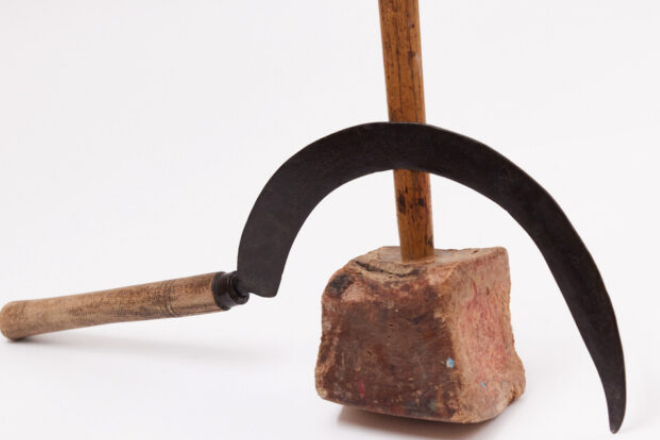
A sickle with a curved blade and wooden handle leans against a hammer with a wooden handle and a brick head, as featured on the cover of Russian Pendulum.

Russian Pendulum: Paradoxes, Practices and Patterns named among six titles on this year’s shortlist for the prestigious £10,000 award.

Pushkin House has announced the shortlist for the 2026 Book Prize, with Prof. Alena Ledeneva’s Russian Pendulum: Paradoxes, Practices and Patterns selected as one of six outstanding titles.

In Russian Pendulum, Ledeneva offers a compelling exploration of Russia’s political and social dynamics, examining the enduring interplay between tradition and modernity, power and society. Framed through the concept of ambivalence, the book identifies long-standing patterns that shape governance and everyday life, highlighting the role of informal networks sustained by practices of co-optation, control and camouflage.

The winner of the £10,000 prize will be announced by the judging panel at the award ceremony in September 2026.

Congratulations to Prof. Ledeneva on this well-deserved recognition

Book Launch: The Babushka Phenomenon

A set of four blue matryoshka dolls with floral patterns arranged by size.

Join Anna Shadrina at UCL SSEES for the launch of The Babushka Phenomenon: Older Women and the Political Sociology of Ageing in Russia, her new open access book published by UCL Press.

Hosted by UCL’s FRINGE Centre, the event will feature a discussion of the book’s key themes and will be chaired by Professor Alena Ledeneva from UCL SSEES.

Shadrina’s research explores ageing as a socio-political phenomenon shaped by local responses to declining fertility and the pluralisation of family forms. In many parts of the world, women combine paid work and motherhood by outsourcing care and domestic labour to paid nannies and domestic workers. The case of Russia shows how post-socialist welfare cutbacks have positioned older women as essential yet unpaid and undervalued family caregivers.

In Russia, the norm of grandmothers’ active involvement in childcare, housing support, and housework has shaped the marginal social position of the babushka – a post-professional and post-sexual member of society who, paradoxically, is perceived as a recipient of social benefits rather than an active contributor. The book demonstrates how older women’s practical and financial support enables younger generations to navigate post-socialist insecurities and to combine paid labour with family life.

Event details

Date: Wednesday 29 October 2025
Time: 6:30 to 8:30pm GMT
Location: Masaryk Room, 16 Taviton Street, UCL SSEES, London WC1H 0BW
Register here: Eventbrite link

New open access books published in August 2025

Stones and Sand on Brighton Beach

August is traditionally a time to relax – but we haven’t slowed down! Six brand new open access books have landed this month, covering everything from blindness to Soviet youth games, historical travel to democracy.

Bringing together leading international scholars and artists in the emerging field of ‘blindness arts’, Beyond the Visual: Multisensory modes of beholding art seeks to broaden the discussion of multisensory ways of beholding contemporary art, with a particular emphasis on modes that transcend a dependency upon sight. A true delight to read.

Moving beyond current scholarship in urban and regional studies, Informational Peripheries: Rethinking the urban in a digital age presents a case for ‘informational peripheries’ as an analytical lens to understand the uneven, fragmented and disconnected geographies of urban peripheries in the Global South. Download it free.

So absorbing that one of our team recommended it as excellent bedtime reading, Leagues of Laughter: War, comedy and the Soviet legacy in Russia and Ukraine traces how a Soviet-created youth game changed as students’ nation states collapsed, competed and went to war. A series of interconnected, cross-border stories spanning 60 years illustrates how laughter and oppression entwined in the long cultural context of the war in Ukraine. Download it free.

Our Marketing Manager’s Summer read, No Country for Travellers? British visitors to Spain and Portugal, 1760–1820 explores the rise and nature of British travel to Spain and Portugal between 1760 and 1820. Using extensive archival and printed sources left by travellers in the period, the compelling narrative is a broad and deep investigation into all aspects of travel experience, including non-combatant witness to the Peninsular War. Download it free.

With more than 30 authors, the ambitious The Sciences of the Democracies proposes holistic study of democracy that draws on five sources of knowledge: individual people, groups of people, non-textual media, texts and non-humans. It argues that inclusion of these sources leads to the discovery of democratic practices and institutions unfamiliar to the conventional ‘Western’ perception. Read it free.

The fascinating Women’s Labour Activism in Eastern Europe and Beyond: A new transnational history presents a deeply researched, inclusive history of women’s labour activism in Eastern Europe and transnationally from the age of empires to the late 20th century. It explores women’s activism to improve working conditions and living circumstances of lower-income and working-class women and communities in the region and internationally. Download free.

We’ll be back again next month with a round up of the very best open access books. As always, stay safe!

ICCEES 2025 World Congress reading list

UCL SSEES winding staircase.

To mark the ICCEES 2025 World Congress at UCL in London this week, we’ve put together a reading list of essential open access books from UCL Press.

If you’re attending, Dr Chris Penfold, our commissioning editor, will be there to talk you through our extensive list of titles, and answer questions about how to publish your next open access book with UCL Press.

Join the UCL Press mailing list to find out more about the latest open access titles, or visit our stand!

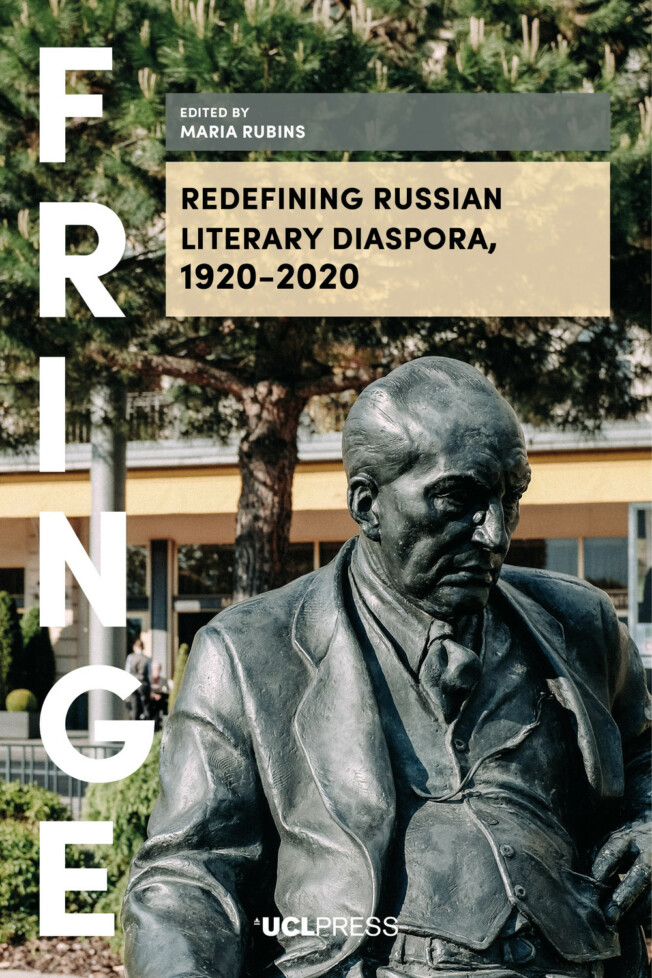
Cover of Redefining Russian Literary Diaspora, 1920-2020

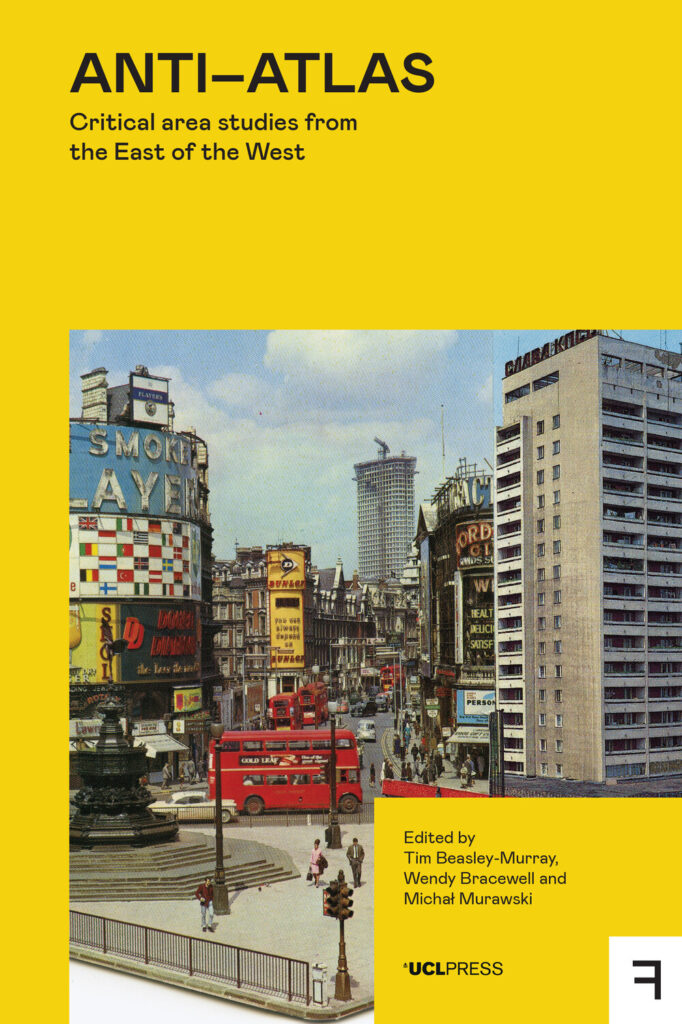
Book Launch: Anti-Atlas: Critical Area Studies from the East of the West

City street with double-decker buses, tall buildings with ads, and a high-rise tower in the background. This image is used on the cover of Anti-Atlas

Join the authors and editors of Anti-Atlas for a lively discussion on the future of Area Studies in a rapidly shifting global landscape.

Date: Tuesday 22 July 2025
Time: 17:30–19:00 BST
Location: The Moot Court, Bentham House, UCL Laws, 4–8 Endsleigh Gardens, London WC1H 0EG
Hosted by: PPV (FRINGE Centre UCL/SSEES; UCL European Institute) and the Tbilisi Architecture Biennale

Admission is free but registration is required.
👉 https://www.eventbrite.com/e/area-studies-on-trial-tickets-1489197512849

About the book

The full-scale Russian invasion of Ukraine has brought renewed urgency to questions about how we understand and study regions of the world. Anti-Atlas responds to this moment by challenging the conventions of the traditional atlas, including its assumptions about knowledge, power and spatial hierarchy.

Bringing together an eclectic mix of authors from Eastern and Western Europe, the UK and North America, the volume explores how Area Studies can be reimagined through heterodox, vernacular, undisciplined and collaborative approaches. The book includes a wide range of genres, from scholarly essays and travel guides to autobiographical reflections and data visualisations, each offering a different lens on what it means to think critically about place.

Anti-Atlas is an imaginative, brave attempt to reframe area studies, simultaneously rebuilding ‘our images and cartographies of the world’… an essential antidote to knowledge produced in the service of empires, past or present.
— Aida A. Hozić, University of Florida

Event details

This event is open to all and will be of particular interest to those working in Area Studies, critical geography, postcolonial theory and interdisciplinary research. It will take place in person at UCL Bentham House.

Admission is free but registration is required.
👉 https://www.eventbrite.com/e/area-studies-on-trial-tickets-1489197512849

New open access books published in February 2025

Books on a wooden bookshelf in UCL library.

It’s been another grey, dark, wet month, but we’ve almost been too busy to notice. With six more exciting open access books to read, who can blame us?

The final volume of David Scott’s extraordinary On Learning trilogy (v1, v2) , On Learning, Volume 3: Knowledge, curriculum and ethics published at the start of the month. Like the first two volumes, the book is a response to empiricist and positivist conceptions of knowledge. in which the author challenges detheorised and reductionist ideas of learning that have filtered through to the management of our schools, colleges and universities, over-simplified messages about learning, knowledge, curriculum and assessment, and the denial that values are central to understanding how we live and how we should live.

Postcapitalist Countrysides: From commoning to community wealth building explores the tensions that arise from the established conventions of economic production and private accumulation, as they affect life, wealth and work in rural areas. Find out more about the brilliance of the brilliance of the book’s contributors in an interview with one of the editors.

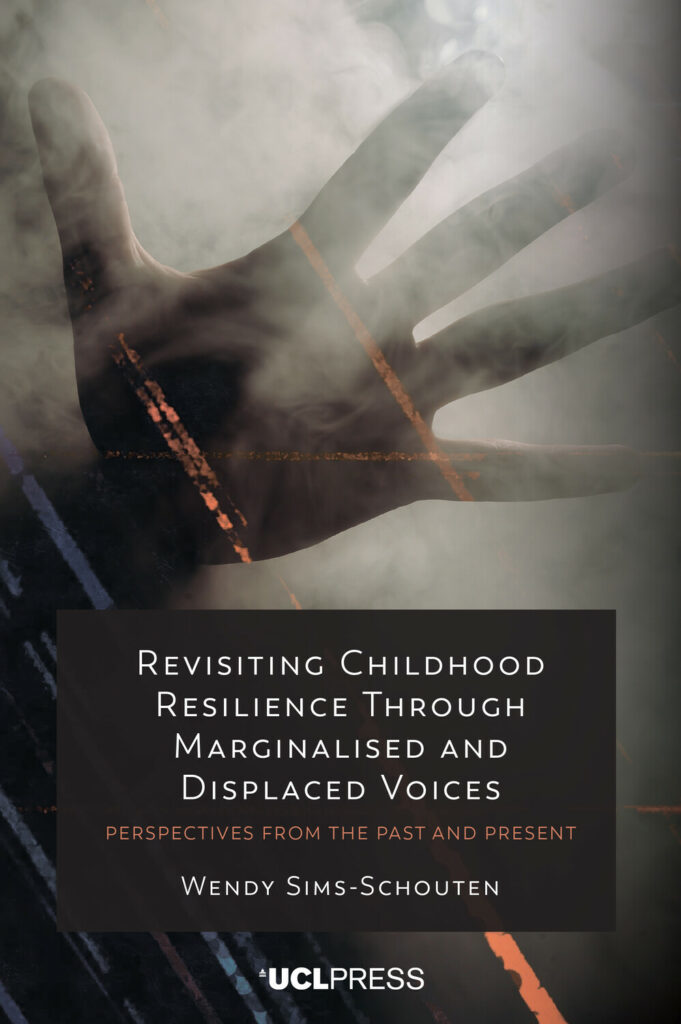
Revisiting Childhood Resilience Through Marginalised and Displaced Voices: Perspectives from the past and present draws on 10 years of Wendy Sims-Schouten’s research with children, young people and adults from marginalised, disadvantaged and displaced communities. These stories draw critical attention to coping strategies in adversity and oppression, and will inform creative research and policymaking. Read our interview with the author to find out more about her fascinating approach to research.

Lahore in Motion: Infrastructure, history and belonging in urban Pakistan provides a vivid portrait of the Pakistani metropolis by tracing the path of the city’s first metro rail corridor. The volume collects stories from a series of walks along the metro’s 27-kilometre path, bringing together a wide variety of authors to reflect on the relationship between urban change and belonging in a historic city. Interested to find out more? We have an excusive excerpt on the blog.

The latest book in the FRINGE series, Anti-Atlas: Critical Area Studies from the East of the West plays with the politics of the conventional atlas, with its assumptions about knowledge and power, its hierarchies of value, and its simplifications. It provides readers with a diverse series of intellectual resources, asking them to think critically about the ways in which we construct the world by dividing it into pieces.

The final book of the month, A Guide to Performing Systematic Reviews of Health and Disease is a fantastic practical guide to performing systematic reviews in a healthcare context provides a step-by-step approach for students and health professionals. Using free, opensource software to extract data and perform the necessary meta-analyses, this open access guide navigates the process of reviews, from study design and randomised controlled trials to interpreting results and reporting your findings. The author explains why this is an important book for health professionals and students alike in a wide-ranging interview.

We’ll be back again next month with a round up of the very best open access books. As always, stay safe!

Meet the author: The Laissez-Faire Peasant

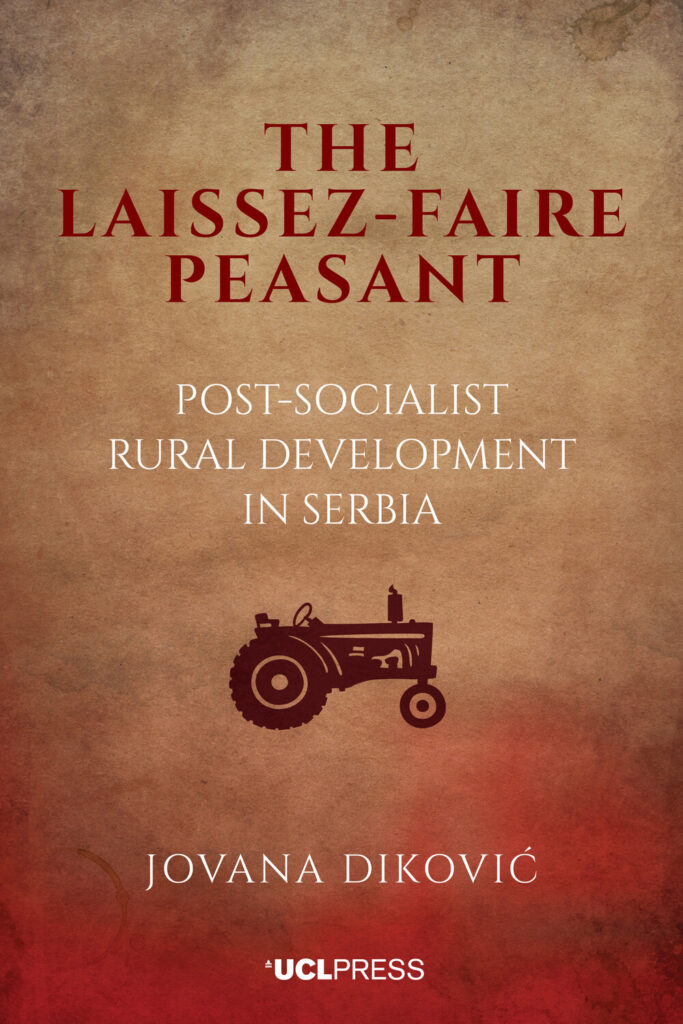
Silhouette of a tractor on a textured red and brown background, as featured on the cover of The Laissez-faire Peasant

Earlier this month, Jovana Diković’s fascinating open access book The Laissez-Faire Peasant was published.  We caught up with her to talk about her fascinating research in Serbia and Kosovo, why peasants are misunderstood and just why ‘Kill your darlings’ was a useful piece of advice she received when completing her PhD.

Tell us about yourself.

I am an economic anthropologist. At the University of Belgrade, I obtained my Bachelor diploma in social anthropology and Masters diploma in political sciences. In 2012, I moved to Zurich to complete a doctoral degree in economic anthropology.

Since then, my main research interests have centred around agriculture and food systems, peasantry, cooperation, rural economies and sustainability. As an avid rural explorer, I conducted more than two years of fieldwork research in villages in Serbia and Kosovo.

During longer research stays at the University of Ottawa and University of Pittsburgh, I furthered my studies in cooperation, self-governance, and property rights. Since 2022 I have headed a research unit on sustainable development and inclusive growth at the Centre for Corporate Responsibility and Sustainability, at the School of Management in Fribourg. In the past eleven years, I have taught several courses on rural economy, development, environment and sustainability at the University of St. Gallen, University of Fribourg, and University of Zurich.

What motivated you to write and publish The Laissez-Faire Peasant?

Serbian peasants were my main motivation. In the book I attempt to show that peasants are not the victims of state politics or market economy which is a prevailing image of them but are rather autonomous and competent actors. Peasants are the architects of their own and local wellbeing, and their conceptions of development are often opposed to state plans for agriculture and rural development. Moreover, state plans for rural development in Serbian villages have been continuously distorted and interrupted by autonomous actions and values of peasants because the state programs do not provide what peasants seek. It is less known that peasants’ values determine the level of their cooperation with the state and are the main drivers of individual and local wellbeing.

Contrary to this explanation, the rural scholarship predominantly focuses on the diverse forms of peasants’ marginalization, completely neglecting that even when that is being true, such a marginalization is often intentionally sustained in order to protect peasant’s autonomy, their ownership of land, way of doing things, and safe distance from the state. In other words, peasants know how to deal with their marginalization. Such an insight questions mainstream interpretations of power relations between the peasants and the state in the literature and public discussions, and urges rethinking theoretical conceptions of the peasantry, and generally paternalistic agricultural policies.

In a nutshell, the book  questions the broader implications of the purposefulness of state programs for rural development (which are doomed to fail in the local context), and whether peasants need state rural development at all.

How and why did you get into this subject area?

In my mid-twenties, I got an opportunity to accompany an older colleague and conduct research on vernacular architecture in several rural municipalities in Serbia. This allowed me to became familiar with the vernacular building techniques and the ways local people preserve their built heritage.

During that time, I discovered a fascinating world I did not know much about. It was the experience of being and living in villages among villagers – not the results of research – that hooked me. I discovered the world of our co-citizens about which we usually believe we know much, and eventually we either misinterpret or romanticize their realities. I wanted to pick up a village life in its entirety and to explain what matters in rural communities, particularly in regard to local rural development. And so, in my thirties, I undertook research on rural development in three villages in Vojvodina province in Serbia.  

Why did you choose to publish your work Open Access?

Typical university publisher books are often expensive and out of reach for the interested and non-academic audience. I always have hard time deciding to purchase a book that costs more than €50. In some parts of the world people live on a less than a $3a day-  buying books investing in education is often  sacrificed first in those societies.

My intention was to publish a book which is accessible, downloadable, and easily available for anyone with an interest in the topic. Open access has allowed me to do this.

Open access has a noble intention of making the books available for everyone and disrupting the monopolies of publishers who established the system for generating enormous profits at the expense of authors.

How do you see your research contributing to a better understanding of the world, and what potential benefits might it offer in the future?

My contribution is in bridging the gap towards understanding peasants’ motivations and realities; these are generally not understood by outsiders or are subjected to severe criticism.

When peasants are not perceived as victims, they are often accused of being severe polluters and free riders. By getting to know them and their farming practices we can understand their attitudes beter. This has the potential to lead toward sound and effective agricultural and rural policies. If we extend the ideas of my book to agri-environmental context and fixing bad practices in agricultural production, they contain an important moral: subtle and direct coercion of peasants will not force them to work toward environmental goals.

Finding a cooperation threshold for sustainable agriculture will not be possible without a dialogue between peasants, consumers, legislators and policymakers. Without this dialogue, the incentives and agendas of sustainable agricultural policies will be failing, one after another. Policymakers, legislators, and consumers need to have an understanding of those whose practices they intend to change – in this case those of the peasants – and to understand what is realistic on that path.

Surprise us with something unexpected you encountered in your research for this book.

‘Land never stays uncultivated, no matter the political and economic conditions’, was one of the most revealing statements by a peasant. It means that peasants will cultivate their land even when they are facing high costs, bankruptcy, or when it is a complete loss for them. In another words, peasants are not only utility maximisers. That was a turning point which changed my perspective and made me rethink my research questions. It forced me to examine the issue of the relationships between the peasants and land, and peasants and the state from an unorthodox angle and understand their viewpoint freed from layers of scientific knowledge installed by post-socialist and rural studies about peasants. It also inspired me to explain why existing scientific conceptions about peasants are wrong, which occupies a special place in my book.

What do you see as the most exciting future directions for research in your field, and what breakthroughs do you hope to see in the coming years?

I am eager to see how the understanding of land property will develop in the era of vertical farming, GMO production, and speed technological advancements that at least hypothetically might enable satisfactory production on smaller and smaller plots of land, or in a laboratory. That will be indeed an exciting time, both for anthropologists and societies. I wonder how agriculture, practices of farming and farming knowledge will change, when practically anyone given meeting certain conditions such as vertical space, agri- or lab-tech, can become a farmer. So, this will change an image of farmers, who can be an everyman without agricultural knowledge and skills on how to use agricultural mechanisation, without which today’s agriculture cannot be imagined. If development of agriculture follows such a path, it will be a structural transformation urging reconsideration of the modern view of land property, concept of farmers, production, and production ethics.    

What advice would you give to students who are interested in pursuing a career in your field, and what skills or qualities do you think are most important for success?

The worst thing one can do is to become a niche expert. This is important, to the  limited extent which requires technical knowledge of the field and literature but it will not make you a good scholar. ‘Kill your darlings’, was one of the best pieces of advice when I was doing my PhD, and which I still find very useful in my career.  It makes you step down from your ivory tower, challenge the niche knowledge and explore the world outside the domain of your expertise.


About the author

Jovana Diković is an economic anthropologist, publicist, and Head of Sustainable Development and Inclusive Growth at the Center for Corporate Responsibility and Sustainability, School of Management, Fribourg.
New open access books published in January 2025

Books on a wooden bookshelf in UCL library.

2025 has begun in the best way possible- with four brand new open access books!

Our first book of the year, The Laissez-Faire Peasant: Post-socialist rural development in Serbia examines manifestations of peasant autonomy, both in response to and independent of state rural development policies through a multi-sited ethnography of three Serbian villages. It is shown how these factors impede state programs for rural development while enabling the spontaneous flourishing of local communities. By focusing on the agency of rural residents, the book finds that peasants are resilient and competent agents who do not need government plans to thrive.

This was closely followed by Alice Stevenson’s Contemporary Art and the Display of Ancient Egypt argues that the contemporary and the ancient do not necessarily inform each other. Rather than explore how contemporary artists have been inspired by Egypt, this book examines how they have shaped the language and discourse around study of the Egyptian past by looking at the wider field of public display in which both have been historically situated. Building on this critical history of practice, the book draws from experiments in bringing contemporary artistic sculptures, conceptual pieces, multimedia films, sounds, smells and performances into galleries: at the British Museum in London, the Egyptian Museum in Turin and the State Museum of Egyptian Art in Munich. These are used to explore what contemporary art does in these spaces, the motivations for inviting artists in, and the legacies of those interventions. It ends with a reflection on how academics and curators can be involved in the creative process and how artists contribute to academic research.

The edited collection Palaeontology in Public: Popular science, lost creatures and deep time followed. This delightful book  considers the connections between palaeontology and public culture across the past two centuries. In so doing, it explores how these public dimensions have been crucial to the develo Dinosaurs feature, of course, including Spinosaurus, Winsor McCay’s ‘Gertie the Dinosaur’ and the creatures of Jurassic Park and The Lost World. A must for anyone with an interest in history of science, palaeontology and culture.

The final book of the month was the immensely important War Essays. In this fantastically absorbing book, Zainab Bahrani charts the devastation, cultural cleansing and targeted erasure of Iraq’s past, and argues that the topics of archaeology, history and memory must be analysed within the larger geopolitical issues of the contemporary Middle East. The essays present a counter-narrative of events that historicize the position of the historian and illustrate the enduring colonial practices of archaeology. Set within a narrative that reflects at once upon the violence of war and the processes of writing, an archaeologist’s personal journey unfolds. War Essays intertwines the autobiographical with the historical and analytical aspects of scholarship, weaving an eye-witness account of war with theoretical discussions around writing, the relationship of monuments, historical landscapes and memory, and how one’s sense of place in the world is disrupted by war. Definitely not one to miss.

We’ll be back again next month with a round up of the very best open access books. As always, stay safe!

On publishing Memorandoms by James Martin

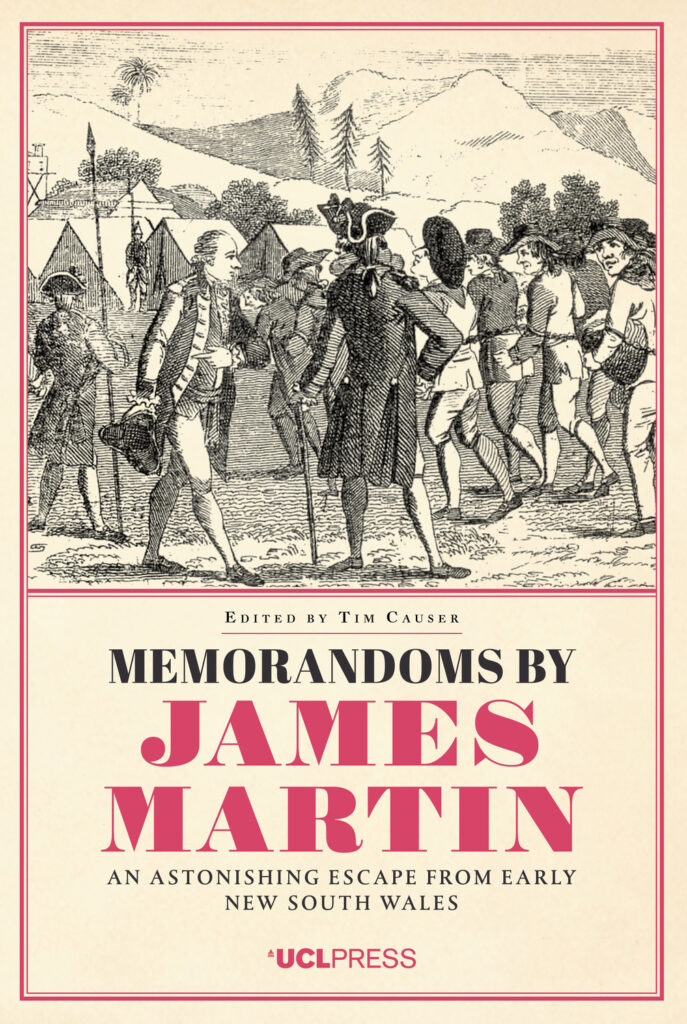
Cover image from of Memorandoms by James Martin, showing the landing of Convicts at Botany Bay.

To celebrate Australia day, today’s guest post is by Tim Causer, editor of Memorandoms by James Martin and Principal Research Fellow at the Bentham Project.

Those of us researching the history of convict transportation to Australia are extraordinarily fortunate in terms of resources, as some of the most important have, for several years, been available digitally on an open-access basis. For instance, we can search colonial-era newspapers in the National Library of Australia’s Trove, or consult the Tasmanian convict records, a body of material unique in its detail about the tens of thousands of ordinary people transported to Van Diemen’s Land.

As a callow undergraduate at the University of Aberdeen, making a first foray into Australian history fourteen years ago, such resources were the stuff of dreams. The university library’s holdings on Australian history were largely limited to landmark secondary texts such as Russel Ward’s The Australian Legend (1958) and A. G. L. Shaw’s Convicts and the Colonies (1966). The most recent work we had to hand was almost two decades old: Robert Hughes’s blockbuster, The Fatal Shore (1986). Hughes’s brilliant, terrible book is beautifully written, but is ultimately frequently misleading. But a major strength of The Fatal Shore’s was its use of convict narratives, giving it an immediacy rare in many earlier histories which relied heavily upon parliamentary papers and official correspondence.

Convict narratives fall into two main types. The first, and most common, are those published in the eighteenth and nineteenth centuries, during or around the period in which convicts were transported to the Antipodes. For instance, two of the most well-known are Martin Cash’s The Bushranger of Van Diemen’s Land (1870) and Mark Jeffrey’s A Burglar’s Life (1893), both of which were ghost-written by the former convict James Lester Burke.

Of course, published narratives such as these present issues of interpretation. How much of Cash’s autobiography is authentically his voice, and how much is that of Burke? Ghost-writers often sanitised their subject’s life into a redemption parable, walking the fine line between titillation while still seeking to attract a respectable audience. Those narratives written by the few transported for political offences—male, middle-class, well-educated authors—are unrepresentative of the experiences of the majority of convicts. There is also a racial and gender imbalance, with the overwhelming majority of narratives dealing with the lives of white convict men—Reverend James Cameron’s partly-fictionalised biography of the Spanish transportee, Adelaide de Thoreza, is a rare exception.

The second type of narrative exists only in manuscript. They are often more exciting to deal with: they were not written for publication, do not have to meet the conventions of any genre, and are often more revealing, explicit, and subversive. For instance, the Irish convict Laurence Frayne’s narrative is a graphic account of his punishment and contains a sustained character assassination of James Morisset, a commandant of the Norfolk Island penal station during the 1830s, which would never have been fit to print.

Memorandoms by James Martin is one such unpublished manuscript which, thanks to UCL Press, is now available in open-access for the first time. The Memorandoms tells the story of the most famous of all escapes from Australia by transported convicts, that led by William and Mary Bryant. On the night 28 March 1791 the Bryants with their two infant children, James Martin, and six other male convicts stole a fishing boat and sailed out of Sydney Harbour and out into the Pacific. They reached Kupang in Timor on 8 June, though were subsequently identified as escaped convicts and the survivors were shipped back to England to face trial—where James Boswell lobbied the government for their release.

The group’s 69-day, 3,000-mile journey has been the subject of two television series, poetry, novels, and innumerable history books, with a focus on Mary Bryant. Yet the modern historical accounts are frequently unsatisfactory and derivative; what then, the reader might wonder, could be said about this story that has not been said so many times before?

Quite a bit, it turns out. Memorandoms by James Martin is the only extant first-hand account of the escape, and it provides a fresh perspective to this often formulaically-told tale. Despite the Memorandoms being spare and prosaic, it provides a sense of the hardship of the journey, the terror of those in the boat as it is pummelled by storms and churning seas, and of the party’s fascination and fear in their encounters with Indigenous Australians and Torres Strait Islanders. The Memorandoms also strikingly reveals just how far some modern historians have departed from the historical record when telling the story.

Memorandoms by James Martin is also important in a second sense: it is the only known narrative written by a member of the first cohort of convicts sent to New South Wales with the First Fleet 1788. The Memorandoms was acquired at some point by one of Britain’s great philosophers, Jeremy Bentham, one of the first and most influential critics of transportation to Australia. The vast Bentham archive is, of course, held in UCL’s Special Collections, and the Memorandoms is but one of the many jewels in the College’s collections.

Now, thanks to UCL Press, the Memorandoms manuscripts are available for the first time, and for free; readers can now access the original narrative for themselves, rather than mediated by some rather dubious historical accounts. The colour reproductions bring the document to life in a way which would not otherwise be captured by publishing a transcript, and I am inordinately grateful to UCL Press for bringing the Memorandoms out in this way. My younger self in Aberdeen would have been thrilled to have had a resource like this to hand, and I hope that those who today may not have ready access to unpublished narratives like the Memorandoms will be equally pleased.


About the Author

Tim Causer is Principal Research Fellow at the Bentham Project.

Sign up to our newsletter

Don't miss out!
Subscribe to the UCL Press newsletter for the latest open access books,
journal CfPs, news and views from our authors and much more!