Tackling difficult histories with (museum) objects

Animal skull with prominent canines on a tabletop.

What can a preserved animal specimen tell us about colonialism, extinction and even genocide? In this blog post, Thomas Kador reflects on the themes of his recent book Object-Based Learning: Exploring Museums and Collections in Education and considers how museum objects, often seen as neutral or purely scientific, can reveal troubling histories. From the Thylacine skeleton in UCL’s Grant Museum to instruments linked to eugenics, these objects challenge us to confront uncomfortable truths and rethink the role of collections in education.

Object-based learning (OBL) refers to a pedagogy based on working with material culture in support of learning and critical engagement with the world. While object-based approaches can involve all types of objects, there is usually a particular focus on items from museums and other curated collections.

My recent book Object-Based Learning: Exploring Museums and Collections in Education explores the many ways in which we can employ objects in formal and informal educational settings, and the benefits of doing so. Research repeatedly demonstrates that learners find working with objects – especially heritage ones – inspiring. It also shows that working with objects can support the development of subject-specific, transferable, and interdisciplinary skills, as well as benefit learners’ health and wellbeing.

You can probably recall a time when you felt inspired by a beautiful museum object or work of art, but there are museum objects that testify to much darker and challenging parts of human history. This does not diminish their capacity to facilitate learning. On the contrary, such objects represent extremely powerful catalysts for interrogating the past, including power structures, abuses of power, injustices, and even atrocities. 

There are some well-known examples you might be aware of, such as the so-called Benin bronzes in the British Museum, and the artworks that were stolen by Nazi officials from their Jewish owners during the Holocaust. However, many items’ connection to difficult histories is less readily apparent, and we need to scratch a little deeper  below the surface to reveal their stories.

For example, the deep entanglement of many museums and collections in the colonial project is well known. Objects and specimens allow us to lift the curtain on colonial exploits, with much of the discourse focusing  on archaeological, anthropological, and historical museums, and – to a lesser extent – art collections. But what about natural history museums? Often mistakenly seen solely as spaces of scientific study which are unconnected to past or present political situations, these museums can also reveal problematic histories if we dig a little deeper.

UCL’s Grant Museum of Zoology has a collection of animal specimens that stretch back to the university’s foundation in 1826. When the collection was started in the 1820s and 30s, animals which have since become endangered or extinct were still in existence. For example, the museum has a collection of Thylacine – commonly known as the Tasmanian Tiger – material, consisting of a complete skeleton, some skulls, a number of other bones and a fluid specimen (i.e. a dissected animal preserved in alcohol). As Thylacines became extinct nearly 90 years ago,  the remains at the Grant Museum are significant, especially as the fluid specimen is possibly the only one in the world.

But this is where it gets political, as Tasmania – the island from where the Thylacine specimens originate – was declared a British colony in 1825. At the time, the Thylacine, the largest modern day marsupial carnivore, was seen as a threat to European sheep plantations, and a bounty was placed on their pelts. This resulted in perhaps the only documented purposeful extinction of an entire animal species in human history. The mission ‘succeeded’, and by 1936 the last known Thylacine had died in that Australian zoo. The native human population did not fare much better, with the colonisers coming extremely close to exterminating the local Aboriginal people during the 1824-1832 Tasmanian war. It is striking how quickly a seemingly ‘harmless’ specimen in a natural history collection can become an emblem not only of its own species’ extinction, but also a reminder of the genocides perpetrated by Europeans on Tasmanians and other Aboriginal peoples. 

While these are truly dark subjects, museum objects and specimens allow us to explore them closely in a relatively safe and non-confrontational manner. We can interrogate difficult topics from multiple perspectives, including some that differ from our own personal views. This brings us back to the role of objects as conduit for highlighting and critiquing institutional power and violence without being violent in their own right. This allows learners to confront uncomfortable truths, such as our own complicity – or inaction – in local or global injustices.

As an employee of UCL, it would be remiss of me not to mention my institution’s promotion of scientifically racist and ableist ideas through its enthusiastic embrace of eugenics in the early twentieth century. As a legacy of UCL’s involvement, we have a collection of objects, instruments and materials related to the study of eugenics, which recently have found new use as items that allow learners to critically engage with this troubled history. In this context, objects that were once instruments of oppression are now enabling students and researchers to interrogate, challenge, and come to terms with these practices and the mindsets that gave rise to them. The objects remain as tangible connections to these troublesome chapters of human history, but they have been transformed from tools of power and domination to facilitators of dialogue and cultural understanding.


British dads are going ‘on strike’ for better parental leave

Today’s blog post, by Professor Katherine Twamley, describes the issues around parental leave in the UK that she discusses in her recent open access book. This article originally appeared The Conversation.

UK campaign group The Dad Shift is staging a “dad strike” on June 11, to protest the poor paternity leave available to fathers in the UK. Fathers and other parents are being asked to “picket or pickup” – to leave work and join protests at government buildings, or use this time to do the school or nursery run.

My research suggests that a poor offer of leave for fathers means they do not believe either the UK government or their employers view their participation in childcare as important.

UK fathers can take up to two weeks’ leave at the time of the birth of their child, but it is paid well below the living wage. This leave is also only eligible to fathers who have been continuously employed by their employer for at least 26 weeks up to the 15th week before the baby is due.

Paternity leave was introduced in 2003, when maternity leave was extended from 18 to 26 and later 52 weeks. This has resulted in a stark inequality between mothers’ and fathers’ opportunity to take time with their new baby. The UK paternity leave offer also compares poorly against leave offered for fathers in other countries, ranking 40th out of 43 OECD countries

And despite the small amount of leave offered to fathers in the UK, only 59% actually take it. This is mostly due to the poor pay, but fathers also report facing pressure from work that inhibits their use of the leave options available to them.

Sharing leave

Shared parental leave, introduced in 2015 throughout the UK, allows parents to share up to 50 weeks between them. But it has failed to alter parental leave patterns: only 5% of fathers take any shared parental leave.

The low remuneration offered – currently £187.18 a week, if taken within the first nine months, or no pay at all thereafter – again has affected how many men make use of this scheme. They may also feel they are “stealing” the mother’s leave, because a father taking shared parental leave means the mother has to go back to work sooner.

But it’s really important that fathers take time with their babies. When fathers take leave, there are multiple documented benefits for the family and beyond.

Man cooking with baby in sling
Time with an involved father benefits children. Anna Kraynova/Shutterstock

Dads’ time at home with their children can help establish a bond between father and child. Research has found that a father who spends time with his young baby, and does activities with them, is more likely to be an engaged parent as his child gets older. There are also potential improved developmental outcomes for children. These benefits are increased the more time fathers are able to spend with their children.

Wider benefits

Mothers also benefit from having their partner off work and with them, particularly during the first weeks and months after giving birth.

I collected diary entries and held interviews with new parents about their parental leave. The difference that fathers taking extended paternity leave at the time of birth made to mothers was palpable. All these mothers reported a smoother and happier transition to parenthood.

On the other hand, mothers whose partners returned to work at two weeks or earlier reported significant challenges. Some even said they felt “traumatised” when the paternity leave ended. “It’s harrowing when the father goes back to work,” one mother told me. “I was, like, hysterical from lack of sleep and not being able to breastfeed.”

As more and more births are via caesarean section – an estimated 31% in the UK – it is even more important that mothers have a partner present at this time. Mothers who have a c-section have limited mobility and will generally require greater levels of support for longer than mothers who have a vaginal birth.

Beyond the family, fathers’ participation in leave is also good for gender equality. Fathers who take leave are more likely to share parenting tasks later and demonstrate more understanding around what parenthood involves.

These benefits are magnified when fathers take leave alone – whether through shared parental leave taken alone in the UK or, as in some European countries, an extended “daddy’s quota” of leave taken after the mother returns to work.

This can also have knock-on benefits for gender equality in paid work. The gender pay gap in the UK is 7% – women working full-time earn 7% less per hour than men. As documented by Nobel prize winner Claudia Goldin, the biggest factor in the gender pay gap is the transition to parenthood. A greater uptake of leave by fathers can shift the established roles of mother-as-carer and father-as-breadwinner.

Besides all these documented benefits of paternity leave, perhaps one of the most potent is that fathers too are part of a family. To deny them independent and well-supported access to parental leave, at least in a comparable way to mothers, is simply unjust. They shouldn’t miss out on this valuable time with their children – and nor should children miss out on time with their fathers.

About the Author

Katherine Twamley is Professor of Sociology, UCL and author of the open access book Caring is Sharing? Couples navigating parental leave at the transition to parenthood

This article is republished from The Conversation under a Creative Commons license. Read the original article.

Bill Hillier’s legacy, and the future of Space Syntax – notes from the Space Syntax book launch

Space Syntax, a collection of the late Bill Hillier’s work that reflects the progression of his influential ideas across his career, published in April. In a post that originally appeared on Mapping Urban Form and Society, Professor Laura Vaughan reflects on Bill Hiller’s legacy, the future of Space Syntax, and a launch event that took place in May.

It’s hard to believe that it’s three years since I first wrote to leading space syntax scholars John Peponis (Georgia Tech) and Ruth Conroy Dalton (Northumbria) with the idea for an edited volume of Bill’s key papers. We had the mad notion that it would be quite a simple process. In some ways it was: we selected papers that weren’t available elsewhere for which Hillier was first author, choosing pieces that entailed significant theoretical and methodological insights, with a bias to the earlier articles and book chapters that established the foundations of the discipline of space syntax.

Edited by me, Laura Vaughan, John Peponis, and Ruth Conroy Dalton, the book offers access to essential papers on the origins and development of the discipline of space syntax, ranging from pieces on architecture as a professional and research discipline, through to later articles that present a theory of the spatial structure of the city and its social functions. By bringing together writing from across Bill Hillier’s career span of half a century, with specially commissioned introductions by a wide range of international experts in the field, we aimed to contextualise his key ideas.

The selection of contributors was relatively straightforward, as we did so on the basis that they had written something relevant about the piece in the past and/or were from adjacent fields that we felt that could add an interesting angle to Bill’s ideas. Inevitably, this consequently led to many space syntax theorists not being included.

The main themes in Bill’s work were summarised for the book’s introductory chapter, recontextualising their historical development in an extended piece written by the three editors led by John Peponis. Both he and Ruth checked, and revised where necessary, formulae and graphs that had been corrupted in earlier publications.

Page from one of Bill Hillier’s numerous notebooks, courtesy of Sheila Hillier

All the pieces were reformatted from the original, frequently poor quality photocopied papers. This involved, as well as rekeying the text of many of the earlier pieces, checking and revision of references, with additional editorial endnotes. The book also includes a list of published works by Bill Hillier. The illustrations were redrawn by a team led by Ruth Conroy Dalton, working with Emad Alyedreessy, while Nick (Sheep) Dalton, author of the original space syntax suite of software, wrote the code to generate new syntax graphs in several instances. An essential index to the book was prepared by Garyfalia (Falli) Palaiologou.

Photos from the launch courtesy of Jonathan Rock Rokem. Left-hand image shows John Peponis, Laura Vaughan, and Ruth Conroy Dalton; Right-hand image shows Ricky Burdett, Kerstin Sailer, Michal Gath-Morad, and Vinicius (Vini) Netto

The launch held a panel discussion to reflect on Hillier’s legacy and explore future directions for the field of space syntax, with prompting questions from the event’s chair, Kimon Krenz. Linked to below are the brief papers prepared by John Peponis and Ruth Conroy Dalton, as well as those of several of the panellists.

Introduction to Bill Hillierby John Peponis

Where Might Bill Hillier Have Gone Next? Reflections on the Future Directions of Space Syntaxby Ruth Conroy Dalton

Charting the Adjacent Possible: Future explorations for Space Syntax as a socio-spatial theory, by Vinicius M. Netto

What innovative cognitive frameworks or methods could revolutionise the way we understand human interaction with space? by Michal Gath-Morad, University of Cambridge

Can space syntax better accommodate the social, institutional, and behavioural nuances that define how people truly use and experience space? by Kerstin Sailer


About the author

Professor Laura Vaughan is Director of the Space Syntax Laboratory at the Bartlett School of Architecture, University College London, where she is Professor of Urban Form and Society. Following an architectural design degree at the Bezalel Academy of Art and Design, Jerusalem, Israel, she studied for an MSc and PhD at the Lab. After several years working with Bill Hillier at Space Syntax Limited, she returned to UCL in 2001 as lecturer and Programme Director, MSc Advanced Architectural Studies (now MSc/MRes Space Syntax). She has been the Lab’s Director since 2014. In addition to co-editing Space Syntax, she also edited Suburban Urbanities (UCL Press, 2016) and is author of Mapping Society (UCL Press, 2018).

Read her blog to find out more about her work: Mapping Urban Form and Society.

Five years since COVID: Notes from the USA

Logo of FACT-COVID: FAMILIES & COMMUNITY IN THE TIME OF COVID-19 A Study Investigating Family Life under Covid 19

Last month marked five years since the WHO declared the COVID-19 worldwide pandemic. In commemoration of this moment, the Marjorie Elaine, Lu Liu and Sophia L. Ángeles look back at what has changed and what has remained the same in the USA since the original research for Family Life in the time of COVID was undertaken.

A lot of things have changed in the US in recent months. Looking back, we see roots of the current sociopolitical upheaval in the COVID-19 pandemic. The U.S. presents an interesting contrast to the scenario that Maria Dobryakova describes in Russia. In the U.S., the populace did not unite against the danger of the virus. Instead, there was a major split between those who complied with and those who rejected public health advice to shelter at home, wear masks, and get vaccinated. And now, five years later, the newly appointed head of the U.S. Department of Health and Human Services, Robert F. Kennedy, Jr. is a person well known for his skepticism about vaccines, and a leading voice for the “anti-vaxxer” movement, as people who are against mandated vaccinations are known. 

As Dobryakova notes, crises illuminate the powerful social construction of reality, including through the narrated memories we create about them. Dobryoakova suggests that Russians remember cozy days at home with family and friends, with an “undertone of togetherness.” In the US, there is little such public nostalgia. Instead, the country seems to be trying to leave the pandemic behind, to erase a period of divisiveness and confusion, and return to an elusive “normal.”  And yet, the world we have returned to is not normal at all. We are more divided and confused than ever. 

We would do well, we think, to reflect on what we could have learned from the COVID-19 pandemic. The diaries that we gathered from 35 U.S. families are replete with wisdom and insights into all kinds of learning that happened in homes and communities during that time: positive lessons about compassion, kindness, cooperation, protection of the most vulnerable, working together in the face of great uncertainty, reinvigorating intergenerational and transnational connections (using technology as a tool in creative ways), and centering wellness activities such as creative pursuits and being in nature. 

There are also lessons we could learn about how things could have been done differently, or better, to mitigate against the greatest inequities (in which “essential workers” were left to bear the brunt of illnesses and deaths, and children in under-resourced homes and communities were left to flounder without sufficient educational supports). There are powerful lessons that we could have learned, and maybe still can, through careful reflection on what we all thought and experienced as we moved through that time. Our international consortium has the data to facilitate such reflection; the data we gathered may be even more powerful when analyzed at a distance. The U.S. team is working on a new book, tentatively titled Crisis Crossroads: What we could have learned from the COVID-19 pandemic (and maybe still can). We hope we can contribute to collective remembering of all that happened during that time, honouring the voices and perspectives of the people in our study


About this post

This post originally appeared on https://fact-covid.wixsite.com/study/post/five-years-on-notes-from-the-usa

Five years after COVID: Notes from South Africa, the UK, and Russia

Logo of FACT-COVID: FAMILIES & COMMUNITY IN THE TIME OF COVID-19 A Study Investigating Family Life under Covid 19

Last month marked five years since the WHO declared the COVID-19 worldwide pandemic. In commemoration of this moment, the authors of Family Life in the time of COVID look back at what has changed and what has remained the same in their respective countries. In today’s blog, we hear from South Africa, the UK and Russia.

South Africa

In our project chapter (Haffejee et al 2023) focused on the numerous challenges South African families faced during the pandemic as well as the resources they accessed that enabled their resilience. One of the most significant stressors related to economic hardships – the complete lock-down meant the closure of many businesses, and many people lost their jobs. Single, female headed households were the most vulnerable and food insecurity increased. The closure of schools exacerbated the already deep educational divide in the country, and parents shared concerns over their children’s education. Beyond these challenges, there was also the emotional toll of the pandemic – isolation, financial worries, and worry about the pandemic increased feelings of stress and anxiety. Despite the many challenges, there were some positives; with government introducing emergency relief measures, communities organising to assist those in need and in some cases, families drawing closer without the distractions of everyday life.

What’s changed since this time?

The economic challenges that were exacerbated during the pandemic have yet to be resolved. The Social Relief of Distress (SRD) grant that was introduced as a temporary measure, has been extended to the 31 March 2025. The SRDG was particularly significant as it was the first grant in South Africa specifically designed for individuals aged 18 to 59 with no source of income, marking a shift in social assistance policy aimed at addressing the country’s high unemployment and poverty rates (Vanleeuw, Zembe-Mkabile, & Atkins, 2022). The grant was recognized as a critical social protection measure and continues to be at the forefront of discussions and has contributed to the calls for a Basic Income Grant. In the 2025 State of the Nation Address the President committed to develop the SRD grant into a more permanent solution, that would alleviate poverty.

Findings from a longitudinal study conducted with children and families in Johannesburg, showed that between 2020 and 2023, unemployment levels remained fairly stable and high, but financial debt increased (Patel et al., 2023). Currently, food insecurity in South Africa remains a critical issue, with many households still struggling to access adequate and nutritious food.

For the most part, schools have resumed their normal functioning. We know however that post the lockdown, there was almost a drop of 50% in school attendance (Anakpo, Nkungwana, Mishi, 2024). The longer-term impacts of this are as yet unknown.  As we move past the immediate effects of the pandemic, the psychological impact on children and adolescents continues to be a significant concern (Sayed et al., 2024). However, Patel et al. (2023) showed a significant drop in caregiver depression between 2020 to 2023 ( 52.6 to 23.5%).

UK

As the lockdown periods came to an end in the UK, in June of 2021, we asked our participants in the UK about their hopes and expectations for the future. At this anniversary of the pandemic, we look back at their reflections and consider to what extent they have been realised.

The major shift identified by participants was the ability to work from home, and most hoped that this would be something that would last beyond the pandemic, giving them more time to spend with family, friends and life beyond work:  

I think what I’d like to remain as it is now is the working from home aspect of life – cutting down commute time, cutting down the mad scramble in the mornings and at nursery-pickup time and then that exhausted feeling at the end of the day only to realise it needs to all happen again the following morning. Zenobia Mum, May 2021

The working from home aspect itself I do like, I don’t think I want to go back ever to go for work full time. I think people have enjoyed having an hour to back every day from work for the working day, seeing friends or going doing exercise or seeing your children and cooking a meal, reading a book, it doesn’t really matter. […] I probably want to keep that forward. Lily Mum

People working from home now and after pandemic, […] and that shows that this life will be changed for some people but I’m working in a frontline so my life will not be changed that much. Ilama Dad

Working from home has the potential to improve gendered equality in paid and unpaid work, through increasing men’s time at home and their participation in domestic work and childcare (Twamley 2024). But as we see with Ilama Dad, not everyone can work from home, and in fact it’s more often women than men, leading to further gendered inequalities in paid and unpaid work (Chung 2022). During the pandemic, gendered inequalities in domestic work and ‘COVID labour (Twamley et al 2023) were further embedded. This appears to have had a lasting legacy: this year the UK was awarded its lowest ranking for workplace gender equality in a decade (see here). Either way, increasingly employers are demanding workers return to their offices (HR magazine) suggesting this desired shift is under threat. 

Russia

It’s five years since the start of the COVID-19 pandemic and four since lockdowns. Still, every now and then, about once every couple of months, we hear someone in our immediate social circle say, “Oh, I’ve got that nasty COVID again,” or “My sister has it.” But these mentions have become routine, matter-of-fact—no different from the flu. As a societal crisis, COVID-19 in Russia has been replaced by the crisis of war—first in Ukraine, then in Israel (in Russia, roughly every third person has personal ties to either Ukraine, Israel, or both). If we take a step back and analyse it through a cool sociological lens, the most striking difference between these two crises lies in how society responds to them.

During COVID-19, people largely sought to unite and cooperate against an unknown danger. Even those who refused to wear masks were still seen as part of “us” rather than cast into a hostile “them.” Governments, media, and public discourse framed the virus as a common enemy, fostering a shared reality where collective action and cooperation were necessary for survival. Even when disagreements arose—over masks, lockdowns, or government policies—these differences rarely redefined people as fundamentally opposed. The invisible nature of the virus helped sustain a unifying narrative, reinforcing the idea that, despite conflicts, society was in it together.

War, in contrast, has done the opposite. It constructs a reality not of unity, but of division. Instead of a collective struggle against an external threat, war forces people to take sides. People align with one side, often adopting simplified, emotionally charged narratives that justify their position and demonise the other. Unlike the collective response to COVID-19, where differences were often tolerated within the larger group, war tends to force stark distinctions—disrupting relationships, communities, and even shared historical narratives. 

Both crises serve as powerful examples of the social construction of reality and its influence on group behaviour. COVID-19 fostered a sense of collective responsibility, allowing disagreement to coexist within a broader shared purpose. War, by contrast, demands visible allegiance, dividing society into opposing camps. As such, despite its death toll, COVID-19 now seems like a nice and cozy piece of cake—a glimpse of those stay-at-home days with family and friends, when the crisis, for all its fear and uncertainty, still carried an undertone of togetherness.


References

Anakpo G, Nkungwana S, Mishi S. (2024). Impact of COVID-19 on school attendance in South Africa. Analysis of sociodemographic characteristics of learners. Heliyon. 2024 Apr 1;10(7):e29096. doi: 10.1016/j.heliyon.2024.e29096. PMID: 38601547; PMCID: PMC11004647.

Chung, H. (2022). The Flexibility Paradox: Why flexible working leads to (self-) exploitation. Bristol: Policy Press.

Patel, L., Sello, M., Haffejee, S., Mbowa, S., Sani, T., Graham, L., Gunhidzirai, C., Pillay, J., Henning, E., Telukdarie, A., Norris, S., Ntshingila, N., Raniga, T., Zembe-Mkabile, W., Nyati, L., Nesengani, T.V., Setlhare-Kajee, R., Bezuidenhout, H. How well are children faring? A longitudinal assessment of child wellbeing in the COVID-19 pandemic in selected Johannesburg schools over three waves from 2020 -2022. Johannesburg: Centre for Social Development in Africa, University of Johannesburg. September 2023

Sayed, A. A., El-Gendy, A. A., Aljohani, A. K., Haddad, R. A., Taher, O. H., Senan, A. M., … & Alqelaiti, B. (2024). The effects of COVID-19 on the mental health of children and adolescents: a review. Cureus16(3).

Twamley K (2024) Caring is Sharing? Couples navigating parental leave at the transition to parenthood London: UCL Press

Twamley K, Faircloth C, Iqbal H (2023) COVID Labour: Making a ‘livable life’ under lockdown. The Sociological Review 71(1):85-104Haffejee, S., Mwanda, A. and Simelane, T. (2023). South Africa: COVID-19 and family well-being. In K. Twamley, H. Iqbal and C. Faircloth (eds) Family Life in the Time of COVID: International Perspectives. London: UCL Press

Vanleeuw L, Zembe-Mkabile W, Atkins S (2022) Falling through the cracks: Increased vulnerability and limited social assistance for TB patients and their households during COVID-19 in Cape Town, South Africa. PLOS Glob Public Health 2(7): e0000708. https://doi.org/10.1371/journal.pgph.0000708

(https://www.iol.co.za/news/politics/sona-2025-how-the-expanded-social-relief-grant-could-pave-the-way-for-basic-income-in-south-africa-79083e9b-bf51-4bf8-83d0-0d5904e9d651

(https://iej.org.za/blogs/south-africas-fight-for-a-basic-income/).

About this post

 This post originally appeared on the research team’s blog: https://fact-covid.wixsite.com/study/post/five-years-on

Chasing a ghost: Dark matter physics

A detailed image of outer space showing cosmic web structures. Blue filaments stretch across, with bright orange patches representing galaxies or galaxy clusters.

Today marks the publication of the open access textbook Fundamentals of Dark Matter by Ignacio Ferreras. This new book focuses on pedagogy that guides students through the facts regarding dark matter, and also encourages questions and critical examination of what is known to date.

In this blog post, Professor Ferreras provides an introduction to the discovery of dark matter and offers some pointers about how dark matter science may develop in future years.

Dark matter is unquestionably one of the most important topics of modern physics. Postulated nearly a century ago to account for the motion of galaxies in clusters, and then to describe the orbits of stars within galaxies, it is now found to pervade the Universe as the dominant component of all matter. In contrast, the “standard stuff”, i.e. matter put together by elements taken from the Periodic Table, amounts to a fraction roughly 16% by mass. The composition of dark matter is thus far unknown, but “ordinary particles” that make up the Standard Model are positively ruled out; even standard neutrinos cannot contribute more than a fraction of the total dark matter budget. The subject of dark matter thus overlaps a wide range of disciplines in astrophysics, cosmology and particle physics. Its elusive detection, along with its important contribution to the Universal mass content nicely exemplifies how science has to deal with such elephants in the room. While critics raise this issue to illustrate the weakness of science, it should be noted that there are numerous examples in the history of science when such situations were faced, and so it represents the strength, rather than the weakness, of the scientific method.

A not too dissimilar example of a gravitational conundrum can be found in our Solar system. The traditional family of five planets* (from Mercury to Saturn) has been known for millennia, due to their visibility to the naked eye and their wandering motion on the celestial sphere. Positional astronomy allowed us to make one of the most fundamental discoveries of humanity, namely the workings of the Solar environment through gravity, and the true nature of Earth as just another planet orbiting the Sun. Astrophysics adds one more step in this understanding of the Universe, by adopting a powerful methodology that compares precise measurements of the Heavens with a mathematically-based model (in this case the inverse square law of gravitational forces). After the discovery of planet Uranus by Sir William Herschel, following a careful investigation of a would-be comet by him and others (Lexell and Bode), astronomers were puzzled with the observations of the orbital motion of Uranus that could not be fully explained by the adopted paradigm of Newtonian gravity. In the nineteenth century, Adams and Le Verrier hypothesised a new planet (Neptune) to explain the observations, that was eventually discovered in 1846. In the decades spanning from the confirmation of Uranus as a major planet to the discovery of Neptune, we could make the case that “dark matter” was present in our Solar system.

On the other side of our planetary system, closer to the Sun, another example illustrates a new approach to tackle a similar problem. It was again Le Verrier, who proposed an additional, inner planet to explain the motion of Mercury. The orbit of Mercury was found to feature a characteristic precession of its perihelion, something that could not be accounted by Newton’s gravity. The search for the new “dark matter” was on, and spurious sightings of planet Vulcan were reported. This time, the true nature of Mercury’s motion was due to a substantial change in the adopted paradigm. Einstein’s theory of general relativity predicted a post-Newtonian perturbation in the inner parts of the Solar system that can fully accommodate Mercury’s orbital precession.

These two discoveries show how difficult it is to find definitive solutions to complex problems, and how the unexpected motion of a system can lead either to a new component (say, the dark matter particle), or a change in the working paradigm (say, our understanding of gravity).

My new textbook Fundamentals of Dark Matter, published by UCL Press, is meant to give advanced undergraduates and keen aficionados a general overview of this most elusive case of unexpected gravitational effects over scales ranging from galaxies to the whole Universe. Amazingly enough, the solution to the Dark Matter problem should come at the level of microphysics, in the form of a new particle and/or the modification of our incomplete paradigm based on the Standard Model of particle physics along with General Relativity.

* Plus our own Earth, of course.


About the Author

Ignacio Ferreras is a staff astronomer at the Instituto de Astrofisica de Canarias, in Tenerife, Spain and holds an honorary professor position at the Physics and Astronomy department, UCL. He was academic staff at the Mullard Space Science Laboratory, UCL for eleven years. After obtaining university degrees in theoretical physics in Valladolid, Spain, and Cornell University, USA, he embarked on a career in astrophysics with a PhD in Cantabria, Spain, followed by various research and academic appointments at Oxford, ETH Zürich, UCL, and King’s College London. He was a ‘La Caixa’ fellow and an individual Marie Curie fellow.

On publishing Memorandoms by James Martin

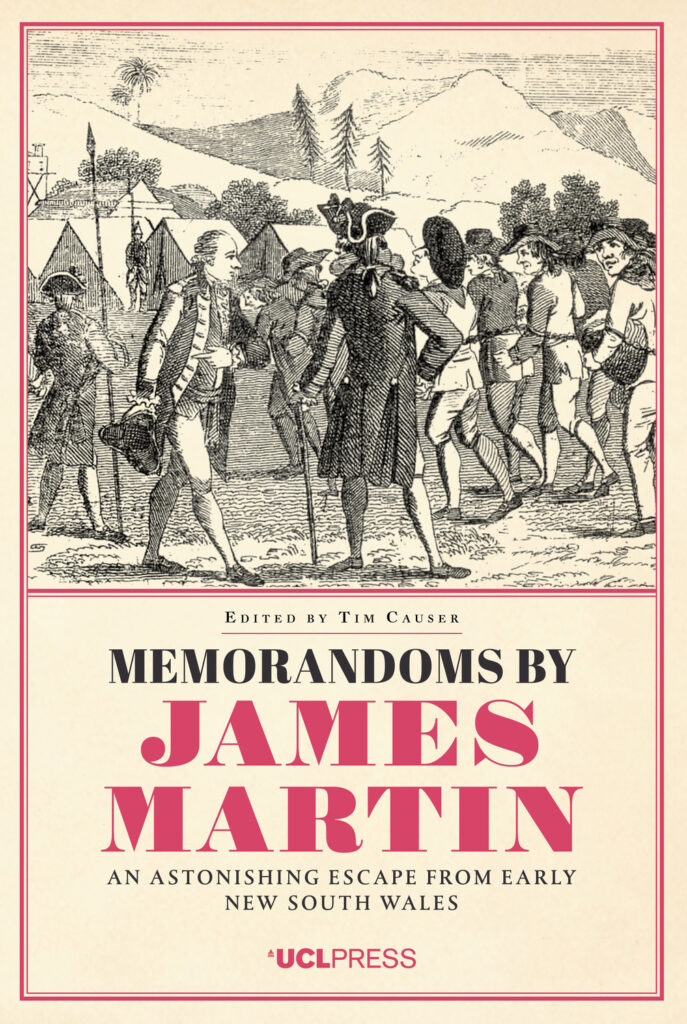
Cover image from of Memorandoms by James Martin, showing the landing of Convicts at Botany Bay.

To celebrate Australia day, today’s guest post is by Tim Causer, editor of Memorandoms by James Martin and Principal Research Fellow at the Bentham Project.

Those of us researching the history of convict transportation to Australia are extraordinarily fortunate in terms of resources, as some of the most important have, for several years, been available digitally on an open-access basis. For instance, we can search colonial-era newspapers in the National Library of Australia’s Trove, or consult the Tasmanian convict records, a body of material unique in its detail about the tens of thousands of ordinary people transported to Van Diemen’s Land.

As a callow undergraduate at the University of Aberdeen, making a first foray into Australian history fourteen years ago, such resources were the stuff of dreams. The university library’s holdings on Australian history were largely limited to landmark secondary texts such as Russel Ward’s The Australian Legend (1958) and A. G. L. Shaw’s Convicts and the Colonies (1966). The most recent work we had to hand was almost two decades old: Robert Hughes’s blockbuster, The Fatal Shore (1986). Hughes’s brilliant, terrible book is beautifully written, but is ultimately frequently misleading. But a major strength of The Fatal Shore’s was its use of convict narratives, giving it an immediacy rare in many earlier histories which relied heavily upon parliamentary papers and official correspondence.

Convict narratives fall into two main types. The first, and most common, are those published in the eighteenth and nineteenth centuries, during or around the period in which convicts were transported to the Antipodes. For instance, two of the most well-known are Martin Cash’s The Bushranger of Van Diemen’s Land (1870) and Mark Jeffrey’s A Burglar’s Life (1893), both of which were ghost-written by the former convict James Lester Burke.

Of course, published narratives such as these present issues of interpretation. How much of Cash’s autobiography is authentically his voice, and how much is that of Burke? Ghost-writers often sanitised their subject’s life into a redemption parable, walking the fine line between titillation while still seeking to attract a respectable audience. Those narratives written by the few transported for political offences—male, middle-class, well-educated authors—are unrepresentative of the experiences of the majority of convicts. There is also a racial and gender imbalance, with the overwhelming majority of narratives dealing with the lives of white convict men—Reverend James Cameron’s partly-fictionalised biography of the Spanish transportee, Adelaide de Thoreza, is a rare exception.

The second type of narrative exists only in manuscript. They are often more exciting to deal with: they were not written for publication, do not have to meet the conventions of any genre, and are often more revealing, explicit, and subversive. For instance, the Irish convict Laurence Frayne’s narrative is a graphic account of his punishment and contains a sustained character assassination of James Morisset, a commandant of the Norfolk Island penal station during the 1830s, which would never have been fit to print.

Memorandoms by James Martin is one such unpublished manuscript which, thanks to UCL Press, is now available in open-access for the first time. The Memorandoms tells the story of the most famous of all escapes from Australia by transported convicts, that led by William and Mary Bryant. On the night 28 March 1791 the Bryants with their two infant children, James Martin, and six other male convicts stole a fishing boat and sailed out of Sydney Harbour and out into the Pacific. They reached Kupang in Timor on 8 June, though were subsequently identified as escaped convicts and the survivors were shipped back to England to face trial—where James Boswell lobbied the government for their release.

The group’s 69-day, 3,000-mile journey has been the subject of two television series, poetry, novels, and innumerable history books, with a focus on Mary Bryant. Yet the modern historical accounts are frequently unsatisfactory and derivative; what then, the reader might wonder, could be said about this story that has not been said so many times before?

Quite a bit, it turns out. Memorandoms by James Martin is the only extant first-hand account of the escape, and it provides a fresh perspective to this often formulaically-told tale. Despite the Memorandoms being spare and prosaic, it provides a sense of the hardship of the journey, the terror of those in the boat as it is pummelled by storms and churning seas, and of the party’s fascination and fear in their encounters with Indigenous Australians and Torres Strait Islanders. The Memorandoms also strikingly reveals just how far some modern historians have departed from the historical record when telling the story.

Memorandoms by James Martin is also important in a second sense: it is the only known narrative written by a member of the first cohort of convicts sent to New South Wales with the First Fleet 1788. The Memorandoms was acquired at some point by one of Britain’s great philosophers, Jeremy Bentham, one of the first and most influential critics of transportation to Australia. The vast Bentham archive is, of course, held in UCL’s Special Collections, and the Memorandoms is but one of the many jewels in the College’s collections.

Now, thanks to UCL Press, the Memorandoms manuscripts are available for the first time, and for free; readers can now access the original narrative for themselves, rather than mediated by some rather dubious historical accounts. The colour reproductions bring the document to life in a way which would not otherwise be captured by publishing a transcript, and I am inordinately grateful to UCL Press for bringing the Memorandoms out in this way. My younger self in Aberdeen would have been thrilled to have had a resource like this to hand, and I hope that those who today may not have ready access to unpublished narratives like the Memorandoms will be equally pleased.


About the Author

Tim Causer is Principal Research Fellow at the Bentham Project.

Does class size matter? We’ll get a better answer if we rethink the debate

Students in classroom

For many teachers, large classes present problems which adversely affect their practice and their pupils’ learning. This is what our surveys show. But researchers and commentators often have a different view. For them the class size debate can be summed up with the question: does class size affect pupil attainment?

As we show in our new open access book, Rethinking Class Size: The Complex Story of Impact on Teaching and Learning, published by UCL Press, researchers (contrary to a practitioner view) commonly find that the statistical association between class size and attainment is not marked and so conclude that class size does not matter much. This has led some to even suggest that we could raise class sizes, and instead invest savings in professional development for teachers. Currently, in the wake of the Covid pandemic and teacher absences, there are reports of some schools being forced to create supersized classes of 60 pupils.

The view that class size is not important is probably the predominant view among researchers and policy makers, and so they may be relatively relaxed about increases in class size. We therefore need – more than ever – good quality evidence on class size effects, but in our view much research is limited and leads to misleading conclusions.

We identify three problems. One issue is that the exclusive concern with the association between class size and academic attainment in first language and mathematics is limited.  It may be that teachers in large classes prioritise these subjects (and this might help account for the relatively small difference in pupil academic outcomes, compared to smaller classes) but this raises a question about the possible way large classes affect other pupil ‘outcomes’, e.g., creativity, independent and critical thinking and motivation to learn. There is very little research that addresses this question.

Second, class size is not an ‘intervention’ like the distinct pedagogical approaches with which it is commonly compared in meta-analyses of research findings. It is not something one adds to the classroom like a reading scheme, but rather one aspect of the classroom context to which teachers and pupils have to adapt.

The third and most important problem with the usual research approach is that it does not take into account ways in which class size affects classroom processes, particularly teaching. At the heart of the claim that class size does not matter is the assumption that teaching is essentially about conveying information to students. If teaching was just about lecturing, then class size is much less important. Good teachers can control and lecture a very large class of 60. Indeed, in higher education we routinely see massive classes of more than 100, listening to a lecture. No doubt, some people would argue that this kind of teacher directed, didactic style of teaching is preferable anyway.

But this is a very narrow view of teaching, especially at primary school. In ‘Rethinking Class Size’ we present results from our own 20-year research programme involving extensive classroom observations, national questionnaire surveys and detailed case studies – probably the largest dedicated study on class size worldwide. We show that large classes: make differentiated teaching and individual support more difficult; mean reduced knowledge about individual pupils; make classroom management more demanding; reduce the amount of educationally valuable activities like practical and investigative tasks; increase the demands of marking, report writing, planning and preparation; and increase teacher stress.

Large classes are particularly demanding given the diverse pupil intake found in many UK schools, as well as policies of inclusion, which mean more individual support is often needed. Worryingly, we found in our research that it is low attaining pupils and those with SEND who are most disadvantaged in large classes, for example in terms of classroom engagement.

Our central conclusion is that the effect of class size on academic attainment is not a direct one, as is assumed in much research, but interconnects in complex ways with classroom processes like the balance of whole class, group and individual teaching, classroom management, relations between pupils, classroom tasks, and administrative activities like marking.

To understand the effect of class size we have as researchers to do more than produce a statistical correlation with academic attainment because without information on what is going on in classrooms we cannot reliably interpret the correlation. In the book we develop a distinctive social pedagogical framework to account for the complex contextual, dynamic and relational factors at work.

Obviously at a time of national emergency, schools have to adapt to staff and pupil numbers as best they can, and large classes may in the short term be necessary. Teachers will also find inventive ways of teaching large groups. But we should not assume this is a long-term solution. We need to be aware of the implications for teaching and the breadth of learning.


About the Authors

Peter Blatchford is Emeritus Professor in Psychology and Education at the UCL Institute of Education. Anthony Russell has had an international career in teaching, teacher training, curriculum development and education research.

This blog post originally appeared on the IOE Blog.

Trump’s ascent via Twitter

US flag flying against a clear blue sky.

Today marks the second inauguration of Donald Trump as US President, following his previous controversial stint from 2017 to 2021. To mark the occasion, we take a look back at how social media (in particular Twitter, now known as X) fuelled Trump’s ascent in the 2016 election in an excerpt from Ralph Schroeder’s open access book Social Theory after the Internet.

In the 2016 presidential primaries, Donald Trump dominated the news headlines on the side of the race to become the nominee for the Republican Party, even though he was a party outsider and the party favoured insider candidates. His dominance was achieved largely because of social media, mainly Twitter (though he also used other social media such as YouTube and Facebook), where he tweeted controversial positions on a range of issues. These positions then featured prominently in television newscasts and newspaper headlines. Many of these headlines were critical of Trump’s positions, which were far from the political
mainstream and promoted a populist right-wing agenda, including, most controversially, an anti-immigrant stance. Yet the headlines ensured that his views received a disproportionate amount of attention. The relation between the number of tweets in which Trump and other candidates are mentioned and their coverage in mainstream media over the course of the primary campaign and beyond has been tracked at http://viz2016.com/ (Groeling et al. 2016). It shows a clear correlation: Trump is mentioned in tweets far more than any other candidate in both parties, often more than all the other candidates combined, and the volume of tweets closely tracks his outsize coverage in the dominant mainstream media (which, in the same tracking analysis, includes CNN, Fox News, MSNBC, ABC, CBS, NBC and local news). Polling data (such as this) confirms that Trump pulled ahead of other Republican candidates in synchrony with his dominance of the media attention space, despite the fact that his nomination as Republican candidate was opposed by the party up until the party’s convention and
beyond.

Traditional news media were compelled to give a lot of time to Trump’s views since, as we have seen, the American media system is characterized by horse-race politics and market competition for audience share. Tomasky (2016) quotes the television executive Les Moonves, who said during the primary election campaign that ‘the Trump phenomenon “may not be good for America, but it’s damn good for CBS” ’. The ‘free’ extensive media coverage also meant that Trump had to spend far less on political advertising than his rivals. Furthermore, journalists covering the campaign, themselves extensive users of Twitter, eagerly picked up newsworthy items on Twitter. Hamby (2013) has argued that Twitter has changed presidential political campaigns, with journalists relying on Twitter as a major source, not just to follow candidates and campaign teams but also to follow each other. However, they are also under pressure from their editors to feature such ‘breaking news’ in their stories, especially attention-grabbing issues, to maximize audience share. Thus Trump was able to set the agenda by tweeting positions that were guaranteed a wide audience in mainstream media.

Hamby criticizes the dominance of Twitter, especially the way it contributes to the greater prominence of trivia or focuses on the process of campaigns rather than the substance. He notes that this is not a new criticism, but the trend is intensified by Twitter since messages are unfiltered – or, put the other way around, there is less editorial control – which allows minor incidents to gain widespread attention quickly. Here it can be noted that Trump’s tweets also went against the grain of the tighter management of campaign messages on social media, which has been characteristic of other presidential campaigns.

He tweeted himself (and still does so!), and the controversial nature of many of his messages means they are a boon to news-starved journalists. Hamby describes how there is often a desperate search to find something newsworthy to report among journalists during the primary campaign, and Trump often provided tweets (and again, still does) that were considered newsworthy enough to be reproduced in full in the news.


Trump’s position could not have been achieved without the support of a substantial proportion of the electorate. His base of support consisted of a part of the population that considers itself left out by the country’s media elites and its established party elites. And while there is an economic aspect to the demographic of this support, it is among the less educated, male, more rural, white population. Trump supporters are against established state elites and share a distrust of government, a deep-rooted tradition in American politics (Hall and Lindholm 2001). Their anti-immigrant, anti-refugee and anti-Muslim stances are more to do with citizenship rights and economic nationalism than purely economic disadvantage or uncertainty.

As we have seen, unlike elections elsewhere (such as in Sweden – Dimitrova and Strömbäck 2011), the focus during American elections in the media is on the horse race between candidates, who rely on personal media attention (as opposed to attention on parties and policies), within a media system where news is driven more strongly (and almost exclusively, unlike Sweden, with its public-service media) by market competition for audiences. The role of Twitter can be singled out here; it was a transmission belt to visibility in traditional media. It did not play a decisive role once Trump was the nominee of the Republican Party since, from that point onwards, the candidates of both parties were guaranteed a roughly equal share of media attention (and Trump could also gain attention by seeking media appearances). But Twitter did play a decisive role in his success in becoming the nominee for the Republican Party and, for a crucial period, he was able to circumvent media autonomy – or use digital media to amplify his message in traditional media.

This success cannot be explained by reference to Twitter alone; rather, again, the explanation relies on how Trump’s political message – his unconventional remarks on Twitter – received a level of attention in traditional media that would have been impossible had he relied on press conferences or traditional broadcast coverage. In other words, by communicating via Twitter, Trump was able to bypass the conventional gatekeepers of journalists and mainstream TV and newspapers because they were compelled to report his views in a competitive environment that relies on audience share. Put differently, Trump did not directly speak tohis audience via Twitter – too few Americans are on Twitter. But he could rely on traditional media to broadcast his new media messages. As Karpf (2016) argues: ‘In a world with digital media, but less analytics, this election drama would have unfolded differently…journalists and their editors would have been less attuned to the immediate feedback of Trump’s daily ratings effects, and this would have led them to spread their coverage more evenly (as they always have in the past). Trump’s media dominance isn’t just driven by our attention, it’s driven by the media industry’s new tools for measuring and responding to that attention.’ As we will see in chapter 6, these analytics have become important beyond politics and elections and now also shape the competition for online audiences generally.

In any event, the role of the media and of Twitter was decisive inasmuch as other factors that typically play a role can be ruled out: the argument that the party and its elites ‘decide’ on the candidate (Cohen et al. 2016) did not apply on this occasion (though arguably, it applied to Hillary Clinton’s nomination). Second, Trump had fewer resources; he spent far less than other candidates during the primary campaign (and he also spent less, and there was less overall spending, than in previous campaigns). Third, Trump did not have an effective data analytics-driven or ground campaign; in this respect, his campaign was less sophisticated
than that of his competitors.

Populists have traditionally been adept at using the mass media of their day. But the reach of their media was limited, as with direct mail and magazines or latterly email (Kazin 1998, 259–60), unless populists could also obtain sufficient attention in the mainstream media. Other populists have had a critical attitude to the mainstream media, and Trump has also maintained a critical – even conspiratorial – attitude towards the establishment-dominated media throughout the election (and beyond) and accused the media of being ‘rigged’ against him. The extent to which this attitude drove his supporters to alternative media and social media has not been systematically examined (to my knowledge). But the key is that Trump was able to continue to have his message relayed from his tweets to the mainstream media, even though the mainstream media often covered him negatively (and covered his claims that the media were biased against him).

Trump stands in a long line of right- and left-wing populism in America, though as Kazin (1998) points out, populism has generally moved rightwards since the Second World War. Populism as an ideology has waxed and waned in the post-war period, though it has often been just as strong as left, right, moderate and libertarian ideologies (Claggett et al. 2014). Trump’s language was strongly populist; only Bernie Sanders rivalled him on the left and Ben Carson on the right for populist language, as Oliver and Rahn (2016) show. They also show that support for his views was strong among voters, and argue that such populist views have not been taken into account by parties, and by the Republican Party in particular, which they say constitutes a ‘representation gap’: ‘Donald Trump’s simple, Manichean rhetoric is quintessentially populist…the opportunity for a Donald Trump presidency is ultimately rooted in a failure of the Republican Party to incorporate a wide range of constituencies’ (2016, 202). In other words, his populist appeal mattered too. In short, Twitter, translated into mainstream media, plus populism, explains Trump’s success.


About the author

Ralph Schroeder is a Professor at the Oxford Internet Institute. Before coming to Oxford University, he was Professor at Chalmers University in Gothenburg. His recent books are Rethinking Science, Technology and Social Change (2007) and, co-authored with Eric T. Meyer, Knowledge Machines: Digital Transformations of the Sciences and Humanities (2015).

Rethinking History Assessment

A person in a green shirt and denim shorts performs a handstand between ancient stone columns.

Assessment forms an integral part of history education at all levels, throughout school, college and university. The process of assessing and being assessed occupies much time and attention of staff and students alike. In a recent article in History Education Research Journal, Sarah Holland uses practitioner research to advocate rethinking assessment in history, and asks how ‘creative’ or ‘innovative’ approaches to assessment can make this a more effective and meaningful process. In this post, she explains more.

My article Rethinking Assessment explores the potential of innovative and creative assessments in history and the importance of diversifying assessment. Assessment forms an integral part of history education at all levels but how often do we stop and reflect on how and why we assess history and consider alternative approaches? The aim of my article is to share my insights into alternative forms of history assessment and encourage others to rethink assessment. It adds a subject specific perspective to the research on alternative forms of assessment. The focus is history assessment in UK Higher Education, but the context, discussion and recommendations have wider relevance extending beyond disciplinary, educational sector and geographical boundaries. It should be relevant to anyone involved with history assessment and those interested in making assessment a more meaningful process.

I argue that alternative forms of assessment matter, especially in text-heavy subjects such as history, as they provide a different way to assess historical skills and assess different ways to communicate historical research. The article begins by establishing the rationale for rethinking assessment, including history specific perspectives. It then focuses on a case study of creative and public history assessments in Higher Education using practitioner research. This includes student perceptions and experiences of these assessments within a history degree. It concludes by exploring the wider implications of the research. Alternative and innovative approaches can make assessment a more effective and meaningful process within a subject specific context, helping to develop historical knowledge, understanding and skills, transferable skills and different ways of communicating historical research. The evidence demonstrates students value having different ways to be assessed, enabling them to develop or demonstrate the same core historical skills as other assessments, together with transferable skills and attributes. Many students reflected that this assessment enabled them to better understand the module content, be more engaged and demonstrate what they knew and understood more effectively.

Providing space to rethink assessment in subject specific contexts is crucial. Alternative assessment won’t be everyone’s preferred choice and nor should it simply replace existing assessment types to become the dominant mode of assessment. However, as part of a varied assessment diet, these assessments can foster curiosity and develop a wide range of historical competencies and transferable skills.

Publishing my research in the History Education Research Journal was an opportunity to provide space to rethink assessment and encourage conversations between universities and schools to shape the future of history assessment. As an open access journal focused on history education with an international readership, HERJ provides an excellent opportunity to engage with practitioners in different contexts.

Rethinking assessment: the potential of ‘innovative’ or ‘creative’ assessments in history by Sarah Holland (University of Nottingham, UK) is published in History Education Research journal, volume 21.

About the author

Sarah Holland is Associate Professor in History at the University of Nottingham. She is a Senior Fellow of Advance HE and Co-Convenor of History UK. Sarah is currently leading two History UK working groups: Assessment and Collaborations between schools and universities, and the History UK Disability and History project.

This post originally appeared on the History Education Research Journal blog, and can be read here.

Sign up to our newsletter

Don't miss out!
Subscribe to the UCL Press newsletter for the latest open access books,
journal CfPs, news and views from our authors and much more!