We are currently upgrading our shopping cart; in the interim all orders are being diverted to Waterstones. If you would like to redeem a promotional code, or are an author wanting to place an order, please email us.
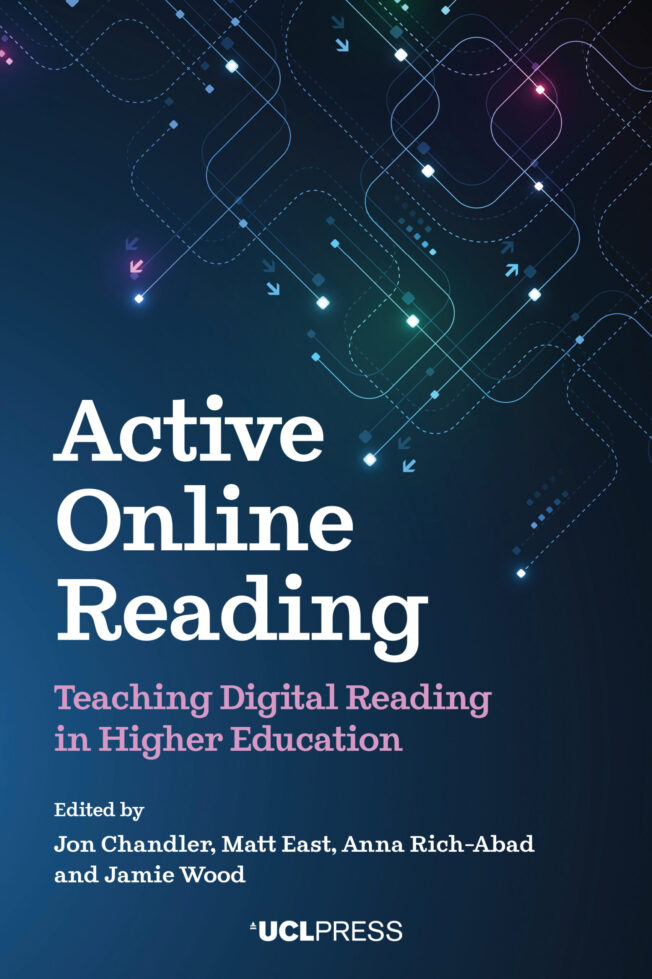
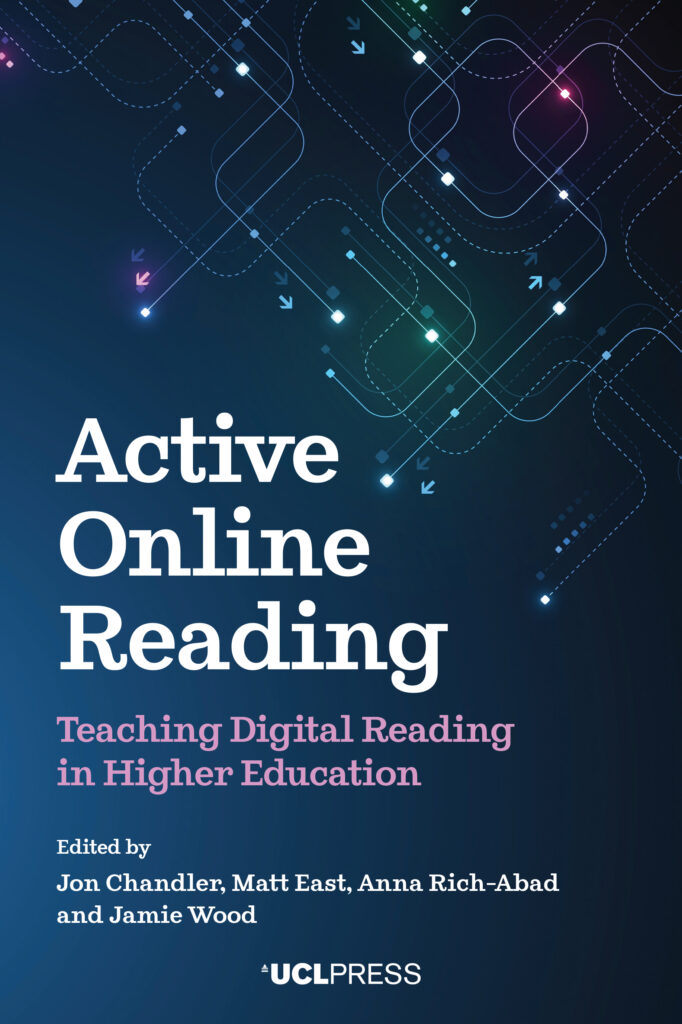
Active Online Reading addresses one of the most important but underdeveloped areas of contemporary higher education: how students learn to read effectively in digital environments. As digital resources, online platforms, virtual learning environments, mobile technologies and generative AI reshape academic study, reading remains central to student learning but is often assumed rather than explicitly taught.
Drawing on research, student reflections and practical case studies from UK higher education, this volume argues for active online reading as a powerful pedagogy for inclusive and effective learning. Contributors explore how students engage with digital texts, the barriers they encounter and the teaching strategies that can support deeper engagement. Chapters consider accessibility, library provision, transitions into university study, social annotation, AI reading assistants, collaborative reading, playful and creative methods, disciplinary reading practices, and student reading journeys from undergraduate to doctoral level. The book’s distinctive contribution lies in bringing together academics, librarians, learning developers, educational technologists and students to examine digital reading as a taught, scaffolded and reflective academic practice. Grounded particularly in reading-rich disciplines in the Arts, Humanities and Social Sciences, it offers both a manifesto for change and a practical resource for educators seeking to improve students’ engagement with digital texts.
Active Online Reading addresses one of the most important but underdeveloped areas of contemporary higher education: how students learn to read effectively in digital environments. As digital resources, online platforms, virtual learning environments, mobile technologies and generative AI reshape academic study, reading remains central to student learning but is often assumed rather than explicitly taught.
Drawing on research, student reflections and practical case studies from UK higher education, this volume argues for active online reading as a powerful pedagogy for inclusive and effective learning. Contributors explore how students engage with digital texts, the barriers they encounter and the teaching strategies that can support deeper engagement. Chapters consider accessibility, library provision, transitions into university study, social annotation, AI reading assistants, collaborative reading, playful and creative methods, disciplinary reading practices, and student reading journeys from undergraduate to doctoral level. The book’s distinctive contribution lies in bringing together academics, librarians, learning developers, educational technologists and students to examine digital reading as a taught, scaffolded and reflective academic practice. Grounded particularly in reading-rich disciplines in the Arts, Humanities and Social Sciences, it offers both a manifesto for change and a practical resource for educators seeking to improve students’ engagement with digital texts.
Jon Chandler (Editor)
Jon Chandler is an Associate Professor (Teaching) at University College London. He is a historian of the early modern Atlantic World and a Senior Fellow of the Higher Education Academy. In his teaching, he focuses on supporting first-year undergraduate students to transition to university and to develop the skills they will need to thrive in higher education. In his research, he is particularly interested in the use of new technologies to support student development through innovative teaching and assessment.
Matt East (Editor)
Matt East is a Higher Education Leader at Perlego, a digital learning library providing over 1.5 million academic texts to readers on an unlimited access subscription model. Matt has over 15 years experience working in, and across higher education from learning development, curriculum design, technology development and implementation, and educational leadership. HIs academic research spans across student engagement, social annotation, information literacies, digital reading, and the intersection of pedagogy and technology in higher education. Matt is a Principal Fellow of Advance HE, and a Visiting Fellow at the University of Lincoln.
Anna Rich-Abad (Editor)
Anna Rich-Abad is Associate Professor (Teaching) at the University of Nottingham. She specialises in Medieval History with a particular focus on social and gender studies related to the interaction between Jews and Christians in the Western Mediterranean. She is a Senior Fellow of the Higher Education Academy and has conducted pedagogic research on online reading and digital learning, for which she obtained funding from the QAA, Students’ transition to Higher Education, having led a three-year project based on student partnership at the University of Nottingham, and on forms of assessment.
Jamie Wood (Editor)
Jamie Wood is Director of Short Online Courses and Departmental Lecturer at the University of Oxford, having worked at the University of Lincoln from 2013-2026, where he was Professor of History and Education. He is a historian of society, culture and religion in the late antique and early medieval western Mediterranean. A Senior Fellow of the HEA, his pedagogic research has been funded by the Higher Education Academy, JISC and the QAA. He has published widely on innovative pedagogies in the Humanities and Social Sciences, including inquiry-based and digital approaches, student partnership and reading.
Sign up to our newsletter
Don't miss out! Subscribe to the UCL Press newsletter for the latest open access books, journal CfPs, news and views from our authors and much more!