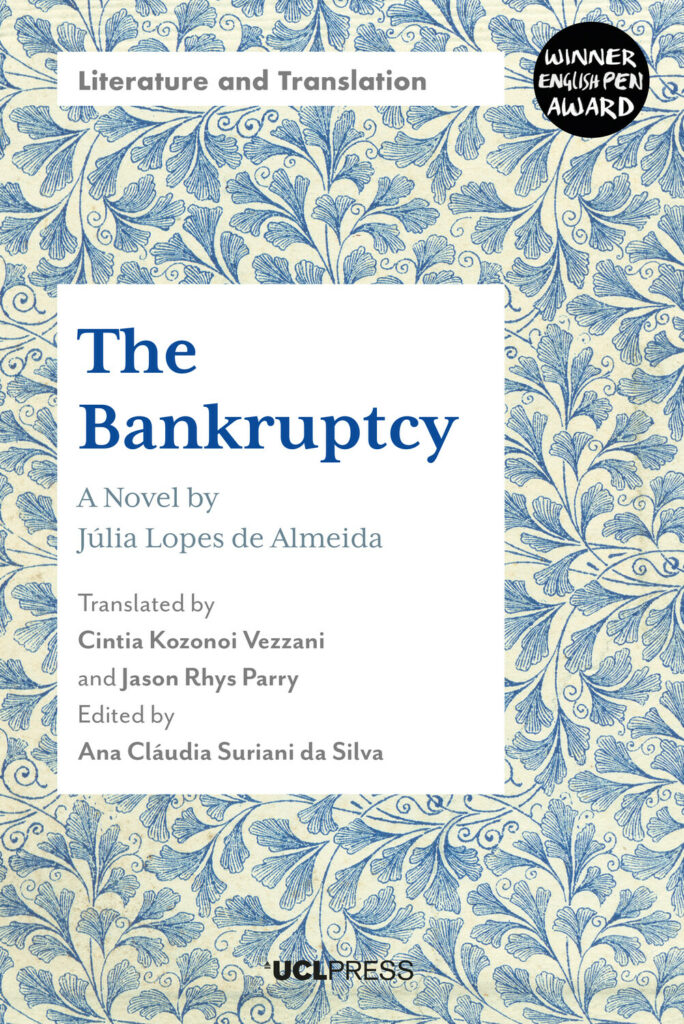
The Bankruptcy

Set in the early years of the Old Republic after the abolition of slavery, Júlia Lopes de Almeida’s The Bankruptcy depicts the rise and fall of a wealthy coffee exporter against a kaleidoscopic background of glamour, poverty, seduction, and financial speculation. The novel introduces readers to a turbulent period in Brazilian history seething with new ideas about democracy, women’s emancipation, and the role of religion in society. Originally published in 1901, its prescient critiques of financial capitalism and the patriarchal family remain relevant today.

In her lifetime, Júlia Lopes de Almeida was compared to Machado de Assis, the most important Brazilian writer of the nineteenth century. She was also considered for the inaugural list of members of the Brazilian Academy of Letters, but was excluded because of her gender. In the decades after her death, her work was largely forgotten. This publication, a winner of the English PEN award, marks the first novel-length translation of Almeida’s writing into English, including an Introduction to the novel and a Translators’ preface, and accompanies a general rediscovery of her extraordinary body of work in Brazil.
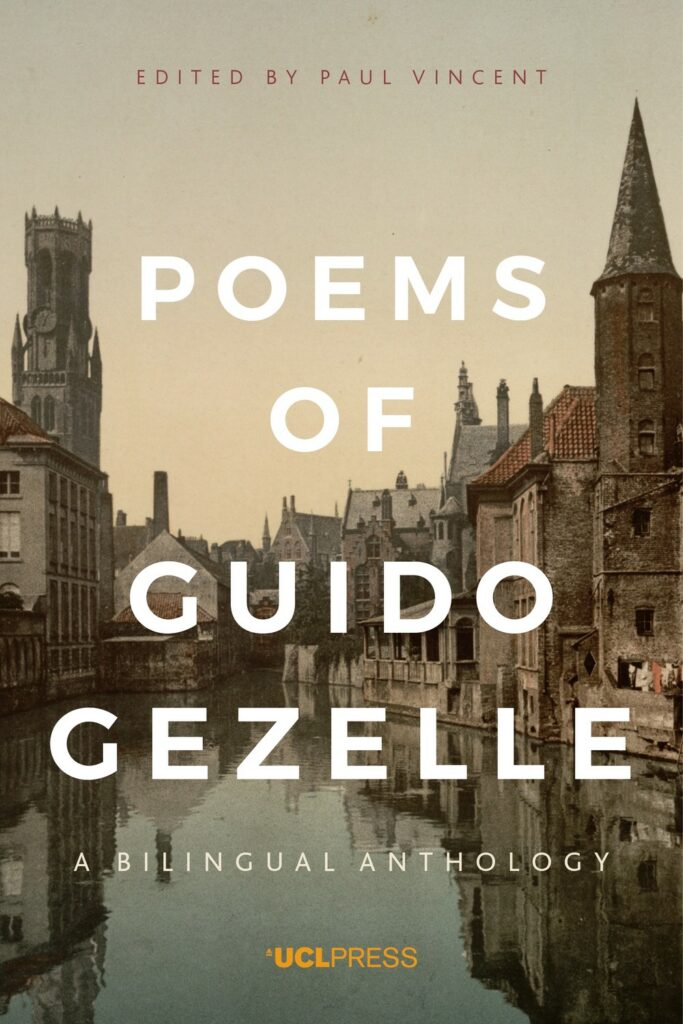
Poems of Guido Gezelle

The Bruges-born poet-priest Guido Gezelle (1830–1899) is generally considered one of the masters of 19th-century European lyric poetry. At the end of his life and in the first two decades of the 20th century, Gezelle was hailed by the avant-garde as the founder of modern Flemish poetry. His unique voice was belatedly recognised in the Netherlands and often compared with his English contemporary Gerard Manley Hopkins (1844–1889). In this bilingual anthology, award-winning translator Paul Vincent selects a representative picture of Gezelle’s output, from devotional through narrative, to celebratory and expressionistic. Gezelle’s favourite themes are childhood, the Flemish landscape, friendship, nature, religion and the Flemish vernacular, and his apparently simple poems conceal a sophisticated prosody and a dialogue with spiritual and literary tradition. However, an important barrier to wider international recognition of his lyric genius up to now has been the absence of translations that do justice to the vigour and musicality of Gezelle’s West Flemish idiom. Two of the translations included go some way to redressing the balance: ‘The Watter-Scriever’ by Scotland’s national poet Edwin Morgan and ‘A Little Leaf . . .’ by Francis Jones. Both translators make brilliant use of their own vernaculars (Glaswegian and North Yorkshire respectively) to bring Gezelle to life for the non-Dutch-speaking reader.

Herman Gorter: Poems of 1890

Commonly viewed as a revolutionary and propagandist Herman Gorter (1864–1927) is often overlooked despite his lasting contribution to Dutch poetry. This selection of thirty-one poems, translated by Paul Vincent, focuses on Gorter’s experimental love and nature lyrics in Poems of 1890, and the Introduction sets the poems in the context of his earlier seminal work ‘Mei’ (May) as well as his often neglected Socialist verse.

The lyrical expansiveness, consistent use of rhyme and vivid imagery of the Dutch landscape that characterises ‘Mei’ evolves into more fragmentary verse in Poems of 1890, and the joyful celebratory tone of Gorter’s poetry increasingly co-exists with a sense of isolation and introspection. This can be viewed in the context of a rapidly changing political scene in Europe in the prelude to the First World War and the Russian Revolution. This is a valuable collection that revisits Gorter’s literary and political legacy, and introduces English-speaking readers to a selection of his most accessible and lyrical poems.

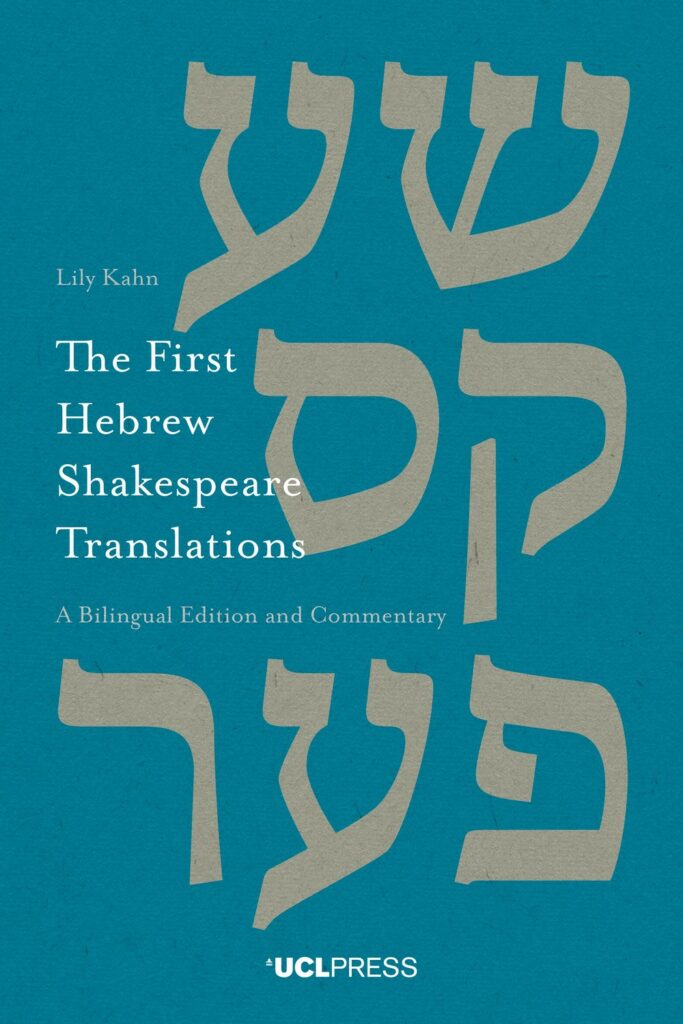
The First Hebrew Shakespeare Translations

This first bilingual edition and analysis of the earliest Shakespeare plays translated into Hebrew – Isaac Edward Salkinson’s Ithiel the Cushite of Venice (Othello) and Ram and Jael (Romeo and Juliet) – offers a fascinating and unique perspective on global Shakespeare. Differing significantly from the original English, the translations are replete with biblical, rabbinic, and medieval Hebrew textual references and reflect a profoundly Jewish religious and cultural setting. The volume includes the full text of the two Hebrew plays alongside a complete English back-translation with a commentary examining the rich array of Hebrew sources and Jewish allusions that Salkinson incorporates into his work. The edition is complemented by an introduction to the history of Jewish Shakespeare reception in Central and Eastern Europe; a survey of Salkinson’s biography including discussion of his unusual status as a Jewish convert to Christianity; and an overview of his translation strategies. The book makes Salkinson’s pioneering work accessible to a wide audience, and will appeal to anyone with an interest in multicultural Shakespeare, translation studies, the development of Modern Hebrew literature, and European Jewish history and culture.

Sign up to our newsletter

Don't miss out!
Subscribe to the UCL Press newsletter for the latest open access books,
journal CfPs, news and views from our authors and much more!