We are currently upgrading our shopping cart; in the interim all orders are being diverted to Waterstones. If you would like to redeem a promotional code, or are an author wanting to place an order, please email us.

Contact us

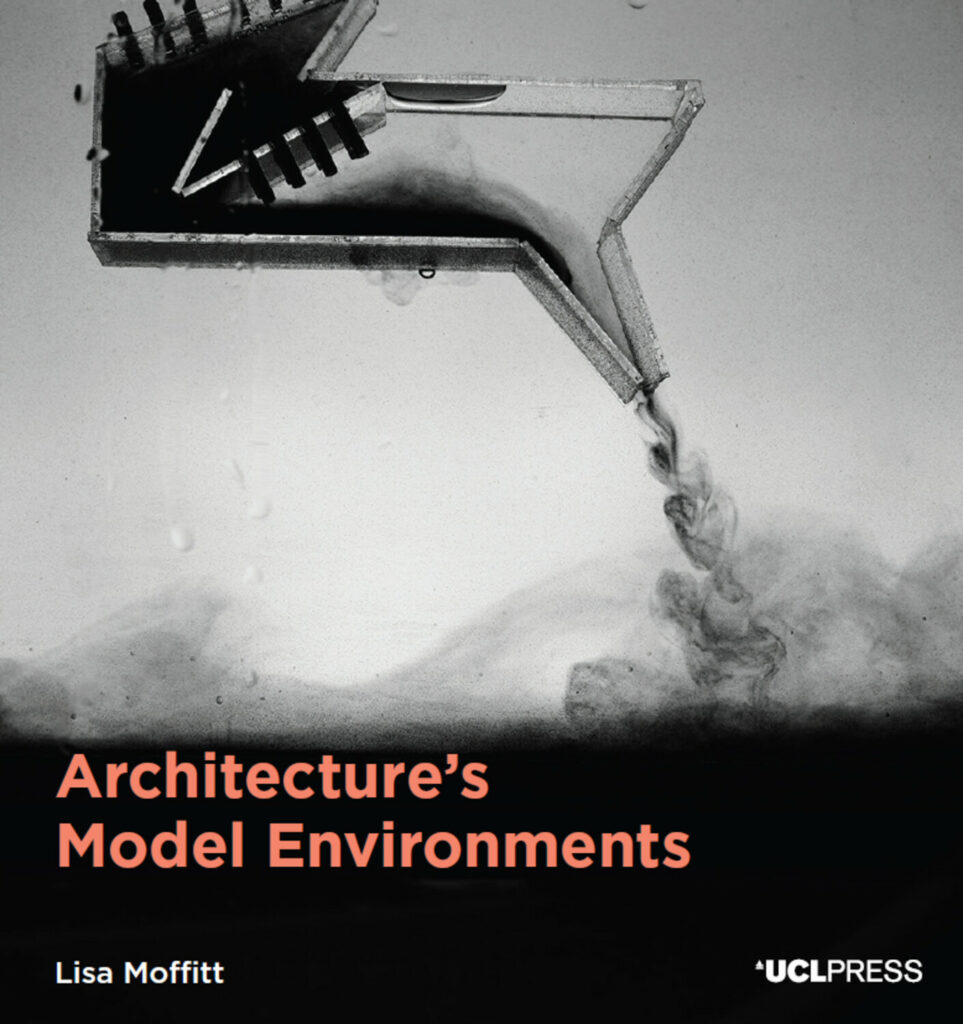
Architecture’s Model Environments

Seen through the distilling lens of the architectural model, Architecture’s Model Environments is a novel and far-reaching exploration of the many dialogues buildings have with their environmental surroundings. Expanding on histories of building technology, the book sheds new light on how physical models conventionally understood as engineering experimentation devices enable architectural design speculation.

The book begins with a catalogue of ten original model prototypes – of wind tunnels, water tables and filling boxes – and is the first of its kind to establish an architectural approach to fabricating such environmental models. Subsequent chapters feature three precedent models that have been largely overlooked within the wider oeuvres of their authors: French polymath Étienne-Jules Marey’s 1900-2 wind tunnels, Hungarian-American architects Victor and Aladár Olgyay’s 1955-63 thermoheliodon, and Scottish chemist and building ventilation expert David Boswell ‘The Ventilator’ Reid’s 1844 test tube convection experiments.

Moving between historic moments and the present day, between case studies and original prototypes, the book reveals the potent ability for models, as both physical artefacts and mental ideals, to reflect prevailing cultural views about the world and to even reshape those views. Fundamentally, Architecture’s Model Environments illustrates how environmental models reveal design insights across scales from the seam (that leaks) to the body (that feels) to the building (that mediates) to the world (that immerses).
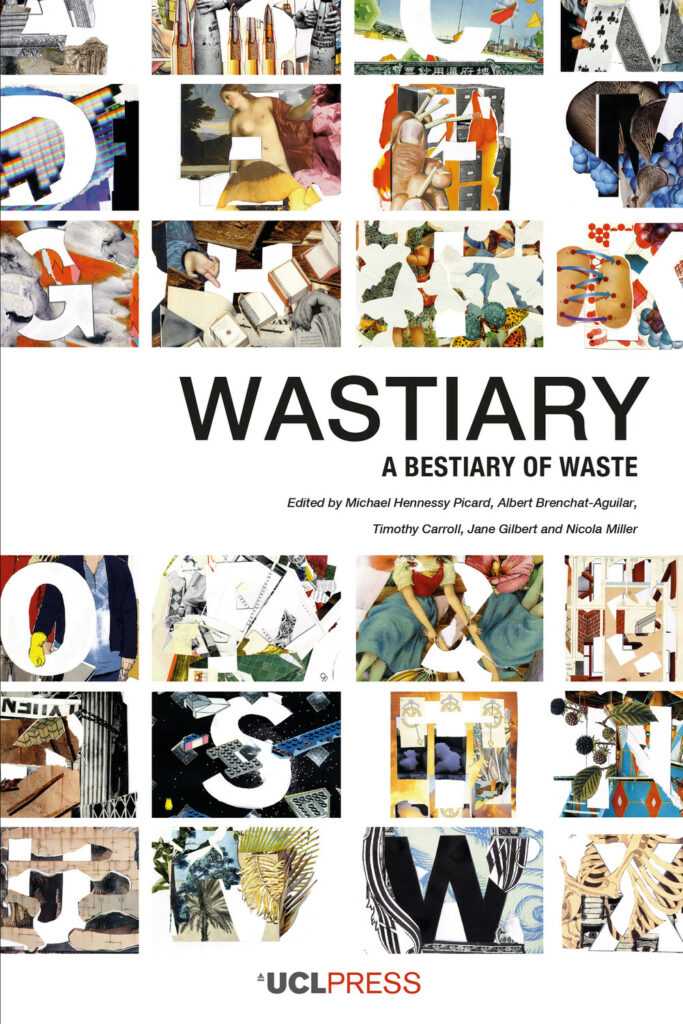
Wastiary

Wastiary, or Bestiary of Waste, is a creative exercise that occupies letters, numbers, and symbols of Western academic language to compose a list of 35 short entries on the uncomfortable but pressing topic of waste in the contemporary world. The collection is richly illustrated with artwork, photography, collage and mixed media.
The book is a heterodox compendium of ‘beasts of waste’, playfully re-imagining the medieval treatise on various kinds of animal. It conveys the message that various forms of waste and pollution have achieved a beast-like or untameable quality, at times pungently transferring to considerations of ‘the human’, or humans treated as waste.

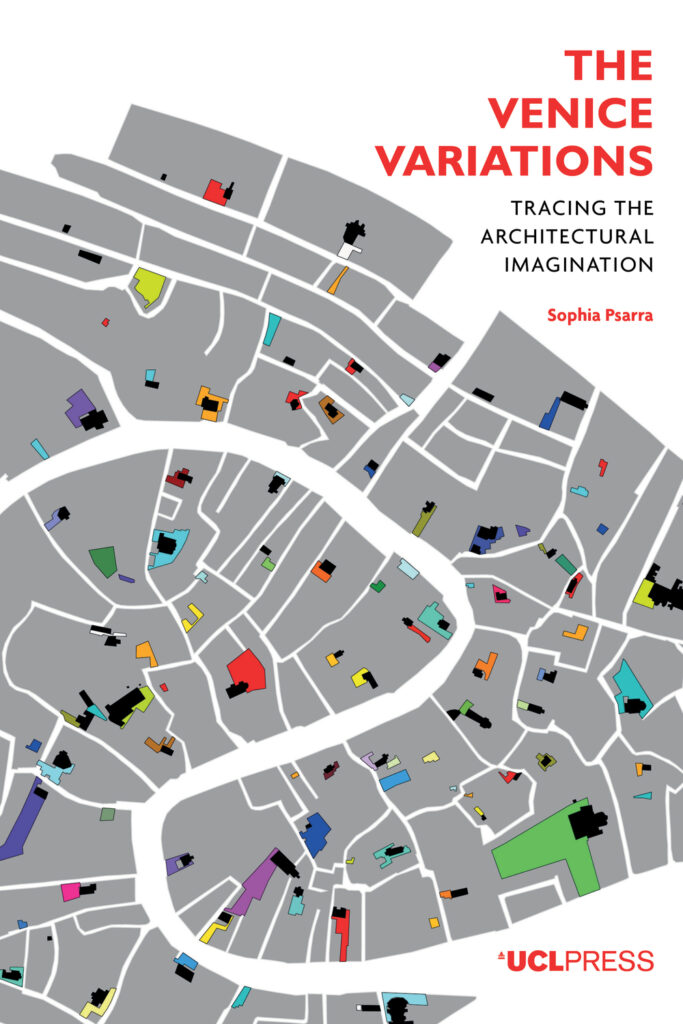
The Venice Variations

From the myth of Arcadia through to the twenty-first century, ideas about sustainability – how we imagine better urban environments – remain persistently relevant, and raise recurring questions. How do cities evolve as complex spaces nurturing both urban creativity and the fortuitous art of discovery, and by which mechanisms do they foster imagination and innovation? While past utopias were conceived in terms of an ideal geometry, contemporary exemplary models of urban design seek technological solutions of optimal organisation. The Venice Variations explores Venice as a prototypical city that may hold unique answers to the ancient narrative of utopia. Venice was not the result of a preconceived ideal but the pragmatic outcome of social and economic networks of communication. Its urban creativity, though, came to represent the quintessential combination of place and institutions of its time.

Through a discussion of Venice and two other works owing their inspiration to this city – Italo Calvino’s Invisible Cities and Le Corbusier’s Venice Hospital – Sophia Psarra describes Venice as a system that starts to resemble a highly probabilistic ‘algorithm’. The rapidly escalating processes of urban development around our big cities share many of the motivations for survival, shelter and trade that brought Venice into existence. Rather than seeing these places as problems to be solved, we need to understand how urban complexity can evolve, as happened from its unprepossessing origins in the marshes of the Venetian lagoon to the ‘model city’ enduring a 1000 years. This book frees Venice from stereotypical representations, revealing its generative capacity to inform potential other ‘Venices’ for the future.

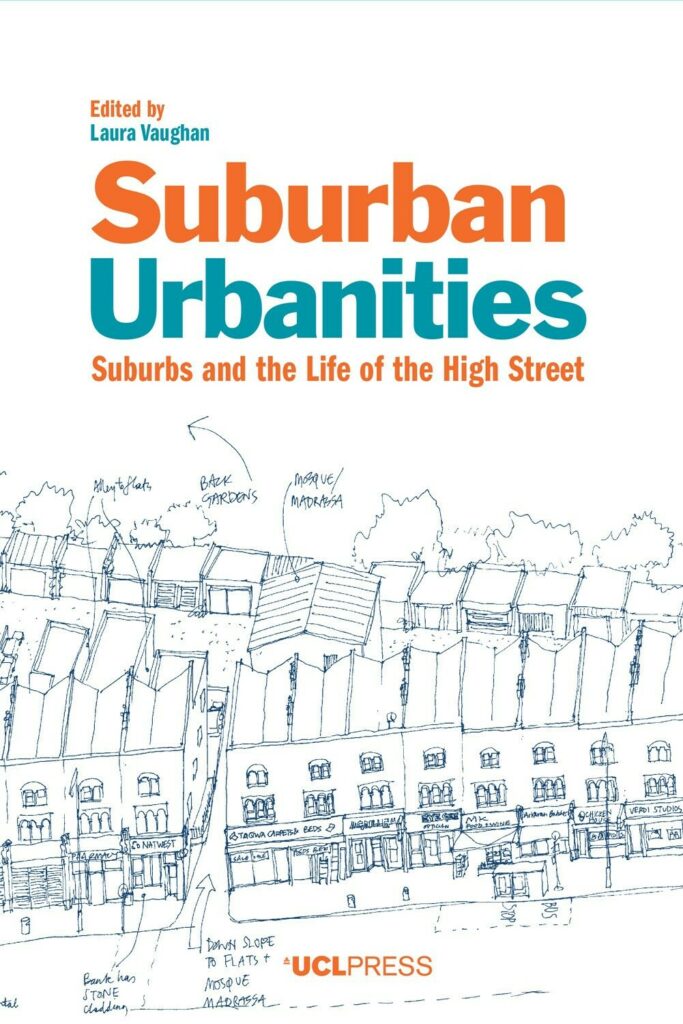
Suburban Urbanities

Suburban space has traditionally been understood as a formless remnant of physical city expansion, without a dynamic or logic of its own. Suburban Urbanities challenges this view by defining the suburb as a temporally evolving feature of urban growth.

Anchored in the architectural research discipline of space syntax, this book offers a comprehensive understanding of urban change, touching on the history of the suburb as well as its current development challenges, with a particular focus on suburban centres. Studies of the high street as a centre for social, economic and cultural exchange provide evidence for its critical role in sustaining local centres over time. Contributors from the architecture, urban design, geography, history and anthropology disciplines examine cases spanning Europe and around the Mediterranean.

By linking large-scale city mapping, urban design scale expositions of high street activity and local-scale ethnographies, the book underscores the need to consider suburban space on its own terms as a specific and complex field of social practice.

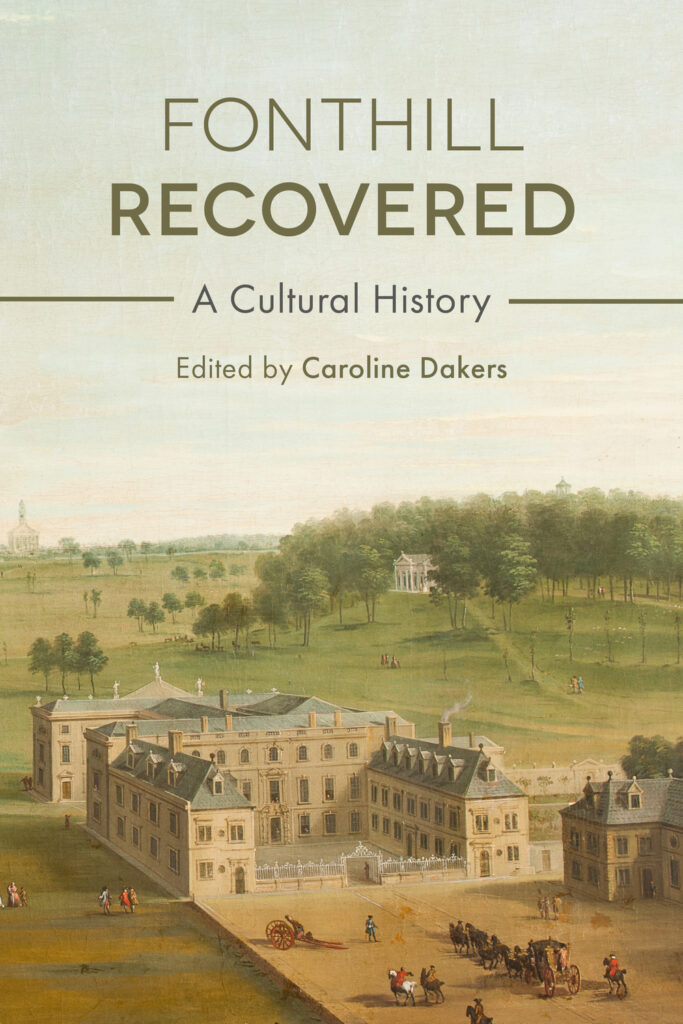
Fonthill Recovered

Fonthill, in Wiltshire, is traditionally associated with the writer and collector William Beckford who built his Gothic fantasy house called Fonthill Abbey at the end of the eighteenth century. The collapse of the Abbey’s tower in 1825 transformed the name Fonthill into a symbol for overarching ambition and folly, a sublime ruin. Fonthill is, however, much more than the story of one man’s excesses. Beckford’s Abbey is only one of several important houses to be built on the estate since the early sixteenth century, all of them eventually consumed by fire or deliberately demolished, and all of them oddly forgotten by historians. Little now remains: a tower, a stable block, a kitchen range, some dressed stone, an indentation in a field.

Fonthill Recovered draws on histories of art and architecture, politics and economics to explore the rich cultural history of this famous Wiltshire estate. The first half of the book traces the occupation of Fonthill from the Bronze Age to the twenty-first century. Some of the owners surpassed Beckford in terms of their wealth, their collections, their political power and even, in one case, their sexual misdemeanours. They include Charles I’s Chancellor of the Exchequer, and the richest commoner in the nineteenth century. The second half of the book consists of essays on specific topics, filling out such crucial areas as the complex history of the designed landscape, the sources of the Beckfords’ wealth and their collections, and one essay that features the most recent appearance of the Abbey in a video game.

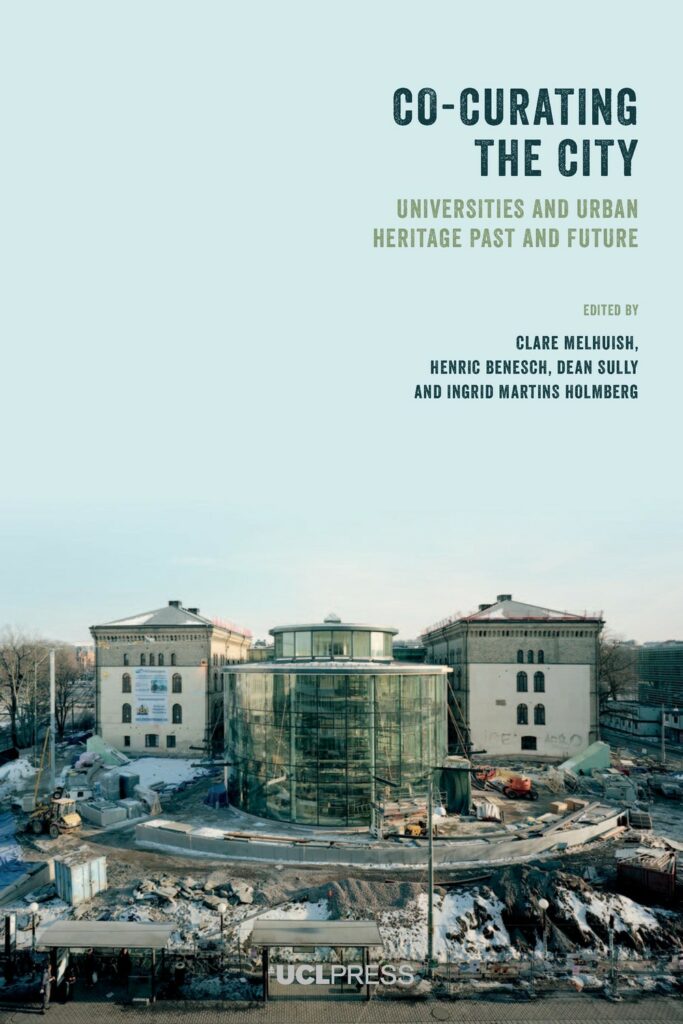
Co-curating the City

Co-curating the City explores the role of universities in the construction and mobilisation of heritage discourses in urban development and regeneration processes, with a focus on six case study sites: University of Gothenburg (Sweden), UCL East (London), University of Lund (Sweden). Roma Tre university (Rome), American University of Beirut, and Federal University of São Paulo, Brazil.

The aim of the book is to expand the field of critical heritage studies in the urban domain, by examining the role of institutional actors both in the construction of urban heritage discourses and in how those discourses influence urban planning decisions or become instrumentalised as mechanisms for urban regeneration. It proposes that universities engage in these processes in a number of ways: as producers of urban knowledge that is mobilised to intervene in planning processes; as producers of heritage practices that are implemented in development contexts in the urban realm; and as developers engaged in campus construction projects that both reference heritage discourses as a mechanism for promoting support and approval by planners and the public, and capitalise on heritage assets as a resource.

The book highlights the participatory processes through which universities are positioning themselves as significant institutions in the development of urban heritage narratives. The case studies investigate how universities, as mixed communities of interest dispersed across buildings and urban sites, engage in strategies of engagement with local people and neighbourhoods, and ask how this may be contributing to a re-shaping of ideas, narratives, and lived experience of urban heritage in which universities have a distinctive agency. The authors cross disciplinary and cultural boundaries, and bridge academia and practice.

Cities Made of Boundaries

Cities Made of Boundaries presents the theoretical foundation and concepts for a new social scientific urban morphological mapping method, Boundary Line Type (BLT) Mapping. Its vantage is a plea to establish a frame of reference for radically comparative urban studies positioned between geography and archaeology. Based in multidisciplinary social and spatial theory, a critical realist understanding of the boundaries that compose built space is operationalised by a mapping practice utilising Geographical Information Systems (GIS).

Benjamin N. Vis gives a precise account of how BLT Mapping can be applied to detailed historical, reconstructed, contemporary, and archaeological urban plans, exemplified by sixteenth- to twenty-first century Winchester (UK) and Classic Maya Chunchucmil (Mexico). This account demonstrates how the functional and experiential difference between compact western and tropical dispersed cities can be explored.

The methodological development of Cities Made of Boundaries will appeal to readers interested in the comparative social analysis of built environments, and those seeking to expand the evidence-base of design options to structure urban life and development.

Supplementary materials for this book are available to download from [http://discovery.ucl.ac.uk/10055955/6/Supplement-BLT-table.pdf][1]

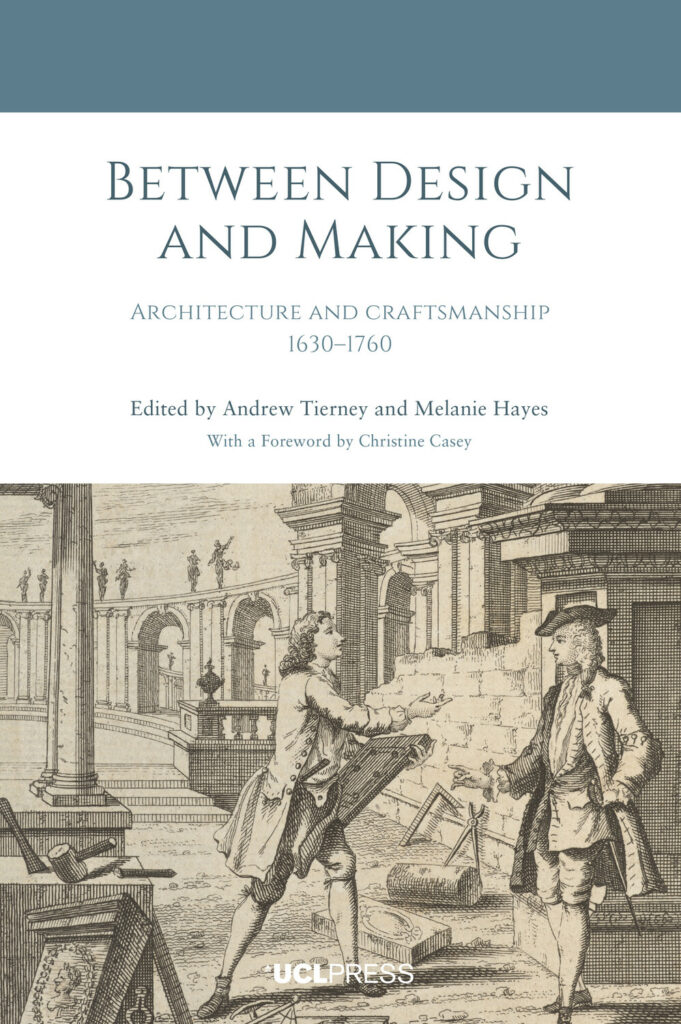
Between Design and Making

The seventeenth and eighteenth centuries represent a high point in the intersection between design and workmanship. Skilled artisans, creative and technically competent agents within their own field, worked across a wide spectrum of practice that encompassed design, supervision and execution, and architects relied heavily on the experience they brought to the building site. Despite this, the bridge between design and tacit artisanal knowledge has been an underarticulated factor in the architectural achievement of the early modern era.

Building on the shift towards a collaborative and qualitative analysis of architectural production, Between Design and Making re-evaluates the social and professional fabric that binds design to making, and reflects on the asymmetry that has emerged between architecture and craft. Combining analysis of buildings, archival material and eighteenth-century writings, the authors draw out the professional, pedagogical and social links between architectural practice and workmanship. They argue for a process-oriented understanding of architectural production, exploring the obscure centre ground of the creative process: the scribbled, sketched, hatched and annotated beginnings of design on the page; the discussions, arguments and revisions in the forging of details; and the grappling with stone, wood and plaster on the building site that pushed projects from conception to completion.

Sign up to our newsletter

Don't miss out!
Subscribe to the UCL Press newsletter for the latest open access books,
journal CfPs, news and views from our authors and much more!