A brief history of the end of the world in science fiction

Image of a blurred red bus

In this exciting new blog post, Robert Yeates, author of  American Cities in Post-Apocalyptic Science Fiction, discusses pivotal themes explored within his book to celebrate National Science Fiction Day.

Where modern cities have grown and flourished since the late nineteenth century, so too have artistic imaginings of their downfall. Many of these found expression in a form of fiction that emerged concurrently with the expansive industrialization, modernization and urbanization of late nineteenth- century America. This speculative form was focussed on fantastic futures and was closely entwined with contemporary technological and scientific innovation, and would later come to be known as sf. Post- apocalyptic themes have featured frequently in sf since the beginnings of the genre, but post- apocalyptic fictions significantly predate the genre of sf. Tracing the origins of the post- apocalyptic mode as it arose in sf thus requires us to go further back, far beyond the formation of the modern American city.

Broadly defined, apocalyptic (and its subset post- apocalyptic) fictions involve imaginings of catastrophic change on a societal, hominal, environmental or celestial level. As Claire P. Curtis describes, apocalypses need not require ‘the destruction of all humans or even the destruction of all potential conditions of human life’, but are nonetheless characterized by ‘a radical shift in the basic conditions of human life’. Many critics frame the history of apocalyptic literature as emerging from the foundations of Judeo- Christian theology but, as one might expect, apocalyptic stories arose in written and oral texts much earlier and are far more global than such a framing suggests. Elizabeth K. Rosen notes that the influences of the biblical apocalypse can be traced ‘to the ancient civilizations of the Vedic Indians, Egyptians, Persians, Mesopotamians, and Greeks’. Abbas Amanat writes that recent scholarship has traced visions of the end of the world ‘in cultures as far and wide as Chinese, Buddhist, Hindu, Islamic, Pre- Columbian American, indigenous African, Latin American and Pacific Islands’. The word ‘apocalypse’ in its contemporary usage in English has its etymological origins in the Greek ‘apokalypsis, meaning “unveiling” or “uncovering” ’, and, through its use in Judeo- Christian and Islamic contexts, was historically applied to revelatory endings characterized by the ultimate judgement of a cosmic power.

Lois Parkinson Zamora notes that biblical apocalyptic visions, especially the Revelation of St John, ‘began to inspire a significant body of imaginative literature and visual art in the later Middle Ages, and have continued to do so, variously and abundantly’. The Judeo- Christian apocalyptic imagination reached North America with the first settlement by Europeans, leading Douglas Robinson to assert that ‘the very idea of America in history is apocalyptic, arising as it did out of the historicizing of apocalyptic hopes in the Protestant Reformation’. By the early seventeenth century, a body of what Paul K. Alkon describes as ‘futuristic fiction’ had begun to emerge in Europe and America, though these did not proliferate until the early nineteenth century. These fictions were ‘prose narratives explicitly set in future time’ but which, in contrast to earlier literary and artistic representations, marked a move away from strict interpretation of biblical prophecies towards more original imaginings of futurity. An influential example of the apocalyptic in such future fictions is Jean- Baptiste Cousin de Grainville’s Le dernier homme, ouvrage posthume, first published in France in 1805 and translated into English as The Last Man: or Omegarus and Syderia, a romance in futurity in 1806. Originally intended as an epic poem, Le dernier homme was published as a prose work divided into the poetic structure of cantos. Its story is, according to Alkon, ‘an unmistakable analogue to the Book of Revelation’, but Grainville’s translation of biblical apocalypse to a creative imagining of the future inspired several early writers working in the genre that would become sf.

Brian Aldiss, in his history of the genre Billion Year Spree (1973; revised and expanded in 1986 as Trillion Year Spree), famously proposed Mary Shelley’s Frankenstein (1818) to be the first example of sf. While this claim has been the subject of much discussion and disagreement by scholars of sf, Frankenstein is today often taken to be a key text in the formation of the genre, with many works of scholarship accepting Aldiss’s claim. Numerous attempts by sf scholars to settle on a single, comprehensive definition of the genre, however, led Paul Kincaid to declare in 2003 that ‘There is no starting point for science fiction. There is no one novel that marks the beginning of the genre. The failure to develop a single and unifying definition of sf, despite noble efforts by scholars over many decades, necessitates working with definitions and histories which are always incomplete and imperfect. For the purposes of this capsule history, I will follow the commonly agreed upon claim that Frankenstein marks a beginning in the development of sf, a genre which would coalesce into a generally recognizable form by the mid- twentieth century. For a working definition of sf, I focus on elements common to most definitions of the genre proposed by scholars: that sf is a speculative genre concerned with possible futures, alternative presents or reimagined pasts, which defamiliarizes or reorients our relationship to the everyday through an imaginative conceit, and which is grounded by a focus on what is generally seen to be scientifically possible. Following the meeting of gothic fantasy and emerging fields of scientific enquiry in Frankenstein, the nascent genre of sf gained momentum over the nineteenth century with the rise of fiction- focussed magazines such as Blackwood’s Edinburgh Magazine (first published in 1817) in the UK and the Southern Literary Messenger (first published in 1834) in the US. Sf and the medium of magazines grew together gradually, and the relationship befitted the meeting of experimental narrative content and form. The fragmented form of serialized magazine publication and the myriad styles encountered in individual issues made this an ideal medium to house a genre that was still indistinct and finding its  identity, composed as it was from fragments of the conventions of gothic, detective and adventure stories. It also meant that the genre and its  venues were highly suited to depicting fractured, ruined and repurposed fictional spaces in their narratives, spaces embodied through the  embracing of post- apocalyptic urban settings in sf.

Apocalyptic and post- apocalyptic themes came to sf early in its development. Perhaps the clearest early example of fiction which uses a scientific approach to representing the end of the world is Shelley’s tale of global plague The Last Man (1826), published only eight years after Frankenstein. In the two centuries since then, post- apocalyptic sf has become a substantial subgenre of sf, though again the struggle to define sf causes difficulties. As Diletta De Cristofaro writes, in the years since sf developed into a popularly recognizable genre, ‘narratives of a future in ruins are generally subsumed under the umbrella term of SF’, whether or not these works adhere to the realms of scientific possibility. We ought, therefore, to distinguish between the continuation of earlier forms of post- apocalyptic fiction and post- apocalyptic sf. The former includes works which involve elements of religious or otherwise supernatural apocalypticism, such as the long- running Left Behind series of novels (1995– 2007) by Tim LaHaye and Jerry B. Jenkins, which are based around the Christian rapture. The latter category, post- apocalyptic sf, is a subgenre of sf rooted in a world deemed possible by our current understandings of science. Post- apocalyptic sf may therefore reflect various contemporary issues affecting the modern city, such as the dangers of new technologies, overdependence on infrastructure, overcrowding, the spread of deadly diseases, pollution and damage to the environment, failure of municipal government and law enforcement, totalitarianism, terrorism, wars, and the spilling over of tensions between groups artificially divided by race, class, gender and sexuality. Such stories tend to depict catastrophic, cataclysmic destruction visited upon the city, and confront us with a vision of our world today, a version of the world which might have been, or a world which might still be, in a state of comprehensive ruination.

As sf in Europe and America developed and proliferated during the twentieth century, often being one of the first genres to test the capabilities and push the boundaries of new and developing media forms, post- apocalyptic depictions of cities in ruin spread with it. Permeating all forms of media, post- apocalyptic sf stories are now so well established as to be enjoyed around the world across generational and other demographic boundaries. As I write in 2021, this subgenre seems to be ideally suited to experimenting with emerging media, as creators can test their capabilities in worlds which by design are fragmentary, unfamiliar and new, in much the same way as early sf did in the magazines. Examples of this include the long- running and Reuben Award- winning webcomic Stand StillStay Silent (2013– present) by Minna Sundberg, the augmented reality (AR) mobile game for Android smartphones The Walking Dead: Our world (2017), and the critically acclaimed and popular virtual reality (VR) computer game Half-Life: Alyx (2020). In testing the capabilities of new representational technologies and in anticipating the desires of their audience, storytellers working in post- apocalyptic sf create worlds that are similarly disassembled and partially reconstructed into an unconventional and yet familiar form. As such these post- apocalyptic worlds symbolize both the genre of sf and the media through which it is produced and received, for both are the result of the reimagining of a combination of previous forms.

Since the 1980s, some scholars have characterized post- apocalyptic sf as demonstrating a postmodern tendency towards belief in a ‘chaotic, indifferent, and possibly meaningless universe’. This characterization might arguably be applied to many examples of post- apocalyptic sf released in the late twentieth and early twenty- first centuries, such as Paul Auster’s haunting novel In the Country of Last Things (1987), the film The Road (2009), adapted from Cormac McCarthy’s sombre 2006 novel of the same name, and the violent and emotionally devastating video game The Last of Us Part II (2020). Such a reading neglects the full range of purposes to which post- apocalyptic settings in sf have been applied, however. To take a handful of examples from video games alone, ruined cities provide an environment for social and political satire in Beneath a Steel Sky (1994) and A New Beginning (2010); the experimental problem- solving of the open- world ‘sandboxes’ of Fallout: New Vegas (2010) and Metro: Exodus (2019); the creative, challenging puzzles of Portal 2 (2011) and Bastion (2011); and the cooperative, social experiences of the online multiplayer games Left 4 Dead (2008) and Day-Z (2018). With varied and creative depictions of post- apocalyptic cities across multiple media, it is no surprise that there has developed a strain of overt comedies set in or around cities devastated by apocalyptic events. Early examples include the films Night of the Comet (1984) and Radioactive Dreams (1985), and a notable recent example is the critically acclaimed American television comedy The Last Man on Earth (2015– 18), which ran for four series on the Fox network. This strain even includes a lively subcategory, the zombie romantic comedy (sometimes abbreviated to ‘zomromcom’), with prominent film releases including Shaun of the Dead (2004), Zombieland (2009) and Warm Bodies (2013). The accessibility and versatility of post- apocalyptic cities have made them popular as settings for young adult novels, such as the Hunger Games series (2008– 20), the Maze Runner series (2009– 16) and the Divergent trilogy (2011– 13), each of which has grown into a highly popular cross- media franchise, and even in texts suitable for children, such as Pixar’s animated film WALL-E (2008).

While comic and sometimes family- friendly texts represent one somewhat niche end of the spectrum, this book is primarily concerned with those texts which occupy the overwhelming middle of that spectrum: texts that readily engage with both real contemporary urban concerns and the desire to explore experimental, creative and sometimes hopeful post- apocalyptic urban spaces. Always in these texts, at least in the background, there is a continuous resonance of real- life tragedies, inequities and fears, but so too is there always in any cultural artefact which honestly engages with its historical moment. These are stories as much about our own worlds as they are fictions. As Margaret Atwood, author of several highly popular post- apocalyptic and dystopian novels, recently put it: ‘Prophecies are really about now. In science fiction it’s always about now. What else could it be about? There is no future. There are many possibilities, but we do not know which one we are going to have.’ In post- apocalyptic sf set in cities, there are clear resonances of contemporary discussions around the lifecycles of architecture, humanity’s relationship with the environment, and how people successfully live and thrive in urban spaces. While post- apocalyptic sf texts certainly engage with contemporary urban concerns, they can nonetheless simultaneously create spaces which are enticing for audiences and which encourage repeat encounters with dramatic visions of urban ruin.


About the Author

Robert Yeates is Senior Assistant Professor of American literature at Okayama University, Japan.

Everyday resistance to Assad never dimmed 

Wall painted to resemble the Syrian flag with text and stars, topped by a mattress.

Charlotte Al-Khalili spent three years embedded with Syrians displaced to the Turkish border after the 2011 uprising. She found a people continuing to resist and evidence of a ‘permanent’ revolution. The voices she presents in this ethnography have deep resonance now Assad has fallen.

In light of recent events in Syria, going back to Syrians’ understanding and conception of revolutionary change is important. Now the Assad regime has finally fallen, 13 years after the revolution started, one can wonder how these events are linked. Since Sunday 8 December, I have received many messages from my friends and interlocutors who are central figures in my ethnographic monograph of the revolution. Most expressed their immense joy at finally seeing the regime fall, the detainees freed and the brutal oppression exposed in plain light with the opening of its prisons. My interlocutors see the downfall of the regime as part of the revolutionary process and cycle I have described in my book, and as part of this cycle it is not an end in itself, as the revolutionary spirit that emerged in 2011 must continue to inform the changes that will happen now the regime has ended.

The fieldwork for this book was conducted between 2013 and 2016, to reflect on the aftermath of the 2011 uprising that appeared to have been defeated. The book’s thesis is that the Syrian revolution was in fact an unended process and my interlocutors were still hoping to see it succeed at the scale of the state in the political domain. They were conscious that a revolution is a long-term process rather than a single event and that their revolution would take time to be fully completed. The ethnographic concept of al-thawra proposes that we think of revolution as a long-term process that is cyclical and can be defeated on the scale of the nation-state in the political sphere, but still has deep effects in the social domain and in exile. Even when the Syrian revolution was widely perceived as defeated, many of my interlocutors still conceived it as permanent (al-thawra mustamera), a conception of revolution that opens up to the potential that the 2011 defeat was only temporary. The idea that the revolution was still ongoing throughout my fieldwork inside and outside Syria was illustrated by my interlocutors through examples of everyday resistance to new forms of oppression (zulm) in the territories liberated from regime control. They were not ready to submit to any new illegitimate authorities, as exemplified by Nura in the first extract from my book.

Resistance as a way of life (from Chapter 5)

‘How long did it take for the French revolution to succeed? A hundred years?’ I was often asked rhetorically, before one of my interlocutors would conclude, ‘We still have a long way ahead of us!’, referring to the four years that had passed since the beginning of the Syrian revolution. The possible success of the revolution was thus located in a distant future that will be a different repetition of the past. However, I was also often given the example of liberated areas that had rejected the zulm (oppression/injustice) of Islamist groups that had gained control over them. Nura described how people had refused to submit to these rules whereby women’s dress must be modified, men were forbidden to smoke in public, and revolutionary emblems were banned in her city. According to her and other interlocutors, such actions, as well as renewed protests inside Syria, exemplified the revolution’s legacy and the continued presence of the spirit of the revolution inside (juwwa). The areas where it happened had first been liberated by the FSA and had witnessed the involvement of communities in local bodies of administration and governance after the revolution. Nura, among other interlocutors, explained that after these localities were liberated by the FSA, women started to participate in public and political life, increased their mobility, and became breadwinners, getting new opportunities to work outside their homes in community centres and newly established institutions. They thus saw the revolution’s enduring spirit in the fact that after being taken over by Islamist groups, women organised protests against restrictions imposed by these groups. The possibility for the revolution’s future success was thus linked by my interlocutors to ‘irreversible’ (ghir rdud) changes in the social fabric and in people’s ‘mentality’ (‘aqliyyeh), that were already happening in the present. This was stressed by the fact that the revolution became increasingly called ‘al thawra al mustamera’ (the permanent revolution) stressing its long-lasting and constant effect. Despite political change at nation-state level becoming a more distant horizon, my interlocutors thus argued that permanent social transformations were taking place in the present at the local level. These in-depth transformations were believed to enable a political revolution in the long term. To my interlocutors, this widespread spirit of defiance was proof of the success of revolutionary transformation on the social level; such changes gave them hope that what Abu Zein called ‘cycle of anger’ would start again. This led my young interlocutors in particular to believe that even in the regions retaken by the Assad regime, people would eventually start a more radical revolution, even if it took a generation.

If the renewed protests happening inside Syria’s liberated areas were interpreted as a renewed struggle that replicated the 2011 uprising – they similarly opposed zulm (oppression/injustice) and illegitimate authority inside Syria – such struggle was also located outside, where it was similarly directed against traditional and usually taken-for-granted forms of authority. These acts of ‘everyday resistance’(maqawameh yawmiyyeh) index in particular Syrian women’s questioning of gender ideology and socio-religious conservatism, as pointed out by Nura for instance. Here, the term ‘resistance’ has to be understood as an ethnographic concept that signifies a struggle against all kinds of oppressive authority. Resistance literally translates as maqawameh but it was most often expressed by my interlocutors in terms of struggle against authority (sulta) and oppression (zulm). By taking seriously my interlocutors’ claims, and their understanding of continuities between their political struggles and the transformations of their social and intimate lives, I propose to make sense of their questioning of the dominant gender ideology in (pre-)revolutionary Syria. My aim is not to describe these processes in terms of ‘emancipation’ or ‘empowerment’, which would risk imposing a white Western feminist gaze that universalises a historically bounded situation.  On the contrary – inspired by bell hooks’s feminist writings and building on Julie Peteet’s work on Palestinian women in the resistance – I aim to draw out processes of transformation of gender structures and meanings rather than analyse the situation in terms of liberation versus subordination.

Revolution as ethnographic object (from the Introduction)

Taking revolution as an ethnographic object – that is, examining it through Syrians’ experiences, narrations and  understandings of the events – this book sheds a new light on its causes, developments and evolving definitions. This contributes to extending the concept of revolution, showing what a revolution can be when it is understood from the perspective of its very actors. Heard through Syrian voices, or its mnemonic and linguistic traces, al-thawra (the revolution) appears as an ongoing process that inscribes itself in a national and regional history of uprisings, rebellions and revolts, rather than merely a failed uprising. It is presented as having deep roots in Syria’s past, creating a radical rupture in Syrians’ present, and having long-lasting consequences in their lives. Moreover, al-thawra appears as a transformative entity that is itself subject to change: from a peaceful uprising to an armed rebellion against the regime’s and, later, the jihadists’ and islamists’ oppression (zulm), leading Syrian revolutionaries from hope to doubt and despair in their political project.

Here, looking at revolution ethnographically means putting the concept of revolution itself ‘under ethnographic scrutiny’, in other words, deconstructing revolution using my interlocutors’ conceptualisations and experiences as analytical tools. Such endeavour allows for a redefinition of what revolution is and can be by ethnographically showing how Syrian events have been experienced, conceptualised, and imagined by my interlocutors as thawra. This shows that a revolution engenders a series of transformations that transcend the paradigm of success and failure and can be found outside the (narrowly defined) political realm.

In taking revolution as an ethnographic object, this book’s central argument is that the Syrian revolution is understood as open-ended: despite having been defeated in the political domain at the scale of the state, the Syrian revolution still has a transformative power that can be identified at the level of the constitution of subjects, social relations, modes of dwelling, temporality, future horizons, and imaginative modes. Moreover, the Syrian revolution witnessed a displacement: rather than a political rupture at the scale of the state, it produced a series of transformations that dramatically reshaped Syrians’ lifeworlds. Here, al-thawra appears as a transformational entity that can reorganise an entire world even when a revolution has been defeated. My argument is therefore that a revolution defeated in the political domain can nonetheless produce ruptures and disruptions in the social realm, as well as on micro (intimate) and and macro (cosmological) scales. It thus suggests stepping away from the dichotomous definition of revolution as either a successful or a failed rupture and shifting the research focus to its marginal and often unexplored dimensions in order to grasp more fully what a revolution is. Rather than looking at the epicentre of revolutionary action – protests, occupations, and political organisations – it proposes to explore what is often seen as peripheral and apolitical: everyday life, kinship relations, religious imagination, and spatio-temporal practices.

Revolutions have been classically defined, according to a model of before-and-after, as a historical rupture that leads to a new political order and temporal cycle because of a change in political regime – the ancient regime is replaced by a new one. Such a definition therefore glosses over the transformative potential of apparently defeated and failed revolutions. Because of such definitions, failed or defeated revolutions end up in history’s dustbin. The ethnographic enquiry of the Syrian revolution thus calls to an expanding of our conceptual framework and methodological tools to fully grasp what revolution, and in particular a defeated one, is and can be.

Arguing that revolutionary transformations outlast revolution’s defeat, this book maps out the ruptures (intended changes) and disruptions (unexpected shifts) that the revolution engendered beyond what is usually defined as the political field: within the self, in the intimate sphere of the home, in Syrians’ everyday lives, social relations, and sense of time, and in their experience of Islamic cosmology, thereby shifting the analytical focus to the revolution’s long-lasting and in-depth consequences.7 Revolution becomes a multi-layered and multidimensional entity: it affects Syrian lifeworlds in all domains and scales. These very transformations are themselves being interpreted in ways that evolve as Syrians’ theorisations, experiences, and imaginations of al-thawra (the revolution) are themselves being transformed. This book has thus two overall aims: the location of the traces of the early stage of the 2011 revolution through my interlocutors’ narratives, memories, activities and artefacts; and the mapping of the transformations that revolutionary moment, space and experience create in exile.

By grounding my research within families, my ethnography was able to grasp the in-depth and long-term effects of the 2011 revolution on Syrians’ lifeworlds. In the course of my fieldwork, I often heard of great hardship.

The unbearable weight of waiting (from Chapter 4)

With the revolution’s defeat becoming clearer, it seems that the near future has been evacuated, yet this period is central to revolutionary action, for it is the time of ‘the reach of thought and imagination, of planning and hoping’. Moreover, the revolution’s defeat also leads to a shift in temporal horizons from the near future to a present consisting of waiting and a long-term horizon of the revolution’s successful return and its afterlife. In the aftermath of the defeated revolution, the near past and distant future appear as the main horizons of the revolutionary project and action, and are invested with hope, whereas the near future is a time of uncertainty that seems an extension of my interlocutors’ indefinite waiting in the present. After Umm Najem’s husband was arrested in Idlib by the regime forces, she did not hear of him for nine months despite her attempts to discover his whereabouts. When the security forces sent his belongings to her home – his watch, his ID card, and other things he had with him when he was arrested – they announced that he was dead [‘killed under torture’ as Nura translated it for me]. She had four small children, and she was living in her in-laws’ home. After her husband was martyred, and after the four-month mourning period, she married his brother so she could keep living with her children at her in-laws. It had then been over a year since her husband disappeared, and she had lost hope that he was still alive. A year after she married her brother-in-law, her husband was released from jail and he came home to find that his wife had married his brother and was pregnant by him … Can you imagine these people’s situation?! This is why people never give up hope and, unless they see their relatives’ bodies, never accept they are dead.

As Nura compared the incomparable – the martyrdom or detention of a relative – she used this story to contrast waiting for a detainee with her own situation. She had nothing to wait for anymore, no hope that her husband would ever come back, and no hope for a future together. On the other hand, if he had been detained there would still be a slight hope that he would come back, she explained. Yet waiting for a victim of enforced disappearance in a country known for its arbitrary arrests, and for torture on an industrial scale, is an indefinite and uncertain process.


About the author

Charlotte Al-Khalili is currently a Leverhulme Early Career fellow in anthropology at the University of Sussex

‘They explode with gayness’: Polish queer migration and self-realisation

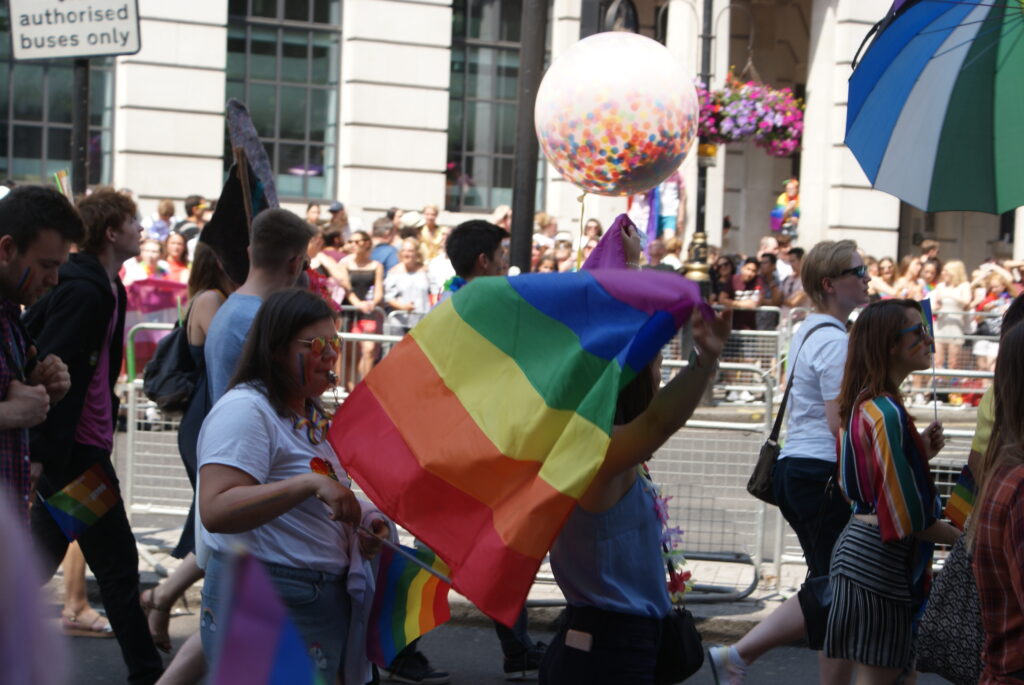
: View of the Pride flag and globe being flown in the Pride London parade

This International Migration Day, we’re highlighting the experiences of migrants.  This piece is by Richard Mole, who describes the experiences of queer Polish people moving to London. Richard edited the open access book Queer Migration and Asylum in Europe.

While opposition to LGBT rights in Poland has lessened in recent years, it is still among the highest in the EU, the result in part of the instrumentalisation of homophobia by Polish religious figures and politicians. During his re-election campaign in 2020, for example, Andrzej Duda made repeated attacks on LGBT rights, while around 100 municipalities have declared themselves to be LGBT-free zones. In such contexts, queer Poles have to decide how to respond to situations in which they are constructed as a threat to society and religious values. For many migration is a key strategy to escape homophobia at home.

In my research on Polish queer migration to London, it was possible to make out two main migration pathways. While some of my interviewees moved directly from their home towns to London, most relocated from the small towns they grew up in to larger cities – primarily to the nation’s capital, Warsaw – before then moving to the UK. As Ryszard put it succinctly:

‘[If] you’re gay, you move to Warsaw or you can move abroad, or you move to Warsaw and then you move abroad!’

Migration from small towns to cities is a common experience of LGBT people the world over and the motivations of queer Poles in my study in many ways mapped on to those identified by scholars working on other societies: to come out; to move to a neighbourhood with an existing LGBT community or LGBT venues; to be with a same-sex partner; or to benefit from sexual citizenship rights.

Moving away from their home towns enabled those who had not yet come out to extricate themselves from the social control of their families to perform their sexuality in line with their own desires and reduce the risk that their sexual behaviour and identity would be reported back to their parents before they felt ready to tell them. For those who were not ready to come out but who wanted to explore their sexuality, living in their home towns might increase the risk of word getting out that they were gay or lesbian. The fact that, according to Bartosz, ‘everybody knows everyone’ in small towns, in particular, but also to some extent in cities meant that it was difficult to ensure that your private life stayed private.

Migration to Warsaw, which was frequently referred to as the most liberal city and its inhabitants the most open-minded in the country, offered an unparalleled gay scene, providing queer Poles with a sense of community and the opportunity to engage in sexual relationships – often for the first time. Yet, for others, domestic migration to Warsaw or one of Poland’s other cities only partly enabled them to live their lives on their own terms. For Adam, the dominant discourses around appropriate gender and sexual behaviour placed restrictions on his ability to express his feelings towards his boyfriend in ways that would have gone unnoticed had his partner been a woman:

When I started dating and I had a partner that I wanted to go out with, yeah, I didn’t ever feel comfortable about, I don’t know, showing our affection in public places, so to speak. And I didn’t mean like just snogging in the middle of a square or something but I mean, you know, those little gestures, like holding hands or just sitting close to each other on a bench somewhere, things like that or holding hands in the cinema.

What my findings suggest is that domestic migration only met some of the needs of queer Poles in terms of their ability to live their lives on their own terms. Even presenting a gender image that did not adhere to the traditional ideas of how Polish men and women should behave and what they should wear was a source of disquiet. As Adam explained:

‘Poland is very rigid in terms of maintaining certain gender identities. […] More often than not, there’s no malice in the remarks people make [but] it still makes you feel kind of uncomfortable.’

Thus, whether or not LGBT Poles migrate to more liberal cities such as Warsaw, their freedom is still constrained to some degree by ‘acceptable’ gender and sexual norms. One way to extricate themselves from these constraining forces was to leave Poland.

Contrary to some Western media reports none of my respondents fled Poland in fear of state persecution. Rather, the general impression given was that their decision to migrate was prompted by the belief that moving to London would grant them greater freedom to perform their sexuality in line with their own desires. As Grzegorz explained: ‘I think homosexuality just plants this thing in your head that you’re not going to be free until you go somewhere where you’re accepted, you know.’ While very few respondents cited the desire to come out as a factor motivating them to move to Britain, the ability to be out to most people beyond a small circle of friends and family was identified as a factor which, if not prompting them to move to the UK in the first place, was at least seen as a reason to stay. To Dariusz, this was tied up with the perception that people in London were more accepting of sexual difference. (It is important to emphasise that attitudes towards homosexuality outside London are not always as positive as in the capital and that anti-LGBT hate crime remains a serious problem throughout the UK.)

I feel much more comfortable being out here at work, everywhere I go, I do feel that, you know, I don’t have to be ashamed of it any more, there’s nothing to hide. […] I know that people here will understand, if they don’t, no problem. So, this is the attitude that, you know, I didn’t have in Poland; I just felt like if someone had a problem with me being gay, they’d probably beat me up or something.

Moving to a town or city with an LGBT scene was frequently cited as a motivation to migrate – particularly for those who had moved directly from small towns to London, rather than first moving to Warsaw or other Polish cities. Florentyna, who grew up in a town of just 50,000 people, initially wanted to move to Edinburgh but eventually opted for London because of the greater range of LGBT venues there. While those who moved from Warsaw or other big cities were less likely to refer to London’s gay scene as a motivating factor, they did notice the impact access to a gay scene like London’s had on LGBT Poles who had migrated from the Polish countryside:

I think a lot of Polish gays, when they come from villages, […] come here and they absolutely explode with freedom. […] They’re from places where it’s really frowned upon and it’s really tough. […] It’s interesting how when they come here, you know, they just, it’s nice to see, they just explode with gayness. Grzegorz

In general, it was the draw of London’s gay scene, sexual citizenship rights and the perception that there was greater acceptance of difference that drew most of my queer Polish respondents to London. Freedom to be oneself trumped all other motivating factors. And, even though a number of respondents still referred to Poland as ‘home’, it was clear many felt more at home in London.


About the author

Richard C.M. Mole, Professor of Political Sociology (UCL SSEES), researches identity, sexuality, and migration, particularly of queer individuals in Eastern Europe. In this piece, he looks at the experiences of queer Poles leaving their home towns and migrating to Warsaw or elsewhere in Europe, where they can more freely explore or express their sexuality.

This post originally appeared on the UCL European Institute blog 

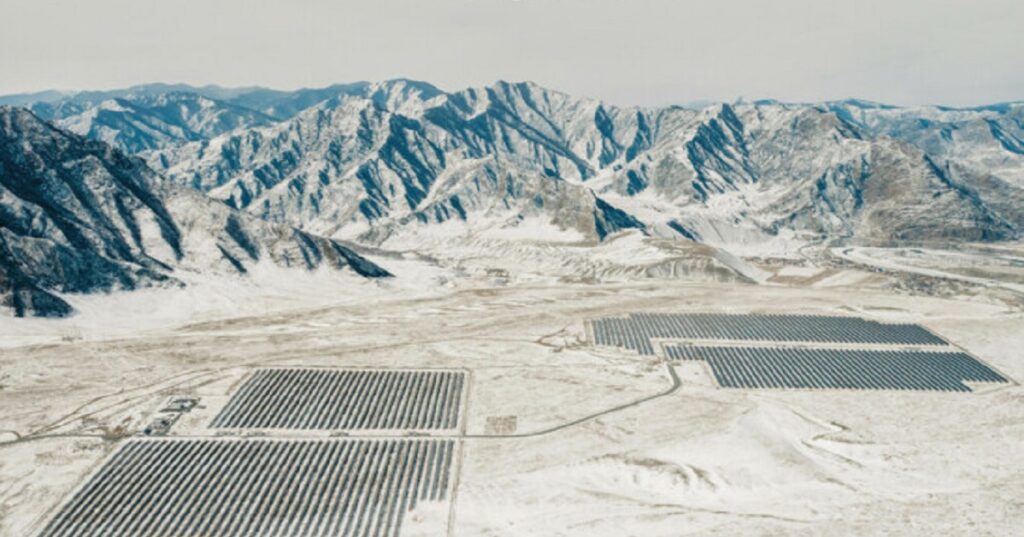
Geographies of Solar Energy Transitions awarded best edited book award by American Energy Society

Aerial view of vast solar panel fields in a snowy landscape with rugged mountains in the background.

We are delighted to announce that Geographies of Solar Energy Transitions has been awarded the American Energy Society’s best edited book award for 2024!

Edited by Siddharth Sareen and Abigail Martin, with a host of outstanding contributors, Geographies of Solar Energy Transitions focuses on how solar energy governance (both state-based regulations and more market driven modes of governance) is evolving to address a diverse range of conflicts and challenges.

Each year, the American Energy Society surveys the energy landscape and spotlights the most extraordinary contributions to energy and sustainability. Categories include books, media, people and STEM.

The announcement said that ‘Geographies of Solar Energy Transitions (UCL Press) focuses on how solar energy governance (both state-based regulations and more market-driven modes of governance) is evolving to address these conflicts in diverse settings. Each chapter is well written (especially chapter 4 “Beyond Power” by Karla Cedeño and Ana G. Rincon-Rubio; and also chapter 10 “Governing solar supply chains,” by Dustin Mulvaney.’

Congratulations to the volume’s editors and contributors!

New open access books published in December 2024

Books on a wooden bookshelf in UCL library.

The end of the year is nigh, and we’ve got one very exciting open access publication to share with you: Urban Transformations in Sierra Leone!

With a population over one million, Freetown, the capital of Sierra Leone, faces serious challenges around provision of services, housing and infrastructure, all exacerbated by climate change. Already, a large share of the Freetown population lives in informal settlements and as many as 70 per cent of the city’s residents are employed on an informal basis.

In 2015, the Sierra Leone Urban Research Centre (SLURC) was established to engage with urban challenges in Sierra Leone through research, capacity building and advocacy activities in areas such as health, land, housing and mobility. SLURC has become a platform for dialogue among urban stakeholders to negotiate the future of the city.

Urban Transformations in Sierra Leone aims to share SLURC’s journey so far, articulating the key findings generated by its various research projects, while also reflecting on the partnerships it has enabled. By bringing together research from different sectors, the book makes a significant contribution to knowledge on Freetown, and demonstrates the potential of transdisciplinary work.

What ever you’re doing this festive season- whether you’re planning to celebrate, or not- we send you the warmest of season’s greetings. We’ll be back next year with more of the very best open access books and journals!

What is blindness?

A ladder descends into a jagged hole against a black background with white dots.

International Day of People with Disability (IDPWD) is a United Nations day that is celebrated each year on 3 December. The day aims to promote an understanding of disability issues and mobilise support for the dignity, rights and well-being of those who live with disabilities.

To mark the day, we’re publishing an excerpt from chapter one from Michael Crossland’s important book Vision Impairment. In this extract, he describes how the word ‘blind’ can be an emotionally charged term, and how one of his patients took the news of worsening vision impairment in a surprising way.

‘So would you say I’m blind?’ Sam asked.

This sounds like a straightforward question. Sam had been attending my low vision clinic for six years, so surely I would be able to answer her without a second thought?

Sam had an eye condition called Stargardt disease, which was slowly causing the cells in the central part of her retina to stop working. Just after starting high school when she was 11, she had found it difficult to see the whiteboard in some of her classrooms. Assuming she needed an eye test, her parents took her to a local optometrist who prescribed spectacles, but they didn’t seem to make much difference to her sight. Her family realised there was something seriously wrong when Sam
asked for the ketchup bottle to be passed, not seeing that it was right in front of her. A trip to her doctor led to a referral to an eye hospital, blood tests, scans, photographs and the unwelcome news that she had a serious, inherited and generally untreatable eye disease.


Sam remembers the news being broken: ‘The consultant just said “there’s not a lot we can do”,’ she told me. ‘I felt a bit like he was washing his hands of me, although I’m really pleased he referred me to this place.’ ‘This place’ was the low vision clinic we were sitting in, buried away at the back of the hospital. At her previous visits to the clinic I had prescribed Sam strong reading spectacles, given her various magnifying glasses and shown her how to set up her iPhone to make it easier to see. I’d spoken to her specialist teacher for visual impairment to make sure she had a relay system for the whiteboard at school, and had given her details for a group so she could meet other teenagers with sight loss. Since her first visit, Sam had changed from being a shy and slightly awkward girl to a rebellious teenager (an appearance not helped by the way that her vision loss made it difficult to maintain eye contact), then a funny and engaging young adult. Now she had green hair and wore Doc Martens, a denim jacket and a ‘Meat is Murder’ T-shirt.


Sam’s question about whether I would call her ‘blind’ may have been spurred on by the fact that her vision had clearly got worse. For the first time, she could no longer make out the letters on the top row of my sight chart, four metres away from her. When I wheeled the chart closer to Sam she could read the first few letters by moving her eyes around, sliding the blind area in the central part of her vision away from what she was looking at and using her peripheral retina to just about see.


Sam had told me that she’d got the grades she wanted in her A Levels and that she was very excited about moving to Leeds to study politics. She’d told me that her football team had won a tournament that summer and that she’d started a band with some of her college friends. She could travel independently, using apps on her phone to help when she couldn’t see a bus number or platform sign. Her vision was too poor to have a driving licence, but she could cycle to band rehearsals. She’d
had enlarged print and additional time in her exams, but she didn’t read braille or have a guide dog. Would this active and successful teenager meet most people’s idea of a blind person? The poet Stephen Kuusisto talks about people entering ‘the planet of the blind’,1 but would Sam be welcome there?


The word ‘blind’ is emotionally charged and tends to be avoided by people working in eye clinics. In the UK, being ‘registered blind’ was replaced in the early 2000s with ‘having a certificate of vision impairment’. In ophthalmology research, we even speak about ‘double masked trials’ rather than the ‘double blind’ studies used in other areas of medicine.


This coyness around the word ‘blind’ isn’t universal. Many of the major sight loss charities use the word in their names, such as the UK’s Royal National Institute of Blind People, the National Association for the Blind in India and New Zealand’s Blind and Low Vision NZ. In 2011, the London-based Metropolitan Society for the Blind renamed themselves ‘Blind Aid’, which almost feels like reclaiming the word for people with vision impairment.


Writer Georgina Kleege uses the word ‘blind’ as she dislikes the alternatives: ‘The word “impairment” implies impermanence … but my condition has no cure or treatment … I crave the simplicity of a single, unmodified adjective. Blind. Perhaps I could speak in relative terms, say I am blinder than some, less blind than others.’ Kleege has only come to embrace the word ‘blind’ after several decades of low vision. She writes that as a teenager ‘the most I would admit to was a “problem with my eyes”, sometimes adding, “and they won’t give me glasses”, indicating that it was not me but the wilfully obstructionist medical establishment which was to blame for my failure to see as I should’.


When Sam asked if she was blind, I heard her father gently whistle at the gravity of the question. The room was so small that I thought I could feel his breath on the back of my neck. The background hum of the busy clinic around me seemed to drop, as if everyone was waiting for my response. Even as I spoke, I knew my answer was a cop out: ‘The word “blind” means something different to nearly everyone I meet,’ I told her. ‘We prefer to say “severely sight impaired”. It’s true that if you were in America you’d be called “legally blind”, but you’re certainly someone who uses your eyes for most things, so I don’t think “blind” would be the best word to describe you.’


‘Legally blind,’ Sam said, almost under her breath. I thought she was going to comment on this dramatic label, but she surprised me instead. ‘We’ve been looking for a name for our band, and I think that might be it!’

New open access books published in November 2024

Books on a wooden bookshelf in UCL library.

The end of the year is nigh, and Winter is upon us (in the Northern hemisphere, at least). As things start to wind down for the end of year festivities, we’re here with news of four new open access books to devour in the quieter moments.

Caring is Sharing? Couples navigating parental leave at the transition to parenthood was the first title we published in November. In this absorbing book, Katherine Twamley explores how mixed-sex couples make decisions around parental leave and how these decisions shape their work and family care practices. Drawing on a longitudinal study of couples in England, it shows that practices of couple intimacy influence the processes through which they enact divisions of parental leave and care.

The latest instalment of the Embodying Inequalities: Perspectives from Medical Anthropology series, Packaged Plants: Seductive supplements and metabolic precarity in the Philippines, offers an absorbing ethnography and cultural history of how the production and consumption of plants for food and medicine has gone through ‘metabolic rifts’, increasingly processed into commodities with adverse impact on health and aggravating existing economic and social inequities. The book also describes ultra-processed foods that are linked to metabolic syndrome, including cardiovascular disease, diabetes and obesity- a topic of great interest to people across the globe!

Polish Cities of Migration: The migration transition in Kalisz, Piła and Płock  analyses how Poland is transitioning to a new identity as a ‘country of immigration’, although its ‘country of emigration’ identity remains strong outside a handful of bigger cities. The book explores two interconnected puzzles: how Poland’s migration transition is influenced by the fact that it is simultaneously a country of emigration, and why migrants are spreading out beyond the metropolises, often settling with their families in smaller cities with limited labour markets, cities from which Poles themselves continue to migrate. An excellent companion to 2018’s The Impact of Migration on Poland.

The first volume in the Textbook of World and Minority Languages series, Baghdadi Judeo-Arabic: An Introductory Text, is dedicated to spoken Baghdadi Judeo-Arabic and is designed to guide beginners to an advanced level, with the goal of enabling basic conversations. It focuses on common expressions of this unique dialect and opens a window to Baghdad’s historic Jewish culture. The 10 lessons guide readers through a particular topic, such as greetings, family, shopping or cuisine, and consist of sample texts, key vocabulary, grammar points and exercises. If you enjoyed the Grammars of World and Minority Languages series, you’ll enjoy this new series!

As always, we’ll be back again next month with a round up of the very best new open access books. As always, stay safe, and wrap up warm!

Learning from history – how could it work?

Maren Tribukait’s recent article in History Education Research Journal asks how the topic of contemporary right-wing extremism is approached in German educational media, and how it is linked to the Nazi era. In this post, she explains what she learnt.

There has been a lot of discussion on whether it is possible to learn from history – especially from the abysses of the 20th century. In the current political situation, this question seems to be more relevant than ever as quite a few people seem to have forgotten about the era of National Socialism and fascism. Although there might be a lot of reasons for this, I wondered whether the pedagogical approaches in history education could also be problematic and if there might still be ways to learn from history. Therefore, I investigated the connections that are drawn between the Nazi era and contemporary right-wing extremism in current history education in Germany. In my paper, I looked at history textbooks, but I also discovered a digital game, Hidden Codes, that approaches the topic in an innovative way.

Concerning the structure of textbooks, I found out that only 16 out of 28 history textbook series for the lower secondary level covered the topic of contemporary right-wing extremism; and almost all of these 16 textbooks placed the topic at the end of the chapter about National Socialism, usually presenting it as a lasting legacy. This textbook structure may have two effects: first, when today’s right-wing extremism is locked away as a problem of the Nazi past, it cannot be explained and understood in the context of contemporary history. And, second, it contributes to a ‘polished’ narrative about unified Germany as the topic does not resurface again in the respective chapter.

As to the pedagogical approaches to the topic, I identified predominantly two, the moral response and the analytical approach. The moral response approach tends to simplify today’s right-wing extremism as a phenomenon of the fringes, it also prescribes students how to think and judge about it. The analytic approach, on the other hand, characterizes right-wing extremism in a more nuanced way as an anti-democratic, illiberal and violent political movement with a modern face while giving students more room to explore the phenomenon by themselves. Interestingly, the game Hidden Codes followed an entirely different approach by focusing on problem-solving: as girl or boy at a new school the player has to decide how to react when one girl turns out to be right-wing extremist. The game aims to convey a complex picture of right-wing extremism through its story and offers empowering subject positions to the players.

Teaching about the Nazi era and the Holocaust will remain important. But we have known for some time that it does not work directly as prevention of right-wing extremism. Since the Nazi past is moving further away for the younger generations, we need to pay more attention to the present and the lifeworlds of the students, which are not only shaped by the ‘Age of Extremes’ (Eric Hobsbawm), but also by the immediate, post-1989 past.

This article originally appeared on the History Education Research Journal blog. History education as prevention: the topic of right-wing extremism in German educational media by Maren Tribukait (Leibniz Institute for Educational Media, Georg Eckert Institute, Braunschweig, Germany) is published in History Education Research Journal, volume 21.


Maren Tribukait joined the Leibniz Institute for Educational Media at the Georg Eckert Institute in Braunschweig, Germany in 2013 and works in research  and knowledge transfer. She leads the Teaching in a Mediatised World research team and conducts research into the changes occurring in schools as a result of digital networks and increasing political polarisation. She also coordinates the Digital Lab, where researchers, education practitioners and media developers can meet to exchange ideas, analyse digital practices and test innovative didactic approaches.

Chances and Risks of Participation in dealing with Difficult Heritage

Florian Reitmann’s recent paper in AMPS explores a participatory process organised to deal with the highly contested former Nazi project Prora on the Baltic island of Rügen, which was carried out on behalf of the German government in 1996. The author explains why the process opened new avenues in dealing with difficult heritage.

How can a difficult heritage site exert a negative influence on a local community and even block the path to a future perceived as positive? How can such a difficult legacy be negotiated in order to transform it from an obstacle into an opportunity for positive development? What are the opportunities – but also the risks – of participatory approaches in dealing with such a difficult heritage site?

These questions characterised a participatory process that in 1996 dealt with a site with multiple burdens: ‘Prora’ on the German island of Rügen in the Baltic Sea.

Prora was planned and built by the Nazi regime. Intended as a gigantic ‘strength-through-joy’ seaside resort, it was meant to hold 20,000 beds, to provide low-cost seaside holidays for workers. However, Prora was the first time put into operation under communist rule. It served the GDR’s ‘National People’s Army’ as an important military base. In this new function, the building not only represented the military power of the communist regime, it also exerted an important influence on the island’s economy and the lives of the local population for many years.

After the fall of the Berlin wall, the military was withdrawn from the site. However, due to its size and former importance, Prora soon turned into a battleground in the conflicts over Rügen’s future. Various stakeholder — including residents of the complex, local communities, heritage activists, government agencies and international investors — attached different historical meanings to Prora and, upon that basis, projected conflicting futures on the site and the island.

When the growing conflicts threatened to block any solution, the federal government decided to cooperate with local actors and initiatives to find a solution for Prora.

The resulting participatory process took the form of a ‘discursive procedure’: Over the course of eight months, joint solutions for dealing with the complex were developed in workshops and discussion rounds. This process is at the centre of my article ‘Turning the project of dictatorship into an example of democracy? Chances and risks of participation at the Nazi relic Prora’.

My article argues that the participatory process in Prora opened a space of opportunity that demonstrates the potential of a transformative and future-oriented approach to difficult heritage. A burden that inhibited development on the island was transformed into a positive and active asset. It became a tool for actively shaping a new and different future. This tool was used to verbalise and manage conflicts that went far beyond the immediate significance of Prora and affected the entire region.

However, the framework in which the participatory process in Prora took place pointed to new risks and problems that can accompany such an approach. Under the conditions of market-liberal politics, the call for the withdrawal of the state, experts and institutional responsibility can easily serve as a vehicle for delegating responsibility for difficult heritage to market forces and profit-oriented local actors. This also became quite clear in the course of the participatory process in Prora and is discussed in more detail at the end of the article.

Turning the project of dictatorship into an example of democracy? Chances and risks of participation at the Nazi relic Prora by Florian Rietmann (Brandenburg University of Technology) is published in Architecture_MPS, volume 29.

This article originally appeared on the AMPS journal blog.


About the author

Florian Rietmann is an architect, researcher and educator. Currently he is scholarship holder and lecturer at the Berliner Hochschule für Technik (BTH). His working experience include different positions in architecture firms in Germany and Switzerland as well as his work as a researcher in the DFG Research Training Group “Cultural and Technological Significance of Historic Buildings” at Brandenburg University of Technology, where he is currently working on his dissertation “Prora’s Rigid Resilience – The Long Shadow of an Unloved Structure”.

The transformation of migration in Polish cities

For her new book, Polish Cities of Migration: The migration transition in Kalisz, Piła and Płock, Anne White carried out extensive in-depth interviews with Polish return migrants, Ukrainians and people from other countries living in the Polish cities of Kalisz, Płock and Piła. This extract from Chapter 1 explores how the basis of Poland’s migration identity is changing from emigration to immigration.

‘For me it’s no different whether I live in Nottingham or Płock. I spend most of my time in the recording studio.’

(Jan, Polish return migrant, interviewed by Anne White)

‘At last, after waiting so long, I’ve been able to buy a house … I want my grandchildren to be born here … There’s a lake and a forest. I want to take my grandsons fishing.’

(Sergei, Ukrainian interviewed by Anne White in Piła, mid-February 2022)

Polish Cities of Migration analyses how Poland, with its strong and continuing ‘country of emigration’ identity, is transitioning to a new identity as a ‘country of immigration’. In the past few years, millions of migrants have been arriving to work, study and join family members in Poland. The book explores two interconnected puzzles. The first is whether the nature of Poland’s migration transition is influenced by the fact that it is simultaneously a country of emigration. In Poland, immigrants encounter Polish circular and return migrants, as well as Polish neighbours and workmates who have not migrated, but have family and friends living abroad. The book discusses how these mobile and transnationally connected Poles respond to the newcomers in their midst. What parallels do they perceive, and do they behave in a more welcoming way because of their shared experiences? The second puzzle concerns the decision-making of the non-Polish migrants. Why are they beginning to spread out beyond the metropolises, often settling with their families in smaller cities, such as Kalisz, Piła and Płock, with limited economic opportunities? I argue that their feeling of comfort in such locations links to lifestyle considerations, and is partly connected to their impression that local Poles have a pragmatic and accepting attitude towards migration. The early twenty-first century context is significant for Poland’s migration transition. Polish Cities aims to shed light on some typical aspects of twenty-first century mobility, and it compares the experiences of Polish and other migrants. Drawing on my in-depth interviews with 70 Ukrainians, 37 Poles and 17 people from different countries around the globe, I illustrate some actual – not just perceived – parallels between (ex)migrants, irrespective of their nationality. These include, for example, how parents quite soon after their arrival abroad decide to bring over their partners and children. Parallels between Ukrainian and Polish migration are often particularly striking, as also found, for example, by Brzozowska (2018). The book investigates why.

This chapter begins by introducing the main themes and arguments of the book. It outlines the story of the Polish migration transition and the particular role played by Ukrainians. It also looks at the phenomenon from the Ukrainian perspective. For Ukrainians, this is not a migration transition, but a story of mobility and emigration connected directly and indirectly to Putin’s 2014 invasion. The chapter then discusses central concepts of the book: migration transitions and migration (or mobility) cultures. It relates these to the Polish experience and explains how the concepts shed light on local-level experiences of becoming a country of immigration. Because of space limitations, the chapter does not discuss other concepts used in Polish Cities, such as livelihood strategies, place attachment, intersectionality, integration, anchoring, contact hypothesis, ethnic hierarchies and social networks. These are introduced in later chapters.

Countries are often considered to be either ‘countries of immigration’ or ‘countries of emigration’. For example, Australia is seen as a ‘country of immigration’, unlike Ireland, which until the 1990s was a ‘country of emigration’. These reputations are not just linked to statistics about net migration flows, but are also based in culture and historical tradition. Moreover, ‘emigration’ and ‘immigration’ in English (although not in other languages, such as Polish) imply migration for settlement, suggesting significant, sustained losses or gains of population. Given these connotations of migration for settlement, the phrase ‘country of immigration’ captures the idea of a country which is acquiring a more permanent identity as a place where foreigners come to settle. The book argues that becoming a new receiving country on a major scale is not just a matter of statistics but also implies acquiring a ‘country of immigration’ self-identity. In this connection, one could study the top-down process of adopting legislation, institutions and policies. My focus instead is on grassroots self-identification, the bottom-up process of ordinary people adjusting to the new identity as a receiving society. However, as discussed later, migrants have to become somewhat visible within local society for the majority population to acknowledge that this change has occurred. The book shows that on the eve of the 2022 refugee influx, Ukrainians, whom I label the ‘majority minority’, were already more visible and acknowledged to be part of composition of the local population in the fieldwork cities than were the ‘minority minorities’. These other migrants were individuals or tiny groups, not communities of co-nationals. They hailed from countries across the globe, from Uruguay to Nigeria and Taiwan.

Chapter 2 discusses the book’s intersectional approach. However, it seems important here in Chapter 1 to highlight that ‘migrants’ is a category as diverse as ‘humankind’. Any person could become a migrant. One type of differentiation which is particularly salient for this book is that different migrants have different expectations about whether their migration may result in settlement. Sergei and Jan, quoted at the head of the chapter, were Ukrainian and Polish respectively, but their ages and overall outlooks on life were at least as important as nationality in explaining their different degrees of place attachment and attitudes towards mobility. Sergei, having transplanted himself and his family to Piła, and achieved his life’s ambition of buying a house, dreamed on the eve of war of being settled in idyllic surroundings for the rest of his life. He was one of a group of interviewees for whom migration appeared to represent a ‘happy ending’. Jan, a younger person and a musician, was highly mobile and transnational, and typified another group: people of different nationalities whose occupations meant they could have lived almost anywhere, but nonetheless chose to be based – sometimes part-time and temporarily – in the smaller city or its environs.

About the Author

This is an excerpt from Polish Cities of Migration: The migration transition in Kalisz, Piła and Płock by Anne White.

Anne White is Professor of Polish Studies and Social and Political Science at UCL, author of Polish Cities of Migration: The migration transition in Kalisz, Piła and Płock and co-author of The Impact of Migration on Poland.

Sign up to our newsletter

Don't miss out!
Subscribe to the UCL Press newsletter for the latest open access books,
journal CfPs, news and views from our authors and much more!