We are currently upgrading our shopping cart; in the interim all orders are being diverted to Waterstones. If you would like to redeem a promotional code, or are an author wanting to place an order, please email us.
Travel Behaviour Reconsidered in an Era of Decarbonisationby David Metz argues that our transport networks are mature, and the objective should be to improve operational efficiency. Over the past half century, large public expenditures in roads and railways were justified by an analytic approach to the benefits of investment, primarily the value of the time saved through faster travel, to both business and non-business users of the networks. However, average travel time has not changed over this period. People have taken the benefit of faster travel as better access to people, places, activities and services, with the ensuing enhanced opportunities and choices. This book argues that the basis of orthodox transport economic analysis has been misconceived and a fresh perspective on economic analysis is now needed.
We finished the month with the latest book in theAgeing with Smartphones series: Ageing with Smartphones in Japan: Care in a visual digital age by Laura Haapio-Kirk, who we have worked with since the early days of the Press when she was closely involved in the Why We Postseries of books as the team’s Research Assistant. Based on 16 months of ethnographic research in urban Kyoto and in rural Kōchi Prefecture, Ageing with Smartphones in Japan follows members of one of the most aged populations in the world as they navigate social and personal shifts post-retirement.
We’ll be back again next month with a round up of the very best open access books. As always, stay safe!
On World Beard Day, it seemed appropriate to repeat a post from the archives. In this intriguing post, which originally appeared on the UCL European Institute blog, Seb Coxon explains what got him interested in researching how beards are portrayed in medieval German literary texts, and how we make make sense of this. His book, Beards and Texts: Images of masculinity in medieval German literature is out now.
Really, I ought to claim that my interest in this niche topic was sparked by landmark works of medieval European literature. By the Old French Chanson de Roland, for example, with its battles between white-bearded Franks (led by a white-bearded Charlemagne) and their white-bearded heathen adversaries. Or by the medieval Spanish epic, the Poema de Mio Cid, whose long-suffering protagonist takes remarkable pride in his own beard. Or even by the medieval English romance, Sir Gawain and the Green Knight, where the bushy-bearded Green Knight causes an uproar by deriding the knights at Arthur’s court as ‘beardless boys’.
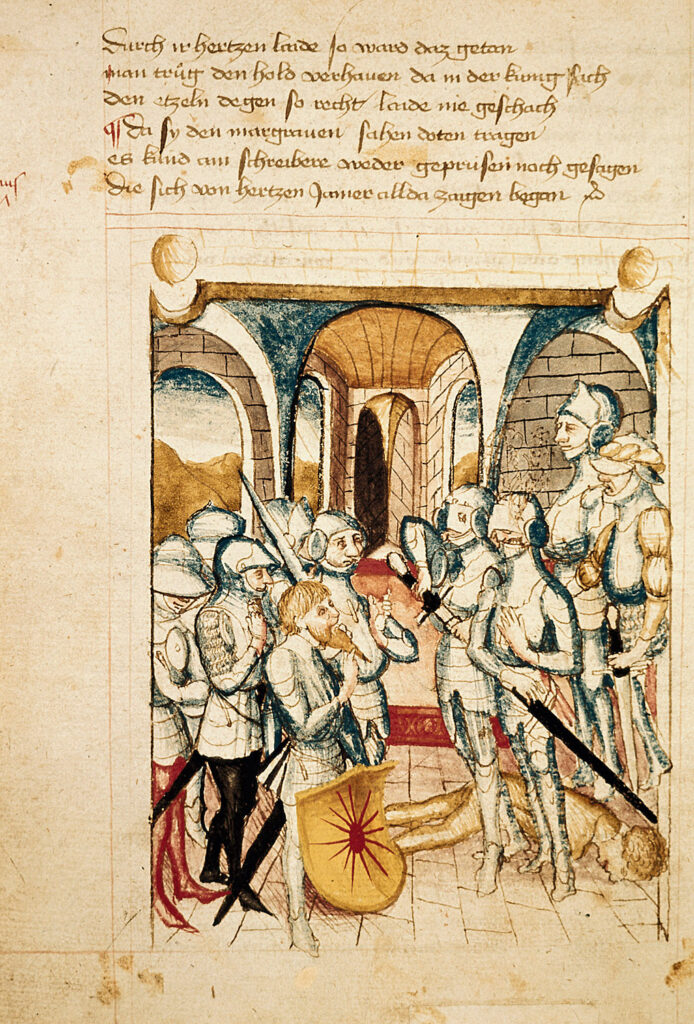
But the truth is I have a class of students to thank. They were the ones who first drew my attention to a particular episode towards the end of the Nibelungenlied, the foremost medieval German heroic epic. Here, in a twist of Germanic fate, one fearless warrior meets his bloody end at the hands of his friends, whereupon he is mourned by a whole host of suitably devastated heroes, as visualized by the poet: ‘You could see the tears flowing down their beards and chins, for they had suffered a cruel loss.’
Nibelungenlied. Berlin, Staatsbibl., mgf 855, fol. 148v. Public Domain.
So what, if anything, does the almost incidental beard-reference in this scene achieve? My best guess is that it forms part of a strategy of compensation, reasserting the notion of heroic masculinity at a precarious moment. In other words: if warriors are going to cry, then at the very least they should shed tears collectively as a band of bearded brothers and in demonstratively manly fashion.
As a ‘natural’ and naturally conspicuous symbol for masculinity, beards were imbued throughout the Middle Ages with theological, legal and medical significance. In the hands and mouths of poets references to beards, and to beardlessness for that matter, could always serve as a shorthand way of evoking a masculine ideal in any number of complementary or incongruous contexts.
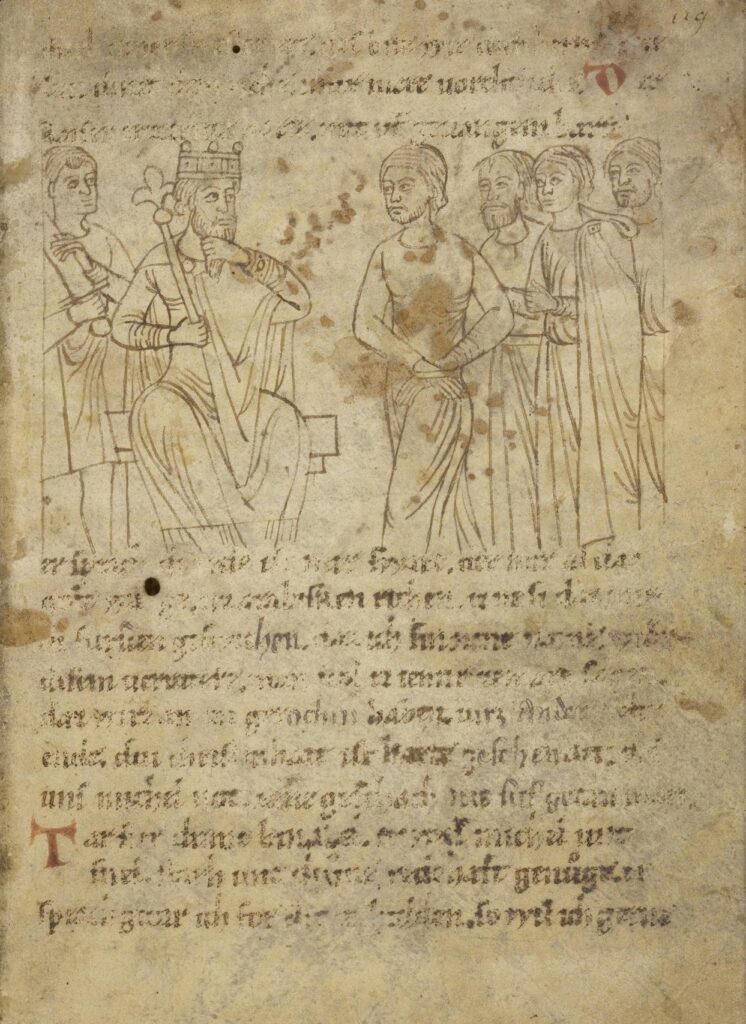
Of course, some figure-types were more likely to be portrayed as bearded than others, although it is always worth looking out for bearded women (not least those virgin saints who miraculously grow a beard to escape unwanted male attention). The bearded king, for example, often wears his majesty in his face, as it were, his beard betokening such credentials for rulership as (sexual) maturity and wisdom. This was in fact a widespread iconographic motif from the twelfth century onwards. And the same motif was exploited by narrative poets too. Thus, a certain Pfaffe Konrad, the author of the German Rolandslied (a reworking of the Chanson de Roland), repeatedly draws attention to Charlemagne’s beard at moments of crisis, when the emperor’s composure is threatened and he expresses his disquiet by grabbing, stroking or shaking his beard at those around him.
Different texts do different things with the same bearded figure-types. In stories where kings are presented as unworthy or fit only for ridicule, their beards are liable to be manhandled, plucked, or even vomited over (as in the widespread fable of the nauseous and somewhat disrespectful philosopher).
Much of this material conforms to one of the cardinal rules of pre-modern storytelling: selective visualization, or rather: choice details pertaining to the appearance of characters tend to be given for a special, thematic reason. Where no such reason existed, the beardedness, or otherwise, of male figures was left to the audience’s (or reader’s) imagination. By contrast, the artists of the miniatures contained in illustrated manuscripts of these same poetic works had no choice but to decide which male figures to beard and which not. The relationship between medieval text and image was very rarely one of straightforward correspondence.
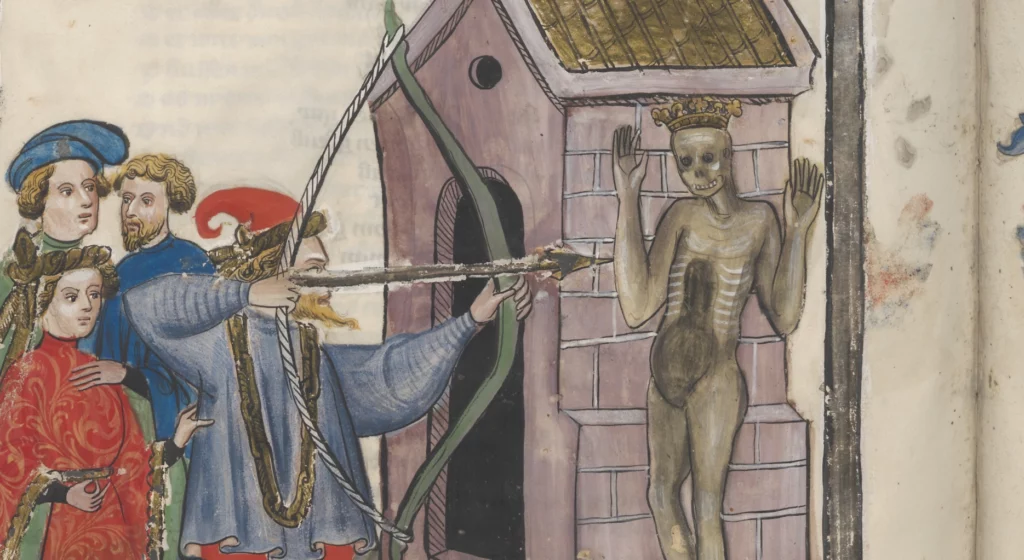
Not infrequently artists had ingenious ideas of their own in matters of the beard. The artist(s) behind some of the pictures designed for Hugo von Trimberg’s very popular moral compendium, Der Renner, for instance, compounds the comic effect of one tale of marital infidelity by emphasizing the affinity between unattractive husband and goat: bearded, outside, and of little interest to the wife indoors, who is embracing her (beardless) young lover. Elsewhere in the same codex, an exquisitely executed beard forms the very focal point of another miniature, framed as it is by the bow and arrow held by the eldest of a dead king’s four sons. Ironically enough, in the macabre trial to discover who among them is worthy of the crown it is the youngest son – the beardless figure to the left of centre – who distinguishes himself by refusing to shoot at his father’s corpse. Sometimes, it would seem, a decorous beard is no more than just that.
In today’s guest post, Maria Rubins talks about Redefining Russian Literary Diaspora, 1920-2020, which resulted from an international research project uniting leading experts on Russian culture from British and American universities.
The last hundred years have been marked by unprecedented migrations caused by world wars, revolutions, and economic globalization. Millions of people reside today outside their homelands, speak in adopted tongues and experience challenges and advantages provided by their status as “outsiders.” This specific anthropological experience generates hybrid identities that in turn inform art and fiction created by individuals who live at the crossroads between different cultures, languages and social codes.
Narratives of immigrant authors who, like Salman Rushdie or Assia Djebar, express themselves in the languages of their host countries, have long been discussed as a special category within diasporic and postcolonial contexts. But when we turn to the rich extraterritorial Russian literature produced over the last century in various parts around the globe, from Harbin to Paris, New York, Tel Aviv and São Paulo, we discover that the dominant critical reception has mainly focused on its connection to the homeland tradition. Russian émigré writing has been routinely discussed as a minor branch of Russian literature and its artistic lineage has been traced to the same set of canonical figures (Pushkin, Gogol, Dostoevsky, Tolstoy etc.). Have Russian writers who lived abroad for decades remained somehow immune to diverse transnational flows, as opposed to their peers who originated in other countries? Is the Russian case different because most of émigré writers continued to use their mother tongue, such notable exceptions as Nabokov and Brodsky notwithstanding? And can the language be still considered a crucial factor in defining a writer’s national affiliation?
Together with a group of international experts, I set out to explore whether the hundred-year-old intellectual Russian diaspora has produced a mere clone of metropolitan literature, or an alternative cultural formation. We sought to identify distinct markers of diasporic Russian writing that go far beyond just thematic content, linguistic hybridity, a sense of alienation, nostalgia, or emphasis on the workings of memory. We examined how diasporic literature inscribes experiences that are not easily available within the metropolitan locus, giving us insight into the human condition from a perspective informed by a simultaneous awareness of at least two cultural dimensions. Contributions to the book Redefining Russian Literary Diaspora discuss characteristic ways in which diasporic texts and literary practices reframe Russian master narratives; question the dominant cultural canon; contest standard historical interpretations; reshape cultural memory; and reflect experiences of exile, deracination, migration, translingualism and multiple belonging. In particular, they engage with diaspora writers’ responses to foundational rhetorical or ideological parameters that have come to define Russian cultural politics.
For instance, in Russia, writers were traditionally perceived as “prophets” and exerted tremendous authority. Tolstoy and Dostoevsky were approached for guidance on various moral, religious and practical matters. In the 20thcentury their works were reinterpreted as a prophecy of the Bolshevik rule: Lenin famously praised Leo Tolstoy “as a mirror of the Russian revolution” whereas Dostoevsky’s Demons was seen as a visionary novel about the chaos and violence of the social upheaval. Indeed, the status of a writer in Russia has always implied ethical responsibility.
How does the sense of mission change in the diaspora? What kind of prophecy can an exiled author deliver and to whom is it addressed? As Pamela Davidson’s chapter demonstrates, the tropes of prophecy and mission were radically reinterpreted in emigration. Many post-revolutionary intellectuals saw their mission as the rejection of Soviet Russia (for some this went as far as supporting Hitler as Stalin’s chief opponent). Others regarded emigres’ geographical dispersion across Europe as a prerequisite for a fulfilment of Russia’s providential calling to mediate between Eastern and Western Christianity. Yet, others, like Nabokov, resisted any mission at all.
If we turn to another cornerstone of collective Russian identity—the victory in the Great Patriotic War (as World War II is officially designated in Russia) and the tremendous suffering during the Siege of Leningrad,– we will see that diasporic and domestic writers interpret these events differently. Mark Lipovetsky’s analysis reveals that today’s liberal-minded authors living in Russia often show a cynical, a-historical attitude to the Siege as a reaction against the manipulation of this lingering trauma by the state propaganda. By contrast, diasporic writers tend to distance themselves from the present debates, to approach the Siege through historical documents, and to minimize the internal conflicts in their representations of life in Leningrad.
Another sensitive topic, the Holocaust, was a de facto taboo in official Soviet discourse that deflated the specifically Jewish tragedy and focused on the common sacrifice of the Soviet people in the war against Nazi Germany. Diaspora naturally offered a space for reflection on this subject. It became one of the central topics in the writing of Russian Israelis and their interpretation has been coloured by the memory of Soviet antisemitism and silencing of the Holocaust and by local Israeli narratives of the shoah.
Many other key elements of the metropolitan canon have been likewise dramatically renegotiated in the diaspora. These complex processes of critical rethinking of the national tradition complemented by Russian writers’ engagement with political, ideological and cultural trends in their host countries eventually produced new forms of Russian cultural identities and alternative definitions of Russianness. By articulating a new interpretive optic of this rich legacy our book aims to highlight the generative potential of diasporic difference. In this way, we believe, the metropolitan and diasporic literatures can engage in a productive dialogue and offer a more balanced view of Russia’s past and future cultural trajectories.
View of Downtown Brooklyn’s Fabric with Infill Housing Spatially Integrating the Farragut Housing Towers (indicated by use of brown roof)
For much of the 20th century, the image of cities was defined by the skyline of corporate office towers. The disruption of the pandemic, however, has reduced the demand for new office towers and dampened their allure as the image of the city. At the same time, the importance of housing in cities has only grown and is now the critical focus of city governments across the world. Despite the ability to work and live remotely, urban housing, especially in global cities like New York, is still in high demand as cities are the economic engines of their region, providing opportunity to a diverse range of people. These city governments are working to meet the vast needs for new housing stock, in particular affordable housing, while at the same time preserving as much existing housing as possible, especially housing for low-income families. This task of meeting the housing demand is daunting, with hundreds of thousands of new units required and many older buildings faltering due to a lack of adequate investment and maintenance. Making this task more difficult is the resistance many communities have to change, rendering proposals for new housing contentious. This volume of housing research offers multiple perspectives considering the nature of housing and specific instances where the provision of housing is a complex process with social, economic, and political implications.
My paper explores this complexity in the context of the vital questions surrounding the survival of public housing in New York City. The research and speculative design demonstrate the potential for new housing and site-specific urban design to be part of the solution to saving and upgrading the deteriorating subsidised apartments for low-income New Yorkers. This new housing, the fabric of a new neighbourhood integrating the public housing towers, is shown to simultaneously address the economic needs for the existing housing and the spatial and social isolation of public housing residents by providing the definition of new streets, parks, and public squares as an active and connected public realm. This paper’s goal is to help move the conversation forward by demonstrating what change could look like and how new urban housing development could benefit a wide range of new and current city residents.
Jason Montgomery is an architect, urban designer, scholar, and educator. An Associate Professor at Catholic University School of Architecture and a principal at Truong Montgomery Architect, his research reflects his interests in urban architecture and morphology. He co-organized a number of conferences and symposia addressing the complexity of cities, the evolution of downtown Brooklyn, and housing along the Brooklyn waterfront. He was the editor of a recently published volume Place-based Sustainability: Research and Design Extending Pathways for Ecological Stewardship, and a guest editor of a special issue of AMPS Journal: Re-imagining the City: Urban Space in the Post-Covid City.
Ethnographic accounts are generally written by anthropologists outside their own community. I had the rare opportunity to carry out ethnographic fieldwork in the very micro community into which I was born. While I carried out systematic ethnographic fieldwork, this book also draws on my experience growing up in a workers’ household as a plantation boy. An extended embodiment of the plantation community has shaped my world views and my anthropological approach to the study of human beings. I had the profound advantage of speaking the same language as my interlocutors, their dialect, but also their style of speech, its oratory with all its proverbs, aphorisms and short stories through which the socio-cultural world of the Tamil plantation workers are articulated and transmitted. I was able to grasp subtle and implicit aspects of socio-cultural life which might have gone unnoticed by anthropologists from outside the community. For instance, I was attuned to the differences between people belonging to different castes, which are sometimes transmitted in non-verbal embodied ways through etiquette, politeness, avoidance and abstinence. These can often be difficult for a foreign anthropologist to recognise, although long-term field immersion is intended to overcome this. This does not in any way suggest that my information is necessarily superior to that gained by a non-native anthropologist. However, the quality and sense of significance may be distinct. The importance that I give to identity, to its complexity and to certain principle values, I suggest, derive from my day-to-day experience as a member of the very community that I was studying.
Although there are clear advantages to being a native anthropologist – especially in giving me a deep sensitivity to the economic crisis that the workers confronted – in certain ways I was also restricted in the kinds of information I was able to gather. For the plantation workers, a foreigner is simply a foreigner; they do not care whether the particular researcher is from (another part of) India, North America, Europe or Australia. But the cultural capital of upper-caste urban India, or of whiteness and the colonial heritage, has its own hierarchy within which foreign researchers become positioned. Plantation workers are not concerned about foreign researchers publicising their personal life because they stay in the field for only a short period of time and disseminate the information gathered to a distant and unknown audience.
The fear was that I would share local knowledge (to which I was privy through my web of personal relations), with significant implications for a local audience. The expectation was that information presented in newspapers or academic articles that I wrote would feed back into the local situation, with negative consequences. As such my position was neither neutral nor outside. I was regarded by many as too close, too intimate with the events, and people were concerned that I might divulge too much. My positioning created in certain circumstances an ambivalent caution. People would test me by teasing, responding ironically or being extremely hesitant and even avoiding interaction with me. This became even more true as the workers were increasingly affected by the uncertainty that the crisis in the tea industry had generated.
I realised that, even when I was part of the plantation community, participant observation transformed me, in a way making me more intimate with the life in the tea belt. Over time I realised that I had come to know more about some people than most of their own neighbours did. Many told me stories of poverty that they would not share even with their close relatives or neighbours. Sometimes they described their poverty objectively to others, yet not with the kind of emotion they employed with me. These were organic moments of sharing the inner experience of poverty, not merely the daily routine of collecting information. When I met people in the street after long conversations, the way they greeted me expressed that intimacy, precisely because they had told me many things that they might not have told anyone else. And, as it happened with more and more people in the village, I became something like a sorcerer, one who knows a great deal about everyone – a person who holds the secrets of plantation life. The workers and their families had experiences that were overflowing through my fieldnotes. At the same time, it was paradoxical that those overflowing experiences were indicative of what many of them thought of as the futility of human life. As many workers told me, they had to sustain their lives ‘for their children even if not for themselves’.
I do not presume to speak on behalf of the workers, although I was born and raised in a Tamil Dalit plantation household. My intention is simply to lay out the stories as told to me over years of living and doing fieldwork. As a ‘native’ researcher, my approach to ethnography is mindful of the postmodern critique of participant observation (Geertz 1972; Clifford and Marcus 1986) and also of the importance of Bourdieu’s phenomenologically reflexive approach (Bourdieu and Wacquant 1992). The significance of this is crucial whether the observer is an outsider (which is Bourdieu’s reference) or an insider. Perhaps there is a greater onus on the native researcher to be cognisant of her or his own common-sense assumptions that may mask the effects of other processes. As the foreign researcher must critically interrogate the nature of her or his positioning, so must the native researcher. I have tried to take both the position of an outsider – where nothing can be taken for granted or assumed – and that of an insider, one who has lived the structures of which she or he may not have hitherto (prior to engaging in anthropological research) been fully aware. My critical approach combines the intimate experience of the insider with the more distanced reflexive orientation of the outsider. Part of such a critical approach is attending to structural processes that are not necessarily reducible to individual subjectivist terms – an emphasis of postcolonial and postmodern perspectives.
At the same time, my description of my positionality in the field should not be interpreted as a mere addition to the postmodernist ‘anthropological critique’ that has been dominating anthropological writing for the last quarter-century. This critique, rooted in textual analysis of every component of anthropological research, occasionally becomes a self-centred analysis that downplays broader structural hierarchies and inequalities. Some of the recent ‘turns’ in anthropology, such as the ‘ontological turn’, seem to reinforce this self-centric analysis of ethnographic situations. While I agree with the significance of thick descriptions of ethnographic situations, I believe that a holistic approach is required to fully understand the ontological transition, or the repositioning of self of the plantation workers and the changes in the perception of self and others due to structural transformations in the dominant social identities (of class, gender and caste) in the crisis context.
Alienation of the workers is at the centre of this ontological transition. At the same time, in my exposition of this ontological transition and the phenomenology of crisis, I was careful not to deny the social dimensions in which the crisis unravels. It may appear therefore that my focus on the alienation and powerlessness of the workers overshadows their creative engagement, or their ‘agency’. Such celebrations of agency have become a dominant orientation in anthropological literature afterthe ‘crisis of representation’ discourse (Clifford and Marcus 1986; Marcus and Fischer 1986). In my view, the celebration of the workers’ agency, without examining the true liberatory potential of workers’ actions, is myopic and does not allow the fieldwork-based knowledge to examine the structures of exploitation. It is important to understand that the social process goes beyond the rhetoric of agency and individual, which may themselves be produced out of structural forces rather than the other way around – often the perspective of individualist and ego-centred perspectives (Kapferer 2005a). Further, the fieldwork on the lived experience of the tea workers demonstrates that they ‘speak’ of their alienation as the core phenomenon of their lives. They were impassive whenever I tried to ‘appreciate’ them for their ‘creative engagement’ with the crisis. Therefore, not recognising their recognition of alienation would be to deny their agency.
Walking through the crisis was emotionally taxing for me as I have experienced sleepless nights pondering the crisis and the hollowness it produced for the workers’ families. Despite being from a family of plantation workers, the ethnographic fieldwork has radically transformed my own cosmological and ontological understanding of human life in the plantations. Now the difficult part was to come to terms with how I wanted to lay out their lives in the text with the highest regard for their dignity and the ways they experience the dimensions of the economic crisis. Perhaps one thing I paid the utmost attention to was to unpack the crisis in a way that de-naturalises the marginal life of the Tamil Dalits in the plantation frontiers of India.
Doing fieldwork in one’s own community is a challenge not only in terms of how you choose to position yourself in it, but also how you are already positioned within the plantation cosmology and its categorical relationships. As a native anthropologist, I was subjected to structures of social and political significance that were different from those to which a foreign anthropologist might be subjected. Foreign anthropologists would not be personally confronted on a daily basis with the subtleties underpinning the dynamics of identity and relations in the contexts they enter. I was constantly enmeshed in the complexities of identity as I negotiated my path through plantation life. In distant tea estates where I did not know the people, I would be asked leading questions indicative of my caste and social origin (whether my ancestors were from northern or southern Tamil Nadu, for instance). I was often asked by the workers if I had any relatives in the tea estates that I visited. Giving the names of my relatives living in their estate would position me in terms of caste and family reputation.
This was mainly done by the upper-caste managerial staff, trade union leaders, government officials and merchants in the nodal towns, who often wanted to put me in my place. The coerced embodiment of a particular identity ascribed to me by the upper caste occurred through their narratives of incidents in which plantation people from my kinship networks sought their help in sorting out issues with the labour conflicts in the plantations. Their narratives were often filled with sarcasm and stereotypes about Tamil plantation workers. Some would invoke incidents in which they had helped the workers and would link that to my kinship networks, as if I should be obliged for their assistance to the plantation workers. Whenever I left the offices of these non-plantation people who were somehow connected to the plantation business, I would ask myself what the relationship would have been between Sidney Mintz and Don Taso if Mintz had been a Black anthropologist. Or, for that matter, if M.N. Srinivas and André Béteille had been Dalits trying to walk though Brahmin streets to conduct research on caste.
Anthropologists critically discuss their privileged position and the power they hold in ‘re-presenting’ the lives of people they engage with. Such discussions do not pay due attention to the vulnerability of those ethnographers who are not treated on a par with some of the population within the socio-political hierarchies of the society they write about. The precariousness of being a Dalit while doing fieldwork in the Indian countryside is indeed revealing. Such dehumanising experiences push us to be much more intimate to the stories of those who suffer at the bottom. This poses a challenge to the detachment from the field that is supposed to be required to finish writing, for example, this book. This challenge is augmented by the call for reflexivity and positioning of oneself in describing plantation life in a crisis. Perhaps, in the course of becoming an anthropologist, I recognised more the mutuality of being with the plantation community, thus continually becoming a plantation boy.
Jayaseelan Raj is Assistant Professor at the Centre for Development Studies, Thiruvananthapuram, India, and Fellow in the GRNPP project at SOAS, London.
On A-Level results day, we bring you an except from the introduction to Mary Richardson’s excellent open access book Rebuilding Public Confidence in Educational Assessment, which explores the nature of trust in assessment discourses.
In June 2013, I was conducting research in Finland. It was part of a longitudinal study with six European partner universities, and we had spent a week together writing and planning. On the final day, the weather was uncharacteristically hot for the Arctic Circle and, given the option of an indoor university tour or a trip to Santa’s village, we all chose the latter.
The village includes shops and, of course, Santa’s Post Office, where, after posting some cards, I wandered into the post room. I struck up a conversation with an ‘elf’ about the types of request they get and she showed me the files of letters, pulling out that year’s collection from England. One letter, handwritten on pink notepaper (in typically girlish writing – very rounded, with hearts instead of dots above the letter ‘i’), caught my eye. It said:
Dear Santa, What I’d like for Christmas is to get 10 A stars in my GCSEs. If I fail, I will let everyone down – they think I can do it. I try really hard at school but don’t always get the grades I want. Please help Santa. Love, xxx
I was struck by the fact that a child of 15 or 16 years old (the age when GCSE examinations are sat in England) was writing to a mythical figure for help and by the innate desperation of the request. This letter suggests that the pressure is too much, the expected level of achievement is wrong, and its presence is causing such anxiety that it led to this desperate cry for help.
Throughout this book, I use many examples from my own context in England, but I also include examples from international contexts, to demonstrate that we are facing a global crisis in education. The examples and focus for the issues in educational assessment are based on ‘discourses’ – the many ways in which we communicate and share ideas, and how we understand and make sense of the world. The letter to Santa not only reflects a discourse of high expectations (a desire to achieve top grades), it also reveals an opposing discourse framed by doom, of concern about letting people down or not being good enough.
It is important to understand that discourses are not the ‘truth’; rather, they are narratives constructed by individuals or groups to try to characterise what is meant in a particular situation. What makes discourses problematic is when they become an accepted norm or an ideal that skews how people see and understand the world around them. In educational settings, this is definitely an issue. The theory of discourses in education is explained further in Chapter 1.
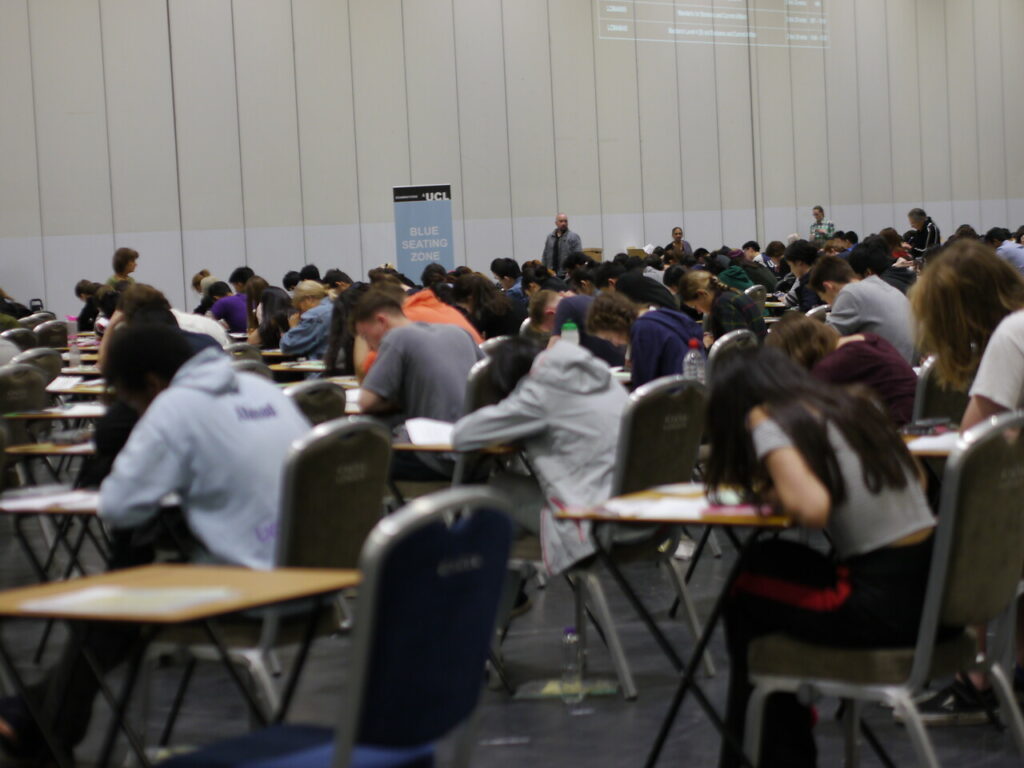
Globally, the emphasis on comparative achievement in educational assessment has become more prominent since the 1990s (Unterhalter, 2019). This has radically changed our perceptions about the aims and purpose of education, and has consequently impacted on how we view educational assessment. Essentially, assessment is characterised by a received culture of competition, leading to a belief that the grade is everything. This idea is so important now that some tests are called ‘high-stakes’ tests, because their results shape us: they determine our careers, our access to higher education, our access to certain opportunities and places, and our socio-economic prospects (Torrance, 2017). The addiction to high-stakes testing is often framed by claims (which lack substantive evidence) that exams are fairer and more rigorous than any other type of assessment, so they present a more truthful, measured picture of academic achievement of which we can be more confident.
Assessment and its outcomes matter deeply to us, so I am concerned by a global lack of confidence in both policy and practice. This low confidence comes from poor understanding of two things: what assessment is and how assessment works. These two deficits have preoccupied me for some time, and this book is an attempt to present some answers to each of them in an accessible, evidence-based way.
When I tell people that my work is in educational assessment, their response is either a barely disguised yawn or, more commonly, a barrage of questions about why national testing and standards have collapsed. Despite the notion that assessment is not a very interesting topic, it appears to preoccupy a great deal of public interest. It is time for an honest, clear explanation and conversation about its key constituents, while also challenging some of the misconceptions that emerge in public settings. Testing, particularly the examination system, is often in the news.
This leads me to question how something so influential can be regarded with suspicion and framed by challenges and anxiety.
Views of assessment are broadly influenced by a complex series of discourses that surround our understanding of its development, use and outcomes. However, an examination of popular discourses within public domains reveals an unsatisfying binary level of argument – a love–hate relationship with the whole idea of assessment. We ‘love’ the certification and selection that the results of standardised testing bring, but we ‘hate’ the extent to which grading and measuring from the same tests has the capacity to influence opportunities and can lead to personal labelling.
Much of the vast range of assessment literature that has evolved since the 1990s comprises evidence of how formative assessment could challenge our reliance on testing as ‘the best’ form of assessment and demonstrates that assessment can be a way of informing and supporting learning. But despite a plethora of resources and global engagement with the idea of assessment for learning theories, when the chips are down we do not necessarily engage with formative assessments; we prefer to rely on grades to summarise ability, skills or knowledge. Such patterns of behaviour are not unique to England, but are seen from Canada to Kazakhstan, and from Slovenia to Hong Kong. Grades are a universally accepted way of characterising achievement and understanding success in academic terms.
Much research has been conducted on this theme and it reveals consistent patterns of anxiety and pressure. Obsession with exams and the continual promotion of competition as a foundation for a sense of educational achievement has been noted as problematic since the 1950s (Fielding, 2011). Yet we continue to repeat the cycle. In England, Reay and Wiliam (1999) found that national testing schemes in English statemaintained primary schools were leading children to judge themselves based on their scores. Children were literally describing themselves as a ‘four’, or even a ‘nothing’. Their scores referred to what was called the common attainment scale across the three key stages in education. These were numbered from 1 to 8, and the children in this study (aged about 10) were working towards a national average grade of 4, so anything below this would be considered a ‘failure’. The study suggested a need to change the concern and to focus on test outcomes as a measure of potential.
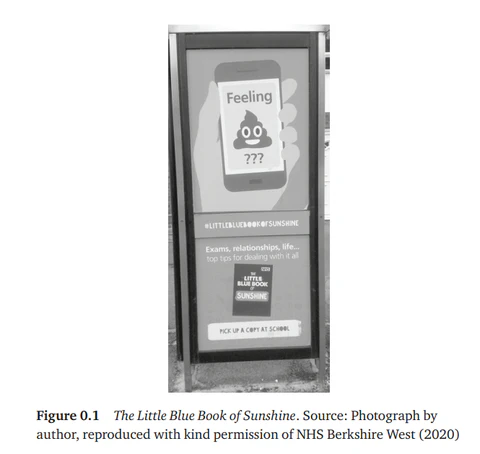
However, this unhealthy obsession with grading at a young age continues. It is implicit in the public messaging shown in Figure 0.1, which appeared on an advertising hoarding at the end of my road.
Clearly aimed at the teenagers who walk by it each day en route to the nearby secondary school, this advertisement promotes an online resource designed to provide support for anxious students. What surprised me about this is the order of concerns listed: exams are at the top of the list, outranking relationships – very different to my experience of teenage years at school!
There is an inconsistency in the perceived purpose of assessment clashing with a flawed understanding of a framework of educational achievement. Politicians and policymakers claim that our education system is now more sensitive than ever to the needs of all children, yet we accept a system of testing that is increasingly reductive. Those who create and produce our high-stakes examinations claim that such assessments provide balanced ways of capturing how students demonstrate knowledge, skills and/or understanding in the subjects they study in school. In terms of test construction, reliability and validity, this may be so, but how these tests demonstrate the achievements of individuals is more ethically troubling. Teachers are increasingly forced to focus their students’ attention on grades and not necessarily because they matter to the student. Chapters 1 and 2 explain this issue and introduce the continual quest for an elusive gold standard.
This book is not an attempt to identify and challenge all of the ways in which we talk about educational assessment. Instead, I explore them using what I have identified as dominant discourses on screen, in print and online. There are literally hundreds of thousands of articles that analyse assessment in a range of ways – from the social and political, through policymaking, to technical construction and classroom practice. However, I am interested in how assessment is discussed broadly too. Look beyond the limited readerships of academic publishing and there are so many public discourses about this issue. There is no single, correct interpretation of those beliefs and perceptions that circulate how we talk about assessment, and I’m not seeking to reveal the right way that it should be undertaken. Rather, I want to try to understand the prevailing discourses, so that there are other ways to reflect on what is happening in this controversial and contested area of education.
On International Day of World’s Indigenous Peoples, we bring you an except from Zeremariam Fre’s superb Knowledge Sovereignty among African Cattle Herders, which argues that there is much to learn from established indigenous knowledge, challenging the preconceptions that regard it as untrustworthy when compared to scientific knowledge from more developed regions.
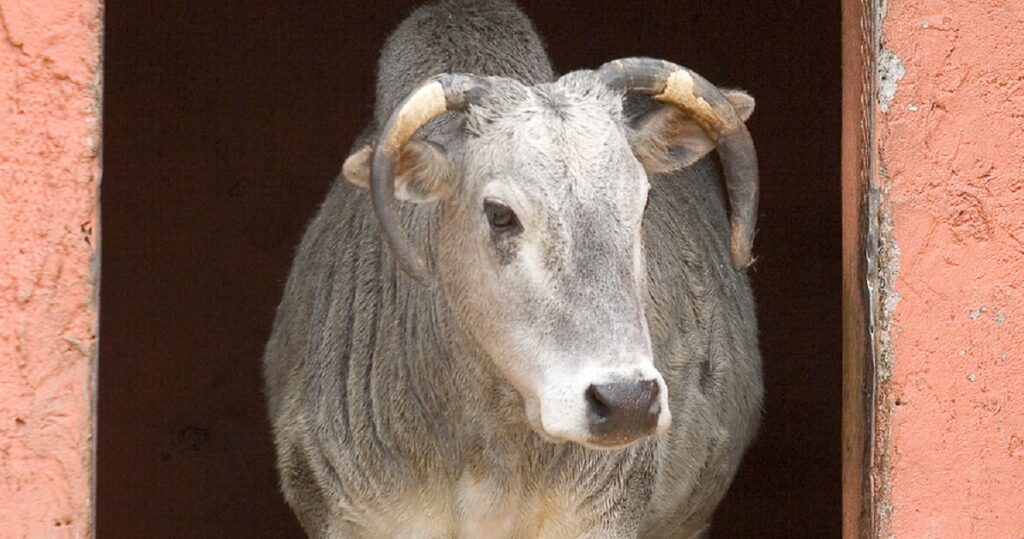
Knowledge Sovereignty among African Cattle Herders focuses on the description, elicitation, documentation and analysis of major aspects of indigenous knowledge systems (IKS) among the Beni-Amer in the Horn of Africa. My fundamental point of departure is that Beni-Amer cattle owners (Seb-ahha) in the western part of the Horn of Africa are not only masters of cattle breeding, but also knowledge-sovereign in terms of owning cattle with productive genes and the cognitive knowledge base which is key to sustainable development.
The strong bonds between the Beni-Amer, their animals and their environment constitute the basis of their ways of knowing, and much of their knowledge system is based on experience and embedded in their cultural practices. Notions that this knowledge is somewhat ‘untrustworthy’ when compared to western scientific knowledge are explored further in the book. The evidence also shows that the Beni-Amer’s knowledge system includes elements of western knowledge; for example, the Beni-Amer incorporate western veterinary knowledge into their practice. The learning is mutual, however, since elements of pastoral technology, such as on animal production and husbandry, make a direct contribution to our scientific knowledge of livestock production. It is this hybridisation and dynamism which are at the core of this indigenous knowledge system.
This premise also affirms that indigenous knowledge can be seen as a stand-alone science, and that a community’s rights of ownership should be defended by government officials, development planners and policy makers, making the case for a celebration of the knowledge sovereignty of pastoralist communities. Throughout the book I demonstrate that the hybridisation of ‘indigenous’ and ‘scientific’ knowledge is a key factor in the sustainability of the Beni-Amer’s pastoral practices.
Pastoral knowledge is embedded in the cultural, spiritual, political and social system of pastoral societies. The cultural aspect is particularly important; the knowledge is often transmitted orally and passed down to each generation through stories, songs and other rituals, where cattle are revered. Pastoralists around the world have historically praised their cattle in verse; among the drovers in the Highlands of Scotland in the late seventeenth century, the commercial importance of an ability to sing about the good points of a Highland cow drew on long-nourished skills (Cheape 2011).
Sadly, the pastoralist culture is becoming eroded as the practice of pastoralism continues to be under threat from political and environmental stresses. Also, pastoralism itself is subject to many misconceptions. It is still viewed by some policy makers as outdated, ‘quaint’ or ‘backward’, and such myths need to be dispelled. Given the wealth of literature produced by decades of research into the environmental and economic advantages of pastoralism, it is important that we see the future of pastoralism not as declining, nor as a linear progression, but as offering many versatile options for dealing with new and emerging challenges in the African drylands and elsewhere. Indigenous pastoral knowledge, as demonstrated by the case of the Beni-Amer, has proved itself to be resilient to change and open to new approaches, offering evidence-based and modern solutions to present and future climatic and other pressures.
About the Author
Zeremariam Fre is the founding director and former head of regional NGO, the Pastoral and Environmental Network in the Horn of Africa (PENHA). He currently works at the Bartlett Development Planning Unit at UCL as a teaching fellow and course tutor. His research and teaching are inspired by his work experience in development planning, dry land agriculture, land use policy, food security, peri-urban agriculture, indigenous knowledge systems, the role of women in food production, NGOs and social movements.
Summer might have been a bit of a wash out (again!) but July has been a fertile month for new publications. In July we published a bumper crop of SIX new open access books, including the second publication from our new open access textbook programme!
First up was Newman University Church, Dublin: Architectural revivalism in the British Isles and the authority of form, which is a fascinating study of Dublin’s Newman University Church, situating it not only in terms of its connection to John Henry Newman’s views on and achievements in education, but also in terms of the overlooked significance of the church in relation to architectural revivalism. A must read for scholars of religious buildings and architectural history.
Next up was Methods and Methodologies in Heritage Studies, an essential textbook that offers succinct, easily accessible analyses of the disciplinary debates, intellectual legacies, and practical innovations that have led to understandings of heritage value today. Well worth a read if you are interested in research methods used in heritage studies.
Readers might also like to take a look at Collections Management as Critical Museum Practice. With a superstar cast of museum studies contributors, this open access book brings into focus the knowledges, value systems, ethics and workplace pragmatics that are the foundation of collections management. The book creates a critical dialogue about the underlying philosophies, values and ethics that determine what are and what might be acceptable collections practices.
The month ended with two titles that focus on the world of STEM. Generalism in Clinical Practice and Education outlines a generalist philosophy of practice that is brought to life through interleaved examples. Written by a range of international clinicians, patients and academics it seeks to inspire readers’ future engagement with generalism in practice and learning through sharing underpinning concepts, values and principle.
The second title, Belonging and Identity in STEM Higher Education, leading scholars, teachers, practitioners and students explore belonging and identity in STEM fields. STEM ways of thinking, such as those underpinning abstract and complex mathematics, can form the basis of new ways of conceptualising belonging for both staff and students.
We are delighted to announce that A History of Scientific Journalshas been shortlisted for the 2024 BSHS Pickstone Prize, awarded biennially by the British Society for the History of Science (BSHS).
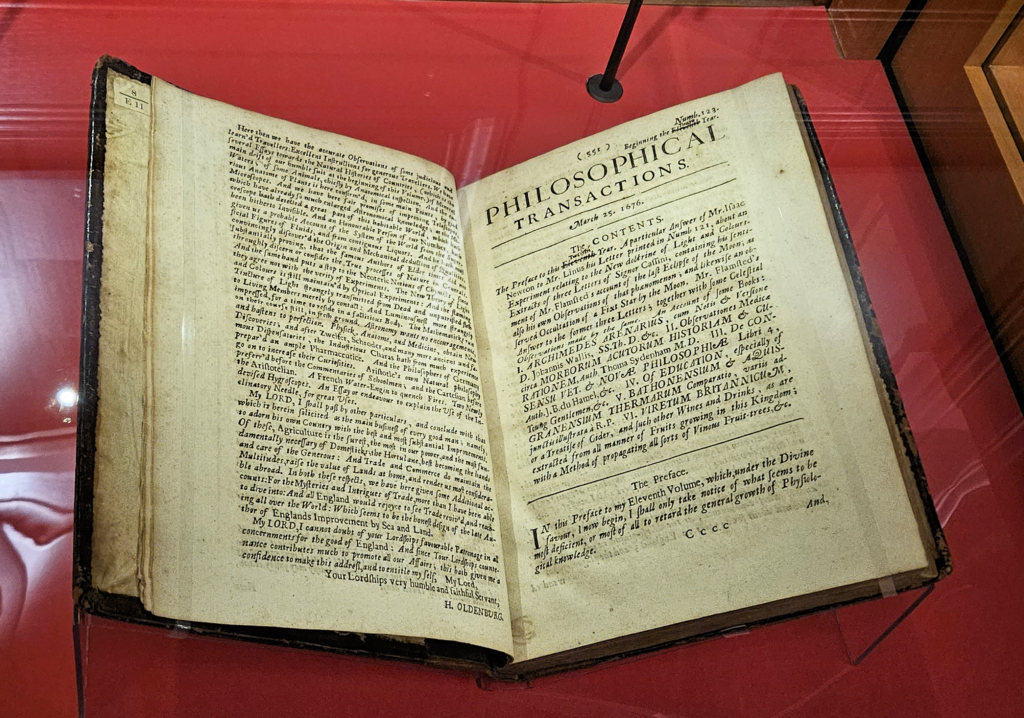
A History of Scientific Journals explores 350 years of scientific publishing through the lens of the Royal Society’s prestigious publication Philosophical Transactions. It has been downloaded more than 10,000 times in 121 countries and territories across the world since its publication in October 2022.
Unrivalled insights from the Royal Society’s comprehensive archives enabled the authors to investigate the editorial management, business practices and financial difficulties of the Philosophical Transactions and its sibling Proceedings reveal the meaning and purpose of journals in a changing scientific community.
The BSHS Pickstone Prize is awarded every two years to the best scholarly book in the history of science (broadly construed) in English. The Prize aims to recognize pioneering works that advance the scholarly understanding and interpretation of the scientific past. The winner will be announced at the Annual Conference of the BSHS in Aberystwyth, 10-13 July 2024.
The London Review of Education, IOE’s flagship open-access, peer-reviewed journal published by UCL Press, is currently seeking a new Editor-in-Chief to lead the journal in its next phase.
We are now inviting applications from IOE academic staff to join the journal in this key senior leadership role. This is a voluntary role. Applications close on 14th July 2023.
Founded in 2003, it reflects the Institute’s broad interests in all types of education in all contexts – local, national, global – and its commitment to analysis across disciplines using a variety of methodologies. It shares the Institute’s aspiration to interrogate links between research, policy and practice, and its principled concern for social justice. Joining the journal offers many opportunities for professional development as well as collaborating/networking with a broad group of international academic and professional experts. You will find further information about the journal, the current Editorial Board, as well as all its publications and future series, indexing and full aims and scope, online at https://uclpress.co.uk/lre.
This senior leadership position may form part of personal research or scholarship time and would be considered commensurate with activities at Grade 10 or above in the Academic Careers Framework. The role is voluntary with a 5-year term (subject to renew) and provides the unique opportunity to run and directly shape the future direction and development of this growing journal, by defining journal strategy, policies and the journal aims and scope. The role holder will also be required to sit on the IOE Research Committee as representation of the Journal. Other duties also include:
Actively working with UCL Press and the Journal Editorial Board to develop strategies to improve processes and grow its reputation;
Oversight and delegation to other Journal Editors handling peer review of submitted papers (including supporting and educating Editors on best practice in these processes, e.g. providing critical and objective assessment and review);
Triaging submissions for suitability to proceed with peer review;
Making appropriate editorial decisions for publication (accept, reject, revise);
Occasionally writing editorials and other copy as required in producing an online journal.
If you would like to apply for this role, as well as any enquiries, please email the UCL Press Journals Manager, Ian Caswell, at i.caswell@ucl.ac.uk with your CV and a brief covering email about why you would like to join.
Sign up to our newsletter
Don't miss out! Subscribe to the UCL Press newsletter for the latest open access books, journal CfPs, news and views from our authors and much more!