

The Global Encyclopaedia of Informality, Volume 2
Understanding Social and Cultural Complexity
Alena Ledeneva (Editor)
Series: FRINGE
Alena Ledeneva invites you on a voyage of discovery to explore society’s open secrets, unwritten rules and know-how practices. Broadly defined as ‘ways of getting things done’, these invisible yet powerful informal practices tend to escape articulation in official discourse. They include emotion-driven exchanges of gifts or favours and tributes for services, interest-driven know-how (from informal welfare to informal employment and entrepreneurship), identity-driven practices of solidarity, and power-driven forms of co-optation and control. The paradox, or not, of the invisibility of these informal practices is their ubiquity. Expertly practised by insiders but often hidden from outsiders, informal practices are, as this book shows, deeply rooted all over the world, yet underestimated in policy. Entries from the five continents presented in this volume are samples of the truly global and ever-growing collection, made possible by a remarkable collaboration of over 200 scholars across disciplines and area studies.
By mapping the grey zones, blurred boundaries, types of ambivalence and contexts of complexity, this book creates the first Global Map of Informality. The accompanying database ([www.in-formality.com][1]) is searchable by region, keyword or type of practice, so do explore what works, how, where and why!
Related titles


The Ambivalence of Power in the Twenty-First Century Economy
Vadim Radaev, Zoya Kotelnikova,
07 July 2022




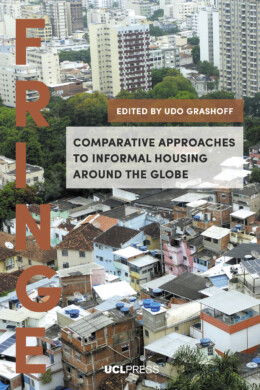
Urban Informality and the Built Environment
Nerea Amorós Elorduy, Nikhilesh Sinha, Colin Marx,
12 March 2024





Medical Humanity and Inhumanity in the German-Speaking World
Mererid Puw Davies, Sonu Shamdasani,
15 April 2020
The Global Encyclopaedia of Informality, Volume 2
Understanding Social and Cultural Complexity

Alena Ledeneva invites you on a voyage of discovery to explore society’s open secrets, unwritten rules and know-how practices. Broadly defined as ‘ways of getting things done’, these invisible yet powerful informal practices tend to escape articulation in official discourse. They include emotion-driven exchanges of gifts or favours and tributes for services, interest-driven know-how (from informal welfare to informal employment and entrepreneurship), identity-driven practices of solidarity, and power-driven forms of co-optation and control. The paradox, or not, of the invisibility of these informal practices is their ubiquity. Expertly practised by insiders but often hidden from outsiders, informal practices are, as this book shows, deeply rooted all over the world, yet underestimated in policy. Entries from the five continents presented in this volume are samples of the truly global and ever-growing collection, made possible by a remarkable collaboration of over 200 scholars across disciplines and area studies.
By mapping the grey zones, blurred boundaries, types of ambivalence and contexts of complexity, this book creates the first Global Map of Informality. The accompanying database ([www.in-formality.com][1]) is searchable by region, keyword or type of practice, so do explore what works, how, where and why!
‘Suited for graduate students, scholars, and professionals. Recommended.’
Choice Reviews
‘The chapter introductions, like many of the entries, subsume a huge quantity of analytical and theoretical reflections of enormous depth. … If there were door-to-door encyclopedias sellers, this would be a best seller.’
Periferia
‘The Global Encyclopaedia of Informality represents the beginning of a new era in informality studies. With its wealth of information, diversity, scope, theoretical innovation and artistic skill, this collection touches on all the aspects of social and cultural complexity that need to be integrated into policy thinking.’
Predrag Cvetičanin, Faculty of Arts, University of Nis, Serbia