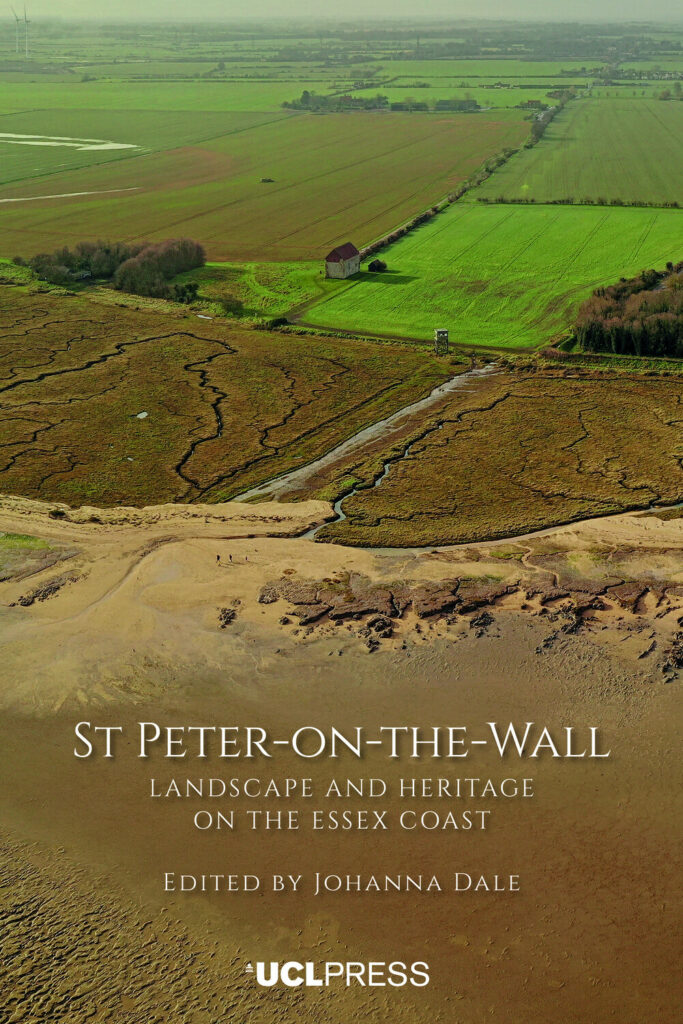
St Peter-On-The-Wall

The Chapel of St Peter-on-the-Wall, built on the ruins of a Roman fort, dates from the mid-seventh century and is one of the oldest largely intact churches in England. It stands in splendid isolation on the shoreline at the mouth of the Blackwater Estuary in Essex, where the land meets and interpenetrates with the sea and the sky. This book brings together contributors from across the arts, humanities and social sciences to uncover the pre-modern contexts and modern resonances of this medieval building and its landscape setting.
The impetus for this collection was the recently published designs for a new nuclear power station at Bradwell on Sea, which, if built, would have a significant impact on the chapel and its landscape setting. St Peter-on-the-Wall highlights the multiple ways in which the chapel and landscape are historically and archaeologically significant, while also drawing attention to the modern importance of Bradwell as a place of Christian worship, of sanctuary and of cultural production. In analysing the significance of the chapel and surrounding landscape over more than a thousand years, this collection additionally contributes to wider debates about the relationship between space and place, and particularly the interfaces between both medieval and modern cultures and also heritage and the natural environment.
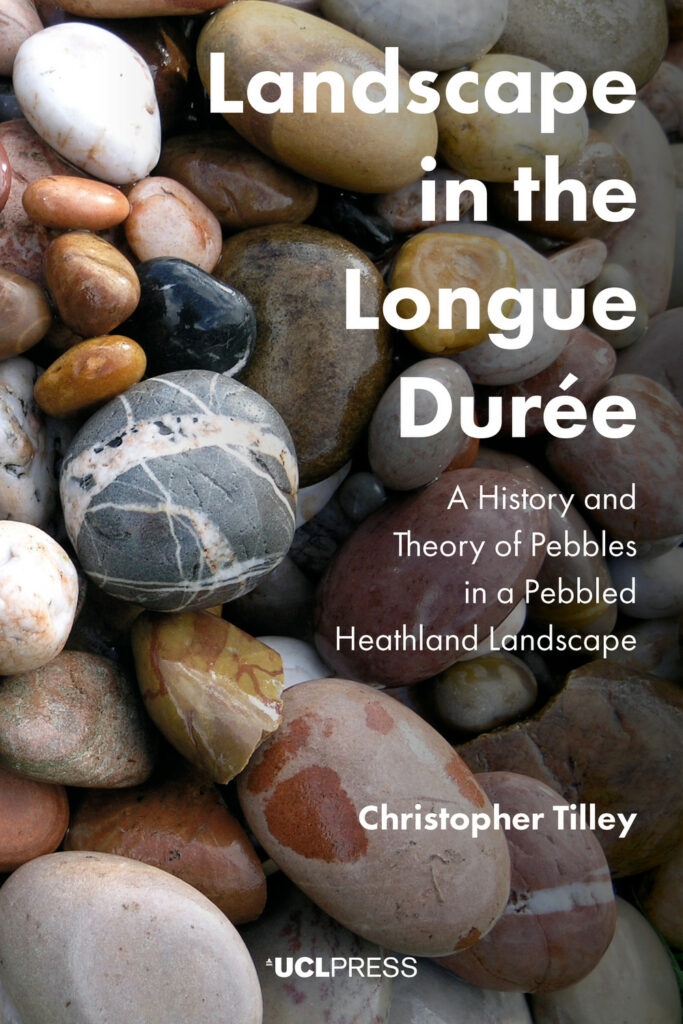
Landscape in the Longue Durée

Pebbles are usually found only on the beach, in the liminal space between land and sea. But what happens when pebbles extend inland and create a ridge brushing against the sky?

Landscape in the Longue Durée is a 4,000 year history of pebbles. It is based on the results of a four-year archaeological research project of the east Devon Pebblebed heathlands, a fascinating and geologically unique landscape in the UK whose bedrock is composed entirely of water-rounded pebbles. Christopher Tilley uses this landscape to argue that pebbles are like no other kind of stone – they occupy an especial place both in the prehistoric past and in our contemporary culture. It is for this reason that we must re-think continuity and change in a radically new way by considering embodied relations between people and things over the long term.

Dividing the book into two parts, Tilley first explores the prehistoric landscape from the Mesolithic to the end of the Iron Age, and follows with an analysis of the same landscape from the eighteenth into the twenty-first century. The major findings of the four-year study are revealed through this chronological journey: from archaeological discoveries, such as the excavation of three early Bronze Age cairns, to the documentation of all 829 surviving pebble structures, and beyond, to the impact of the landscape on local economies and its importance today as a military training camp. The results of the study will inform many disciplines including archaeology, cultural and art history, anthropology, conservation, and landscape studies.

This book also includes a downloadable appendix. Download it here (.pdf).

An Anthropology of Landscape

An Anthropology of Landscape tells the fascinating story of a heathland landscape in south-west England and the way different individuals and groups engage with it. Based on a long-term anthropological study, the book emphasises four individual themes: embodied identities, the landscape as a sensuous material form that is acted upon and in turn acts on people, the landscape as contested, and its relation to emotion. The landscape is discussed in relation to these themes as both ‘taskscape’ and ‘leisurescape’, and from the perspective of different user groups. First, those who manage the landscape and use it for work: conservationists, environmentalists, archaeologists, the Royal Marines, and quarrying interests. Second, those who use it in their leisure time: cyclists and horse riders, model aircraft flyers, walkers, people who fish there, and artists who are inspired by it. The book makes an innovative contribution to landscape studies and will appeal to all those interested in nature conservation, historic preservation, the politics of nature, the politics of identity, and an anthropology of Britain.

Sign up to our newsletter

Don't miss out!
Subscribe to the UCL Press newsletter for the latest open access books,
journal CfPs, news and views from our authors and much more!