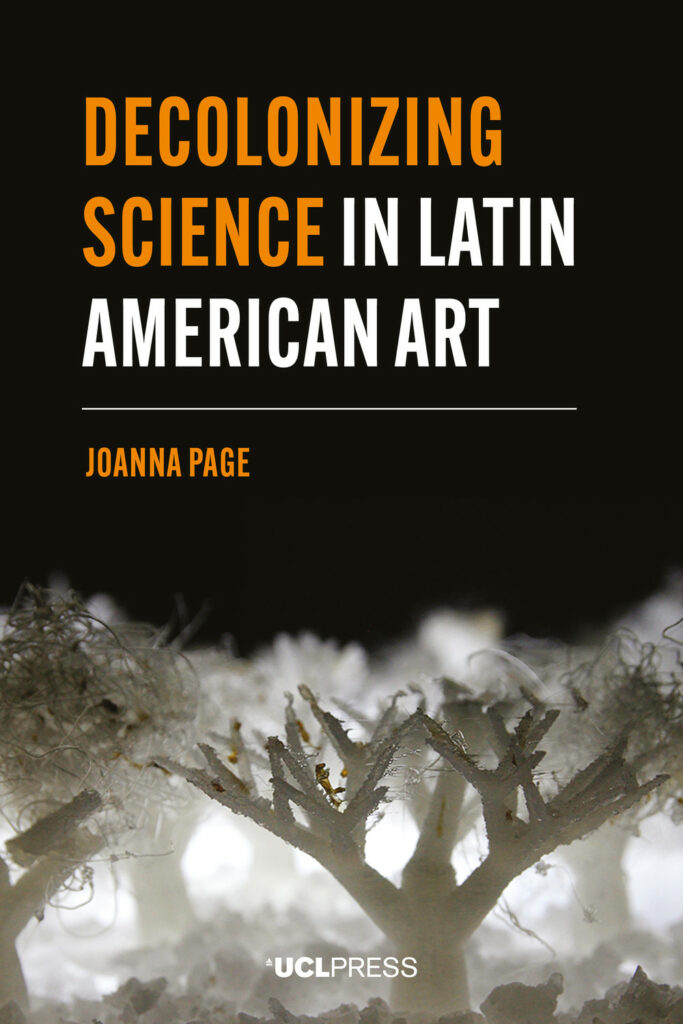
Decolonizing Science in Latin American Art

Projects that bring the ‘hard’ sciences into art are increasingly being exhibited in galleries and museums across the world. In a surge of publications on the subject, few focus on regions beyond Europe and the Anglophone world. Decolonizing Science in Latin American Art assembles a new corpus of art-science projects by Latin American artists, ranging from big-budget collaborations with NASA and MIT to homegrown experiments in artists’ kitchens.

While they draw on recent scientific research, these art projects also ‘decolonize’ science. If increasing knowledge of the natural world has often gone hand-in-hand with our objectification and exploitation of it, the artists studied here emphasize the subjectivity and intelligence of other species, staging new forms of collaboration and co-creativity beyond the human. They design technologies that work with organic processes to promote the health of ecosystems, and seek alternatives to the logics of extractivism and monoculture farming that have caused extensive ecological damage in Latin America. They develop do-it-yourself, open-source, commons-based practices for sharing creative and intellectual property. They establish critical dialogues between Western science and indigenous thought, reconnecting a disembedded, abstracted form of knowledge with the cultural, social, spiritual, and ethical spheres of experience from which it has often been excluded.

Decolonizing Science in Latin American Art interrogates how artistic practices may communicate, extend, supplement, and challenge scientific ideas. At the same time, it explores broader questions in the field of art, including the relationship between knowledge, care, and curation; nonhuman agency; art and utility; and changing approaches to participation. It also highlights important contributions by Latin American thinkers to themes of global significance, including the Anthropocene, climate change and environmental justice.
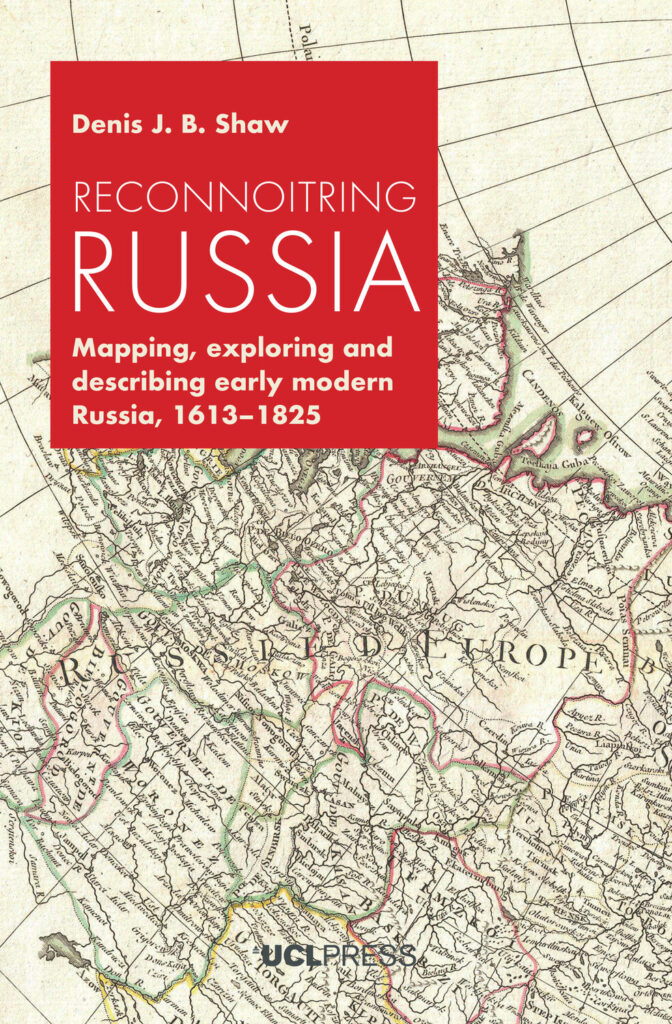
Reconnoitring Russia

Like many European countries during the Great Age of Discovery and Exploration, Russia embarked on policies of state building, exploration and imperial expansion. At the beginning of the fourteenth century, the territory under Moscow’s control was about twenty thousand square kilometres. By 1800 Russia’s empire had expanded to some eighteen million square kilometres. Russia had thus become one of the world’s greatest empires.

By focusing on such geographical practices as exploring, observing, describing, mapping and similar activities, Reconnoitring Russia seeks to explain how Russia’s rulers and its educated public came to know and understand the territory of their expanding state and empire, especially as a result of the modernizing policies of such sovereigns as Peter the Great and Catherine the Great. It places the Russian experience into a comparative context, showing how that experience compares with those of other European countries over the same period. The book adopts a broad chronological framework, exploring the age between 1613 when the Romanov dynasty assumed power and 1825, the conclusion of Alexander I’s reign, or what is often termed the end of the ‘long eighteenth century’.

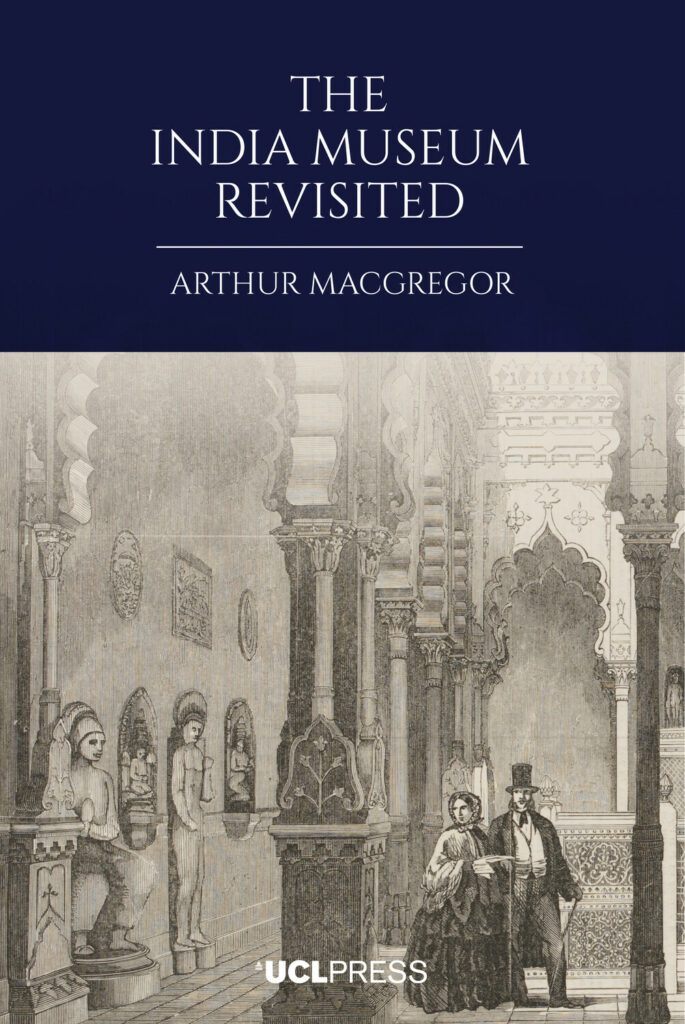
The India Museum Revisited

The museum of the East India Company formed, for a large part of the nineteenth century, one of the sights of London. In recent years, little has been remembered of it beyond its mere existence, while an assumed negative role has been widely attributed to it on the basis of its position at the heart of one of Britain’s arch-colonialist enterprises.

Extensively illustrated, The India Museum Revisited provides a full examination of the museum’s founding manifesto and evolving ambitions. It surveys the contents of its multi-faceted collections – with respect to materials, their manufacture and original functions on the Indian sub-continent – as well as the collectors who gathered them and the manner in which they were mobilized to various ends within the museum.

From this integrated treatment of documentary and material sources, a more accurate, rounded and nuanced picture emerges of an institution that contributed in major ways, over a period of 80 years, to the representation of India for a European audience, not only in Britain but through the museum’s involvement in the international exposition movement to audiences on the continent and beyond.

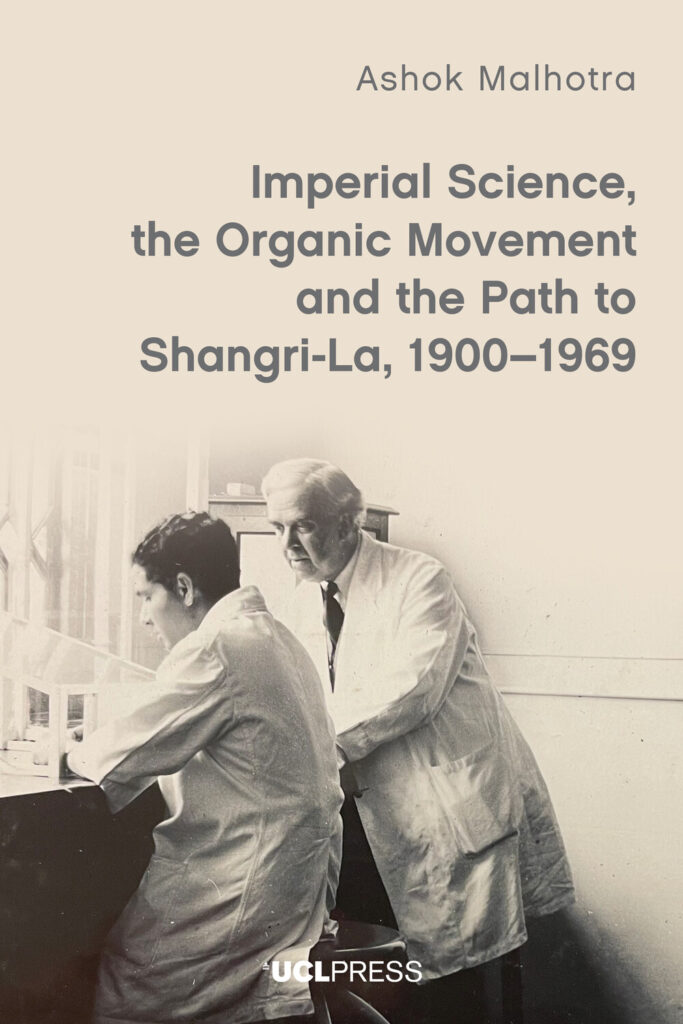
Imperial Science, the Organic Movement and the Path to Shangri-La, 1900-1969

Imperial Science, the Organic Movement and the Path to Shangri-La, 1900-1969 investigates scientific studies undertaken in British India by Robert McCarrison and Albert Howard in the 1920s, and how this research was later adapted in Britain and the USA. It examines how imperial agendas and colonial stereotyping shaped McCarrison’s dietary laboratory experiments and Howard’s development of the Indore Composting Process. Ashok Malhotra reveals how Indian scientists and Indian Princes contributed to the research culture in the institutes that were founded by these two British scientists, and in so doing, he draws attention to figures whose contributions have previously been overlooked by scholars. Malhotra demonstrates how McCarrison’s and Howard’s research was interpreted by British and US-based organic farming advocates to advocate for agricultural methods which returned organic matter to the soil and rejected chemical fertilisers.

It discusses how organic advocates on both sides of the Atlantic deployed the Hunzas, a community in British India (later Pakistan), as an example of a ‘tribe’ whose vigour could be ascribed to their farming techniques and diets. The narrative concludes by demonstrating how US travel writers in the 1950s and 1960s represented Hunza as a Shangri-La – a paradise whose inhabitants lived prolonged lives in blissful contentment.

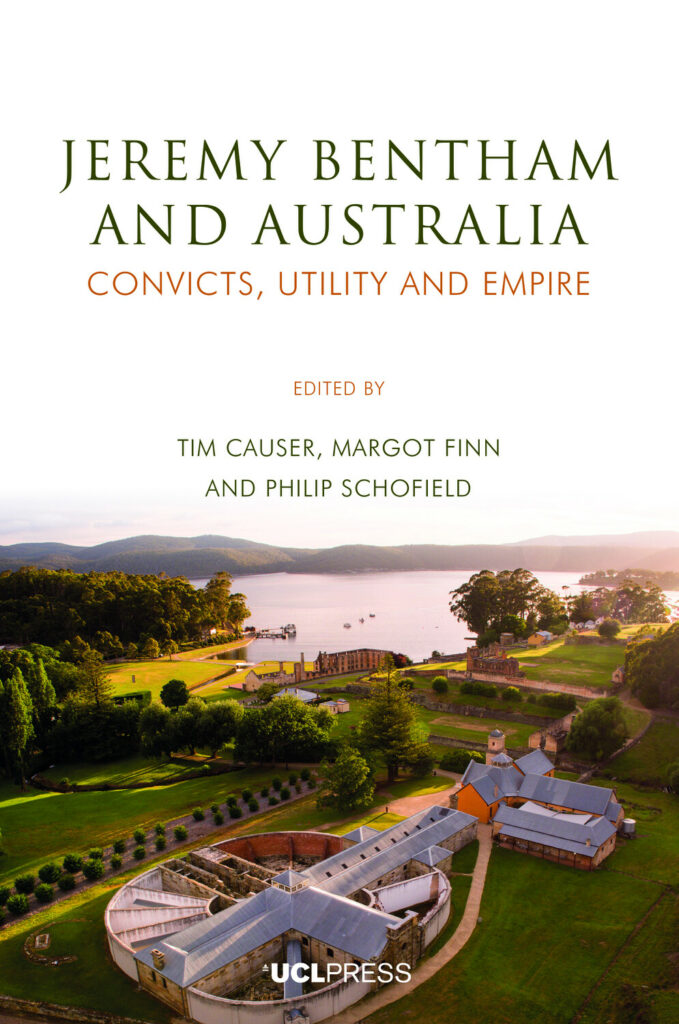
Jeremy Bentham and Australia

Jeremy Bentham and Australia is a collection of scholarship inspired by Bentham’s writings on Australia. These writings are available for the first time in authoritative form in Panopticon versus New South Wales and other writings on Australia, a volume in The Collected Works of Jeremy Bentham published by UCL Press.

In the present collection, a distinguished group of authors reflect on Bentham’s Australian writings, making original contributions to existing debates and setting agendas for future ones. In the first part of the collection, the works are placed in their historical contexts, while the second part provides a critical assessment of the historical accuracy and plausibility of Bentham’s arguments against transportation from the British Isles. In the third part, attention turns to Bentham’s claim that New South Wales had been illegally founded and to the imperial and colonial constitutional ramifications of that claim. Here, authors also discuss Bentham’s work of 1831 in which he supports the establishment of a free colony on the southern coast of Australia. In the final part, authors shed light on the history of Bentham’s panopticon penitentiary scheme, his views on the punishment and reform of criminals and what role, if any, religion had to play in that regard, and discuss apparently panopticon-inspired institutions built in the Australian colonies.

This collection will appeal to readers interested in Bentham’s life and thought, the history of transportation from the British Isles, and of British penal policy more generally, colonial and imperial history, Indigenous history, legal and constitutional history, and religious history.

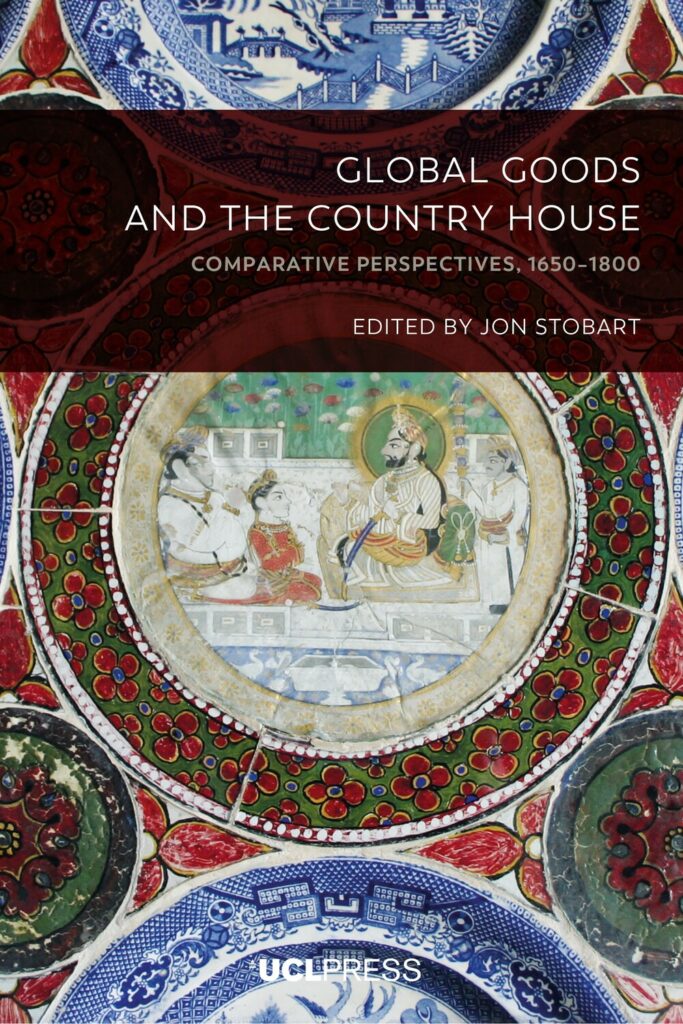
Global Goods and the Country House

Global goods were central to the material culture of eighteenth-century country houses. Across Europe, mahogany furniture, Chinese wallpapers and Indian textiles formed the backdrop to genteel practices of drinking sweetened coffee, tea and chocolate from Chinese porcelain. They tied these houses and their wealthy owners into global systems of supply and the processes of colonialism and empire.

Global Goods and the Country House builds on these narratives, and then challenges them by decentring our perspective. It offers a comparative framework that explores the definition, ownership and meaning of global goods outside the usual context of European imperial powers. What were global goods and what did they mean for wealthy landowners in places at the ‘periphery’ of Europe (Sweden and Wallachia), in the British colonies of North America and the Caribbean, or in the extra-colonial context (Japan or Rajasthan)? By addressing these questions, this volume offers fresh insights into the multi-directional flow of goods and cultures that enmeshed the eighteenth-century world. And by placing these goods in their specific material context – from the English country house to the princely palaces of Rajasthan – we gain a better understanding of their use and meaning, and of their role in linking the global and the local.

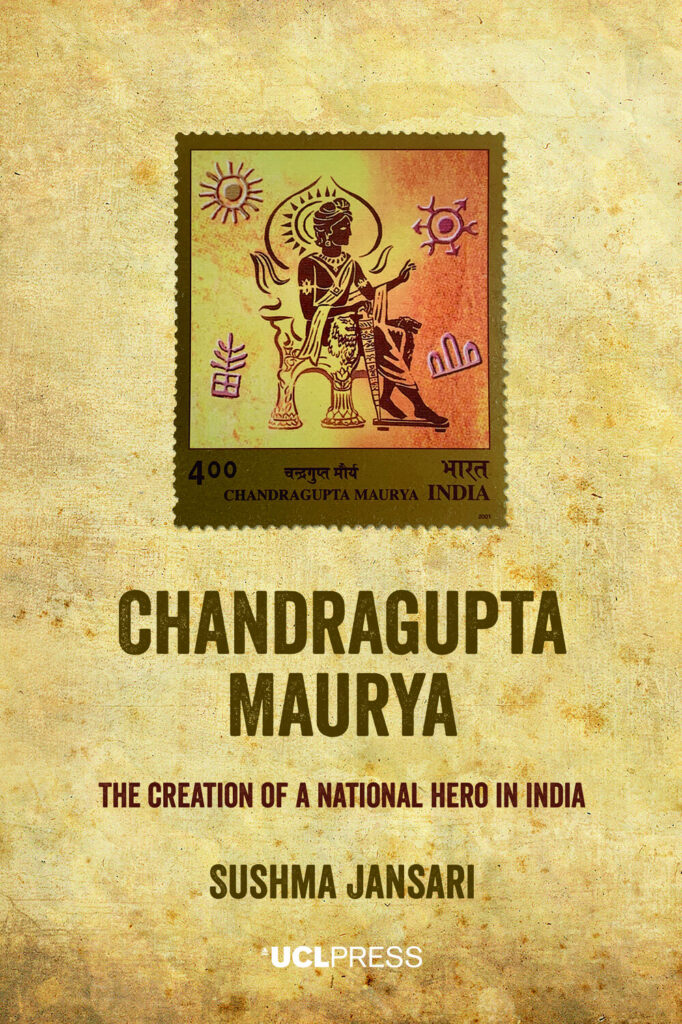
Chandragupta Maurya

We take it for granted that some historical figures become heroes, and others do not. Chandragupta Maurya evolved from obscure ruler to contemporary national icon. The key moment in the making of this Indian hero was a meeting by the banks of the River Indus between Chandragupta and Seleucus, founder of the Seleucid empire and one of Alexander the Great’s generals, in c.305-3 BC. This significant event was a moment of peace-making at the end of conflict. But no reliable account exists in early sources, and it is not even clear which ruler was victorious in battle. This uncertainty enabled British and Indian historians of the nineteenth and twentieth centuries to interpret the sources in radically different ways. With Chandragupta representing India and Seleucus standing in for Britain, British scholars argued that Seleucus defeated Chandragupta, while Indian academics contended the opposite.

The writing and reception of history fundamentally influences how we engage with the past, and the evolving colonial and post-colonial relationship between Britain and India is crucial here. In India, the image of Chandragupta as an idealised hero who vanquished the foreign invader has prevailed and found expression in contemporary popular culture. In plays, films, television series, comic books and historical novels, Chandragupta is the powerful and virtuous Hindu ruler par excellence. The path to this elevated standing is charted in this book.

Sign up to our newsletter

Don't miss out!
Subscribe to the UCL Press newsletter for the latest open access books,
journal CfPs, news and views from our authors and much more!