Bringing Powerful Knowledge into Classrooms

Powerful knowledge equips students with the capacity to engage with systematic, disciplinary thinking, to imagine futures that are not yet conceived and think what is yet to be thought. Bringing Powerful Knowledge into Classrooms explores how teachers develop such knowledge in classrooms by transforming disciplinary understandings through subject teaching that responds to the educational needs of society.

Drawing on Bernstein’s concept of recontextualisation and theories of teacher agency, the book examines how teachers navigate the boundaries between academic disciplines, school subjects and everyday knowledge. Through empirical case studies from England, Finland and Sweden, it illustrates how teachers’ decisions are shaped by national expectations, institutional frameworks and classroom dynamics. Combining Anglophone and Nordic traditions in subject teaching with curriculum theory and classroom research, the book offers a theoretically grounded yet practical account of how teachers recontextualise knowledge. It develops new insights into teacher agency and recontextualisation which are highly relevant to teacher education, curriculum design and educational policy. By focusing on real-life teaching across a range of subjects, the book deepens our understanding of how powerful knowledge is brought into classrooms and how teachers can be supported in this vital work.
History and the Climate Crisis

History education has a key contribution to make in developing a deeper understanding of the current environmental crisis, but its role is too often overlooked. When embedded in the school curriculum, environmental history adds crucial layers of knowledge to the learning from other subjects and can enable students to make their own informed contributions to one of the most pressing concerns of the 21st century.

History and the Climate Crisis makes the case for including an environmental focus in the secondary school history curriculum by locating its arguments within established historiographical and revisionist debates. It provides much-needed subject knowledge in an area that is new for most history teachers. The author considers the disciplinary and pedagogical challenges and demonstrates how including an environmental focus can strengthen students’ disciplinary knowledge. She also builds her argument through the use of many examples and offers practical strategies for use in classrooms, including developed enquiries suitable for the secondary history curriculum. The book focuses on environmental history within a strong subject bound curriculum and will be relevant to teachers, academics and policymakers in the UK and internationally.

ABC Learning Design

ABC Learning Design is a popular and effective rapid design method for developing educational programmes, modules and short courses. Created at UCL in 2015, ABC enables academic teams to collaborate in short, focused workshops to co-create visual storyboards of students’ learning journeys. Its ease of use, adaptability, and open licence have led to widespread adoption across the UK, Europe and beyond.

ABC Learning Design: Active, blended, connected and beyond introduces ABC to a new audience, adding insights from institutions that have localised and implemented the method in diverse contexts. ABC provides practical, ready-to-use tools, but it is often reframed as more than a set of resources. Its built-in flexibility not only allows for transferability but actively encourages creative modifications that respond to institutional needs. The core ABC workshop remains the heart of the method and is central to all implementations. Around this, institutions have built locally relevant adaptations that retain the method’s participatory ethos. This shared structure creates a design lingua franca that supports collaboration within and across institutions. Drawing on facilitator and participant experiences, the book reviews ABC’s key strengths and explains why it continues to inspire innovation. It invites a global conversation on enriching learning design for students, faculty, and institutions alike.

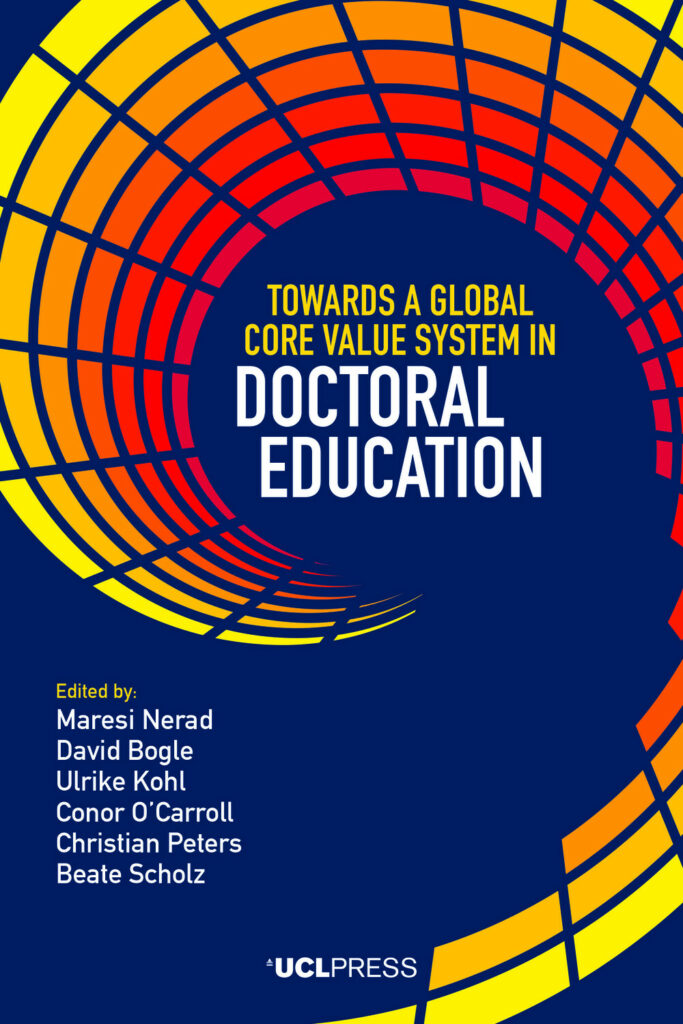
Towards a Global Core Value System in Doctoral Education

Recent decades have seen an explosion in doctoral education worldwide. Increased potential for diverse employment has generated greater interest, with cultural, political and environmental tensions focusing the attention of new creative, responsible scholars.

Towards a Global Core Value System in Doctoral Education provides an evaluation of changes and reforms in doctoral education since 2000. Recognising the diversity of academic cultures and institutional systems worldwide, the book advocates for a core value system to overcome inequalities in access to doctoral education and the provision of knowledge. Building on in-depth perspectives of scholars and young researchers from more than 25 countries, the chapters focus on the structures and quality assurance models of doctoral education, supervision, and funding from an institutional and comparative perspective. The book examines capacity building in the era of globalisation, global labour market developments for doctoral graduates, and explores the ethical challenges and political contestations that may manifest in the process of pursuing a PhD.

Experts and early career researchers in the Global North and South collaborated in interdisciplinary and intergenerational teams to develop guidelines for doctoral education. They learned from each other about how to act courageously within a complex global context. The resulting recommendations and reflections are an invitation to reflect on the frames and conditions of doctoral education today.

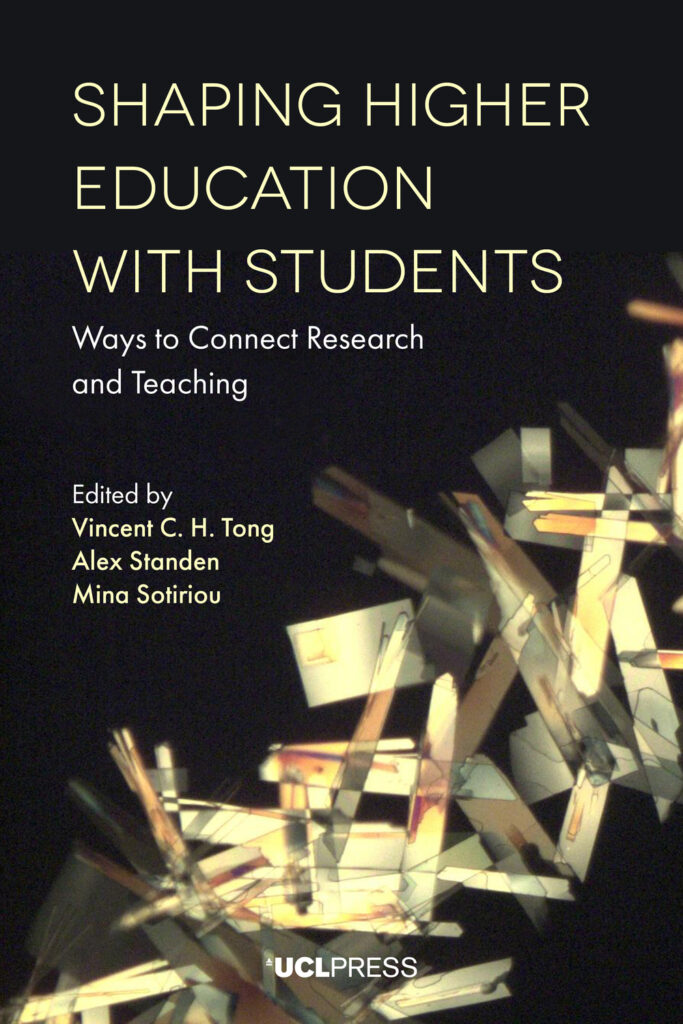
Shaping Higher Education with Students

Forging closer links between university research and teaching has become an important way to enhance the quality of higher education across the world. As student engagement takes centre stage in academic life, how can academics and university leaders engage with their students to connect research and teaching more effectively? In this highly accessible book, the contributors show how students and academics can work in partnership to shape research-based education.

Featuring student perspectives, it offers academics and university leaders practical suggestions and inspiring ideas on higher education pedagogy, including principles of working with students as partners in higher education, connecting students with real-world outputs, transcending disciplinary boundaries in student research activities, connecting students with the workplace, and innovative assessment and teaching practices. Written and edited in full collaboration with students and leading educator-researchers from a wide spectrum of academic disciplines, this book poses fundamental questions about learning and learning communities in contemporary higher education.

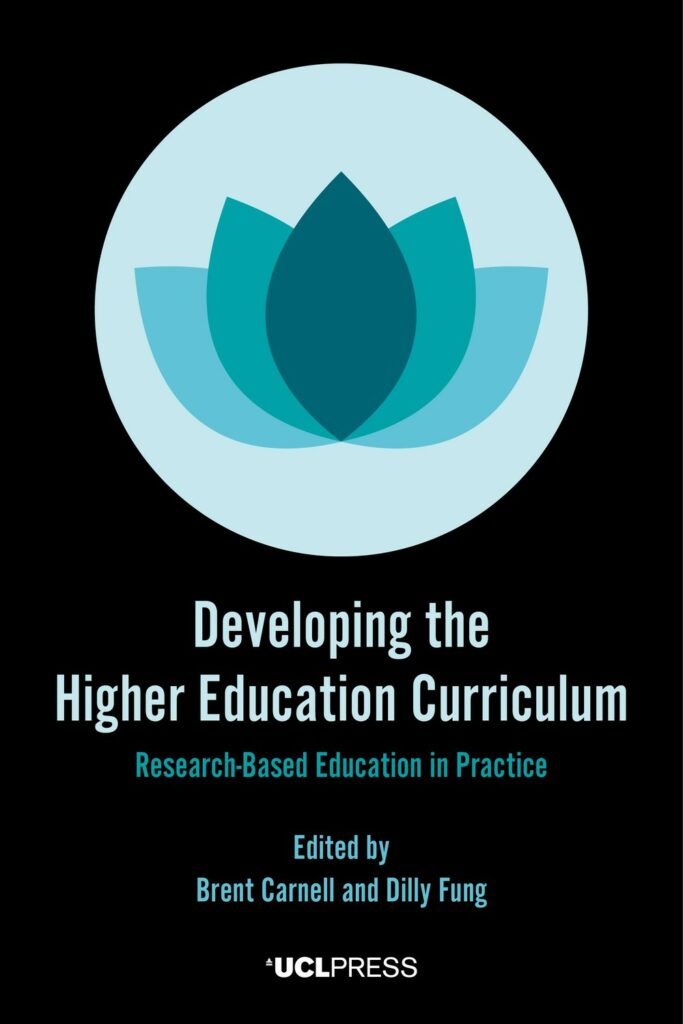
Developing the Higher Education Curriculum

A complementary volume to Dilly Fung’s A Connected Curriculum for Higher Education (2017), this book explores ‘research-based education’ as applied in practice within the higher education sector. A collection of 15 chapters followed by illustrative vignettes, it showcases approaches to engaging students actively with research and enquiry across disciplines. It begins with one institution’s creative approach to research-based education – UCL’s Connected Curriculum, a conceptual framework for integrating research-based education into all taught programmes of study – and branches out to show how aspects of the framework can apply to practice across a variety of institutions in a range of national settings.

The 15 chapters are provided by a diverse range of authors who all explore research-based education in their own way. Some chapters are firmly based in a subject-discipline – including art history, biochemistry, education, engineering, fashion and design, healthcare, and veterinary sciences – while others reach across geopolitical regions, such as Australia, Canada, China, England, Scotland and South Africa. The final chapter offers 12 short vignettes of practice to highlight how engaging students with research and enquiry can enrich their learning experiences, preparing them not only for more advanced academic learning, but also for professional roles in complex, rapidly changing social contexts.

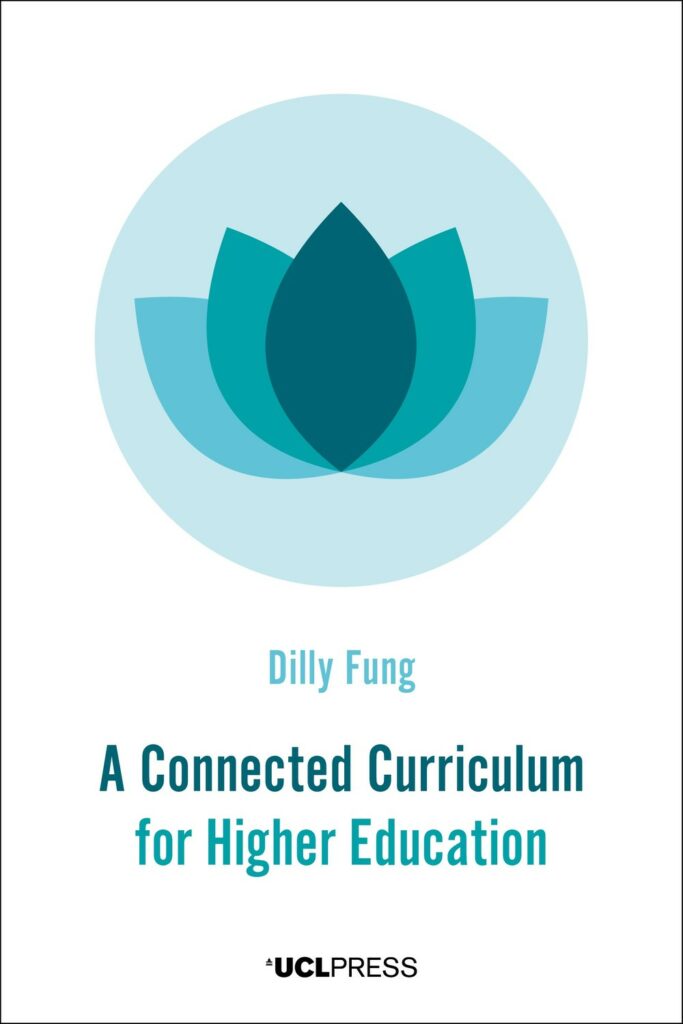
A Connected Curriculum for Higher Education

Is it possible to bring university research and student education into a more connected, more symbiotic relationship? If so, can we develop programmes of study that enable faculty, students and ‘real world’ communities to connect in new ways? In this accessible book, Dilly Fung argues that it is not only possible but also potentially transformational to develop new forms of research-based education. Presenting the Connected Curriculum framework already adopted by UCL, she opens windows onto new initiatives related to, for example, research-based education, internationalisation, the global classroom, interdisciplinarity and public engagement.

A Connected Curriculum for Higher Education is, however, not just about developing engaging programmes of study. Drawing on the field of philosophical hermeneutics, Fung argues how the Connected Curriculum framework can help to create spaces for critical dialogue about educational values, both within and across existing research groups, teaching departments and learning communities. Drawing on vignettes of practice from around the world, she argues that developing the synergies between research and education can empower faculty members and students from all backgrounds to contribute to the global common good.

Sign up to our newsletter

Don't miss out!
Subscribe to the UCL Press newsletter for the latest open access books,
journal CfPs, news and views from our authors and much more!