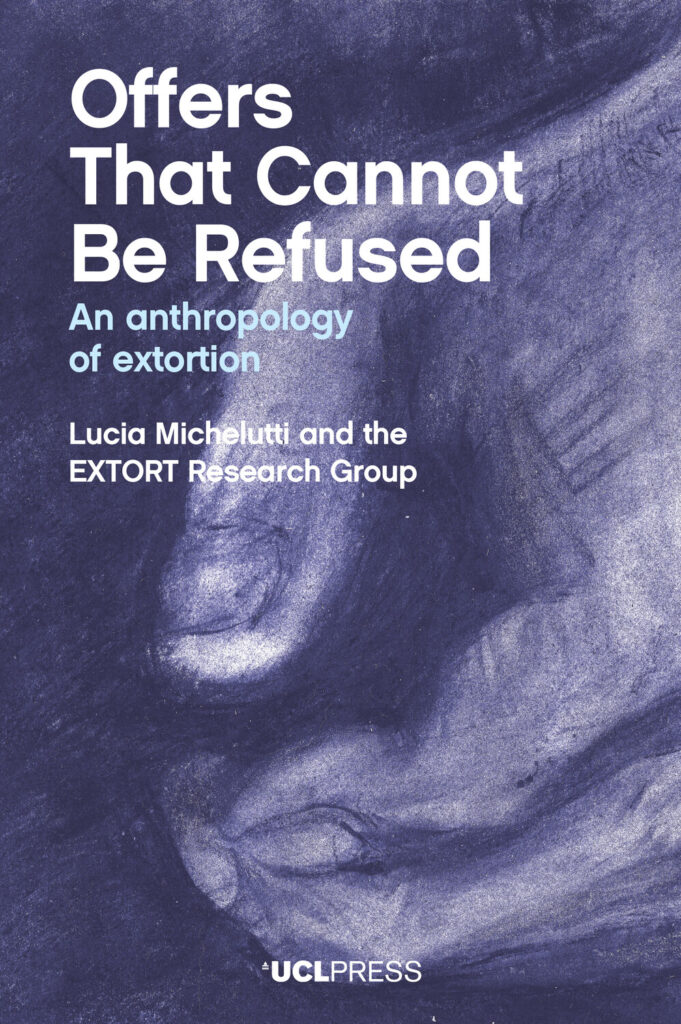
Offers That Cannot Be Refused

What makes an offer impossible to refuse? Combining original ethnography with compelling storytelling, this book traces the social life of extortion across Bangladesh, Bolivia, Brazil, China, Ecuador, Guatemala, India, Italy, Nigeria, Pakistan, South Africa, Sri Lanka and the United Kingdom. The research is grounded in collaborative and comparative ethnography conducted by a team of anthropologists, bringing together fieldwork from across the world to reveal how extortive logics shape different domains of life, following the circulation of threats to the distribution of intimidation across society.

The result is a gripping read about the ordinariness of extortion beyond conventional organised crime and mafia spheres. The chapters document how the strength of extortion lies in the gradual and complicit inclusion of individuals and populations within relationships that are simultaneously attractive and violent – capturing the overlapping dimensions of compulsion and choice that define so many of today’s livelihoods. In doing so, this book illustrates the dynamics of coercion, force and consent, and offers a fresh perspective on economic violence that moves away from exclusive legalistic definitions of extortion.
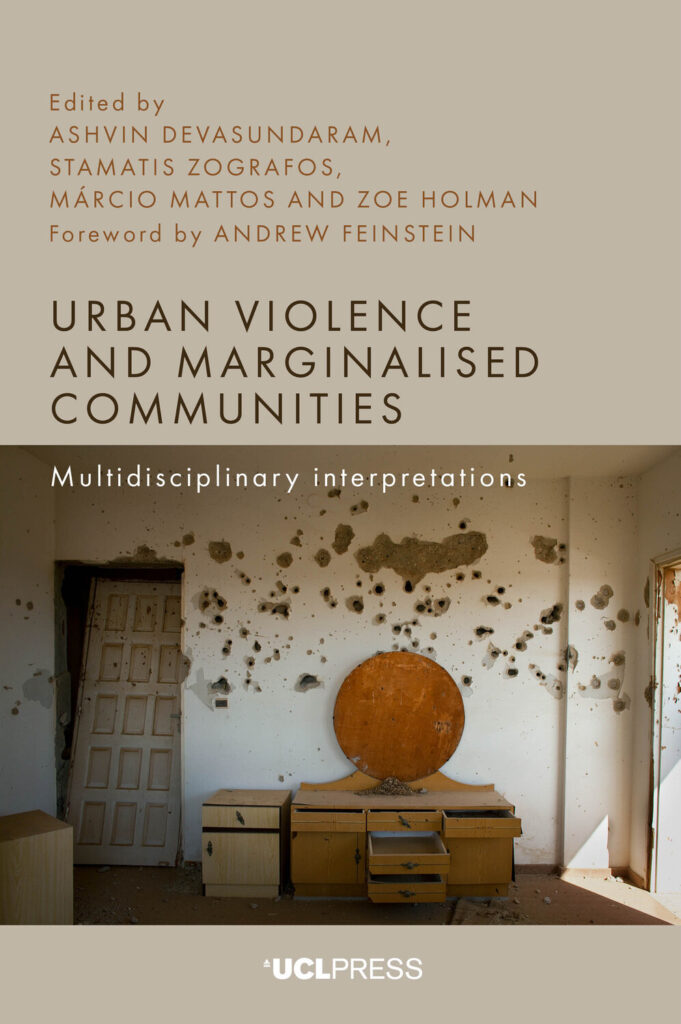
Urban Violence and Marginalised Communities

Placing peripheralised people at its centre, this edited collection unpacks how urban violence must be understood from multiple points of view: powerholders, decision makers, law enforcers, built environment professionals, creative artists, and particularly from the lived standpoint of less empowered communities. It illustrates how listening to often unheard voices of the excluded, disproportionately experiencing daily precarity and violence, can inform and broaden our shared understanding of urban violence.

Urban Violence and Marginalised Communities presents a nuanced and revealing picture of how urban violence manifests and operates in multiple and unprecedented ways, challenging the common conception of urban violence solely as criminal physical acts performed by predictable perpetrators. This volume blurs geographical borders through an equitable and representative synthesis of Global South and North interpretations, focusing on a range of marginalised communities. The chapters are inventively crafted as local-meets-global case studies, with a broad regional sweep from Brazil, US, UK and Ukraine to India, South Africa and Palestine. This is mirrored in the volume’s multidisciplinary diversity of topical themes including migration and politics, policing, law and order, built environment/architecture, film, media and performing arts.

Sign up to our newsletter

Don't miss out!
Subscribe to the UCL Press newsletter for the latest open access books,
journal CfPs, news and views from our authors and much more!