We are currently upgrading our shopping cart; in the interim all orders are being diverted to Waterstones. If you would like to redeem a promotional code, or are an author wanting to place an order, please email us.

Contact us

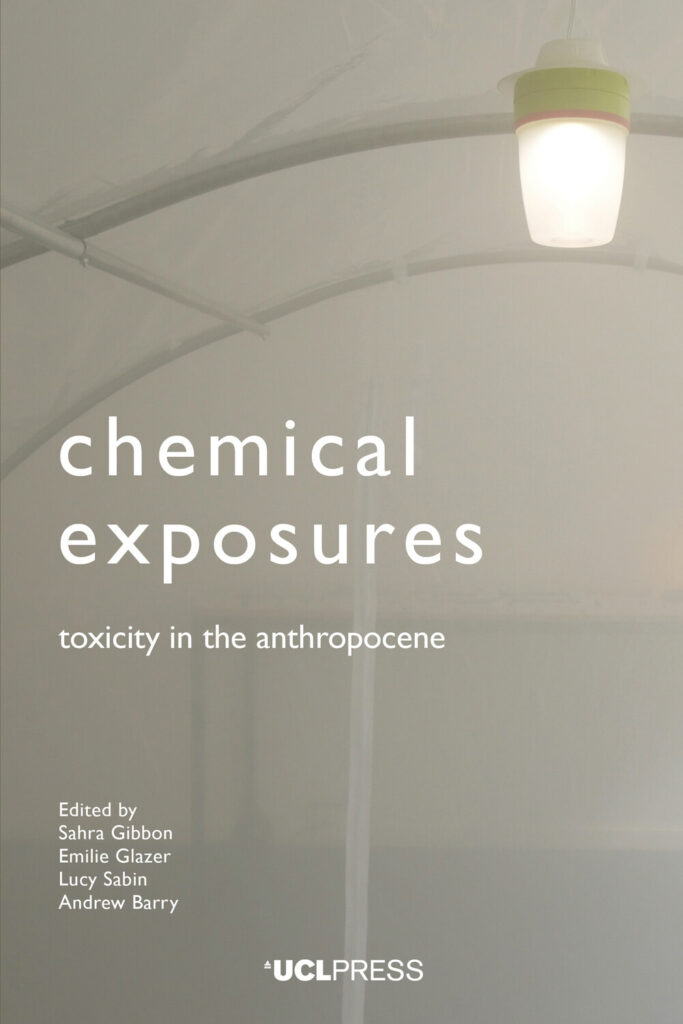
Chemical Exposures

Exposure to toxic chemicals has become common place, yet the study of both chemicals and toxicity has tended to remain at the margins of the social sciences. This volume addresses the entangled landscape of toxic chemicals in the Anthropocene, drawing together research by anthropologists, geographers, artists, and scholars in science and technology studies. The contributors understand chemical pollution as not simply pervasive, but multiple, situated and unequal, profoundly relational and affective, traversing temporal and spatial scales as it continuously disrupts and reconfigures the relations between the geological and the human, the political and the material, and between the social and natural sciences and humanities. Chemical Exposures explores the accumulation of toxic substances, the multiple scales of exposure, and the diverse ways in which exposure can be both sensed and visualised.
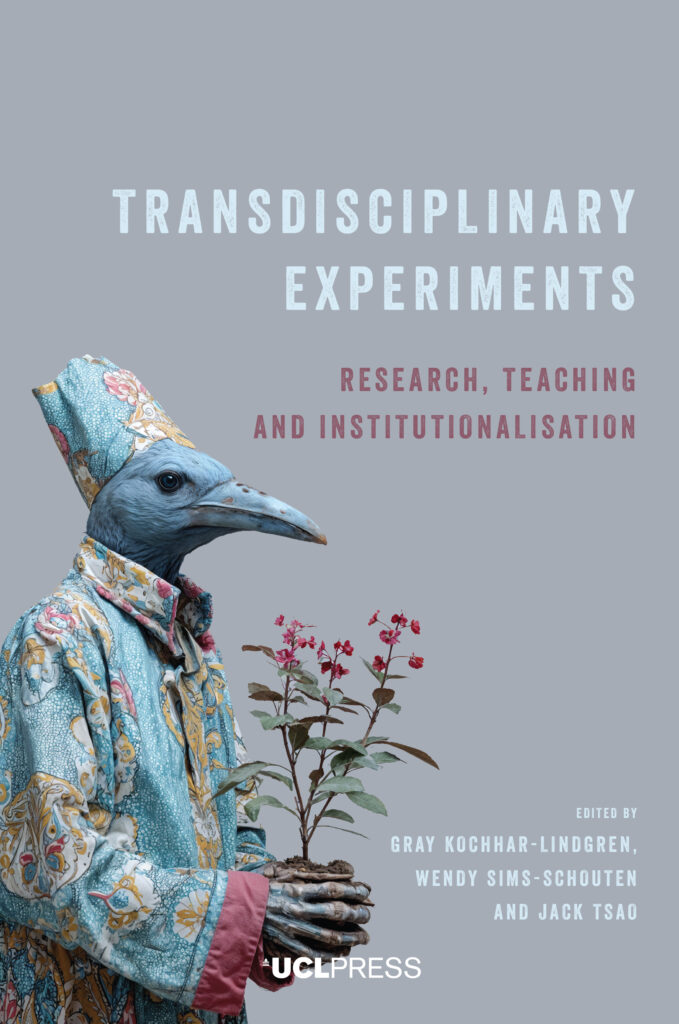
Transdisciplinary Experiments

Transdisciplinary Experiments: Research, teaching and institutionalisation explores how experimental approaches can reshape research, education, and institutions in higher education to better respond to today’s complex and interconnected challenges. The book is grounded in the idea of ‘the experiment’ as a way to open up new possibilities, whether in knowledge-creation, teaching and learning, or institutional structures and initiatives. It examines how these experiments can inspire meaningful change across disciplines, sectors and cultures.

International contributors – scholars, artists, scientists, teachers, curators, community and academic leaders – offer diverse perspectives blending practical strategies with theoretical insights. These contributions advance the framing of transdisciplinarity and its implications for practice. The book engages with project-based teaching, flexible course and programme designs, and new forms of organisation. In doing so, it converges on a common goal of rethinking how we create and share knowledge in ways that are more collaborative and adaptive, and aligned with the needs of a rapidly changing world. A section titled ‘Provocations’ offers further reflections from four contributors on leadership challenges, failures and possibilities for creative interventions.

By connecting curiosity with action and experimentation with institutionalisation, Transdisciplinary Experiments offers a vision of what higher education research, teaching, learning and leadership can look like when driven by creativity, openness and a commitment to building more resilient futures.

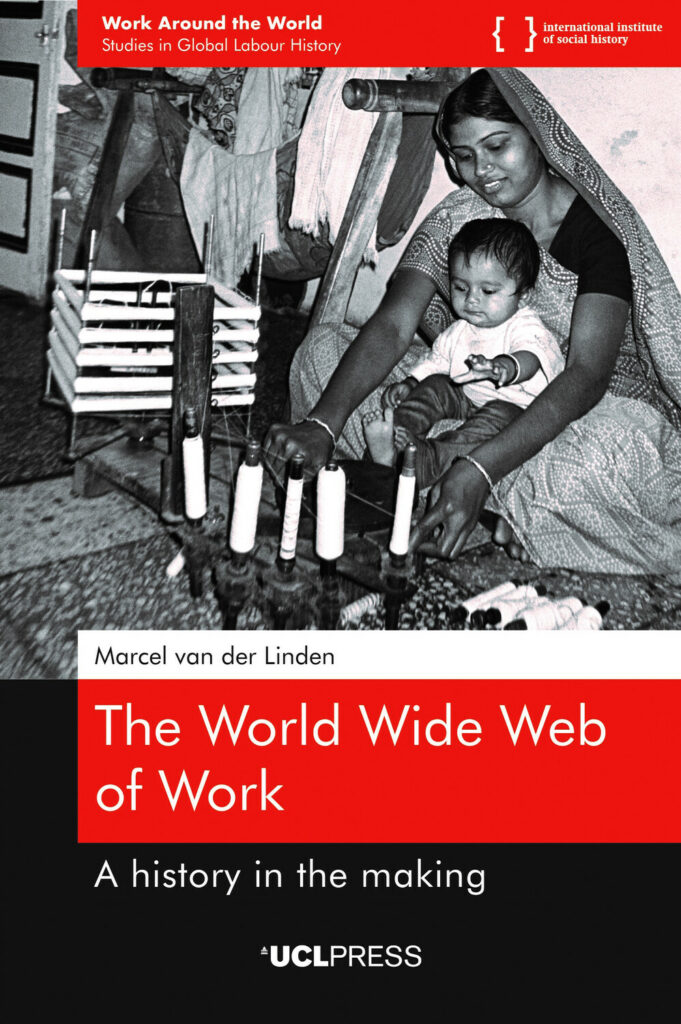
The World Wide Web of Work

Global Labour History has rapidly gained ground as a field of study in the 21st century, attracting interest in the Global South and North alike. Scholars derive inspiration from the broad perspective and the effort to perceive connections between global trends over time in work and labour relations, incorporating slaves, indentured labourers and sharecroppers, housewives and domestic servants.

Casting this sweeping analytical gaze, The World Wide Web of Work discusses the core concepts ‘capitalism’ and ‘workers’, and refines notions such as ‘coerced labour’, ‘household strategies’ and ‘labour markets’. It explores in new ways the connections between labourers in different parts of the world, arguing that both ‘globalisation’ and modern labour management originated in agriculture in the Global South and were only later introduced in Northern industrial settings. It reveals that 19th-century chattel slavery was frequently replaced by other forms of coerced labour, and it reconstructs the laborious 20th-century attempts of the International Labour Organisation to regulate labour standards supra-nationally. The book also pays attention to the relational inequality through which workers in wealthy countries benefit from the exploitation of those in poor countries. The final part addresses workers’ resistance and acquiescence: why collective actions often have unanticipated consequences; why and how workers sometimes organise massive flights from exploitation and oppression; and why ‘proletarian revolutions’ took place in pre-industrial or industrialising countries and never in fully developed capitalist societies.

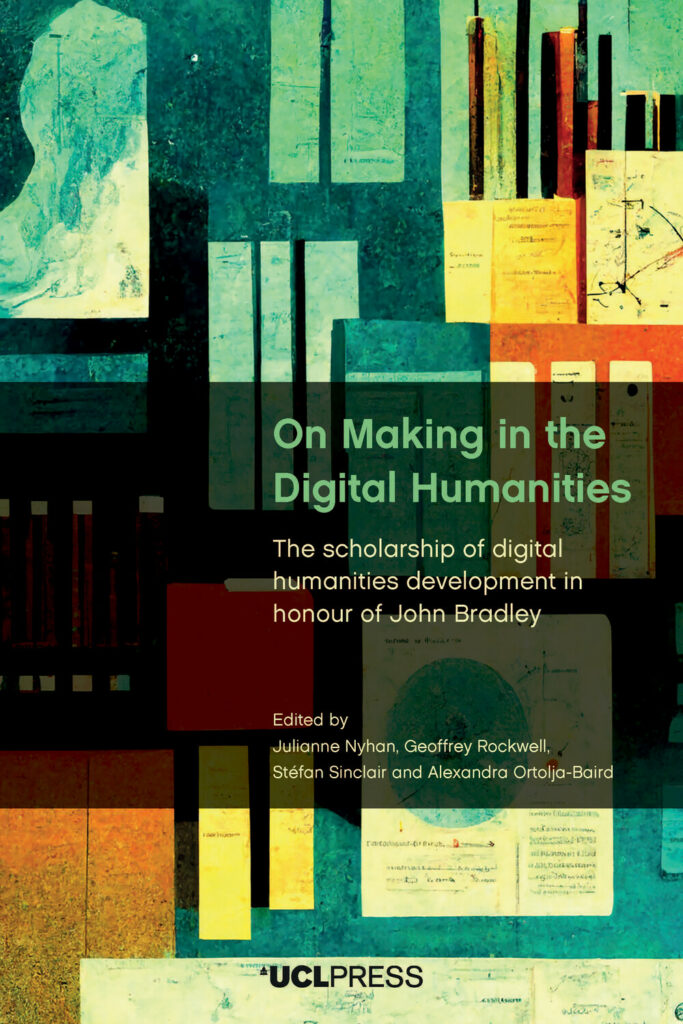
On Making in the Digital Humanities

On Making in the Digital Humanities fills a gap in our understanding of digital humanities projects and craft by exploring the processes of making as much as the products that arise from it.

The volume draws focus to the interwoven layers of human and technological textures that constitute digital humanities scholarship. To do this, it assembles a group of well-known, experienced and emerging scholars in the digital humanities to reflect on various forms of making (we privilege here the creative and applied side of the digital humanities). The volume honours the work of John Bradley, as it is totemic of a practice of making that is deeply informed by critical perspectives. A special chapter also honours the profound contributions that this volume’s co-editor, Stéfan Sinclair, made to the creative, applied and intellectual praxis of making and the digital humanities. Stéfan Sinclair passed away on 6 August 2020.

The chapters gathered here are individually important, but together provide a very human view on what it is to do the digital humanities, in the past, present and future. This book will accordingly be of interest to researchers, teachers and students of the digital humanities; creative humanities, including maker spaces and culture; information studies; the history of computing and technology; and the history of science and the humanities.

Sign up to our newsletter

Don't miss out!
Subscribe to the UCL Press newsletter for the latest open access books,
journal CfPs, news and views from our authors and much more!