We are currently upgrading our shopping cart; in the interim all orders are being diverted to Waterstones. If you would like to redeem a promotional code, or are an author wanting to place an order, please email us.

Contact us

Ethics and Aesthetics of Translation

Ethics and Aesthetics of Translation engages with translation, in both theory and practice, as part of an interrogation of ethical as well as political thought in the work of three bilingual European authors: Bernardo Atxaga, Milan Kundera and Jorge Semprún. In approaching the work of these authors, the book draws upon the approaches to translation offered by Benjamin, Derrida, Ricœur and Deleuze to highlight a broad set of ethical questions, focused upon the limitations of the monolingual and the democratic possibilities of linguistic plurality; upon our innate desire to translate difference into similarity; and upon the ways in which translation responds to the challenges of individual and collective remembrance.

Each chapter explores these interlingual but also intercultural, interrelational and interdisciplinary issues, mapping a journey of translation that begins in the impact of translation upon the work of each author, continues into moments of linguistic translation, untranslatability and mistranslation within their texts and ultimately becomes an exploration of social, political and affective (un)translatability. In these journeys, the creative and critical potential of translation emerges as a potent, often violent, but always illuminating, vision of the possibilities of differentiation and connection, generation and memory, in temporal, linguistic, cultural and political terms.
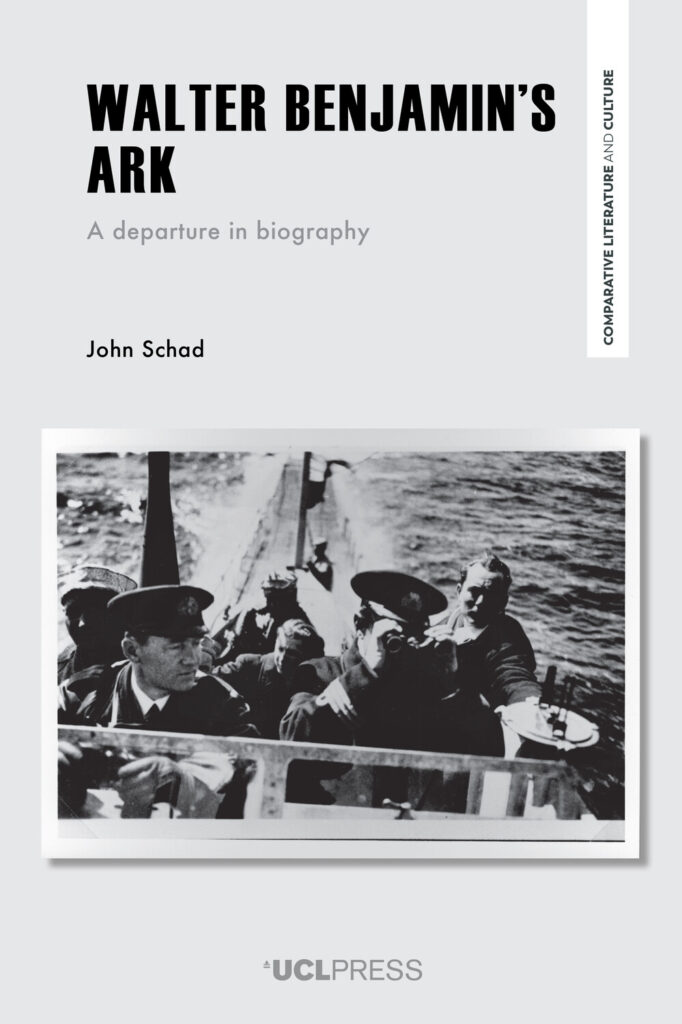
Walter Benjamin’s Ark

In July 1940, amidst fear of Nazi invasion, HMT Dunera left England. On board were a few British soldiers guarding over 2000 interned male Enemy Aliens, mostly Germans. Some of the internees were passionate Nazis, but most were Jewish refugees. Among them was Stefan Raphael Benjamin, the estranged child of the German-Jewish intellectual, Walter Benjamin.

Cue Walter Benjamin’s Ark which re-reads the life and work of Walter Benjamin via the curious life of his only child. The focal point is Stefan’s dramatic voyage from England to Australia in 1940, a voyage rich in intellectual suggestion, shared as it was with obscure men with famous names such as Wittgenstein, Kafka, Marx and Wilde. Central to the book is the one substantive text that can be ascribed to Stefan: Benjamin’s meticulous transcription of Stefan’s utterances as an infant. This fascinating text has been largely overlooked, despite the insistence of Benjamin’s biographers that ‘it continued to play a role in Walter Benjamin’s writing until the end of his life’. This book thus seeks not only to bring into view the intriguing figure that is Stefan but also to identify him as that most crucial of Benjaminian spectres, namely, the secret ‘you’ or addressee of Benjamin’s writings.

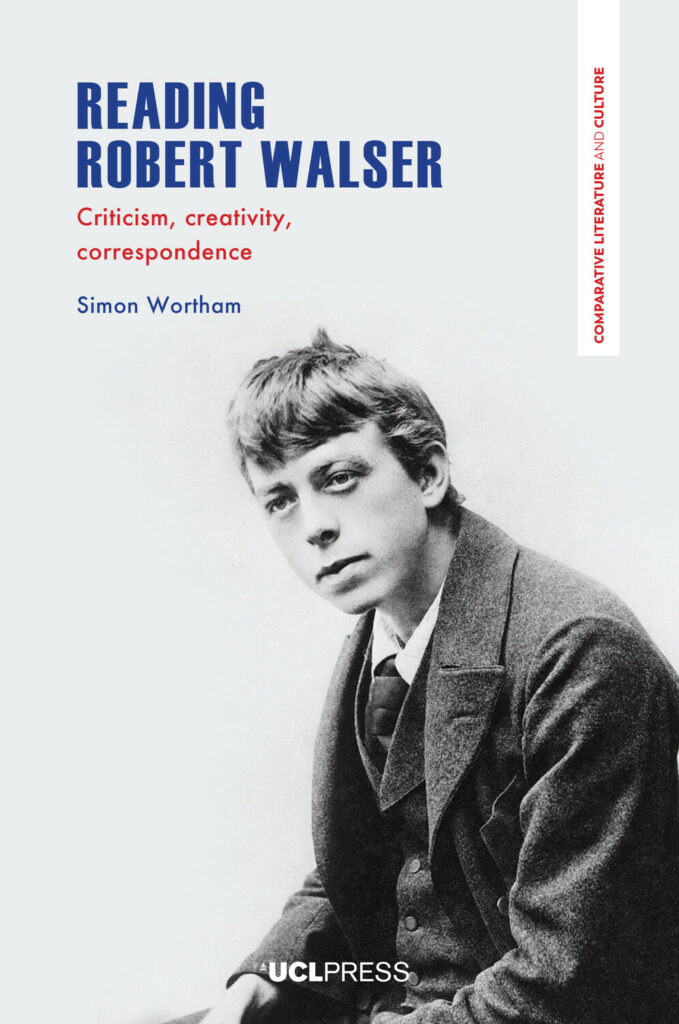
Reading Robert Walser

Reading Robert Walser concentrates on the letters sent by the author Robert Walser to Frieda Mermet, the laundry manager at a Swiss psychiatric hospital where his sister worked as a teacher. Their exchange continued from 1913 to 1942, covering the time when Walser’s literary fortunes declined, after which he himself was placed in an asylum for almost three decades before his death in 1956.

This epistolary history provides a reflection on the question of correspondence and literature, particularly the subject of lost correspondence, gender, the question of address and the performance of identity. Simon Wortham frames the letters with an extensive critical biography about the life and writing of Robert Walser, whose work has enjoyed a resurgence in recent years. As her side of the exchange no longer survives, the book concludes with a fictional reimagining of Mermet’s response to Walser’s letters. This creative part is carefully introduced by chapters on epistolary writing in a range of critical settings from modernism to literary theory and deconstruction, as well as exploring what is at stake in creative engagements with a literary legacy of this kind.

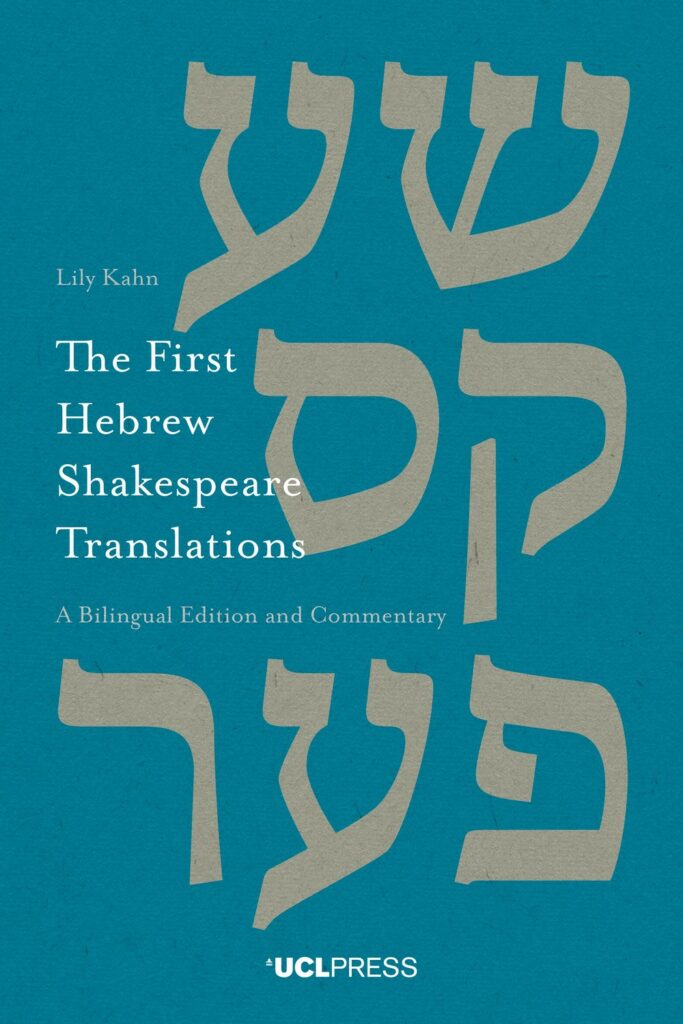
The First Hebrew Shakespeare Translations

This first bilingual edition and analysis of the earliest Shakespeare plays translated into Hebrew – Isaac Edward Salkinson’s Ithiel the Cushite of Venice (Othello) and Ram and Jael (Romeo and Juliet) – offers a fascinating and unique perspective on global Shakespeare. Differing significantly from the original English, the translations are replete with biblical, rabbinic, and medieval Hebrew textual references and reflect a profoundly Jewish religious and cultural setting. The volume includes the full text of the two Hebrew plays alongside a complete English back-translation with a commentary examining the rich array of Hebrew sources and Jewish allusions that Salkinson incorporates into his work. The edition is complemented by an introduction to the history of Jewish Shakespeare reception in Central and Eastern Europe; a survey of Salkinson’s biography including discussion of his unusual status as a Jewish convert to Christianity; and an overview of his translation strategies. The book makes Salkinson’s pioneering work accessible to a wide audience, and will appeal to anyone with an interest in multicultural Shakespeare, translation studies, the development of Modern Hebrew literature, and European Jewish history and culture.

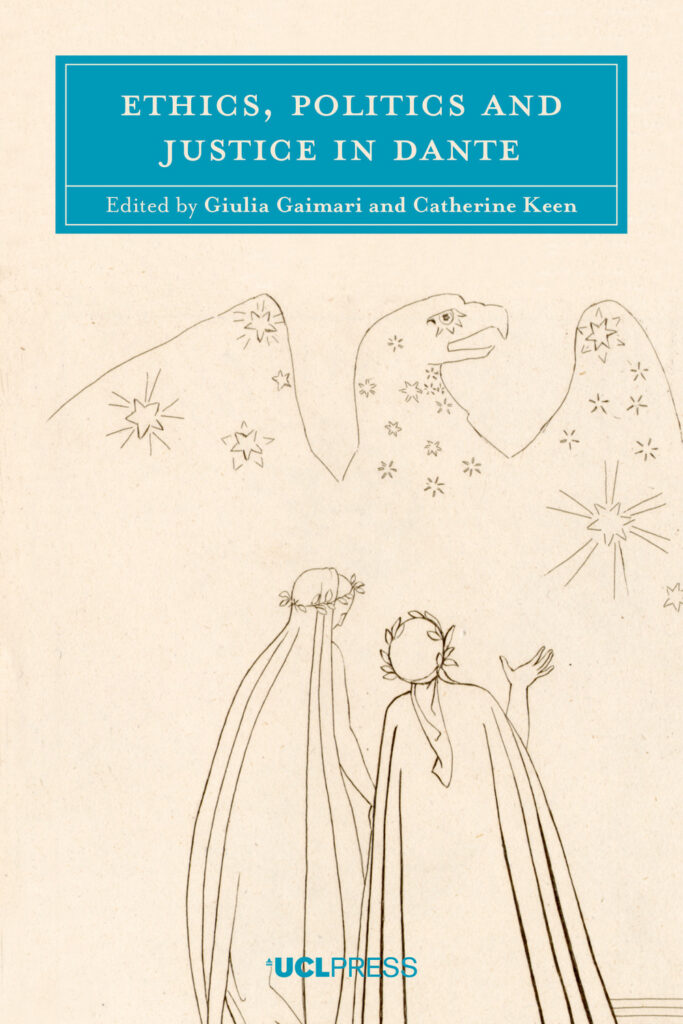
Ethics, Politics and Justice in Dante

Ethics, Politics and Justice in Dante presents new research by international scholars on the themes of ethics, politics and justice in the works of Dante Alighieri, including chapters on Dante’s modern ‘afterlife’.

Together the chapters explore how Dante’s writings engage with the contemporary culture of medieval Florence and Italy, and how and why his political and moral thought still speaks compellingly to modern readers. The collection’s contributors range across different disciplines and scholarly traditions – history, philology, classical reception, philosophy, theology – to scrutinize Dante’s Divine Comedy and his other works in Italian and Latin, offering a multi-faceted approach to the evolution of Dante’s political, ethical and legal thought throughout his writing career.

Certain chapters focus on his early philosophical Convivio and on the accomplished Latin Eclogues of his final years, while others tackle knotty themes relating to judgement, justice, rhetoric and literary ethics in his Divine Comedy, from hell to paradise. The closing chapters discuss different modalities of the public reception and use of Dante’s work in both Italy and Britain, bringing the volume’s emphasis on morality, political philosophy, and social justice into the modern age of the nineteenth, twentieth, and twenty-first centuries.

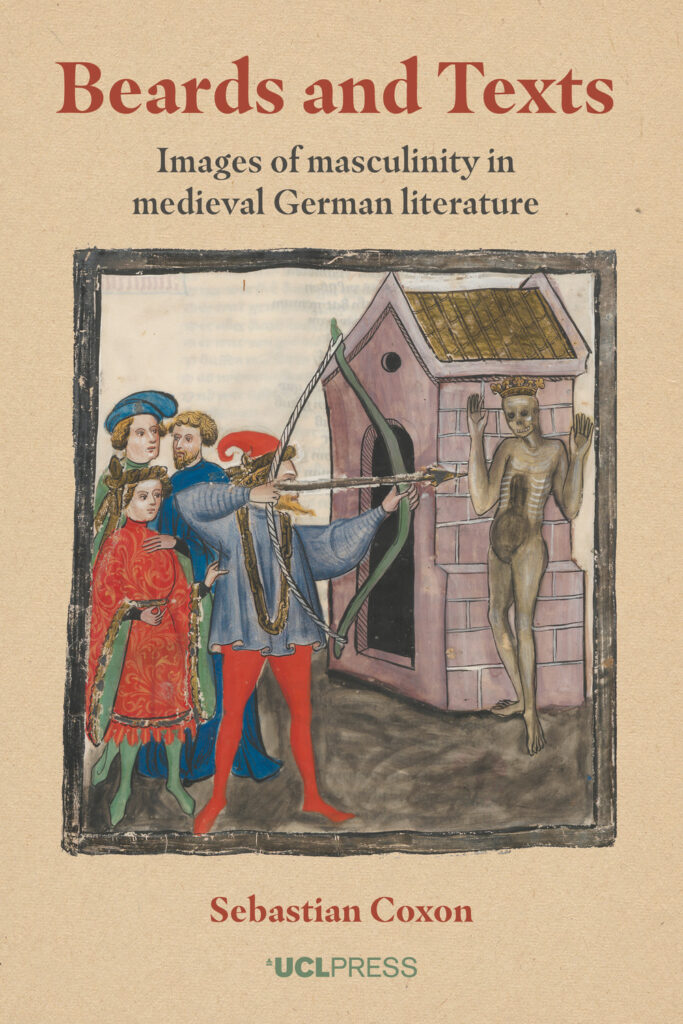
Beards and Texts

Beards and Texts explores the literary portrayal of beards in medieval German texts from the mid-twelfth to the early sixteenth centuries. It argues that as the pre-eminent symbol for masculinity the beard played a distinctive role throughout the Middle Ages in literary discussions of such major themes as majesty and humanity. At the same time beards served as an important point of reference in didactic poetry concerned with wisdom, teaching and learning, and in comedic texts that were designed to make their audiences laugh, not least by submitting various figure-types to the indignity of having their beards manhandled.

Four main chapters each offer a reading of a work or poetic tradition of particular significance (Pfaffe Konrad’s Rolandslied; Wolfram von Eschenbach’s Willehalm; ‘Sangspruchdichtung’; Heinrich Wittenwiler’s Ring), before examining cognate material of various kinds, including sources or later versions of the same story, manuscript variants and miniatures and further relevant beard-motifs from the same period. The book concludes by reviewing the portrayal of Jesus in vernacular German literature, which represents a special test-case in the literary history of beards. As the first study of its kind in medieval German studies, this investigation submits beard-motifs to sustained and detailed analysis in order to shed light both on medieval poetic techniques and the normative construction of masculinity in a wide range of literary genres.

Sign up to our newsletter

Don't miss out!
Subscribe to the UCL Press newsletter for the latest open access books,
journal CfPs, news and views from our authors and much more!