
Publication date: 20 September 2021
DOI: https://doi.org/10.14324/111.9781800080232
Number of illustrations: 20

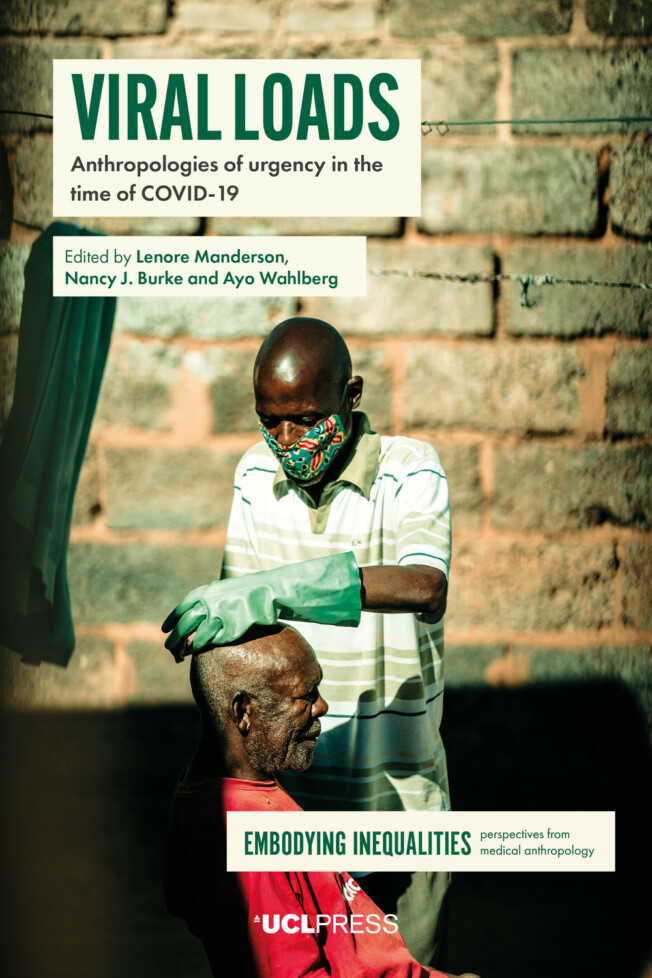
Viral Loads
Anthropologies of urgency in the time of COVID-19
Lenore Manderson (Editor), Nancy J. Burke (Editor), Ayo Wahlberg (Editor)
Drawing upon the empirical scholarship and research expertise of contributors from all settled continents and from diverse life settings and economies, Viral Loads illustrates how the COVID-19 pandemic, and responses to it, lay bare and load onto people’s lived realities in countries around the world.
A crosscutting theme pertains to how social unevenness and gross economic disparities are shaping global and local responses to the pandemic, and illustrate the effects of both the virus and efforts to contain it in ways that amplify these inequalities. At the same time, the contributions highlight the nature of contemporary social life, including virtual communication, the nature of communities, neoliberalism and contemporary political economies, and the shifting nature of nation states and the role of government. Over half of the world’s population has been affected by restrictions of movement, with physical distancing requirements and self-isolation recommendations impacting profoundly on everyday life but also on the economy, resulting also, in turn, with dramatic shifts in the economy and in mass unemployment.
By reflecting on how the pandemic has interrupted daily lives, state infrastructures and healthcare systems, the contributing authors in this volume mobilise anthropological theories and concepts to locate the pandemic in a highly connected and exceedingly unequal world. The book is ambitious in its scope – spanning the entire globe – and daring in its insistence that medical anthropology must be a part of the growing calls to build a new world.
Related titles
Jennie Gamlin, Sahra Gibbon, Paola M. Sesia, Lina Berrío,
12 March 2020
Cancer and the Politics of Care
Linda Rae Bennett, Lenore Manderson, Belinda Spagnoletti,
13 February 2023
Family Life in the Time of COVID
Katherine Twamley, Humera Iqbal, Charlotte Faircloth,
31 August 2023
Viral Loads
Anthropologies of urgency in the time of COVID-19
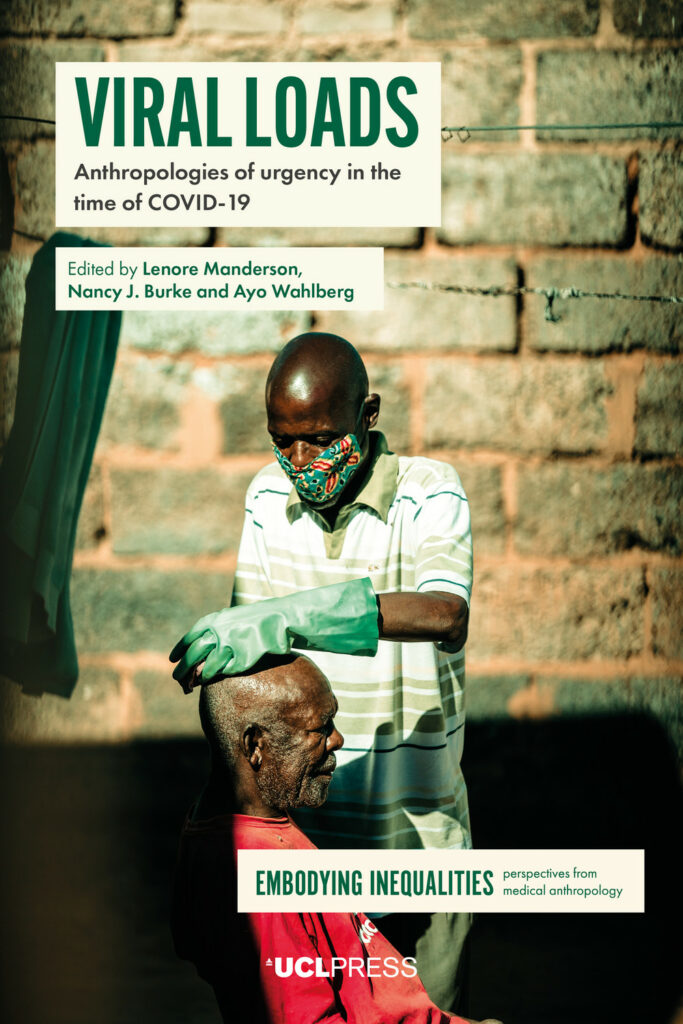
Series: Embodying Inequalities: Perspectives from Medical Anthropology
Publication date: September 20, 2021
Open Access PDF ISBN: 9781800080232
Paperback ISBN: 9781800080249
Hardback ISBN: 9781800080256
Trim size (hardback): 23.4cm x 15.6cm
Trim size (paperback): 23.4cm x 15.6cm
Drawing upon the empirical scholarship and research expertise of contributors from all settled continents and from diverse life settings and economies, Viral Loads illustrates how the COVID-19 pandemic, and responses to it, lay bare and load onto people’s lived realities in countries around the world.
A crosscutting theme pertains to how social unevenness and gross economic disparities are shaping global and local responses to the pandemic, and illustrate the effects of both the virus and efforts to contain it in ways that amplify these inequalities. At the same time, the contributions highlight the nature of contemporary social life, including virtual communication, the nature of communities, neoliberalism and contemporary political economies, and the shifting nature of nation states and the role of government. Over half of the world’s population has been affected by restrictions of movement, with physical distancing requirements and self-isolation recommendations impacting profoundly on everyday life but also on the economy, resulting also, in turn, with dramatic shifts in the economy and in mass unemployment.
By reflecting on how the pandemic has interrupted daily lives, state infrastructures and healthcare systems, the contributing authors in this volume mobilise anthropological theories and concepts to locate the pandemic in a highly connected and exceedingly unequal world. The book is ambitious in its scope – spanning the entire globe – and daring in its insistence that medical anthropology must be a part of the growing calls to build a new world.
‘This collection of essays on the anthropology of an emergency is a captivating account of “the first digital pandemic”’
Medical Anthropology Quarterly
‘The scope of Viral Loads is admirable and informative. Its 23 chapters are grounded in Cuba, South Africa, Romania, India, and many other locales, and in topics including conspiracy theories, disability and chronic illness, sexual and reproductive health, gender, racism, and poverty…. A significant strength of Viral Loads is that its authors, affiliated with institutions on 5 continents, draw their analyses from various parts of the global north and global south: a truly international effort….abounding in rich ethnographic insights’
The Polyphony
‘A significant contribution by medical anthropology to the understanding of a global health crisis as it unfolded in front of observers’ eyes.’
Journal of the Royal Anthropological Institute
‘In Viral Loads, the editors and contributors offer a penetrating analysis of how, worldwide, the COVID pandemic has exposed and exploited the racially, socioeconomically and globally uneven ways in which people live; it demands, in response, that we extend our rationales emergent from anthropological and interdisciplinary architectures. This broad and intensive work is as much a book of the academy as it is of the heart, with enormously important ramifications for humankind in the present and for the future. As the authors sort through the global mess our species has managed to create, they argue the urgency to address underlying social, political, and ecological dimension of inequality, acute stratifications, economic disjunctions, forced human migrations, and political lethargy; without this, we are doomed to face many more rounds of equivalent pandemic disasters. From the Amazon to the Sonoran Desert, and from Pretoria to Mumbai, the narrative is excruciatingly tragic yet ironically hopeful. All are immensely tired of seeing death visiting unequally, but none have permitted their exhaustion to diminish their commitment to enhance the lives of the communities and people whom they champion and to speak to power. This is a magnificent work of action and reflection that must be read carefully and with care. To not do so is to ensure the present as the continuing model for the future.’ – Carlos G. Vélez-Ibáñez, Arizona State University
‘Viral Loads demonstrates anthropology’s power of description, analysis and theory to capture a global tragedy as it unfolds. This impressive volume brings together anthropologists from around the world, who draw on their own deep knowledge to trace COVID’s impact on social, economic and political life. The authors offer compassionate accounts of the power of the virus to exploit and magnify social and structural vulnerabilities, while they present impassioned arguments of the imperative to address underlying inequalities, local and global, that continue to threaten our very existence.’ – Melissa Parker, London School of Hygiene and Tropical Medicine