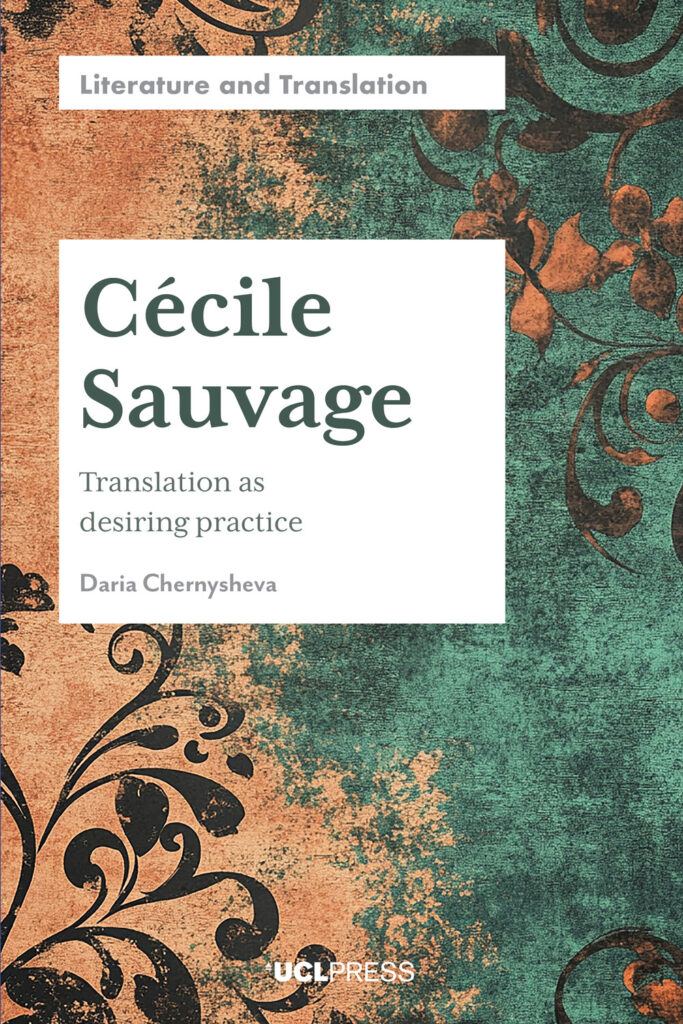
This book offers a creative critical approach to translating the poetry of French writer, Cécile Sauvage (1883-1927). Sauvage was a remarkable poet who wrote of pregnancy, maternity, the self, sex and death, yet the story of her reception across the last century is a sequence of versions, as different readers and editors reworked Sauvage’s corpus to create new images of the poet. This book presents itself as the latest versioning of Sauvage, using the creative critical framework to challenge the traditionally strict separation between translation and commentary, between practice and theory. Figuring the literary translator as a fan, this approach makes the case for understanding translation as a participatory, possessive practice, and argues for Sauvage’s importance from the starting point of the personal.
Cécile Sauvage: Translation as desiring practice makes a wide-ranging selection of Sauvage’s poetry available in English for the first time and makes publicly available information from her manuscripts and correspondence. It brings translation into interdisciplinary conversation with topics such as fan studies, genetic criticism and literary forms. Ultimately, it advocates for creativity in translation and a reappraisal of scholarly modes of working, arguing on behalf of rigorous scholarship that is unafraid to confess the desiring position from which operates, and openly works with a translator and scholar’s subjectivity rather than against it.