We are currently upgrading our shopping cart; in the interim all orders are being diverted to Waterstones. If you would like to redeem a promotional code, or are an author wanting to place an order, please email us.

Contact us

Reflexive Translation Studies

In the past decades, translation studies have increasingly focused on the ethical dimension of translational activity, with an emphasis on reflexivity to assert the role of the researcher in highlighting issues of visibility, creativity and ethics. In Reflexive Translation Studies, Silvia Kadiu investigates the viability of theories that seek to empower translation by making visible its transformative dimension; for example, by championing the visibility of the translating subject, the translator’s right to creativity, the supremacy of human translation or an autonomous study of translation.

Inspired by Derrida’s deconstructive thinking, Kadiu presents practical ways of challenging theories that argue reflexivity is the only way of developing an ethical translation. She questions the capacity of reflexivity to counteract the power relations at play in translation (between minor and dominant languages, for example) and problematises affirmative claims about (self-)knowledge by using translation itself as a process of critical reflection.

In exploring the interaction between form and content, Reflexive Translation Studies promotes the need for an experimental, multi-sensory and intuitive practice, which invites students, scholars and practitioners alike to engage with theory productively and creatively through translation.

Inclusion, Diversity and Innovation in Translation Education

The image shows the cover of a book titled ‘Inclusion, Diversity and Innovation in Translation Education’, edited by Alejandro Bolaños García-Escribano and Mazal Oaknín and foreword by Olga Castro. The cover has an abstract blue and beige floral background with the title text on a white central panel.

Through examples of literary and audiovisual translation teaching practices, Inclusion, Diversity and Innovation in Translation Education places a novel emphasis on equality, diversity and inclusion (EDI) synergising the latest research advancements in EDI and translation curricula.

The contributors revisit how languages and translation are currently taught and explore the relevance of EDI values from an interdisciplinary perspective. The chapters contain proposals of best teaching practices and teacher training guidance alongside examples of research-led teaching scenarios. There is a twofold rationale behind this volume: firstly, identifying links between literary and audiovisual translation teaching practices, which often demand great creativity inside and outside the classroom; and, secondly, placing greater emphasis on EDI-focused methods and themes. Following this approach, readers are invited to consider pressing societal issues such as (media) accessibility, intersectionality, LGBTQI+ and race, among others, and to embed them in their language and translation teaching practices.

Ethics and Aesthetics of Translation

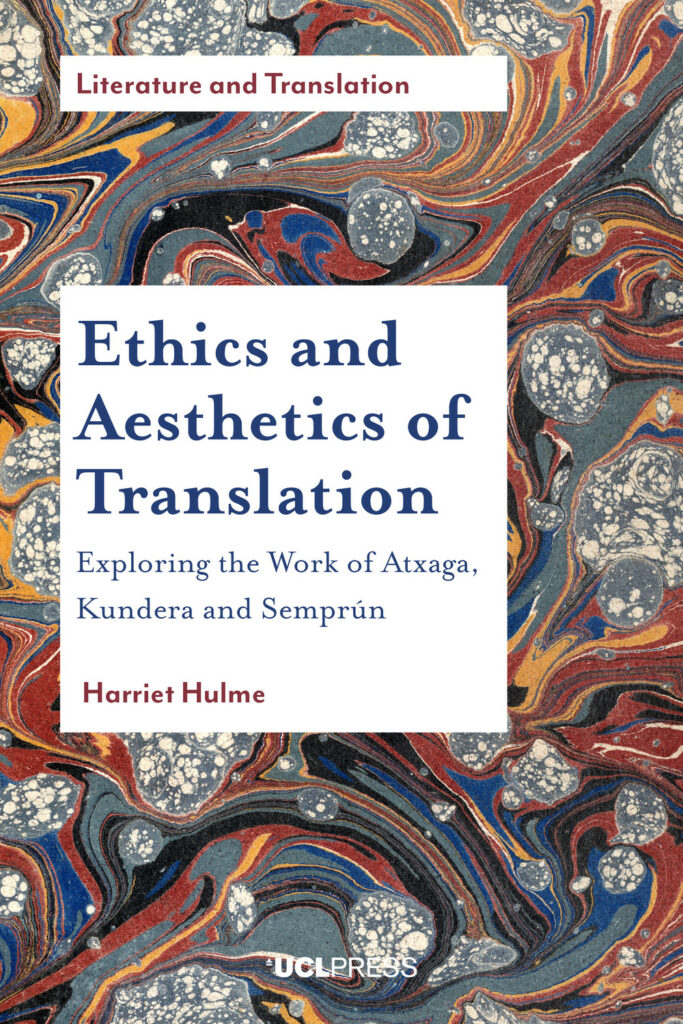
Ethics and Aesthetics of Translation engages with translation, in both theory and practice, as part of an interrogation of ethical as well as political thought in the work of three bilingual European authors: Bernardo Atxaga, Milan Kundera and Jorge Semprún. In approaching the work of these authors, the book draws upon the approaches to translation offered by Benjamin, Derrida, Ricœur and Deleuze to highlight a broad set of ethical questions, focused upon the limitations of the monolingual and the democratic possibilities of linguistic plurality; upon our innate desire to translate difference into similarity; and upon the ways in which translation responds to the challenges of individual and collective remembrance.

Each chapter explores these interlingual but also intercultural, interrelational and interdisciplinary issues, mapping a journey of translation that begins in the impact of translation upon the work of each author, continues into moments of linguistic translation, untranslatability and mistranslation within their texts and ultimately becomes an exploration of social, political and affective (un)translatability. In these journeys, the creative and critical potential of translation emerges as a potent, often violent, but always illuminating, vision of the possibilities of differentiation and connection, generation and memory, in temporal, linguistic, cultural and political terms.

Redefining Russian Literary Diaspora, 1920-2020

Over the century that has passed since the start of the massive post-revolutionary exodus, Russian literature has thrived in multiple locations around the globe. What happens to cultural vocabularies, politics of identity, literary canon and language when writers transcend the metropolitan and national boundaries and begin to negotiate new experience gained in the process of migration?

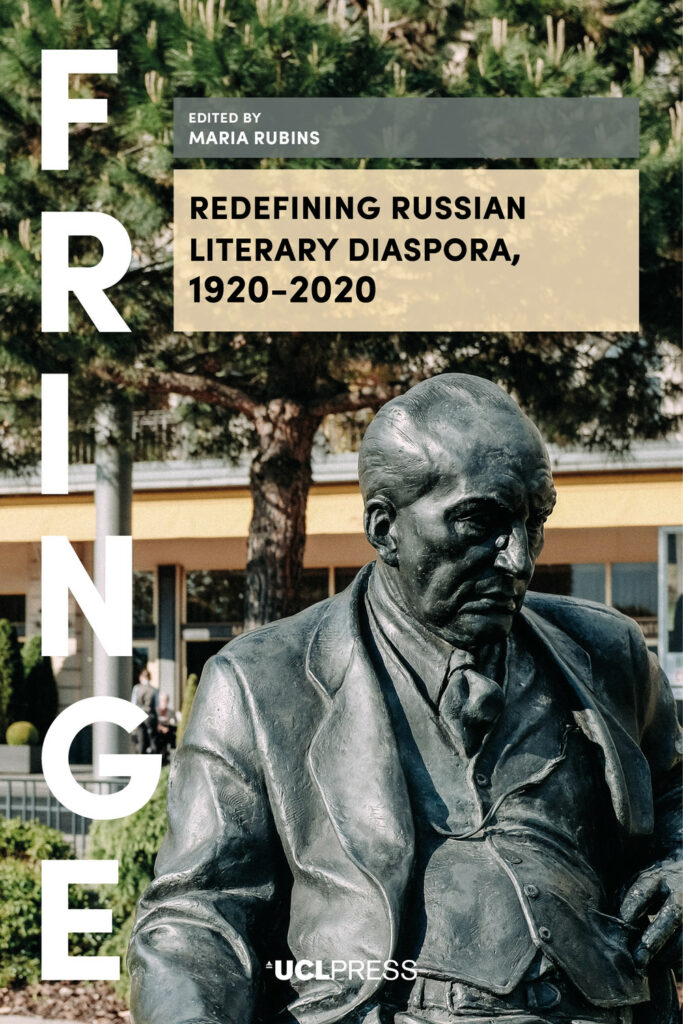
Redefining Russian Literary Diaspora, 1920-2020 sets a new agenda for the study of Russian diaspora writing, countering its conventional reception as a subsidiary branch of national literature and reorienting the field from an excessive emphasis on the homeland and origins to an analysis of transnational circulations that shape extraterritorial cultural practices. Integrating a variety of conceptual perspectives, ranging from diaspora and postcolonial studies to the theories of translation and self-translation, World Literature and evolutionary literary criticism, the contributors argue for a distinct nature of diasporic literary expression predicated on hybridity, ambivalence and a sense of multiple belonging. As the complementary case studies demonstrate, diaspora narratives consistently recode historical memory, contest the mainstream discourses of Russianness, rewrite received cultural tropes and explore topics that have remained marginal or taboo in the homeland. These diverse discussions are framed by a focused examination of diaspora as a methodological perspective and its relevance for the modern human condition.

Poems of Guido Gezelle

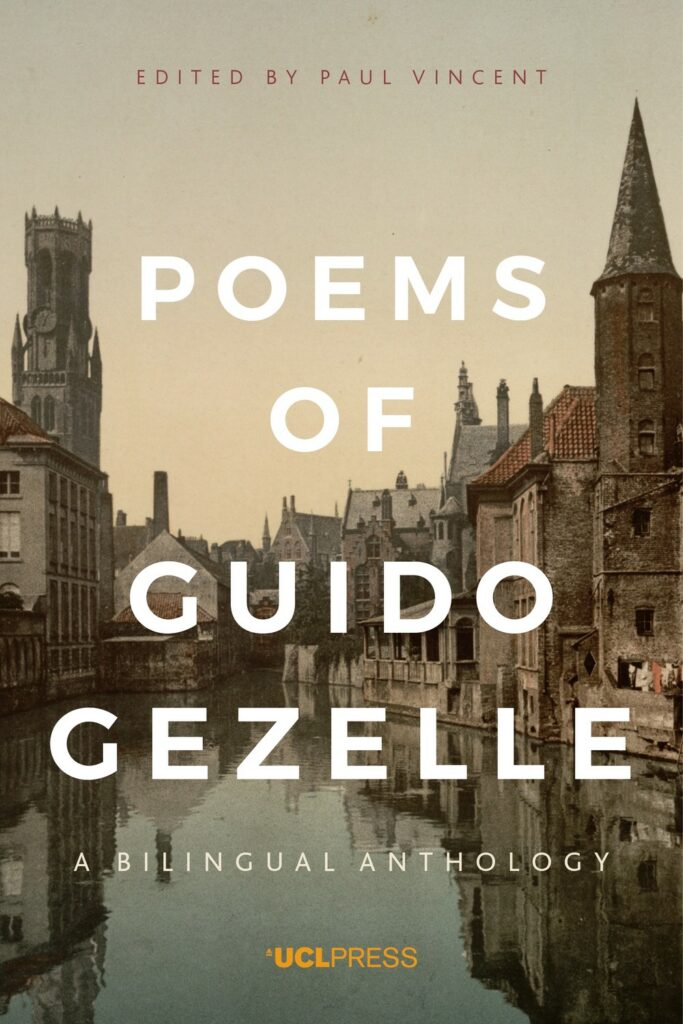
The Bruges-born poet-priest Guido Gezelle (1830–1899) is generally considered one of the masters of 19th-century European lyric poetry. At the end of his life and in the first two decades of the 20th century, Gezelle was hailed by the avant-garde as the founder of modern Flemish poetry. His unique voice was belatedly recognised in the Netherlands and often compared with his English contemporary Gerard Manley Hopkins (1844–1889). In this bilingual anthology, award-winning translator Paul Vincent selects a representative picture of Gezelle’s output, from devotional through narrative, to celebratory and expressionistic. Gezelle’s favourite themes are childhood, the Flemish landscape, friendship, nature, religion and the Flemish vernacular, and his apparently simple poems conceal a sophisticated prosody and a dialogue with spiritual and literary tradition. However, an important barrier to wider international recognition of his lyric genius up to now has been the absence of translations that do justice to the vigour and musicality of Gezelle’s West Flemish idiom. Two of the translations included go some way to redressing the balance: ‘The Watter-Scriever’ by Scotland’s national poet Edwin Morgan and ‘A Little Leaf . . .’ by Francis Jones. Both translators make brilliant use of their own vernaculars (Glaswegian and North Yorkshire respectively) to bring Gezelle to life for the non-Dutch-speaking reader.

Passages

The study of literature and culture is marked by various distinct understandings of passages – both as phenomena and critical concepts. These include the anthropological notion of rites of passage, the shopping arcades (Passagen) theorized by Walter Benjamin, the Middle Passage of the Atlantic slave trade, present-day forms of migration and resettlement, and understandings of translation and adaptation. Whether structural, semiotic, spatial/geographic, temporal, existential, societal or institutional, passages refer to processes of (status) change. They enable entrances and exits, arrivals and departures, while they also foster moments of liminality and suspension. They connect and thereby engender difference.

This volume is an exploration of passages as contexts and processes within which liminal experiences and encounters are situated. It aims to foster a concept-based, interdisciplinary dialogue on how to approach and theorize such a term. Based on the premise that concepts travel through times, contexts and discursive settings, a conceptual approach to passages provides the authors of this volume with the analytical tools to (re-)focus their research questions and create a meaningful exchange across disciplinary, national and linguistic boundaries.

Contributions from senior scholars and early-career researchers whose work focuses on areas such as cultural memory, performativity, space, media, (cultural) translation, ecocriticism, gender and race utilize specific understandings of passages and liminality, reflecting on their value and limits for their research.
Herman Gorter: Poems of 1890

Commonly viewed as a revolutionary and propagandist Herman Gorter (1864–1927) is often overlooked despite his lasting contribution to Dutch poetry. This selection of thirty-one poems, translated by Paul Vincent, focuses on Gorter’s experimental love and nature lyrics in Poems of 1890, and the Introduction sets the poems in the context of his earlier seminal work ‘Mei’ (May) as well as his often neglected Socialist verse.

The lyrical expansiveness, consistent use of rhyme and vivid imagery of the Dutch landscape that characterises ‘Mei’ evolves into more fragmentary verse in Poems of 1890, and the joyful celebratory tone of Gorter’s poetry increasingly co-exists with a sense of isolation and introspection. This can be viewed in the context of a rapidly changing political scene in Europe in the prelude to the First World War and the Russian Revolution. This is a valuable collection that revisits Gorter’s literary and political legacy, and introduces English-speaking readers to a selection of his most accessible and lyrical poems.

The First Hebrew Shakespeare Translations

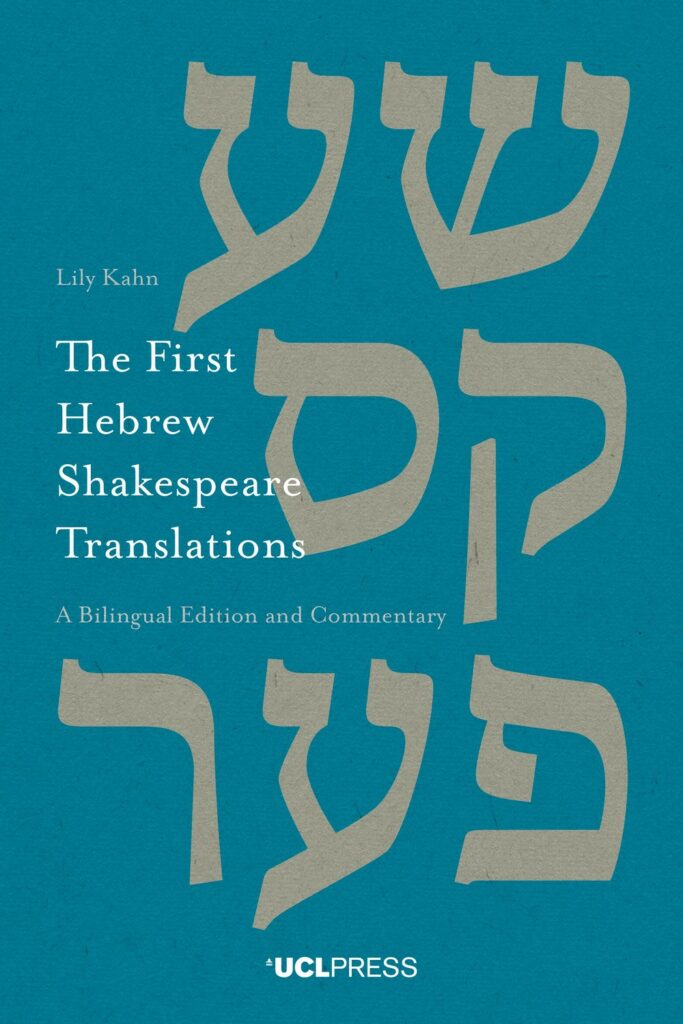
This first bilingual edition and analysis of the earliest Shakespeare plays translated into Hebrew – Isaac Edward Salkinson’s Ithiel the Cushite of Venice (Othello) and Ram and Jael (Romeo and Juliet) – offers a fascinating and unique perspective on global Shakespeare. Differing significantly from the original English, the translations are replete with biblical, rabbinic, and medieval Hebrew textual references and reflect a profoundly Jewish religious and cultural setting. The volume includes the full text of the two Hebrew plays alongside a complete English back-translation with a commentary examining the rich array of Hebrew sources and Jewish allusions that Salkinson incorporates into his work. The edition is complemented by an introduction to the history of Jewish Shakespeare reception in Central and Eastern Europe; a survey of Salkinson’s biography including discussion of his unusual status as a Jewish convert to Christianity; and an overview of his translation strategies. The book makes Salkinson’s pioneering work accessible to a wide audience, and will appeal to anyone with an interest in multicultural Shakespeare, translation studies, the development of Modern Hebrew literature, and European Jewish history and culture.

Captioning and Subtitling for d/Deaf and Hard of Hearing Audiences

Captioning and Subtitling for d/Deaf and Hard of Hearing Audiences is a comprehensive guide to the theory and practice of captioning and subtitling, a discipline that has evolved quickly in recent years.

This guide is of a practical nature and contains examples and exercises at the end of each chapter. Some of the tasks stimulate reflection on the practice and reception, while others focus on particular captioning and SDH areas, such as paralinguistic features, music and sound effects. The requirements of d/Deaf and hard of hearing audiences are analysed in detail and are accompanied by linguistic and technical considerations. These considerations, though shared with generic subtitling parameters, are discussed specifically with d/Deaf and hard of hearing audiences in mind. The reader will become familiar with the characteristics and needs of d/Deaf and hard of hearing audiences, and the diversity – including cultural and linguistic differences – within this group of people.

Based on first-hand experience in the field, the book also provides a step-by-step guide to making live performances accessible to d/Deaf and hard of hearing audiences. As well as exploring all linguistic and technical matters related to the creation of captions, aspects related to the overall set up of the captioned performance are discussed. The guide will be valuable reading to students of audiovisual translation at undergraduate and postgraduate level, to professional subtitlers and captioners, and to any organisation or venue that engages with d/Deaf and hard of hearing people.

Captioning and Subtitling for d/Deaf and Hard of Hearing Audiences is a comprehensive guide to the theory and practice of captioning and subtitling.

Sign up to our newsletter

Don't miss out!
Subscribe to the UCL Press newsletter for the latest open access books,
journal CfPs, news and views from our authors and much more!