Victorian Alchemy

Victorian Alchemy explores nineteenth-century conceptions of ancient Egypt as this extant civilisation was being ‘rediscovered’ in the modern world. With its material remnants somewhat paradoxically symbolic of both antiquity and modernity (in the very currentness of Egyptological excavations), ancient Egypt was at once evocative of ancient magical power and of cutting-edge science, a tension that might be productively conceived of as ‘alchemical’. Allusions to ancient Egypt simultaneously lent an air of legitimacy to depictions of the supernatural while projecting a sense of enchantment onto representations of cutting-edge science.

Examining literature and other cultural forms including art, photography and early film, Eleanor Dobson traces the myriad ways in which magic and science were perceived as entwined, and ancient Egypt evoked in parallel with various fields of study, from imaging technologies and astronomy, to investigations into the electromagnetic spectrum and the human mind itself. In so doing, counter to linear narratives of nineteenth-century progress, and demonstrating how ancient Egypt was more than a mere setting for Orientalist fantasies or nightmares, the book establishes how conceptions of modernity were inextricably bound up in the contemporary reception of the ancient world, and suggests how such ideas that took root and flourished in the Victorian era persist to this day.
Restaging the Past

Restaging the Past is the first edited collection devoted to the study of historical pageants in Britain, ranging from their Edwardian origins to the present day.

Across Britain in the twentieth century, people succumbed to ‘pageant fever’. Thousands dressed up in historical costumes and performed scenes from the history of the places where they lived, and hundreds of thousands more watched them. These pageants were one of the most significant aspects of popular engagement with the past between the 1900s and the 1970s: they took place in large cities, small towns and tiny villages, and engaged a whole range of different organised groups, including Women’s Institutes, political parties, schools, churches and youth organisations.

Pageants were community events, bringing large numbers of people together in a shared celebration and performance of the past; they also involved many prominent novelists, professional historians and other writers, as well as featuring repeatedly in popular and highbrow literature. Although the pageant tradition has largely died out, it deserves to be acknowledged as a key aspect of community history during a period of great social and political change. Indeed, as this book shows, some traces of ‘pageant fever’ remain in evidence today.

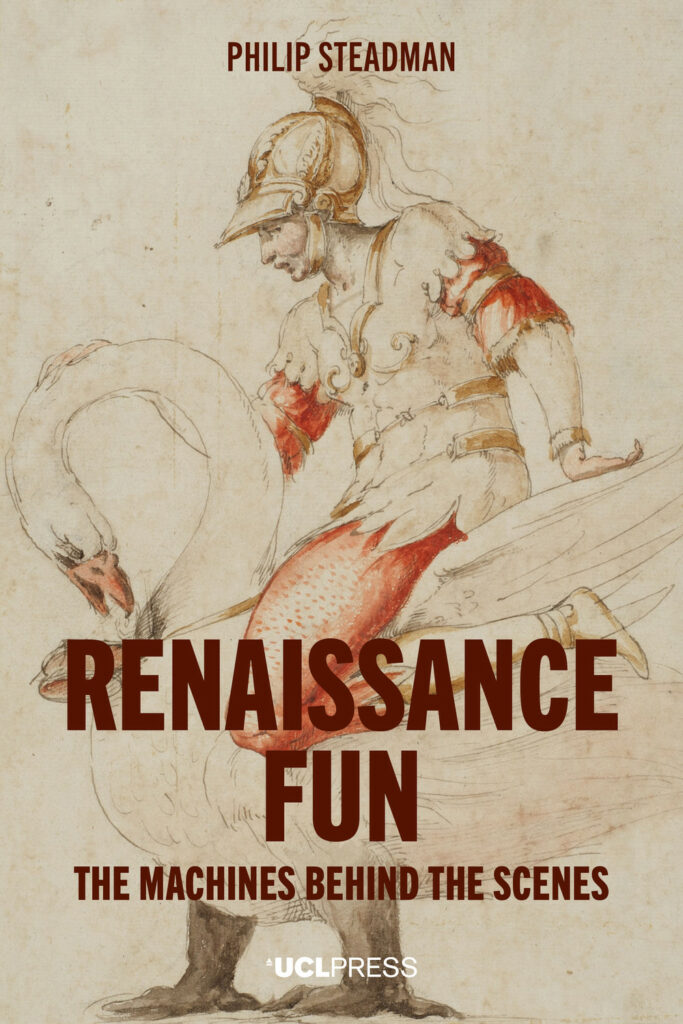
Renaissance Fun

Renaissance Fun is about the technology of Renaissance entertainments in stage machinery and theatrical special effects; in gardens and fountains; and in the automata and self-playing musical instruments that were installed in garden grottoes.

How did the machines behind these shows work? How exactly were chariots filled with singers let down onto the stage? How were flaming dragons made to fly across the sky? How were seas created on stage? How did mechanical birds imitate real birdsong? What was ‘artificial music’, three centuries before Edison and the phonograph? How could pipe organs be driven and made to play themselves by waterpower alone? And who were the architects, engineers, and craftsmen who created these wonders? All these questions are answered. At the end of the book we visit the lost ‘garden of marvels’ at Pratolino with its many grottoes, automata and water jokes; and we attend the performance of Mercury and Mars in Parma in 1628, with its spectacular stage effects and its music by Claudio Monteverdi – one of the places where opera was born.

Renaissance Fun is offered as an entertainment in itself. But behind the show is a more serious scholarly argument, centred on the enormous influence of two ancient writers on these subjects, Vitruvius and Hero. Vitruvius’s Ten Books on Architecture were widely studied by Renaissance theatre designers. Hero of Alexandria wrote the Pneumatics, a collection of designs for surprising and entertaining devices that were the models for sixteenth and seventeenth century automata. A second book by Hero On Automata-Making – much less well known, then and now – describes two miniature theatres that presented plays without human intervention. One of these, it is argued, provided the model for the type of proscenium theatre introduced from the mid-sixteenth century, the generic design which is still built today. As the influence of Vitruvius waned, the influence of Hero grew.

Refuge in a Moving World

Refuge in a Moving World draws together more than thirty contributions from multiple disciplines and fields of research and practice to discuss different ways of engaging with, and responding to, migration and displacement.

The volume combines critical reflections on the complexities of conceptualizing processes and experiences of (forced) migration, with detailed analyses of these experiences in contemporary and historical settings from around the world. Through interdisciplinary approaches and methodologies – including participatory research, poetic and spatial interventions, ethnography, theatre, discourse analysis and visual methods – the volume documents the complexities of refugees’ and migrants’ journeys. This includes a particular focus on how people inhabit and negotiate everyday life in cities, towns, camps and informal settlements across the Middle East and North Africa, Southern and Eastern Africa, and Europe.

A key dynamic documented throughout the book is the multiple ways that responses to displacement are enacted by people with personal or family experiences of (forced) migration. These people appear in many roles: researchers, writers and artists, teachers, solidarians, first responders, NGO practitioners, neighbours and/or friends. Through the application of historically and spatially sensitive, intersectional and interdisciplinary lenses, the contributors explore the ways that different people – across axes of religion, sexuality, gender and age – experience and respond to their own situations and to those of other people, in the context of diverse power structures and structural inequalities on the local, national and international level.

Ultimately, Refuge in a Moving World argues that working collaboratively through interdisciplinary approaches and methodologies has the potential to develop nuanced understandings of processes of migration and displacement, and, in turn, to encourage more sustainable modes of responding to our moving world.

Developing Theatre in the Global South

Drawing on new research from the ERC project ‘Developing Theatre’, this collection presents innovative institutional approaches to the theatre historiography of the Global South since 1945. Covering perspectives from Africa, Asia, the Middle East, Latin America and Eastern Europe, the chapters explore how US philanthropy, international organisations and pan-African festivals all contributed to the globalisation and institutionalisation of the performing arts in the Global South. During the Cultural Cold War, the Global North intervened in and promoted forms of cultural infrastructure that were deemed adaptable to any environment. This form of technopolitics impacted the construction of national theatres, the introduction of new pedagogical tools and the invention of the workshop as a format. The networks of ‘experts; responsible for this foreground seminal figures, both celebrated (Augusto Boal, Efua Sutherland) but also lesser known (Albert Botbol, Severino Montano, Metin And), who contributed to the worldwide theatrical epistemic community of the postwar years.

Developing Theatre in the Global South investigates the institutional factors that led to the emergence of professional theatre in the postwar period throughout the decolonising world. The book’s institutional and transnational approach enables theatre studies to overcome its still strong national and local focus on plays and productions, and connect it to current discourses in transnational and global history.

Sign up to our newsletter

Don't miss out!
Subscribe to the UCL Press newsletter for the latest open access books,
journal CfPs, news and views from our authors and much more!