Creative Critical Interventions for Social Justice

Creative Critical Interventions for Social Justice is an edited volume grounded in a commitment to politically engaged research that moves beyond traditional scholarly forms. It examines knowledge that is often excluded from conventional academic production and explores the potential for creative critical writing and cultural production to advance social justice-focused research and practice. The book addresses hierarchies of knowledge creation and knowledge creators, bringing together artists, educators, community organisers, activists, researchers and writers working from decolonial, antiracist, queer and transfeminist perspectives.

The volume considers the role of storytelling and experimental, creative and often collaborative interventions across, between and beyond disciplines. Contributions include reflections on the uses of poetry in youth and climate justice work, conversational life stories as a research method in sociological studies of kinship formation, analysis of the potentials and pitfalls of centring researcher positionality and lived experience as a basis for scholarly analysis, relationality and the ethics of ethnographic work with radical political movements, speculative imaginings of the future of political organising and notions of rigour and care for the living and the dead in racialised archives.
Contraband Cultures

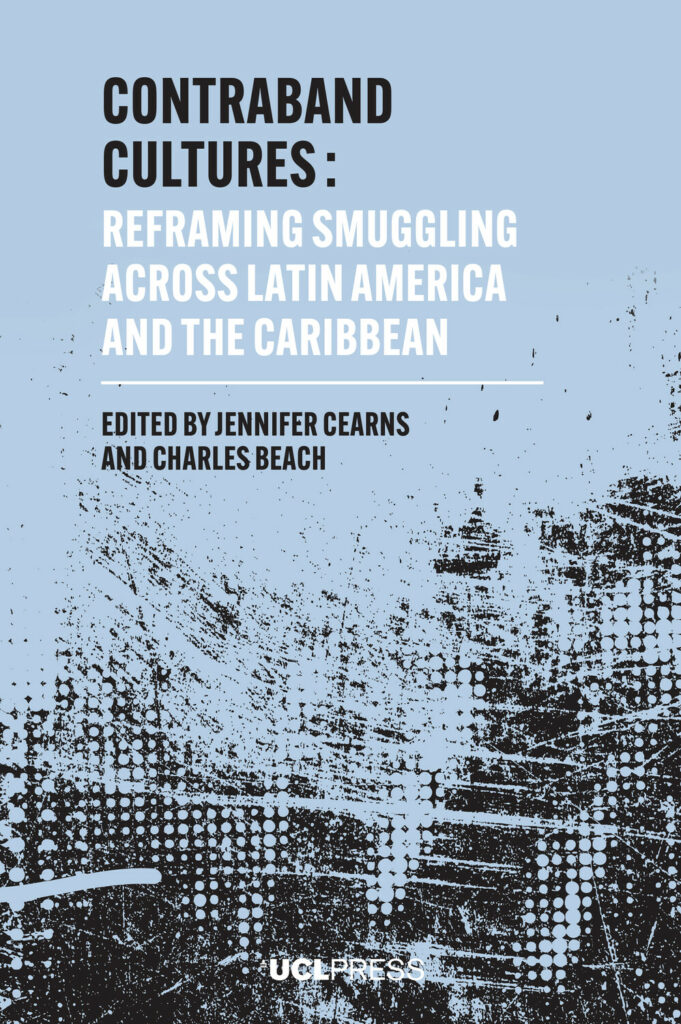
The image shows the cover of a book titled ‘Contraband Cultures: Reframing Smuggling Across Latin America and The Caribbean’, edited by Jennifer Cearns and Charles Beach. The background is dark blue with a pattern that resembles white paint splatters or stars. The title and editors’ names are in white text, with the UCL Press logo at the bottom.

Contraband Cultures presents narratives, representations, practices and imaginaries of smuggling and extra-legal or informal circulation practices, across and between the Latin American region (including the Caribbean) and its diasporas. Countering a fetishizing and hegemonic imaginary (typically stemming from the Global North) of smuggling activity in Latin America as chaotic, lawless, violent and somehow ‘exotic’, this book reframes such activities through the lenses of kinship, political movements, economic exchange and resistance to capitalist state hegemony.

The volume comprises a broad range of chapters from scholars across the social sciences and humanities, using various methodological techniques, theoretical traditions and analytic approaches to explore the efficacy and valence of ‘smuggling’ or ‘contraband’ as a lens onto modes of personhood, materiality, statehood and political (dis)connection across Latin America. This material is presented through a combination of historic documentation and contemporary ethnographic research across the region to highlight the genesis and development of these cultural practices whilst grounding them in the capitalist and colonial refashioning of the entire region from the sixteenth century to the present day.

Inclusion, Diversity and Innovation in Translation Education

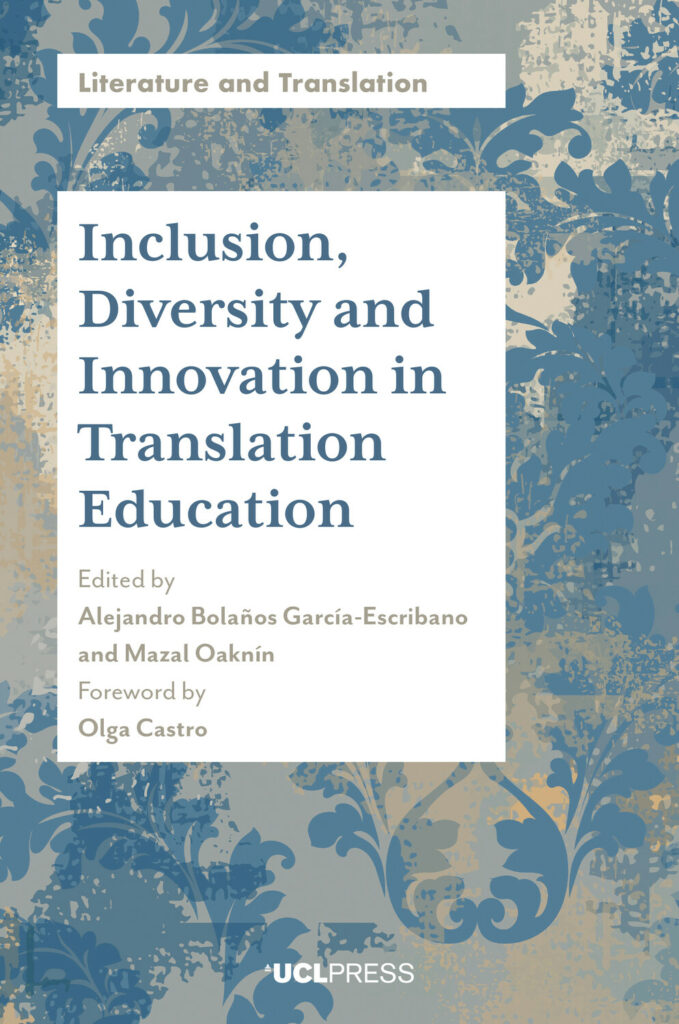
The image shows the cover of a book titled ‘Inclusion, Diversity and Innovation in Translation Education’, edited by Alejandro Bolaños García-Escribano and Mazal Oaknín and foreword by Olga Castro. The cover has an abstract blue and beige floral background with the title text on a white central panel.

Through examples of literary and audiovisual translation teaching practices, Inclusion, Diversity and Innovation in Translation Education places a novel emphasis on equality, diversity and inclusion (EDI) synergising the latest research advancements in EDI and translation curricula.

The contributors revisit how languages and translation are currently taught and explore the relevance of EDI values from an interdisciplinary perspective. The chapters contain proposals of best teaching practices and teacher training guidance alongside examples of research-led teaching scenarios. There is a twofold rationale behind this volume: firstly, identifying links between literary and audiovisual translation teaching practices, which often demand great creativity inside and outside the classroom; and, secondly, placing greater emphasis on EDI-focused methods and themes. Following this approach, readers are invited to consider pressing societal issues such as (media) accessibility, intersectionality, LGBTQI+ and race, among others, and to embed them in their language and translation teaching practices.

Critical Heritage and Social Justice

Critical Heritage and Social Justice brings together insights and experiences of scholars and practitioners working across heritage, museums, galleries, and cultural institutions to explore how principles of social justice can be embedded within these spaces. Bridging theoretical frameworks with practical applications, it presents a range of case studies and critical reflections that illuminate pathways toward transformative, justice-oriented heritage practices. Using Nancy Fraser’s three-dimensional justice framework of redistribution, recognition, and representation, the book situates social justice at the heart of critical heritage studies, highlighting its intersections with urgent global challenges including the climate crisis, conflict, forced migration, and widening social, cultural and economic inequalities. All these issues demand inclusive, equitable and community-engaged approaches within the heritage sector.

Each chapter considers how to support communities, particularly those that are marginalised, by linking heritage to broader social justice struggles, addressing structural inequalities, promoting interdisciplinary collaboration, and fostering inclusive education and curatorial practices. Contributors from diverse disciplinary backgrounds – including anthropology, archaeology, architecture, conservation, education, science communication, and urban planning – offer rich, cross-sectoral perspectives. Through this collaborative and critically engaged approach, the volume articulates new conceptual and methodological directions for advancing social justice through heritage work, responding to the urgent demands of a fragmented and rapidly evolving world.

Critical Medical Anthropology

Critical Medical Anthropology presents inspiring work from scholars doing and engaging with ethnographic research in or from Latin America, addressing themes that are central to contemporary Critical Medical Anthropology (CMA). This includes issues of inequality, embodiment of history, indigeneity, non-communicable diseases, gendered violence, migration, substance abuse, reproductive politics and judicialisation, as these relate to health.

The collection of ethnographically informed research, including original theoretical contributions, reconsiders the broader relevance of CMA perspectives for addressing current global healthcare challenges from and of Latin America. It includes work spanning four countries in Latin America (Mexico, Brazil, Guatemala and Peru) as well as the trans-migratory contexts they connect and are defined by. By drawing on diverse social practices, it addresses challenges of central relevance to medical anthropology and global health, including reproduction and maternal health, sex work, rare and chronic diseases, the pharmaceutical industry and questions of agency, political economy, identity, ethnicity, and human rights.

Transforming Early Childhood in England

Early childhood education and care has been a political priority in England since 1997, when government finally turned its attention to this long-neglected area. Public funding has increased, policy initiatives have proliferated and at each general election political parties aim to outbid each other in their offer to families. Transforming Early Childhood in England: Towards a Democratic Education argues that, despite this attention, the system of early childhood services remains flawed and dysfunctional. National discourse is dominated by the cost and availability of childcare at the expense of holistic education, while a hotchpotch of fragmented provision staffed by a devalued workforce struggles with a culture of targets and measurement. With such deep-rooted problems, early childhood education and care in England is beyond minor improvements. In the context of austerity measures affecting many young families, transformative change is urgent.

Transforming Early Childhood in England offers a critical analysis of the current system and proposes change based on young children’s universal right to education. The book calls for provision built on democratic principles, where all learning by all children is visible and recognised, educators are trusted and respected, and a calmer approach called ‘slow pedagogy’ replaces outcomes-driven targets. Combining criticism and hope, and drawing on inspiring research and examples from home and abroad, the book is essential reading for students, educators, practitioners, parents, academics and policymakers – anyone, in fact, who seeks to understand the policy problems for early childhood education and care in England, and see better prospects for the future.

Towards a Global Core Value System in Doctoral Education

Recent decades have seen an explosion in doctoral education worldwide. Increased potential for diverse employment has generated greater interest, with cultural, political and environmental tensions focusing the attention of new creative, responsible scholars.

Towards a Global Core Value System in Doctoral Education provides an evaluation of changes and reforms in doctoral education since 2000. Recognising the diversity of academic cultures and institutional systems worldwide, the book advocates for a core value system to overcome inequalities in access to doctoral education and the provision of knowledge. Building on in-depth perspectives of scholars and young researchers from more than 25 countries, the chapters focus on the structures and quality assurance models of doctoral education, supervision, and funding from an institutional and comparative perspective. The book examines capacity building in the era of globalisation, global labour market developments for doctoral graduates, and explores the ethical challenges and political contestations that may manifest in the process of pursuing a PhD.

Experts and early career researchers in the Global North and South collaborated in interdisciplinary and intergenerational teams to develop guidelines for doctoral education. They learned from each other about how to act courageously within a complex global context. The resulting recommendations and reflections are an invitation to reflect on the frames and conditions of doctoral education today.

Structural Injustice and the Law

Cover of the book ‘Structural Injustice and the Law’ edited by Virginia Mantouvalou and Jonathan Wolff, published by UCL Press. The artwork on the cover displays an abstract composition with dynamic blocks of color in shades of blue, orange, red, and yellow, with visible brushstrokes adding texture. The upper portion of the background is a deep blue, which gradually transitions to a vivid orange towards the bottom. The book’s title and editors’ names are prominently displayed in white text over the colourful background.

In developing her conception of structural injustice, Iris Marion Young made a strict distinction between large-scale collective injustice that results from the normal functions of a society, and the more familiar concepts of individual wrong and deliberate state repression. Her ideas have attracted considerable attention in political philosophy, but legal theorists have been slower to consider the relation between structural injustice and legal analysis. While some forms of vulnerability to structural injustice can be the unintended consequences of legal rules, the law also has potential instruments to alleviate some forms of structural injustice.

Structural Injustice and the Law presents theoretical approaches and concrete examples to show how the concept of structural injustice can aid legal analysis, and how legal reform can, in practice, reduce or even eliminate some forms of structural injustice. A group of outstanding law and political philosophy scholars discuss a comprehensive range of interdisciplinary topics, including the notion of domination, equality and human rights law, legal status, sweatshop labour, labour law, criminal justice, domestic homicide reviews, begging, homelessness, regulatory public bodies and the films of Ken Loach. Drawn together, they build an invaluable resource for legal theorists exploring how to make use of the concept of structural injustice, and for political philosophers looking for a nuanced account of the law’s role both in creating and mitigating structural injustice.

Schooling for Refugee Children

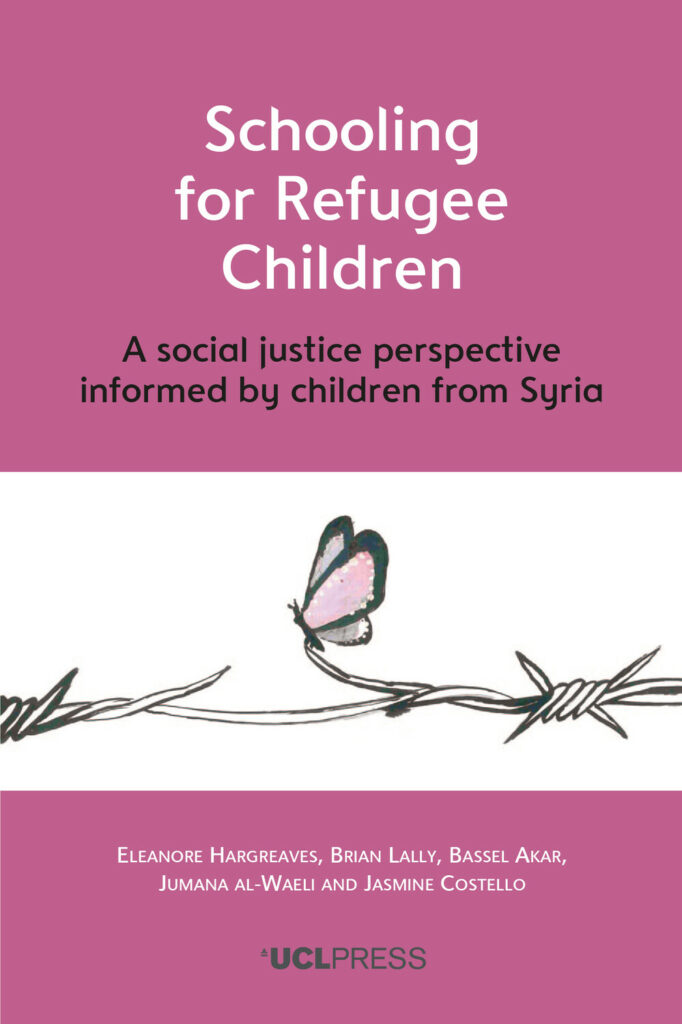
Schooling for Refugee Children is a collaboration between five authors who explore their interactions with refugee children displaced from Syria to the Lebanese borders and London. Through a programme of carefully tailored research activities, they analyse the children’s representations of their personal journeys and current circumstances, especially with regard to ongoing schooling. The children’s experiences are expressed through their own words and drawings, disrupting the stereotype of children as ‘receivers’ rather than empowered actors, and challenging traditional solutions for improving schooling. Throughout, the children are eloquent about their schooling in the context of displacement. Their views and illustrations depict a keen awareness of social justice issues, including on the distribution of wealth, recognition of status and representation of voice. These are framed by the authors within Nancy Fraser’s concept of social justice as parity-of-participation. In this way, the book brings to light important representations of some empowering experiences lived through by refugee children from Syria, as well as their thoughts on what has helped their learning and what can be done better. The children’s need for care and a sense of belonging in their schools and new communities is given particular emphasis throughout the book, represented by one child, who simply requested, ‘Add some more love!’

Research in Global Learning

Young people around the world are calling ever more urgently on policymakers to address today’s global challenges of sustainability, structural inequality and social justice. So it is little surprise that learning in a global society, understanding sustainable development and being active global citizens are increasingly popular themes for education at all levels. Educational research makes a crucial contribution to knowledge that can address the great questions of our time, with evidence from diverse studies vital if we are to build a clear picture. Research in Global Learning showcases methods and findings from early career researchers who conducted illuminating studies around the globe, specifically in Brazil, China, Ghana, Greece, Israel, Jamaica, Japan, Kazakhstan, Pakistan, Poland, South Korea, Trinidad and Tobago, Turkey, the United States and the United Kingdom.

The studies in this volume investigate four important themes: the relationship between policy and practice; opportunities and constraints in the education system and for the role of teachers; challenges for higher education; and the perspectives of young people and students. Flexibility of approach is crucial for successful educational research in varied environments, and is on show throughout this book. Depending on context, authors used case study, quantitative and qualitative research, participatory action research, longitudinal studies and analysis of textbooks through critical discourse analysis to demonstrate how learning about global learning and sustainability can inspire learners and contribute to quality education.

Sign up to our newsletter

Don't miss out!
Subscribe to the UCL Press newsletter for the latest open access books,
journal CfPs, news and views from our authors and much more!