Creative Critical Interventions for Social Justice

Creative Critical Interventions for Social Justice is an edited volume grounded in a commitment to politically engaged research that moves beyond traditional scholarly forms. It examines knowledge that is often excluded from conventional academic production and explores the potential for creative critical writing and cultural production to advance social justice-focused research and practice. The book addresses hierarchies of knowledge creation and knowledge creators, bringing together artists, educators, community organisers, activists, researchers and writers working from decolonial, antiracist, queer and transfeminist perspectives.

The volume considers the role of storytelling and experimental, creative and often collaborative interventions across, between and beyond disciplines. Contributions include reflections on the uses of poetry in youth and climate justice work, conversational life stories as a research method in sociological studies of kinship formation, analysis of the potentials and pitfalls of centring researcher positionality and lived experience as a basis for scholarly analysis, relationality and the ethics of ethnographic work with radical political movements, speculative imaginings of the future of political organising and notions of rigour and care for the living and the dead in racialised archives.
Critical Thinking for the Arts and Humanities

This textbook provides multi-disciplinary introduction to critical thinking skills as applied to the arts and humanities. It includes fifteen case studies, each based on research conducted at UCL to illustrate critical thinking skills within a specific discipline, guiding students through the research process and offering inspiration and example for wider research design and practice. The case studies are introduced by a summary of the main concepts and skills, and the research methodologies applied. Accompanying exercises provide opportunities to apply the skills illustrated in the study to real-world contexts.

This book avoids promoting a view of critical thinking as a set of generic skills that apply across academia. Instead, it encourages students to understand the skills they will be expected to apply in their own study of the arts and humanities. Approaches to knowledge vary across academic disciplines – and this book equips students with the ability to think critically in their own work.

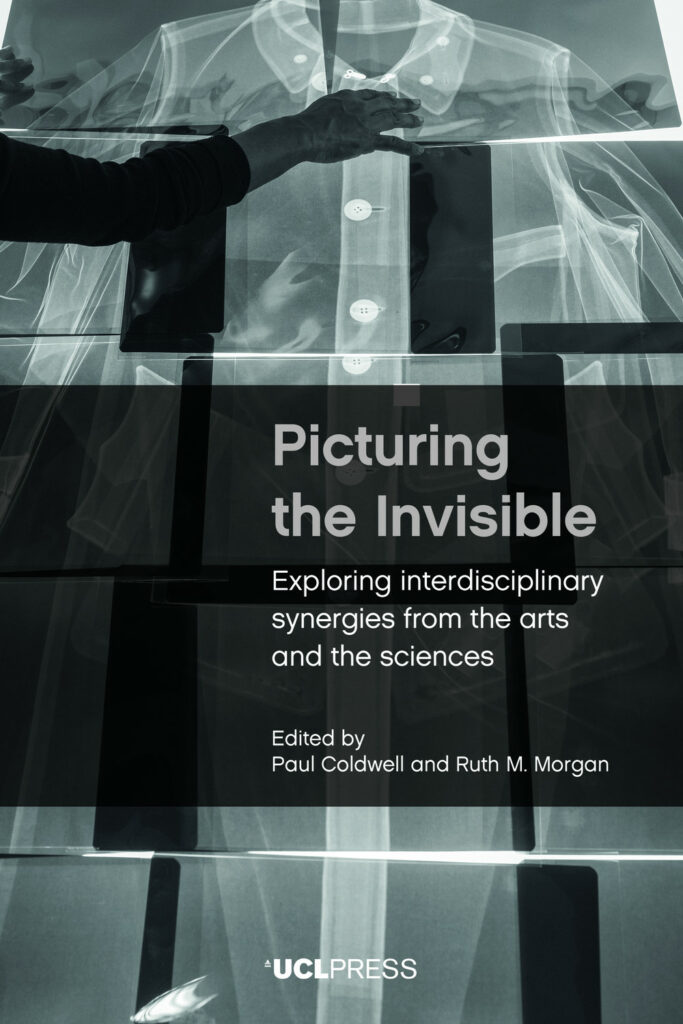
Picturing the Invisible

Picturing the Invisible presents different disciplinary approaches to articulating the invisible, that which is not known or that which is not provable. The challenge that we have seen is how to articulate these concepts, not only to those within a particular academic field but beyond, to other disciplines and society at large. As our understanding of the complexity of the world grows incrementally, so does our realisation that issues and problems can rarely be resolved within neat demarcations. Therefore, the importance of finding means of communicating across disciplines and fields becomes a priority. Whilst acknowledging the essential importance of the specialist academic, the capacity to understand other disciplines, their priorities, methodologies and even the language used can become crucial in being an effective instrument for change.
This book brings together insights from leading academics from a wide range of disciplines including Art and Design, Curatorial Practice, Literature, Forensic Science, Fashion, Medical Science, Psychoanalysis and Psychotherapy, Philosophy, Astrophysics and Architecture with a shared interest in exploring how, in each discipline, we strive to find expression for the invisible or unknown, and to draw out and articulate some of the explicit and tacit ways of communicating those concepts that transcends traditional disciplinary boundaries.

Methods and Methodologies in Heritage Studies

Methods and Methodologies in Heritage Studies offers succinct, easily accessible analyses of the disciplinary debates, intellectual legacies and practical innovations that have led to understandings of heritage value today.

Through a diverse collection of expert voices, this volume invites readers to embark on their own journeys through appropriate methodologies for research and public engagement. Readers can draw on analyses of key problem areas and argumentative interventions to create a roadmap for the many disciplinary approaches that converge on heritage studies.

Oriented specifically towards learning and teaching heritage across archaeology, anthropology, history and geography, this textbook is designed to support critical, ethical heritage students, researchers and practitioners.

Being Interdisciplinary

In Being Interdisciplinary, Alan Wilson draws on five decades as a leading figure in urban science to set out a systems approach to interdisciplinarity for those conducting research in this and other fields. He argues that most research is interdisciplinary at base, and that a systems perspective is particularly appropriate for collaboration because it fosters an outlook that sees beyond disciplines. There is a more subtle thread, too. A systems approach enables researchers to identify the game-changers of the past as a basis for thinking outside convention, for learning how to do something new and how to be ambitious, in a nutshell how to be creative. Ultimately, the ideas presented address how to do research.

Building on this systems focus, the book first establishes the basics of interdisciplinarity. Then, by drawing on the author’s experience of doing interdisciplinary research, and working from his personal toolkit, it offers general principles and a framework from which researchers can build their own interdisciplinary toolkit, with elements ranging from explorations of game-changers in research to superconcepts. In the last section, the book tackles questions of managing and organising research from individual to institutional scales.

Alan Wilson deploys his wide experience – researcher in urban science, university professor and vice-chancellor, civil servant and institute director – to build the narrative. While his experience in urban science provides the illustrations, the principles apply across many research fields.

Sign up to our newsletter

Don't miss out!
Subscribe to the UCL Press newsletter for the latest open access books,
journal CfPs, news and views from our authors and much more!