The King’s Dinner

The King’s Dinner is about what it meant to be British at the end of the eighteenth century. Drawing on the vast kitchen ledgers of two royal households made newly available to research through digitisation, the authors study the role and influence of food in understanding British identity. Analysing trade routes, migration, agricultural changes, recipes, and flavours they argue that Britishness was more complex and more multicultural than previously recognised.

Starting at George III’s Kew Palace and the Prince Regent’s Carlton House, then moving in ever wider circles, the book considers the significance of food for understanding the royal family, the wider British population, their European neighbours, and the British and colonised people in the Atlantic world and the Indian subcontinent. With a growing overseas empire, Britain was an increasingly powerful nation, and the ability to choose was one of the ways this power was exercised. The cuisine that emerged was complex, with wealthy Britons adopting, adapting, or rejecting the foods of European enemies and allies or colonised peoples and places. ‘Britishness’ was an ever-shifting balance of European multiculturalism, imperial ambition, tradition and experimentation, a messy mix that reveals the entanglement of cultures and cuisines, continually changed by the people who cook and eat the food.
The State, Popular Mobilisation and Gold Mining in Mongolia

Mongolia’s mining sector, along with its environmental and social costs, have been the subject of prolonged and heated debate. This debate has often cast the country as either a victim of the ‘resource curse’ or guilty of ‘resource nationalism’.

In The State, Popular Mobilisation and Gold Mining in Mongolia, Dulam Bumochir aims to avoid the pitfalls of this debate by adopting an alternative theoretical approach. He focuses on the indigenous representations of nature, environment, economy, state and sovereignty that have triggered nationalist and statist responses to the mining boom. In doing so, he explores the ways in which these responses have shaped the apparently ‘neo-liberal’ policies of twenty-first century Mongolia, and the economy that has emerged from them, in the face of competing mining companies, protest movements, international donor organizations, economic downturn, and local and central government policies.

Applying rich ethnography to a nuanced and complex picture, Bumochir’s analysis is essential reading for students and researchers studying the environment and mining, especially in Central and North East Asia and post-Soviet regions, and also for readers interested in the relationship between neoliberalism, nationalism, environmentalism and state.

Reframing the Ethnographic Museum

Since the later part of the twentieth century, ethnographic museums have come under increasing scrutiny, and many have reflected on and changed their presentation as they questioned collections so often made by colonial officials and explorers. Now is a good time to explore whether new developments in display and cultural politics provide a viable future for ethnographic museums. In particular, policies for restitution by colonial era institutions create a changed landscape for ethnographic display both in the countries from which they originate and in former colonising states.

Reframing the Ethnographic Museum presents a wide range of cultural settings across the world where ethnographic displays have appeared in their local circumstances. Non-European museum strategies raise new problems but also new solutions. Nationalism has been especially significant in museology in Asia, and in Africa new museum objectives have emerged. They share a problematic future in a digital age when the aura of artefacts is challenged by digital repositories and a public less willing to travel to visit original objects. Authors in this book grapple with the new complexities facing them as curators in the contemporary world.

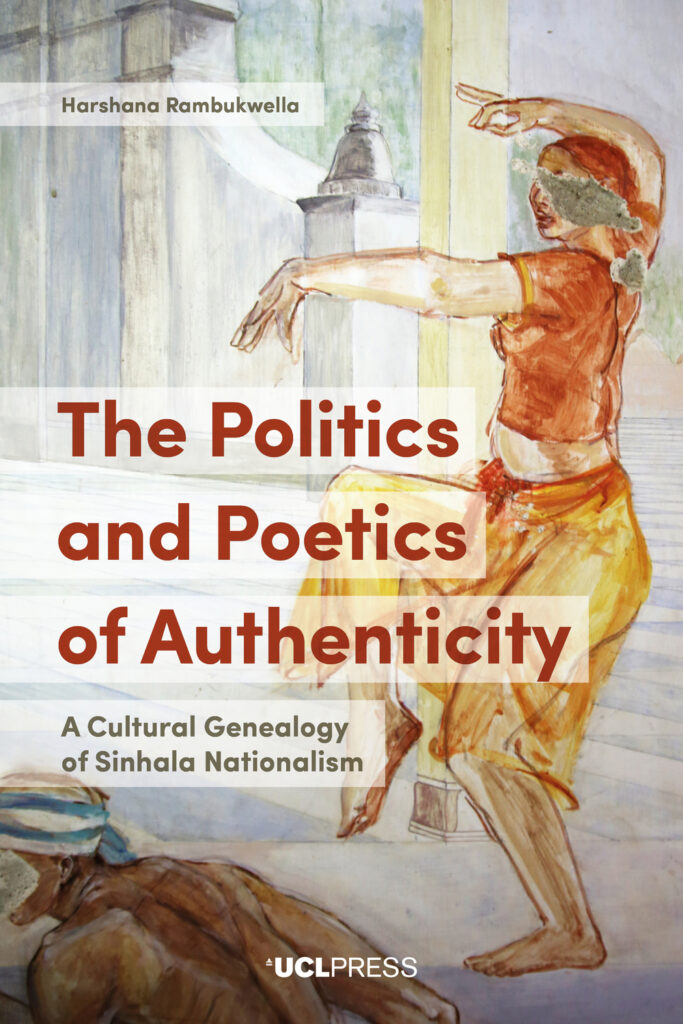
The Politics and Poetics of Authenticity

What is the role of cultural authenticity in the making of nations? Much scholarly and popular commentary on nationalism dismisses authenticity as a romantic fantasy or, worse, a deliberately constructed mythology used for political manipulation. The Politics and Poetics of Authenticity places authenticity at the heart of Sinhala nationalism in late nineteenth and twentieth century Sri Lanka. It argues that the passion for the ‘real’ or the ‘authentic’ has played a significant role in shaping nationalist thinking and argues for an empathetic yet critical engagement with the idea of authenticity.

Through a series of fine-grained and historically grounded analyses of the writings of individual figures central to the making of Sinhala nationalist ideology the book demonstrates authenticity’s rich and varied presence in Sri Lankan public life and its key role in understanding post-colonial nationalism in Sri Lanka and elsewhere in South Asia and the world. It also explores how notions of authenticity shape certain strands of postcolonial criticism and offers a way of questioning the taken-for-granted nature of the nation as a unit of analysis but at the same time critically explore the deep imprint of nations and nationalisms on people lives.

Life-writing in the History of Archaeology

Life-writing is a vital part of the history of archaeology, and a growing field of scholarship within the discipline. Travels and adventures of the ‘great archaeologists’ have generated centuries-worth of bestselling books that, in turn, shaped the public perception of archaeology. The lives of archaeologists are entangled with histories of museums and collections, developments in science and scholarship, and narratives of nationalism and colonialism into the present. In recent years life-writing has played an important role in the surge of new research in the history of archaeology, including ground-breaking studies of discipline formation, institutionalisation and social and intellectual networks. Sources such as diaries, wills, film and the growing body of digital records are powerful tools for highlighting the contributions of hitherto marginalised archaeological lives including many pioneering women, hired labourers and other ‘hidden hands’.

This book brings together critical perspectives on life-writing in the history of archaeology from leading figures in the field. These include studies of archive formation and use, the concept of ‘dig-writing’ as a distinctive genre of archaeological creativity and reviews of new sources for already well-known lives. Several chapters reflect on the experience of life-writing, review the historiography of the field and assess the intellectual value and significance of life-writing as a genre. Together, they work to problematise underlying assumptions about this genre, foregrounding methodology, social theory, ethics and other practice-focused frameworks in conscious tension with previous practices.

Heritage and Nationalism

How was the Roman Empire invoked in Brexit Britain and in Donald Trump’s United States of America, and to what purpose? And why is it critical to answer these kinds of questions? Heritage and Nationalism explores how people’s perceptions and experiences of the ancient past shape political identities in the digital age. It particularly examines the multiple ways in which politicians, parties and private citizens mobilise aspects of the Iron Age, Roman and Medieval past of Britain and Europe to include or exclude ‘others’ based on culture, religion, class, race, ethnicity, etc.

Chiara Bonacchi draws on the results of an extensive programme of research involving both data-intensive and qualitative methods to investigate how pre-modern periods are leveraged to support or oppose populist nationalist arguments as part of social media discussions concerning Brexit, the Italian Election of 2018 and the US-Mexican border debate in the US. Analysing millions of tweets and Facebook posts, comments and replies, this book is the first to use big data to answer questions about public engagement with the past and identity politics. The findings and conclusions revise and reframe the meaning of populist nationalism today and help to build a shared basis for the democratic engagement of citizens in public life in the future. The book offers a fascinating and unmissable read for anyone interested in how the past and its contemporary legacy, or ‘heritage’, influence our ‘political’ thinking and feeling in a time of hyper-interconnectivity.

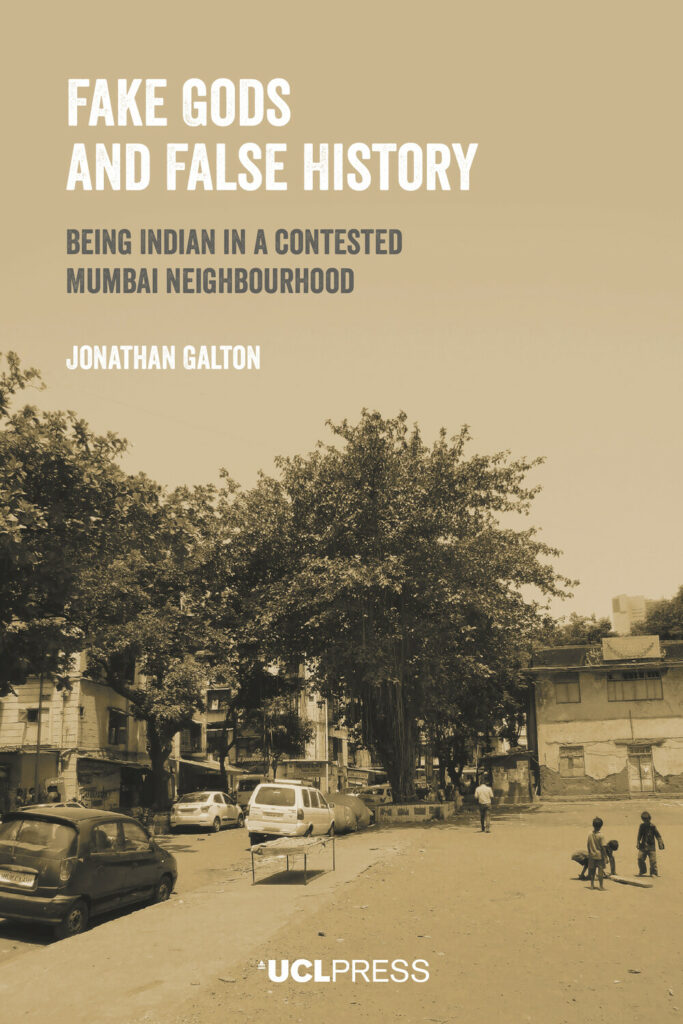
Fake Gods and False History

In an age where history is a global battleground and fake news proliferates, culture wars are being waged across India over its future – majoritarian or inclusive, neoliberal or socialist, religious or secular?

Fake Gods and False History takes us to the BDD Chawls, a central Mumbai neighbourhood of tenement blocks (chawls) on the brink of a controversial redevelopment. It reveals how contested narratives of Indian history play out in the daily life of this divided neighbourhood and how the legacies of certain godlike but very human historical figures, such as Dr Babasaheb Ambedkar and Chhatrapati Shivaji, are invoked by different communities. Jonathan Galton draws on research conducted among the formerly untouchable Dalit Buddhist community, who are staunchly opposed to the redevelopment plans and deeply critical of the religious nationalism they perceive in their Hindu neighbours. We also meet young male migrants living in village-linked dormitory rooms called Gramastha Mandals, trapped in a liminal space between urban and rural.

Throughout the book, which is woven through with candid reflections on methodology and research ethics, readers are challenged into drawing connections with their own experiences of history impinging on their lives. A story that might initially seem parochial will thus resonate with a diverse global audience.

Central Peripheries

Central Peripheries explores post-Soviet Central Asia through the prism of nation-building. Although relative latecomers on the international scene, the Central Asian states see themselves as globalized, and yet in spite of – or perhaps precisely because of – this, they hold a very classical vision of the nation-state, rejecting the abolition of boundaries and the theory of the ‘death of the nation’. Their unabashed celebration of very classical nationhoods built on post-modern premises challenges the Western view of nationalism as a dying ideology that ought to have been transcended by post-national cosmopolitanism.

Marlene Laruelle looks at how states in the region have been navigating the construction of a nation in a post-imperial context where Russia remains the dominant power and cultural reference. She takes into consideration the ways in which the Soviet past has influenced the construction of national storylines, as well as the diversity of each state’s narratives and use of symbolic politics. Exploring state discourses, academic narratives and different forms of popular nationalist storytelling allows Laruelle to depict the complex construction of the national pantheon in the three decades since independence. The second half of the book focuses on Kazakhstan as the most hybrid national construction and a unique case study of nationhood in Eurasia.

Based on the principle that only multidisciplinarity can help us to untangle the puzzle of nationhood, Central Peripheries uses mixed methods, combining political science, intellectual history, sociology and cultural anthropology. It is inspired by two decades of fieldwork in the region and a deep knowledge of the region’s academia and political environment.

Sign up to our newsletter

Don't miss out!
Subscribe to the UCL Press newsletter for the latest open access books,
journal CfPs, news and views from our authors and much more!