We are currently upgrading our shopping cart; in the interim all orders are being diverted to Waterstones. If you would like to redeem a promotional code, or are an author wanting to place an order, please email us.

Contact us

Unmaking to Make

The call to decolonise has become one of the dominant forces in contemporary art – yet its most radical possibilities are routinely absorbed and neutralised by the institutions of the Global North. Unmaking to Make intervenes in this impasse by turning to Latin America, centring Afro-diasporic and Indigenous perspectives from a region where artistic practice operates at the intersection of aesthetics, politics and social life, and whose thinkers and practitioners have long theorised decolonisation from within.

Drawing on essays, curatorial reflections and conversations with contributors from Argentina, Bolivia, Brazil, Chile, Cuba, Ecuador, Guatemala, Martinique, Mexico and Peru, the volume moves across four thematic terrains – counter-genealogies, museums and cultural institutions, the decolonisation of language, and plural temporalities – to show how art unsettles colonial narratives, reshapes knowledge and generates new vocabularies of power.

At its core, the volume makes a bold claim: that Latin American artistic practice is not just transforming the canon but articulating a form of thought – one that theorises, enacts and insists upon other worlds. Essential reading for scholars, curators, artists and students of contemporary art, decolonial thought and Latin American cultural politics.

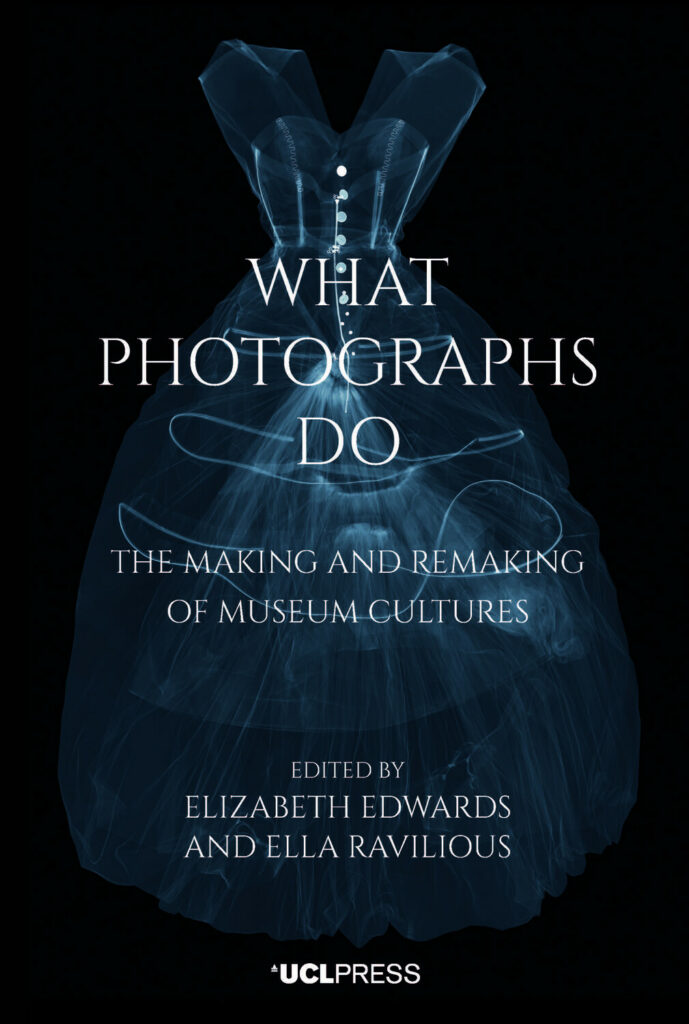
What Photographs Do

What are photographs ‘doing’ in museums? Why are some photographs valued and others not? Why are some photographic practices visible and not others? What value systems and hierarchies do they reflect?

What Photographs Do explores how museums are defined through their photographic practices. It focuses not on formal collections of photographs as accessioned objects, be they ‘fine art’ or ‘archival’, but on what might be termed ‘non-collections’: the huge number of photographs that are integral to the workings of museums yet ‘invisible’, existing outside the structures of ‘the collection’. These photographs, however, raise complex and ambiguous questions about the ways in which such accumulations of photographs create the values, hierarchies, histories and knowledge-systems, through multiple, folded and overlapping layers that might be described as the museum’s ecosystem.

These photographic dynamics are studied through the prism of the Victoria and Albert Museum, London, an institution with over 150 years’ engagement with photography’s multifaceted uses and existences in the museum. The book differs from more usual approaches to museum studies in that it presents not only formal essays but short ‘auto-ethnographic’ interventions from museum practitioners, from studio photographers and image managers to conservators and non-photographic curators, who address the significance of both historical and contemporary practices of photography in their work. As such this book offers an extensive and unique range of accounts of what photographs ‘do’ in museums, expanding the critical discourse of both photography and museums.

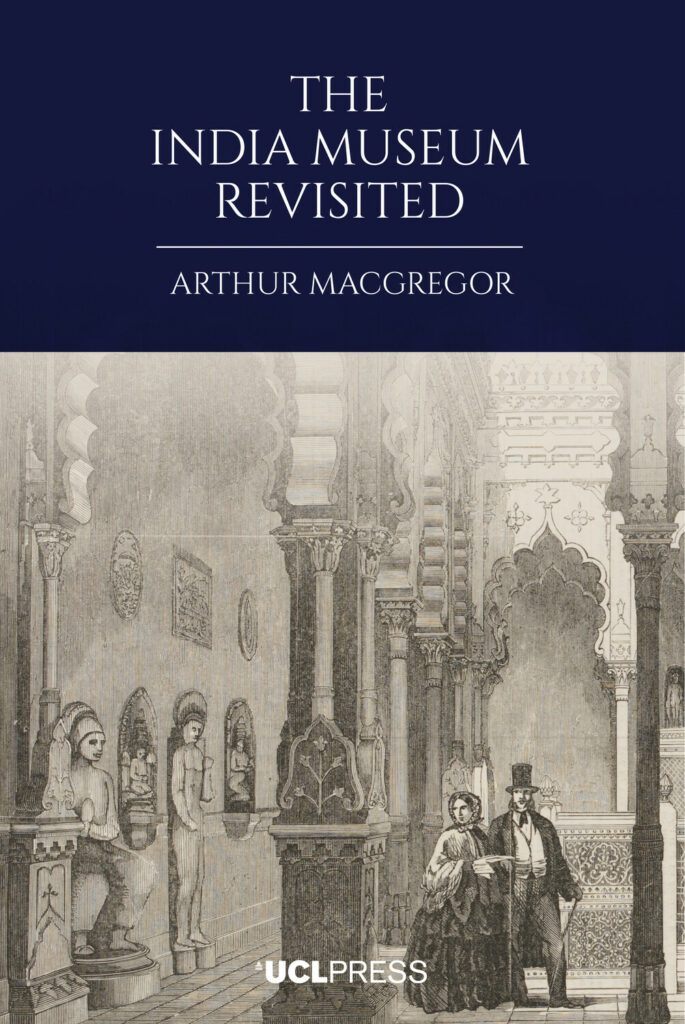
The India Museum Revisited

The museum of the East India Company formed, for a large part of the nineteenth century, one of the sights of London. In recent years, little has been remembered of it beyond its mere existence, while an assumed negative role has been widely attributed to it on the basis of its position at the heart of one of Britain’s arch-colonialist enterprises.

Extensively illustrated, The India Museum Revisited provides a full examination of the museum’s founding manifesto and evolving ambitions. It surveys the contents of its multi-faceted collections – with respect to materials, their manufacture and original functions on the Indian sub-continent – as well as the collectors who gathered them and the manner in which they were mobilized to various ends within the museum.

From this integrated treatment of documentary and material sources, a more accurate, rounded and nuanced picture emerges of an institution that contributed in major ways, over a period of 80 years, to the representation of India for a European audience, not only in Britain but through the museum’s involvement in the international exposition movement to audiences on the continent and beyond.

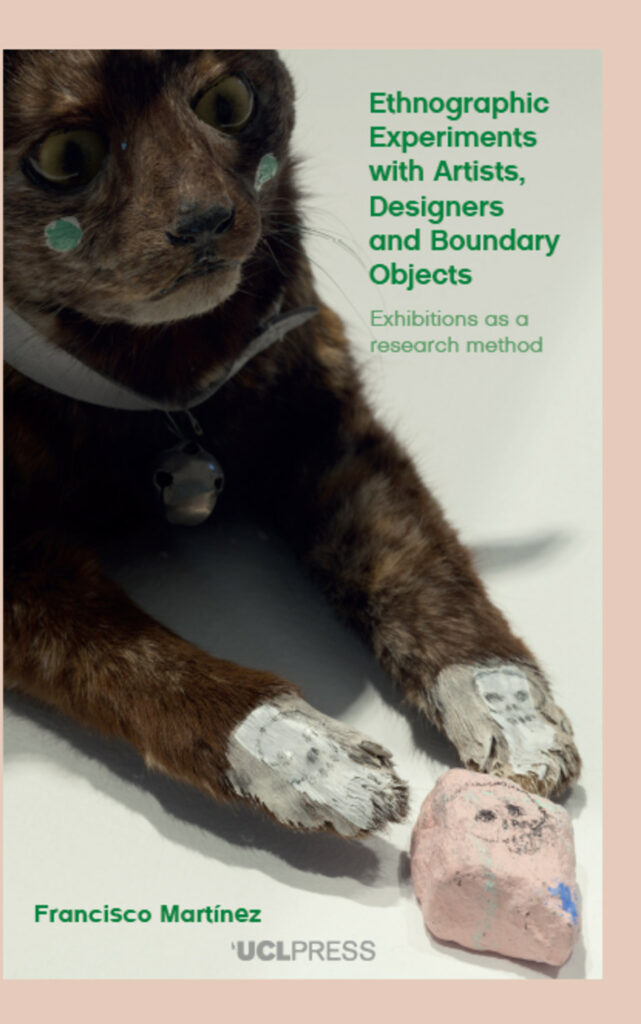
Ethnographic Experiments with Artists, Designers and Boundary Objects

Ethnographic Experiments with Artists, Designers and Boundary Objects is a lively investigation into ethnographic practice. Richly illustrated, it invites the reader to reflect on the skills of collaboration and experimentation in fieldwork and in gallery curation, thereby expanding our modes of knowledge production.

Francisco Martínez increases our understanding of the relationship between contemporary art, design and anthropology, imagining creative ways to engage with the contemporary world and developing research infrastructures across disciplines. He opens up a vast field of methodological explorations, providing a language to reconsider ethnography and objecthood while producing knowledge with people of different backgrounds.

At the heart of this study are the possibilities for transdisciplinary collaborations, the opportunity to use exhibitions as research devices, and the role of experimentation in the exhibition process. It is critical reading for researchers of Anthropology, Material Culture and Museum Studies, and for any reader with an interest in ethnographic methods.

Mobile Museums

Mobile Museums presents an argument for the importance of circulation in the study of museum collections, past and present. It brings together an impressive array of international scholars and curators from a wide variety of disciplines – including the history of science, museum anthropology and postcolonial history – to consider the mobility of collections. The book combines historical perspectives on the circulation of museum objects in the past with contemporary accounts of their re-mobilisation, notably in the context of Indigenous community engagement. Contributors seek to explore processes of circulation historically in order to re-examine, inform and unsettle common assumptions about the way museum collections have evolved over time and through space.

By foregrounding questions of circulation, the chapters in Mobile Museums collectively represent a fundamental shift in the understanding of the history and future uses of museum collections. The book addresses a variety of different types of collection, including the botanical, the ethnographic, the economic and the archaeological. Its perspective is truly global, with case studies drawn from South America, West Africa, Oceania, Australia, the United States, Europe and the UK. Mobile Museums helps us to understand why the mobility of museum collections was a fundamental aspect of their history and why it continues to matter today.

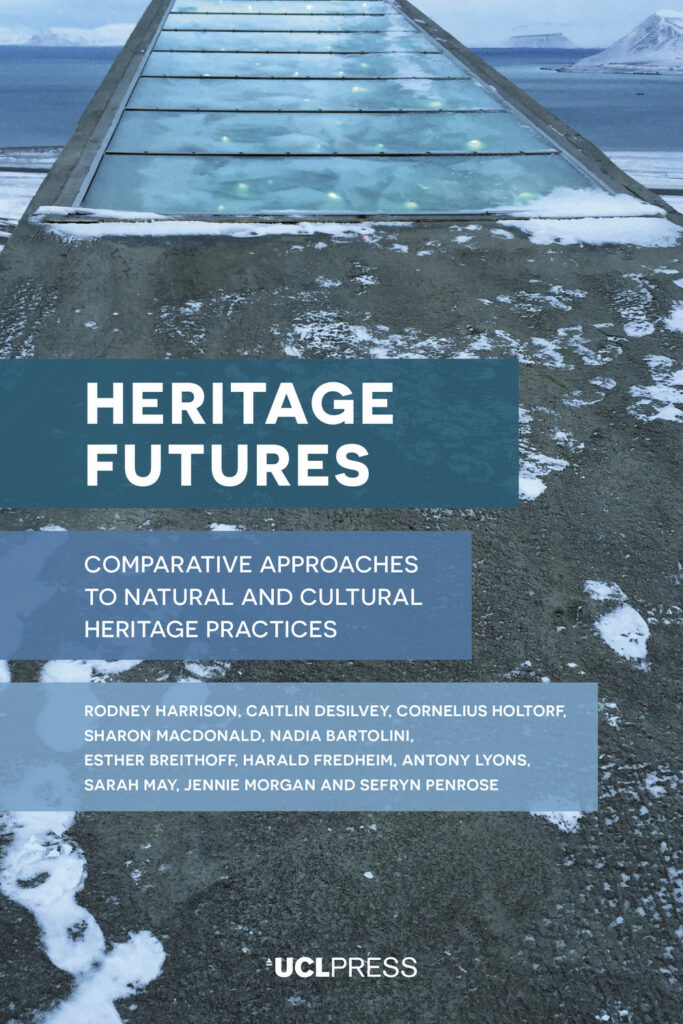
Heritage Futures

Preservation of natural and cultural heritage is often said to be something that is done for the future, or on behalf of future generations, but the precise relationship of such practices to the future is rarely reflected upon. Heritage Futures draws on research undertaken over four years by an interdisciplinary, international team of 16 researchers and more than 25 partner organisations to explore the role of heritage and heritage-like practices in building future worlds.

Engaging broad themes such as diversity, transformation, profusion and uncertainty, Heritage Futures aims to understand how a range of conservation and preservation practices across a number of countries assemble and resource different kinds of futures, and the possibilities that emerge from such collaborative research for alternative approaches to heritage in the Anthropocene. Case studies include the cryopreservation of endangered DNA in frozen zoos, nuclear waste management, seed biobanking, landscape rewilding, social history collecting, space messaging, endangered language documentation, built and natural heritage management, domestic keeping and discarding practices, and world heritage site management.

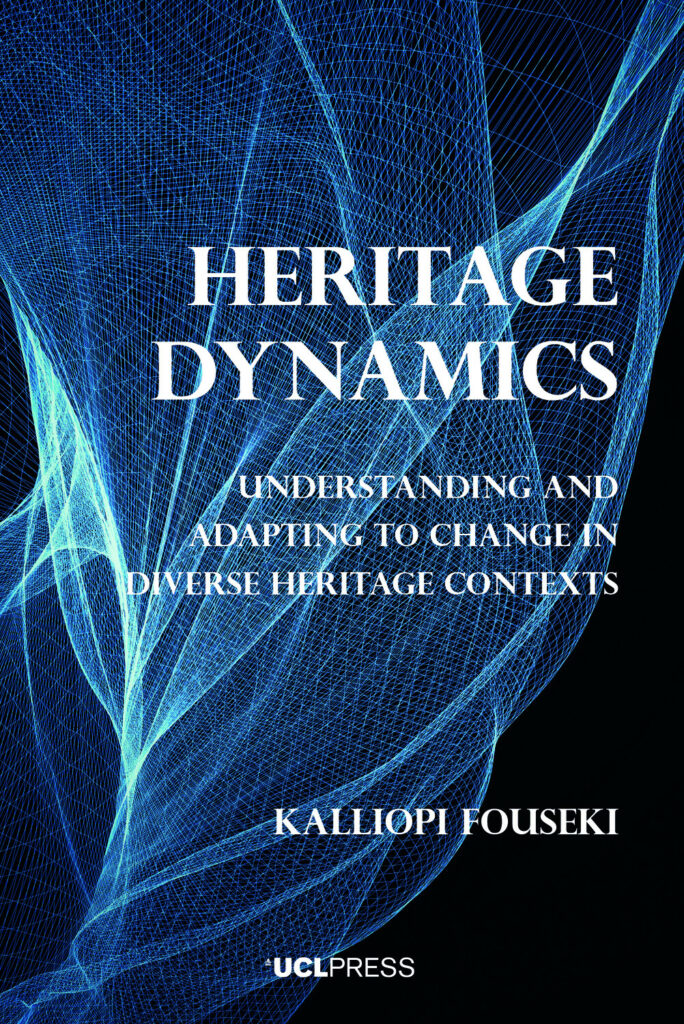
Heritage Dynamics

How does heritage emerge, change, stagnate, disappear and/or revive over time? Should heritage be approached as a ‘non-renewable resource’ that needs to be sustained for eternity, or as a ‘renewable resource’ that adapts to change and transformation?

Heritage Dynamics deconstructs the dynamic nature of heritage. Heritage as a socio-cultural practice goes through non-linear, continuous lifecycles, where certain factors will be the catalyst for the ending of one lifecycle and the revival for another. Kalliopi Fouseki develops a theoretical and methodological framework of ‘heritage dynamics’, which is used as the analytical thread of six heritage contexts: heritage-led transformation in historic urban places; decision-making on energy efficiency and heritage conservation in ‘everyday heritage’ residential buildings; lifecycles of heritage collections; exhibition dynamics and the impact of participation with emphasis of ‘difficult heritage’; dynamics of dissonance on contested museums and the dynamics of ‘intangible heritage’ with emphasis on flamenco.

The book offers a new theoretical and methodological framework that will enable heritage scholars and practitioners to unpack the ways and conditions under which heritage changes. The new theoretical framework will re-orientate current thinking of heritage as a thing, a process or discourse towards a new, more systemic thinking that captures the complexity of heritage.

Methodologically, Heritage Dynamics introduces the potential of systemic methods, such as system dynamics, in capturing the dynamic nature of heritage. The new theory and method not only opens up new avenues for theoretical explorations, but also offers a significant tool for heritage managers and policymakers.

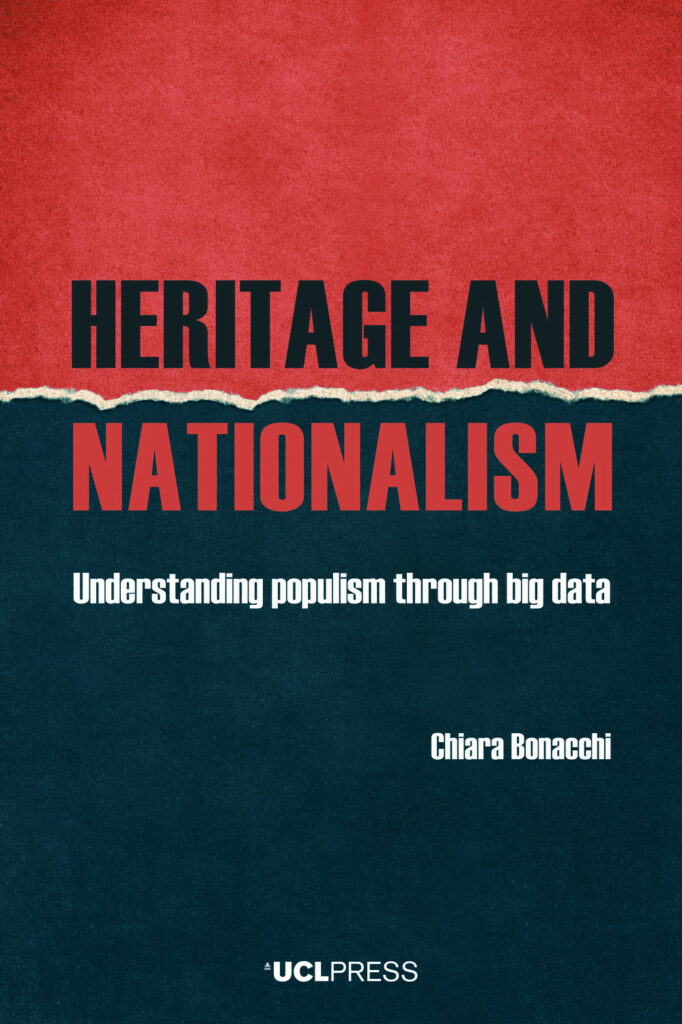
Heritage and Nationalism

How was the Roman Empire invoked in Brexit Britain and in Donald Trump’s United States of America, and to what purpose? And why is it critical to answer these kinds of questions? Heritage and Nationalism explores how people’s perceptions and experiences of the ancient past shape political identities in the digital age. It particularly examines the multiple ways in which politicians, parties and private citizens mobilise aspects of the Iron Age, Roman and Medieval past of Britain and Europe to include or exclude ‘others’ based on culture, religion, class, race, ethnicity, etc.

Chiara Bonacchi draws on the results of an extensive programme of research involving both data-intensive and qualitative methods to investigate how pre-modern periods are leveraged to support or oppose populist nationalist arguments as part of social media discussions concerning Brexit, the Italian Election of 2018 and the US-Mexican border debate in the US. Analysing millions of tweets and Facebook posts, comments and replies, this book is the first to use big data to answer questions about public engagement with the past and identity politics. The findings and conclusions revise and reframe the meaning of populist nationalism today and help to build a shared basis for the democratic engagement of citizens in public life in the future. The book offers a fascinating and unmissable read for anyone interested in how the past and its contemporary legacy, or ‘heritage’, influence our ‘political’ thinking and feeling in a time of hyper-interconnectivity.
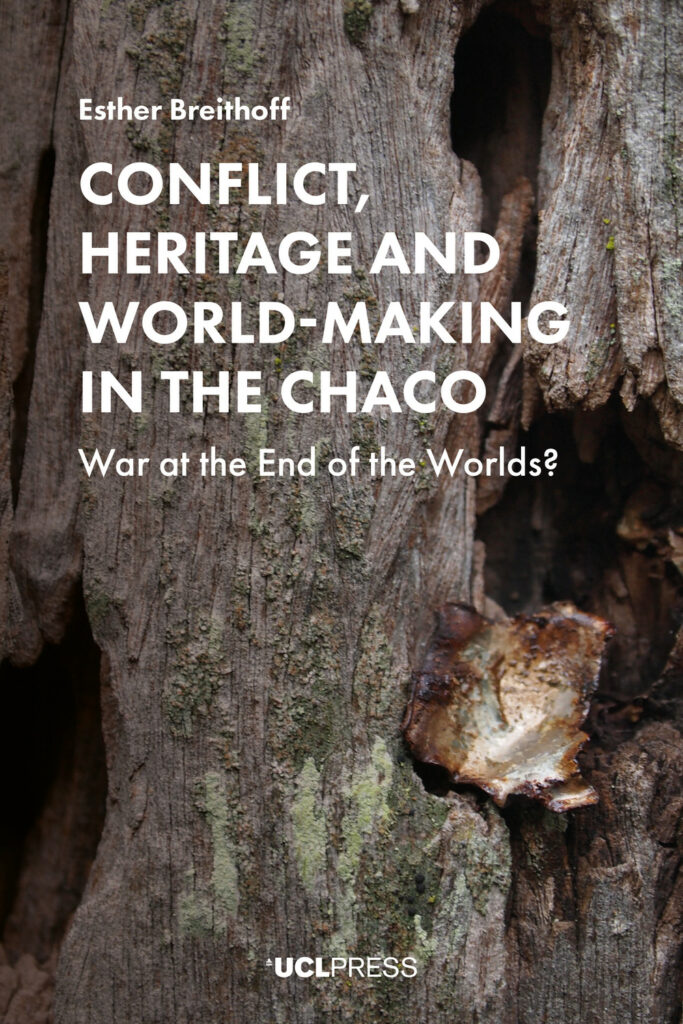
Conflict, Heritage and World-Making in the Chaco

Conflict, Heritage and World-Making in the Chaco documents and interprets the physical remains and afterlives of the Chaco War (1932–35) – known as South America’s first ‘modern’ armed conflict – in what is now present-day Paraguay. It focuses not only on archaeological remains as conventionally understood, but takes an ontological approach to heterogeneous assemblages of objects, texts, practices and landscapes shaped by industrial war and people’s past and present engagements with them. These assemblages could be understood to constitute a ‘dark heritage’, the debris of a failed modernity. Yet it is clear that they are not simply dead memorials to this bloody war, but have been, and continue to be active in making, unmaking and remaking worlds – both for the participants and spectators of the war itself, as well as those who continue to occupy and live amongst the vast accretions of war matériel which persist in the present.

Framing the study as an exploration of modern, industrialised warfare as Anthropocene ‘hyperobject’ (Morton 2013), This book shows how the material culture and heritage of modern conflict fuse together objects, people and landscapes, connecting them physically and conceptually across vast, almost unimaginable distances and time periods. It offers a unique perspective on the heritage of conflict, the natural environment, practices of recycling, the concept of time, and the idea of the ‘Anthropocene’ itself, as seen through the lens of the material legacies of war, which remain firmly and stubbornly embedded in the present and which continue to actively shape the future.

The book makes a major contribution to key debates in anthropology, archaeology, environmental humanities, critical heritage and material culture studies on the significance of conflict in understanding the Anthropocene, and the roles played by its persistent heritages in assembling worlds.

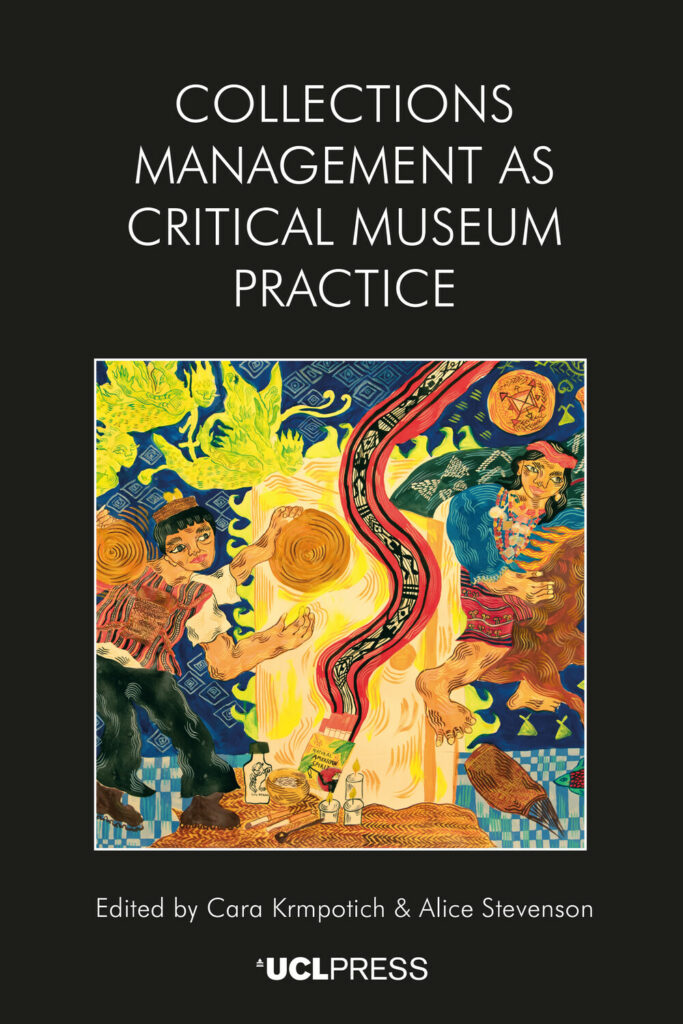
Collections Management as Critical Museum Practice

There is a common misconception that collections management in museums is a set of rote procedures or technical practices that follow universal standards of best practice. This volume recognises collections management as a political, critical and social project, involving considerable intellectual labour that often goes unacknowledged within institutions and in the fields of museum and heritage studies.

Collections Management as Critical Museum Practice brings into focus the knowledges, value systems, ethics and workplace pragmatics that are foundational for this work. Rather than engaging solely with cultural modifications, such as Indigenous care practices, the book presents local knowledge of place and material which is relevant to how collections are managed and cared for worldwide. Through discussion of varied collection types, management activities and professional roles, contributors develop a contextualised reflexive practice for how core collections management standards are conceptualised, negotiated and enacted. Chapters span national museums in Brazil and Uganda to community-led heritage work in Malaysia and Canada; they explore complexities of numbering, digitisation and description alongside the realities of climate change, global pandemics and natural disasters. The book offers a new definition of collections management, travelling from what is done to care for collections, to what is done to care for collections and their users. Rather than ‘use’ being an end goal, it emerges as a starting point to rethink collections work.

Sign up to our newsletter

Don't miss out!
Subscribe to the UCL Press newsletter for the latest open access books,
journal CfPs, news and views from our authors and much more!