We are currently upgrading our shopping cart; in the interim all orders are being diverted to Waterstones. If you would like to redeem a promotional code, or are an author wanting to place an order, please email us.

Contact us

Ageing with Smartphones in Uganda

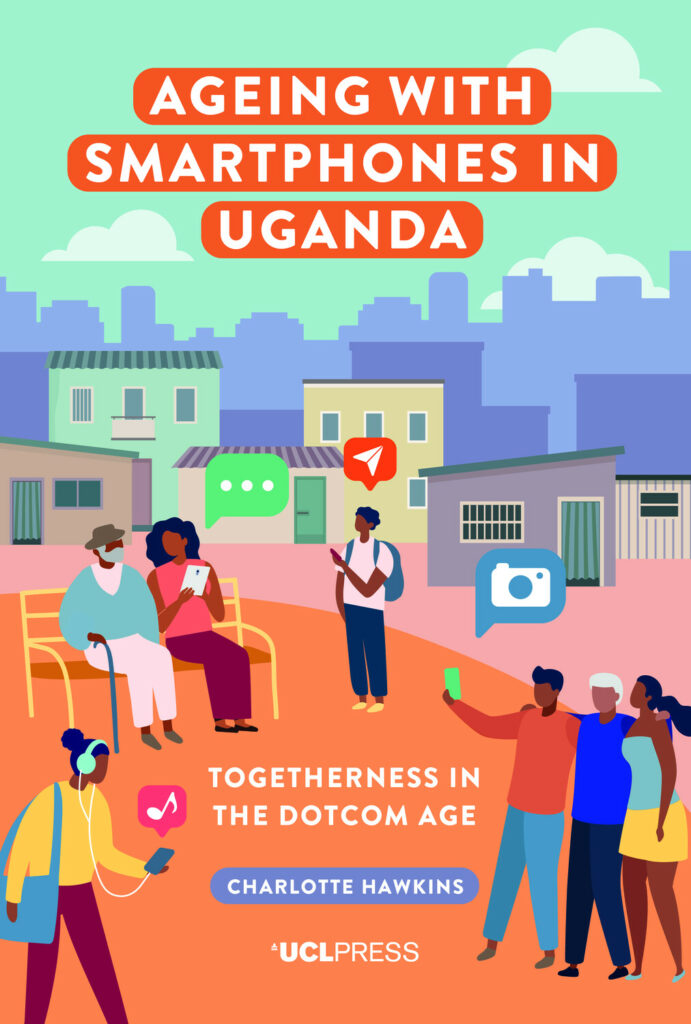
Ageing with Smartphones in Uganda is based on a 16-month ethnography about experiences of ageing in a neighbourhood in a diverse neighbourhood in Kampala, Uganda. It examines the impact of smartphones and mobile phones on older people’s health and everyday lives as part of the global ‘Anthropology of Smartphones and Smart Ageing’ project.

In taking the lens of the smartphone to understand experiences of ageing in this context, the monograph presents the articulation and practice of ‘togetherness in the dotcom age’. Taking a ‘convivial’ approach, which celebrates multiple ways of knowing about social life, Charlotte Hawkins draws from these expressions about cooperative morality and modernity to consider the everyday mitigation of profound social change. ‘Dotcom’ is understood to encompass everything from the influence of social media to urban migration and lifestyles in the city, to shifts in ways of knowing and relating. At the same time, dotcom tools such as mobile phones and smartphones facilitate elder care through, for example, regular mobile money remittances.

This book explores how dotcom relates to older people’s health, in particular their care norms, social standing, values of respect and relatedness, and intergenerational relationships – both political and personal. It also re-frames the youth-centricity of research on the city and work, new media and technology, politics and service provision in Uganda. Through ethnographic consideration of everyday life and self-formation in this context, the monograph seeks to contribute to an ever-incomplete understanding of how we relate to each other and to the world around us.
Ageing with Smartphones in Ireland

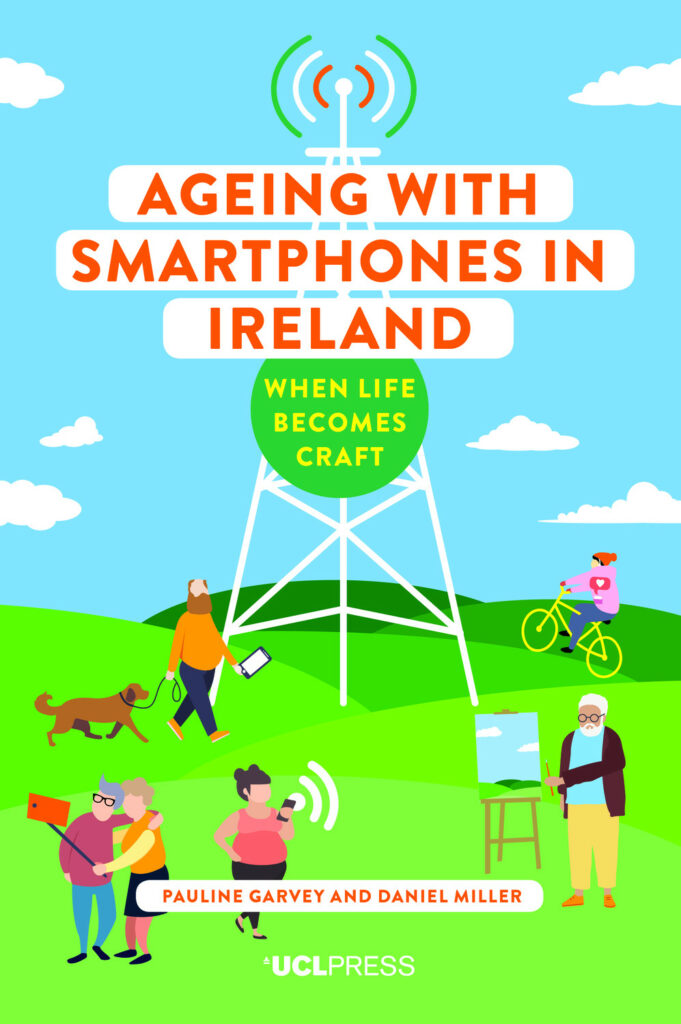
There are not many books about how people get younger. It doesn’t happen very often. But Ageing with Smartphones in Ireland documents a radical change in the experience of ageing.

Based on two ethnographies, one within Dublin and the other from the Dublin region, the book shows that people, rather than seeing themselves as old, focus on crafting a new life in retirement. Our research participants apply new ideals of sustainability both to themselves and to their environment. They go for long walks, play bridge, do yoga and keep as healthy as possible. As part of Ireland’s mainstream middle class, they may have more time than the young to embrace green ideals and more money to move to energy-efficient homes, throw out household detritus and protect their environment.

The smartphone has become integral to this new trajectory. For some it is an intimidating burden linked to being on the wrong side of a new digital divide. But for most, however, it has brought back the extended family and old friends, and helped resolve intergenerational conflicts though facilitating new forms of grandparenting. It has also become central to health issues, whether by Googling information or looking after frail parents. The smartphone enables this sense of getting younger as people download the music of their youth and develop new interests.

This is a book about acknowledging late middle age in contemporary Ireland. How do older people in Ireland experience life today?

Sign up to our newsletter

Don't miss out!
Subscribe to the UCL Press newsletter for the latest open access books,
journal CfPs, news and views from our authors and much more!