We are currently upgrading our shopping cart; in the interim all orders are being diverted to Waterstones. If you would like to redeem a promotional code, or are an author wanting to place an order, please email us.

Contact us

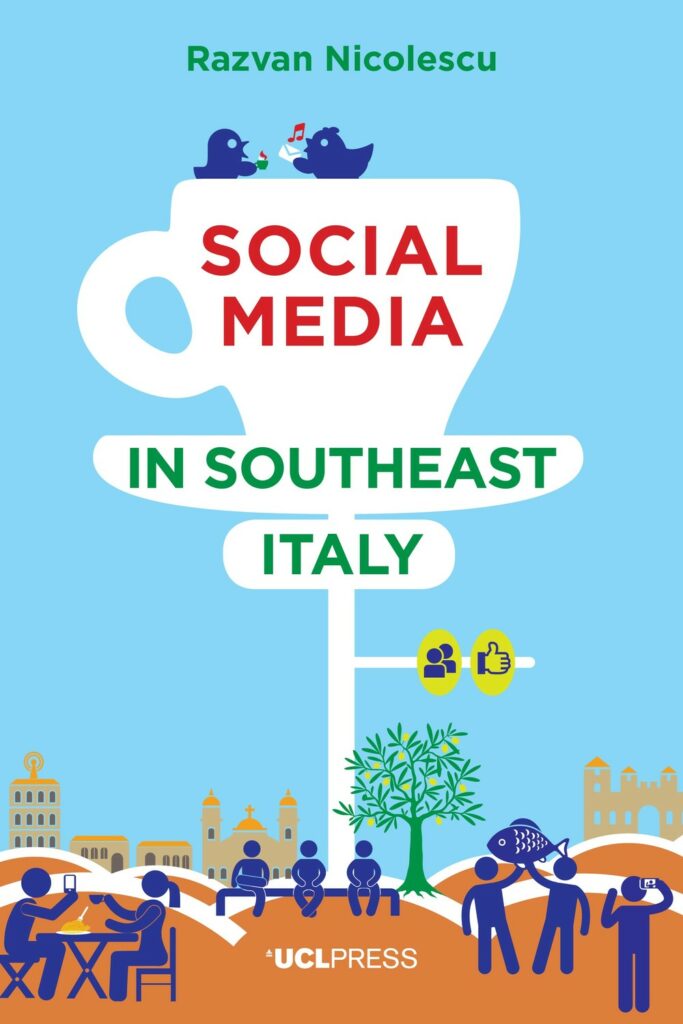
Social Media in Southeast Italy

Why is social media in southeast Italy so predictable when it is used by such a range of different people?

This book describes the impact of social media on the population of a town in the southern region of Puglia, Italy. Razvan Nicolescu spent 15 months living among the town’s residents, exploring what it means to be an individual on social media. Why do people from this region conform on platforms that are designed for personal expression?

Nicolescu argues that social media use in this region of the world is related to how people want to portray themselves. He pays special attention to the ability of users to craft their appearance in relation to collective ideals, values and social positions, and how this feature of social media has, for the residents of the town, become a moral obligation: they are expected to be willing to adapt their appearance to suit their different audiences at the same time, which is crucial in a town where religion and family are at the heart of daily life.
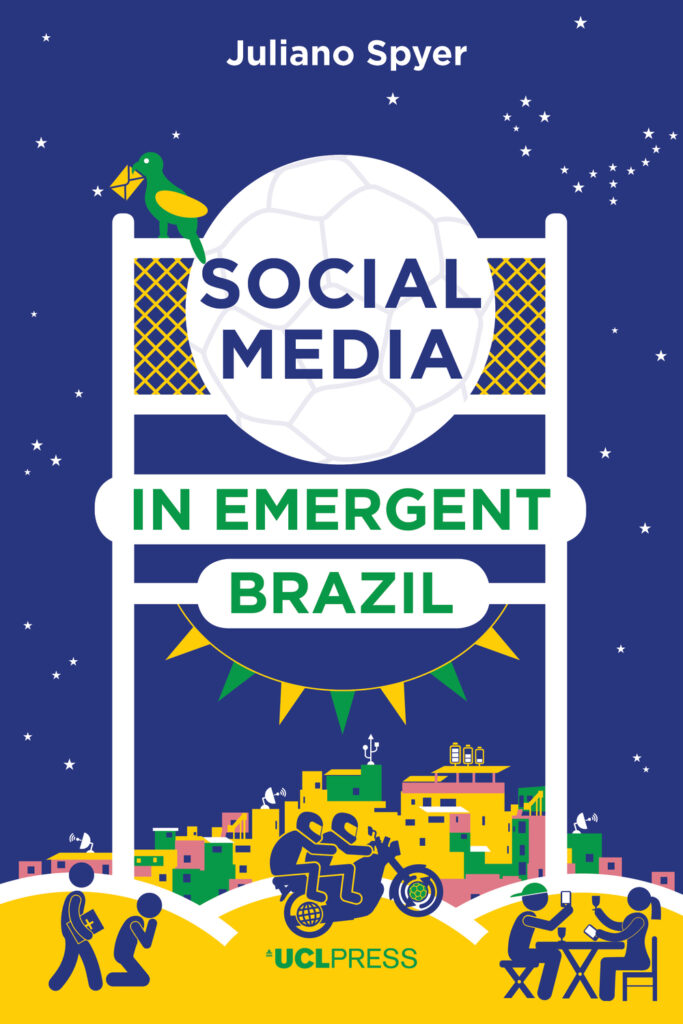
Social Media in Emergent Brazil

Since the popularisation of the internet, low-income Brazilians have received little government support to help them access it. In response, they have largely self-financed their digital migration. Internet cafés became prosperous businesses in working-class neighbourhoods and rural settlements, and, more recently, families have aspired to buy their own home computer with hire purchase agreements. As low-income Brazilians began to access popular social media sites in the mid-2000s, affluent Brazilians ridiculed their limited technological skills, different tastes and poor schooling, but this did not deter them from expanding their online presence. Young people created profiles for barely literate older relatives and taught them to navigate platforms such as Facebook and WhatsApp.

Based on 15 months of ethnographic research, this book aims to understand why low-income Brazilians have invested so much of their time and money in learning about social media. Juliano Spyer explores this question from a number of perspectives, including education, relationships, work and politics. He argues that social media is the way for low-income Brazilians to stay connected to the family and friends they see in person on a regular basis, which suggests that social media serves a crucial function in strengthening traditional social relations.

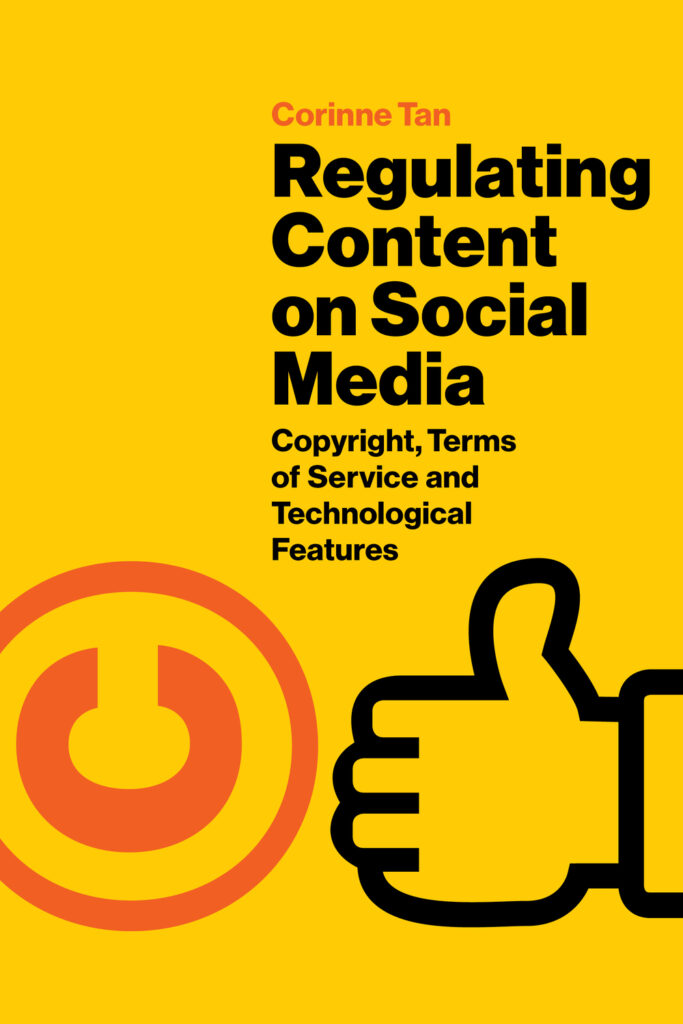
Regulating Content on Social Media

How are users influenced by social media platforms when they generate content, and does this influence affect users’ compliance with copyright laws?

These are pressing questions in today’s internet age, and Regulating Content on Social Media answers them by analysing how the behaviours of social media users are regulated from a copyright perspective. Corinne Tan, an internet governance specialist, compares copyright laws on selected social media platforms, namely Facebook, Pinterest, YouTube, Twitter and Wikipedia, with other regulatory factors such as the terms of service and the technological features of each platform. This comparison enables her to explore how each platform affects the role copyright laws play in securing compliance from their users. Through a case study detailing the content generative activities undertaken by a hypothetical user named Jane Doe, as well as drawing from empirical studies, the book argues that – in spite of copyright’s purported regulation of certain behaviours – users are ‘nudged’ by the social media platforms themselves to behave in ways that may be inconsistent with copyright laws.

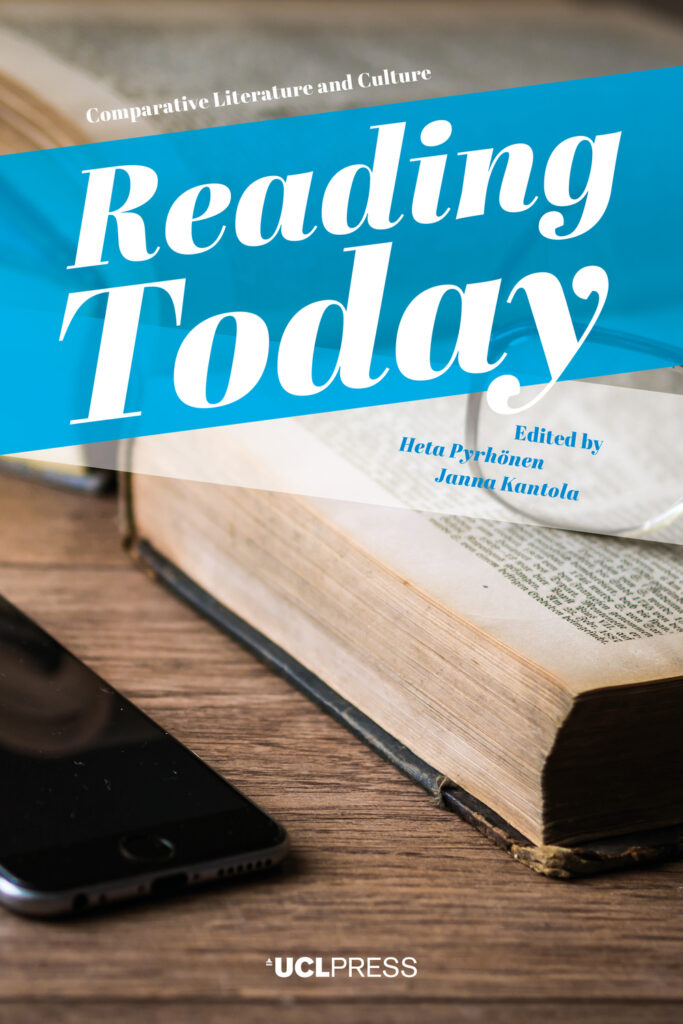
Reading Today

New technologies are changing our reading habits. Laptops, e-readers, tablets and other handheld devices supply new platforms for reading, and we must learn to manage them by scrolling, clicking or tapping. Reading Today places reading in current literary and cultural contexts in order to analyse how these contexts challenge our conceptions of who reads, what reading is, how we read, where we read, and for what purposes – and then responds to the questions this analysis raises. Is our reading experience becoming a ‘flat’ one? And does reading in a media environment favour quick reading?

Alongside these questions, the contributors unpack emerging strategies of reading.They consider, for example, how paying attention to readers’ emotional reactions as an indispensable component of reading affects our conception of the reading process. Other chapters consider how reading can be explored through such topics as experimental literature, the contemporary encyclopedic novel and the healing power of books.

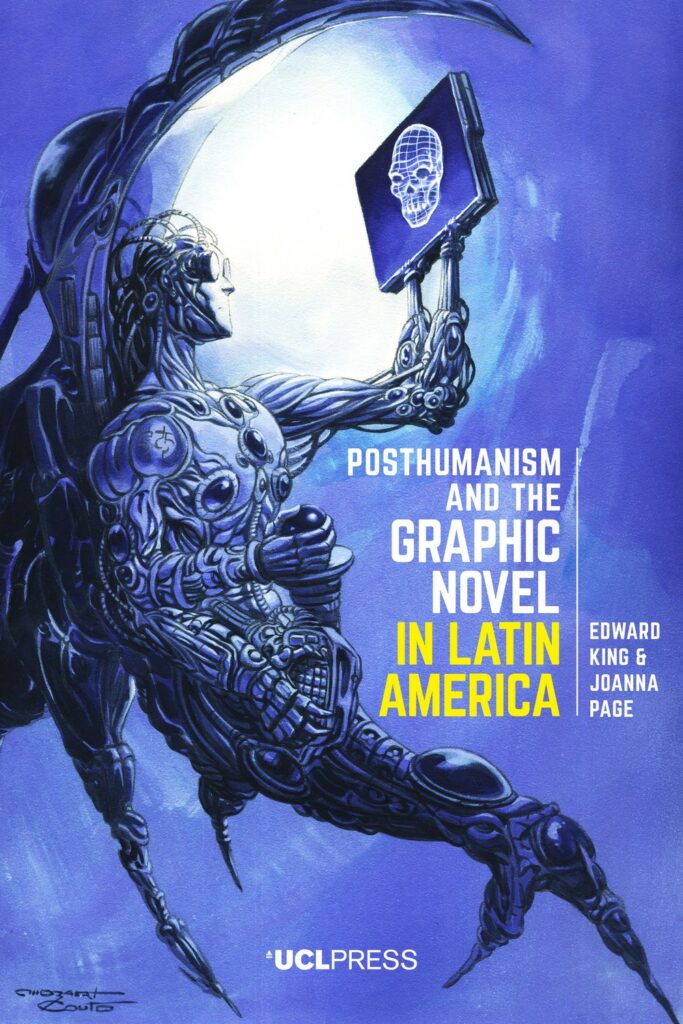
Posthumanism and the Graphic Novel in Latin America

Latin America is experiencing a boom in graphic novels that are highly innovative in their conceptual play and their reworking of the medium. Inventive artwork and sophisticated scripts have combined to satisfy the demand of a growing readership, both at home and abroad. Posthumanism and the Graphic Novel in Latin America, which is the first book-length study of the topic, argues that the graphic novel is emerging in Latin America as a uniquely powerful force to explore the nature of twenty-first century subjectivity. The authors place particular emphasis on the ways in which humans are bound to their non-human environment, and these ideas are productively drawn out in relation to posthuman thought and experience. The book draws together a range of recent graphic novels from Argentina, Brazil, Chile, Mexico and Uruguay, many of which experiment with questions of transmediality, the representation of urban space, modes of perception and cognition, and a new form of ethics for a

Sign up to our newsletter

Don't miss out!
Subscribe to the UCL Press newsletter for the latest open access books,
journal CfPs, news and views from our authors and much more!